
SERMONS
Archive
- October 2026
- September 2026
- August 2026
- July 2026
- June 2026
- May 2026
- April 2026
- March 2026
- February 2026
- January 2026
- December 2025
- November 2025
- October 2025
- September 2025
- August 2025
- July 2025
- June 2025
- May 2025
- April 2025
- March 2025
- February 2025
- January 2025
- December 2024
- November 2024
- October 2024
- September 2024
- August 2024
- July 2024
- June 2024
- May 2024
- April 2024
- March 2024
- February 2024
- January 2024
- December 2023
- November 2023
- October 2023
- September 2023
- August 2023
- July 2023
- June 2023
- May 2023
- April 2023
- March 2023
- February 2023
- January 2023
- December 2022
- November 2022
- October 2022
- September 2022
- August 2022
- July 2022
- June 2022
- May 2022
- April 2022
- March 2022
- February 2022
- January 2022
- December 2021
- November 2021
- October 2021
- September 2021
- August 2021
- July 2021
- June 2021
- May 2021
- April 2021
- March 2021
- February 2021
- January 2021
- December 2020
- November 2020
- October 2020
- September 2020
- August 2020
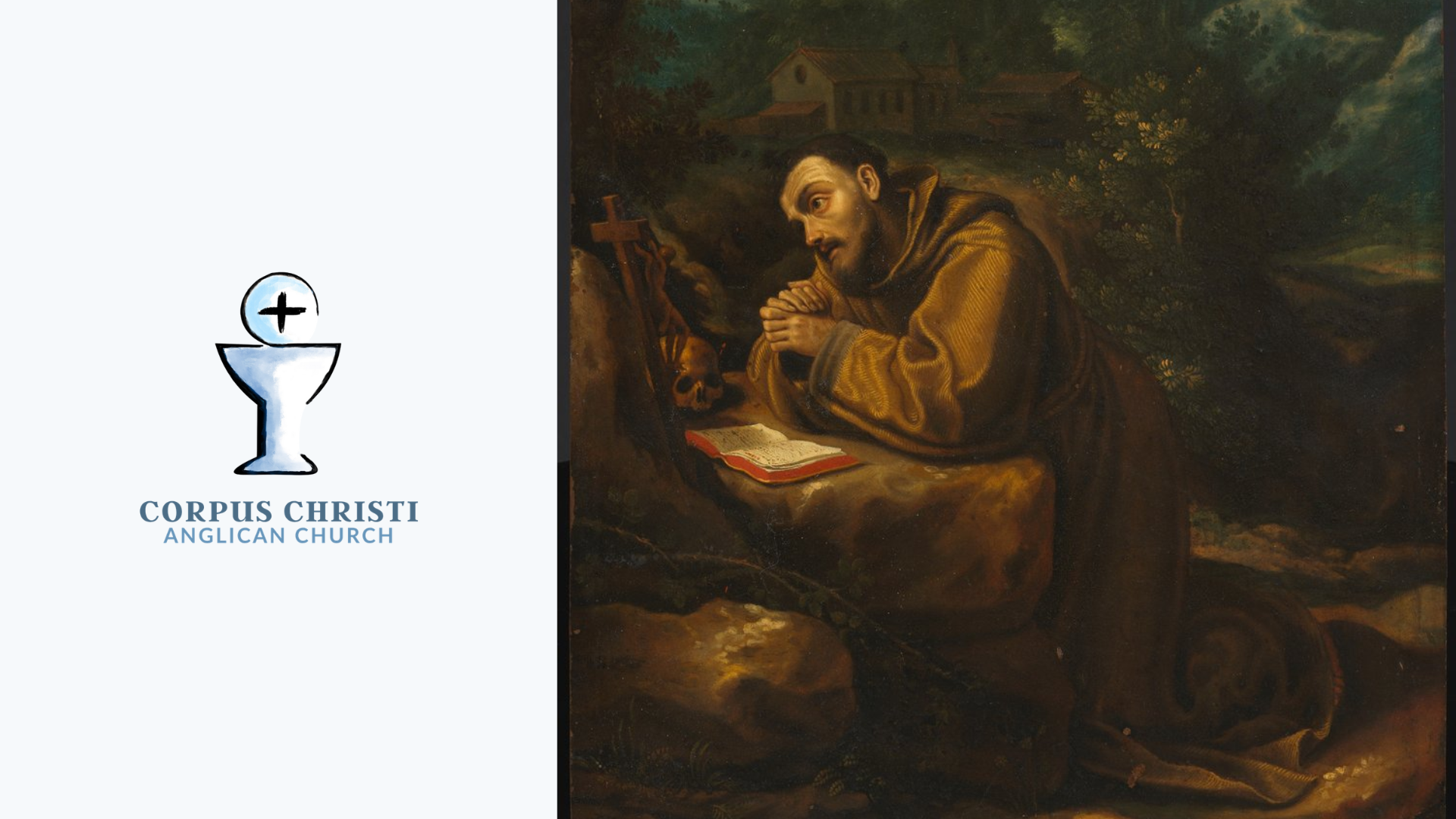
Proper 22: The Life and Teaching of St. Francis
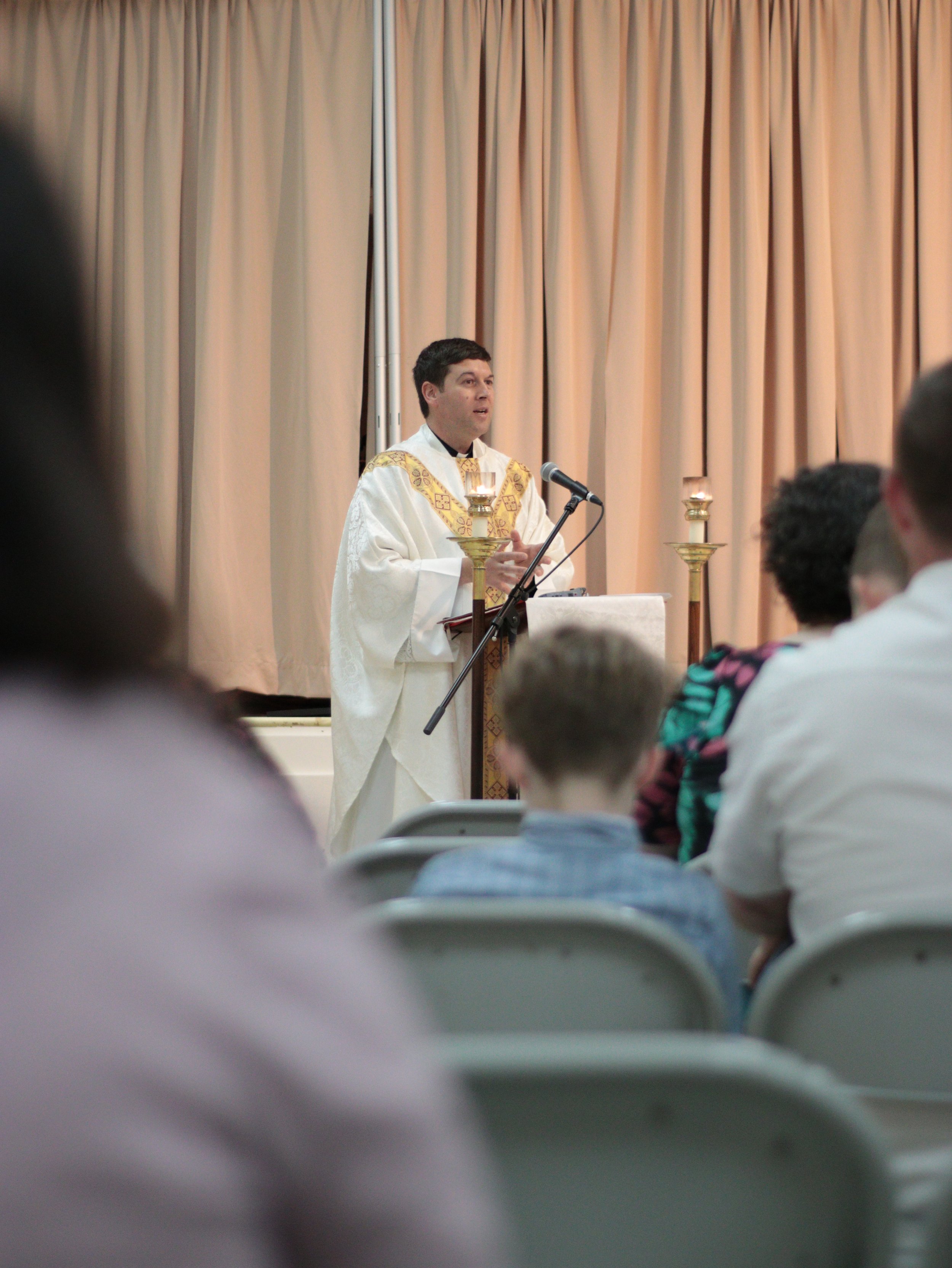
I’m Alexei Laushkin a member here. Let’s pray together father as we turn to the living Saints, especially the life of Saint Francis in our time this morning. Speak to us as you once spoke to him working us as you once worked in him the name of the father‘s son and the Holy Spirit. today I get a chance to graciously talk about something that I know a little bit about but you also when you feel like you, you love something and you know something you always feel like there’s more to know and so in preparing for this time to talk about the life of Saint Francis for whom feast day is today, October 4 800 years ago today actually yesterday he passed and so we are in the life of Saint Francis and if you like me and you have a saint or someone that you admire maybe admire a famous Preacher whenever you speak about them it fills you with a bit of holding trepidation.
I come this morning with that feeling because I think I could probably talk to you a half day about Saint Francis and yet I won’t do that to you. It’s a homily and so I wanna give you some sense of his life and his ministry and his passion and also related to the scripture but I want to start with a very basic question. how many of you know about the life in Saint Francis keep just raise your hand if you know about it OK so do you some man if you don’t know who Saint Francis. I could see it from here so if you’re like me when I first visited a Assisi, which I visited now about a half dozen times a little bit more than a half dozen I had thought of Saint Francis is the same for animals, right maybe he was the saint for those who didn’t like war I didn’t realize that beneath these kind of more remarkable legends and ministries and living witness accounts was the life of a saint, who is very passionate about God, was very passionate about Christ, who believed in the church primarily, as the means for which the Lord would change the world and so I’m not gonna be talking to you about Saint Francis the animal lover, though I do enjoy that part of Saint Francis‘s life.
I’m gonna talk to you about three parts of his story one brokenness with his parents that you may not know about the nativity story for which we get a lot of the nativity tradition comes from Saint Francis and finally his love for the poor and the lost. Those are the three things that we’re gonna cover so Frances was born actually named for his by his mom Giovanni. He was born John. His father was a merchant man merchant men in an era that was very stratified Italy. What now is Italy was not a united nation it was a several different kingdoms, and the paper itself had kingdoms. I’m not gonna go into that, but it was not a one nation it was several different types of cities.
His father was a wealthy cloth merchant, and when he, his mother was from France when he came back and realized that the sun was born, so the father would go off. He was a businessman who would travel for months at a time, and he came back, and the so was born, had already been baptized. He was not happy and so he changed his name to little little Frenchie that’s what Frances is Francesco little Frenchie after his wife Saint Francis was a in his early years.
St. Francis was a fairly passionate fellow so you can imagine someone who he could. His father could afford all the clothes that he ever needed. He liked going out to parties he liked going out and having adventures he was eager to please his father into seek for himself what he thought would be the best thing in life ever which was to become a Knight to essentially live a glorious life and you think about this, they were not nobility. They were merchant men and women and so part of the seeking is that if you became a Knight as someone who has ancestry in kind of the Russian tradition in the Russian empire, if he became a knight or if he did something glorious on behalf of the king that’s how you got your Harold Reed that’s how you got your nobility. At least the chance was there so Frances was really thinking about his family and had to advanced his father‘s Interest at the time if you’ve ever visited have any of you been to a Assisi before OK so some of you have so I can speak a little bit about this but if you’re in a Assis, you look across the way you’ll see Perugia. She has just a neighboring town. It’s the distance between like Alexandria and Fairfax. Maybe it’s not that far like if you took the outer borders, you could walk there this is my point. You can walk there and what it happened was the merchants of a Assisi rebelled against the aristocracy and kicked them out burned their lands. It’s it’s not a pretty time in world history it. None of this is like pleasant stuff as the nobility fled over to Perugia and Frances following his father‘s wishes, joined the Armed Forces of the Assisi in the battle he’s captured and said in prison for a year this begins the transition of his life.
It takes about four years from the time that he is in prison to the point where he has what I would describe a living encounter with Christ. He’s in prison for a year. He’s very sick. His father finds out about it, and as things are cooling off between Perugia and the Assisi, his father pays a ransom. He comes back to a Assisi and get sick for like 8-10 months very ill if any of you’ve had brokenness with your family if any of you have had life tragedy if any of you had long illness like I have had in my childhood Saint Francis can relate to that experience. I just want you to hold onto that for a moment as we go through these next pieces of his story in the process of recovering at about year three he decides I’m gonna go join the Armed Forces again, so he’s still very much following his father‘s wishes. It’s on the way to reenlist that the Lord convict him that this is not the way he should live then the process kind of gets a little challenging. He has a vision that he is supposed to rebuild God‘s church and like most useful people or if you know people administration when they start out, he takes it very literally and he believes it is a specific church that he is supposed to rebuild that is in ruins. This is the crisis San Diamiano, what does he do in order to do this?
Well he starts selling his father stuff to pay for the rebuild hence the conflict friends when we follow the life of Christ the Saints teach us including Saint Francis but also the church fathers and mothers that there will come a point where you will need to choose between Christ Parents or the thing that you love most this is part of the teachings of Jesus and Saint Francis had that moment his father is so enraged. He goes to the Bishop who at the time in this era of bishops kind of settled disputes. They had a slightly magisterial function in terms of magistrate that wasn’t their total role, but that was one of the roles so he goes to the Bishop of the Tang and says look at this scoundrel of a son that I have he is selling. He’s stealing from me stealing from me. Imagine if you’ve ever had a conflicted with a loved one and they’re screaming at you in public. This is what Saint Francis is dealing with the Bishop turns to Frances and says you know the scripture says that shall not steal. This isn’t right what you’re doing Frances takes off all his clothes except for an undergarment so if you see a film, he’s not total anyways there’s an undergarment on that that’s all I need to say in the morning near the altar and the Bishop is so moved a Bishop who wasn’t necessarily the anyways he’s so moved. He puts on imagine what Father Morgan‘s wearing except more grand. he puts that on Saint Francis to cover him and Frances in a low voice and I think he regrets this says the only father I have is in heaven into what’s happening in the medieval time. That we’re discussing as they’re announcing each other publicly a wound that Frances could never heal. There is no recorded restoration between Frances and his parents so this is a saint who knows the brokenness of those imagine Frances has spent his whole life trying to please, his father and it comes to this imagine your own wounds the God can still use them as God use Saint Francis Saint Francis did try to reconcile this really difficult part of his life, but it never healed. It never healed and this is the guy that we serve that perhaps you to come this morning with wounds that aren’t healing I believe that God healed the emotional worms in Saint Francis given the way he lived his life in the way he talked about his parents, never will find kindness and never with disparagement.
He was very cautious about his words. I myself have my own wounds with those who have harmed or or I’ve experienced great harm but less than I learned from Saint Francis is not to air the laundry in public so these are things that are known about Saint Francis, but that he did not talk about very often but this is part of his story part of his legacy. The second is the nativity story. This is interesting so we do have some writings from Saint Francis and I’m going throughout the course of the homily share some of his actual written work we have the equivalent I would say of 60 pages depending on the type from him that are believed to be his writings, so he says a person sins who wished to see who wishes to receive more from his neighbor than what he wishes to give him himself to the Lord God, a person sins who wishes to receive more from his neighbor then he wishes to give himself to the Lord God in the process he lived in the time that Navy was like our time was very troubling. The Crusades, there was violence. There was plagues. There were people who confessed to love the Lord, but did not live like this. Saint Francis had all of that in his life and very early on. They decided to start sending people throughout the world to spread their message, the message of radical imitation of Christ and the way that they live, which I’ll talk better in the moment so he imagine this you know think about the era late 11 century early early late 12th century early 13th century he says I’m gonna go meet with the sultan who is at war of the Christian kingdoms to persuade him about Christ. Can you imagine he’s in Italy and he’s gonna go take a boat to Egypt which would take him months and then he’s gonna convince the people legged that he should cross the lines that are openly at war with each other, and he’s gonna go have an audience with the Sultan to persuade him about Christ. This is the kind of radical obedience that he had the kind of radical sense that this is part of what I should be doing not gonna talk a lot about that encounter. He does meet the Sultan. It’s a peaceful exchange neither convinces the other, but the Sultan kind of grandson safe passage to lead after that point he spends about a year in the holy land visiting the sites of Christ and Bethlehem when he comes back, we don’t have a lot of what happened when he was in the holy land, he thinks to himself the celebration of Christmas needs to be a lot more robust needs to be a lot more robust so what he does is in 1223 he return he he goes to the people he wants him to experience the raw and published reality of Christ birth so when he’s in Bethlehem, it strikes in how poor Bethlehem is in his day so what he does is he goes to a noble money. He says we’re gonna set up a cave in Grigio why Grigio well there’s parts of Italy that actually look like the holy land so if you’re a fan of Mel Gibson s, the passion or if you’re gonna be watching the chosen is gonna have a scene about the resurrection where they’re filming Madera Italy actually looks like the holy land, Jerusalem that’s why they filmed there Madera just in God‘s Providence is the place where those who first made icons which was controversial in even the Aunt fled. They lived in Madera and wrote their icons on the cave so I think it’s just interesting in God‘s economy that several centuries later we’re still telling the big story is about Jesus I’m saying that because this part of Italy looks like Bethlehem that’s why Saint Francis chose it as a place to do it so what did he do?
He got a live a live donkey on Christmas Eve. They went to the countryside, carrying torches and candles, and they went into a dark cave Saint Francis, who is a deacon never priest he is a lifelong. Deacon starts chanting the midnight mass and eyewitnesses record from St. Thomas of Celino that a little child appears in an empty manger, whether they all had a vision, whether it was actually the child I leave that to the Lord’s Providence, I’m not gonna make a judgment call from here. I wasn’t not there, but I believe God can do such things. It impressed the people there so much that the popularity of the nativity scene isn’t just a great reenactment is the sense that Jesus is really present in someway and that’s what convicted those in those early days you see Saint Francis this radical obedience in this move towards the kingdom of God now this last part where I’m talking about his love for the poor and in the way you lived his life I talk a little bit about how does this intersect with angle criticism before I do that so this is a lot this is a Catholic saint, but it’s really a saint of the church, orthodox and Anglican vendor this Anglican sort of love for Saint Francis. I would say it starts really in the early 20th century so I’m all creatures of our God and King that’s a rendition of the mechanicals of creation so William Draper 1919 when he does all creatures of our God King, that’s one of the writings that Saint Francis actually wrote the mechanicals of the creatures is the first writing of any major saint in Italian so at this point Latin still the majority church language and it is the first full Italian vernacular song that we have so early 20th century William Draper, translated into all creatures of our God in king second society of Saint Francis. A religious order also comes into existence in the angle can communion in 1921 and this prayer that has become very popular make me an instrument of your peace. You may know that prayer has been popularized. I would say by the English speaking world and Anglican even probably more than the Catholic world so if you go to Assisi today, most of the merchandise is in English more than Italian so this has been our contribution is Anglican to Saint Francis. The last piece on his love for the poor if you’re like me in the Christian life, you may feel like loving the least of these in the poor is a complicated endeavor. Do you feel that it’s not particularly easy or simple anything from a simple as what do I do if someone asked me for money to how do I encounter someone who is on house and what do I do There? I think Saint Francis taught me as one of the teachers that I am to respond in simplicity yet, let my simplicity know if someone asked me for money. Judge not least I’d be judged Saint Francis learn this lesson very very in a very hard way when he was a young man he was revolted by the poor I mean, revolted to the point where he probably had indigestion seeing the physical poor he did not want to be around them part of his experience in 1205 he kind of comes more fully into loving Christ in 1206 is he meets a leopard now leopards in those days aren’t just people who were just really sick. They had to call out in front of them leopard leopard to avoid the contamination they had to physically by law communicate who they were. Frances heard the bail on the call so they had a bell while he was walking, he, he had an impulse of Grace from Christ.
He walked straight up to the man placed a coin in his disfigured hand. He had never touched a leopard bending down Frances wrapped his arms around the leopard and kiss his hand in face. The leopard return Frances‘s gesture, giving him the kiss of peace back a man who never wanted to touch a leopard there may be places in your life or God is calling you to do something big that you have trouble doing know that Saint Francis knows what that’s like and he believed in that kind of exchange. This started his lifelong love for the port Frances in the first men who became Franciscan’s worked for their daily bread by laboring in the field when their supply of food was not enough to provide what they needed. They begged door-to-door never accepting money but food can you imagine a priest coming to you begging for food? How shocking that would be Frances was not a priest. He was a deacon but a religious person asking you for food a Bishop even asking you for food I need food his life and teaching were meant to enter and reach people where they were at. He teaches us to go out into the world, just like Christ and to say the Christian teachings we see in the beatitudes aren’t abstractions love your enemy, love the least the lost they’re part of our daily fabric of life and they’re meant for us to go forward in these encounters, and this is the way Saint Francis taught his his order in his brother so what does this all mean and had us tie into our scriptures for today in Isaiah? We read the verses that God was looking for justice and the only found bloodshed Saint Francis also lived in a very violent time. He took simple steps and he invites us through Christ not through himself, but through Christ to take simple steps to battle, the injustices that we see that could take a simple form it could be avoid avoiding paying a day laborer, for instance because they don’t get insurance or paying them the right way could take a simple form of responding to those who I need who might need money, but maybe providing food instead they could take a simple form of calling that relative that you’ve neglected. It’s on my list that you haven’t talked to you in a while saying I love you. I’m thinking about you. It can take simple forms God is not looking for the great reformer. He is looking for the small reformer through Christ by the Holy Spirit in our heart, simple things. Psalm restore us, and we shall be whole Saint Francis believe that God could restore the brokenness that he experienced with his family and his parents, do we believe that our deepest wounds can be restored that God‘s goodness lives in the land of the living what might that look like in Matthew Saint Francis lived his life believing that the master would return to set the house in order so one of his big practices were service and simplicity the belief in the holy Eucharist in the church as the means for restoration, which is incredible. I know it’s incredible even for me to say because the church has so many flaws. The church makes scandals in every paper on earth that was true in Saint Francis‘s day as well maybe not the Free Press but the scandal part absolutely, and yet Frances believed it was through the church not outside the church. The God would work that was what his life was about. That’s what he gave his life for that God would work for the ordinary means of the church and so a prayer perhaps before Eucharist could be restore our faith, Lord, that a church can actually work to change the community that we’re in because it takes believe we’re like the doubting Thomas I believe help my unbelief Saint Francis believed in the church. The third part he believed in was holy obedience, he spoke a lot about judgment that the Lord would judge the church and that you need to obey obedience is not a word that we like I’m gonna close on this. It’s not a word that feels good. It’s not a word that rubs are American sensibilities as well but it’s a trust. It’s a trust that God is working in institutions and in people. It’s a trust that God will reform that which is broken in.
It is a trust not to put ourselves as our own gods, as though we knew everything, but that we in Community would discern what is best and that God works through Community so it is an act of faith Saint Francis live that active faith, he believed in the gospel of Matthew that the master would return, and that his vineyard was supposed to operate a certain way noticed the vineyard was a corporal thing he wasn’t returning to an abstraction. He was returning to something that was supposed to be working in Saint Francis said live your life as though that we’re true live your life as though that we were true, was closing prayer, gracious Father we thank you for the life in the example of Saint Francis his hard teaching his love and his passion, the mystery of his life. We asked that those of us formed in the Anglican communion might learn from his example which points primarily to our own example, which is Christ, the name of the father son and Holy Spirit.

Proper 21 (Fall Retreat): Creating After God's Own Heart
Introduction
Good morning dear friends. What a wonderful weekend it’s been together. I have loved the opportunity to engage our imaginations together over the course of the last few days as we work with our hands, share meals, do activities, and find time to rest together. Today’s passages teach us a lot about the nature of words and their relationship to our actions, and they present us with an invitation to the grace of God found in repentance and confession. Jesus is inviting us to rid ourselves of false piety and discipleship in words only, in order to take personal responsibility, confess, repent, and live in a world transformed by the grace of God. Living as an authentic follower of Christ moves us from being passive recipients of the brokenness of the world happening to us, to becoming generative agents who reimagine the world newly created in Christ.
Kids sermon: I want to invite the kids up for our kids sermon today. Kids, I want you to look at this picture. What is this? One of you said that this is a pipe. Well done...except for the French at the bottom: “Ceci n’est pas une pipe.” That means “This is not a pipe.” Why in the world did the artist say it is not a pipe when it is clearly a pipe? This famous picture, trying to highlight a contradiction between words and images because we think we see a pipe, but actually what we see is a painting.[1]
And it is sort of funny because it reminds me of kids flash cards. As you flip through a child might say, “This is A. A is for apple. This is an apple.” The painting looks a bit like the kind of image you’d point out to a child and say “this is a pipe” except that the text says “This is not a pipe.” Sometimes the thing we see doesn’t match the reality of what it is and this is the case for the story Jesus will tell us today. He is going to get into a debate with some people in Jerusalem that look like they are the religious experts. Jesus is going to challenge the religious experts on the nature of what following God’s law means. There are those who say “Yes, yes, I know what I’m supposed to do to please God,” but then their actions don’t match their words. Jesus is inviting them and us to ask what it might look like to notice the ways that things are broken and because of which we can become broken, and then to ask for his help. This is called confession and repentance — naming and turning. This opens us up to the gift of mercy that God wants to give to his children and it invites us to look at the world in the way that God does.
As we look at the Gospel together, would you pray with me, “Dear God...You are good...and you give good gifts...to your children...Thank you...for making us your children... in Jesus. Amen.”
A) False piety and an imaginary world
In the story today Jesus is in Jerusalem in conversation with the religious leaders. He begins to tell some parables about how much the religious leaders have missed it with regards to obedience to God.
Today he tells a parable of two sons. A father asks the first son to go and work in the vineyard. The son says sure, but the does not do it. The second son he asks to work in the vineyard, the son says no, but then eventually has a change of heart and does it anyway. This parable follows on the heels of a question about John the Baptist. John had invited people to turn from their sins and to come back to covenant faithfulness with God. The two groups represented by the two sons are two ways to receive the ministry of John the Baptist. The religious leaders are meant to be represented by the first son. Their “yes” to the Lord is how they keep up structures and theology. But their lives don’t live up to the words they say.[2]
I had listened to a podcast last week where someone asked the question “what good is your theology if you’re mean?” Her point was a good one she was asking questions about the telos of theology, or to what end we explore theology. Kids, if someone says they’re your friend, but they are constantly unkind to you and make fun of you in front of others, are they really your friend? No!
The point of “good theology” is to draw ourselves and the world around us into the life and love of the Trinity. This immediately rehumanizes our neighbor and it fosters a vision in us for God’s compassion both for us and for others. Good theology draws us into God’s love. Anything less than that aim, like culture war Christianity for example which seeks for power more than love, runs the risk of making us like the son who says “yes, I’ll do it” but then we don’t.
The second son says no, but does it anyways. This represents those who had lived their lives in contradiction to the law. They hear the preaching of John the Baptist and want a fresh start to renew their commitment to God and his commandments. They are aware of their brokenness and need for God’s help.
We need examples to follow who are like the second son; we need saints who are marked with gratitude and mellowed souls, who have weathered all kinds of storms with Jesus at their side, and who have never lost a deep sense of their need for God’s help and have spent a lifetime cultivating a childlike wonder at the kingdom of God in their midst.
Like those saints, we have to name brokenness honestly and hold it before God. This is confession. Where we see this brokenness in us we ask for God’s help to restore us. This is repentance. This opens us up to a world transformed by the grace of God where we start to see the kingdom of God and a world restored.
B) Personal responsibility and re-imaging the world.
Substantive discipleship involves reimagining the world. This is part of Ezekiel’s point today to the exiles in Ezekiel 18. The exiles find themselves in all kinds of hardships. Rather than doing the hard work of asking what is going on inside them, they shift the blame to God and others with a proverb about parents eating sour grapes and the children’s teeth being set on edge.[3] The good news in Ezekiel is that God does not desire the death of the wicked and because of this, if someone takes the personal responsibility to repent, God will meet them with grace.
Creativity after God’s own heart is an antidote to a broken world. God is creator and those who join the work of new creation see the world in abundance; they will take difficult circumstances, reflect on them, grieve appropriately, and look for opportunity. This person will take personal responsibility for their contributions to negative situations with others because they long for reconciliation and for Jesus’s resurrection to bring new goodness out of the ashes. Someone who has lost their ability to create sees the world in scarcity, anxiety, and simple cause and effect. They fixate on what cannot be done because of a lack of resources and see themselves as passive: any negative circumstances are things that happen to them. Life is constant anxiety and reaction to the next problem they’ll encounter. The hard work of confession and repentance, and taking personal responsibility, brings us to a place where we move into God’s redemptive new creation work.
A number of years ago I was translating Syriac texts for publication, which is my artistic labor. I remember wrestling with just the right words to translate a couple of lines. In my personal life I was wrestling with some really heavy issues that I could not fix. When I cannot fix something, I can spiral. I have learned to let myself feel sad when I cannot fix it. The sadness is necessary for me to begin to rebuild. Poetry has been a salve for me. I remember crying when I finally came to these lines:
“Come here, mind, see the Messiah standing amidst the assemblies, resembling the Gihon River, full of compassion, coursing and overflowing with all manner of healing for the afflicted, and the land of Judah is flooded by it and its remedies. Abounding mercy flows from it like a deluge and its floods — destroying diseases and pains. By it the blind saw, the deaf heard, the dead lived, and by it the whole land of darkness was illumined.”[4]
I needed that poetry. I wrestled for hours with how to bring those lines from Syriac into English and by the time I was done, I sat back and read them for myself. It was like God gave me permission to cry and be honest. He was listening. It was creative work after God’s own heart.
This is one of the values of art. Art is a necessary gift that helps us become better truth tellers as we cultivate an imagination for a redeemed world. It might be an opportunity to pen poetry or prose. It might be painting, gardening, wood carving, or scrapbooking. It is a space where we take back agency and reflect rather than react in anxiety because we are learning to create like the God who creates and see the world restored. It gets us in touch with what it means to be a restored image bearer of God.
Conclusion:
As we close our time out this weekend, let’s remember Jesus’ question of which son in this parable has done what pleases his father. It is a call to follow Jesus with integrity and not just to be seen as someone who is following Jesus, or worse, to be seen as someone who has all their doctrine just right. Jesus invites us to ask what gets in the way of following him with integrity. We have to be those who have our need for God’s help at the forefront of our imaginations. We need to keep rhythms of identifying what is broken, telling God about it, and asking for his help to change. This opens us up to the redemptive work of co-creating with God and reimagining the world in the light of the kingdom of God. Take what you’ve learned this weekend together and make some space to reflect on it this week. My prayer is that in being together and doing life together as a community this weekend that God is giving us glimmers of hope that He is at work for our good and for his glory. Please pray with me:
“O merciful Lord, grant to your faithful people pardon and peace, that we may be cleansed from all our sins and serve you with a quiet mind; through Jesus Christ our Lord, who lives and reigns with you and the Holy Spirit, one God, now and for ever. Amen.
[1] René Magritt, “The Treachery of Images”, 1929.
[2] Matthew 23:2-3.
[3] Ezek. 18:2.
[4] Jacob of Sarug, Jacob of Sarug’s Homily on the Lord’s Prayer, trans. Morgan Reed, Piscataway: Gorgias Press. Lines 57-64.
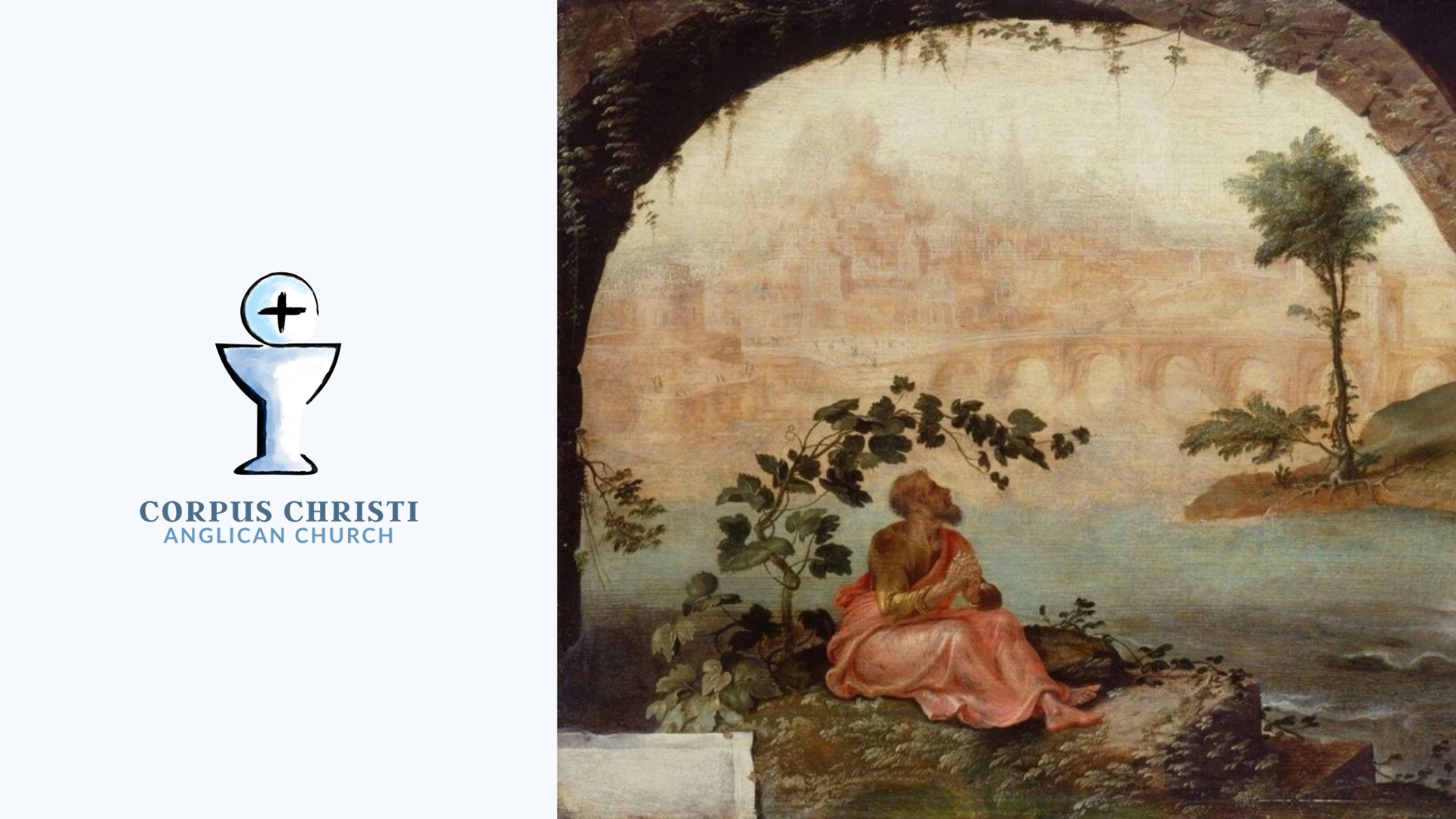
Proper 20: Do You Do Well to Be Angry?
‘Jonah Under His Gourd’ (1561), by Maarten van Heemskerck. ALAMY
Lections – Jonah 3:10–4:11 (NRSV); Psalm 145 or 145:14–21; Philippians 1:21–27; Matthew 20:1–16
Thank you, Fr Morgan, for the warm welcome. What a joy to worship with you here at Corpus Christi. Let me open by reading from an article posted online this past June:
‘On June 11, 2021, lobster diver Michael Packard found himself in the mouth of a humpback whale off the coast of Provincetown. Forty seconds later, he resurfaced.
“It was like I was being squeezed...I was just enveloped by his mouth, it was just hard, dark, and scary,” Mr. Packard recalled in the 2023 documentary about the experience, entitled: In the Whale: the Greatest Fish Story Ever Told. “This is it, this is how I’m gonna die in a whale’s mouth.” [spoiler] Mr. Packard survived the whale encounter…’ (https://vineyardgazette.com/news/2026/06/13/film-documents-true-whale-tale)
The documentary is supposed to release on streaming platforms. But I have a bone to pick with the title, because the greatest fish story ever told is Jonah.
This morning we’ll focus on Jonah’s closing chapter (3:10-4:11). By way of outline, we’ll review context and then ask three questions:
1) What does this reveal about God?
2) What does this reveal about Jonah?
3) What does this reveal about us?
Let’s start with context: a little refresher to a familiar story. Jonah was a prophet of Israel, but God told him to deliver a message of judgment to Ninevah.
Ninevah was located along the Tigris River in what is now northern Iraq. It was a booming metropolis (“3 days journey in breadth,” 3:3) and future capital of Assyria, Israel’s great nemesis. Jonah would have needed to travel east at least a month, deep into enemy territory.
We aren’t told what Ninevah did to incite God’s fierce anger (literally, “burning in his nostrils”), but all sin offends God. We do know Ninevah worshipped Ishtar, the goddess of sex and fertility on the one hand and war and violence on the other, so it’s not difficult to imagine.
What does Jonah do? He books passage to Tarshish, the most western point in the known world. Merchant vessels took 3 years round trip from Joppa to Tarshish.
You recall what happens next: the Lord sends a violent storm. Jonah tells the sailors to throw him overboard, but instead of drowning, Jonah is swallowed by a big fish—the catch-all Hebrew term for large sea creatures.
After 3 days and nights, the Lord answers Jonah’s prayer and the big fish vomits him onto land. When God again tells him to go, Jonah makes the 550 mile trek to Ninevah and delivers the message: “In 40 days, Ninevah will be overturned!”
His enemy does the unthinkable. They heed his warning. They seek to appease the Hebrew God by showing sorrow for their evil ways through fasting, wearing sackcloth, and sitting in ashes; these were not typical Assyrian religious practices. They repent—all of them—from the king to the animals. They fast. They mourn. They cease their violence. They pray.
That’s where today’s reading picks up.
So let’s ask our first question. 1) What does this reveal about God?
Jonah 3:10 says,
“When God saw what they did, how they turned from their evil ways, God changed his mind about the calamity that he had said he would bring upon them; and he did not do it.”
God changed his mind. That can also be translated God relented, repented, or turned. This is not because God is changeable, fickle, or made a mistake. Rather, this is in keeping with his mercy.
Turns out that’s why Jonah didn’t want to go to Ninevah in the first place. He didn’t want God to show mercy to the enemy. He says in 4:2,
“…for I knew that you are a gracious God and merciful, slow to anger, and abounding in steadfast love, and ready to relent from punishing.”
Listen to that again.
That’s who God is. That’s how God described himself to Moses in Ex 34:6-7. He is undeserved grace and mercy. He’s slow to anger—literally “long of nostrils.” There’s no end to his promise-keeping love. He’s ready to forgive all who turn to him.
God explains this to Jonah in 4:11,
“And should I not be concerned about Nineveh, that great city, in which there are more than a hundred and twenty thousand persons who do not know their right hand from their left, and also many animals?”
The verb for “be concerned” encompasses pity, compassion, benevolence and mercy—what God feels for every living thing in the city, both human and animal. “Not knowing their right hand from their left” is an idiom for such total darkness that you can’t even see your own hands—in this case, spiritual darkness.
God shows mercy to Ninevah, a pagan city and Israel’s enemy because he has compassion for them and they turn to him.
God also shows mercy to Jonah. Not only does God rescue him, but even after Jonah obeys, the Lord cares about the state of his heart—about his anger and lack of compassion. More on that in a moment.
Jonah’s closing chapter grants us a glimpse of this gracious and merciful God. It is the same grace and mercy fully revealed when Jesus died to forgive us and rose to give us eternal life. If Jonah is a peek behind the curtain, then the cross rips that curtain wide on a love so vast that forgiveness and new life are offered freely to all.
That’s good news for us, for our neighbors, for our enemies, for everyone.
Except Jonah didn’t think so. That brings us to our 2nd question: 2) What does this reveal about Jonah?
Let’s start with the positives; there aren’t many. Jonah does obey, in the end. He speaks truth about God’s nature. He doesn’t stop praying. He keeps talking to God, even when he’s angry. You gotta hand it to him for being honest.
3:10 says God’s mercy toward Ninevah
“…was very displeasing to Jonah, and he became angry.”
What an understatement. The good that God did for Ninevah was evil upon evil in Jonah’s eyes, and he burned with anger over it. His nostrils flared. He was so angry that he’d rather die. Have you ever been that angry?
Here’s the thing: God can handle our anger. God doesn’t condemn Jonah. He doesn’t command him to stop. Instead, he invites Jonah to reflect. Listen to 4:4,
‘And the Lord said, “Is it right for you to be angry?”’
Put another way: Do you do well to be angry? Does it do you good?
In the ‘90s, Abbott Laboratories wanted to test a new pharmaceutical designed to treat anger. Problem was, they couldn’t find volunteers for clinical trials. Apparently, few people with volatile tempers saw their anger as a problem. (Chicago Tribune, 28 July 2000).
Maybe Jonah’s anger was justified. Or maybe it was petty. The text doesn’t say. But it doesn’t matter. Jonah’s anger gets in the way of the good God wants for him.
So the Lord arranges an object lesson: a bush that grows overnight to provide shade. To Jonah the bush is delight upon delight. Until a worm withers the bush.
And again God invites Jonah to reflect on his anger, picking up at 4:9,
‘But God said to Jonah, “Is it right for you to be angry about the bush?” And he said, “Yes, angry enough to die.”’
Stubborn, stubborn Jonah, feasting on his anger like a “toothsome morsel” when, as Frederick Beuchner says, “the skeleton at the feast is you.”
Jonah’s anger burns so hot that it’s easy to overlook the hope in 4:10,
‘Then the Lord said, “You are concerned about the bush, for which you did not labor and which you did not grow…”’
Jonah’s concern for the bush is the same word as God’s concern for Ninevah. We already talked about that; it’s pity, compassion, mercy. We never see Jonah show pity to the bush. But God knows the heart. He calls out that sliver of compassion Jonah feels for the bush; he tugs those heartstrings. That right there, he says. That’s the same compassion that moves me, except so much greater.
I’d like to think that Jonah had an ‘aha’ moment, that the object lesson worked and he understood the antidote to anger is compassion. But we aren’t told. Jonah ends like a ‘choose your own adventure’ novel. We’re left with not what would Jonah do, but what will we do?
That brings us to our final point: 3) What does this reveal about us?
Ah. We never struggle with anger, do we? No, not faithful saints like us. Except we do. Or maybe it’s just me.
That’s one takeaway from Jonah. Keep it real. Keep it honest. We can talk to God about our anger. He can handle it.
Maybe we’re like Jonah or like those in the parable we read in Matthew 20:1-16, who begrudge the Lord’s generosity to others. Maybe we’re angry about trauma in our past or injustice in the present. Maybe we struggle with anger toward a parent or spouse or child or someone in the church. Maybe we’re angry with God.
In prayer, the Lord invites us to sit with his question: is it right for you to be angry? Do you do well to be angry?
Maybe? If we can be angry and not sin (Eph 4:26). But more often we experience James 1:20,
“…the anger of man does not produce the righteousness of God.”
Anger gets in the way of what God wants for us. It gets in the way of relationships, of building up the church. It gets in the way of our witness and sharing Jesus. It gets in the way of loving others.
God didn’t snap his finger and evaporate Jonah’s anger. Rather, he arranged circumstances to lead Jonah toward growth.
We have something far greater. We have the Holy Spirit working in us to make us like Jesus, yet the Spirit doesn’t operate in a vacuum. He works as we yield to him, and he uses our relationships in the Body of Christ, as we live and serve and love together—just as Paul encouraged in our reading from Philippians 1:21-27. The Spirit uses the church to produce in us the character of God—so that we too might become “long of nostrils,” that is slow to anger and moved by godly compassion.
You may have heard that Annie Dillard died this week. If you don’t know her, she was a brilliant author. Her early books are nuanced observations on creation and the mystery of the Creator. We can’t know the state of her soul at the end, but her later writings suggest anger and disillusionment separated her from church and rattled her trust in God. That saddens me.
Church, you’re here so you’ve already chosen a different path.
Can we keep being honest in prayer? Can we sit with the question: is it right for you to be angry? Let’s talk to God about anything that gets in the way of what he wants for us.
And then, can we yield to the Spirit as he files down our sharp edges? That may require confession, forgiveness, reconciliation—things the last few Sundays have addressed. It will certainly require growing together as church family, whether on retreat, in formation groups, or in sharing Jesus’ love with neighbors.
Before I close in prayer, will you take a moment to sit in silence with however the Hoy Spirit is speaking to you and to offer yourself back to him?
Almighty and eternal God, so draw our hearts to you, so guide our minds, so fill our imaginations, so control our wills, that we may be wholly yours, utterly dedicated to you; and then use us, we pray, as you will, and always to your glory and the welfare of your people; through our Lord and Savior Jesus Christ. Amen. [2019 BCP Collect 73. A Prayer of Self-Dedication – William Temple]

Proper 19: Do I Have to Forgive Others?
Introduction
Good morning friends. It is great to be with you. I’m Fr. Morgan Reed, the Vicar here at Corpus Christi Anglican Church. Today is our Fall Kickoff Day, which we do each year in early September to mark a welcome back after a long summer. There are a lot of great ways to plug into the life of the church in this season.
If your calendar is anything like mine, it is also a very full season. As the calendars get full, we have more commitments, more responsibilities, more deadlines, and more stress. And when there is stress, there are more disagreements: with coworkers, young children, teenagers, siblings, spouses, coaches, and teachers. When arguments are more frequent we also have more opportunity to pay attention to what is going in inside of us and our stories. Conflict has a way of shining light on the dark places we’d rather keep hidden. Our painful moments are profound moments that have the potential for two different outcomes: they might draw us into the deep and harmful waters of bitterness and resentment or they may draw us into a deeper knowledge of God’s grace and forgiveness. Today’s passage calls us to the latter, where forgiveness is a necessary mark of the community of the followers of Jesus.
Let me pray for us. “In the name of God, the Father, the Son, and the Holy Spirit. Amen. Lord, may the words of my mouth and the meditation of our hearts be always acceptable in your sight, O Lord, our rock, and our redeemer. Amen.”
The forgiveness God grants — vv 21-27
Last week we began a discussion about forgiveness from St. Matthew, chapter 18. Jesus had told the disciples as they follow him and form Messianic communities that pursue the life of the kingdom together, they are to confront one another when sin occurs. This was for the sake of reconciliation and restoring someone fully to their life with God and life with one another. People are more deeply connected when there is conflict, assertion, ownership, forgiveness, and repair — or reconciliation. St. Peter asks a question that logically follows Jesus’ exhortation. “Lord if someone sins against me, how often should I forgive him?” He believes he is being more than generous by saying perhaps he should forgive 7 times.
Jesus goes from generous to ridiculous as he says, “not seven times, but seventy times seven”. Some translations have seventy-seven whereas some have seventy times seven. That is not important. The point is you cannot keep a tally of how often you are to be open to the possibility of forgiveness. The other important point is that the phrase Jesus uses here has been used in one other important place in the Old Testament. When you read Genesis 4 in the LXX, Lamech, who is in the line of Cain, brags to his two wives poetically saying that he killed a man for wounding him. If Cain is avenged sevenfold, truly Lamech, using the same phrase, is avenged “seventy-sevenfold.” It is the same Greek words and construction as what Jesus says here and his point is this. Inasmuch as Lamech was bloodthirsty for power, control, violence and vengeance, so should the follower of Jesus equally be eager to forgive. The desire for vengeance made Lamech less human, but to forgive is to become fully human, free of the hatred and resentment we were not designed to carry.
This is a very bold statement that I’m sure raised a ton of objections and “whataboutisms” from the disciples. Jesus offers a parable to illustrate his point. There is a king who has slaves that are indebted to him for various amounts of money. The slave we are introduced to owes the king ten thousand talents. A talent would have likely been one person’s lifetime worth of wages and the point is that this slave owes more than anyone could possibly pay back even if they had multiple lifetimes. Despite his promise, this slave could never pay this back. The king knows this.
The point was to bring the servant to the place where he is utterly dependent on the king’s mercy, knowing full well that he has debt, and except for the king’s compassion, he will continue in enslavement to pay it off. The parable highlights our deep need for God’s compassion to rescue us. The king forgives him so that he is free to become fully who he is meant to be in his vocation and relationships. He is freed to learn the nature of compassion and bring it to others.
Anecdotally, I remember having a beer with someone after a hard season of conflict with someone else. And I remember saying to them “I know this is bad, but I really desire that this person fail.” This was my desire for vengeance over the way I’d been mistreated. Over time I had to work through how that person hurt me. It took several years, but I did relinquish my desire for vengeance and I could genuinely rejoice when that person succeeded because their life was no longer really bound up with mine. It was time, separation, and a lot of personal work that led me to the place where I could truly forgive and hand God my desire for vengeance. Forgive and forget isn’t a thing. I’ll never forget the harm and disappointment, but I can hate what happened while blessing God for his grace and presence in the midst of it or for what it taught me. We learn to forgive so that we can begin to heal.
The forgiveness we should extend — vv 28-35
The parable doesn’t end there. After having been forgiven, the freed slave goes to his colleague, another slave. This slave owes him a hundred denarii. It isn’t a small amount, perhaps about 3-4 months wages. Unlike the first slave, this is something that can be paid off. He asks for patience. This is a very reasonable amount of money to pay off. But completely ignoring the compassion shown to him, the freed slave puts him into debtor’s prison. Yes, this was legal to do, but not everything legal is ethical and just. This was, in fact, unjust and cruel, despite being legal. Having done this, the king who had originally forgiven the freed slave, now becomes angry, and orders that the freed slave be seized and not only taken in custody, but tortured. Jesus gives his purpose for sharing this extreme parable when he says, “So my heavenly Father will do to every one of you if you do not forgive your brother or sister from your heart.”
This is a hard saying, and it is not meant to give us any 1:1 correspondence to the theology of eternal punishment or reward. It is meant to impress on us the gravity of forgiveness as the defining characteristic of the people of God. No one who follows Jesus is exempt from the obligation to forgive, not for others’ sake, but for our own. It sounds simple enough, but we need nuance with what constitutes forgiveness because my fear is that people will say “you have to forgive” when what they actually mean is “Forget it and just get over it.” This is not real forgiveness, and it robs us of the opportunity to grow. I would encourage you to journal and work backwards. Not everything can be traced to a particular person or part of our story, but when we take note with the wise guidance of others then we begin to notice patterns. Perhaps it is a priest, therapist, spiritual director, or all three!
As patterns begin to emerge, we have to begin accepting grace and holding space for healing to take time. Someone once said that in your twenties you had the nagging sense that your parents preferred your sibling to you, but then in your 30s and 40s you discover they really did. The family systems, friendship experiences, church experiences, and other impactful relationships will shape your current relationships in ways that take time to unearth. Go slow. We cannot be rushed into forgiving someone if we haven’t fully named the impacts of harm. Certainly we can forgive along the way for what we have come to understand, but depending on the level of harm, it may take longer to bring the details out and forgiveness will come in stages.
In a group this large, I do not want to gloss over and bypass the real stories of hurt, trauma, abuse, neglect, and wounding. Please don’t hear me say that forgiving is as easy as flipping some mental switch or that you should forget parts of your story. Forgiveness does not mean that we allow abusive people back into our lives without them doing the deep and long work of repentance and amendment of life. Forgiveness does not mean that we refuse to speak ill of the dead. I had a relative that I loved who died, but lived their whole life through the lens of being a victim and it unfairly put me in the place of rescuer when I was a teenager. I had to process the ways that came out sideways in relationships in my 20s and 30s. We aren’t shaming those who harmed us, but we have to name what didn’t go right in order to heal. If forgiveness is our relinquishing the desire for vengeance, then we can delineate that from reconciliation, and restoration. They are different things with different processes and different lengths of time.
Forgiveness heals us because we are releasing the desire for harm and vengeance on others that we are not meant to hold. This is the mechanism by which our deep wounds become scars integrated into the story of grace in our lives that God continues to unfold. God’s forgiveness opened up the possibility of our reconciliation and restoration to life as God intended it to be. It’s up to us to grab hold of it. Similarly, forgiveness is the first step toward reconciliation, but it is not a guarantee. If the offender has a pattern of gaslighting, succumbing to their own unresolved trauma and maladaptive coping strategies, an inability to own what they’ve done wrong, etc., then reconciliation may not be possible. Reconciliation is beautiful, but false reconciliation is destructive, so go very slow and do not push reconciliation before the offender has honestly and deeply repented with authenticity. You might even think of that as causing an infection where otherwise there might have been healing.
This is why it is so important that the church become a community marked by truth-telling, forgiveness, and the blessing of scars. We forgive those who hurt us. We forgive ourselves for what we wished had turned out differently. We need relinquish our resentments for a life we feel is unfair. And although God is big enough to hold onto our rage, which is what the category of lament teaches us, we also need to begin relinquish our resentments against God for what we have come to resent about ourselves, our bodies, our lives, and our world.
Conclusion
God is bringing us into healing and new creation and it is often the profoundly difficult seasons that we point back to that have shaped us. One writer says this, “...We need to forgive those who have hurt us, forgive ourselves for our own failings, forgive life for not being fully fair, and forgive God for seemingly being so indifferent to our wounds. We need to do that before we die because ultimately there is only one moral imperative: not to die an angry, bitter person, but to die with a warm heart.”[1] May our church be a community which receives and lives out forgiveness and where the love of Christ is known and made known. This keeps us tender to one another as we grow in our gratitude for the great gift of mercy that we ourselves have received.
Let us pray:
Lord Jesus Christ, you said to your apostles, “Peace I give to you; my own peace I leave with you”: Regard not our sins, but the faith of your Church, and give to us the peace and unity of that heavenly city, where with the Father and the Holy Spirit you live and reign, now and for ever. Amen.
[1] Ronald Rollheiser, Sacred Fire: A Vision For A Deeper Human and Christian Maturity, 259.
Proper 18: Why Forgiveness is Hard
Introduction:
Good morning friends. I’m Fr. Morgan Reed, the Vicar here at Corpus Christi Anglican Church. This morning’s Gospel reading teaches us something very important about how God draws us into life with him. It is a passage that is quite easy to understand, but incredibly difficult to put into practice. It teaches that if we press into productive conflict in Christian community rather than run from it, reconciliation might occur and would become for us a grace in which God delivers us from our worldly attachments and brings us to a fuller maturity in the work of his kingdom.
Kids Sermon:
Kids, I’d love for you to join me up here. How many of you know what these are? These are some of the flowers from our meadow again. I have cut them so they won’t go to seed. What purpose do they serve now?
The longer I hold these flowers in the vase the less valuable they’ll become. If I don’t change the water, but I leave them in here for at least a month, what will happen? That’s right, the water will change colors, the flowers will wilt and the pedals will fall off. It will start to stink. Eventually, not only is it ugly, its smell will begin to permeate the whole room unless I get rid of it.
This isn’t a perfect analogy, but as you grow up, people will make you angry, you will do something to someone that you know you shouldn’t have done and it will make you feel guilty. These emotions are really useful. Anger tunes us in to something that should have gone differently. Guilt can tune us in to what is not safe. Sadness tunes us in to what is really important to us. But when it comes to relationships, when we are hurt, angry, and sad, we can hold the emotion too long so that it becomes resentment or a desire for someone else’s hurt. The longer we hold them, the less helpful the negative emotion becomes. Eventually it starts to permeate other areas of our life if we aren’t careful. Did you know that sometimes if your parents overreact and get really angry at you, it is often telling you about something that they are still angry about that has nothing to do with you? Parents, can I get an ‘Amen’?
Forgiveness happens when we refuse to hold onto our resentments and desire for someone else’s harm any longer. We allow God to hold us and to hold the ways we have felt hurt and sad and angry. God loves to take these things from us and redeem them. Today, Jesus is going to teach his followers how this community of the church is supposed to be a community marked by forgiveness. It is simple to say, but really hard to do. He gives us his help to do it. He forgives us the things we have done wrong when we ask for his help so that we can do the same for others.
Can you please pray with me? “Dear God...thank you ....for a fresh start....when we ask for your help...Help us ...to love others...like you love us...Amen.”
Love by desiring the best for one another (Matt 18)
We see God’s heart of love in the Old Testament today. God does not desire the death of sinners, but that they would turn and live.[1] Our Gospel and New Testament passages continue this theme today by exhorting us to pursue what is best for one another in love. In today’s passage, Jesus gives his disciples a method for thinking about restoration to communal life when someone has sinned against another and the community. The goal is never to ostracize, isolate, and condemn someone. The goal is someone’s healing and restoration. This is why in the very next passage, which we did not read today, Peter asks how many times we need to forgive someone. Certainly 7 should be good enough! But Jesus says, 70x7, in a hyperbolic way of saying that actually the extension of forgiveness from a person who has been forgiven much is actually a hallmark of following our Lord. We should not count the number of times we have forgiven someone. That is far too transactional and limiting.
When Jesus talks about the assembly of faith, it is not like large churches we think about today. In Jesus’ day, a synagogue, or assembly, was often small. The picture here is a cohort of Jesus followers probably no bigger than most of our Formation Groups. When someone in that group has caused an egregious offense, it is hard to hide it. And if someone in that group egregiously sins against another, it is hard to avoid the tension now present in this group. Everyone knows that something is wrong.
He tells them to go directly to the person who caused the offense. Notice how hard that is even though it is simple. It is easier to complain in a veiled way on facebook and create a group of people who will support me against this injustice. It is easer to talk to someone in the group and share my frustrations under the guise of desiring empathy or calling it a prayer request; but actually all I’m doing is indirectly communicating and triangulating. It is costly to have to face someone directly and tell them our experience of harm. This requires us to take stock of what happened in us so that we can name that accurately and name what someone else did that harmed us. If this falls on deaf ears, we are encouraged to bring someone else from the community. The ideal person is not just someone who will agree with us, but someone who will shoot straight and tell both of us hard truth equally. Finally he says to bring the whole community into this if the person who has caused harm refuses to change. The ideal scenario, according to God’s heart, as we have come to understand it, is that this person is drawn back to repentance and following the Lord. When this happens, the bonds of relationship grow deeper. In psychology they call it rupture and repair. Cycles of rupture and repair build stronger relationships. What keeps us from doing this though is how much it costs us. We risk losing a dear friend. I have had to do this and I have lost dear friends, and it is costly. If we have named the harm accurately, and begun to forgive them by relinquishing our resentment, we can approach them with God’s heart for healing. It’s the very way we hope to be approached.
A community marked by this deep authenticity and devotion is still filled with flawed people who will do harm to one another. The question is whether they will stay tender and compassionate. I realize that talking about forgiveness might feel tangential to the passage, but if we cannot forgive, then we run the risk of driving people away from community with our unexamined, harbored, resentments. And right now, as a culture, resentment and hatred are the currency of our social capital. We monetize it, politicize it, weaponize it even sometimes in the name of God. Heaven help us.
Jesus tells us to forgive one another as God forgives us.[2] This is something that characterizes the community of Jesus. Forgiveness opens us up to this amazing possibility that wrath, vengeance, and resentment are not ours to hold. In other words, forgiveness is mostly for our good.
Forgiveness, though, needs some nuance so that it is not weaponized to alleviate the conscience of offenders by papering over real problems. If we ignore real harm, the offender has no possibility of real reconciliation. Forgiveness is difficult because to do it well we have to name harm for what it is. Because of abuse, power differential, or other factors, it may not be wise or safe to confront the person who caused harm. Forgiveness does not mean re-platforming famous preachers or politicians who have caused egregious scandal, and it does not mean trusting an abusive family member again. Trust, responsibility, and forgiveness are not the same.
Jesus’ scenario is not speaking with that kind of nuance. His scenario here is about a two good-willed, Jesus-following people in a community who have a dispute. For example, maybe during the after service prayer time someone shares something with a prayer minister about something deeply personal. Then the prayer minister says something to the person needing prayer that isn’t appropriate. Perhaps they begin to give a bunch of advice rather than actually pray. The person coming for prayer will feel appropriate feelings of shame and anger, perhaps even betrayal. Rather than sit with that resentment, Jesus is giving us permission to say to that person, “what you said felt very out of bounds and I felt deeply hurt.” In an ideal scenario this prayer minister would humbly receive that, be able to speak back the ways this caused harm, and apologize. The person naming the harm has given this person a gift of grace in their boldness and honesty. The person receiving it needs to die to themselves, ask for the Lord’s grace, process it, and then apologize. I’m not exempt. I hurt people too, and in many ways, I am called to exemplify receiving critique, processing it and asking where the Lord is healing me. I remember in another church a long time ago I told someone they couldn’t host a small group because they lived so far away. They were deeply hurt and I didn’t know how deep the offense was that I caused. As a result, I went to their house and sat in their living room with them for two hours, listened to why this was so deeply hurtful, acknowledged how deep the pain was that I’d caused, and genuinely apologized. We were reconciled over time as they learned that I was for their good, but it did take time.
Conclusion:
Our passages today show us a beautiful truth about God’s heart for humanity. He does not long for our destruction, but for our repentance, renewal, and perfect communion. As we live into the grace and forgiveness we have in Christ, we are invited into a courageous and bold witness to the fact that Jesus has good things not only for us, but for others as well. We want what is ultimately good for our brothers and sisters. We are here to bless others and call them into the beauty that Jesus has for them. We grow when we learn to apologize well for the wrongs we’ve done, make restitution, and amend our lives. To long for the good of others we need to learn and practice forgiveness and get good and paying attention to anger, sorrow, and guilt, while at the same time learning to relinquish our resentments and desire for vengeance. This will give us eyes to begin to see ourselves, others, and the world around us as God does.
Let us pray:
O Lord God, grant your people grace to withstand the temptations of the world, the flesh, and the devil, and with pure hearts and minds to follow you, the only God; through Jesus Christ our Lord, who lives and reigns with you and the Holy Spirit, one God, now and for ever. Amen.
[1] Ezekiel 33:11
[2] Matthew 6:12

Proper 17: How To Avoid Becoming the Voice of Satan
Introduction
Good morning friends. It is wonderful to see you this morning. Last week we heard about St. Peter’s confession. Today the pendulum swings and he gets called Satan by Jesus. What an emotional rollercoaster! It happens because Jesus teaches something that upsets Peter’s deeply held convictions and expectations and this reveals a misalignment in Peter about his will and God’s will; ultimately this becomes an invitation into a deeper relationship with his Lord. I want to invite the kids down now to talk more about it.
Kids sermon
How many of you have worked with clay before? What have you made? As you’re working with the clay, you might have an image in your mind of how something should look, but then as you begin to work with it, it’s not looking like the image in your head. What do you do?
These seeming imperfections are an opportunity to ask what we want it to look like and what we need to do to get it there. Once we get it as we would like it to be, then you have to let it air dry before painting it. After you paint it, then you can fire it in the kiln. Whatever you’ve done with the wet clay will become permanent once it’s fired in the kiln.
Today St. Peter is being reminded that his ideas about Jesus have not yet been fired in the kiln. He himself, and his ideas about who the Messiah should be, are like moldable clay being pressed on, worked, and reshaped. It is easy as you grow older to become crusty old clay, but St. Peter reminds us to stay moldable. He is going to get a stern rebuke from Jesus, but this isn’t meant to shame or isolate him; it is meant to invite him into deeper formation and life with God. You kids are very moldable. I love seeing you wonder at God’s world. We adults have a lot to learn from you about staying moldable. Today’s passage encourages us to take in the lessons that Jesus is teaching us, to be honest with God about our expectations and where they might not be met, and then look for the ways that Jesus wants to help us grow in a deeper vision for who he is.
Would you please pray with me: “Dear God...thank you...for loving us...when things don’t go our way...we trust you...make us more like Jesus...amen.”
1. The move from triumph to unmet expectations (vv 21-22)
Last week we looked at the Gospel passage just before this where St. Peter and the disciples are up in Caesarea Philippi with Jesus. He asks them who they say he is and St. Peter, on behalf of the disciples declares that Jesus is Messiah. Jesus declares Peter to be the rock on which he’ll build his community, the church. That confession is a pivotal point in St. Matthew’s Gospel because it is here we begin the journey to Jerusalem. “Jesus began to show his disciples that he must go to Jerusalem and undergo great sufferings at the hands of the elders, chief priests, and scribes, and be killed and on the third day be raised.”[1] You and I are very familiar with the story of Jesus’ crucifixion and resurrection, but this would not have been familiar to them.
The disciples have seen him proclaim the kingdom and heal people. They expect a king to rule, and reign, to bring God’s justice. They don’t expect the deep paradox that the way to glory is through death on a cross. Passages like Psalms 22 and 66 do hint that the coming Messiah will suffer, but people have not systematically put together how this is possible. The Judaism of Jesus’ day was reconciling if there would be one messiah who would accomplish the suffering for the people and the conquering, or if there might even be two Messiahs: משׁיח בן יושׂפ who would suffer and משׁיח בן דוד who would reign.[2] To the disciples, it is incomprehensible still that Jesus’ reign would come to this.
Because Peter was representing the mind of the other apostles earlier, I think it is likely he is here too. As the spokesman he got all the encouragement earlier, but that is risky because now he will be taking the fall for others’ thoughts. He pulls Jesus aside to talk with him in private. He says to Jesus “God forbid it Lord, this should never happen to you.”[3] Now it is understandable why he says this, but that doesn’t make it right. He has too small of a vision for what Jesus is going to do and the challenging of his assumptions is going to expand his imagination not just for a greater vision of who Jesus is, but what following him looks like.
2. Misalignment: When the foundation becomes a stumbling block (vv. 23) — Bring in Jeremiah
Because Peter is acting as a spokesman for the disciples, Jesus rebuffs him publicly in front of the disciples, despite Peter’s attempt to pull him aside. Jesus says to him, “Get behind me Satan!” This reminds us of Jesus’ third test in the wilderness where Satan offered him the glories of the earthly kingdoms if he would skip over the suffering involved. Peter’s voice became the voice of Satan, not because he worshiped Satan, but because he allowed his mind and heart to be caught up in human and earthly affairs rather than keeping heaven’s perspective.
Jesus calls him a stumbling block and the irony should not be lost on us that the rock is now a rock of stumbling. This is a good warning to us of why we need St. Paul’s reminder in Romans 12 this morning not to be conformed to this world, but to be transformed by the renewing of our minds, so that we might discern what the will of God is. It doesn’t say that the will of God is easy to imagine or comprehend, the path of least resistance, or even logically deduced; it does, however, say that God’s will is good, acceptable, and perfect.
We don’t become the voice of Satan to one another because we long to disobey God or follow something evil. We become the voice of Satan often because we’re spiritually negligent, held down by unhealthy patterns of trauma and family systems that go unexamined, have a tight grip and high control grid for how our world should be and how others should exist be in our world; we try to keep ourselves safe, but actually we are perceiving God’s world incorrectly, and often times this results in self-condemnation, unwittingly cursing others, immaturity, and not seeing the world as God does. This happens in friendship, in marriage, at work, in relationships within the church. It is endemic to humanity because we have an enemy who seeks to keep us from becoming fully human by following our Lord. The good news for Peter and for us is that stones of stumbling can get picked up again and by the grace of God put back into the walls of the temple of the people of God.
I’ll give an example. I’m actually motivated to achieve when people tell me I cannot do something. My attitude is “forget you...I’ll show you” because I do not like to fail and I refuse to look incompetent. That has a good side and shadow side. Sometimes, without being aware of it I take on other’s failures to achieve as my own, because if they achieve, then I look competent. It is under the surface whether I’m leading a staff team or coaching baseball. When someone isn’t doing well I am dysregulated and as a result I will likely overreact to someone’s failures and rob them of the opportunity to learn. I have had to work on the phrase “tell me what you learned” as a way to regulate myself so that I can bless them with the voice of God rather than curse them with the voice of Satan and try to control outcomes so that I make myself feel better. We all have things like this we need to work on. Where do we curse because we are trying to control our world? This is an opportunity for repentance and the renewing of our minds.
Suffering and crises do not mean that we are outside of God’s will. In fact these might just be the pivotal points of growth where God will shape our imagination for His kingdom. We do often miss the kingdom because of our story, proclivities, or negligence. God’s grace is available to deepen us in relationship with him. Glory will come, but it is through the suffering of the cross. The community that Jesus was building on the rock is one that is marked by bearing the cross.
There is something communal and cooperative to our salvation, especially in Romans 12. As you understand your gifts and proclivities, do the hard work of repentance and transformation, you are uniquely equipped to build up others in love. This involves considering others to be a part of your life, belonging one to another, when it is inconvenient and hard. And yet we need one another. This is what bearing our cross means in the kind of community that St. Paul envisions in Romans 12.
Conclusion:
Our moments of suffering and pain are the pivotal moments that invite us to deeper growth. Peter could have walked away angry and learned nothing, but grown deeper in bitterness. Instead he received Jesus’ grace and learned more about the kingdom. I heard an interview once where someone asked why people get more bitter when they get older and the speaker said “I don’t understand. People don’t get bitter when they get older. People get bitter, then they just get older.” In other words, age amplifies our current formation. Are we renewing our minds through repentance and receiving grace?
The community that Jesus began continued through the work of the apostles. It is a community marked by grace, forgiveness, and restoration. We are called to the daily renewal of our minds, to attune our thinking to the will of God. And we know that we will fail at times, so we when do, we need to accept God’s grace for ourselves, and relinquish our resentments to prefer forgiveness as we name things accurately and trust Jesus to heal the wounds. It is through the pivotal moments of suffering in faithfulness that we will come to a deeper knowledge of Jesus and his kingdom.
Let us pray:
O Lord, we pray that your grace may always precede and follow after us, that we may continually be given to good works; through Jesus Christ our Lord, who lives and reigns with you and the Holy Spirit, one God, now and for ever. Amen
[1] Matt 16:21
[2] Cf. 4Q372, Talmud Sanhedrin 98a-99a.
[3] v 22.

Proper 16: The Church, Stewards of Paradise
Introduction
Good morning dear friends. It is great to be with you all on this final day of summer vacation. Many of you will be entering new rhythms and a new reality tomorrow. You will learn new things, some things will be really fun and some will be really challenging, but in it all, Jesus goes with you. The disciples in our Gospel passage today were being taught something very important that would carry them through the rest of Jesus’ ministry, even when things did not go as they thought they would. The disciples will confess Jesus as the Messiah and learn about what he is building. They’ll also discover that their call is to so know heaven’s reality, that they steward its resources for building up the community where heaven is supposed to be experienced, the church. This is our call as well, which we’ll look at together. And now I want to invite the kids up...
Kids sermon
Good morning friends. Can anyone tell me what a key is for? Can I just shove any key in any lock? What happens? Who wants to guess what all these keys are for?
What do keys represent? For example, my keys can get me into the church office which provides me a place to prepare sermons, gather supplies for cookouts, hear confessions, etc. A key can open the prayer box, where I read someone’s prayer request and follow up with them to see how they’re doing. My key opens my house, where I sleep, cook, eat, workout, and have family time. Keys unlock opportunities for heaven’s realities. Have any of you been part of a house blessing? What do we do for those?
A house blessing reminds us that the miraculous, transformative work of the kingdom of heaven most often happens in the very mundane. We just need to attune our imagination to it. In Jesus, you and I have been given keys to see God’s kingdom come on earth as it is in heaven. When we follow Jesus and trust him, we are invited to see God’s work happen in our ordinary days, but we need to be looking for it. We can do this by asking him for help and for giving him thanks for the good gifts he gives us. And as we see Jesus at work, we can share that gift with others. That is our responsibility because we hold the keys. Would you please pray with me?
“Dear God...thank you...for your work...in our lives...through Jesus... You are with us...and you love us...Help us...as we start new rhythms this week...amen.”
13-15 Jesus sets them up with what they need for what’s coming up
The story we get to today is a pivotal one in the story of Matthew. Jesus has had a lot of public ministry in the north, in Galilee. Today’s passage takes him and the disciples away from the crowds, away from the noise, because Jesus has a very important thing he wants to share with them. Jesus, in St. Matthew’s Gospel, never comes out and says publicly, “hi everyone, it’s me...The Messiah”. A self-declaration would make him public enemy number one of the secular and religious authorities.
And yet, after this story, in St. Matthew’s Gospel, Jesus begins the journey toward Jerusalem. The disciples will need to know who Jesus is when things don’t turn out as they expected. Jesus knows this, and he is preparing them with what they need for what is to come.
Jesus and his disciples get to a mountain up in Caesarea Philippi and Jesus asks them, “Who do people say that I am?” Some thought he was a prophet: John the Baptist, Elijah, or Jeremiah. But Jesus’ ministry was more than prophetic. Jesus will expect his disciples to have a better answer, even though they may not know the full implication of their answer.
Pay attention to the moments where we are faced with the question of who Jesus is. These are often moments of preparation. People have all kinds of expectations on Jesus. Here are some examples: “if we do things the right way, then he won’t let us fail.” “Jesus is a warrior” “Jesus said not to make any judgments on people”. Jesus will be no one’s political prop or a puppet for one’s own internal authority. The reality is much more nuanced. Jesus is Lord and creator and good. We cannot make good policy without centering the image of God in all people. We have to make judgments about just and unjust, good and harmful. As men and women are both made equally in God’s image we cannot honor manhood without equally honoring womanhood. Jesus will frustrate all of our incomplete and culturally constructed images of him. This is why we must read with the whole of tradition across time and geography. The disciples of Jesus have to have a better and more nuanced answer than the crowds. We must have a higher view of Jesus than any subculture’s caricature.
16-17 Peter’s confession is the confession of the church
Peter’s confession should be ours as well. He is a spokesman for the disciples, and when asked who they think he is, he says, “You are the Messiah, the Son of God.” This is what Jesus wants them to understand while they’re on the mountain because they are about to see some things that will shake all of their expectations for what the Messiah will be. This brings together the language of 2 Samuel 7:14 with the anointing of David as king with the enthronement language of Psalm 2:7. This is language of adoption and sonship, which was very commonly used with divine enthronement. Caesar, Herod, and the temple authorities better watch their backs.
It is a bold declaration and Jesus tells Peter that this truth would not have been revealed to him without the work of God. Heaven is beginning to break into the life of the disciples. Isaiah 51 is what we read for the Old Testament today and it was written to the exiles in Babylon. God says that he will console Zion in this time where his people have been wrecked because of sin and idolatry, taken into what feels like the undoing of creation in chaos once again. What seems like wastelands will become again like the garden of Eden. The arid valleys that are dusty and unproductive will become once again like the garden of the Lord.[1] Peter’s confession that Jesus is the Christ means that God’s people look forward to paradise where they are abundantly supplied, where creation is ordered for their well-being, and where communion with God is unobstructed. The whole earth will become for them a temple, a thin place where heaven and earth meet.
18-20 Peter leads the way for the church to bring heaven to earth
Jesus is not going to build an actual temple or literal city, but a community whose allegiance is to Jesus the Messiah, a community that becomes the place where heaven is brought to bear upon earth. Peter says that Jesus is the Messiah, Jesus functionally says to Peter, “Yes, I am Messiah, and you, my friend are the rock; the rock on which I will build this community.” This historically is played out in the history of the church. St. Peter is the leader among the disciples and when we read the book of Acts. He is there to ratify the movements of the Holy Spirit in building the church, including the Samaritans and the Gentiles. He has a prominent place in the church of Jerusalem until James eventually leads.
The gates of Hades would not prevail against this community. This is a poetic way of referring to death itself, which is how it’s used in Isa 38:10. Death will not prevail or stop God’s work through the Messiah or through his disciples. And Peter, in this context is said to bind and loose. The imagery is not of Peter standing at the gates of heaven and unlocking it for people, contrary to popular imagination. The imagery is one of stewardship, as though St. Peter is like a a chief administrator who unlocks granaries and storehouses and locks them based on the need of those who come. This continues to be the church’s task after St. Peter. We give to others the healing we ourselves have received. This is the logic of the confession liturgy. The priest is merely an imperfect agent of the church.
I will say that hearing confessions is one of my favorite parts of ministry. As I sit with someone and we ask questions together about what the Lord is doing and why certain things have come to light as particular roadblocks and places of stumbling, it is the beautiful time where the church helps someone dig deeper into their stories and proclivities, help shape someone’s faith through wise counsel and historic rhythms, and proclaim the absolution that Jesus offers. It is an earthly moment of heavenly reality.
Conclusion:
We all carry with us the apostolic call to become the kind of community that reflects the heavenly reality of the church. This means that we live in allegiance to Christ and seek Christ’s peace and welfare for others. The confession made at Caesarea Philippi is the confession of the church, the agent of God’s re-creating the world; the people of God are becoming the place where heaven is restoring earth. You and I get to be part of the process of bringing paradise and refreshment, and the unrestrained communion with God that creation is groaning for. Consider the week ahead, the new people you’ll meet, the new rhythms that will be part of your calendar, and let’s just take a moment in silence to ask the Lord this question: Lord, where do I need your help this week and who do I know that needs your help too?” I’ll close our silence with a prayer in just a moment.
Let us pray:
Gracious Father, we pray for your holy Catholic Church. Fill it with all truth, in all truth with all peace. Where it is corrupt, purify it; where it is in error, direct it; where in anything it is amiss, reform it. Where it is right, strengthen it; where it is in want, provide for it; where it is divided, reunite it; for the sake of Jesus Christ your Son our Savior. Amen.
[1] Isaiah 51:1-3.

Proper 15: Derailments and the Path to Grace
Introduction
Good morning friends. It is wonderful to be with you. I’m Fr. Morgan Reed, the Vicar here at Corpus Christi Anglican Church. In our passage today, Jesus has an encounter with a Gentile woman. The way Jesus talks to this woman sounds potentially rude, possibly even racist, but it is neither. His intent was not to exclude the Canaanite woman, but to draw her into deeper life in the kingdom of God.
Kids sermon
I want to invite the kids up with me for our kids sermon.
Anyone here ever heard of grafting? What is it?
I happen to have everything we are going to need for it here. [Show them how to do it]. It doesn’t work with every tree, but it will work with trees of the same family, like stone fruits: cherries, apricots, plums, etc...anything with a pit. Someone actually created a tree of 40 fruits in New York to preserve some older and more rare varietals of stone fruit that had been grown in North America before we depended on supermarkets so much.[1]
When you graft things in, nutrients are taken from the roots of the original tree, come up through the original stump, and then produce new fruit. St. Paul talks about this today in our Romans passage. God’s people had by and large been rejecting Jesus as the Messiah and the result of this was that God was cutting off the original branches in order to graft in new branches, nourished by the same root system. We get to hear about that today in our gospel passage. The good news for us is that God saved Israel in order to save all the nations and you and I are a part of that work. Through faith in Jesus, we are grafted in and given life to live out God’s love for the good of the world around us. You and I are a part of what God is doing and he loves you.
Please pray with me: “Dear God...thank you...for loving us...and for Jesus...who died and rose again...to give us new life...thank you...for making us...into a new people...amen.”
• Jesus is interrupted during his retreat — Interruptions are the ministry (21-23)
Our passage begins with Jesus leaving the place where he was to go to the district of Tyre and Sidon. The Gentile regions were not on his calendar for preaching. He is going away to be with his disciples: away from the crowds and away from the opposition. The time of rest comes to an end when a distraught woman comes to him and his disciples.
The text says she is a Canaanite. Canaanite is not an ethnic term in Jesus’ day. Canaanite is an historic and theological identity as an enemy of God’s people. And yet, this woman, when something deeply troubling happens in her life, has the internal sense that she can come to this Jewish Messiah.
Her daughter is tormented by a demon, she is beside herself with fear, and she knows enough about Judaism to recognize Jesus could help. She calls out, “Have mercy on me, Lord, Son of David...” She seems to have come to understood that if this Judean Messiah comes, then his deliverance means mercy for the nations. A Canaanite woman receiving the mercy of God would present a compelling case that God’s kingdom for his people would be for the good of all people. It would be a kingdom entered into by faith and not merely family lineage.
But the strange thing is, in this case, her pleas are met with silence from Jesus and annoyance by the disciples. He doesn’t answer her at all. I see the silence of Jesus here not rejection, but an invitation to clarify her longing. The Canaanite woman reminds me not to pass too quickly over what I might perceive as difficult distractions, inconveniences, and annoyances. The disciples may have perceived her as derailing them from God’s real work, but she and her daughter were God’s work. The things that might feel like a distraction from the work, if we would pay attention to God’s work in them, will invite us to a deeper vision of the kingdom of God.
• Israel’s salvation was meant to be for the good of the world (24-28)
Jesus is silent and the disciples are annoyed. They believe he can heal, but they don’t believe this person is worth their time. This will become an opportunity for a mercy that would stretch their imaginations for what the kingdom of God would be. Israel’s salvation was supposed to mean the salvation of the nations around them. This was the vision of the Old Testament as well. Isaiah 56, which we read today, speaks of foreigners, “And the foreigners who join themselves to the LORD, to minister to him, to love the name of the LORD, and to be his servants, all who keep the sabbath, and do not profane it, and hold fast my covenant—these I will bring to my holy mountain and make them joyful in my house of prayer...”[2]
St. Paul in our passage in Romans 11 talks about a tree that natural branches were broken off of and wild olives were grafted in. St. Paul’s warning to the Romans is that the natural branches, the Jewish people, had seemingly rejected the Messiah; not all of them of course, but its not like a majority were following Jesus. And God is then said to have broken off the natural branches to graft in the Gentiles who would now be nourished by the same trunk and root system: one tree, one people, to carry on the call to Israel in this new covenant. The Old Covenant must be held in honor as something that nourishes and flows into the New Covenant, it is not a dismantling of the old covenant for a new gentile religion.
Jesus knows that salvation will come to the Gentiles from his Scriptures, and I think he is drawing this reality out of the situation with some pointed statements for the woman. He says “I was sent only to the lost sheep of the house of Israel.” His statement ratchets up the intensity and she kneels before him and says “Lord, help me.” He says, “It is not fair to take the children’s food and throw it to the dogs.” This is not at all flattering, in fact it feels quite cruel, but the point isn’t to insult or shame her, it is to test her grasp of what her ask really involves.
It kind of reminds me of a coach who might say “Do you want to win today?” And the team says “yes”. Then he says “I don’t believe you.” So they yell “yes” even louder. Then the coach might say “Go run a mile, get back here and do 20 push ups and show me how much you want to win.” So the team does it. He isn’t disbelieving them or discouraging them, he is teasing out the intensity of their longing — Do they know what they are asking for and what it will take to get there? The test proves to the suppliant how much they want what they’re asking for.
The woman cleverly turns Jesus’ statement on its head and says that even the dogs eat crumbs that fall from the master’s table.[3] She understands the implication that the Jews are the children of God and that the Gentiles are not. And yet, she has the humility to say that she too needs nourished by the hand of the God of the Jews. She articulates the fact that the deliverance of Israel was meant for the deliverance of all. This woman has come with a good desire, faith, and the resolve to wrestle with God. And the result is that Jesus says, “Woman, great is your faith! Let it be done as you wish.” And the daughter was healed instantly.[4] The qualifier of great faith is said of no one else by Jesus except this woman. Perhaps this is why one writer in the church’s history calls her the mother of the Gentiles.[5]
Good desire, faith, and a resolve to wrestle with God over his promises and your reality is great faith. I’m grateful that this was included for us as a prayer in our Eucharist liturgy: “We are not worthy so much as to gather up the crumbs under your table, but you are the same Lord whose character is always to have mercy.” One person told me once that they hated this part and they refused to say it because it sounded like groveling; however, remember the context of the woman’s words. What she confesses is that she is in need of God’s merciful help and wrestles with God in dialogue because the things he promised and the things she’s experiencing are not aligned. We too come to God with the desire for goodness, faith in God’s work, and the disposition to wrestle with God’s promises and our current realities. The prayer draws out the intensity of our longing rather than making us cower in groveling shame. As a community, we need to continue to welcome one another into our lives, showing hospitality and love to the end that we grow by wrestling with God with one another. Who feels outside to you this morning? And what would it look like to open our lives to those who feel other and discover the mystery of the kingdom? Jesus’ disposition is invitation, even if on the surface today it felt like rejection.
Conclusion:
Today’s passages remind us that God is saving a people for the good of others. The things that might feel like frustrating distractions and bumps on the path might just be the very things that God uses to bring about his kingdom work if we are attentive to them. This passage reminds us that as we pay attention to the kingdom, we come like this mother of the Gentiles with a faith that produces good for others, a great faith that is persistent and wrestles, and a faith that humbly sees our need for God’s help.
Let us pray:
O God of unchangeable power and eternal light: Look favorably on your whole Church, that wonderful and sacred mystery; by the effectual working of your providence, carry out in tranquility the plan of salvation; let the whole world see and know that things which were cast down are being raised up, and things which had grown old are being made new, and that all things are being brought to their perfection by him through whom all things were made, your Son Jesus Christ our Lord; who lives and reigns with you, in the unity of the Holy Spirit, one God, for ever and ever. Amen.
[1] https://www.samvanaken.com/tree-of-40-fruit-2
[2] Isa 56:6-7.
[3] Matthew 15:27
[4] Matthew 15:28
[5] Epiphanius the Latin: Manlio Simonetti, ed., Matthew 14-28 (Ancient Christian Commentary on Scripture; Downers Grove, IL: IVP, 2002), 27.

Proper 14: God Sits Enthroned Over the Chaos
Intro:
Good morning friends. It is so great to be back with you. It was good to have a time to rest up and recuperate. I’m so glad that you got to meet my friends, Fr. David Griffin, two weeks ago, and Fr. TJ Ono, last week. Thank you for welcoming them. They really enjoyed being with you. This week I wanted to look at our Psalm passage together. Psalm 29, which we prayed together today, presents God’s kingship as terrifying thunderstorm and beautiful comfort. God will not let his work and fame be challenged by any lesser idea, god, or person who promises salvation. He will ultimately subdue chaos, and give his people the strength and peace they need for transform and to see His Kingdom come. As we look at Psalm 29, I want to invite the kids to come up.
Kids sermon:
How many of you have drink coasters in your home? Why do you have them?
When Ashley and I were first married we lived in Chicago in a little apartment. As a housewarming gift we received some coffee coasters from a local Christian bookstore. They had this black, glossy finish, with words like “faith”, “hope”, “love”, etc. The funny thing is, the more we put hot cups on them, the more scratched up they got. The damage continued as the plastic coating on the top began to start peeling. I scraped at one of them a bit more and realized that the veneer of faith, hope, and love, was only held on there with the plastic seal. I scraped it off to reveal a beautiful painted chicken underneath. Ha! Once this seal came off it never got scratched up again. Someone had taken a perfectly good coffee coaster and cheaply pasted a christian veneer on the outside. The hot cup’s heat would not be outdone by the plastic coating.
Today’s Psalm portrays God as a thunderstorm, destroying all kinds of things that people are tempted to worship or the things their false gods needed to use to survive: cheap finishes thrown onto what we really need. God’s voice shows up in this poem 7 times like peals of thunder and the idea is that God is never ultimately unresponsive. He will make his voice known and his plan will be accomplished. Sometimes we get off track and go down the wrong path because we love the wrong things too much, or someone tells us lies about ourselves or the world around us and we believe it. And because of these things we find ourselves overwhelmed by the chaos of bad outcomes even with all our good intentions, the weight of lies we have to keep up and keep track of, and the discouragement we might feel when we try to become good and virtuous when unhealthy people around us might call it ignorant, uncool, or shameful. But despite the chaos, God shows up and reminds us that he loves us, and the pain of getting rid of the wrong things will give way to God producing good things in us. Ultimately, he is conquering the chaos of sin and death in this world and in our lives. My constant hot cups of coffee would burn away the veneer of “nice Christian sayings” to reveal something more stable, good, and lasting. God too will show up, and when he does, what is ultimately good and beautiful will be made known. Would you please pray with me:
“Dear God...when we are scared...we can trust in you...take away the things...we trust in...that are not...worthy of you...and make us more like Jesus...Thank you...for your love for us...Amen.”
1. God will be over all and in all (1-9)
In Psalm 28, the Psalmist demanded that God not remain silent. Psalm 29 answers back with the voice of YHWH showing up 7 times. [Psalm 28:1]. The BCP and other english versions tone down what’s happening by translating the addressees as “the mighty” or “mighty ones”; however, these are deities, literally sons of the gods! This phrase shows up in Scripture in a number of places to refer to deities, dead heroes, and other things that are supernatural. [This comes from the language of the divine council of YHWH. See Gen 6:2,4; Job 1:6; 2:2; Job 38:7; Ps 89:7; Deut 32:8.] Israel would eventually come to be truly monotheistic, but at least in this point in its history, the people are at best, henotheistic, believing that YHWH is the supreme God, but that other gods like Amun, Hadad, and Baal still exist. This is precisely why the prophets rise up all the time to tell them to put away their idols!
The themes of this Psalm are set against the backdrop the theology of the Baal myths in popular Ugaritic, or Canaanite, theology: Baal was the Canaanite storm god who rides on the clouds, who clutches lightning. It is Baal that is worshiped in order to bring rain and given thanks when the rain comes for the flourishing of the harvest. In Psalm 29, Baal is just another worshiper in YHWH’s heavenly worship, “Ascribe to YHWH, you sons of gods, ascribe to YHWH glory and strength. Ascribe to YHWH the glory that is due his name. Bow down to YHWH in holy splendor.” This Psalm invites us into the both the beauty and the holiness of YHWH as king. The world that God made has been filled with sin and destruction, but God will restore it and God’s people would do well to pay attention to God’s ongoing work of re-creation both in worship and in the phenomena of nature.
God was victorious over the floodwaters of primeval chaos in the creation of the world and Psalm 29 invites us to reimagine this victory through the imagery of a thunderstorm. The thunderstorm sweeps in from the Mediterranean over northern Canaan. God will not remain silent. His voice is referred to seven times in this poem, like thunder-peals showing God’s absolute power and presence as an answer to the supposed silence. The voice breaks the cedars of Lebanon. These trees were needed by the gods to build the houses in which they dwell. YHWH is unconcerned about this. The lightning scares off the animals and makes the mountains quake. The storm moves from northern Canaan south into the wilderness. God’s power rules even over the vast wastelands where demons dwell, lands which long ago forgot humanity and humanity long ago left it behind. In the places long forgotten where demons seem to dwell and retain power, God is at work to subdue the chaos, if we would listen for his voice.
This passage challenges us to pay attention to the work of God in worship and in creation. What gets in the way of discovering the kingdom is often our own busyness, the false narratives we hold to in order to sustain that busyness, and the gods of money and power that we often unwittingly worship. One time I was on a hike with Cole and it was the time of Spring where the Virginia peepers were croaking incessantly. We heard them, but as we kept moving, the sound went away. They were still there, but they were hiding. Eventually we stopped walking and just listened. There they were again. We stopped and paid attention and their loud peeps reminded us that they were still alive and strong. God is the one who subdues the anti-creation forces that war against us. Jesus did it in his death and resurrection, and has given the Spirit to continue the kingdom work which destroys our false pretenses, wayward affections, and the gods we’ve created. His glorious thundering presence isn’t one ultimately of destruction, but a life-giving force of goodness, subduing that which is set against our healing. The Spirit is at work, we don’t have to manifest it or create it, we just have to pay attention to it.
2. God is kind and his goal is to grant strength and peace to his people.
The final thunder-peal of verse 9 moves us back to God’s throne-room where all cry “Glory”! God’s kingship has a goal, which is that his strength and peace are present and put on display in his people.
A good question to sit with is this “Today, or in this season of our life, what causes us the most emotional and spiritual turbulence?” Is this the anxiety about a new grade or new school in a few weeks? Is this the death of a loved one or a chronic health issue? Is this an unresolvable conflict in a relationship or the painful disappointment or realizing our life is half over and we wished we’d accomplished more? Is this the worrying dehumanization we see in political discourse or the current affairs we are reading in the news? There are many so-called solutions and false gods we might be tempted to run to for help, but what we will discover in them is actually chaos; they are anti-creation, and something that makes us less human as image-bearers of the divine king.
The Gospel passage today gives us an incarnate picture of this God. Peter walks out onto the water at the command of Jesus in a storm. [Matt 14:22-23]. Jesus is unaffected by the turbulence and chaos and Peter joins him. Peter takes his sight off Jesus for a moment and starts to sink. Jesus is undeterred by the storm on the sea or by the storm inside Peter. Instead, he reaches down in compassion and lifts him up out of the chaos. He reminds Peter of his lack of faith and asks why he doubted, but this does not deter him from rescue. Peter is lifted out of the chaos and when they get into the boat, the storm ceases. Jesus is YHWH who subdues the chaos: the chaos out there and the chaos in here.
Conclusion
The God at work in creation, who orders the chaos, is the God who provides the strength and peace his people need. He is also the God who looks at us with compassion, and reminds us that despite our times of inner chaos and doubt, our desire to be rescued is enough and he will reach out his hand and calm the storm outside and within. We, of all people, should be the most calm, unaffected, and differentiated because we pay attention to and worship the thunderous and mighty God whose voice breaks the cedars and stills the waters of chaos. When your senses get dull, take up Psalm 29 and let it be your prayer to help you see, feel, hear, know, and sense the God who subdues chaos, rules over all, and in whom all things will be made new.
Let us pray:
“Almighty God, our strong tower of defense in time of trouble: We offer you praise and heartfelt thanks for our deliverance from the dangers which lately surrounded us and for your gracious gift of peace. We confess that your goodness alone has preserved us; and we ask you still to continue your mercies toward us, that we may always know and acknowledge you as our Savior and mighty Deliverer; through Jesus Christ our Lord. Amen.”

Proper 13: Questions in the Wilderness
Again, good morning! My name is TJ, and it is my great delight to be with you this morning. During the past couple of years, I’ve gotten to know your pastor, Fr. Morgan. And he has been such a sweet gift to me. When we hang, he often tells me how much he loves each of you. And he really loves and cherishes you. So it is my great honor to share this morning with you.
So friends, let’s pray:
Father, we thank you for these few moments around your Word.
Spirit, would you give us ears to hear, hearts that long to obey, and power to walk in your ways to the glory of your name. We pray all this in Jesus’ precious and holy name. Amen.
I serve as one of the priests at Incarnation, down the road in Alexandria. And something we like to do during the summer is start each of our sermons with a question for our kids. But this morning, I want to begin with a question for kids both young and old! So if you have a childlike heart, I invite you to wonder!
I want you to imagine being taken up in a helicopter, from right here in Springfield! And then drops us off on a desert island with no technology and no resources. And then the helicopter flies away – What’s the first thing you would do when we were stuck in the middle of no where? How would you react?
Today we are going to talk about questions that arise when we are in seasons that feel like the wilderness, like we are on a desert island with no technology and no resources.
Throughout my few, short decades of walking with Jesus, I’ve become convinced that throughout our lives, we’ll experience times and seasons that feel like all the different stories in the Bible.
We’ll have moments that feel like high, highs. We’ll feel like we are with Moses and the Israelites as they were freed from captivity in Egypt. Or maybe we’ll feel like Peter, James, and John, when they were on a mountain top with Jesus, and saw Jesus’ body radiate with uncreated light at his transfiguration.
And then, we’ll have seasons that feel like low, lows. I’ve had seasons when it feels like all I’m doing is wrestling with God in the night, like Jacob. Or maybe we’ll feel trapped, like the Israelites in Egypt, as they waited for 400 years for God to liberate them. Or maybe we’ll feel like Jesus’ disciples after Jesus after their Lord had died, just trying to make sense of the grief of this world.
And I’ve also become convinced that most of the time, in most of our lives with God, we often find ourselves feeling like when we live under God’s care, God often leads us into times, places, and seasons that feel like the wilderness.
Places of uncharted territory, invoking both feelings of wonder and mundanity.
Times that feel like the messy middle, provoking a sense of fear, anxiety, and scarcity.
Seasons where there are more questions than answers, leaving us feeling vulnerable and risky.
And this is the place where our lectionary readings meet us this morning, in the places of wilderness. And this morning, I want us to think about the kinds of questions that arise within us when we are in places and seasons that feel like wilderness.
Our new testament reading comes from the Apostle Paul’s letter to the ancient church in Rome. And these words are his concluding words – to the height of the heart of Paul’s theological vision – of how Jesus changed everything.
And throughout Paul’s letter to the Romans, Paul argues that salvation is here, because of Jesus. Sin, death, and hell no longer have the final word, rather God has the first and final Word, and his name is Jesus. And yet, Jesus has not finished what he has started. Our world is still waiting to be filled only with resurrection life. But until then, God is here – in and with us. And in this place and time of waiting, the Holy Spirit is present and working.
Or to use a different image from the book of Exodus, we are still awaiting the promised land. We are somewhere in between being freed from slavery in Egypt and making our way into the land of milk and honey. We are wandering in the wilderness with God.
And just like questions arose within the Israelites while they were wandering through the wilderness, questions will arise in us.
Our Psalm this morning, Psalm 78, shares with us that while Israel was wandering in the wilderness, that the questions that arose within their heart were questions against God – They questioned: “Can God [really] spread a table in the wilderness?” And who cares that Moses struck a rock and water gushed out, “Can God [really] also give us bread or provide meat for his people?”
And if we are all honest, we probably can’t point our fingers in judgement against the Israelities, because we’ve probably all asked questions like them.
And at some point, in all of our walks with Jesus, we will probably ask a question a lot like the Apostle Paul. Let’s listen to his words again. He writes:
Who will separate us from the love of Christ? Will hardship, or distress, or persecution, or famine, or nakedness, or peril, or sword?
As it is written, “For your sake we are being killed all day long; we
are accounted as sheep to be slaughtered.”
And here, Paul offers a very real question. He asks: When things get bad, when it feels like God is far away: Is God punishing us? Did God leave us?
In the ancient world’s imagination, bad times were signs of divine punishment. And our imaginations are probably not too far away from the ancient world’s imagination. We still live in a world of consequence. And we are all searching for meaningful answers, especially when life is painful, hard, and complex. And so, when we are walking through seasons that feel like wilderness, we will probably ask questions a lot like – Is God punishing me? And did God leave me?
And to emphasize his point here, Paul quotes Psalm 44, in which the nation of Israel is asking this very question. In the psalm, they cry out to God, “This isn’t adding up. We are experiencing somuch defeat and destruction all the time. But we have not forgotten you, God, or been false to your covenant. Help us.”
So in the context of pain and hardship, in the context of what feels like wilderness, in the context of the questions – Is God punishing me? And did God leave me? – Paul answers the questions with a “no.” He writes:
No, in all these things we are more than conquerors through him who loved us. For I am convinced that neither death, nor life, nor angels, nor rulers, nor things present, nor things to come, nor powers, nor height, nor depth, nor anything else in all creation, will be able to separate us from the love of God in Christ Jesus our Lord.
And in Paul’s response here, Paul does something weird. He does something that is not very Paul. Paul could have said, “Nothing will be able to separate us from God.” But rather he says, “Nothing will be able to separate us from the love of God in Christ Jesus our Lord.”
Typically, Paul associates love with the Father. And he associates Christ, the Messiah, the Son with grace. But here, Paul associates the messiah with Love.
It’s as if Paul is pointing our imagination back to the one who revealed himself as the God who is “ready to forgive, gracious and merciful, slow to anger and abounding in steadfast love” (Nehemiah 9:17). The God we heard about in our Nehemiah passage, the God of Abraham, Isaac, and Jabob, the covenant making God, YHWH.
Here, Paul shows us that Jesus, the Messiah, Christ, is YHWH in flesh. The God who kept his word to Noah, Abraham, Isaac, Jacob, Moses, and King David will continue to make good on his word.
For he is “ready to forgive, gracious and merciful, slow to anger and abounding in steadfast love.” And absolutely nothing - no experience, no past, no future, no power visible or invisible, no circumstance, no pain - can separate us from the God –
who proves his love for us,
first through Jesus,
and now the Holy Spirit,
even while we are in the wilderness,
wading through the messy middle,
waiting for Jesus to finish what he started.
Because of Jesus - God’s love, God’s promises, and our destiny and ultimate reality are set in stone. We are covered by Jesus’ blood. We are being made whole by Jesus’ body. We are filled and empowered with the Holy Spirit. And we are fully welcomed and received by the Father. Our small lives are being caught up into the life of the one, true, living God. And our destiny is set. We will embody resurrection life with the one who is Uncreated-Life forever. Nothing can ever change this. Nothing will separate us from the love of God in Christ Jesus our Lord.
Now, I want to finish with one final thought about “the wilderness” from our Gospel reading, when Jesus feeds 5000 men and their families. Matthew tells us that this story happens in “a desolate place.” Another translation for the word “desolate” is “wilderness.” The context of Jesus’s miracle of feeding the 5000 is in the wilderness.
And here, the disciples find themselves in the wilderness with Jesus and crowds (plural) of people. Jesus’ heart churns for the crowds of people who need healing, who hurt, who have no way to get what they are searching for. So Jesus tends to the people. And as suppertime approached, the disciples were getting hungry and tired. You can hear it in their voice.
And they exhort Jesus, “This is a desolate place, and the day is now over; send the crowds away to go into the villages and buy food for themselves” (14:15).
Now watch what Jesus, their teacher on life with God, does. Jesus said, “They need not go away; you give them something to eat” (14:15b).
And as the disciples looked into the wilderness and only saw the overwhelming needs of the crowds, they said to him, “We have only five loaves and two fish” (14:16). When the disciples looked into the wilderness and only saw desperation and overwhelming need, they only saw two fish and five loaves, seven items in total. They only saw resources that wouldn’t make a dent to address the situation before them. They only saw a little bit of the ordinary to meet an extraordinary need.
And I’ll be the first to confess that this week, I found myself sounding a whole like the disciples, “As I look at these things before me – in my work and in my life – what I saw is about five loaves and two fish.”
In the wilderness – when we are navigating unchartered territory, when we feel like we are in the messy middle, when we are in a season with more questions than answers – we’ll be tempted to look around and only see scarcity. We’ll be tempted to see only our finitude and our limits. Five loaves. Two fish. Seven items in total.
Now, watch what Jesus, their teacher on life with God – watch what he does. He says, “Bring them here to me” (v. 18).
And then, the disciples put their measly offering – five loaves and two fish into Jesus’ hands. But now, when they looked at their measly offering, they didn’t just see seven items. They saw seven items plus God. The disciples now count to eight.
Within the Bible, the number eight symbolizes new creation and resurrection. And here, we see our measly offerings, in the hands of God. And God can use whatever as means to usher in new creation and resurrection into our world.
And we often find that God especially loves to use what we bring to him.
I love the way New Testament scholar, Frederick Bruner, puts it:
The disciples think they have ‘nothing here’ except these seven items. But they are counting only the realities that impress them, not the Reality that should impress them most.
When Jesus’ disciple looked out into their overwhelming circumstances, they only saw their resources, and yet they neglected to see God among them.
Church Father, John Chrysostom, says this marvelously:
Note carefully [Jesus’s] the Teacher’s skill…He did not say “I give them” but “You give them.” For at this point their regard for him was essentially as to a man. They said to him, “We have only five loaves here and two fish.” At this point Mark adds, “They did not understand the saying, for their heart was hardened.”
Chrysostom’s words, “For … their regard for him was essentially as to a man,” may sum up one of the primary temptations as we wander in the wilderness, waiting for Jesus to come back.
When it looks like we and our resources are scarce, when the road looks too uncertain, too hard, too daunting and too long, when life and the world around us seems overwhelming and chaotic, we may be tempted to blind eyes to God who is with us. Or to count God as one who is just like us.
But the good news of God is that God is not just like us, but God became like us so that we might become like him, full of life and love for the sake of our neighbors.
So friends, no matter what season we are in - and especially if we are in a season that feels like the wilderness - may we remember that God has not abandoned us. Nothing can separate us from the love of God in Christ Jesus our Lord. God is here among us and in us.
And our call to love God and our neighbors does not change, even when we are in seasons that feel scarce. And so may be disciples who always count to 8, who always bring the very little we have and place it into the hands of Jesus, ready for Jesus to do with us whatever he desires, knowing that God is making all things new and caring for all his creatures.
Friends, may it be so. Amen.
To end, I just want to invite us into a moment of silent prayer. Would you close your eyes and take a few deep breaths? And then when you are ready, would you ask God, “What’s one thing you want me to bring to you?”