
SERMONS
Archive
- March 2026
- February 2026
- January 2026
- December 2025
- November 2025
- October 2025
- September 2025
- August 2025
- July 2025
- June 2025
- May 2025
- April 2025
- March 2025
- February 2025
- January 2025
- December 2024
- November 2024
- October 2024
- September 2024
- August 2024
- July 2024
- June 2024
- May 2024
- April 2024
- March 2024
- February 2024
- January 2024
- December 2023
- November 2023
- October 2023
- September 2023
- August 2023
- July 2023
- June 2023
- May 2023
- April 2023
- March 2023
- February 2023
- January 2023
- December 2022
- November 2022
- October 2022
- September 2022
- August 2022
- July 2022
- June 2022
- May 2022
- April 2022
- March 2022
- February 2022
- January 2022
- December 2021
- November 2021
- October 2021
- September 2021
- August 2021
- July 2021
- June 2021
- May 2021
- April 2021
- March 2021
- February 2021
- January 2021
- December 2020
- November 2020
- October 2020
- September 2020
- August 2020
Sow the Goodness you Long to Harvest
TranscriptioN
Well, good morning again. I'm Father Morgan Reed. I'm the vicar here at Corpus Christi Anglican Church. It is good to be with you worshiping our Lord this morning.
Nice to see new and visiting faces among us, which is one of the fun things about summer around here. Today's lectionary reading has us in the end of the Book of Galatians, this epistle that St. Paul wrote to some of the churches in that region. And I wanted to spend some time in the end of Galatians because I think there's some helpful themes for us to meditate on.
Next week we're going to be in St. Paul's letter to the Colossians, which the lectionary has us in all the way until August, so we'll get to spend a good month in the in the Book of Colossians. So the Book of Galatians gives us this glimpse into the hard work of salvation and how it relates to the family of God, this kingdom that God is building in Christ. We can read about the churches in this region if we go back to Acts 13 and 14.
And if you remember, we preached on those passages during Eastertide. So if you go back to May 11th, 18th, and 25th, you can hear some of our sermons where Paul is evangelizing some of the areas that make up this region of Galatia to which he is writing this circulatory letter that's going to be read to all the churches. And this letter, which was written fairly soon right after the Council of Jerusalem in Acts 15, if you remember, they had this problem arise where they were wondering, well, if somebody, if a Gentile starts to believe in Jesus, do they need to be circumcised? Which is traditionally what pagans would have to do to become Jewish.
And so this is a paradigm shift. And if you remember that council, they decide that, no, in fact, the Gentiles, the pagans, as they come to believe in Jesus, they are made one with the Jews in this family of God, all who are following Jesus as the Messiah. And then what happens after that is St. Peter, who is one of the architects and foundations of that council, seems to be slipping into a little bit of hypocrisy, as he is with very diverse congregations, and seems to favor his time with the circumcised.
So St. Paul, earlier in this letter, says, I confronted him to his face, which is very extreme. And he does the same with Barnabas, we find out, too, because of St. Peter's practice of isolating certain people at table fellowship, making certain people feel like they're second-class Christians, right? And it takes some integrity and some really deep confidence in the call and mission of the gospel to call out not only a pillar of the church, but one of the people who is the architect of this council that made the decision, and to point out his hypocrisy. Now, Peter wasn't the only one doing this.
We find out that actually this was happening in lots of churches, and so St. Peter was actually endemic of a larger problem in these churches in the region of Galatia that Paul had originally evangelized. So he's encouraging these churches to do what he himself does, which is to consider himself something of a spiritual farmer, there to join him in spiritual farming, sowing seeds of the kingdom of God, and then not losing heart. Not losing heart, because it would have been easy to lose heart if the thing in front of you is confronting one of the pillars of the church.
Sometimes things are really hard to do, and it's easy to lose heart. I'm indebted to the late Anglican theologian John Stott for my outline today. The way that he helpfully put all this passage under the theme of spiritual farming and framed this passage in light of sowing and reaping.
And you heard a little bit of the sowing and reaping language again in the gospel today, with the harvest is plenty, but the laborers are few. There is a harvest that we join in with the Apostles as spiritual farmers. So St. Paul says in verse 8 that our thoughts and deeds are the seeds that are to be sown into the field of either the spirit or the flesh.
Sow thoughts in the Spirit
Verse 8 says, if you sow to the flesh, you will reap corruption from the flesh, but if you sow to the spirit, you will reap eternal life from the spirit. And he also says that God won't be mocked. So if you can't sow contempt, corruption, and violence, and then expect to harvest things that are going to please God and to make you more like Jesus, you have to pay attention to what you're sowing, is this point.
Reaping eternal life is not about some future destiny about going to heaven when you die. Reaping eternal life is something qualitative that happens now in the kingdom. It's like when Jesus talks about that I have come and may have life and have it to the full.
He's not talking about some future thing only. He's talking about right now, if you follow Jesus, it might be hard, but there is something qualitatively different about the eternal life that is found in him. And so this is what he's calling them to harvest.
A harvest of eternal life comes when you sow the seeds of goodness, of righteousness in the gospel. It's not a life of ease, but it is a life of goodness and the presence of God. And what does it look like to be spiritual farmers who are sowing in order to reap eternal life? In this context, it means no longer sowing or no longer giving voice or authority to the flesh, the old broken self, the old broken parts of us that are only going to produce a harvest of corruption or violence or brokenness.
If you look back at the history of the church, the saints of old got this. One of my favorite Latin writers is a guy named Saint John Cassian. And John Cassian, he's writing in the late fourth and the early fifth centuries.
He brings the eight thoughts tradition into Latin from Greek, which becomes what we all know as the seven deadly sins tradition. Yes, they're originally eight, and he brings them into Latin into the West. And he says this, it's really important, he says, the pains of disturbances are not always caused in us by other people's faults, but rather by our own.
As we have stored up in ourselves the causes of offense and the seeds of faults, which as soon as a shower of temptation waters our souls, at once burst forth out into shoots and fruits. And so cultivation, harvesting, farming imagery was really common for the early monastic figures as well. There's this beautiful expansion of the idea of farming here.
If we were to look at the wounds of how we were raised, significant deaths of friends or loved ones that we remember, curses that might have been spoken against us, things that we've started to believe, dysfunctional relationships, stories of harm that have been done to us, we begin to discover how over time we've built up a storehouse of causes of offense. And these become the seeds of faults. The showers of temptation that water the soul are things like life transition, job loss, raising a child, an anxious family system, marriage, a new roommate, a move, maybe the sound of someone's voice.
And what we see sprouting, what we can see what's sprouting is paying attention to what's activating us, what's triggering us, what reactions do we have to what we experience. Pay attention to those things. Those are often the fruits of the ways that we've sown into the soil.
What triggers us, what activates us, notice the reactions that you have to certain external circumstances, and what is the fruit that we see telling us about what's been sown into the soil of our brokenness. For John Cassian, the answer is to name them and then to pluck them out. And that requires this life of prayer and repentance.
So if we're gonna sow well as spiritual farmers, we have to be honest about what's broken, cultivate a life of prayer and inner stillness where the spirit can heal our contempt, our envy, our desire to look so put together and can settle the disturbances of our souls. What we sow is going to grow. What we sow will grow when the waters of temptation come, the waters of testing, and so we have to sow well.
So one counselor that I enjoy listening to has said it this way. He says, “our idolatry grows in the soil of our pain. Our idolatry grows in the soil of our pain.”
What he means is that the things that are unexamined, the wounds that we've got that are unnamed, those become the places where lies start to grow. Often because we're overcompensating for something untrue that we believe about ourselves. For example, let's take a hypothetical person.
We'll call him Timothy because I don't think anybody in here's named Timothy. So we'll call him Timothy. And Timothy, you know, he's bullied as a child and he comes home and his dad says something terrible to him and horribly dismissive, like, you know, Timothy, you're always getting beaten up.
Why don't you stand up for yourself? Sometimes he comes home and he's really upset. His dad says to him, why do you let kids do that to you? Why are you so weak? I didn't raise a weak boy. Right? Or something similar.
Super passive. You get the point. So Timothy learns that his father won't be there for him when he needs him to be with his sadness.
He's determined to overcome that weakness on his own. And he learns that it's better to rage and to hurt than to risk the embarrassment of coming to his dad and feeling a deep sense of humiliation for wanting someone to bear witness to his pain. So fast-forward 20 years now.
Timothy is married and he's sitting at the table with his wife and two kids. And as they're talking, his wife says to him, Timothy, you helped your son, our son, with his math homework. Thanks for doing that.
But he didn't do very well because you didn't show him the way to do it that his teacher wanted. Because everybody knows division has changed in the last 40 years. And so Timothy is in his feelings at the moment.
He's enraged at this criticism that his wife has given to him about not training his son to do math the correct way. And so he stands up in his rage, he slams the chair into the table, and he walks outside the door slamming it behind him in a silent rage. His rage at the criticism comes from the fact that he can't bear the shame of feeling inadequate before other people.
He hears his dad's words behind the criticism. His body was telling him to rage rather than to risk the shame of admitting that he didn't know this new way of doing math. His reaction is way out of proportion, right? But it's also the bad fruit that stems from these deep-seated lies that were allowed to germinate in the soil of his pain.
So what falsehoods are we allowing to grow in the soil of our pain? Spiritual farmers, like the monks of old, accept this task of naming brokenness accurately. Then as these little seedlings begin to grow, plucking them up through the hard work of honesty and repentance, and then sowing the seeds of the gospel, the good news and beauty of the work of Jesus and his presence back into the soil of our pain, and then watching for the spirit to bear fruit as those waters of temptation water the seed. Because the waters of testing will come, the question is just what seed is being allowed to grow in the soil.
Sow good works into the lives of the community
So the seed refers to good thoughts and deeds that are sown in the spirit. The seed also refers to good works which are sown into the lives of the community, the church community. St. Paul reminds them not to grow weary of doing good.
We can be so tempted to want to give up and to despair when there are no tangible results that we can see. He tells us to work for the good of all, especially for those of the household of faith. Some of the hardest work that is going to tempt you to despair is in the realm of human relationships.
If we make art, or if we do construction, write, build out spreadsheets, work with materials outside of ourselves, we can manipulate it, change it outside of us, you can potentially scrap it, throw it against the wall, right, if that's the material of our labor. The hard work of loving people well is much harder. I remember years ago in my ordination process, we have a group, if you're not familiar with the Anglican ordination process, there's a group called the Examining Chaplains, and once you're at a certain point, they basically walk with you on all the things that you don't know yet that you should know.
So they examine you and help you along the process. So they had asked me a question when I was, this was 2016, so nine years ago. I'm not gonna tell you how old I was, but I was younger.
And they had asked me in this Examining Chaplains meeting to give a five-minute answer to somebody who comes up to me after the service, and we're having coffee, and as they come to me they ask, why is it okay that you would baptize infants? Give me the, and their question was, give me a five-minute reply to somebody over coffee hour comes to you with that question. To love somebody well goes far beyond me handing them a bunch of proof texts from the Bible. That is not loving them well.
But I didn't know that back then, and so my answer was terrible. I don't even know what I said, but I wouldn't have answered it now the way that I answered it then. Now what I would do is if somebody came up to me and I only had five minutes, I'd probably ask a lot more questions than answer.
And I would start with the question, trying to find the question behind the question, so that I can address the thing they're really asking, which is not usually about infant baptism. Maybe they were baptized as an infant. We'll take another hypothetical.
But they never actually believed in Jesus until they were an adult, and the person who shared the gospel with them and mentored them was this godly Baptist pastor who doesn't see infant baptism as valid at all. Let's say that after this person got married and after that pastor officiated the wedding, the pastor shortly thereafter sadly passed away, and this couple, now not necessarily wanting to leave Baptist, but they want a healthy church, they found out from a friend that their friends have been going to an Anglican Church, and they wanted to try one too. And they were surprised to find out that Anglicans baptize babies.
And knowing that, if I were to ask those kinds of questions to get a little bit of background, I would more likely understand that the question behind the question is, well, can I lose my salvation? Or what is baptism, actually, if there's no public profession of faith from the person being baptized? Approaching other people with curiosity and kindness is the hard work of doing good to one another. It's assuming the best of somebody. I might ask, well, what did you learn about Jesus from your pastor that meant so much to you in your life, and that cared for you so well? How can I honor their story while showing curiosity with a question? And after that, I could address what baptism is, and why we do that with infants, and why they can receive it.
So that's just an example, but think of your relationships, the people that are closest to you, these relationships that you hold on to and steward, your household, the people in your neighborhood. And as you look around your church family, these are people that you are connected with. It can be a struggle to bless others and to seek their good when there's no discernible change in their thoughts or behavior as you walk with them day in and day out. But the encouragement from St. Paul is, don't grow weary in doing good. Keep sowing. Don't stop.
If you're married, then that begins in your closest and most intimate relationship with your spouse. If you have kids, it's true of your kids, do not lose heart. Keep sowing good things.
You can't produce a good harvest if you give up sowing good seed. And so sow into your household, long for God's goodness to rest on each person in your household, even when they're so challenging to get along with. And do the same in the church as you love one another well.
So in the end of this letter to the churches in Galatia, St. Paul has had to address challenges that arose since he left the community. He had evangelized this community. He loves it.
He knows them by name. He has seen stories of transformation, and these people are an encouragement to him. How discouraging to work so hard and to see them start walking away from the very things that he's been teaching them.
After the Jerusalem Council had decided that in Christ Gentiles don't need to receive circumcision to be a full participant in the body of Christ, you see St. Paul working diligently to now tease out those implications for these churches that he loves. You see his struggle with Saints Peter and Barnabas and the Galatian Church itself, which is at risk of itself sowing bad seed. And so he addresses the goodness of sowing good seeds of our thoughts and actions in the realm of the Spirit, and then sowing good deeds into one another in the community of the church without giving up.
And that's all to the end that there would be a good harvest of good fruit. We want to see the harvest that's plentiful and the laborers are few that we read about in the gospel, then we need to sow good seed. We want the good fruit of the Holy Spirit individually and in the church communally.
We want to experience the eternal life of God in the midst of a really challenging life, which are the waters of testing, but we want to reap well and so we have to sow well. So let's be tireless as spiritual farmers who do the hard work of repentance and who do the hard work of blessing others as we carry on in laboring to see God's kingdom come in the fields of this earthly life. Let me pray for us.
Grant Almighty God that the words that we have heard this day with our ears may by your grace be grafted into our hearts, that they may bring forth in us the fruit of a righteous life to the honor and praise of your name, through Jesus Christ our Lord. Amen.
Transcribed by TurboScribe.ai. Edited by the author.
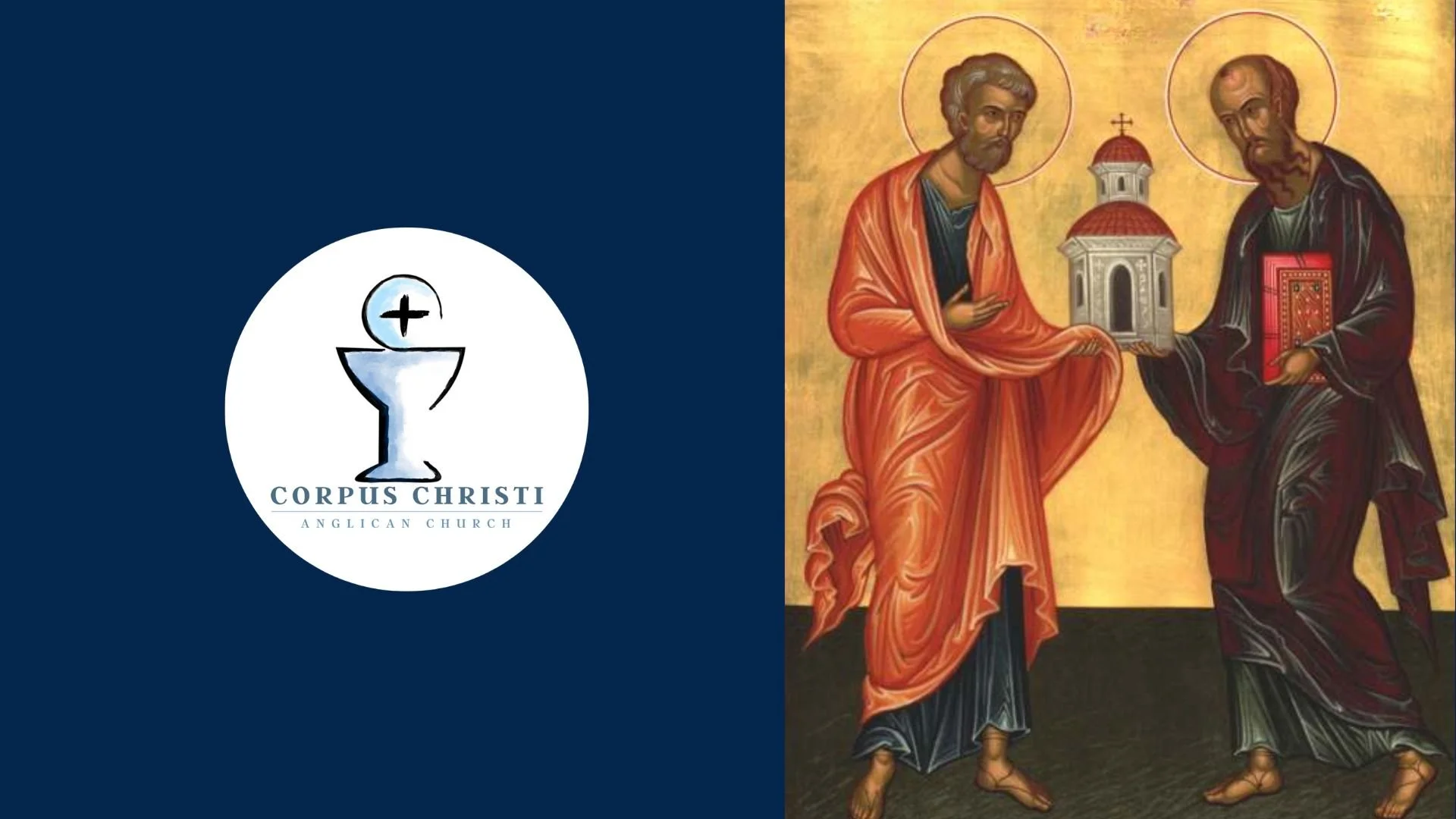
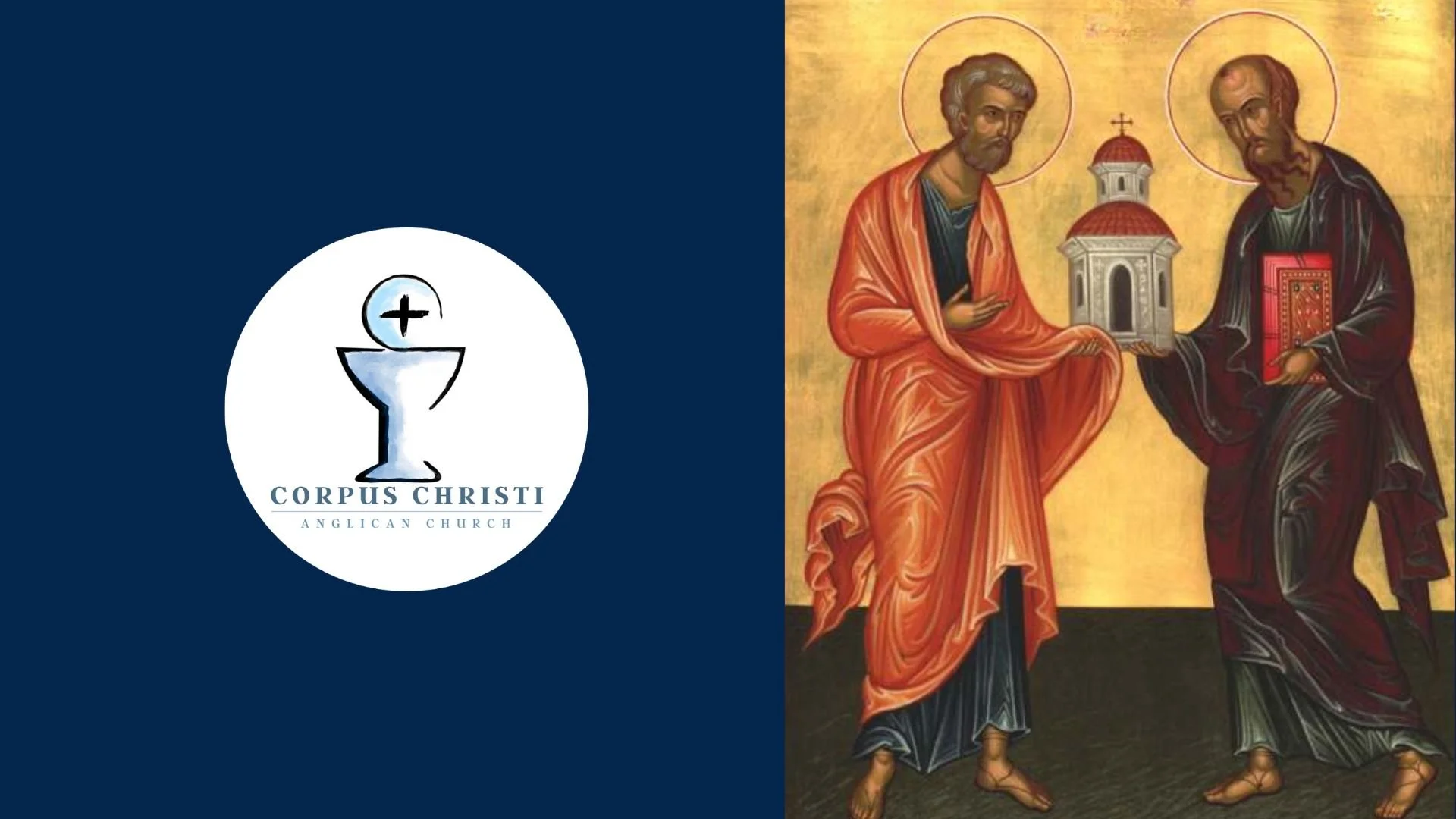
Feast of Sts. Peter and Paul: The Kingdom Through Diverse Stories of Faithfulness
TranscriptioN
Good morning. My name is Steve Brooks. I serve as a vocational deacon at Restoration Anglican Church in Arlington, Virginia. As always, Morgan, it's an honor to be invited to serve your congregation.
The last time I was here was before Easter of last year, and for those of you who were here then, you may remember it that I preached on the bread of life, and I brought with me one of my very first homemade bread loaves from a sourdough starter I created for that sermon. Every month, I bake bread from that same starter, and as I work through the bread baking process, I pray for your congregation. With each loaf that I make and that I eat and that I share, I find great peace in it.
So please know that you all are never far away from my heart, or my stomach for that matter. It's really great to be with you again. So let's pray. “Holy Spirit come, bless this congregation and our time here this morning. O Lord, let the words of my mouth and the meditation of my heart be acceptable in your sight. O Lord, my rock and Redeemer. Amen.”
So today we observe the Feast of St. Peter and Paul, one of the oldest and most important feasts in the Christian liturgical calendar, especially in the Eastern Orthodox tradition. This remembrance on this day of June 29th, it stretches all the way back to the third or fourth century.
In history and tradition tell us that Saints Peter and Paul were martyred in Rome on June 29th. Not necessarily in the same year, but on the same date, sometime between the year 64 and 68 AD, under the brutality of Roman Emperor Nero. It is believed that the early church, early Roman Christians used this feast day to compete with and eventually supplant the pagan celebration surrounding the founding of Rome nearly 1,000 years earlier by brothers Romulus and Remus.
For early Christians, this date, June 29th, would mark the founding of the new Rome, the Christian Rome. Saints Peter and Paul are remembered today for their shared suffering and death for our Lord and Savior Jesus Christ. Yet their journeys to faith, their backgrounds, their behaviors are vastly different.
It's a miracle that the two men with such differences would come to share a day of remembrance and celebration in the church. Peter was a fisherman. Paul was a tent maker.
Peter was uneducated. Paul was a scholar, a Pharisee. Peter was impulsive, bold, and emotional.
Paul was zealous and driven and eventually patient. Peter was called to follow the living Jesus from the shores of Galilee, and Paul set out to destroy people like Peter until the resurrected Christ met and called him on the road to Damascus. In Acts 22, Luke recorded Paul recounting that mission.
Paul said that I persecuted the Christian movement to the death, building and delivering to prison both men and women. I journeyed toward Damascus to take those who were there and bring them in bonds to Jerusalem to be punished. Paul's journey from Jerusalem to now the oldest city in the world would change all of history.
It would change everything. Paul encountered the risen Christ. He experienced what may be the greatest conversion of all time.
Over the three days following Paul's encounter, he was blinded, he was born again, he was baptized, and completely transformed. His destructive passion was turned into devotion, and his new purpose would ultimately align perfectly with that of the Apostle Peter. These two men of different backgrounds would share a passionate faith and love for Jesus Christ.
Nothing, prison, torture, death, could keep either of them from proclaiming the good news. The Epistle and the Gospel readings this morning, they capture two very specific critical moments in the lives of these two men. The Gospel reading I just read a few minutes ago from John 21, it captures the very beginning, the exact moment that Jesus literally puts his faith in Peter by giving him responsibility to feed his sheep and shepherd the church
It's the beginning of Peter's ministry. When we read it out loud, which I did many times before the sermon, I felt like I was standing among the other disciples listening to a conversation that I wasn't necessarily supposed to hear. It's very personal.
Yet Jesus openly speaks so the others witness the transformational moment in Peter. In the Epistle reading from 2nd Timothy chapter 4, we are witness to the end of Paul's ministry. These are Paul's last known recorded words before he is killed by a murdering emperor.
Paul wrote this letter to ensure the continuity of his ministry, and he is literally handing off the baton over to Timothy. John 21 and 2nd Timothy 4 are two snapshots 30 years apart. One snapshot is of Peter, a man who had no idea what lies ahead for him because of his faith and love for Jesus.
And another man, Paul, knows his death is imminent, yet he is full of zeal to ensure that the good news of Jesus Christ is shared with the world. So as we dig into these two readings this morning, I'd like you to reflect on the two apostles. Who do you connect with most? What parts of their stories are like yours? And what do you hope for? What do you hope for in your own journey with Jesus Christ? So let's start with Paul's letter to Timothy.
Prior to his conversion, Paul was a zealous prosecutor of Christians and present at the stoning of Stephen, the first martyr for Christ. After his conversion, he spent three years in Arabia, he returned to Damascus, and later visited Jerusalem for the first time as a convert where he actually met Peter and James. Paul was called to be the apostle to the Gentiles.
He was set apart by the Holy Spirit and sent on three missionary journeys, and it's on his second journey in Asia Minor in Europe where he met Timothy in the city of Lystra. Paul suffered for Christ. He was arrested, imprisoned, beaten, shipwrecked.
All the while, he proclaimed the name of Jesus Christ as his Lord and Savior. By the time he wrote his second letter to Timothy, Paul was imprisoned in Rome for the second time. He was about 63 years old and facing execution.
So I love reading Paul. I find it so helpful how he gives so much detail in the salutation to whom he's writing, and then when he closes, we see all these people and the connections. In 1st Timothy chapter 1, Paul refers to Timothy as my true son in faith.
This language helps us understand Paul's connection and relationship to Timothy, and it frames the letter so we can read it with context and deeper understanding. 1st Timothy was written about three years before the second letter that we're reading today. And Paul's farewell discourse to the Ephesian elders in Acts chapter 20, it's famous for its comparison to the fell-weary discourse of Moses and Jesus, but these final words in chapter 4 are almost like Paul's last will and testament.
He's facing death, there's a sense of urgency, an unending spirit, and a passion for faith in Jesus. He was determined to leave this world by giving a clear and concise instruction to Timothy, his protege of about ten years, to continue this ministry. So in chapter 4 verse 1, Paul doesn't suggest a mission for Timothy.
In reality, it's a divine charge, a divine mandate directed to Timothy and to all who preach the gospel of Jesus Christ. Paul is imploring Timothy to be ready to preach both in and out of season, which means he should ground people in Scripture under all circumstances, whether they're hungry for it or not. He stresses that Timothy should be ready to preach whether it's convenient or not, and even when it is at great cost to himself.
Paul calls on Timothy to reprove, rebuke, and exhort. In other words, to correct error, call out sin, and encourage and strengthen those to whom he is preaching. The only way to approach this mandate is for Timothy to preach with patience, endurance, and wisdom.
And Paul's telling Timothy, take this baton, don't look back, and run. And it won't be easy. As a good mentor does, Paul was sharing his own experiences, and I'm sure praying that Timothy would get it.
He knew that Timothy needed a strong spiritual background of faith to follow Jesus and preach the good news, no matter the circumstance. In verse 3, Paul says, for the time is coming when people will not endure sound teaching, but having itching ears, they will accumulate for themselves teachers to soothe their own passions. Paul's warning rings true today.
Our culture, like that during Paul's time, often chases comfort over conviction. We seek messengers and messages that affirm rather than transform. We trade in truth for convenience. We live in a world dominated and shaped by consumerism, social media, and self-serving ideologies. The idols may have changed shape, but idolatry remains the same. In verse 6, Paul continues, and he says, I'm already being poured out as a drink offering, and the time of my departure has come.
This refers to the Jewish custom of pouring out wine at the base of the altar as part of the ritual sacrifice of the Lamb. Years earlier, Paul wrote to the Philippians about the possibility of his death, describing it the same way, as being poured out like a drink offering. At that point, it was a hypothetical statement.
Now, he writes to Timothy, it's the real deal. His death was imminent, and Timothy knew what he meant. A pastor named Kent Hughes wrote extensively about Paul's letters, and he said this about this section.
He said, it is clear that Paul did not think of himself as about to be executed, but rather as offering himself to God. From the time of his conversion, everything he had was given to God. His wealth, his body, his brilliance, his passion, his position, his reputation, all of his relationships, and his dreams.
For years, the red blood of his life had been spilling onto the altar. Now, all that remained was his life's breath, and he triumphantly gave that. In verses 7 and 8, it appears that Paul was almost declaring a victory of sorts, as he wrote to Timothy.
But I see it as Paul on his knees in prayer, telling Jesus, I did it. I lived it. I finished what began on the road to Damascus, Lord. I kept your faith in me. I stayed on the course that you laid out for me from the beginning of time. I finished the race.
I finished the race, Lord. I am done, but I'm not defeated. And I will await your return, Lord, to receive not a crown of glory or fame, but of righteousness.
And that crown of righteousness, Paul says here, is not only for himself, but it's for all who follow Jesus and long for his return. Imagine for a moment Timothy reading this letter when he gets it from his spiritual father, probably a little shaken. I know I would be.
It's emotional. It's urgent. It's holy and filled with the divine charge that he must accept. Paul doesn't say, good luck, son. Do the best you can. Hang in there.
He tells him to be faithful, stay sober-minded, endure the sufferings of following Jesus Christ, be steady, be steady, and finish the race like I have. I wonder if he ever got to see Paul again to talk about what he was being asked to do, to share his anxiety maybe, his worry, be affirmed that his faithfulness and love in Jesus would carry him. So let's pivot over for a few minutes over to John, John 21.
It's a different snapshot in time. It's about 35 years before Paul wrote Timothy, and in this moment, before ascending into heaven, Jesus is handing his baton off to Peter. So for lack of a better way to say this, Peter had a very complicated relationship with Jesus.
His walk with Christ has been a lot like mine over the past 44 years, and it may feel like yours too. Each of the four Gospels provide a unique facet of Simon Peter's calling by Jesus. In the Gospel of John, Andrew introduces his brother to Jesus.
Jesus says, you are Simon, son of John. You shall be called Cephas, which means Peter, which means the rock. In Matthew and Mark, we observe the immediacy of Peter's response to follow Jesus, and my favorite is in the Gospel of Luke.
We witness the awe of a miraculous catch of fish only because Peter obeyed Jesus's call to cast that net one last time, and after the fish were brought in, the nets would break apart. Peter, having great humility at that point, says, go away from me, Lord. I am a sinful man, and Jesus says back to him, do not be afraid.
From now on, you will be catching men. This is where Simon, now Peter, began his journey of faith with Jesus, in Jesus. So later in the story, you all know some of these, later in the storm on the Sea of Galilee, in faith, Peter steps out of a boat and walks on water to meet Jesus, and in his doubt, he sinks and is saved by our Lord.
As Peter's faith grows deeper, Jesus asks the question, who do you say that I am? Peter responds, you are the Christ, the Son of the Living God, and Jesus replies to Peter, you are Peter. On this rock, I will build my church. When Jesus predicts his own death later, Peter actually rebukes Jesus, and Jesus in turns rebukes him right back.
Peter heard the voice of God and saw Moses and Elijah when he witnessed the transfiguration, and he was terrified. The night of the Last Supper, Jesus tells Peter, truly I tell you this very night before the rooster crows, you will deny me three times. In protest, Peter claims, even if I must die with you, I will not deny you.
Just a little later, after his arrest, Jesus was being held in the high priest's home, and Peter, sitting by a small fire in the middle of the courtyard, was confronted three times that he knew Jesus, and three times he denied it, and then the rooster crowed. This blogger, this guy I was reading around on the internet, and I found this blogger, his name is John Van Wagner. He loves Jesus, and he wrote this about this scene.
He says, it was a terrible, horrifying night for Peter. Darkness, cold, flickering flames, distorted shadows on the walls of the courtyard, and then his denials three times. Peter collapsed under the pressure.
His self-reliance and self-confidence were shattered. All his promises, all his boasting, all his efforts to prevent this night from happening were blown away when Peter turned his back on his friend. To make it worse, and better, Jesus turned, singled out Peter, looking straight at him with a look that Peter will probably never forget.
It's as if Jesus was saying, Peter, do you remember what I said? All that I said? Don't forget that I also told you not to let your heart be troubled, to trust in the Father, and to trust in me. Implicit in this command is a promise, I will never leave you or forsake you. We all know how the story continues.
Jesus is crucified, he is buried, and he rose again. And Peter, who abandoned Jesus, is one of the first to see the empty tomb. While he believed Jesus was the Messiah, he misunderstood the mission of the Messiah.
He had the faith in Jesus, but not yet the faith of Jesus. The faith that is the source, the true source of hope. John sets the stage at the beginning of chapter 21.
It was night, seven disciples are fishing from a boat in the Sea of Galilee. It's a few weeks after Jesus was resurrected. They had already experienced the risen Christ two times.
They will again here. Just as day broke, Jesus stood at the shore of the lake, and he had already started a charcoal fire, cooking fish and baking bread. The disciples out on the water saw Jesus on the shore, but didn't know who it was, and he called out to them, cast your net on the right side.
And they did it. They caught a huge number of fish, 153 to be exact. And it was the Apostle John who realized it was Jesus on the shore, and he yells out, it's the Lord! And what did Peter do? He leaps out of the boat, and he swims ashore.
Jesus tells them to bring some of the fish they caught, and Peter, soaking wet, is the one to go back to the boat and haul that net in on his own. And the net was not torn. The unbroken net is a subtlety in the text here.
The net was not torn. Remember his first encounter with Jesus from the fishing boat? Simon Peter was obedient and cast the net, yet he didn't believe, he didn't have the faith of Jesus, and the net broke. This time, the net was not broken.
Something changed. A restoration of true and obedient faith is about to occur. And verse 15 takes us to the early morning quiet on the beach.
Seven disciples and Jesus stand next to a charcoal fire, much like the one Peter sat next two weeks earlier as he denied Christ. And Jesus spoke, calling Peter Simon, a reminder of who he was before he met Jesus, a reminder of his human weakness. Three times he said, Simon, do you love me? Simon, son of John, do you love me? Do you love me? This is a blunt, there is a blunt honesty in the Lord's questioning, but his words are quite affable.
Jesus matched each question with each denial, and Peter must have been confused and shaken that he would give the wrong response. And he answered three times, you know that I love you, Lord. You know that I love you.
You know that I love you. And each time Jesus said, feed my lambs, tend my sheep, feed my sheep. In front of all standing at the fire, Jesus displayed a deep love for the Apostle Peter.
These questions were words of healing, they were words of comfort, they were words of restoration and instruction. Peter's encounter with the risen Christ is a metamorphosis of faith, a transformation. Not only does Peter now have faith in Jesus, but he has the faith of Jesus Christ.
It's not a different kind of faith, but rather that characteristic of faith that Jesus exemplified. It is total and absolute trust and obedience to the Father, relying on him alone and no longer on himself. We witness here the beginning of Peter's new life in Christ.
His call is clear. Peter, the rock, is given authority by Jesus and ordination in its own right to feed and shepherd his flock and to share the gospel. Peter is anointed as the leader of Christ's chosen.
So the juxtaposition and connectedness of these two stories between Paul and Peter, for me it's beautiful. Paul was at the end of the journey, passing the torch so he could continue with Timothy, could continue what had been begun. Peter, on the other hand, was at the beginning of the new beginning.
He was handed a huge responsibility by Christ himself to leave the boat and become a shepherd. Although Jesus hinted during the seaside conversation at the very end, little did Peter know what trials and tribulations lay ahead for him. Little did he know that his life would end on a cross turned upside down in Rome, in the same city and around the same time as Saul of Tarsus.
Little did he know that Saul would become Paul, that they would both die for carrying the faith of Christ in their hearts and minds, sharing the same passion for Christ our Lord. I could have gotten up and given this sermon, which is part of one by St. Augustine. He makes it very simple.
He did a homily for the feast of St. Peter and Paul and he said this, not the whole homily, but they followed the truth, they professed the truth, they died for the truth. They followed, they professed, and they died for Jesus Christ. So our journeys with Christ are likely never going to match that of either of these apostles.
So I asked you, what do you hope for in your own faith and walk with Christ? What does that look like? Whether you're a young child and you're just starting to figure it out, or if you're in your last years, what does it look like to follow Jesus? So let's pray for that. Pray, you don't have to pray it out loud, but I'm going to pray for all of us and we'll pray for that specifically. Oh Lord Heavenly Father, God we give thanks for Peter and Paul, their differences, their love, their passion, and professing around the world of what you did.
Father, pray right now how for all of us, for you to call us into ways that we may have never thought. Ways for us to follow you, God give us some insight into that. Really, really, really, really, really love you Jesus.
God give us some insight, help all of us understand our call to follow you. In the name of Jesus we pray, amen.
Transcribed by TurboScribe.ai. Edited by the vicar.
Proper 7: Seeking God When Nothing is Going Right
TranscriptioN
And good morning again, my friends. It is good to be with you this morning. As I mentioned, if you're new here or visiting, we're so glad you're here. I'm Father Morgan Reed.
I'm the vicar here at Corpus Christi Anglican Church. Last Sunday was Trinity Sunday. In Reverend Susan had a wonderful sermon on the Trinity. You can go back and listen to that. And then next Sunday is going to be the feast day of St. Peter and St. Paul, two pillars of the early church. And we'll have a friend here to preach with us that morning.
Then in the month of July, I'll be finishing up in the first Sunday of July a passage from the gospel. And then we'll spend some time in Colossians, the epistle of St. Paul to the Colossians over the month of July. But today I wanted to do something a little bit different. I wanted to have a psalm reflection, time to reflect on the psalm that we read this morning. We often don't preach on those, but it's interesting. Jesus, in our gospel passage, was with his disciples, and he asks the crowd, he asked them who the crowds say he is, and they start to give him answers.
And then he says, who do you say that I am? And Peter makes this famous confessional, you are the Christ. And they're expecting an earthly ruler, a kingly Messiah, who's going to rule and reign. And what he does is he tells them to hold on, and don't tell anybody, because he will do that.
But first he has to go to the cross and suffer on behalf of humanity. And he encourages them not to seek power in greatness, because this is the thing that they're tempted to do. If your kingdom is earthly, then certainly we should join in the greatness of this kingdom.
But what they don't realize is the cross is the way to the kingdom. And so he has this encouragement that feels a little bit mysterious or enigmatic about, take up your cross daily and follow me. And they're sort of teasing out what that could possibly mean, because they don't yet know about the fullness of what the cross is.
And it's true that when we think about abundant life in the kingdom of God, it often shows itself in really hard circumstances. Circumstances where there are difficult trials and challenges, but the kingdom of God will come. And it's often when we look back at those difficult seasons that we realize that there was a cross to bear, that God showed himself faithful, that his presence was there.
And so taking up our cross involves some level of humiliation each day as we learn to follow Jesus. It might look like not seeing the things that we hoped for materialize as we thought they would, apologizing for the wrongs that we've done to others, telling others what is just even when they don't want to hear it, loving God's image in somebody when it's popular to stoke hatred or verbal or physical violence against people, even doing the hard inner work of naming things instead of turning to escapist behaviors and avoiding naming things that are really difficult to name. Ultimately we should seek the experience of the love of God in Christ Jesus more than comfort, more than self-protection, more than self-preservation.
And so Psalm 63 that we read today can be brought into conversation with our gospel texts. Psalm 63 helps us to see what it means a little bit to take up our cross and to follow Jesus. We should seek to seek God's love so to fill us that we come to know the life that Jesus has promised.
We should seek God's love to fill us so that we learn the love of Jesus and come to know that life that Jesus has promised. Now to do this, the things that I want to look at from our psalm passage are our longings, our interior life, and our resolve. Our longings, our interior life, and our resolve.
Our Longings
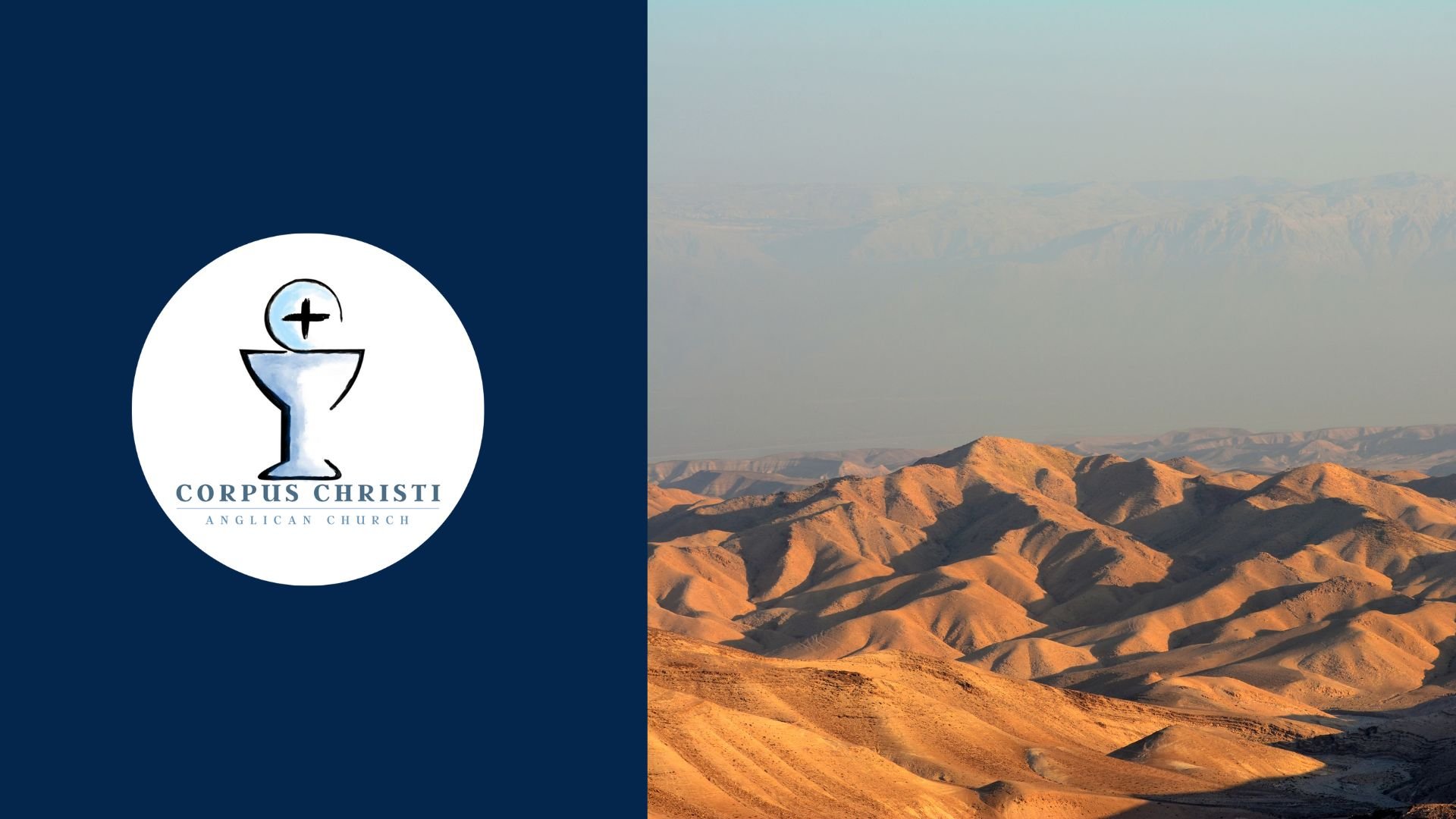
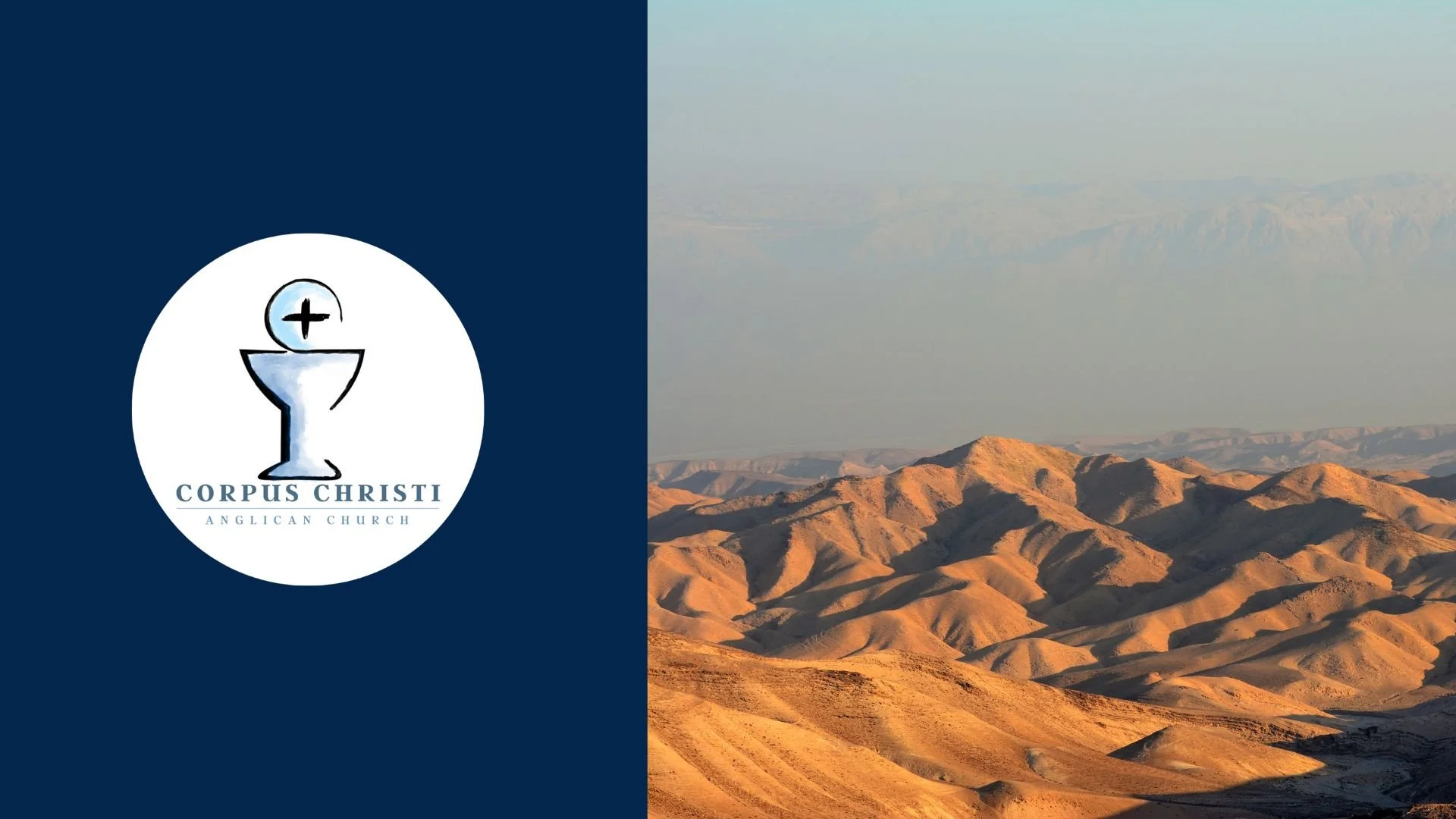
So first look at our longings. The psalm is attributed to David. We didn't read the subscription in our reading, but if you were to read this in your English Bible, Psalm 63, there's a little attribution to David when he's in the wilderness of Judah, which this pictures then David as he's escaping from King Saul in the Negev, which is in the southern part of Israel.
It's a dry, hot, arid desert that he finds himself in, and rather than spending his days strategizing on how to foster the contempt that's in his heart, or how to assassinate Saul, what he does is he finds shady spots to hide in, caves, takes out a writing utensil and a scroll, and he makes time to write poetry. He's rightly ordering his interior life. That is the thing that he is spending his time doing.
Rather than allowing contempt to help him strategize a way to seek vengeance, to take vengeance into his own hands, what he does is in the midst of these really troubling circumstances, is he focuses on rightly ordering his interior life and his longings. So he begins with a poem, this poem with this line, God, you are my God. I will search for you.
I'm thirsting for you. My body is wasting away for you in a dry and in a weary land with no water. How many of you kids this morning enjoy camping or outdoor survival activities? Yeah? Yeah? Who likes to camp or do outdoor survival stuff like build fires and other fun things? Great.
A lot of you. Excellent. Now, I'm gonna ask you a question.
When you get out into the wilderness, what are some of the first things that you should do? What do you think, Kate? Find shelter. That's it. Yep.
Absolutely. What else? Misha? Yep. Build your camp.
Exactly. What else? And make a fire. Excellent.
Yes. What else? Shepherd? Find food and water. And which one of those is more important? Yes.
I heard it a couple places. Water is more important than food. Absolutely.
So you can make it a long time without food, or at least very little food. You can't make it that long without water. Think about the next three days here.
You will experience thirst. Here, the psalmist is kind of like what Tuesday is gonna feel like, but in the desert, and he is longing in that hot, arid, dry place, and picturing himself being there, looking for a viable source of water. So he's out there, right? He's thinking about water, and what he compares it to is God's presence.
Nothing else matters. The circumstances are so bad, the thing that I want, Lord, is you. And this is the way he pictures his relationship with God.
Do we long for God's presence, like a body in a dry desert that is longing desperately for water? But the writer deeply longs to know God, and then what's interesting is he's longing to know God when everything outside is going wrong. When things haven't gone the way that he hoped for, you know, do we long that way for better circumstances, or do we long that way for God's presence? I would imagine that if we were put in the psalmist's shoes, we would spend our time, strategy, and resources figuring out how to get out of the mess, and possibly to take vengeance, but that's sort of a second tier, rather than spending all of our energy seeking the presence of God. But his focus is on rightly ordering his interior life.
Rightly Ordered Interior Life
So after rightly ordering his longings, the psalmist gives us these outward gestures of a rightly ordered interior life. He says, so I gazed at you in the sanctuary to see your power and your glory. There's a famous paradigm in the Psalms that you can think about all of them, some level of orientation, disorientation, and reorientation.
I get that from the late Walter Brueggemann, but it's a really helpful way to think through the Psalms. Is the psalmist in a state of orientation, disorientation, or being reoriented? All three can happen in the same psalm. And there's a reorientation that happens here for the psalmist as he goes into the sanctuary, and he has this encounter with God in the midst of his disorientation, and searching, and longing for water in the desert.
The sanctuary is a really important place. Don't miss this. For Israel, the sanctuary was meant to refigure for people the Garden of God, the Garden of Eden, where people experienced God dwelling with them directly.
And so the sanctuary is the place where you meet God. It creates this place where heaven and earth meet on this earth. And what becomes new in the ministry of Jesus is that he becomes the temple.
Jesus is the place where heaven and earth meet. And then what's even more mysterious and wonderful, as we looked at in the book of Acts, is that ministry continues in Christ's body, which is the church, the body of Christ. So the church becomes the temple, the place where heaven and earth meet, where people come to discover an encounter with God.
So the corporate body of the church, when it gathers, is the location where heaven and earth meet. But also individually, each one of us is a temple of the Holy Spirit where heaven and earth meet. And why is that? It's because the Holy Spirit has been poured out in each one of our hearts.
That's what we celebrated a couple weeks ago at Pentecost, and it's really important. You and I have within us God's presence, the Holy Spirit, the one who can reorient us to what is true, good, and beautiful. And even when things around us are falling apart, he can still reorient us and rightly order our interior world.
So in our Anglican tradition, we have the Book of Common Prayer. It's got in it the daily office, prayer services that you can use throughout the day. That's a really helpful start.
Morning, midday, evening prayer, compline, something short. You can use the family prayer forms of those that are really short. These create a little sanctuary in time.
They're really helpful to sort of reframe and reorient the day. We also need other helpful practices to remind ourselves that we don't need to be subject to the tyranny of the urgent when things have blown up and become in disarray. I find myself rushing from thing to thing to thing, and I think I'm probably a product of the area that I live in, and I imagine that I'm probably not the only one here like this.
You know, find a few moments. It doesn't have to be long to stop and to pray for the Spirit to come and be present. So now I've actually put like a five-minute block between each meeting, so I can just stop and pray and ask, Lord, was there something that I needed to learn from the last thing? Is there something that you want to speak through the next thing? But figuring out for yourself, where are these blocks of time to create little sanctuaries of reorientation in your calendar? Are there Scripture passages that come to mind throughout the day, and are we creating rhythms of reading the Scripture so that we actually are able to draw on those things through the day? The psalmist then follows up his reorientation with several gestures.
He talks about his lips praising God, he blesses God, he lifts up his hands in God's name, the mouth praises God with joyful lips, and in verse 6, and some of you can relate with this, he's awake and he's restless in the middle of the night. And what does he do when he does this? He says he meditates on God in the night watches, which sounds poetic and beautiful, but picture somebody who's restlessly awake in the middle of the night, and how they use that time. He's using that time to meditate on God, and I would imagine the stress of his situation is probably what's keeping him up.
So finally, in verse 7, he sings with joy. All of these things are embodied. There are bodily postures that tell us what his heart is doing and how his heart is oriented, and how important it is to consider your body in your life with Christ.
Your body matters. If you think of David in the wilderness, he's not wasting his time trying to figure out how to draw up a peace treaty with Saul. He's not wasting his time trying to figure out how to assassinate Saul.
He's spending so that he can rightly order the circumstances that he's in. He's accepting those things that he can't change, and then he's taking it in and he's rightly ordering his own interior life. He's writing poetry in the shadows in a really hot day in the desert, and when we feel like our circumstances might have driven us into the wilderness, and we're at an impasse like nothing is going to change, this might just be the invitation that God has for us to draw deeply on that well of prayer where the Holy Spirit is residing, to sit in whatever momentary shade God's providing, and then to start writing some poetry. Seriously, write some poetry. It's really helpful. Or at the very least, if you don't write poetry, journal.
Or at the very least, can we begin to ask God to reveal our desires that might be keeping us from desiring his presence more than our own surface-level comfort? What is keeping us from experiencing the love of God? So we've seen the psalmist, how he longs for God's presence, his longings, more than life itself. We've seen his outward gestures of the rightly ordered interior life, and finally now the psalm ends with confidence and resolve, even when things are not going well for him. So the psalmist's reorientation, it includes a resolve about people who are causing him harm.
Our Resolve
It's poetic, and what he says is that God will take vengeance on his enemies. He's poetically saying it, but that's the essence of what he's saying. And then in verse 11, there's a different sort of ending here, a different theme. He says, but the king will rejoice in God, talking about himself. All who swear allegiance to him will give praise, for the mouths of those speaking lies will be shut. The mouths of those speaking lies will be shut.
This is his hope, this is his resolve. In some ways it's depersonalized. It's not just that he's personally offended, it's that he's doing the very thing God's called him to do, and what these people are speaking is actually against the will of God.
And so his trust is not in God taking vengeance on his personal hurts, it's God taking vengeance on those things that are truly unjust. And so it's the slander, and if you think about this, what he's saying is God watches over the faithful, and I trust this. And in this final verse, if it gives any indication of the Psalmist circumstances, then it seems like the violence and the assault that he's experiencing is primarily verbal, which is actually harder than physical violence sometimes.
And while his friends slander him and betray him, the Psalmist is resolved to seek the God who watches over his faithful ones. Like the Psalmist, we can trust that God loves us, and that he wants to redeem those curses that people might have spoken over us, and return those things with a blessing. That's really important.
This Psalmist has been cursed by people who were probably close to him, and he's probably wondering if these parts of himself that others have cursed, there might be a back-and-forth about whether these things about him are truly good, whether God has made him this way or not, and so God wants to return these things with a blessing. And I'll give you an example from my own life that I was thinking about this week. In my mid-20s, I was, a coworker told me, you're really obnoxious when you talk
Alright, now, I'm trying not to be triggered even as I say this, right? Now, if I look back, what I think that she was saying was, when you articulate your to-do list out loud, it overwhelms me, and I can't hold that much information in my head, so can you not talk about those things so much, right? Now that I'm 20 years removed almost, I can talk about those things. So, but in that moment, when she said, you're obnoxious when you talk, my body kind of froze, and I noticed that I got this deep feeling of shame, and it was sort of a curse that got spoken over me, like, you are flawed. And, you know, that, and as I look back, there might be other times I can think of, no, there are other times I can think of, where somebody has probably told me, they definitely have told me, hey, get to the point, or why don't you just say what you mean, right? Or even in my writing, it was really hard to write a dissertation, because I, it took me 40 pages to get to the 20 I really meant, and truly, like, I have a lot of words, I know this, I process verbally, and not all of my words are equally important.
So I had to name how people have spoken that curse to me in the past, and then I had to ask God if there is any good in me, right? And I know this sounds extreme, but I think there is. I think there is some good in me there. Knowing that it takes me a while to get to where I'm going, just the knowledge of that has taught me there are certain people that I can bring in as conversation partners at various points, and certain people that I cannot, because they will find it exhausting.
That knowledge is powerful. Also, I love having coffee with you, or having a meal, and not having an agenda. I love seeing where the conversation might go, and not feeling like it needs to go anywhere.
That's actually quite lovely, and so I wonder, for you, as you sit here this morning, are there parts of your life and heart that other people have cursed that were close to you, that God might actually bless? How would searching for God's presence, and rightly ordering our interior world, begin to bless these minds and bodies where other people have spoken curses? We need to build up this resolve of trusting God, and blessing what others have cursed, by seeking God's covenant love for us, so that it becomes more important to us than our own self-protection. So we can leave the vengeance to God as we trust, and as we resolve the trust in this goodness of what God's called us into, and how he's made us to do this thing he's called us to do. So, back to the gospel.
Conclusion
Jesus called his disciples to take up their cross daily, and to follow him. Jesus would be the victorious kingly Messiah that everyone is hoping for, but not without the suffering, and the humiliation, and the pain of the cross. A type of desert where he needed to seek God's presence himself, more than self-preservation.
And while the circumstances that we are in may never fully line up with the things that we hoped for, or for what creates earthly material success and ease, we do know that being in God's presence, and being in God's will, are the ultimate places of rest that our hearts are longing for. So through our psalm today, we have this picture of taking up the cross. The heart of a man who's been exiled into the hot desert wasteland, writing poetry in the shadows, longing for God's presence, being reoriented by an encounter with God, and a resolve to trust God in the face of cursing.
So may we come to know this experience of the love of God so deeply, that we move past self-preservation and hardness of heart, to a desire, and to have our earthly material expectations met, that we really come to know the abundant love and life of Christ. Let me pray for us. Almighty God, you pour out on all who desire it the spirit of grace and supplication.
Would you deliver us when we draw near to you from coldness of heart and wanderings of mind, that with steadfast thoughts and kindled affections, we may worship you in spirit and in truth, through Jesus Christ our Lord. Amen. you
Transcribed by TurboScribe.ai. Edited by the author.
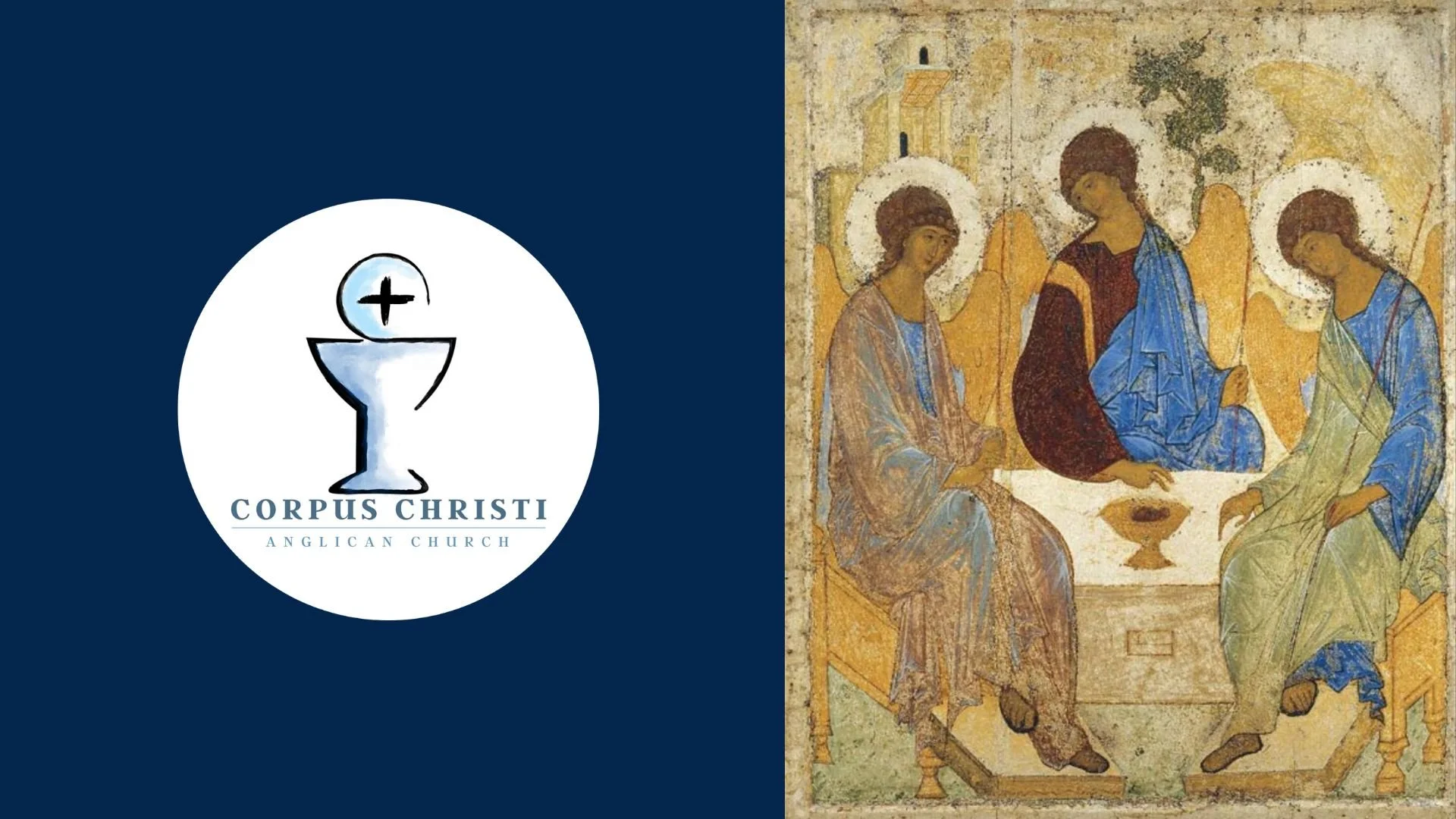
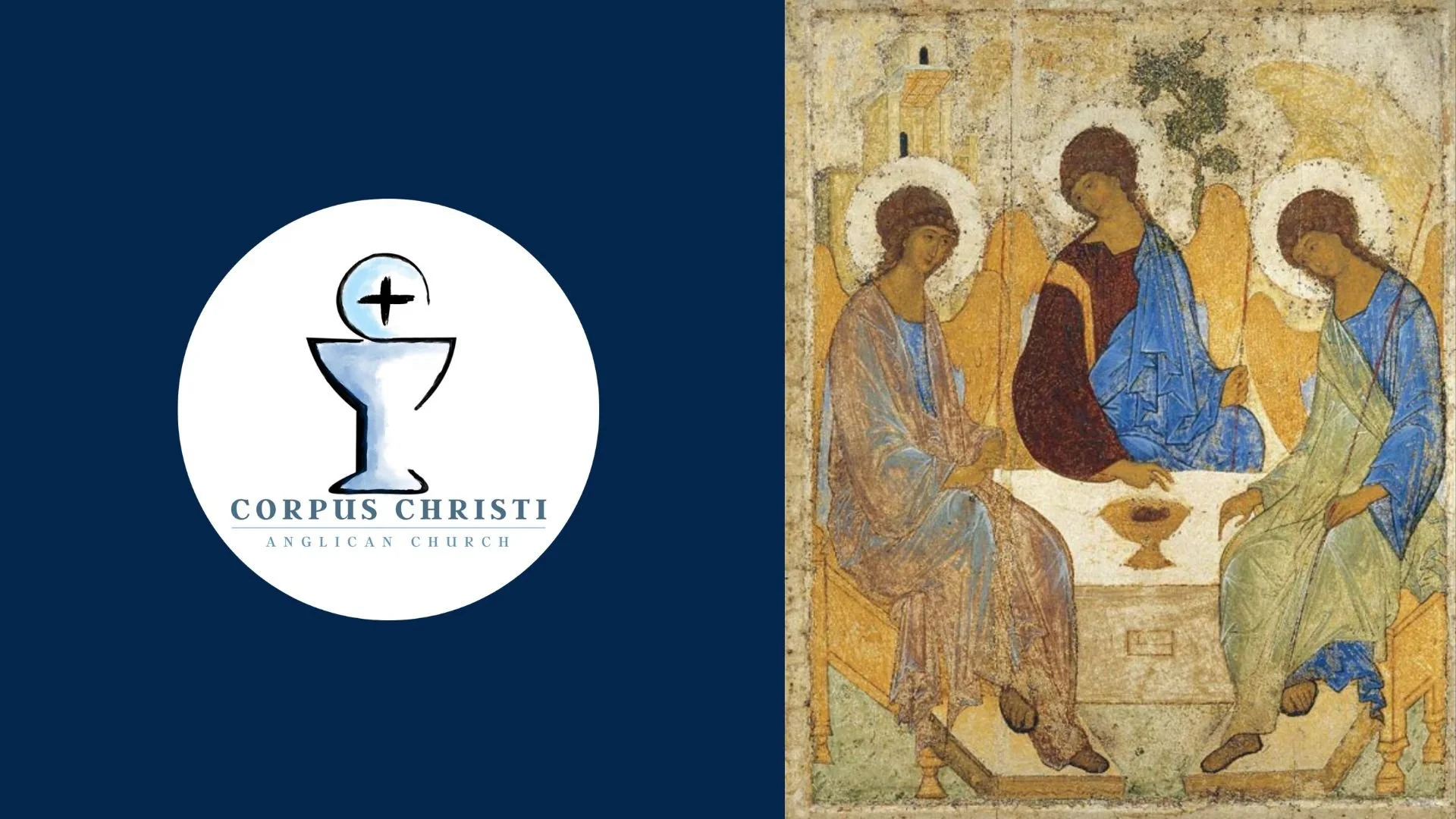
Trinity Sunday: Adore the Inexplicable Trinity
TranscriptioN
“In the name of the Father and of the Son and of the Holy Spirit, let us pray.
Almighty and everlasting God, you have given to us your servant's grace by the confession of a true faith to acknowledge the glory of the eternal Trinity and in the power of your divine majesty to worship the unity. Keep us steadfast in this faith and worship and bring us at last to see you in your one and eternal glory. O Father, who with the Son and the Holy Spirit live and reign one God forever and ever. Amen.” Well, on every Trinity Sunday, we take a courageous foray into trying to explain and understand the Holy Trinity, the inexplainable and the incomprehensible doctrine by which we live. The Trinitarian God is a basic teaching, a creed that is learned and accepted by us as Christians, the foundational way for us to relate to God and his ability to relate fully to us.
The Father is God, the Son is God, the Holy Spirit is God, a monotheistic God, one almighty God who exists in three distinct persons, co-equal, co-eternal, and co-powerful. Each person, 100% God. The Bible tells us that the Father, Son, and the Holy Spirit are distinct persons.
For example, since the Father sent the Son into the world, he cannot be the same person as the Son. In the same way, the Son returned to the Father, and the Father and the Son sent the Holy Spirit into the world. The Holy Spirit is distinct from the Father and the Son.
St. Augustine made seven brief statements in his explanation of the Trinity. The Father is God, the Son is God, the Holy Spirit is God, the Father is not the Son, the Son is not the Holy Spirit, and finally, there is only one God. Now I'm going to take us on a little road that's not exactly part of our Trinity celebration, but I think it helps to demystify something that I always thought of as orthodox as a Christian.
So we'll look at the book of Deuteronomy and the Old Testament, and we hear what is known as the Shema. The Shema is Israel's declaration of God as one God. It is considered the most essential declaration of the Jewish faith.
Hear Israel, the Lord is our God, the Lord is one. Now I think there is a praise song, and you know, hear oh Israel, the Lord our God is one God. Well, the Shema was Israel's declaration that they were a monotheistic people, unlike many of their neighbors who believed in and worshipped many gods.
But here's the thing, they did not want to surrender their unique covenant with God, and Israel often saw itself as representing the side of God that stood against her adversaries. There's a big difference between our creeds and the Shema. The Shema does not define God as a single essence or more than one person present as God.
Now let's look at some other ways we and others have tried to explain the Trinity. You've probably used them. I have.
But they try to explain, but they really can't. You might have heard some comparisons to things to help you understand or explain to someone else. The three distinctive persons who share one substance.
That's the key word there, substance. So have you ever heard about the three slices of pie? Same pie. Okay.
Cherry pie, apple pie, three slices. Okay. The egg, shell, white, and yolk.
Okay, it's one egg. Okay. The apple, skin, flesh, and seeds.
Now three really common ones, and they're pretty popular, I think, as I hear them a lot. The three properties of the same element, H2O, water. Liquid, vapor, and solid, ice.
Water can exist in three different states, but here's the key, not all at the same time. It is either liquid, or it's steam, or it's solid. But God the Father, God the Son, and God the Holy Spirit all coexist in the same essence at the same time.
Okay, get your brain around that. The Father did not cease to exist in heaven, while Jesus the Son was active on earth. Okay, here's one that I thought was pretty good.
The triangle. One form with three distinct sides, and three inside angles. The problem with the triangle is similar, but it's different.
Here are three parts within the one. However, each part is not a full expression of the one. One side of the triangle is just that, one side.
The side is not a full triangle. However, the Bible tells us that God the Father is fully God, not just a part of God. The same is true for the Son and the Spirit.
The 39 articles of religion state there is one but one living and true God, everlasting, without body, parts, or passions. The unity of the Godhead or the Trinity exists of three distinct persons who are equally God, united in their common substance, power, and eternity. All analogies fall short and are insufficient in different ways.
They're mistaken ideas that are trying to explain something that is inexplicable. Analogies of the Trinity are seeking to help us understand the very nature of God. They are all bad analogies because they're materialistic.
They interpret God's being in terms of material that makes up God, but there is no material that makes up God. God is immaterial. There is nothing we can point to that he's made of.
Unfortunately, mistaken analogies can result in mistaken knowledge of God. Since our faith rests on our growing knowledge and love of God, we need to use our limited but faithful understanding of God in the way we communicate the doctrine of the Trinity. I found one commentator this week, he was tongue-in-cheek about it all, but I thought it was good.
I think what's confusing to some pastors is the mistaken notion that teaching the doctrine of the Trinity means explaining how God is three in one. By contrast, the Apostles' Creed and the Nicene Creed, which are the two most important confessions of our faith, that teach the doctrine of the Trinity, never even use the word three. They say nothing about how God is three in one.
Rather, they teach that God is Father, Son, and Holy Spirit all at once. He says, if you want to, you can count to three, but it's hardly essential, and in fact, you'll understand the doctrine better if you forget about counting. Now, having said all that about comparisons, I'd like to share one that I found actually found a little bit helpful.
The Trinity is gravity, a force we can't see or touch, much less explain. We know it's there because we can see its effects. It keeps us on the ground.
It makes objects fall. We can't live without it. Just like gravity, the Trinity is an essential part of our reality.
None of us have gravity. It has us, but without gravity, we would have nothing. Without the Trinity, we would not be able to have a relationship with God.
The fact that the Trinity is in full-time, always-on relationship with itself means that the Trinity is capable of having a relationship with us. The Trinitarian God wants us to know him as fully as we are known. In the end, we dispense with our analogies and numbers and thoughts about having complete understanding of what the Trinity is, and we agree to accept divine majesty that is inexplicable and beyond our human understanding.
Nevertheless, it's the basic doctrine of our belief, based on something we cannot see or understand or explain. One of my favorites for me, and one of the clearest pictures for me of the mystery of the Trinity, is portrayed in Scripture in Genesis 1, 1 to 3, where the three are named. In the beginning, God, the Father, created the heavens and the earth, and the Spirit of God, the Holy Spirit, was hovering over the face of the waters, and God, Jesus, the Word, spoke, let there be light, and there was light.
God is understood in Genesis to have created everything, even before creation. God, as a community of love between Father, Son, and Holy Spirit, but not out of loneliness, out of the eternal, unending circle of love between God, Father, Son, and God, the Holy Spirit. The Trinity is an enigma.
Our human minds just can't fathom this, but whether we understand it, or believe it, or not, it's the Holy Spirit who approaches us even before we understand, or believe. It is the Holy Spirit that opens up our spirit to his spirit, and allows us to believe something beyond our understanding, or even our awareness. This is prevenient grace of God, the grace that, through the Holy Spirit, prepares our hearts to receive God, the Father, and God, the Son.
St. Augustine emphasized that humans are unable to initiate their own salvation, or to respond to God's grace without prior divine action. The wonder of our faith is in the divine initiative of a loving God, our Father in heaven. He is the spiritual wind that we feel and can't see.
He's the wind that opens our spiritual cells to the persons of God, the Father, and God, the Son. It is his initiation that brings with him blessings that are ours, through faith in the Trinity. Blessings, the possibility of eternal salvation, the living water and bread of life in the Eucharist, spiritual growth and insight as we read the Scriptures, the fellowship of believers, God's power at work in us, in our weakness, God's living presence in our lives, making eternity something that begins right now, right here on earth.
Please pray with me. Now to him who is able to keep you from stumbling and resent you blameless before the presence of his Lord with great joy, to the only God, our Savior, through Jesus Christ our Lord, be glory, majesty, demendent, and authority before all time, now and forever. Amen.
Transcribed byTurboScribe.ai. Edited by the Vicar.
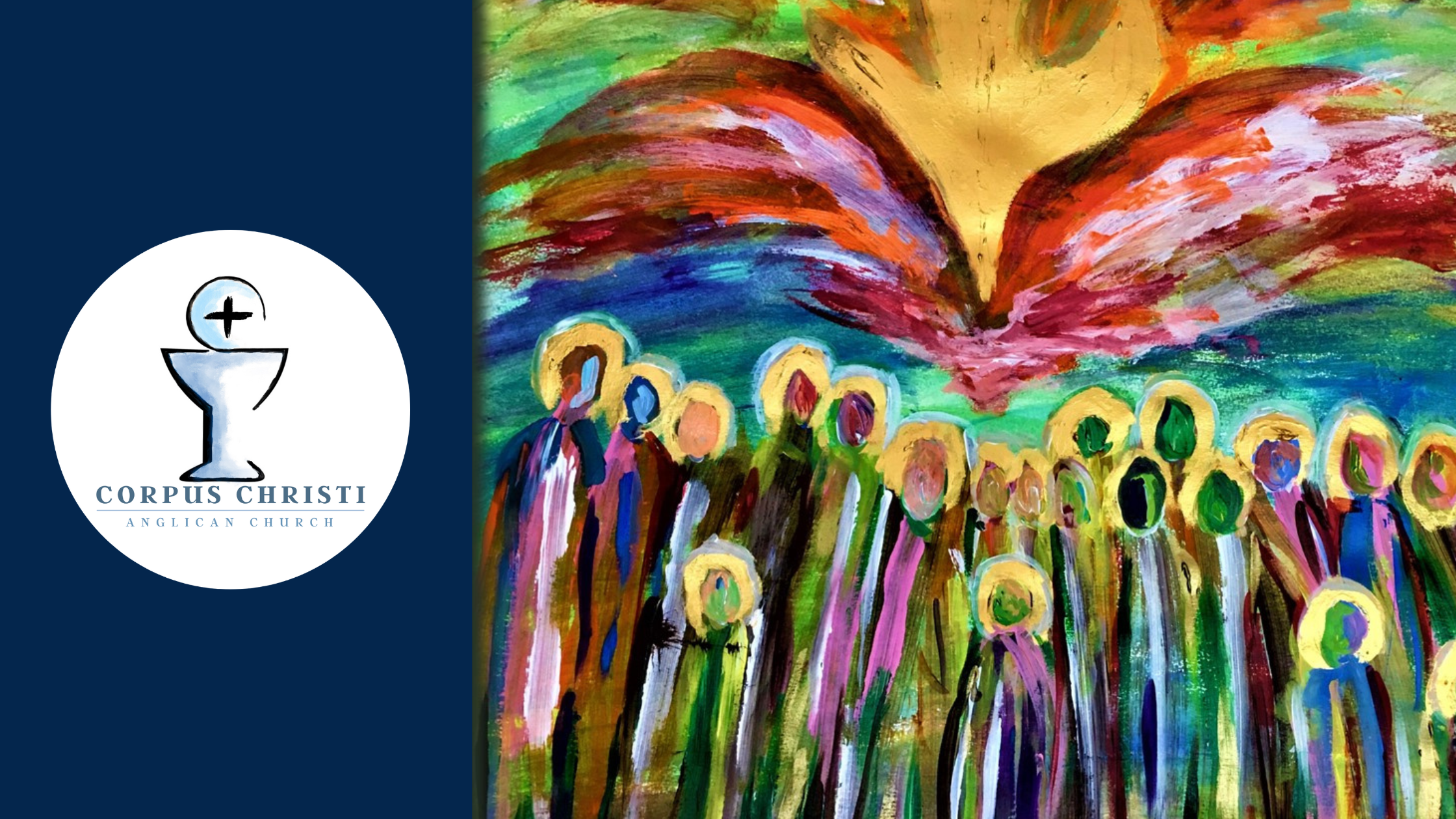
Pentecost: Called and Equipped for the Work of Jesus
This weekend we celebrated Pentecost! We were outside at Pohick Bay with no sound equipment. This is why the preacher is preaching a bit louder than normal. Please excuse our sound issues.
TranscriptioN
Well, good morning again everybody. It is good to be with you this morning. Happy Pentecost. For those of you who are new or visiting this morning, I'm Father Morgan Reed.
I'm the vicar here at Corpus Christi Anglican Church. This isn't our normal location, so we get to do this once a year and we're thankful to be able to be here in this covered area and that it's not too hot today. This is a really important day in the church calendar.
It reminds us that Jesus Christ reigns as King and that he has equipped us to carry on what he's doing in the world through the power of the Holy Spirit. It's only through the Holy Spirit that the church becomes the church, the people of God, and this day reminds us that we need help to carry on this commission that Jesus Christ gives us. So as we look together at Acts 2 this morning, let me pray for us.
In the name of God, the Father, the Son, and the Holy Spirit. Amen. Holy Spirit, breath of God and fire of love, we cannot pray without your aid.
Kindle us, in us, the fire of your love and illumine with your light, illumine us with your light, that with a steadfast will and holy thoughts we may approach the Father in spirit and in truth, through Jesus Christ our Lord, who reigns with you and the Father in eternal union. Amen. Well, let's look.
We're gonna look at two things. We're gonna look at the commissioning and how the disciples are equipped to carry on the ministry. So let's look first at the commissioning of the disciples of Jesus.
After Jesus ascended, there's a large group of his disciples that are waiting in a room together and they're praying until the Feast of Pentecost. It's helpful to know a bit about what this feast is. So in this feast in the Old Testament, it's a feast that started with celebrating something out of the harvest, 50 days after Passover.
The farmers would take the sheeps from their crop, from their wheat, and they would offer it to God. In some ways it was a sign of gratitude for what God had provided, but it's also a prayer that the rest of the crop would be successfully brought in that year. And then it took on new meaning as the people of God are delivered from Egypt and they celebrate the Passover together.
And then this feast, if Passover commemorates the event of Yahweh becoming king and delivering his people, 50 days later Pentecost or Shavuot is the festival that celebrates God's giving of the law on Mount Sinai, equipping the people for how to live out life as his people. And according to Jewish tradition, it was 50 days after Passover that Moses had gone up on Mount Sinai to receive the law, which is God's covenant with his people. And that mighty act of God of coming down on Sinai is something called a theophany.
It's a vision of God where God's power and his presence show up very visibly. And so Pentecost then becomes both a praise and thanksgiving as a feast of what God has done to act on our behalf in history, giving his people a way of life. But it's also a prayer that they would carry out his purposes and will as he's called and equipped them to do.
And today's passage that was so beautifully read is no less of a theophany than what happened on Mount Sinai. It reminded me of a couple years ago. Two years ago I was sitting in our house and I heard some giant explosion happen.
And I was praying it wasn't in our house. It wasn't. But then it did shake the house. And I did what any good millennial would do. I got on the internet. I said, Dear Google, what was that explosion near my house? And I found out that it turns out two F-16s had just launched from Andrews Air Force Base near the house to intercept a private plane that had entered and violated U.S. government airspace.
So that explosion that I heard was the sound of those two F-16s breaking the sound barrier over the DMV and causing a sonic boom. And so the mighty rushing wind that we hear about in the Book of Acts seemed to have the same impact on the crowd as the sonic boom in the DMV. But they did not have internet back then.
And so these Jewish pilgrims who had come from all over the place were wondering what had just happened. And so they come to this house where the disciples were praying. And in this Sinai-like theophany, instead of the twelve tribes of Israel, God had commissioned twelve apostles.
Instead of the Mosaic Covenant, the Holy Spirit is poured out on these disciples to shape a community together, doing life together under the rule and reign of Jesus, showing his love to the world. So Pentecost, again, becomes this thanksgiving for God giving us the Holy Spirit. And it's also a prayer that we would live out this life in the Spirit to discover God's kingdom here and now.
We're called to carry on the works of Jesus, and then we're commissioned to do so through the presence and the power of the Holy Spirit, God himself, who is given to us. So that's the commission. Now let's look at the ways that he leads us into new life.
When God had done this miraculous work, some of the crowd had marveled, some were astounded, and then some rationalized it away and they created false narratives about what they just experienced. And that's a paradigm for what would be the case as the apostles continue on their mission. It's still a paradigm today when people are confronted with the good news of Jesus.
So the people recognize they're hearing this news about Jesus in their own language. And some said, these men must be drunk. Because imagine if you speak Parthian and you hear Egyptian, it sounds like gibberish, right? So this is their conclusion.
This can't be something of God. This has to be these people are drunk. They write off what they can't understand as being from drunkenness, explaining it away with falsehoods, not just because they can't understand it, but because they're unwilling to accept it. So we might get a mighty rushing wind here too. I'm excited for that. Thank God for a covered area.
So Peter stands up to address the crowd and he assures them they haven't even had their morning prayers yet, which means they haven't even eaten yet. There's no way they can be drunk yet with wine. So Peter gives us in this passage an amazing message from the book of Joel, which I know is highest on everyone's reading list.
So he's in the book of Joel and he tells them in the last days God is gonna pour out his Spirit on all flesh. And the Jews of his day are looking for the day of the Lord to come when God would put his King on the throne and where God would reign over his enemies. Peter is functionally saying here that Jesus has ascended, he's become King, and you and I are in the last days right now.
And in these last days we're called to be delivered to the kingdom of God, where the Holy Spirit brings heaven into our earthly reality to begin to taste the redemption now that's ultimately going to come for all things when Jesus comes ultimately to rule and reign and return. And the nations here that are mentioned in the book of Acts are really important. The Roman Emperor back in Peter's day and the Apostles day, he had set himself up as a divine figure.
And when he brought peace to the Empire, he called it the gospel, he called it the good news of the Roman Empire, but it was a good news that came through violence. This was a shadow of true peace. And it was maintained nationally through violence, through corruption, and through coercion.
So St. Luke is now framing this passage to show the rule and the reign of King Jesus as a counter gospel to the Roman gospel, a true good news against the backdrop of the Roman Empire. Let's just sit and listen to this for a second. This is glorious, isn't it? Just want to name it because I see you looking around.
Thanks be to God. But don't miss this. There's a second century church father reading this passage and he says this, “Christ's name is extended everywhere, believed everywhere, worshipped everywhere, reigning everywhere, adored everywhere, conferred equally everywhere upon all. No king with him finds greater favor, no barbarian lesser joy, no dignities or pedigrees enjoy any distinction of merit. To all he is equal, to all he is king, to all he is judge, to all he is God and Lord.” What he's saying, in other words, is this radical renewal of all kinds of real ordinary people is a testimony to the power of the Lord Jesus Christ and the work of the Holy Spirit.
The kingdom is here and Jesus will reign over all. We see it breaking in now. God hasn't started with the most influential to bring about this kingdom.
He hasn't started with those who are most outwardly pious and religious or well-off. God's dream team is filled with really ordinary people, misfits and sinners because wherever the Holy Spirit is, as one church father says, “clay becomes gold.” And so you and I, when we were baptized, we were filled with this same Holy Spirit to put God's works on display as he transforms our hearts individually and calls us to witness to the world.
Peter names what's true and then he invites people into these last days with him, you and I. And what this means is that we need to prioritize listening to the Holy Spirit who's been placed in our hearts. The Holy Spirit is the one who calls us to repentance, who comforts us, who invites us into wondering at new creation, and who miraculously transforms the stuff of our earthly life into the stuff of the heavenly reality. And what he can do in bread and wine and water, he can do with our broken family relationships, the responsibilities that weigh really heavy on our hearts, the daily meals we prepare and invite others into our household, the monies that we steward, the things that we hold on to that are broken.
If he can restore creation, he can restore in us what's been broken and what's been ravaged by the fall. And so there's a final exhortation in verse 21. This is for the crowd to trust in Jesus.
Peter says, everyone who calls on the name of the Lord will be saved. And he's quoting again from Joel 2 and in this passage he is referring to Jesus. There's a Jewish tradition that whenever you see the name Yahweh, it was interesting to hear Yahweh in Tagalog.
That's how they decided to translate the divine name from Hebrew. Whenever you see that name in Hebrew, in Judaism you read the word Adonai out loud. You don't read Yahweh, it's considered blasphemous.
So even today if you read a Jewish document they'll put G - D for God. It's a way of keeping the holy name holy. And so this comes into Greek speaking Judaism when they did their translation work of the Old Testament.
They translated, they come across the name Yahweh and they would translate it Kyrios, which means Lord. Like if you've ever heard us say Kyrie Eleison, Christe Eleison, Kyrie Eleison, Lord have mercy, Christ have mercy. The word Kyrios just means Lord, Master.
And it's a generic word, but when the Jews read Joel 2 in Greek, originally they would think this is Yahweh, the God of Israel. That's the object of our faith. And so when Peter quotes it now, there's something new happening.
He intends for people to understand this as a reference to Jesus. Kyrios, Jesus is Lord. This is new and it puts Jesus on the same level as the God of Israel and that's going to be what he's going to prove for the rest of the chapter that we didn't read today.
When Peter's discussing salvation in this text, he's thinking in terms of deliverance from this present evil age and all of its brokenness and sin. He's assuming that Jesus rules over heaven and earth and then trusting in the name of Jesus brings in each of you and me the outpouring of the Holy Spirit to be delivered from this present darkness. And the Holy Spirit then brings heaven to earth in our lives.
He frees us from the powers of sin and death and comforts us in our afflictions and he redeems the suffering that we've gone through because he is working out in our lives what he's also working out cosmically, which is new creation. And that's why later the crowd is going to say, Peter what should we do? And his answer is to be baptized in the name of Christ so that their sins might be forgiven and then they'll receive the gift of the Holy Spirit. Today we get to do that.
We get to celebrate this with Andrew and I'm so excited. Today we celebrate this in Andrew's life. The stuff of the world that's been part of his journey is taken away because the Holy Spirit uses water and the prayers of the church to bring heaven into this young man's life.
And he's going to be filled with God's presence and power in the Spirit to live a life that shows the world what God can do through Christ in a very ordinary person that lives under the rule and the reign of King Jesus. And you and I get to renew our baptismal vows with him. And we are reminded that we are a community that God has built and we're reminded of what God has done in us and what God is doing in us and the promise of what he will do in us.
And so we're all being saved. All of us are in process of being delivered. This is why the church is so important. The Spirit fills us as we continue the church's rhythms that we find in the book of Acts, chapter 2 actually, about continuing in the teaching, the breaking of bread, the fellowship, and the prayers. So the Spirit brings heaven to bear on our earthly realities. He creates a community that serves as a witness to the power of Jesus's resurrection.
The Holy Spirit is in the business of daily theophanies. Sometimes those theophanies are obvious where God really shows up and there is no question. Sometimes they're more subtle, but whether obvious or subtle, today we remember that God has called and equipped us to become the body of Christ together through the power of the Holy Spirit.
Let me pray for us. Almighty God, on this day, through the outpouring of the Holy Spirit, you revealed the way of eternal life to every race and nation. Pour out this gift anew that by the preaching of the gospel your salvation may reach to the ends of the earth.
Through Jesus Christ our Lord, who lives and reigns with you in the unity of the Holy Spirit, one God, forever and ever. Amen.
Transcribed byTurboScribe.ai. Edited by the author.
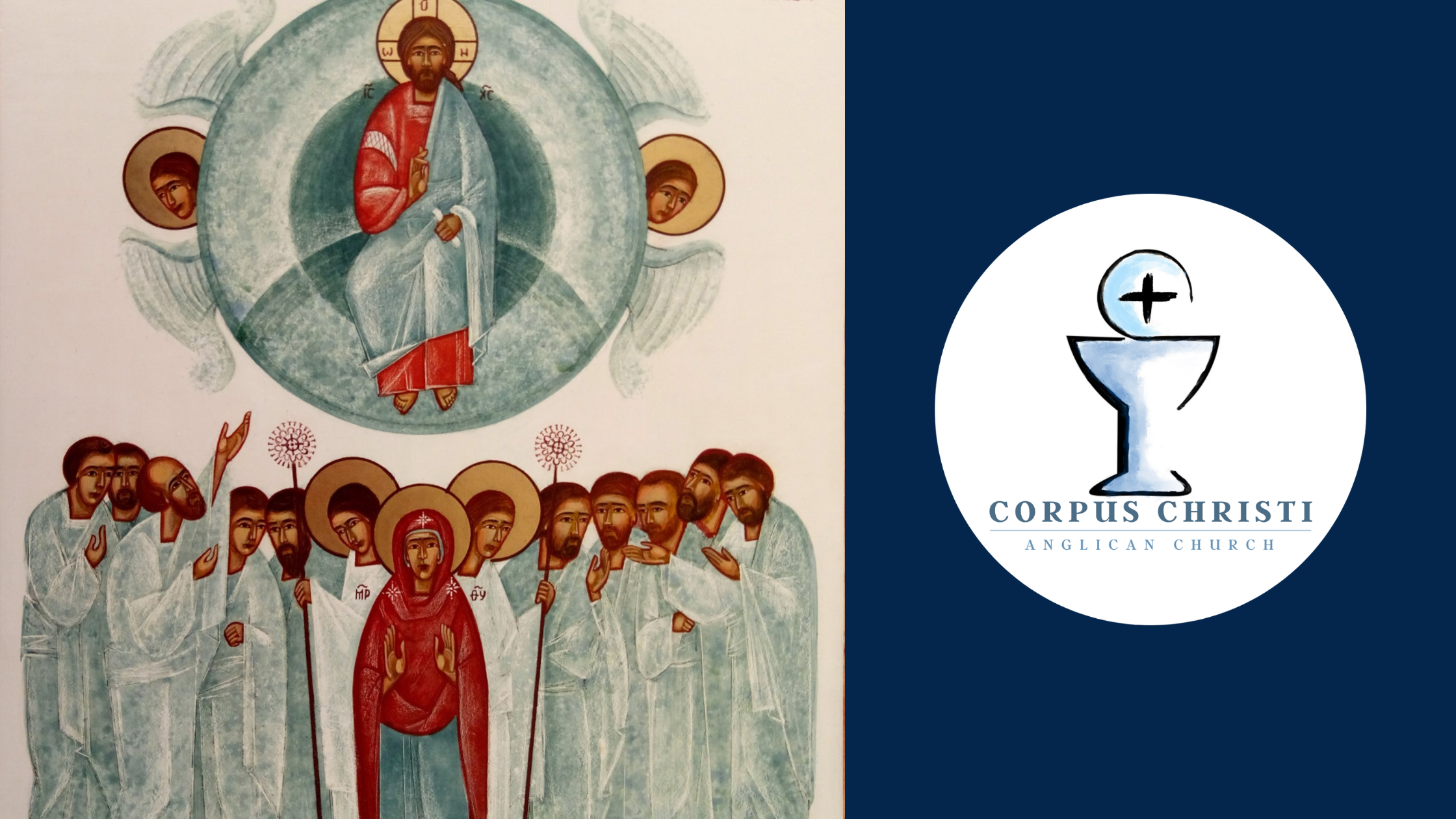
Sunday After the Ascension: Lord, Get us Out of this Mess

TranscriptioN
Well, good morning everybody. It is good to see you this morning. I'm the vicar here at Corpus Christi Anglican Church and this is, as I mentioned before, the final Sunday and Eastertide, this long Easter season that we celebrate. Next week we'll get to celebrate Pentecost together and so we'll be wearing red.
It will be a joyous celebration. And on this last Sunday of Easter, in this little 10 days that we often refer to as Ascensiontide, we are reminded of Jesus going and ascending where he rules and reigns and the disciples waiting for the Spirit to come and to empower them for the work that God is calling them to do, which is to carry on the work of Jesus. And so as we think about Ascension, one of the things that we did on Thursday is we celebrated the Feast of Ascension and we were reminded that there are two realms to creation, heaven and earth, that the Scripture describes.
And Jesus is Lord over all. And what he is doing in Ascension is bringing heaven's realm into earth, breaking in. And this is why each day we pray in the Lord's Prayer, Lord may your kingdom come on earth as it is in heaven.
God's doing this cosmic work of salvation that we're a part of, uniting heaven and earth in new creation. And we see in part now what we look forward to in its fullness when Jesus comes again to restore all things at his second coming. And so today we're still focused on this waiting period, these 10 days, where Jesus has ascended and he is reigning on high and yet hasn't given the Spirit to his disciples to dwell in them, to be his presence as they are to carry on his works.
But what Jesus' Ascension does remind us of, we might be tempted to think that he ascends and so he's absent, but actually the Ascension does not declare his absence, it declares his active presence as he rules and reigns and brings his kingdom to come on earth as it is in heaven. And I don't want to take us too far off on a tangent, but I don't know how many of you are aware of this, but in the Bible, in the book of Esther in Hebrew, how many of you were aware that it almost didn't make it into the canon? Okay, a few of you. It almost did not make it into the canon.
That and the book of Ezekiel are two books that almost didn't make it in for different reasons. For those of you who knew why Esther didn't almost make it in, do you know why? Yes, excellent, yes. It never mentions God, never mentions Yahweh whatsoever, explicitly I should say.
So essentially when you read it, it's this narrative about a Judean woman in the Persian period who saves her people through deception, like that's the basic storyline. Now, some have suggested that the name Yahweh in Hebrews, יהוה, those four letters show up as an acrostic pattern at different points in the book, and that might be true. It's debated, but if it is, and even if it's not true, it still highlights something that's very true about the book, which is that the Lord's name may not be mentioned explicitly, but he's far from absent.
He's in their preservation, and to me the book of Esther in that way, as we see God working in the background very actively, this is something like what it feels like to me when we talk about the ascension of Jesus. He's not absent. He's reigning, and his reign moves over our age and into our earthly realm in ways that you could put sort of on this spectrum of overtly miraculous and overtly ordinary.
Still miraculous, but ordinary. Somewhere in there you see the kingdom of God breaking in. You see Jesus's rule and reign as king breaking into our realm, and we can see it in today's passage in the book of Acts, chapter 16.
We see it in the stirring up of hearts. We see it in the disruption of corrupt and demonic systems, and we see it in this surprising deliverance that produces faith in a Gentile, a pagan, and so I want to look at this text together this morning in Acts, chapter 16. If you have your Bible or you have it on your phone, you can open up to Acts, chapter 16, and as we get into it, let me pray for us.
“In the name of God, the Father, the Son, and the Holy Spirit, amen. Lord, may the words of my mouth and the meditation of my heart be always acceptable in your sight, O Lord, my rock and redeemer, amen.”
Lydia and the Stirring of the Heart
Well first I want to see how God's kingdom comes in stirred hearts.
Paul is in a missionary journey in this context, a different one than the last one we talked about. This time he's traveling with Paul, Silas, Timothy, possibly Luke himself, and they arrive at Philippi, which is a major Roman colony, a very urban place in northeastern Macedonia today, northeastern Greece, and he does what he normally does, which is to find a local synagogue to preach out of, to share the story about how Jesus ties all of history together for people's deliverance and salvation, but Philippi is so pagan that there are no synagogues in Philippi, so what is he to do? He hears a rumor that there are some people who pray down by, there's a regular place to pray down by the water, and there it's mostly made up of women, and when he's down there, this is before the passage we read today, he encounters a woman named Lydia, and Lydia is a God-fearing Gentile, meaning she was a pagan Gentile that converted to worshiping the God of Israel, so she's a monotheist, and as he encounters her, he ties together the stories of Jesus for her in a way that shows her what God has done for her in the Jewish Messiah. She believes this gospel, and then she is baptized, her and her household, so the gospel comes to a successful businesswoman, a woman who is very well known, well off, and she and her whole household are baptized, so we see the gospel being fruitful, multiplying, and filling the earth in this woman, Lydia.
Even in pagan Gentile cities where there's not even a synagogue to preach out of, we don't see all the parts of Lydia's life that lead up to this moment, but we do know that in Acts, God had given Paul a dream to go to Macedonia, and so we see Jesus reigning and bringing together the story of salvation in ways that Paul's not aware of, that Lydia is not going to be aware of until it happens, and Lydia reminds me that we often see the kingship of Jesus when we're open to looking for the ways that God is stirring hearts. Sometimes people will call these God moments, right? There's these ways that you couldn't have guessed that God would bring these moments together, but he does, and in the stirring of hearts, we see God's rule and reign. In Lydia's time, paganism was the norm, and especially in Philippi, this city to preserve its welfare, sacrifice to gods and to the emperor who was considered a god.
They were trying to keep the gods happy, to procure the blessing on their city, and so it was tied together. Economic, politics, religion, it's all brought together in a cohesive system, in this religious system that was intertwined, and this is what it meant to be Roman, and so to follow Christ was a Roman identity, and it was a threat to these Roman nationalists who didn't want anybody threatening the safety or the Roman-ness of their colony, and in our context, you know, there's often a veneer of Christianity that we can see in places, or at least if there's not a veneer of Christianity, people are pretty familiar with the story of Christianity. That might be less and less true, but even now, someone at least knows what this term means, generally, but the reality is our neighbors are still bound to the kingdom of darkness.
No matter where we go, our physical neighbors, our co-workers, and in this place where God, where people are still bound to the kingdom of darkness, Jesus is still stirring up hearts to find him, to discover his goodness, and you and I, like the disciples like Paul here, are called to be attentive to what God is doing, when to speak, when to listen, but we should be prepared to listen and then connect somebody's story to the story that God is telling in them and through them when the opportunity is presented to us. So that's Lydia that we encounter. Jesus is stirring hearts, as in Lydia's case.
The Gospel Disrupts Demonic Systems — the Freed Slave Girl
Jesus also disrupts demonic systems, no matter how embedded they become. This is an amazing aspect of the gospel. So they go another time to the place of prayer.
This is what we read this morning. They encounter a female slave. She's not given a name in the story, but they harass Paul and Silas, and he turns at some point, and he commands the demon to come out in the name of Jesus, and if you think about this, what's astounding is you have this Lydia, who is a well-off businesswoman who comes and believes the gospel.
She's a Gentile convert to Judaism and then believes the gospel of Jesus, and now you have a pagan slave girl who's being profited upon, or she's being used for other people's profit by telling the future, but Luke wants us to see that the gospel comes to all, whether it's the well-off, whether it's the poor, whether it's slave, whether it's free. Her society told her that she only had value in as much as she benefited other people, right? She was valueless, but Jesus has an alternate gospel narrative that her life not only matters, she is an image-bearer of the king of the universe, and that is this holy economic deconstruction of the earthly emperor's gospel. This does battle with the good news of the Roman Empire.
The woman had a spirit of divination. She could tell the future, and Paul liberates this woman both from the spirit of divination that was holding her hostage and, as a result, from her masters. The slave girl is now freed to reign with the king of heaven for the first time in her life, and that is stunning, and so first Paul has to recognize that what this girl is doing is not truly her.
She's bound to the kingdom of darkness. Then he has to take the risk to cast this girl's, the demon out in Jesus's name, and why was it risky? I mean, for a couple reasons. One is if he had said something and nothing happened, so that's a risk, but two, it's also a risk because he named something as demonic that was completely normalized in their culture, and it was something that was so normalized that it was expected to support the sustainability of their culture, so her masters are irate.
They tell the municipal authorities, these men are Jews and they're throwing our city into an uproar by advocating for customs that are unlawful for us Romans to accept or to practice, and I also wonder if there was, for these slave masters, a feeling of fear. If people start becoming Christians, then they're going to move away from Caesar as emperor and lord. They're going to move away from faithful citizens.
They're going to move away from what it means to be Roman, since it was Roman law to sacrifice to the emperor, and if these men's livelihoods could be lost, then perhaps other people's livelihoods could be lost too, as now Christians are just coming in and destabilizing the economy of the colony, especially when your commerce is, your commerce surrounds those gods, and so they're accused of a kind of revolution. People would rather be comfortable than free. Some people want to be told that they're okay, even if they're sick, because the process of healing can involve pain, it can involve suffering, and most difficult to swallow, it can admit that, it can, it can involve admitting that we were wrong, and that's really hard, especially when we're talking about religious political systems, and what if, if we think about the gospel here, what if there were a way to live in community in a way that didn't use slave labor, or exploit women, and that honored the image of God in all people, right? On this end of the empire, Roman Empire's collapse, it seems obvious.
It did not seem obvious to those slave owning Gentile pagans, but this is the power that the gospel brings, a society where the slave is free, that women are honored, that the image of God is honored in all people. This is what the gospel of Jesus offers, but healing can be scary and risky when patterns of acceptable corruption start to calcify and get normalized in the society, and so the kingdom of heaven comes when the calcified patterns of the kingdom of darkness are named, and they're broken up, and they're deconstructed, and Jesus's kingdom comes when individuals are then de-shackled from the lies of the kingdom of darkness. This girl had value as an image bearer of the king, and after the slave woman is free, we see her masters double down on systems that they're bound to, patterns that they've lived into, but Luke's point, which is helpful for us, is that even though they double down on their systems of bondage to the kingdom of darkness, that is not going to stop what God will bring about through the gospel, and that's good news.
So this work of the gospel bearing fruit might be surprising, it might be disappointing at times because it's painful, or there's an admission that we were wrong, but if we prepare our hearts to receive people's reactions, the circumstances that we find ourselves in, with curiosity, kindness, and trust that the Holy Spirit is at work in us, that he's with us, that he's at work through us, then we begin to see the kingdom of God break through into this earthly realm, and the suffering becomes redemptive as the healing begins.
Discerning the Movement of the Kingdom — The Philippian Jailer
And so we've seen Paul and Silas's disposition. They needed to have this disposition of openness, curiosity, and wonder at what God was doing.
They needed this because they're going to then be thrown into prison as a result of these masters and their complaints to the municipal authorities. They're thrown into prison and they're beaten with rods, but then we find them again in Acts 16 praying and singing hymns in the middle of the night, and there's an earthquake that takes place, the whole place is shaken, and all the prison doors are opened. And you have to understand in this culture, people take, the Gentile pagans take things like earthquakes, and they see them as signs of God's disfavor or favor, depending on if it's favorable to them or not.
There is a divine agent behind these natural disasters, and so this is frightening for the guard because the prison doors are open, and he was responsible for these prisoners. If they had escaped, he would be punished. There's little ears, so I just leave it out, he will be punished.
So Paul stops the guard from making a life-altering decision, and he reassures him that all the prisoners are there and they're accounted for. But God had used the earthquake to get the guard's attention, and the guard brings Paul and Silas out to ask them a question. Our translations make it sound so spiritual.
Sirs, what must I do to be saved? This is a Roman pagan. This is a prison guard. There is no way he's thinking in like Jewish kingdom messianic constructs.
So other people have translated it differently. I think they're right. Rather than saved, which is a pretty loaded theological term for us, I think what he's saying is, okay you guys, how do I get out of this mess? That's the essence of what saved means here in this passage.
So God has brought him to this point of realizing, I'm in trouble, I need to know how to get out of this, and I am open to hearing whatever you have to say, because you must know something I don't. And so Paul tells him, trust in Jesus and you will be delivered, you and your household. And we have to keep keep in mind what this means.
Trust in Jesus. He's asking him functionally to disavow his allegiance with the Roman Emperor, who is a god, and to realign his allegiance to Jesus as Lord and King. Jesus is Lord, there is no other.
Jesus is King, there is no other. Caesar is not Lord, Caesar is not King. And that night this man puts his faith in Jesus, and he says, you know, no matter what God brings me through, I trust that Jesus is King.
And he and all of his household that night are baptized, which includes his wife, it includes his children, and if his household had slaves, it includes them too. All of them are brought into the body of Christ. God in his kindness then does what Paul says.
He spares the life of this soldier, as the magistrates just decide that Paul and Silas are allowed to leave now. And so they're released, and they go forward to the next thing, and the life of this soldier and his family are forever changed. This is the beginning of the church at Philippi.
A Jewish woman, a freed slave girl, or a Gentile convert to Judaism, a freed slave girl, a Roman soldier. These are the beginnings of what God is doing in creating the body of Christ in Philippi, where he is shown to be Lord and King. So Jesus delivered this person and his family in a surprising way, that Paul and Silas had to live a life to prepare for.
They had to be recognizing this. They had to be careful to keep faithful rhythms of prayer and worship in order to keep a watchful eye and an open ear to what God was doing and to where his kingdom was moving, and they noticed it in the life of this jailer. They could have run for freedom, but they were attentive to what God was doing, and the result was an enduring faith in the Philippian jailer and trust in the kingship of Christ for this man and his whole household.
Imagine how many generations of Christians there are because of this man and his household. So when Jesus ascends, he is not absent. Quite the contrary, he is actively reigning as Lord and King, and we see his rule and reign where heaven and earth are united in the stirring up of hearts, like in the story of Lydia, through the disruption of demonic systems, as in the deliverance of the slave girl, and when people trust in Jesus, as in the life of the Philippian jailer, and all of us are called to sharing in this ministry of sharing in Christ's rule and reign together.
This is the community where Jesus is King and Lord, and people see that in the way that we treat each other, and it requires a life of attentiveness, regular prayer and worship to reframe our everyday moments, our proclivities, our desires, and our loves under the reality of the kingship of Christ. We need what is real to frame what is temporary, and this also involves curiosity about where we see Christ at work. Sometimes his work is subtle in our everyday moments, and sometimes it is glaringly obvious, but in any case, Jesus hasn't abandoned the project of creation.
He's become Lord of all things, and all things will be brought to their fullness in his work of new creation. His ascension is a promise that he will come back again and restore fully what he is doing in part right now. So I want to encourage us not to just think of heaven as a place we go to where when we die, a geographic space, but instead it's something that is breaking into our reality now.
It is taking over in individuals and households and communities in this community, and so we're to prioritize looking for it attentively, so that each day we can actually pray, may your kingdom come on earth as it is in heaven. Let me pray for us. Almighty God, you sent your son Jesus Christ to reconcile the world to yourself.
We praise and bless you for those whom you have sent in the power of the Spirit to preach the gospel to all nations. We thank you that in all parts of the earth, a community of love has been gathered together by their prayers and labors, and that in every place your servants call upon your name, for the kingdom and the power and the glory are yours forever and ever. Amen.
Transcribed by TurboScribe.ai. Edited by the Author.
Ascension Day: The Reign of Jesus in the Realm of Life
TranscriptioN
Thanks for making time to come and gather on a Thursday night.
This is one of those days where it's often it comes up on us and we're not used to thinking about it, but it is such an important day in the church's calendar. Part of the gospel here is Jesus crucified, risen from the dead, ascended on high, who will come back again. All of this is the gospel, the saving work of God.
And this is actually our first time as a church celebrating it on its actual day. And thank you to Caroline for trying out the incense with us tonight. I was thinking about how joyous it is to talk about Jesus going up in the clouds and then having the clouds of incense just permeating our olfactory imagination.
So thank you. It smells like prayer in here. I'm grateful to you for your help.
And so as I said, this is one of the central days in the church's calendar, in the history of the church. And this feast commemorates not Jesus being absent, but his exaltation as King. That's what the Ascension is all about.
This feast declares that heaven and earth will one day be ultimately one, and that Jesus is Lord over both of these dimensions, heaven and earth, both parts of God's creation. And both of those realms find their overlap in Jesus himself, who is the promise that heaven and earth will ultimately be reunited, restored in this cosmic story of salvation and new creation. And as we look at this book of Acts chapter one, let me pray for us.
In the name of God, the Father, the Son, and the Holy Spirit. Amen. Lord, may the words of my mouth and the meditation of my heart be always acceptable in your sight, O Lord, my rock and my Redeemer.
Amen. The disciples gather around Jesus, and they ask him in chapter one, the beginning of this chapter, Lord, are you at this time going to restore the kingdom to Israel? This is the question on their minds. The expectation is that the Messiah is going to come, that the Messiah is going to conquer the nations that were warring against God and his anointed one.
This is sort of the theme of the Psalms, and that God would establish a throne that would last forever through his servant of the line of David. And that's why the cross had been so surprising, but now Jesus has risen from the dead, and you can imagine, now he's risen from the dead, perhaps their hopes are sparked again, that this might be the time now. Now that we've seen him, now that we've walked with him in his resurrection, maybe now is the time.
When are you going to restore the kingdom to Israel? Is this the time it's going to happen? And Jesus tells them not to worry about the day or the hour. That shouldn't be on the forefront of your thinking and your anxiety, but he instead gives them a call in the meantime. He tells them that the Holy Spirit will come upon them.
They're to wait until that happens, and then they're now going to be Jesus' witnesses in Jerusalem, and then in Judea, which is broader than the area in which is Jerusalem, and then Samaria, just north, and then to the ends of the earth. Everyone else, the Gentiles, but they are waiting. They're in this season of waiting for the Holy Spirit to come on them.
And it reminds me that we're not supposed to waste our time on worrying about when this is finally going to come. When is Jesus going to come back? Reading the newspapers for signs of the times is not a helpful discipline. Instead, we're called in this time of waiting while Jesus is reigning, and we're waiting for him to come again.
The word for that that they use in the Bible and in Catechesis of the Good Shepherd is the parousia, when he comes again to restore all things in their fullness. While we're in this waiting period, we receive this call to bring the message and continue the works of Jesus, who was crucified, resurrected, now he reigns on high. And now one of the things that we're called to do is look for the ways that he reigns right now, because his kingdom isn't just out there, but what the Ascension declares is that his kingdom is come, and will come more fully.
And so we're looking for the ways that his kingdom comes. And it's easy to get hung up on misconceptions about heaven being something out there, something disconnected from our everyday experience, or geographically above us. I can't remember who I was talking with, but there was a Russian atheist, and when he went up into space, he said, you know, I went up into the heavens and God was not there.
And so the reality is that heaven is not geographically located, somewhere out there disconnected. Heaven is another realm or dimension that overlaps with the dimension that we find ourselves in, and Jesus reigns over both realms and dimensions as king over all creation. It's easy to think of it as this repository of souls that's off in the sky, but the way that the Bible describes heaven is that heaven and earth, and we think of that phrase, heaven and earth, as this complete totality of the creation.
And sometimes God's realm breaks into ours. You can think of the Theophanies, the Old Testament, like Mount Sinai, the crossing of the Red Sea, or even something as simple as going into the temple, this thin place where heaven meets earth. And Jesus came in the book of Acts, part of the argument is that he is the temple, he is the place where heaven meets earth.
So if you want to encounter the place, you encounter Jesus, because that's the one who brings these things together. And so when we see Jesus being the temple, we see him stirring people's hearts, healing them physically, some other brokenness restored. These are all the miraculous spaces where we see heaven breaking into our world.
And so I was remembering a time where I felt something like this, where the two realms, there was two realms. And so I used to work when I lived in Chicago as a caterer for a catering company, and I was about 18 or 19, I was in under, no, I was 20, I was an undergraduate, and I was working for this catering company, which brought me into really cool places in Chicago. And one of the interesting places that I got to go was inside the stage of Millennium Park.
And the reason I was there was because there was a girl who was having her 16th birthday party. So this is a realm I'm not used to, where one 16th birthday party is celebrated with private catering inside the stage of Millennium Park. And here I am in this fancy tuxedo, going to this place, serving hors d'oeuvres.
And one of the kids had struck up a conversation with me as I was serving them food, because they don't have some of the same barriers. And the mom comes over and says, please don't talk to the help. I've never felt so out of the realm of where I was at.
I'm wearing a tuxedo, which is not me, and I'm serving food in Millennium Park, which is not me, and here I am, the help, and it's just a weird reality where there is a realm that I was in, which I was not accustomed. That realm was not mine. So it's possible to imagine that God's realm is kind of over here, and it has nothing to do with our realm.
But when we pray the Lord's Prayer multiple times a day, we say, may your kingdom come on earth as it is in heaven. And so there is something of the kingdom of God breaking into our realm that we get to experience when Christ reigns. So when Jesus becomes king, he rules over both heaven and earth, and when we see heaven break in, it's a promise that earth and heaven will ultimately be one.
Like when you read Paul's passages about all in all, Christ is all in all, these things will ultimately be one, and we taste now what will ultimately be true in the future. And it's not that like God has, Jesus has disappeared in the ascension, and we're left to just fend for ourselves down here, but Jesus again is Lord, and he is active, and our job isn't to just fixate on when he's going to restore all things, but to discover how he's doing it right now through the Spirit that he has given to us. He had to ascend in order to send us the Spirit, who is his presence that empowers us to carry on his works to the ends of the earth, which involves our neighborhoods, those closest to us, wherever we go and work.
So Jesus is taken up in a cloud in their sight, and the Son of Man ascending on a cloud is a reference to Daniel 7 13. Again, at this time there's no New Testament written. Their Bible, the Bible that they were familiar with, was what we would call the Old Testament.
So when Jesus ascends on a cloud, this is the image that's coming to mind, is Daniel 7 13. It's kingship language, that the Messiah has become King. It proclaims that Jesus is exalted, not that he's absent, and that's really important, because sometimes it can feel like he is, but being King is really the opposite of abandoning his project until the end when he's going to come back again, and that's why these messengers, heavenly messengers, say to the disciples, why are you standing here looking at the sky? The disciples had been focused on when Jesus is going to bring a physical kingdom, rather than being enamored with discovering where it is now
They were missing, well I should say it this way, they were called to mission, not to date setting, not to wonder when, but to discover where Jesus's rule and reign is breaking into their lives at this time. And so now they need to get their eyes off the sky to look at what's in front of them. Have you ever been on a road trip with a child, or have you been the child on the road trip? You know, the sense of time is just not the same when you're little, and so when you're on a four-hour car ride, and you're in the first five minutes, and you hear from the back, are we there yet? Are we there yet? Well, no, no, it's been five minutes.
Are we there? It's been two minutes since you asked. No, we're not there. Internally you have this dread about how long this four-hour car ride is going to be, and the way that a child is going to stop asking that question is either if they're sleeping, or if they become enamored with what the things are that they can look at out the window.
And as they're looking out the window, there's things to look at, they're just enamored with wonder at what they're seeing as they see new landscapes and places. And that helps me personally to understand something of the kingdom mission that the disciples and us are called to. Rather than focusing on the are we there yet? Can you please come back now? Instead, it's a call to notice the kingdom that God is bringing in them, through them, and around them.
The end is secure. Jesus is ascended. He is going to come back again, and he's going to restore all things.
And he reigns now, and in the meantime, before he comes back again, their call is to proclaim the message, and more importantly, to notice where the kingdom is coming in their lives, and in the world, and in the lives of others. And noticing that is actually part of the proclamation. When you can notice it and name it, this is part of the work of the kingdom mission.
So Jesus ascends to reign, and the story of Acts is all about what Jesus continues to do and teach. And this is the story that's continuing and written into the life of the church through the centuries. I was actually thinking about this.
This is the 1700th anniversary of the Council of Nicaea. This is how, you know, if we look back at the last 1700 years, we are seeing the work of the Holy Spirit writing out this story of the Acts of Jesus in the church. And as you consider your own story, what work has God done in your story to redeem what's broken? And so looking at those things that are broken, and seeing how God has redeemed them, those are miraculous breaking in of the kingdom of God.
Those are the places where heaven and earth get joined together, where you start to see Jesus's rule, and his reign, and his lordship. The point of being saved, when we hear that language, it's often loaded. It's not to go somewhere someday.
That's not usually how the Bible talks about being saved. Again, because heaven's not a geographic place out in the sky. It's to be joined to the new creation work that Christ is doing as he is Lord of all things.
It's seen in the freedom that we have from sin, or that we're experiencing from sin, even for the first time. It's experienced in the changed ways of thinking that we have, the behaviors that change, the breaking of generational trauma, of generational sin, the restoring of broken relationships, broken selves, patterns of speech. All of these things are where heaven breaks in, and we see Jesus's rule and reign as king.
So I want to encourage us to make time for contemplation and stillness, to reimagine how the world has sown in corruption, but how God is going to reap in corruption from that, as the Bible says. There's a passage that I really love from C.S. Lewis in a book called Letters to Malcolm, and he describes memory and reality in this passage, in the new heavens and the new earth. What's the relationship between memory and reality? What happens now in our lives should be framed by the reality of what will be later, and so as he's talking to his imaginary friends in these letters, he says, this is a quote, I can now communicate to you the vanished fields of my boyhood.
They are building estates today, only imperfectly by words. Perhaps the day is coming when I can take you for a walk through them. In other words, the reality of what will be restored is different than his memory, and the memory of what will be restored should reframe what's now broken and what's in need of redemption.
And so again, today we celebrate Jesus as Ascendant. He rules and he reigns as King over all and Lord, and our call is to carry on with the disciples these words in the works of Jesus until he comes again to restore all things ultimately. So we don't need to waste time or effort concerning ourselves with when he comes, but resting in the certainty that he will indeed restore all things, and then we're to engage with him in this work of restoring creation and discovering heaven in the daily earthly experiences that we have.
And that requires us taking time to wonder and notice what God's doing as we serve one another like Christ, and we cultivate incorruptible things from what's been sown in corruption. So make space, like a child in a car ride, to be mesmerized by God's work in your hearts, and in the hearts of others, those who you live with, those who are around you, be mesmerized at the kingdom work that Jesus is doing, because Jesus is Ascended not to abandon the world, but to rule and to reign and to make all things new. Let me pray for us.
O God of peace who has taught us that in returning and rest we shall be saved, in quietness and confidence shall be our strength. By the might of your Spirit lift us, we pray, to your presence, where we may be still and know that you are God, through Jesus Christ our Lord. Amen.
Transcribed by TurboScribe.ai. Edited by the Author.
Rogationtide: Holy Work in Ordinary Ministers
TranscriptioN
Well, good morning again, everybody. It is good to see you. I forgot to introduce myself earlier. I'm Father Morgan Reed.
I'm the vicar here at Corpus Christi Anglican Church, and if you're new to Anglicanism, that's like a senior pastor of a mission church because we are very much a church in formation. But I am grateful that you're here this day, this Memorial Day weekend, but also this special day in our calendars, the last Sunday of Easter before we get to the ascension of Jesus. And this is called Rogation Sunday, which means tomorrow, Tuesday, and Wednesday are this little season called Rogationtide.
These Rogation Days, we celebrate before the ascension of Jesus into heaven, and the focus is twofold. First, it's on the goodness of God's gifts to us through his creation, and then second, it points us to the ways that our earthly labors are made holy because Jesus made labor holy. And that doesn't mean paid labor.
That means anything that you put your hands to do is made holy. And so I want to look at this passage today from the book of Acts through the frame of Rogation Sunday as we encounter Paul and Barnabas preaching for the first time to a pagan community that had no Jewish background at all in the book of Acts. And I think in this passage, what we see in Paul and Barnabas is an encouragement for us to see the works of our hands as an invitation for us and for others to discover the works of Jesus.
So our works, the things that God has for us to do, are an invitation to help others and ourselves see the work of Jesus. As we look at this passage, I'm going to pray for us, the collect for Rogation Days. Almighty God, whose Son, Jesus Christ, in his earthly life shared our toil and hallowed our labor, be present with your people where they work.
Make those who carry on the industries and commerce of this land responsible to your will, and give us all a right satisfaction in what we do, and a just return for our labor through Jesus Christ our Lord, who lives and reigns with you in the unity of the Holy Spirit, one God, now and forever. Amen. So in our passage today, we encounter St. Paul, St. Barnabas.
Barnabas seems to be a little older, and they're on their first missionary journey together, traveling, bringing the gospel to the nations. They have just been, we didn't read this passage, they were just pushed out of Iconium, which is a place in southern Turkey, to another place in southern Turkey, two cities named Lystra and Derby, which are two cities in this region called Laconia. And while they're there, there's a man that they encounter who couldn't walk from his birth, and he was listening to Paul teach.
And Paul, as he's teaching, sees this man, notices him, and he notices about him that he has faith to be healed, whatever that means in the context of a pagan Gentile who has no Jewish background. Paul notices this about this man, and he says to him, stand on your feet, get up. And immediately this man stands on his feet.
And so Paul and Barnabas are carrying on their labor that God's called them to do in an insignificant town to a person that we never learned his name. He's a crippled person, sort of a, he's probably a figure in their city, everybody kind of knows who he is. But God does something significant in this nameless person in a small town, in the overarching story of the kingdom of God and where it's moving.
It's a paradigm shift, where now Gentiles aren't first Jews before they hear the message of this Messiah Jesus. These Gentiles with no Jewish background whatsoever are hearing about the good news that has taken place in the Messiah. And the healing of this man is significant as a shift in the story where this is going to take place.
And even though Paul and Barnabas in this story, we would call them missionaries, I want to suggest that the work that God's given us to do in our different seasons of life, whether it's paid or unpaid, is equally important, equally as spiritual, and equally ministry. And I brought something for the kids to see, and for the adults, and to smell. You guys can pass around and smell it.
This is great. What what is this, kids? You can say, shout it out. Yes, good, good observation.
This is coffee, and it smells so good. So I'm going to pass this around because I want you to experience some of the joy and the sense of salvation. So that is coffee, and it's not just coffee, though.
It is a way to discover Jesus. That was the answer I was looking for. But it is indeed a way to discover Jesus.
Each time we're in the office, you know, my son, he'll brew a cup of coffee for me, and I love the coffee that he makes, and I hug him with gratitude, and I express my gratitude. And there is something of love in the action of doing this, and the beans make this possible. Every time I drink a cup of it, my hands are freed up to think because I'm a fidgeter, and I can meditate on the good things around me.
Every time I brew a cup, I can make some for somebody else if I brew a whole pot of it. And in those conversations, we discover the workings of God in ourselves, and I discover it in them, and vice versa. And so, yes, it's coffee, and it's so much more.
It is a sacred window into the mysterious workings of God. Now, it's not just true of coffee. It is true of everything that we put our hands to do.
My life just revolves, I actually literally have to make my schedule around how much caffeine I'm going to take in with people, so I have tea meetings with some people, coffee latte meetings, depending, so I have to chart my caffeine intake during the day. But either way, it is a window to the New Jerusalem, as is your labor. And so, you know, the thing is that we often don't think about, and why I love Rogation Sunday to be in our church calendar, is that life isn't broken up into secular versus sacred.
But as C.S. Lewis says in some place, I can't remember, he says, life is actually split up into religious versus irreligious. And so, even for a clergy person, the church, and working in the context of the church, should never be something that causes the neglect of the family, or even neglecting my literal neighbors in my literal neighborhood, because somehow church work is seen more valuable than another one, right? They're just different stewardships, different priorities, but one is not more spiritual or more sacred than another. Everything created is sacred in the kingdom of God, in this world, and so our task is to cultivate what is good, true, and beautiful in the good things that God's made.
So St. Paul might be a trailblazer in this passage, but his end goal in doing all this missionary work is to establish communities, to build up the church, to make little outposts of the kingdom of God that don't rely on him to be there anymore. And that's why, when we read his letters, he says in Ephesians chapter 4, God had granted that some be apostles, prophets, evangelists, pastors, and teachers. And anybody know why? Anybody know the last part of that verse? To do what? Building up the church to equip the saints for the work of the ministry.
You know the work of the ministry is not my job, it's yours. I'm just here to help you do it, right? And so this is a really helpful thing to think about on this Rogation Sundays. The ways that you shape your calendar, the things that you put your hands to do, these are opportunities to show the justice and mercy of God, to honor the image of God in another person, to hear some of the words of God from another person, to recognize brokenness and offer an alternative kingdom counter-narrative to what they're walking through.
And no matter what God's called you to do, this could be paid or unpaid, could be child rearing, could be grandparenting, could be real estate, could be social advocacy, teaching, military service, gardening, woodworking, making meals, or a combination of vocations. One's never truly retired in the kingdom of God, one just changes vocations. And so kids, this applies to you too, as you play, create, discover things, this is the work that God has for you where you discover the kingdom of God through very earthly means.
The earthly means matter, our bodies matter. So the work of Jesus continues through our work, the work of our hands, the thought life, the hearts, the words, these are the means by which people discover the goodness of Jesus in us and through us. And so our work points others to Jesus, it's the first point.
And second, as you work, make sure to listen. Listen as you're working. When the crowds heard about this thing that Paul and Barnabas had done, they thought that Barnabas had to have been Zeus, the head of the Pantheon, which probably tells you that he's a little bit older than Paul, and Paul is the main speaker, so they think Paul is the chief god Hermes, the messenger god.
This is a common thing, their government systems, their municipalities are built around the religious system, and so to anger the gods will have bad results on your city, and so they want to, they can't believe that the gods would bless their small town with their presence in this miracle, and so not to offend the gods, who were pretty capricious and fragile, kind of like human beings, they wanted to properly thank the deities for their blessings and their presence just showing up, and so they don't want the gods to be offended. And Paul and Barnabas start to hear what's happening, that there's a temple that's dedicated to Zeus, the priest over there says, let's get everybody in the town to make sacrifices, and Paul and Barnabas tear their garments, which is a Jewish sign that blasphemy has occurred. So note, I think it's really important that for them the means are as important as the ends.
It could have been easy to take advantage of the gullibility of this small town, you know, they just got kicked out of somewhere, and so they're probably hurt and tired, they're wondering how this is going to go, they get a little taste of success all of a sudden, and they might think to themselves or be tempted to think, you know, after being kicked out of the last place, this must be a sign of God's favor, let's just ride this wave for a little bit, stay comfortable, eventually we'll get to the truth, we don't need to rock the boat, right? That's letting ends justify the means. But underneath it all, the means are as important as the ends. The goal is pointing people to Jesus, they are process-oriented, everything they do is done to point people to Jesus, not themselves or their own greatness.
Obviously Paul was talented, they thought he was a god, but that's not the point, he wants to point people to Jesus. Because of that, the means are as important as the end. And our labor, the things that we put our hands to, is a way of helping others see Jesus Christ's character and his work.
It's not a means of establishing wealth or comfort or ease or securing power or influence. Power or influence happen, right? That happens to people, and it's a responsibility to steward, it's not something to seek after. Wealth and comfort and ease, similarly, these are never promised to the Christian.
They might happen, but they might not, and they're only going to happen for a time, and they're being taken away, this is not God's sign of disfavor, it's never promised. But Paul and Barnabas, they hear what's going on, they start to put the pieces together of what the townspeople are thinking about the gods, and they've needed to pay attention before they can connect the dots of how their labor and the work of Christ can be given, and how to package that for these people to take what's true and false in their narratives and shepherd them into what is good and right and holy. And what I think is interesting is there is somewhat of a blessing.
So Paul and Barnabas bless the good desire of these people, and they can name some goodness by God's common grace, and then there is a gentle shepherding away from what is not good for them. So they bless what it's good, they shepherd them towards what needs to be redeemed. So our work points others to Jesus, and we need to listen well before we offer the kingdom to people in a way that they can handle.
And finally, words have to accompany our work as we help people sort through what's true and what's false. Paul and Barnabas challenge the crowds, and they say, why are you doing this? And they tell the crowds, we are people, we're more mortals, just like you. And so they start with where the crowd is at.
They recognize their beliefs, they bless the good thing they desire to do, but they say ultimately there's something flawed here, and they challenge them to turn away from worthless things that won't profit them, and turn towards the living God. Now who is this living God? They don't know yet. This is sort of a foreshadowing of Acts 17 with other pagans in a different group, but they don't know who this is yet.
It is very human to want well-being and prosperity, but the faith of the town is misplaced, and so Paul and Barnabas are emphatically, but they are tenderly, starting with what this town knows, to work towards what they don't yet know. Blessing and shepherding. And so now that Paul and Barnabas have earned the right to be heard in their deeds, they use that platform to offer words of truth and hope.
They tell the crowds about the living God. This is the God who made heaven and earth. In other words, the earth is not deified, the moon is not a god, the Sun is not a god.
This is the God who has made the unseen, the invisible, and the visible. And he tells them for a time God had allowed them to go along in their ignorance, but even in their time of ignorance, God still showed them his goodness, because they were harvesting food. So as they were working with their hands, the labor they were doing was showing them the goodness of God.
God provided for them food, and he filled their hearts with joy. So even the joy that they experienced at a very human level is a gift from God, and those graces are truly common grace, and up to this time they had been misattributing where those came from. So Paul blesses the goodness that they know, and he uses what they know to point them to the God who's given them this thing.
Now, the question can be asked, in Paul's labor here, was he successful? Was he successful? It's your question, what do you guys think? Yes or no? I see some nods, yeah, he was. Well, the next couple of verses mention that the Jews come from Pisidi and Antioch, which we talked about a few weeks ago, and the Jews come from Iconium, where they had just been kicked out. And then they turn the crowds against Paul, and then they stone him, and they drag him out of the city, and everyone thinks he's dead.
That's success. And then the disciples, they come and they surround Paul, presumably to grieve the loss of their friend. Like, it's a tragedy.
And then, by God's power, Paul miraculously gets up. And then him and Barnabas go to the next city of Derbe to keep going. We don't see any of the fruit of Paul's labors here in this chapter.
So while none of us here that I know of have been persecuted to the point of bloodshed, it is the case that doing our work now unto the Lord might risk us being misunderstood, might risk us being cast out, not seeing the fruit of our hard work, even when that work has taken decades. And that's really hard. That can still be successful in the kingdom of God.
The success of Paul's labor wasn't measured in the number of conversions, the number of churches planted, the amount of money raised. It's his faithfulness to point people to Jesus as he follows God in the work that God's called him to do, whatever that is. And so the success comes because God is the one who brings the growth, not St. Paul.
Paul's job is to be faithful with the work God's called him to do. And I find it, and maybe I'm alone in this, but if you're like me, it is so hard to be open-handed and internally okay with the idea that others are going to inherit the labor that we've poured into, right? I want the satisfaction of a job well done. I want people to praise me for the goodness of the thing that I accomplished.
But to be open-handed and to be open to the idea and internally okay with someone else is going to build off what I did, and they're probably going to do it way better than I did. And to like rejoice in that is really hard, especially when things feel unfinished. And yet this is the work of pointing people to Jesus.
It's realizing that every sports team you coach, each moment you have with your kids or your friends, each book or article that you work on and you publish, each team you manage at your work, every document that you work on is probably going to be forgotten in the next hundred years. And if the document's not forgotten or if the acts are forgotten, like they're not going to know you in a hundred years or your contribution to that thing. And so even though that work is going to be forgotten, these are the little labors along the way that are building something like an implicit memory for generations to come that Jesus is good and true and safe and kind.
Try to think of how to explain that. So like as you are working, even though the labor and you and your memory and your name might be forgotten, the ways that you're investing in the people now that God's called you to be around are the little things that generations to come will feel and will know the goodness of Jesus whether or not they attribute it to you. And as the world discovers new ways to distort and confuse God's goodness and love, you and I are cultivating the goodness of the gospel that other people have planted.
We don't know who's sown in us. Maybe we do. But there are people that we don't yet know because there were people who sowed in the people who sowed in us, right? And we are sowing seeds through our labors for generations to come to cultivate.
And so I want to invite us this morning to see all the parts of our lives as sacred. You all are professional ministers. All of you.
Find some things this week that symbolize your work and pray over those things. Bless them in God's name during the days of rogation. I already mentioned coffee.
There are many prayers that happen around coffee. I was thinking for me I've got like a Syriac Bible that symbolizes part of my work. My book of common prayer. Cooking utensils. Ways that I might help people through making a meal or something. And a baseball glove that is part of my season of life right now.
And so what is it for you as you think of the things that sort of symbolize the work that God's called you to at this moment, paid or unpaid, what is that thing you can hold in your hand on rogation tide Monday, Tuesday, and Wednesday and say, Lord bless this. Make this a vehicle of your kingdom. May I see the goodness of new creation in this very simple earthly embodied work.
So take time to notice and delight in the work that God's given you to do. Kids, that includes you too. Our work is an invitation to see the work of Jesus.
Point people to Jesus. Help them reimagine their world as holy. And then listen to others and recognize what's true and what's false and help shepherd them to name what is good and the things that are in need of redemption.
I want to pray for us as we close a very short and simple prayer, but to highlight that this is a prayer we pray every Sunday in the Eucharist. So I'm gonna pray it for us now. And now, Father, send us out to do the work you have given us to do.
To love and serve you as faithful witnesses of Christ our Lord. Amen.
Transcribed by TurboScribe.ai. Edited by the Author.
5th Sunday of Easter: The Light and His Callings
TranscriptioN
Well, good morning. My name is Chip Webb, and I'm a member here at Corpus Christi Anglican Church. Before I begin, let us briefly pray.
“O Lord, may the words of my mouth and the meditations of all your people's hearts be acceptable in your sight. O Lord, our rock and our redeemer. Amen.”
Well, we're now in the season, as Fr. Morgan mentioned, when we have the joy of having our youth and our younger kids with us during the service. And so let me ask them, adults, don't help them out.
Let me ask them what season of the church calendar this is. Yes, Easter. Thank you.
And this is the fifth Sunday of Easter. Now, what do we focus on during the Easter season? Christ's resurrection. Yes, that is primarily what we focus on, the resurrection and its implications for our lives.
And we focus on that in all of our service, our homilies, etc. Now, what do we do during the Easter season? Do we fast like we do in Lent? OK, I'm seeing no. And the answer is no, because we don't fast.
We feast. Yes. Now, watch it, kids.
That doesn't mean that you get to continually ask your parents for your favorite food because we don't want to be gluttonous. But we do want to feast in the sense of spiritually and or literally because we are celebrating the resurrection of Jesus. We had 40 days of repenting for our sins and sometimes fasting during Lent.
But then with Easter, we have 50 days of feasting. And this year, one of our electionary passages each week is taking us through the Book of Acts. And more specifically, portions of the life and ministry of St. Paul.
We're seeing how his life was changed. Two weeks ago, we saw Paul's conversion on the road to Damascus. That direct encounter with the risen Christ that turned Paul's life upside down.
Let me ask our youth and kids one more question. How did Paul change? How is he different? Anyone? OK, well, he went from persecuting, from hurting Christians to being a Christian and telling people of the good news of Jesus Christ and his resurrection. And also his name changed from Saul to Paul.
So we saw that we saw that two weeks ago. Then last Sunday on Good Shepherd Sunday, we looked at one of Paul's early sermons on his first missionary journey, taking the good news of Jesus around the Roman Empire. So we moved from looking at the change that Paul experienced two weeks ago to some of the contents of his faith last week
And this week we are looking at Paul's calling and how it changed in response to the providential circumstances of life. Now, in today's reading from the Book of Acts, chapter 13, we pick up just one week after the sermon Paul gave that was covered in our reading last week. And right before where our reading began today in verse 42, we see the reaction of evidently the majority of the crowd to Paul's sermon in Pisidian Antioch.
They were enthused and they asked Paul to repeat his sermon or at least expand on it, repeat its points, what have you. And so one week later, they must have invited a ton of their friends because we read in verse 44 that the whole city came to the synagogue to hear Paul's sermon. Isn't that amazing? Here's Paul on his first missionary journey, reaching large, interested crowds with the good news of Jesus' resurrection.
Nothing could be better, right? Well, just one verse later, the bottom drops out. A number of Jews from later references, it appears that they were mostly the educated religious people, not only do not accept his message, but work to counter it. That's a pretty darn quick turnaround.
One week, people mostly or maybe even totally accepted his message or at least were open to it. Then the next week, at least a sizable percentage of the congregation opposed it, motivated, we are told, by jealousy. Now, we're not told exactly what the jealousy was over.
Some commentators, such as the Anglican theologian John Stott, believed that it was due to the crowd size or some would say that it's due to the fact, this would be associated with that, that he is in danger of taking over the position of authority that the regular teachers had. So either one's possible. We don't know for absolutely sure.
But whatever the reasons, Paul was experiencing a rapid change of fortunes in the city in Antioch. Now, I think that at least in general, most of us can relate to what Paul went through. Have you ever shared with others about Jesus? And you seem to for a short time or a long time be making a connection with them.
And then something just changes. And sometimes you're not even sure what. And they're no longer responsive.
I would say that that's sort of like what Paul experienced. Or, take something different. Have you been following God to the best of your ability and seemingly going down life thinking that you are following God exactly as he wants you to? And then all of a sudden you find your way blocked.
I know this type of situation very well. And in general, that seems to be what happened to Paul here. His way was blocked to an extent.
Or, maybe you've started out in a generally, or maybe even very good period of life, and then suddenly without warning, everything collapses. Maybe it's your jobs. Maybe it's your health.
It could be any one of a million of things. Many of us have experienced such traumatic circumstances. I dare say most of us.
And we will, the longer that we live, run into those. Any or all of those scenarios, make no mistake, are very difficult. And regarding those that involve our callings, it is never easy to have our direction from God, or seeming direction from God, frustrated.
Such situations can raise all sorts of questions in our head about what God is doing, and why he would either cause or allow, depending upon your particular theological bent, this to happen to you. And, you know, just this last Thursday, I personally celebrated, by reflecting on it, a spiritual birthday. It was the 40th anniversary of when I had committed my life to Christ's Lordship, and when I had become a serious disciple of Jesus Christ.
And now, when I did that, I didn't do it fully knowing what I was doing. I may have thought I had a pretty good idea. And I will say, earlier in that evening, I was a little bit reluctant still to do it, until the campus minister convinced me otherwise.
And the next few years after that were marked by quite a few struggles over what God wanted me to do in my life. You know, finally, over time, those struggles seemed to resolve. And I finally thought I had a good grasp, I mean, not a perfect grasp by any means, but I thought I had a good grasp of what God wanted me to do, and how my life was going to go.
And I had gone into English education to teach high school students. Things were great in terms of the academics, things were wonderful. And then I ran into the real-life training ground of student teaching.
And what I found was that all my somewhat clever lesson plans did not compensate for an inability to discipline students. And things were so bad enough that neither my cooperating teacher nor my professors involved with me would recommend me to go on. And so then I was stuck.
What do I do now with my life? And I have to say, I was incredibly perplexed, and that's an incredible understatement. Now in Paul's case, the blockage related to his ministry. We see in Acts that Paul and Barnabas, following the example of Jesus, went to the Jewish synagogues in the towns that they visited along their missionary journey.
In doing so, they were following the example of Jesus, who said that he was sent to the lost sheep of Israel. And undoubtedly, this was also an expression of Paul's calling. He was the Hebrew of Hebrews, the Pharisee of Pharisees.
His heart was for his fellow Jews. And in Acts, Paul is shown to be fervently attempting to persuade fellow Jews that Jesus is Messiah soon after his Damascus Road experience. We are not given any insight into how Paul reacted emotionally to this blockage once it came, but we do see in verses 46 and 47 that he re-evaluated his mission.
And in that re-evaluation, an ancient passage from chapter 49 of the book of Isaiah, from one of the four servant songs in that book, formed the nucleus of a new direction for him. Quote, I have made you a light for the Gentiles, that you may bring salvation to the ends of the earth. Unquote.
And for me, at least, perhaps the most interesting thing about Paul's citation of the quotation there in verse 47 is that he calls it a command. The Old Testament prophets, including Isaiah, frequently depicted Israel as a nation that was intended to be a light to other nations. In other words, to the Gentiles.
While the New Testament sees the depiction of a servant in those four Isaiah servant songs as ultimately fulfilled in Christ. So when Paul cites being a light to the Gentiles as a command, he is both taking up the role intended by God for the nation of Israel, and, on the other hand, he is also imitating the Lord Jesus Christ, who is faithful to God in precisely all of the different points where Israel was unfaithful to God throughout its history. In other words, the command that Paul now announces that he will obey, it's not particular to him.
It is one that was given to Israel as far back as Abraham. The original Abrahamic call was for Abraham and his descendants to be a blessing not just to his family and kinfolk, but to the nations. And the command is one that is only perfectly obeyed and only perfectly fulfilled in Jesus Christ.
But what about the Jews? God's chosen people and the group that seemingly, judging from Paul's other writings, still was most on Paul's heart. Well, it's important to remember first that, as I mentioned earlier, many of them responded positively to Paul's message, enough that they asked him back to the synagogue and invited their friends. But concerning the Jews who oppose Paul's message, interestingly, Paul asserts in verse 46 that they have judged themselves to be unworthy of eternal life by their opposition to the message of the resurrected Jesus.
In other words, their own actions have consequences and condemn them. Now, are we talking about a permanent condemnation here? No, not necessarily, because there is room for repentance still. But, nonetheless, their actions have had consequences and in a sense have condemned them.
The rest of chapter 13 details the results of these actions and Paul's re-evaluation of his mission. The Gentiles rejoice, while the Jews who oppose Paul, they harden in their opposition and they get other Jews to agree with them and to create such a situation that Paul, Barnabas, and company leave Pisidian Antioch. And so Paul, indeed, he became an apostle to the Gentiles, as he is commonly called.
But with his new focus on the Gentiles, did Paul give up on the Jewish people? No. If we jump into chapter 14, to the start of it, we see that in the next town, Iconium, he is there at first with Barnabas in the Jewish synagogues. So, even though his mission was changing, his heart for the Jewish people and his outreach to the Jewish people did not change.
It may have changed to some degree, but it never changed totally. And so in Acts 13, we see that as a result of one blocked calling, a new one emerges that serves as a foundation for the Church. On Friday, my wife Sharon and I attended the consecration of a newly opened building, the Trofimus Center, which is a new event center for Trinity Anglican Seminary in Ambridge, Pennsylvania.
Well, it is the one holy Catholic and apostolic church that has been made of the stones of both Jews and Gentiles down through the centuries on the foundations of the apostles. The church, which was initially viewed by the Romans as a Jewish sect rather than a separate religion, by reaching out to and incorporating Gentiles became the light to the world that Israel was intended to be. Paul, in obeying the command to be a light to the Gentiles, serves as a prototype and as an example for the Church.
And we, at Corpus Christi Anglican Church, we are one local expression of this emphasis centuries later. We are a common people using common prayer and undergoing uncommon transformation because others in the Church prior to us have carried the torch from Paul. And one overarching goal of our uncommon transformation is to be a light to the nations like the Christians who have gone on before us.
But then what about our personal callings or seeming personal callings that are or at least seem to be from God but are blocked? Well, there are five applications that we can take from them, that we can take, excuse me, concerning them from our scripture readings today and or the life of the Apostle Paul. Number one, we should view our callings within the context of the Church. We are all called as part of the Church, Christ's body, to be a light to the world around us and to be a blessing to the nations.
In doing so, we imitate Christ. Recall the words of the Charles Wesley hymn, Hark the Herald Angels Sing. Light and life to all he brings, risen with healing in his wings.
Think about that. Jesus brings light wherever he goes and with it he brings life and healing. In the picture we get of the New Jerusalem in Revelation 21, the leaves of the tree of life are for what? The healing of the nations.
And that comes after the marriage supper of the Lamb that we heard about today earlier in Revelation 19. We are also to be a light as one of our high priorities with the other high priorities being other aspects of our obedience to Christ. As we do so, by God's grace, we bring his life and healing with us into the world.
Any additional godly personal callings are subservient to this greater calling. Conversely, anything that we pursue that might prohibit us from being a light cannot be our calling. It's just not in our definition.
So, let us discern whether our callings are valid in the light of God's intentions for the church as revealed in Scripture. Number two, our heart should be for all people. You know, when you think about the New Testament, we almost have a biblical mathematical model.
Jew plus Gentile equals everyone. Everyone. Psalm 145 reminded us today in verse 9 that God has mercy upon all.
There is no one beyond the reach of his love. As much as possible, given our human limitations, and we have our own in many, so it should be with us. Our gospel reading today stressed the importance of loving one another.
Even when people seem far from God, we are to always hope for them. Think of the example of the Apostle Paul in the book of Romans when he expressed how much he held out hope for the Jews even though he was grieved over them. Remember, everyone, everyone is created in the image of God.
So, number one, we should view our callings within the context of the church. Number two, our heart should be for all people. Number three, recognize that our callings do not necessarily end when they are blocked.
They might just be modified. Opposition to Paul's message did not end Paul's heart for the Jewish people. A blocked career path does not have to mean that your gifts go unused.
It just means that they might be used in a different career or outside of a career. Be open to how God might use your callings in lesser or greater ways than you anticipate. Number four, take a proper view regarding callings.
Remember that God is not so much interested in what we do as who we are. That is, he is most interested in the development of our characters so that we become more and more and more like Jesus with each passing day, ideally. We can only be a light of the world as we become more like Jesus.
We can only share Christ's life and healing with people as we become more like Jesus. So, let us also resist any temptations to view our callings as ones of self-actualization. It's our American culture, not the Christian faith, that places so much stress upon individualism.
And number five, wrestle with God regarding callings when necessary. We don't see Paul wrestling with God about the situation in Acts 13, but we do see him wrestling in 2 Corinthians chapter 12 over a thorn in his flesh that undoubtedly inhibited his callings. Wrestle with God.
Wrestle, wrestle, wrestle with him. It is in wrestling with God, in being honest with him and about our uncertainty with him, about how he is leading us, etc., that we learn more of what God is like and we learn more how to love him. And realize that being confused about how God leads us and works in our lives is pretty darn normal.
There might well be times when we might say, with the late songwriter Rich Mullins, I can't see how you're leading me unless you've led me here, to where I'm lost enough to let myself be led. That is okay. It is fine not to understand what God is allowing or doing in our lives, or where or how he is leading us.
Jesus is still our good shepherd, as we saw emphasized last Sunday. Wrestle with God in all of his mystery That might never be resolved to your satisfaction in this lifetime or the next one. Our Acts passage ends with the comment that the disciples were filled with joy and the Holy Spirit in verse 42.
Similarly, the consecration of the Trochmas Center on Friday was an occasion for much joy, as well as the presence of the Holy Spirit. Two sections of two different hymns that we sang stand out to be related to these topics. With the elect from every nation mentioned in the church's one foundation, let us rejoice in the light in our darkness that Jesus brings, according to the hymn, Only Begotten Word of God Eternal.
And may by God's grace, individually, we be that light to others, and may the church collectively be that light to everyone. In the name of the Father, and of the Son, and of the Holy Spirit. Amen.
Transcribed by TurboScribe.ai. Edited by the Vicar.
Fourth Sunday of Easter (Good Shepherd Sunday): The Shepherd-King and His New Temple
TranscriptioN
Good morning. It is good to see you all this morning. This is, as I mentioned, the fourth Sunday in Easter, which is Good Shepherd Sunday, and on this Sunday we celebrate the thing that Stephen read for us in Revelation chapter 7, that the Lamb is at the center of the throne, and he will be their shepherd. And each of the passages today that we read have something to do with this pastoral shepherding image of God in Christ.
So Christ is the shepherd and the king. And what might feel like an outlier among those different passages are the ones that we're gonna, is the one we're gonna talk about today, which is from the Book of Acts. And the Book of Acts supplants the Old Testament reading for a few more weeks.
We often suspend the Old Testament reading in Eastertide to hear through the Book of Acts how the resurrected Christ is continuing his ministry through the apostles in the church, the body of Christ. And so this morning I want to look at the way that the shepherd leads us through three images. First is the temple, second is the proclamation, and then the third is the embracing of faith.
And as we look at this passage in the Book of Acts this morning, let me pray for us. “In the name of God, the Father, the Son, and the Holy Spirit. Amen. O God, grant that we may desire you, and desiring you, seek you, and seeking you, find you. In finding you, be satisfied in you forever. Amen.”
The Temple
As we look through the Book of Acts, the Acts of the Apostles, we see the kingdom work of Jesus being continued through the ministry of Jesus' apostles. Chapter 12, which just happened right before what we read today, ended with this something that was recorded also outside the Bible in the writings of Josephus, a historian. Herod gets up to make a speech, and he makes himself like a god.
And right after this speech, he dies, both in the Book of Acts and in Josephus. And so in the Book of Acts, what we find is this thesis that comes through very strongly often, that Caesar is Lord, Caesar is not Lord. Sorry, let's try that again.
The thesis here is that Caesar is not Lord, which again, in the person of Herod, Herod is not Lord. Jesus alone is Lord. And the gospel, this proclamation that Jesus is Lord, will not be stopped.
And so Acts 12:24, right after the death of Herod, has this really terse little phrase, but the Word of God increased and multiplied, which several scholars have pointed out is mirroring the language of the Greek Old Testament, so the Greek book of Genesis, when it talks about humanity being fruitful and multiplying and filling the earth. It's the same verbiage here, that the Word of God is now multiplying and filling the earth, being fruitful and multiplying. And so what we see here is that the gospel is going out through the apostles, and it is bringing a new creation to humanity and to creation, the old creation.
God won't be mocked, and most importantly, he won't be stopped. And so this is the setup at the end of chapter 12 for St. Paul's first missionary journey. He goes to the church in Antioch of Syria, him and Barnabas are there, and they're going to be sent out to bring this gospel to the peoples at the farthest corners of the Roman Empire, and the church in Antioch in Syria lay hands on them and send them out to preach.
They go to Cyprus first, and then they go to several places that are in now southern Turkey. They end up in another city called Antioch. There were a lot of Antiochs.
This one is called Pisidian Antioch, a city in southern what is now Turkey. And one of the major themes in this book of Acts that you find as you read over and over is that God is building a new temple outside Jerusalem, outside the structures that they're used to. God is building a new temple.
In the Old Testament, the temple mimicked and pointed to the Garden of Eden, the place where God dwells and people can dwell with him. It's the place where people meet God, right? This is what the temple is. And in John's gospel and in other places, Jesus starts to reframe what the temple is.
You know, as he talks about, if you destroy this temple, I will rebuild it in three days. John adds this commentary about he was speaking of the temple of his body. And Jesus then is a new temple.
And then the story of Acts is that God is coming to abide in a people, the body of Christ, as the temple, the church. So what's interesting is that not only are Jews included in this temple, but also Samaritans who have their own temple in Mount Gerizim and eunuchs and Gentiles who would have been excluded from temple worship. People who have never entered the temple, who could have never encountered that place where heaven meets earth and the paradise of God are now being made into the temple where heaven meets earth and people encounter the paradise of God.
Men, women, slave, free, Jew, Samaritan, Gentile, young and old are all becoming the body of Christ, the place where heaven meets earth, where the resurrection of Jesus is experienced, where new creation work is the good news that Jesus is the risen Lord. And this is the place, the people from which the gospel is being fruitful and multiplying and filling the earth. So understanding that we are being made into a temple, the dwelling place of this good Shepherd King, helps us frame how meeting God in the fellowship of Jesus and his followers gives us a window into paradise for which we were made, where Jesus leads us to new creation, where he leads us to still waters, wide places, the power of the resurrection, where our wounds will find their redemption.
The Proclamation
And this is the message that St. Paul is bringing to the Jews in Pisidi and Antioch. So we've looked at the temple, now we're looking at the proclamation. Paul and Barnabas go to attend a synagogue.
This is where they normally begin their preaching in different places, where they're sharing the news that Jesus is Lord. And while they're there, someone reads from the law and the prophets, which is very typical in a Jewish liturgy, and the leader of the liturgy asks them for any words of encouragement they might have. And what follows in this passage is a beautiful homily from St. Paul, walking this group through what God has done in these promises and fulfillments throughout Scripture, and for them now too.
He addressed the men of Israel, who are presumably a diverse group of Jews who comprise the Jews that are in Pisidi and Antioch, and then he addresses the God-fearers, which is a term for Gentiles, who have renounced their paganism and are proselytes or converts to Judaism. And so St. Paul walks them through the deliverance of Israel from Egypt, he walks them through God's patience with Israel in the wilderness, giving Israel a land to inherit, he walks them through the period of leadership that leads up to King David, and then he says of this man's offspring, referring to David, God has brought to Israel a Savior, Jesus, as he promised. And so this one from the line of David is the one that everybody has been waiting for, this is the person of Jesus Christ.
So then Paul tells them about John the Baptizer, which I find interesting because Paul wasn't really following Jesus back during Jesus's public ministry, much less John the Baptist, but John the Baptist must have been a really influential person amongst the Jews who, here in southern Turkey now, these Jews from all over the place know about John the Baptizer. And he talks about how John the Baptist pointed to Jesus, and then he also talks about how Jesus's rejection by Jerusalem's leadership, Pilate's approval of Jesus's execution, and then Jesus being laid in the tomb, were all part of God's promises and fulfillment. That God had promised this, he was making good on his promise.
And more importantly, where he's going with this for the community, is that Jesus was raised from the dead, and he made appearances to eyewitnesses, and he's there to tell them that this good news that God had promised to their fathers is now fulfilled to them, who are God's children, by raising Jesus from the dead. And if God can raise Jesus from the dead, then he can free us from the bonds of sin and death that so easily draw us away from the love of God to spiritual death. And those are the things that the law of Moses couldn't deliver us from.
And the good news for these Jews and proselytes is that if they embrace this message that Jesus has risen from the dead, that he is Lord and there is no other, then God is going to fulfill his promises to them to bring them into this new covenant community that had been looked forward to all throughout the Old Testament, which in their day was the Bible. There was no New Testament back then. And so they could become the place where God dwells.
They could become the temple where resurrection happens, where God's good shepherding is experienced in the lives of each other, and where people are finding rest for their souls. And so God's tender shepherding is experienced in the body of Christ because that's where God's presence dwells, where we discover God's presence, and where we're led to streams, where we're led to pasture, where he wipes away the tears from our eyes. It's done in the body of Christ, in the community of faith, first to show us of the ultimate reality that we look forward to, where all things are brought under the rule and reign of King Jesus, our good shepherd.
A Life of Faith
But we experience it now in the body of the church. And we've looked, so now we've looked at the temple, we've looked at the proclamation, and the ways that the good shepherd leads us, and now let's look at a life of faith, embracing that faith. This has to be good news for us first before it's good news for other people.
If you think back to Paul's day, the Emperor had declared themselves Lord. The Emperor was a deity. And so it's stunning when you read Acts chapter 4 and you find Peter's sermon where he says, salvation is found in no one else, for there is no other name under heaven given by which mankind must be saved.
There's no other name Caesar cannot deliver, no political candidate can deliver, no perfect career can deliver, not the right house, not the right life circumstances, not a particular household structure, or just enough income can deliver. Nothing can deliver us from the things that draw us from the love of God except Jesus Christ alone. And so we acknowledge that yes, there are certain circumstances that will put you into life scenarios where you experience better earthly welfare than others, but none of those things can deliver us from what draws us away from the love of God, what distorts our loves, and what keeps us from seeing Jesus Christ fully and ourselves fully, except for Jesus Christ alone, him crucified and resurrected and ascended.
So discovering Jesus, having this gospel, this proclamation be the good news continues now as it did in the book of Acts through what the Apostles and the disciples did then, which is devoting ourselves to the Apostles teaching, to the fellowship, to the breaking of bread, and the prayers. We're not doing anything innovative. This is exactly what we do today because we believe that in it we will discover the resurrected Christ in one another.
And so someone the other day, it was interesting, I get this question a lot, but they asked, how is the church doing? They wanted to hear, you know, how's the church planting process going? And usually when people ask that, either they want to know about attendance and cash, or the temptation is to talk about attendance and cash. But I stopped and I asked, how is the church doing? And so when I answered this person, it felt holy and encouraging to my own spirit because I was reflecting on each one of you, because I know you. You know, we have coffee, I pray for you, I know you one-on-one, and you know each other.
And so I was thinking about how to answer this, and I mentioned to this person about a praise about the redemption that I'm seeing in community. Because I see people getting together. I see people who are longing to be baptized or confirmed, who long for a closer relationship with Jesus, who are growing into a deep sense of belonging into this community.
And because they belong, they feel that felt sense of belonging in community, they're growing in the knowledge of how much Jesus loves them, because they experience it in somebody else. There are people who are wrestling through, how do I forgive this person who I haven't forgiven? How do I show God's love to my children, become a better parent or spouse? How do I become more like Jesus to others around me? And I'm so grateful for the ways that, as I think about our church, people are serving one another, they're staying connected with one another, they're honest and vulnerable about sharing their struggles and joys with one another, and praying for one another. Like, you know that you can be undone when you come in, and that's a great culture to have.
Because I'm that way, so you can too. I was grateful thinking about our formation group last week, as the kids were playing together, and they're learning to delight in one another, in the friendships that they're making, they're learning important lessons about sharing, forgiveness, and kindness, and they're watching the adults pray together, and they're seeing the values without us having to tell them what we value. So I love how intergenerational things are.
So I can see, when I look at you, when I look at these groups, and the formation groups, as I get to know each one of you, I can really see how this is a temple of God, where heaven meets earth, and we experience the risen Christ in community. And so that's how this church is doing. Praise the Lord, that's how this church is doing.
As you think on your own story this morning, think about, there's three questions that I've been thinking about this week that I want to just hand to you as well. What has Jesus delivered you from? Where have you experienced redemption? What has Jesus delivered you from? What is he currently delivering you from? What do you long for him to deliver you from? These are important questions when we're getting to know the Good Shepherd. What has he delivered us from? What is he delivering us from? What do we long for him to deliver us from? And then carving out time to pray through those things, individually and as a community.
This is the work of the Apostles in the book of Acts, where God's gospel is being fruitful and multiplying and filling the earth. That's how it's done, one heart at a time. And the gospel is true, and because it's true, it's also good.
And that's really important. When the goodness of the gospel has touched our hearts, as we're led by this goodness and the kindness of our tender shepherd, we can start praying about the people that we encounter, who needs to hear about the goodness of their Good Shepherd, and how might we share our story with them. Or instead of having a posture of telling, maybe even better is to have a posture of listening, and pray about how we might best listen to somebody's story as they share.
To come with curiosity and kindness to enter into their story with them, to invite them to get to know the goodness of this Good Shepherd that we know to be good, first for ourselves, and then help them to get to know his goodness for themselves. So this morning we've looked at the ways the shepherd leads us into the image of becoming the new temple, through Paul's proclamation of the gospel, and embracing this faith for ourselves, so it is also good for others. And on this Good Shepherd Sunday, we look forward to the end, where we read in Revelation, we get to spend a lot of time in Revelation over the next few weeks, where God's throne, the worship around God's throne, we join this with the saints, where the lamb is in the midst of the throne, and he is the Good Shepherd.
He's the one who leads us to still pastures, great stars, still waters, and green pastures. He's the one who dries our tears. He's the one who restores our souls, who redeems our wounds, and we practice this in the church, which is true in heaven.
Looking forward to the day where the body of Christ, the temple, we see in full of what is in part now. We come to know the redemption that Jesus brings in the hope of the resurrection by discovering his love in the fellowship of the saints. This is why the church is so important.
And by continuing in this long line of saints who are devoting themselves to the Apostles' teaching, the fellowship, the breaking of bread, and the prayers, we journey with Jesus in this pilgrimage of naming what's broken, the things that we're bound to, so that we might be free to live in the new life that's found in Jesus's resurrection. And discovering the goodness of the resurrected Jesus and naming this for others and with others is how the Let me pray for us. Almighty and everlasting God, you govern all things in heaven and on earth.
Mercifully hear our prayers and grant that in this church the pure word of God may be preached and the sacraments duly administered. Strengthen and confirm the faithful, protect and guide the children, visit and relieve the sick, turn and soften the wicked, arouse the careless, recover the fallen, restore the penitent, remove all hindrances to the advancement of your truth, and bring us all to be of one heart and mind within your holy church, to the honor and glory of your name, through Jesus Christ our Lord. Amen.
Transcribed by TurboScribe.ai. Edited by the author.