
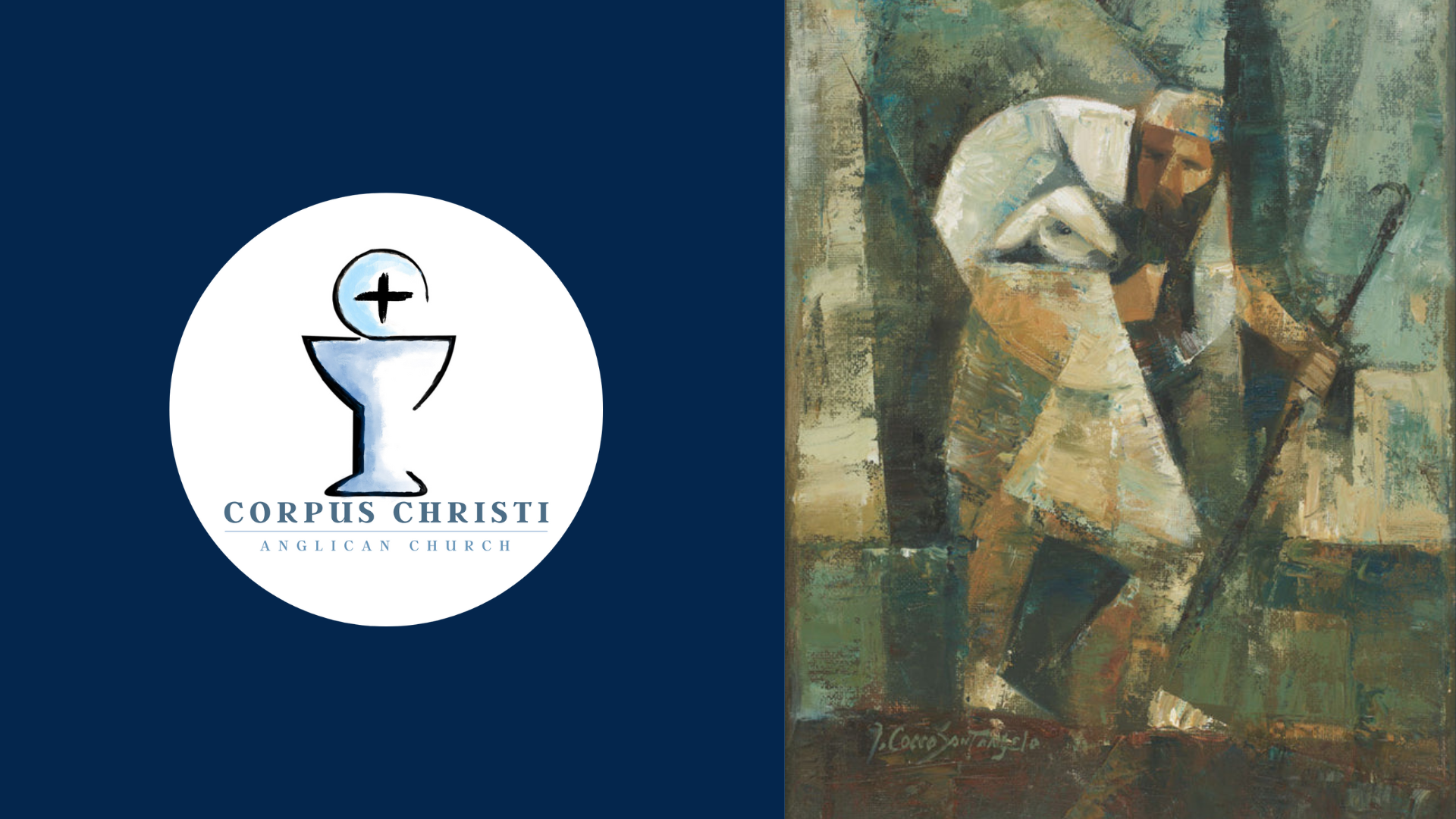
Fourth Sunday of Easter (Good Shepherd Sunday): The Shepherd-King and His New Temple
TranscriptioN
Good morning. It is good to see you all this morning. This is, as I mentioned, the fourth Sunday in Easter, which is Good Shepherd Sunday, and on this Sunday we celebrate the thing that Stephen read for us in Revelation chapter 7, that the Lamb is at the center of the throne, and he will be their shepherd. And each of the passages today that we read have something to do with this pastoral shepherding image of God in Christ.
So Christ is the shepherd and the king. And what might feel like an outlier among those different passages are the ones that we're gonna, is the one we're gonna talk about today, which is from the Book of Acts. And the Book of Acts supplants the Old Testament reading for a few more weeks.
We often suspend the Old Testament reading in Eastertide to hear through the Book of Acts how the resurrected Christ is continuing his ministry through the apostles in the church, the body of Christ. And so this morning I want to look at the way that the shepherd leads us through three images. First is the temple, second is the proclamation, and then the third is the embracing of faith.
And as we look at this passage in the Book of Acts this morning, let me pray for us. “In the name of God, the Father, the Son, and the Holy Spirit. Amen. O God, grant that we may desire you, and desiring you, seek you, and seeking you, find you. In finding you, be satisfied in you forever. Amen.”
The Temple
As we look through the Book of Acts, the Acts of the Apostles, we see the kingdom work of Jesus being continued through the ministry of Jesus' apostles. Chapter 12, which just happened right before what we read today, ended with this something that was recorded also outside the Bible in the writings of Josephus, a historian. Herod gets up to make a speech, and he makes himself like a god.
And right after this speech, he dies, both in the Book of Acts and in Josephus. And so in the Book of Acts, what we find is this thesis that comes through very strongly often, that Caesar is Lord, Caesar is not Lord. Sorry, let's try that again.
The thesis here is that Caesar is not Lord, which again, in the person of Herod, Herod is not Lord. Jesus alone is Lord. And the gospel, this proclamation that Jesus is Lord, will not be stopped.
And so Acts 12:24, right after the death of Herod, has this really terse little phrase, but the Word of God increased and multiplied, which several scholars have pointed out is mirroring the language of the Greek Old Testament, so the Greek book of Genesis, when it talks about humanity being fruitful and multiplying and filling the earth. It's the same verbiage here, that the Word of God is now multiplying and filling the earth, being fruitful and multiplying. And so what we see here is that the gospel is going out through the apostles, and it is bringing a new creation to humanity and to creation, the old creation.
God won't be mocked, and most importantly, he won't be stopped. And so this is the setup at the end of chapter 12 for St. Paul's first missionary journey. He goes to the church in Antioch of Syria, him and Barnabas are there, and they're going to be sent out to bring this gospel to the peoples at the farthest corners of the Roman Empire, and the church in Antioch in Syria lay hands on them and send them out to preach.
They go to Cyprus first, and then they go to several places that are in now southern Turkey. They end up in another city called Antioch. There were a lot of Antiochs.
This one is called Pisidian Antioch, a city in southern what is now Turkey. And one of the major themes in this book of Acts that you find as you read over and over is that God is building a new temple outside Jerusalem, outside the structures that they're used to. God is building a new temple.
In the Old Testament, the temple mimicked and pointed to the Garden of Eden, the place where God dwells and people can dwell with him. It's the place where people meet God, right? This is what the temple is. And in John's gospel and in other places, Jesus starts to reframe what the temple is.
You know, as he talks about, if you destroy this temple, I will rebuild it in three days. John adds this commentary about he was speaking of the temple of his body. And Jesus then is a new temple.
And then the story of Acts is that God is coming to abide in a people, the body of Christ, as the temple, the church. So what's interesting is that not only are Jews included in this temple, but also Samaritans who have their own temple in Mount Gerizim and eunuchs and Gentiles who would have been excluded from temple worship. People who have never entered the temple, who could have never encountered that place where heaven meets earth and the paradise of God are now being made into the temple where heaven meets earth and people encounter the paradise of God.
Men, women, slave, free, Jew, Samaritan, Gentile, young and old are all becoming the body of Christ, the place where heaven meets earth, where the resurrection of Jesus is experienced, where new creation work is the good news that Jesus is the risen Lord. And this is the place, the people from which the gospel is being fruitful and multiplying and filling the earth. So understanding that we are being made into a temple, the dwelling place of this good Shepherd King, helps us frame how meeting God in the fellowship of Jesus and his followers gives us a window into paradise for which we were made, where Jesus leads us to new creation, where he leads us to still waters, wide places, the power of the resurrection, where our wounds will find their redemption.
The Proclamation
And this is the message that St. Paul is bringing to the Jews in Pisidi and Antioch. So we've looked at the temple, now we're looking at the proclamation. Paul and Barnabas go to attend a synagogue.
This is where they normally begin their preaching in different places, where they're sharing the news that Jesus is Lord. And while they're there, someone reads from the law and the prophets, which is very typical in a Jewish liturgy, and the leader of the liturgy asks them for any words of encouragement they might have. And what follows in this passage is a beautiful homily from St. Paul, walking this group through what God has done in these promises and fulfillments throughout Scripture, and for them now too.
He addressed the men of Israel, who are presumably a diverse group of Jews who comprise the Jews that are in Pisidi and Antioch, and then he addresses the God-fearers, which is a term for Gentiles, who have renounced their paganism and are proselytes or converts to Judaism. And so St. Paul walks them through the deliverance of Israel from Egypt, he walks them through God's patience with Israel in the wilderness, giving Israel a land to inherit, he walks them through the period of leadership that leads up to King David, and then he says of this man's offspring, referring to David, God has brought to Israel a Savior, Jesus, as he promised. And so this one from the line of David is the one that everybody has been waiting for, this is the person of Jesus Christ.
So then Paul tells them about John the Baptizer, which I find interesting because Paul wasn't really following Jesus back during Jesus's public ministry, much less John the Baptist, but John the Baptist must have been a really influential person amongst the Jews who, here in southern Turkey now, these Jews from all over the place know about John the Baptizer. And he talks about how John the Baptist pointed to Jesus, and then he also talks about how Jesus's rejection by Jerusalem's leadership, Pilate's approval of Jesus's execution, and then Jesus being laid in the tomb, were all part of God's promises and fulfillment. That God had promised this, he was making good on his promise.
And more importantly, where he's going with this for the community, is that Jesus was raised from the dead, and he made appearances to eyewitnesses, and he's there to tell them that this good news that God had promised to their fathers is now fulfilled to them, who are God's children, by raising Jesus from the dead. And if God can raise Jesus from the dead, then he can free us from the bonds of sin and death that so easily draw us away from the love of God to spiritual death. And those are the things that the law of Moses couldn't deliver us from.
And the good news for these Jews and proselytes is that if they embrace this message that Jesus has risen from the dead, that he is Lord and there is no other, then God is going to fulfill his promises to them to bring them into this new covenant community that had been looked forward to all throughout the Old Testament, which in their day was the Bible. There was no New Testament back then. And so they could become the place where God dwells.
They could become the temple where resurrection happens, where God's good shepherding is experienced in the lives of each other, and where people are finding rest for their souls. And so God's tender shepherding is experienced in the body of Christ because that's where God's presence dwells, where we discover God's presence, and where we're led to streams, where we're led to pasture, where he wipes away the tears from our eyes. It's done in the body of Christ, in the community of faith, first to show us of the ultimate reality that we look forward to, where all things are brought under the rule and reign of King Jesus, our good shepherd.
A Life of Faith
But we experience it now in the body of the church. And we've looked, so now we've looked at the temple, we've looked at the proclamation, and the ways that the good shepherd leads us, and now let's look at a life of faith, embracing that faith. This has to be good news for us first before it's good news for other people.
If you think back to Paul's day, the Emperor had declared themselves Lord. The Emperor was a deity. And so it's stunning when you read Acts chapter 4 and you find Peter's sermon where he says, salvation is found in no one else, for there is no other name under heaven given by which mankind must be saved.
There's no other name Caesar cannot deliver, no political candidate can deliver, no perfect career can deliver, not the right house, not the right life circumstances, not a particular household structure, or just enough income can deliver. Nothing can deliver us from the things that draw us from the love of God except Jesus Christ alone. And so we acknowledge that yes, there are certain circumstances that will put you into life scenarios where you experience better earthly welfare than others, but none of those things can deliver us from what draws us away from the love of God, what distorts our loves, and what keeps us from seeing Jesus Christ fully and ourselves fully, except for Jesus Christ alone, him crucified and resurrected and ascended.
So discovering Jesus, having this gospel, this proclamation be the good news continues now as it did in the book of Acts through what the Apostles and the disciples did then, which is devoting ourselves to the Apostles teaching, to the fellowship, to the breaking of bread, and the prayers. We're not doing anything innovative. This is exactly what we do today because we believe that in it we will discover the resurrected Christ in one another.
And so someone the other day, it was interesting, I get this question a lot, but they asked, how is the church doing? They wanted to hear, you know, how's the church planting process going? And usually when people ask that, either they want to know about attendance and cash, or the temptation is to talk about attendance and cash. But I stopped and I asked, how is the church doing? And so when I answered this person, it felt holy and encouraging to my own spirit because I was reflecting on each one of you, because I know you. You know, we have coffee, I pray for you, I know you one-on-one, and you know each other.
And so I was thinking about how to answer this, and I mentioned to this person about a praise about the redemption that I'm seeing in community. Because I see people getting together. I see people who are longing to be baptized or confirmed, who long for a closer relationship with Jesus, who are growing into a deep sense of belonging into this community.
And because they belong, they feel that felt sense of belonging in community, they're growing in the knowledge of how much Jesus loves them, because they experience it in somebody else. There are people who are wrestling through, how do I forgive this person who I haven't forgiven? How do I show God's love to my children, become a better parent or spouse? How do I become more like Jesus to others around me? And I'm so grateful for the ways that, as I think about our church, people are serving one another, they're staying connected with one another, they're honest and vulnerable about sharing their struggles and joys with one another, and praying for one another. Like, you know that you can be undone when you come in, and that's a great culture to have.
Because I'm that way, so you can too. I was grateful thinking about our formation group last week, as the kids were playing together, and they're learning to delight in one another, in the friendships that they're making, they're learning important lessons about sharing, forgiveness, and kindness, and they're watching the adults pray together, and they're seeing the values without us having to tell them what we value. So I love how intergenerational things are.
So I can see, when I look at you, when I look at these groups, and the formation groups, as I get to know each one of you, I can really see how this is a temple of God, where heaven meets earth, and we experience the risen Christ in community. And so that's how this church is doing. Praise the Lord, that's how this church is doing.
As you think on your own story this morning, think about, there's three questions that I've been thinking about this week that I want to just hand to you as well. What has Jesus delivered you from? Where have you experienced redemption? What has Jesus delivered you from? What is he currently delivering you from? What do you long for him to deliver you from? These are important questions when we're getting to know the Good Shepherd. What has he delivered us from? What is he delivering us from? What do we long for him to deliver us from? And then carving out time to pray through those things, individually and as a community.
This is the work of the Apostles in the book of Acts, where God's gospel is being fruitful and multiplying and filling the earth. That's how it's done, one heart at a time. And the gospel is true, and because it's true, it's also good.
And that's really important. When the goodness of the gospel has touched our hearts, as we're led by this goodness and the kindness of our tender shepherd, we can start praying about the people that we encounter, who needs to hear about the goodness of their Good Shepherd, and how might we share our story with them. Or instead of having a posture of telling, maybe even better is to have a posture of listening, and pray about how we might best listen to somebody's story as they share.
To come with curiosity and kindness to enter into their story with them, to invite them to get to know the goodness of this Good Shepherd that we know to be good, first for ourselves, and then help them to get to know his goodness for themselves. So this morning we've looked at the ways the shepherd leads us into the image of becoming the new temple, through Paul's proclamation of the gospel, and embracing this faith for ourselves, so it is also good for others. And on this Good Shepherd Sunday, we look forward to the end, where we read in Revelation, we get to spend a lot of time in Revelation over the next few weeks, where God's throne, the worship around God's throne, we join this with the saints, where the lamb is in the midst of the throne, and he is the Good Shepherd.
He's the one who leads us to still pastures, great stars, still waters, and green pastures. He's the one who dries our tears. He's the one who restores our souls, who redeems our wounds, and we practice this in the church, which is true in heaven.
Looking forward to the day where the body of Christ, the temple, we see in full of what is in part now. We come to know the redemption that Jesus brings in the hope of the resurrection by discovering his love in the fellowship of the saints. This is why the church is so important.
And by continuing in this long line of saints who are devoting themselves to the Apostles' teaching, the fellowship, the breaking of bread, and the prayers, we journey with Jesus in this pilgrimage of naming what's broken, the things that we're bound to, so that we might be free to live in the new life that's found in Jesus's resurrection. And discovering the goodness of the resurrected Jesus and naming this for others and with others is how the Let me pray for us. Almighty and everlasting God, you govern all things in heaven and on earth.
Mercifully hear our prayers and grant that in this church the pure word of God may be preached and the sacraments duly administered. Strengthen and confirm the faithful, protect and guide the children, visit and relieve the sick, turn and soften the wicked, arouse the careless, recover the fallen, restore the penitent, remove all hindrances to the advancement of your truth, and bring us all to be of one heart and mind within your holy church, to the honor and glory of your name, through Jesus Christ our Lord. Amen.
Transcribed by TurboScribe.ai. Edited by the author.