
SERMONS
Archive
- October 2026
- September 2026
- August 2026
- July 2026
- June 2026
- May 2026
- April 2026
- March 2026
- February 2026
- January 2026
- December 2025
- November 2025
- October 2025
- September 2025
- August 2025
- July 2025
- June 2025
- May 2025
- April 2025
- March 2025
- February 2025
- January 2025
- December 2024
- November 2024
- October 2024
- September 2024
- August 2024
- July 2024
- June 2024
- May 2024
- April 2024
- March 2024
- February 2024
- January 2024
- December 2023
- November 2023
- October 2023
- September 2023
- August 2023
- July 2023
- June 2023
- May 2023
- April 2023
- March 2023
- February 2023
- January 2023
- December 2022
- November 2022
- October 2022
- September 2022
- August 2022
- July 2022
- June 2022
- May 2022
- April 2022
- March 2022
- February 2022
- January 2022
- December 2021
- November 2021
- October 2021
- September 2021
- August 2021
- July 2021
- June 2021
- May 2021
- April 2021
- March 2021
- February 2021
- January 2021
- December 2020
- November 2020
- October 2020
- September 2020
- August 2020
Sunday After the Ascension: Lord, Get us Out of this Mess

TranscriptioN
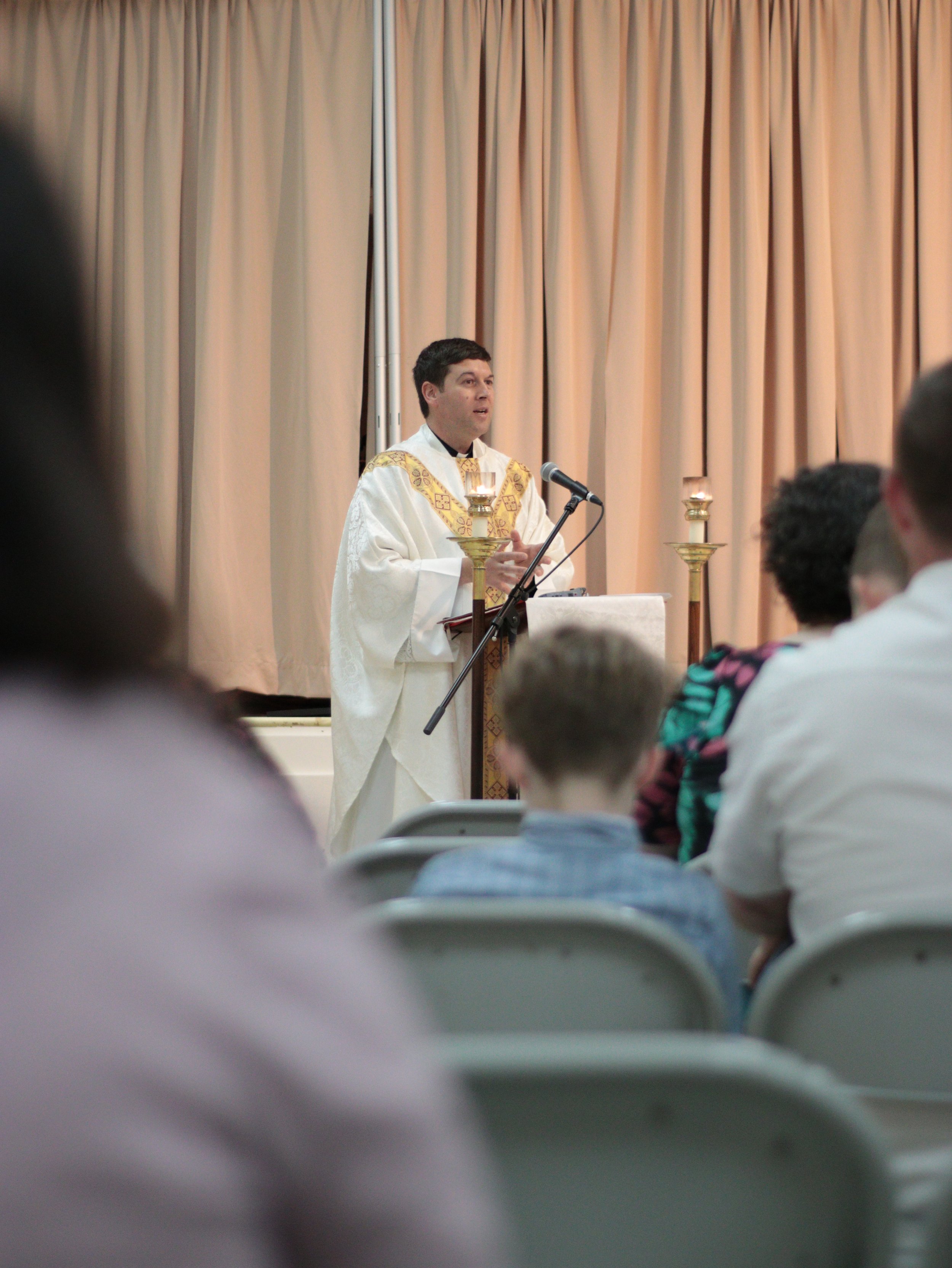
Well, good morning everybody. It is good to see you this morning. I'm the vicar here at Corpus Christi Anglican Church and this is, as I mentioned before, the final Sunday and Eastertide, this long Easter season that we celebrate. Next week we'll get to celebrate Pentecost together and so we'll be wearing red.
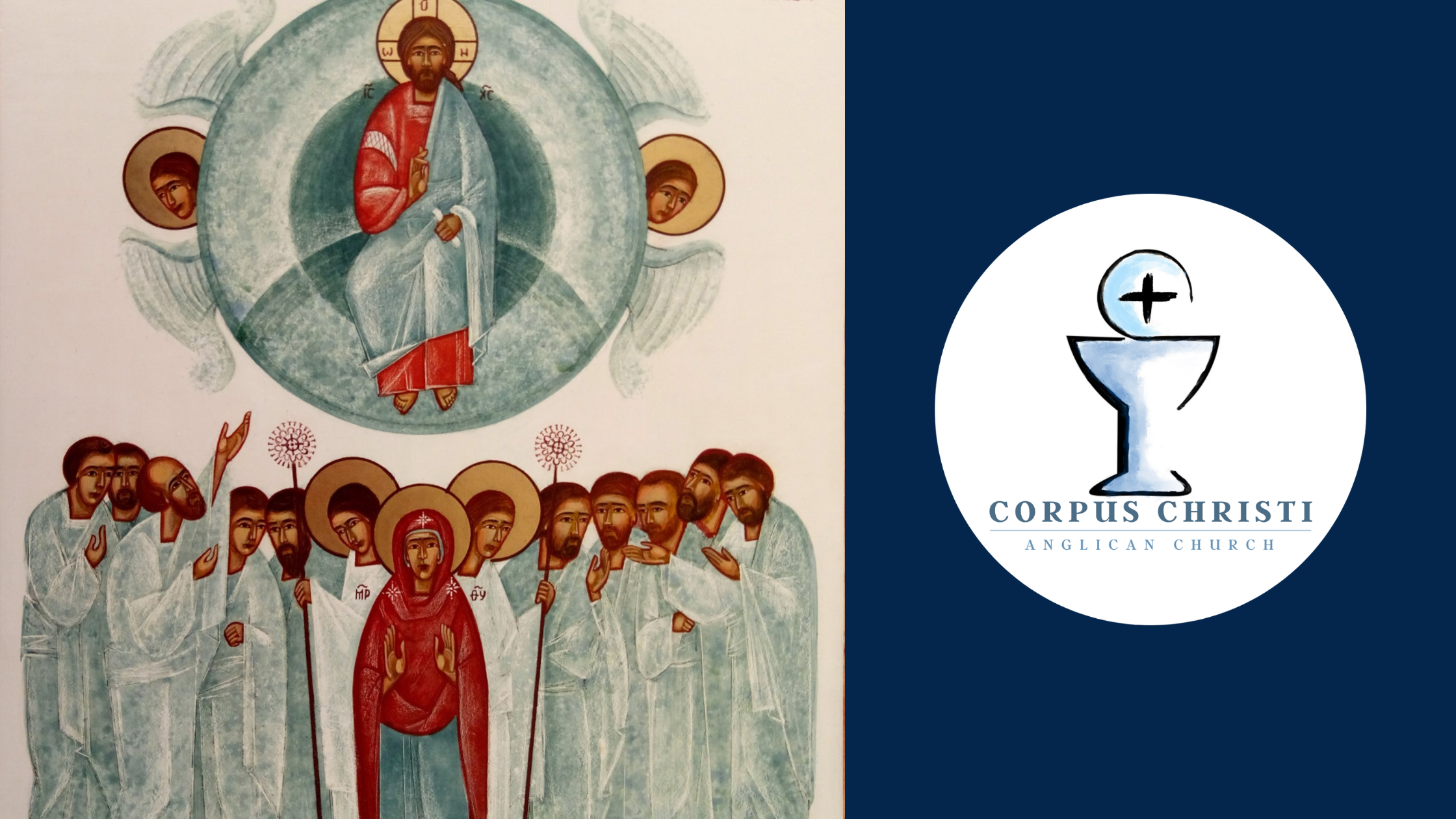
It will be a joyous celebration. And on this last Sunday of Easter, in this little 10 days that we often refer to as Ascensiontide, we are reminded of Jesus going and ascending where he rules and reigns and the disciples waiting for the Spirit to come and to empower them for the work that God is calling them to do, which is to carry on the work of Jesus. And so as we think about Ascension, one of the things that we did on Thursday is we celebrated the Feast of Ascension and we were reminded that there are two realms to creation, heaven and earth, that the Scripture describes.
And Jesus is Lord over all. And what he is doing in Ascension is bringing heaven's realm into earth, breaking in. And this is why each day we pray in the Lord's Prayer, Lord may your kingdom come on earth as it is in heaven.
God's doing this cosmic work of salvation that we're a part of, uniting heaven and earth in new creation. And we see in part now what we look forward to in its fullness when Jesus comes again to restore all things at his second coming. And so today we're still focused on this waiting period, these 10 days, where Jesus has ascended and he is reigning on high and yet hasn't given the Spirit to his disciples to dwell in them, to be his presence as they are to carry on his works.
But what Jesus' Ascension does remind us of, we might be tempted to think that he ascends and so he's absent, but actually the Ascension does not declare his absence, it declares his active presence as he rules and reigns and brings his kingdom to come on earth as it is in heaven. And I don't want to take us too far off on a tangent, but I don't know how many of you are aware of this, but in the Bible, in the book of Esther in Hebrew, how many of you were aware that it almost didn't make it into the canon? Okay, a few of you. It almost did not make it into the canon.
That and the book of Ezekiel are two books that almost didn't make it in for different reasons. For those of you who knew why Esther didn't almost make it in, do you know why? Yes, excellent, yes. It never mentions God, never mentions Yahweh whatsoever, explicitly I should say.
So essentially when you read it, it's this narrative about a Judean woman in the Persian period who saves her people through deception, like that's the basic storyline. Now, some have suggested that the name Yahweh in Hebrews, יהוה, those four letters show up as an acrostic pattern at different points in the book, and that might be true. It's debated, but if it is, and even if it's not true, it still highlights something that's very true about the book, which is that the Lord's name may not be mentioned explicitly, but he's far from absent.
He's in their preservation, and to me the book of Esther in that way, as we see God working in the background very actively, this is something like what it feels like to me when we talk about the ascension of Jesus. He's not absent. He's reigning, and his reign moves over our age and into our earthly realm in ways that you could put sort of on this spectrum of overtly miraculous and overtly ordinary.
Still miraculous, but ordinary. Somewhere in there you see the kingdom of God breaking in. You see Jesus's rule and reign as king breaking into our realm, and we can see it in today's passage in the book of Acts, chapter 16.
We see it in the stirring up of hearts. We see it in the disruption of corrupt and demonic systems, and we see it in this surprising deliverance that produces faith in a Gentile, a pagan, and so I want to look at this text together this morning in Acts, chapter 16. If you have your Bible or you have it on your phone, you can open up to Acts, chapter 16, and as we get into it, let me pray for us.
“In the name of God, the Father, the Son, and the Holy Spirit, amen. Lord, may the words of my mouth and the meditation of my heart be always acceptable in your sight, O Lord, my rock and redeemer, amen.”
Lydia and the Stirring of the Heart
Well first I want to see how God's kingdom comes in stirred hearts.
Paul is in a missionary journey in this context, a different one than the last one we talked about. This time he's traveling with Paul, Silas, Timothy, possibly Luke himself, and they arrive at Philippi, which is a major Roman colony, a very urban place in northeastern Macedonia today, northeastern Greece, and he does what he normally does, which is to find a local synagogue to preach out of, to share the story about how Jesus ties all of history together for people's deliverance and salvation, but Philippi is so pagan that there are no synagogues in Philippi, so what is he to do? He hears a rumor that there are some people who pray down by, there's a regular place to pray down by the water, and there it's mostly made up of women, and when he's down there, this is before the passage we read today, he encounters a woman named Lydia, and Lydia is a God-fearing Gentile, meaning she was a pagan Gentile that converted to worshiping the God of Israel, so she's a monotheist, and as he encounters her, he ties together the stories of Jesus for her in a way that shows her what God has done for her in the Jewish Messiah. She believes this gospel, and then she is baptized, her and her household, so the gospel comes to a successful businesswoman, a woman who is very well known, well off, and she and her whole household are baptized, so we see the gospel being fruitful, multiplying, and filling the earth in this woman, Lydia.
Even in pagan Gentile cities where there's not even a synagogue to preach out of, we don't see all the parts of Lydia's life that lead up to this moment, but we do know that in Acts, God had given Paul a dream to go to Macedonia, and so we see Jesus reigning and bringing together the story of salvation in ways that Paul's not aware of, that Lydia is not going to be aware of until it happens, and Lydia reminds me that we often see the kingship of Jesus when we're open to looking for the ways that God is stirring hearts. Sometimes people will call these God moments, right? There's these ways that you couldn't have guessed that God would bring these moments together, but he does, and in the stirring of hearts, we see God's rule and reign. In Lydia's time, paganism was the norm, and especially in Philippi, this city to preserve its welfare, sacrifice to gods and to the emperor who was considered a god.
They were trying to keep the gods happy, to procure the blessing on their city, and so it was tied together. Economic, politics, religion, it's all brought together in a cohesive system, in this religious system that was intertwined, and this is what it meant to be Roman, and so to follow Christ was a Roman identity, and it was a threat to these Roman nationalists who didn't want anybody threatening the safety or the Roman-ness of their colony, and in our context, you know, there's often a veneer of Christianity that we can see in places, or at least if there's not a veneer of Christianity, people are pretty familiar with the story of Christianity. That might be less and less true, but even now, someone at least knows what this term means, generally, but the reality is our neighbors are still bound to the kingdom of darkness.
No matter where we go, our physical neighbors, our co-workers, and in this place where God, where people are still bound to the kingdom of darkness, Jesus is still stirring up hearts to find him, to discover his goodness, and you and I, like the disciples like Paul here, are called to be attentive to what God is doing, when to speak, when to listen, but we should be prepared to listen and then connect somebody's story to the story that God is telling in them and through them when the opportunity is presented to us. So that's Lydia that we encounter. Jesus is stirring hearts, as in Lydia's case.
The Gospel Disrupts Demonic Systems — the Freed Slave Girl
Jesus also disrupts demonic systems, no matter how embedded they become. This is an amazing aspect of the gospel. So they go another time to the place of prayer.
This is what we read this morning. They encounter a female slave. She's not given a name in the story, but they harass Paul and Silas, and he turns at some point, and he commands the demon to come out in the name of Jesus, and if you think about this, what's astounding is you have this Lydia, who is a well-off businesswoman who comes and believes the gospel.
She's a Gentile convert to Judaism and then believes the gospel of Jesus, and now you have a pagan slave girl who's being profited upon, or she's being used for other people's profit by telling the future, but Luke wants us to see that the gospel comes to all, whether it's the well-off, whether it's the poor, whether it's slave, whether it's free. Her society told her that she only had value in as much as she benefited other people, right? She was valueless, but Jesus has an alternate gospel narrative that her life not only matters, she is an image-bearer of the king of the universe, and that is this holy economic deconstruction of the earthly emperor's gospel. This does battle with the good news of the Roman Empire.
The woman had a spirit of divination. She could tell the future, and Paul liberates this woman both from the spirit of divination that was holding her hostage and, as a result, from her masters. The slave girl is now freed to reign with the king of heaven for the first time in her life, and that is stunning, and so first Paul has to recognize that what this girl is doing is not truly her.
She's bound to the kingdom of darkness. Then he has to take the risk to cast this girl's, the demon out in Jesus's name, and why was it risky? I mean, for a couple reasons. One is if he had said something and nothing happened, so that's a risk, but two, it's also a risk because he named something as demonic that was completely normalized in their culture, and it was something that was so normalized that it was expected to support the sustainability of their culture, so her masters are irate.
They tell the municipal authorities, these men are Jews and they're throwing our city into an uproar by advocating for customs that are unlawful for us Romans to accept or to practice, and I also wonder if there was, for these slave masters, a feeling of fear. If people start becoming Christians, then they're going to move away from Caesar as emperor and lord. They're going to move away from faithful citizens.
They're going to move away from what it means to be Roman, since it was Roman law to sacrifice to the emperor, and if these men's livelihoods could be lost, then perhaps other people's livelihoods could be lost too, as now Christians are just coming in and destabilizing the economy of the colony, especially when your commerce is, your commerce surrounds those gods, and so they're accused of a kind of revolution. People would rather be comfortable than free. Some people want to be told that they're okay, even if they're sick, because the process of healing can involve pain, it can involve suffering, and most difficult to swallow, it can admit that, it can, it can involve admitting that we were wrong, and that's really hard, especially when we're talking about religious political systems, and what if, if we think about the gospel here, what if there were a way to live in community in a way that didn't use slave labor, or exploit women, and that honored the image of God in all people, right? On this end of the empire, Roman Empire's collapse, it seems obvious.
It did not seem obvious to those slave owning Gentile pagans, but this is the power that the gospel brings, a society where the slave is free, that women are honored, that the image of God is honored in all people. This is what the gospel of Jesus offers, but healing can be scary and risky when patterns of acceptable corruption start to calcify and get normalized in the society, and so the kingdom of heaven comes when the calcified patterns of the kingdom of darkness are named, and they're broken up, and they're deconstructed, and Jesus's kingdom comes when individuals are then de-shackled from the lies of the kingdom of darkness. This girl had value as an image bearer of the king, and after the slave woman is free, we see her masters double down on systems that they're bound to, patterns that they've lived into, but Luke's point, which is helpful for us, is that even though they double down on their systems of bondage to the kingdom of darkness, that is not going to stop what God will bring about through the gospel, and that's good news.
So this work of the gospel bearing fruit might be surprising, it might be disappointing at times because it's painful, or there's an admission that we were wrong, but if we prepare our hearts to receive people's reactions, the circumstances that we find ourselves in, with curiosity, kindness, and trust that the Holy Spirit is at work in us, that he's with us, that he's at work through us, then we begin to see the kingdom of God break through into this earthly realm, and the suffering becomes redemptive as the healing begins.
Discerning the Movement of the Kingdom — The Philippian Jailer
And so we've seen Paul and Silas's disposition. They needed to have this disposition of openness, curiosity, and wonder at what God was doing.
They needed this because they're going to then be thrown into prison as a result of these masters and their complaints to the municipal authorities. They're thrown into prison and they're beaten with rods, but then we find them again in Acts 16 praying and singing hymns in the middle of the night, and there's an earthquake that takes place, the whole place is shaken, and all the prison doors are opened. And you have to understand in this culture, people take, the Gentile pagans take things like earthquakes, and they see them as signs of God's disfavor or favor, depending on if it's favorable to them or not.
There is a divine agent behind these natural disasters, and so this is frightening for the guard because the prison doors are open, and he was responsible for these prisoners. If they had escaped, he would be punished. There's little ears, so I just leave it out, he will be punished.
So Paul stops the guard from making a life-altering decision, and he reassures him that all the prisoners are there and they're accounted for. But God had used the earthquake to get the guard's attention, and the guard brings Paul and Silas out to ask them a question. Our translations make it sound so spiritual.
Sirs, what must I do to be saved? This is a Roman pagan. This is a prison guard. There is no way he's thinking in like Jewish kingdom messianic constructs.
So other people have translated it differently. I think they're right. Rather than saved, which is a pretty loaded theological term for us, I think what he's saying is, okay you guys, how do I get out of this mess? That's the essence of what saved means here in this passage.
So God has brought him to this point of realizing, I'm in trouble, I need to know how to get out of this, and I am open to hearing whatever you have to say, because you must know something I don't. And so Paul tells him, trust in Jesus and you will be delivered, you and your household. And we have to keep keep in mind what this means.
Trust in Jesus. He's asking him functionally to disavow his allegiance with the Roman Emperor, who is a god, and to realign his allegiance to Jesus as Lord and King. Jesus is Lord, there is no other.
Jesus is King, there is no other. Caesar is not Lord, Caesar is not King. And that night this man puts his faith in Jesus, and he says, you know, no matter what God brings me through, I trust that Jesus is King.
And he and all of his household that night are baptized, which includes his wife, it includes his children, and if his household had slaves, it includes them too. All of them are brought into the body of Christ. God in his kindness then does what Paul says.
He spares the life of this soldier, as the magistrates just decide that Paul and Silas are allowed to leave now. And so they're released, and they go forward to the next thing, and the life of this soldier and his family are forever changed. This is the beginning of the church at Philippi.
A Jewish woman, a freed slave girl, or a Gentile convert to Judaism, a freed slave girl, a Roman soldier. These are the beginnings of what God is doing in creating the body of Christ in Philippi, where he is shown to be Lord and King. So Jesus delivered this person and his family in a surprising way, that Paul and Silas had to live a life to prepare for.
They had to be recognizing this. They had to be careful to keep faithful rhythms of prayer and worship in order to keep a watchful eye and an open ear to what God was doing and to where his kingdom was moving, and they noticed it in the life of this jailer. They could have run for freedom, but they were attentive to what God was doing, and the result was an enduring faith in the Philippian jailer and trust in the kingship of Christ for this man and his whole household.
Imagine how many generations of Christians there are because of this man and his household. So when Jesus ascends, he is not absent. Quite the contrary, he is actively reigning as Lord and King, and we see his rule and reign where heaven and earth are united in the stirring up of hearts, like in the story of Lydia, through the disruption of demonic systems, as in the deliverance of the slave girl, and when people trust in Jesus, as in the life of the Philippian jailer, and all of us are called to sharing in this ministry of sharing in Christ's rule and reign together.
This is the community where Jesus is King and Lord, and people see that in the way that we treat each other, and it requires a life of attentiveness, regular prayer and worship to reframe our everyday moments, our proclivities, our desires, and our loves under the reality of the kingship of Christ. We need what is real to frame what is temporary, and this also involves curiosity about where we see Christ at work. Sometimes his work is subtle in our everyday moments, and sometimes it is glaringly obvious, but in any case, Jesus hasn't abandoned the project of creation.
He's become Lord of all things, and all things will be brought to their fullness in his work of new creation. His ascension is a promise that he will come back again and restore fully what he is doing in part right now. So I want to encourage us not to just think of heaven as a place we go to where when we die, a geographic space, but instead it's something that is breaking into our reality now.
It is taking over in individuals and households and communities in this community, and so we're to prioritize looking for it attentively, so that each day we can actually pray, may your kingdom come on earth as it is in heaven. Let me pray for us. Almighty God, you sent your son Jesus Christ to reconcile the world to yourself.
We praise and bless you for those whom you have sent in the power of the Spirit to preach the gospel to all nations. We thank you that in all parts of the earth, a community of love has been gathered together by their prayers and labors, and that in every place your servants call upon your name, for the kingdom and the power and the glory are yours forever and ever. Amen.
Transcribed by TurboScribe.ai. Edited by the Author.
Ascension Day: The Reign of Jesus in the Realm of Life
TranscriptioN
Thanks for making time to come and gather on a Thursday night.
This is one of those days where it's often it comes up on us and we're not used to thinking about it, but it is such an important day in the church's calendar. Part of the gospel here is Jesus crucified, risen from the dead, ascended on high, who will come back again. All of this is the gospel, the saving work of God.
And this is actually our first time as a church celebrating it on its actual day. And thank you to Caroline for trying out the incense with us tonight. I was thinking about how joyous it is to talk about Jesus going up in the clouds and then having the clouds of incense just permeating our olfactory imagination.
So thank you. It smells like prayer in here. I'm grateful to you for your help.
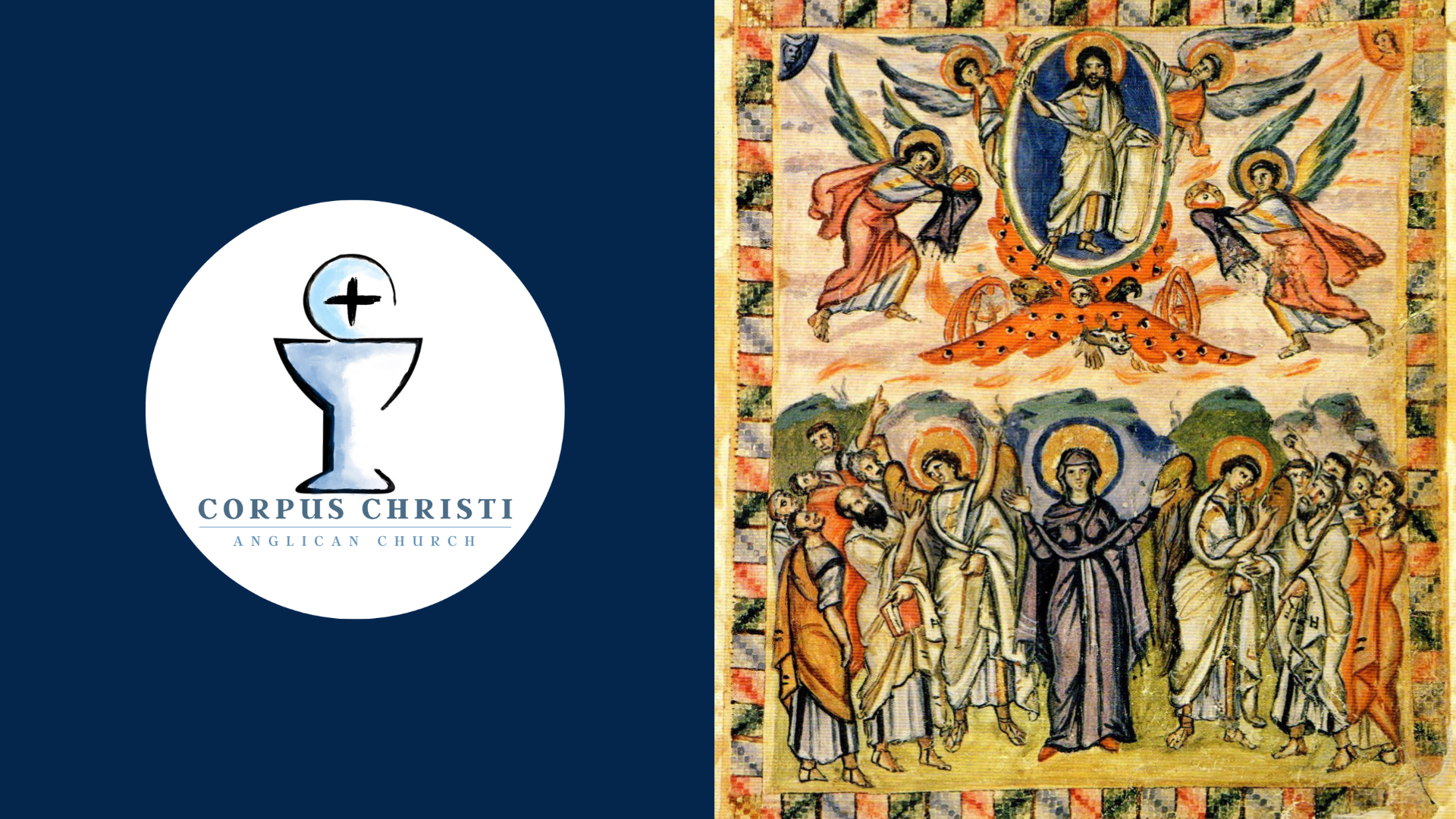
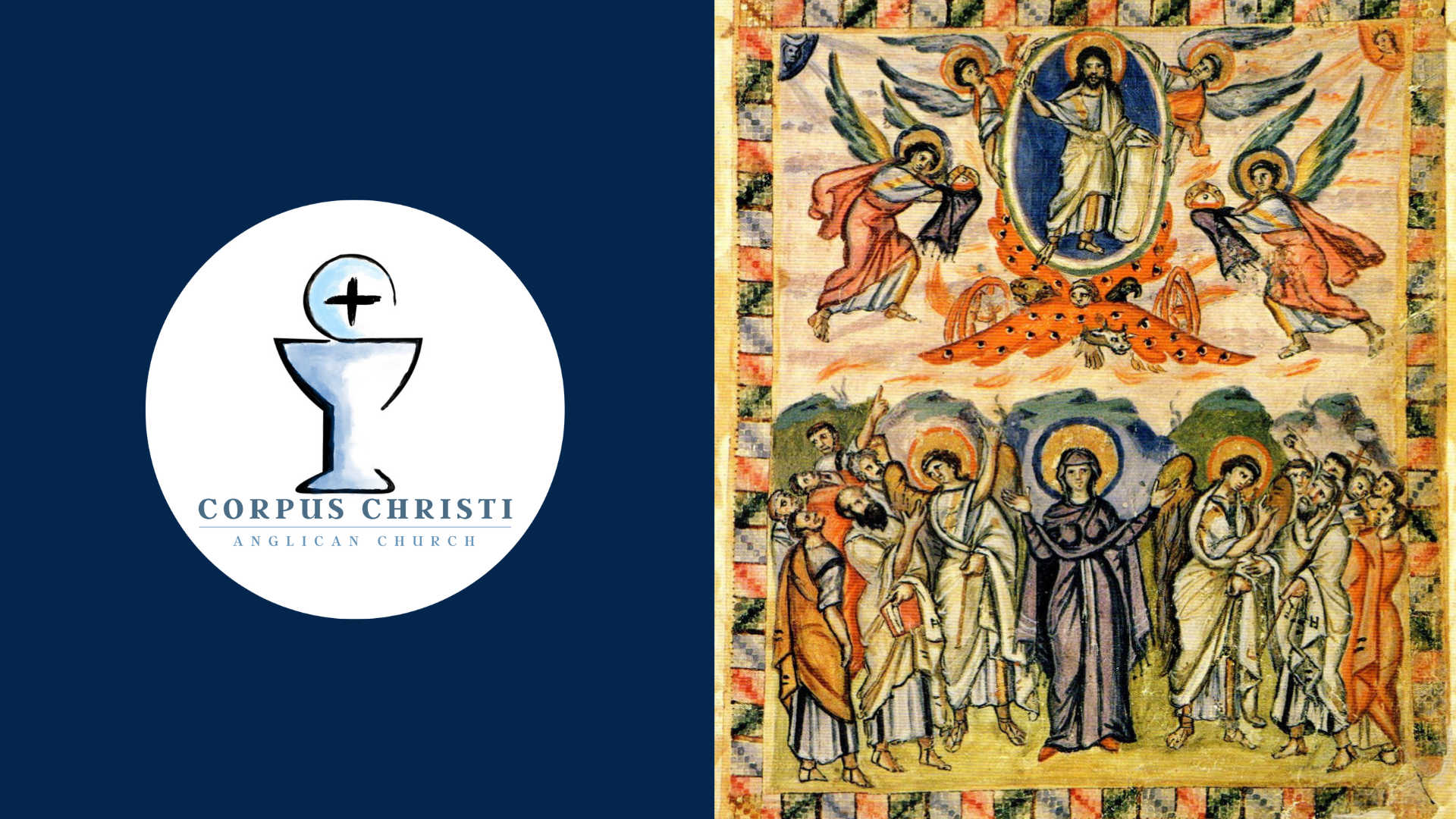
And so as I said, this is one of the central days in the church's calendar, in the history of the church. And this feast commemorates not Jesus being absent, but his exaltation as King. That's what the Ascension is all about.
This feast declares that heaven and earth will one day be ultimately one, and that Jesus is Lord over both of these dimensions, heaven and earth, both parts of God's creation. And both of those realms find their overlap in Jesus himself, who is the promise that heaven and earth will ultimately be reunited, restored in this cosmic story of salvation and new creation. And as we look at this book of Acts chapter one, let me pray for us.
In the name of God, the Father, the Son, and the Holy Spirit. Amen. Lord, may the words of my mouth and the meditation of my heart be always acceptable in your sight, O Lord, my rock and my Redeemer.
Amen. The disciples gather around Jesus, and they ask him in chapter one, the beginning of this chapter, Lord, are you at this time going to restore the kingdom to Israel? This is the question on their minds. The expectation is that the Messiah is going to come, that the Messiah is going to conquer the nations that were warring against God and his anointed one.
This is sort of the theme of the Psalms, and that God would establish a throne that would last forever through his servant of the line of David. And that's why the cross had been so surprising, but now Jesus has risen from the dead, and you can imagine, now he's risen from the dead, perhaps their hopes are sparked again, that this might be the time now. Now that we've seen him, now that we've walked with him in his resurrection, maybe now is the time.
When are you going to restore the kingdom to Israel? Is this the time it's going to happen? And Jesus tells them not to worry about the day or the hour. That shouldn't be on the forefront of your thinking and your anxiety, but he instead gives them a call in the meantime. He tells them that the Holy Spirit will come upon them.
They're to wait until that happens, and then they're now going to be Jesus' witnesses in Jerusalem, and then in Judea, which is broader than the area in which is Jerusalem, and then Samaria, just north, and then to the ends of the earth. Everyone else, the Gentiles, but they are waiting. They're in this season of waiting for the Holy Spirit to come on them.
And it reminds me that we're not supposed to waste our time on worrying about when this is finally going to come. When is Jesus going to come back? Reading the newspapers for signs of the times is not a helpful discipline. Instead, we're called in this time of waiting while Jesus is reigning, and we're waiting for him to come again.
The word for that that they use in the Bible and in Catechesis of the Good Shepherd is the parousia, when he comes again to restore all things in their fullness. While we're in this waiting period, we receive this call to bring the message and continue the works of Jesus, who was crucified, resurrected, now he reigns on high. And now one of the things that we're called to do is look for the ways that he reigns right now, because his kingdom isn't just out there, but what the Ascension declares is that his kingdom is come, and will come more fully.
And so we're looking for the ways that his kingdom comes. And it's easy to get hung up on misconceptions about heaven being something out there, something disconnected from our everyday experience, or geographically above us. I can't remember who I was talking with, but there was a Russian atheist, and when he went up into space, he said, you know, I went up into the heavens and God was not there.
And so the reality is that heaven is not geographically located, somewhere out there disconnected. Heaven is another realm or dimension that overlaps with the dimension that we find ourselves in, and Jesus reigns over both realms and dimensions as king over all creation. It's easy to think of it as this repository of souls that's off in the sky, but the way that the Bible describes heaven is that heaven and earth, and we think of that phrase, heaven and earth, as this complete totality of the creation.
And sometimes God's realm breaks into ours. You can think of the Theophanies, the Old Testament, like Mount Sinai, the crossing of the Red Sea, or even something as simple as going into the temple, this thin place where heaven meets earth. And Jesus came in the book of Acts, part of the argument is that he is the temple, he is the place where heaven meets earth.
So if you want to encounter the place, you encounter Jesus, because that's the one who brings these things together. And so when we see Jesus being the temple, we see him stirring people's hearts, healing them physically, some other brokenness restored. These are all the miraculous spaces where we see heaven breaking into our world.
And so I was remembering a time where I felt something like this, where the two realms, there was two realms. And so I used to work when I lived in Chicago as a caterer for a catering company, and I was about 18 or 19, I was in under, no, I was 20, I was an undergraduate, and I was working for this catering company, which brought me into really cool places in Chicago. And one of the interesting places that I got to go was inside the stage of Millennium Park.
And the reason I was there was because there was a girl who was having her 16th birthday party. So this is a realm I'm not used to, where one 16th birthday party is celebrated with private catering inside the stage of Millennium Park. And here I am in this fancy tuxedo, going to this place, serving hors d'oeuvres.
And one of the kids had struck up a conversation with me as I was serving them food, because they don't have some of the same barriers. And the mom comes over and says, please don't talk to the help. I've never felt so out of the realm of where I was at.
I'm wearing a tuxedo, which is not me, and I'm serving food in Millennium Park, which is not me, and here I am, the help, and it's just a weird reality where there is a realm that I was in, which I was not accustomed. That realm was not mine. So it's possible to imagine that God's realm is kind of over here, and it has nothing to do with our realm.
But when we pray the Lord's Prayer multiple times a day, we say, may your kingdom come on earth as it is in heaven. And so there is something of the kingdom of God breaking into our realm that we get to experience when Christ reigns. So when Jesus becomes king, he rules over both heaven and earth, and when we see heaven break in, it's a promise that earth and heaven will ultimately be one.
Like when you read Paul's passages about all in all, Christ is all in all, these things will ultimately be one, and we taste now what will ultimately be true in the future. And it's not that like God has, Jesus has disappeared in the ascension, and we're left to just fend for ourselves down here, but Jesus again is Lord, and he is active, and our job isn't to just fixate on when he's going to restore all things, but to discover how he's doing it right now through the Spirit that he has given to us. He had to ascend in order to send us the Spirit, who is his presence that empowers us to carry on his works to the ends of the earth, which involves our neighborhoods, those closest to us, wherever we go and work.
So Jesus is taken up in a cloud in their sight, and the Son of Man ascending on a cloud is a reference to Daniel 7 13. Again, at this time there's no New Testament written. Their Bible, the Bible that they were familiar with, was what we would call the Old Testament.
So when Jesus ascends on a cloud, this is the image that's coming to mind, is Daniel 7 13. It's kingship language, that the Messiah has become King. It proclaims that Jesus is exalted, not that he's absent, and that's really important, because sometimes it can feel like he is, but being King is really the opposite of abandoning his project until the end when he's going to come back again, and that's why these messengers, heavenly messengers, say to the disciples, why are you standing here looking at the sky? The disciples had been focused on when Jesus is going to bring a physical kingdom, rather than being enamored with discovering where it is now
They were missing, well I should say it this way, they were called to mission, not to date setting, not to wonder when, but to discover where Jesus's rule and reign is breaking into their lives at this time. And so now they need to get their eyes off the sky to look at what's in front of them. Have you ever been on a road trip with a child, or have you been the child on the road trip? You know, the sense of time is just not the same when you're little, and so when you're on a four-hour car ride, and you're in the first five minutes, and you hear from the back, are we there yet? Are we there yet? Well, no, no, it's been five minutes.
Are we there? It's been two minutes since you asked. No, we're not there. Internally you have this dread about how long this four-hour car ride is going to be, and the way that a child is going to stop asking that question is either if they're sleeping, or if they become enamored with what the things are that they can look at out the window.
And as they're looking out the window, there's things to look at, they're just enamored with wonder at what they're seeing as they see new landscapes and places. And that helps me personally to understand something of the kingdom mission that the disciples and us are called to. Rather than focusing on the are we there yet? Can you please come back now? Instead, it's a call to notice the kingdom that God is bringing in them, through them, and around them.
The end is secure. Jesus is ascended. He is going to come back again, and he's going to restore all things.
And he reigns now, and in the meantime, before he comes back again, their call is to proclaim the message, and more importantly, to notice where the kingdom is coming in their lives, and in the world, and in the lives of others. And noticing that is actually part of the proclamation. When you can notice it and name it, this is part of the work of the kingdom mission.
So Jesus ascends to reign, and the story of Acts is all about what Jesus continues to do and teach. And this is the story that's continuing and written into the life of the church through the centuries. I was actually thinking about this.
This is the 1700th anniversary of the Council of Nicaea. This is how, you know, if we look back at the last 1700 years, we are seeing the work of the Holy Spirit writing out this story of the Acts of Jesus in the church. And as you consider your own story, what work has God done in your story to redeem what's broken? And so looking at those things that are broken, and seeing how God has redeemed them, those are miraculous breaking in of the kingdom of God.
Those are the places where heaven and earth get joined together, where you start to see Jesus's rule, and his reign, and his lordship. The point of being saved, when we hear that language, it's often loaded. It's not to go somewhere someday.
That's not usually how the Bible talks about being saved. Again, because heaven's not a geographic place out in the sky. It's to be joined to the new creation work that Christ is doing as he is Lord of all things.
It's seen in the freedom that we have from sin, or that we're experiencing from sin, even for the first time. It's experienced in the changed ways of thinking that we have, the behaviors that change, the breaking of generational trauma, of generational sin, the restoring of broken relationships, broken selves, patterns of speech. All of these things are where heaven breaks in, and we see Jesus's rule and reign as king.
So I want to encourage us to make time for contemplation and stillness, to reimagine how the world has sown in corruption, but how God is going to reap in corruption from that, as the Bible says. There's a passage that I really love from C.S. Lewis in a book called Letters to Malcolm, and he describes memory and reality in this passage, in the new heavens and the new earth. What's the relationship between memory and reality? What happens now in our lives should be framed by the reality of what will be later, and so as he's talking to his imaginary friends in these letters, he says, this is a quote, I can now communicate to you the vanished fields of my boyhood.
They are building estates today, only imperfectly by words. Perhaps the day is coming when I can take you for a walk through them. In other words, the reality of what will be restored is different than his memory, and the memory of what will be restored should reframe what's now broken and what's in need of redemption.
And so again, today we celebrate Jesus as Ascendant. He rules and he reigns as King over all and Lord, and our call is to carry on with the disciples these words in the works of Jesus until he comes again to restore all things ultimately. So we don't need to waste time or effort concerning ourselves with when he comes, but resting in the certainty that he will indeed restore all things, and then we're to engage with him in this work of restoring creation and discovering heaven in the daily earthly experiences that we have.
And that requires us taking time to wonder and notice what God's doing as we serve one another like Christ, and we cultivate incorruptible things from what's been sown in corruption. So make space, like a child in a car ride, to be mesmerized by God's work in your hearts, and in the hearts of others, those who you live with, those who are around you, be mesmerized at the kingdom work that Jesus is doing, because Jesus is Ascended not to abandon the world, but to rule and to reign and to make all things new. Let me pray for us.
O God of peace who has taught us that in returning and rest we shall be saved, in quietness and confidence shall be our strength. By the might of your Spirit lift us, we pray, to your presence, where we may be still and know that you are God, through Jesus Christ our Lord. Amen.
Transcribed by TurboScribe.ai. Edited by the Author.
Rogationtide: Holy Work in Ordinary Ministers
TranscriptioN
Well, good morning again, everybody. It is good to see you. I forgot to introduce myself earlier. I'm Father Morgan Reed.
I'm the vicar here at Corpus Christi Anglican Church, and if you're new to Anglicanism, that's like a senior pastor of a mission church because we are very much a church in formation. But I am grateful that you're here this day, this Memorial Day weekend, but also this special day in our calendars, the last Sunday of Easter before we get to the ascension of Jesus. And this is called Rogation Sunday, which means tomorrow, Tuesday, and Wednesday are this little season called Rogationtide.
These Rogation Days, we celebrate before the ascension of Jesus into heaven, and the focus is twofold. First, it's on the goodness of God's gifts to us through his creation, and then second, it points us to the ways that our earthly labors are made holy because Jesus made labor holy. And that doesn't mean paid labor.
That means anything that you put your hands to do is made holy. And so I want to look at this passage today from the book of Acts through the frame of Rogation Sunday as we encounter Paul and Barnabas preaching for the first time to a pagan community that had no Jewish background at all in the book of Acts. And I think in this passage, what we see in Paul and Barnabas is an encouragement for us to see the works of our hands as an invitation for us and for others to discover the works of Jesus.
So our works, the things that God has for us to do, are an invitation to help others and ourselves see the work of Jesus. As we look at this passage, I'm going to pray for us, the collect for Rogation Days. Almighty God, whose Son, Jesus Christ, in his earthly life shared our toil and hallowed our labor, be present with your people where they work.
Make those who carry on the industries and commerce of this land responsible to your will, and give us all a right satisfaction in what we do, and a just return for our labor through Jesus Christ our Lord, who lives and reigns with you in the unity of the Holy Spirit, one God, now and forever. Amen. So in our passage today, we encounter St. Paul, St. Barnabas.
Barnabas seems to be a little older, and they're on their first missionary journey together, traveling, bringing the gospel to the nations. They have just been, we didn't read this passage, they were just pushed out of Iconium, which is a place in southern Turkey, to another place in southern Turkey, two cities named Lystra and Derby, which are two cities in this region called Laconia. And while they're there, there's a man that they encounter who couldn't walk from his birth, and he was listening to Paul teach.
And Paul, as he's teaching, sees this man, notices him, and he notices about him that he has faith to be healed, whatever that means in the context of a pagan Gentile who has no Jewish background. Paul notices this about this man, and he says to him, stand on your feet, get up. And immediately this man stands on his feet.
And so Paul and Barnabas are carrying on their labor that God's called them to do in an insignificant town to a person that we never learned his name. He's a crippled person, sort of a, he's probably a figure in their city, everybody kind of knows who he is. But God does something significant in this nameless person in a small town, in the overarching story of the kingdom of God and where it's moving.
It's a paradigm shift, where now Gentiles aren't first Jews before they hear the message of this Messiah Jesus. These Gentiles with no Jewish background whatsoever are hearing about the good news that has taken place in the Messiah. And the healing of this man is significant as a shift in the story where this is going to take place.
And even though Paul and Barnabas in this story, we would call them missionaries, I want to suggest that the work that God's given us to do in our different seasons of life, whether it's paid or unpaid, is equally important, equally as spiritual, and equally ministry. And I brought something for the kids to see, and for the adults, and to smell. You guys can pass around and smell it.
This is great. What what is this, kids? You can say, shout it out. Yes, good, good observation.
This is coffee, and it smells so good. So I'm going to pass this around because I want you to experience some of the joy and the sense of salvation. So that is coffee, and it's not just coffee, though.
It is a way to discover Jesus. That was the answer I was looking for. But it is indeed a way to discover Jesus.
Each time we're in the office, you know, my son, he'll brew a cup of coffee for me, and I love the coffee that he makes, and I hug him with gratitude, and I express my gratitude. And there is something of love in the action of doing this, and the beans make this possible. Every time I drink a cup of it, my hands are freed up to think because I'm a fidgeter, and I can meditate on the good things around me.
Every time I brew a cup, I can make some for somebody else if I brew a whole pot of it. And in those conversations, we discover the workings of God in ourselves, and I discover it in them, and vice versa. And so, yes, it's coffee, and it's so much more.
It is a sacred window into the mysterious workings of God. Now, it's not just true of coffee. It is true of everything that we put our hands to do.
My life just revolves, I actually literally have to make my schedule around how much caffeine I'm going to take in with people, so I have tea meetings with some people, coffee latte meetings, depending, so I have to chart my caffeine intake during the day. But either way, it is a window to the New Jerusalem, as is your labor. And so, you know, the thing is that we often don't think about, and why I love Rogation Sunday to be in our church calendar, is that life isn't broken up into secular versus sacred.
But as C.S. Lewis says in some place, I can't remember, he says, life is actually split up into religious versus irreligious. And so, even for a clergy person, the church, and working in the context of the church, should never be something that causes the neglect of the family, or even neglecting my literal neighbors in my literal neighborhood, because somehow church work is seen more valuable than another one, right? They're just different stewardships, different priorities, but one is not more spiritual or more sacred than another. Everything created is sacred in the kingdom of God, in this world, and so our task is to cultivate what is good, true, and beautiful in the good things that God's made.
So St. Paul might be a trailblazer in this passage, but his end goal in doing all this missionary work is to establish communities, to build up the church, to make little outposts of the kingdom of God that don't rely on him to be there anymore. And that's why, when we read his letters, he says in Ephesians chapter 4, God had granted that some be apostles, prophets, evangelists, pastors, and teachers. And anybody know why? Anybody know the last part of that verse? To do what? Building up the church to equip the saints for the work of the ministry.
You know the work of the ministry is not my job, it's yours. I'm just here to help you do it, right? And so this is a really helpful thing to think about on this Rogation Sundays. The ways that you shape your calendar, the things that you put your hands to do, these are opportunities to show the justice and mercy of God, to honor the image of God in another person, to hear some of the words of God from another person, to recognize brokenness and offer an alternative kingdom counter-narrative to what they're walking through.
And no matter what God's called you to do, this could be paid or unpaid, could be child rearing, could be grandparenting, could be real estate, could be social advocacy, teaching, military service, gardening, woodworking, making meals, or a combination of vocations. One's never truly retired in the kingdom of God, one just changes vocations. And so kids, this applies to you too, as you play, create, discover things, this is the work that God has for you where you discover the kingdom of God through very earthly means.
The earthly means matter, our bodies matter. So the work of Jesus continues through our work, the work of our hands, the thought life, the hearts, the words, these are the means by which people discover the goodness of Jesus in us and through us. And so our work points others to Jesus, it's the first point.
And second, as you work, make sure to listen. Listen as you're working. When the crowds heard about this thing that Paul and Barnabas had done, they thought that Barnabas had to have been Zeus, the head of the Pantheon, which probably tells you that he's a little bit older than Paul, and Paul is the main speaker, so they think Paul is the chief god Hermes, the messenger god.
This is a common thing, their government systems, their municipalities are built around the religious system, and so to anger the gods will have bad results on your city, and so they want to, they can't believe that the gods would bless their small town with their presence in this miracle, and so not to offend the gods, who were pretty capricious and fragile, kind of like human beings, they wanted to properly thank the deities for their blessings and their presence just showing up, and so they don't want the gods to be offended. And Paul and Barnabas start to hear what's happening, that there's a temple that's dedicated to Zeus, the priest over there says, let's get everybody in the town to make sacrifices, and Paul and Barnabas tear their garments, which is a Jewish sign that blasphemy has occurred. So note, I think it's really important that for them the means are as important as the ends.
It could have been easy to take advantage of the gullibility of this small town, you know, they just got kicked out of somewhere, and so they're probably hurt and tired, they're wondering how this is going to go, they get a little taste of success all of a sudden, and they might think to themselves or be tempted to think, you know, after being kicked out of the last place, this must be a sign of God's favor, let's just ride this wave for a little bit, stay comfortable, eventually we'll get to the truth, we don't need to rock the boat, right? That's letting ends justify the means. But underneath it all, the means are as important as the ends. The goal is pointing people to Jesus, they are process-oriented, everything they do is done to point people to Jesus, not themselves or their own greatness.
Obviously Paul was talented, they thought he was a god, but that's not the point, he wants to point people to Jesus. Because of that, the means are as important as the end. And our labor, the things that we put our hands to, is a way of helping others see Jesus Christ's character and his work.
It's not a means of establishing wealth or comfort or ease or securing power or influence. Power or influence happen, right? That happens to people, and it's a responsibility to steward, it's not something to seek after. Wealth and comfort and ease, similarly, these are never promised to the Christian.
They might happen, but they might not, and they're only going to happen for a time, and they're being taken away, this is not God's sign of disfavor, it's never promised. But Paul and Barnabas, they hear what's going on, they start to put the pieces together of what the townspeople are thinking about the gods, and they've needed to pay attention before they can connect the dots of how their labor and the work of Christ can be given, and how to package that for these people to take what's true and false in their narratives and shepherd them into what is good and right and holy. And what I think is interesting is there is somewhat of a blessing.
So Paul and Barnabas bless the good desire of these people, and they can name some goodness by God's common grace, and then there is a gentle shepherding away from what is not good for them. So they bless what it's good, they shepherd them towards what needs to be redeemed. So our work points others to Jesus, and we need to listen well before we offer the kingdom to people in a way that they can handle.
And finally, words have to accompany our work as we help people sort through what's true and what's false. Paul and Barnabas challenge the crowds, and they say, why are you doing this? And they tell the crowds, we are people, we're more mortals, just like you. And so they start with where the crowd is at.
They recognize their beliefs, they bless the good thing they desire to do, but they say ultimately there's something flawed here, and they challenge them to turn away from worthless things that won't profit them, and turn towards the living God. Now who is this living God? They don't know yet. This is sort of a foreshadowing of Acts 17 with other pagans in a different group, but they don't know who this is yet.
It is very human to want well-being and prosperity, but the faith of the town is misplaced, and so Paul and Barnabas are emphatically, but they are tenderly, starting with what this town knows, to work towards what they don't yet know. Blessing and shepherding. And so now that Paul and Barnabas have earned the right to be heard in their deeds, they use that platform to offer words of truth and hope.
They tell the crowds about the living God. This is the God who made heaven and earth. In other words, the earth is not deified, the moon is not a god, the Sun is not a god.
This is the God who has made the unseen, the invisible, and the visible. And he tells them for a time God had allowed them to go along in their ignorance, but even in their time of ignorance, God still showed them his goodness, because they were harvesting food. So as they were working with their hands, the labor they were doing was showing them the goodness of God.
God provided for them food, and he filled their hearts with joy. So even the joy that they experienced at a very human level is a gift from God, and those graces are truly common grace, and up to this time they had been misattributing where those came from. So Paul blesses the goodness that they know, and he uses what they know to point them to the God who's given them this thing.
Now, the question can be asked, in Paul's labor here, was he successful? Was he successful? It's your question, what do you guys think? Yes or no? I see some nods, yeah, he was. Well, the next couple of verses mention that the Jews come from Pisidi and Antioch, which we talked about a few weeks ago, and the Jews come from Iconium, where they had just been kicked out. And then they turn the crowds against Paul, and then they stone him, and they drag him out of the city, and everyone thinks he's dead.
That's success. And then the disciples, they come and they surround Paul, presumably to grieve the loss of their friend. Like, it's a tragedy.
And then, by God's power, Paul miraculously gets up. And then him and Barnabas go to the next city of Derbe to keep going. We don't see any of the fruit of Paul's labors here in this chapter.
So while none of us here that I know of have been persecuted to the point of bloodshed, it is the case that doing our work now unto the Lord might risk us being misunderstood, might risk us being cast out, not seeing the fruit of our hard work, even when that work has taken decades. And that's really hard. That can still be successful in the kingdom of God.
The success of Paul's labor wasn't measured in the number of conversions, the number of churches planted, the amount of money raised. It's his faithfulness to point people to Jesus as he follows God in the work that God's called him to do, whatever that is. And so the success comes because God is the one who brings the growth, not St. Paul.
Paul's job is to be faithful with the work God's called him to do. And I find it, and maybe I'm alone in this, but if you're like me, it is so hard to be open-handed and internally okay with the idea that others are going to inherit the labor that we've poured into, right? I want the satisfaction of a job well done. I want people to praise me for the goodness of the thing that I accomplished.
But to be open-handed and to be open to the idea and internally okay with someone else is going to build off what I did, and they're probably going to do it way better than I did. And to like rejoice in that is really hard, especially when things feel unfinished. And yet this is the work of pointing people to Jesus.
It's realizing that every sports team you coach, each moment you have with your kids or your friends, each book or article that you work on and you publish, each team you manage at your work, every document that you work on is probably going to be forgotten in the next hundred years. And if the document's not forgotten or if the acts are forgotten, like they're not going to know you in a hundred years or your contribution to that thing. And so even though that work is going to be forgotten, these are the little labors along the way that are building something like an implicit memory for generations to come that Jesus is good and true and safe and kind.
Try to think of how to explain that. So like as you are working, even though the labor and you and your memory and your name might be forgotten, the ways that you're investing in the people now that God's called you to be around are the little things that generations to come will feel and will know the goodness of Jesus whether or not they attribute it to you. And as the world discovers new ways to distort and confuse God's goodness and love, you and I are cultivating the goodness of the gospel that other people have planted.
We don't know who's sown in us. Maybe we do. But there are people that we don't yet know because there were people who sowed in the people who sowed in us, right? And we are sowing seeds through our labors for generations to come to cultivate.
And so I want to invite us this morning to see all the parts of our lives as sacred. You all are professional ministers. All of you.
Find some things this week that symbolize your work and pray over those things. Bless them in God's name during the days of rogation. I already mentioned coffee.
There are many prayers that happen around coffee. I was thinking for me I've got like a Syriac Bible that symbolizes part of my work. My book of common prayer. Cooking utensils. Ways that I might help people through making a meal or something. And a baseball glove that is part of my season of life right now.
And so what is it for you as you think of the things that sort of symbolize the work that God's called you to at this moment, paid or unpaid, what is that thing you can hold in your hand on rogation tide Monday, Tuesday, and Wednesday and say, Lord bless this. Make this a vehicle of your kingdom. May I see the goodness of new creation in this very simple earthly embodied work.
So take time to notice and delight in the work that God's given you to do. Kids, that includes you too. Our work is an invitation to see the work of Jesus.
Point people to Jesus. Help them reimagine their world as holy. And then listen to others and recognize what's true and what's false and help shepherd them to name what is good and the things that are in need of redemption.
I want to pray for us as we close a very short and simple prayer, but to highlight that this is a prayer we pray every Sunday in the Eucharist. So I'm gonna pray it for us now. And now, Father, send us out to do the work you have given us to do.
To love and serve you as faithful witnesses of Christ our Lord. Amen.
Transcribed by TurboScribe.ai. Edited by the Author.
5th Sunday of Easter: The Light and His Callings
TranscriptioN
Well, good morning. My name is Chip Webb, and I'm a member here at Corpus Christi Anglican Church. Before I begin, let us briefly pray.
“O Lord, may the words of my mouth and the meditations of all your people's hearts be acceptable in your sight. O Lord, our rock and our redeemer. Amen.”
Well, we're now in the season, as Fr. Morgan mentioned, when we have the joy of having our youth and our younger kids with us during the service. And so let me ask them, adults, don't help them out.
Let me ask them what season of the church calendar this is. Yes, Easter. Thank you.
And this is the fifth Sunday of Easter. Now, what do we focus on during the Easter season? Christ's resurrection. Yes, that is primarily what we focus on, the resurrection and its implications for our lives.
And we focus on that in all of our service, our homilies, etc. Now, what do we do during the Easter season? Do we fast like we do in Lent? OK, I'm seeing no. And the answer is no, because we don't fast.
We feast. Yes. Now, watch it, kids.
That doesn't mean that you get to continually ask your parents for your favorite food because we don't want to be gluttonous. But we do want to feast in the sense of spiritually and or literally because we are celebrating the resurrection of Jesus. We had 40 days of repenting for our sins and sometimes fasting during Lent.
But then with Easter, we have 50 days of feasting. And this year, one of our electionary passages each week is taking us through the Book of Acts. And more specifically, portions of the life and ministry of St. Paul.
We're seeing how his life was changed. Two weeks ago, we saw Paul's conversion on the road to Damascus. That direct encounter with the risen Christ that turned Paul's life upside down.
Let me ask our youth and kids one more question. How did Paul change? How is he different? Anyone? OK, well, he went from persecuting, from hurting Christians to being a Christian and telling people of the good news of Jesus Christ and his resurrection. And also his name changed from Saul to Paul.
So we saw that we saw that two weeks ago. Then last Sunday on Good Shepherd Sunday, we looked at one of Paul's early sermons on his first missionary journey, taking the good news of Jesus around the Roman Empire. So we moved from looking at the change that Paul experienced two weeks ago to some of the contents of his faith last week
And this week we are looking at Paul's calling and how it changed in response to the providential circumstances of life. Now, in today's reading from the Book of Acts, chapter 13, we pick up just one week after the sermon Paul gave that was covered in our reading last week. And right before where our reading began today in verse 42, we see the reaction of evidently the majority of the crowd to Paul's sermon in Pisidian Antioch.
They were enthused and they asked Paul to repeat his sermon or at least expand on it, repeat its points, what have you. And so one week later, they must have invited a ton of their friends because we read in verse 44 that the whole city came to the synagogue to hear Paul's sermon. Isn't that amazing? Here's Paul on his first missionary journey, reaching large, interested crowds with the good news of Jesus' resurrection.
Nothing could be better, right? Well, just one verse later, the bottom drops out. A number of Jews from later references, it appears that they were mostly the educated religious people, not only do not accept his message, but work to counter it. That's a pretty darn quick turnaround.
One week, people mostly or maybe even totally accepted his message or at least were open to it. Then the next week, at least a sizable percentage of the congregation opposed it, motivated, we are told, by jealousy. Now, we're not told exactly what the jealousy was over.
Some commentators, such as the Anglican theologian John Stott, believed that it was due to the crowd size or some would say that it's due to the fact, this would be associated with that, that he is in danger of taking over the position of authority that the regular teachers had. So either one's possible. We don't know for absolutely sure.
But whatever the reasons, Paul was experiencing a rapid change of fortunes in the city in Antioch. Now, I think that at least in general, most of us can relate to what Paul went through. Have you ever shared with others about Jesus? And you seem to for a short time or a long time be making a connection with them.
And then something just changes. And sometimes you're not even sure what. And they're no longer responsive.
I would say that that's sort of like what Paul experienced. Or, take something different. Have you been following God to the best of your ability and seemingly going down life thinking that you are following God exactly as he wants you to? And then all of a sudden you find your way blocked.
I know this type of situation very well. And in general, that seems to be what happened to Paul here. His way was blocked to an extent.
Or, maybe you've started out in a generally, or maybe even very good period of life, and then suddenly without warning, everything collapses. Maybe it's your jobs. Maybe it's your health.
It could be any one of a million of things. Many of us have experienced such traumatic circumstances. I dare say most of us.
And we will, the longer that we live, run into those. Any or all of those scenarios, make no mistake, are very difficult. And regarding those that involve our callings, it is never easy to have our direction from God, or seeming direction from God, frustrated.
Such situations can raise all sorts of questions in our head about what God is doing, and why he would either cause or allow, depending upon your particular theological bent, this to happen to you. And, you know, just this last Thursday, I personally celebrated, by reflecting on it, a spiritual birthday. It was the 40th anniversary of when I had committed my life to Christ's Lordship, and when I had become a serious disciple of Jesus Christ.
And now, when I did that, I didn't do it fully knowing what I was doing. I may have thought I had a pretty good idea. And I will say, earlier in that evening, I was a little bit reluctant still to do it, until the campus minister convinced me otherwise.
And the next few years after that were marked by quite a few struggles over what God wanted me to do in my life. You know, finally, over time, those struggles seemed to resolve. And I finally thought I had a good grasp, I mean, not a perfect grasp by any means, but I thought I had a good grasp of what God wanted me to do, and how my life was going to go.
And I had gone into English education to teach high school students. Things were great in terms of the academics, things were wonderful. And then I ran into the real-life training ground of student teaching.
And what I found was that all my somewhat clever lesson plans did not compensate for an inability to discipline students. And things were so bad enough that neither my cooperating teacher nor my professors involved with me would recommend me to go on. And so then I was stuck.
What do I do now with my life? And I have to say, I was incredibly perplexed, and that's an incredible understatement. Now in Paul's case, the blockage related to his ministry. We see in Acts that Paul and Barnabas, following the example of Jesus, went to the Jewish synagogues in the towns that they visited along their missionary journey.
In doing so, they were following the example of Jesus, who said that he was sent to the lost sheep of Israel. And undoubtedly, this was also an expression of Paul's calling. He was the Hebrew of Hebrews, the Pharisee of Pharisees.
His heart was for his fellow Jews. And in Acts, Paul is shown to be fervently attempting to persuade fellow Jews that Jesus is Messiah soon after his Damascus Road experience. We are not given any insight into how Paul reacted emotionally to this blockage once it came, but we do see in verses 46 and 47 that he re-evaluated his mission.
And in that re-evaluation, an ancient passage from chapter 49 of the book of Isaiah, from one of the four servant songs in that book, formed the nucleus of a new direction for him. Quote, I have made you a light for the Gentiles, that you may bring salvation to the ends of the earth. Unquote.
And for me, at least, perhaps the most interesting thing about Paul's citation of the quotation there in verse 47 is that he calls it a command. The Old Testament prophets, including Isaiah, frequently depicted Israel as a nation that was intended to be a light to other nations. In other words, to the Gentiles.
While the New Testament sees the depiction of a servant in those four Isaiah servant songs as ultimately fulfilled in Christ. So when Paul cites being a light to the Gentiles as a command, he is both taking up the role intended by God for the nation of Israel, and, on the other hand, he is also imitating the Lord Jesus Christ, who is faithful to God in precisely all of the different points where Israel was unfaithful to God throughout its history. In other words, the command that Paul now announces that he will obey, it's not particular to him.
It is one that was given to Israel as far back as Abraham. The original Abrahamic call was for Abraham and his descendants to be a blessing not just to his family and kinfolk, but to the nations. And the command is one that is only perfectly obeyed and only perfectly fulfilled in Jesus Christ.
But what about the Jews? God's chosen people and the group that seemingly, judging from Paul's other writings, still was most on Paul's heart. Well, it's important to remember first that, as I mentioned earlier, many of them responded positively to Paul's message, enough that they asked him back to the synagogue and invited their friends. But concerning the Jews who oppose Paul's message, interestingly, Paul asserts in verse 46 that they have judged themselves to be unworthy of eternal life by their opposition to the message of the resurrected Jesus.
In other words, their own actions have consequences and condemn them. Now, are we talking about a permanent condemnation here? No, not necessarily, because there is room for repentance still. But, nonetheless, their actions have had consequences and in a sense have condemned them.
The rest of chapter 13 details the results of these actions and Paul's re-evaluation of his mission. The Gentiles rejoice, while the Jews who oppose Paul, they harden in their opposition and they get other Jews to agree with them and to create such a situation that Paul, Barnabas, and company leave Pisidian Antioch. And so Paul, indeed, he became an apostle to the Gentiles, as he is commonly called.
But with his new focus on the Gentiles, did Paul give up on the Jewish people? No. If we jump into chapter 14, to the start of it, we see that in the next town, Iconium, he is there at first with Barnabas in the Jewish synagogues. So, even though his mission was changing, his heart for the Jewish people and his outreach to the Jewish people did not change.
It may have changed to some degree, but it never changed totally. And so in Acts 13, we see that as a result of one blocked calling, a new one emerges that serves as a foundation for the Church. On Friday, my wife Sharon and I attended the consecration of a newly opened building, the Trofimus Center, which is a new event center for Trinity Anglican Seminary in Ambridge, Pennsylvania.
Well, it is the one holy Catholic and apostolic church that has been made of the stones of both Jews and Gentiles down through the centuries on the foundations of the apostles. The church, which was initially viewed by the Romans as a Jewish sect rather than a separate religion, by reaching out to and incorporating Gentiles became the light to the world that Israel was intended to be. Paul, in obeying the command to be a light to the Gentiles, serves as a prototype and as an example for the Church.
And we, at Corpus Christi Anglican Church, we are one local expression of this emphasis centuries later. We are a common people using common prayer and undergoing uncommon transformation because others in the Church prior to us have carried the torch from Paul. And one overarching goal of our uncommon transformation is to be a light to the nations like the Christians who have gone on before us.
But then what about our personal callings or seeming personal callings that are or at least seem to be from God but are blocked? Well, there are five applications that we can take from them, that we can take, excuse me, concerning them from our scripture readings today and or the life of the Apostle Paul. Number one, we should view our callings within the context of the Church. We are all called as part of the Church, Christ's body, to be a light to the world around us and to be a blessing to the nations.
In doing so, we imitate Christ. Recall the words of the Charles Wesley hymn, Hark the Herald Angels Sing. Light and life to all he brings, risen with healing in his wings.
Think about that. Jesus brings light wherever he goes and with it he brings life and healing. In the picture we get of the New Jerusalem in Revelation 21, the leaves of the tree of life are for what? The healing of the nations.
And that comes after the marriage supper of the Lamb that we heard about today earlier in Revelation 19. We are also to be a light as one of our high priorities with the other high priorities being other aspects of our obedience to Christ. As we do so, by God's grace, we bring his life and healing with us into the world.
Any additional godly personal callings are subservient to this greater calling. Conversely, anything that we pursue that might prohibit us from being a light cannot be our calling. It's just not in our definition.
So, let us discern whether our callings are valid in the light of God's intentions for the church as revealed in Scripture. Number two, our heart should be for all people. You know, when you think about the New Testament, we almost have a biblical mathematical model.
Jew plus Gentile equals everyone. Everyone. Psalm 145 reminded us today in verse 9 that God has mercy upon all.
There is no one beyond the reach of his love. As much as possible, given our human limitations, and we have our own in many, so it should be with us. Our gospel reading today stressed the importance of loving one another.
Even when people seem far from God, we are to always hope for them. Think of the example of the Apostle Paul in the book of Romans when he expressed how much he held out hope for the Jews even though he was grieved over them. Remember, everyone, everyone is created in the image of God.
So, number one, we should view our callings within the context of the church. Number two, our heart should be for all people. Number three, recognize that our callings do not necessarily end when they are blocked.
They might just be modified. Opposition to Paul's message did not end Paul's heart for the Jewish people. A blocked career path does not have to mean that your gifts go unused.
It just means that they might be used in a different career or outside of a career. Be open to how God might use your callings in lesser or greater ways than you anticipate. Number four, take a proper view regarding callings.
Remember that God is not so much interested in what we do as who we are. That is, he is most interested in the development of our characters so that we become more and more and more like Jesus with each passing day, ideally. We can only be a light of the world as we become more like Jesus.
We can only share Christ's life and healing with people as we become more like Jesus. So, let us also resist any temptations to view our callings as ones of self-actualization. It's our American culture, not the Christian faith, that places so much stress upon individualism.
And number five, wrestle with God regarding callings when necessary. We don't see Paul wrestling with God about the situation in Acts 13, but we do see him wrestling in 2 Corinthians chapter 12 over a thorn in his flesh that undoubtedly inhibited his callings. Wrestle with God.
Wrestle, wrestle, wrestle with him. It is in wrestling with God, in being honest with him and about our uncertainty with him, about how he is leading us, etc., that we learn more of what God is like and we learn more how to love him. And realize that being confused about how God leads us and works in our lives is pretty darn normal.
There might well be times when we might say, with the late songwriter Rich Mullins, I can't see how you're leading me unless you've led me here, to where I'm lost enough to let myself be led. That is okay. It is fine not to understand what God is allowing or doing in our lives, or where or how he is leading us.
Jesus is still our good shepherd, as we saw emphasized last Sunday. Wrestle with God in all of his mystery That might never be resolved to your satisfaction in this lifetime or the next one. Our Acts passage ends with the comment that the disciples were filled with joy and the Holy Spirit in verse 42.
Similarly, the consecration of the Trochmas Center on Friday was an occasion for much joy, as well as the presence of the Holy Spirit. Two sections of two different hymns that we sang stand out to be related to these topics. With the elect from every nation mentioned in the church's one foundation, let us rejoice in the light in our darkness that Jesus brings, according to the hymn, Only Begotten Word of God Eternal.
And may by God's grace, individually, we be that light to others, and may the church collectively be that light to everyone. In the name of the Father, and of the Son, and of the Holy Spirit. Amen.
Transcribed by TurboScribe.ai. Edited by the Vicar.
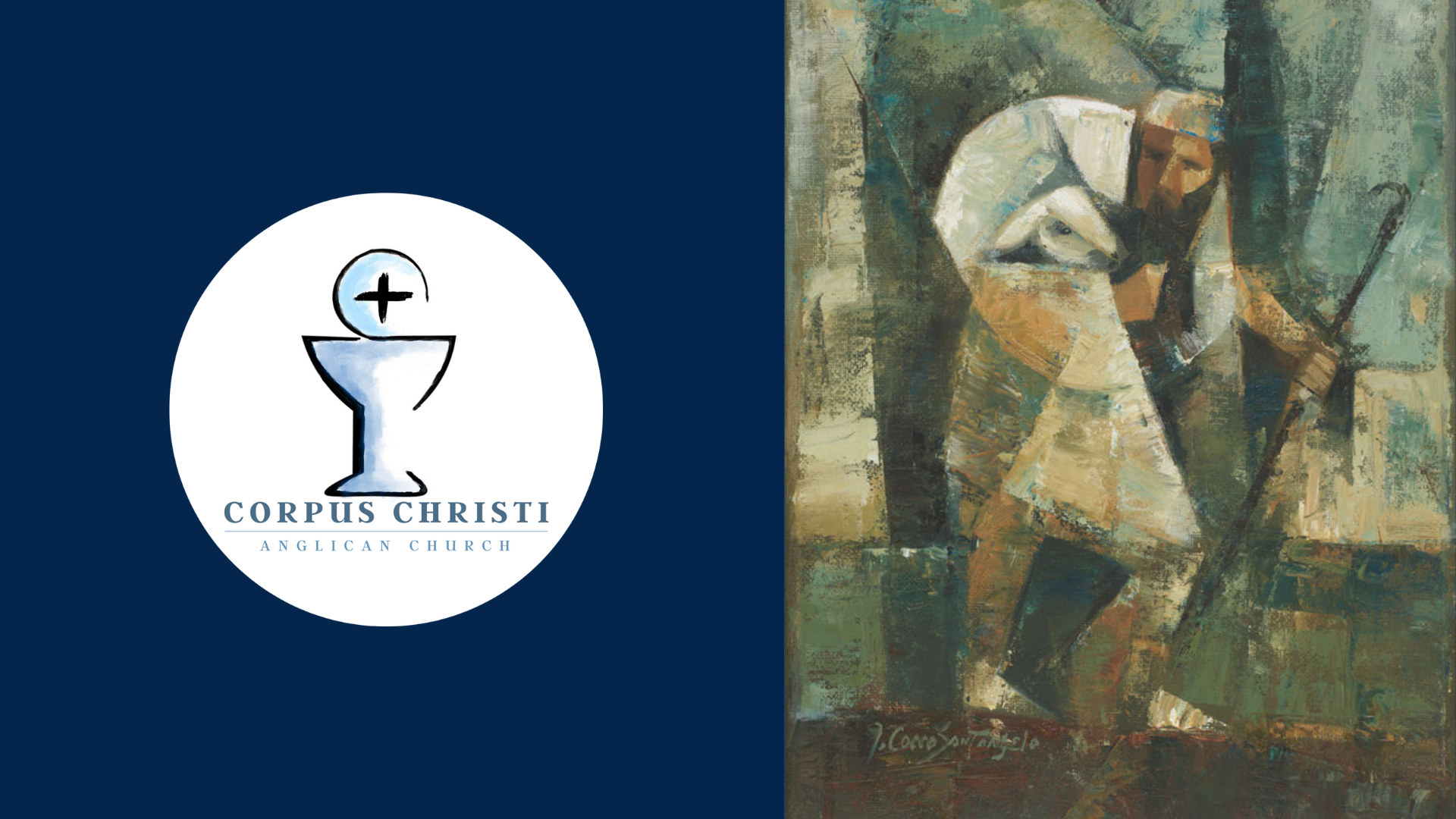
Fourth Sunday of Easter (Good Shepherd Sunday): The Shepherd-King and His New Temple
TranscriptioN
Good morning. It is good to see you all this morning. This is, as I mentioned, the fourth Sunday in Easter, which is Good Shepherd Sunday, and on this Sunday we celebrate the thing that Stephen read for us in Revelation chapter 7, that the Lamb is at the center of the throne, and he will be their shepherd. And each of the passages today that we read have something to do with this pastoral shepherding image of God in Christ.
So Christ is the shepherd and the king. And what might feel like an outlier among those different passages are the ones that we're gonna, is the one we're gonna talk about today, which is from the Book of Acts. And the Book of Acts supplants the Old Testament reading for a few more weeks.
We often suspend the Old Testament reading in Eastertide to hear through the Book of Acts how the resurrected Christ is continuing his ministry through the apostles in the church, the body of Christ. And so this morning I want to look at the way that the shepherd leads us through three images. First is the temple, second is the proclamation, and then the third is the embracing of faith.
And as we look at this passage in the Book of Acts this morning, let me pray for us. “In the name of God, the Father, the Son, and the Holy Spirit. Amen. O God, grant that we may desire you, and desiring you, seek you, and seeking you, find you. In finding you, be satisfied in you forever. Amen.”
The Temple
As we look through the Book of Acts, the Acts of the Apostles, we see the kingdom work of Jesus being continued through the ministry of Jesus' apostles. Chapter 12, which just happened right before what we read today, ended with this something that was recorded also outside the Bible in the writings of Josephus, a historian. Herod gets up to make a speech, and he makes himself like a god.
And right after this speech, he dies, both in the Book of Acts and in Josephus. And so in the Book of Acts, what we find is this thesis that comes through very strongly often, that Caesar is Lord, Caesar is not Lord. Sorry, let's try that again.
The thesis here is that Caesar is not Lord, which again, in the person of Herod, Herod is not Lord. Jesus alone is Lord. And the gospel, this proclamation that Jesus is Lord, will not be stopped.
And so Acts 12:24, right after the death of Herod, has this really terse little phrase, but the Word of God increased and multiplied, which several scholars have pointed out is mirroring the language of the Greek Old Testament, so the Greek book of Genesis, when it talks about humanity being fruitful and multiplying and filling the earth. It's the same verbiage here, that the Word of God is now multiplying and filling the earth, being fruitful and multiplying. And so what we see here is that the gospel is going out through the apostles, and it is bringing a new creation to humanity and to creation, the old creation.
God won't be mocked, and most importantly, he won't be stopped. And so this is the setup at the end of chapter 12 for St. Paul's first missionary journey. He goes to the church in Antioch of Syria, him and Barnabas are there, and they're going to be sent out to bring this gospel to the peoples at the farthest corners of the Roman Empire, and the church in Antioch in Syria lay hands on them and send them out to preach.
They go to Cyprus first, and then they go to several places that are in now southern Turkey. They end up in another city called Antioch. There were a lot of Antiochs.
This one is called Pisidian Antioch, a city in southern what is now Turkey. And one of the major themes in this book of Acts that you find as you read over and over is that God is building a new temple outside Jerusalem, outside the structures that they're used to. God is building a new temple.
In the Old Testament, the temple mimicked and pointed to the Garden of Eden, the place where God dwells and people can dwell with him. It's the place where people meet God, right? This is what the temple is. And in John's gospel and in other places, Jesus starts to reframe what the temple is.
You know, as he talks about, if you destroy this temple, I will rebuild it in three days. John adds this commentary about he was speaking of the temple of his body. And Jesus then is a new temple.
And then the story of Acts is that God is coming to abide in a people, the body of Christ, as the temple, the church. So what's interesting is that not only are Jews included in this temple, but also Samaritans who have their own temple in Mount Gerizim and eunuchs and Gentiles who would have been excluded from temple worship. People who have never entered the temple, who could have never encountered that place where heaven meets earth and the paradise of God are now being made into the temple where heaven meets earth and people encounter the paradise of God.
Men, women, slave, free, Jew, Samaritan, Gentile, young and old are all becoming the body of Christ, the place where heaven meets earth, where the resurrection of Jesus is experienced, where new creation work is the good news that Jesus is the risen Lord. And this is the place, the people from which the gospel is being fruitful and multiplying and filling the earth. So understanding that we are being made into a temple, the dwelling place of this good Shepherd King, helps us frame how meeting God in the fellowship of Jesus and his followers gives us a window into paradise for which we were made, where Jesus leads us to new creation, where he leads us to still waters, wide places, the power of the resurrection, where our wounds will find their redemption.
The Proclamation
And this is the message that St. Paul is bringing to the Jews in Pisidi and Antioch. So we've looked at the temple, now we're looking at the proclamation. Paul and Barnabas go to attend a synagogue.
This is where they normally begin their preaching in different places, where they're sharing the news that Jesus is Lord. And while they're there, someone reads from the law and the prophets, which is very typical in a Jewish liturgy, and the leader of the liturgy asks them for any words of encouragement they might have. And what follows in this passage is a beautiful homily from St. Paul, walking this group through what God has done in these promises and fulfillments throughout Scripture, and for them now too.
He addressed the men of Israel, who are presumably a diverse group of Jews who comprise the Jews that are in Pisidi and Antioch, and then he addresses the God-fearers, which is a term for Gentiles, who have renounced their paganism and are proselytes or converts to Judaism. And so St. Paul walks them through the deliverance of Israel from Egypt, he walks them through God's patience with Israel in the wilderness, giving Israel a land to inherit, he walks them through the period of leadership that leads up to King David, and then he says of this man's offspring, referring to David, God has brought to Israel a Savior, Jesus, as he promised. And so this one from the line of David is the one that everybody has been waiting for, this is the person of Jesus Christ.
So then Paul tells them about John the Baptizer, which I find interesting because Paul wasn't really following Jesus back during Jesus's public ministry, much less John the Baptist, but John the Baptist must have been a really influential person amongst the Jews who, here in southern Turkey now, these Jews from all over the place know about John the Baptizer. And he talks about how John the Baptist pointed to Jesus, and then he also talks about how Jesus's rejection by Jerusalem's leadership, Pilate's approval of Jesus's execution, and then Jesus being laid in the tomb, were all part of God's promises and fulfillment. That God had promised this, he was making good on his promise.
And more importantly, where he's going with this for the community, is that Jesus was raised from the dead, and he made appearances to eyewitnesses, and he's there to tell them that this good news that God had promised to their fathers is now fulfilled to them, who are God's children, by raising Jesus from the dead. And if God can raise Jesus from the dead, then he can free us from the bonds of sin and death that so easily draw us away from the love of God to spiritual death. And those are the things that the law of Moses couldn't deliver us from.
And the good news for these Jews and proselytes is that if they embrace this message that Jesus has risen from the dead, that he is Lord and there is no other, then God is going to fulfill his promises to them to bring them into this new covenant community that had been looked forward to all throughout the Old Testament, which in their day was the Bible. There was no New Testament back then. And so they could become the place where God dwells.
They could become the temple where resurrection happens, where God's good shepherding is experienced in the lives of each other, and where people are finding rest for their souls. And so God's tender shepherding is experienced in the body of Christ because that's where God's presence dwells, where we discover God's presence, and where we're led to streams, where we're led to pasture, where he wipes away the tears from our eyes. It's done in the body of Christ, in the community of faith, first to show us of the ultimate reality that we look forward to, where all things are brought under the rule and reign of King Jesus, our good shepherd.
A Life of Faith
But we experience it now in the body of the church. And we've looked, so now we've looked at the temple, we've looked at the proclamation, and the ways that the good shepherd leads us, and now let's look at a life of faith, embracing that faith. This has to be good news for us first before it's good news for other people.
If you think back to Paul's day, the Emperor had declared themselves Lord. The Emperor was a deity. And so it's stunning when you read Acts chapter 4 and you find Peter's sermon where he says, salvation is found in no one else, for there is no other name under heaven given by which mankind must be saved.
There's no other name Caesar cannot deliver, no political candidate can deliver, no perfect career can deliver, not the right house, not the right life circumstances, not a particular household structure, or just enough income can deliver. Nothing can deliver us from the things that draw us from the love of God except Jesus Christ alone. And so we acknowledge that yes, there are certain circumstances that will put you into life scenarios where you experience better earthly welfare than others, but none of those things can deliver us from what draws us away from the love of God, what distorts our loves, and what keeps us from seeing Jesus Christ fully and ourselves fully, except for Jesus Christ alone, him crucified and resurrected and ascended.
So discovering Jesus, having this gospel, this proclamation be the good news continues now as it did in the book of Acts through what the Apostles and the disciples did then, which is devoting ourselves to the Apostles teaching, to the fellowship, to the breaking of bread, and the prayers. We're not doing anything innovative. This is exactly what we do today because we believe that in it we will discover the resurrected Christ in one another.
And so someone the other day, it was interesting, I get this question a lot, but they asked, how is the church doing? They wanted to hear, you know, how's the church planting process going? And usually when people ask that, either they want to know about attendance and cash, or the temptation is to talk about attendance and cash. But I stopped and I asked, how is the church doing? And so when I answered this person, it felt holy and encouraging to my own spirit because I was reflecting on each one of you, because I know you. You know, we have coffee, I pray for you, I know you one-on-one, and you know each other.
And so I was thinking about how to answer this, and I mentioned to this person about a praise about the redemption that I'm seeing in community. Because I see people getting together. I see people who are longing to be baptized or confirmed, who long for a closer relationship with Jesus, who are growing into a deep sense of belonging into this community.
And because they belong, they feel that felt sense of belonging in community, they're growing in the knowledge of how much Jesus loves them, because they experience it in somebody else. There are people who are wrestling through, how do I forgive this person who I haven't forgiven? How do I show God's love to my children, become a better parent or spouse? How do I become more like Jesus to others around me? And I'm so grateful for the ways that, as I think about our church, people are serving one another, they're staying connected with one another, they're honest and vulnerable about sharing their struggles and joys with one another, and praying for one another. Like, you know that you can be undone when you come in, and that's a great culture to have.
Because I'm that way, so you can too. I was grateful thinking about our formation group last week, as the kids were playing together, and they're learning to delight in one another, in the friendships that they're making, they're learning important lessons about sharing, forgiveness, and kindness, and they're watching the adults pray together, and they're seeing the values without us having to tell them what we value. So I love how intergenerational things are.
So I can see, when I look at you, when I look at these groups, and the formation groups, as I get to know each one of you, I can really see how this is a temple of God, where heaven meets earth, and we experience the risen Christ in community. And so that's how this church is doing. Praise the Lord, that's how this church is doing.
As you think on your own story this morning, think about, there's three questions that I've been thinking about this week that I want to just hand to you as well. What has Jesus delivered you from? Where have you experienced redemption? What has Jesus delivered you from? What is he currently delivering you from? What do you long for him to deliver you from? These are important questions when we're getting to know the Good Shepherd. What has he delivered us from? What is he delivering us from? What do we long for him to deliver us from? And then carving out time to pray through those things, individually and as a community.
This is the work of the Apostles in the book of Acts, where God's gospel is being fruitful and multiplying and filling the earth. That's how it's done, one heart at a time. And the gospel is true, and because it's true, it's also good.
And that's really important. When the goodness of the gospel has touched our hearts, as we're led by this goodness and the kindness of our tender shepherd, we can start praying about the people that we encounter, who needs to hear about the goodness of their Good Shepherd, and how might we share our story with them. Or instead of having a posture of telling, maybe even better is to have a posture of listening, and pray about how we might best listen to somebody's story as they share.
To come with curiosity and kindness to enter into their story with them, to invite them to get to know the goodness of this Good Shepherd that we know to be good, first for ourselves, and then help them to get to know his goodness for themselves. So this morning we've looked at the ways the shepherd leads us into the image of becoming the new temple, through Paul's proclamation of the gospel, and embracing this faith for ourselves, so it is also good for others. And on this Good Shepherd Sunday, we look forward to the end, where we read in Revelation, we get to spend a lot of time in Revelation over the next few weeks, where God's throne, the worship around God's throne, we join this with the saints, where the lamb is in the midst of the throne, and he is the Good Shepherd.
He's the one who leads us to still pastures, great stars, still waters, and green pastures. He's the one who dries our tears. He's the one who restores our souls, who redeems our wounds, and we practice this in the church, which is true in heaven.
Looking forward to the day where the body of Christ, the temple, we see in full of what is in part now. We come to know the redemption that Jesus brings in the hope of the resurrection by discovering his love in the fellowship of the saints. This is why the church is so important.
And by continuing in this long line of saints who are devoting themselves to the Apostles' teaching, the fellowship, the breaking of bread, and the prayers, we journey with Jesus in this pilgrimage of naming what's broken, the things that we're bound to, so that we might be free to live in the new life that's found in Jesus's resurrection. And discovering the goodness of the resurrected Jesus and naming this for others and with others is how the Let me pray for us. Almighty and everlasting God, you govern all things in heaven and on earth.
Mercifully hear our prayers and grant that in this church the pure word of God may be preached and the sacraments duly administered. Strengthen and confirm the faithful, protect and guide the children, visit and relieve the sick, turn and soften the wicked, arouse the careless, recover the fallen, restore the penitent, remove all hindrances to the advancement of your truth, and bring us all to be of one heart and mind within your holy church, to the honor and glory of your name, through Jesus Christ our Lord. Amen.
Transcribed by TurboScribe.ai. Edited by the author.
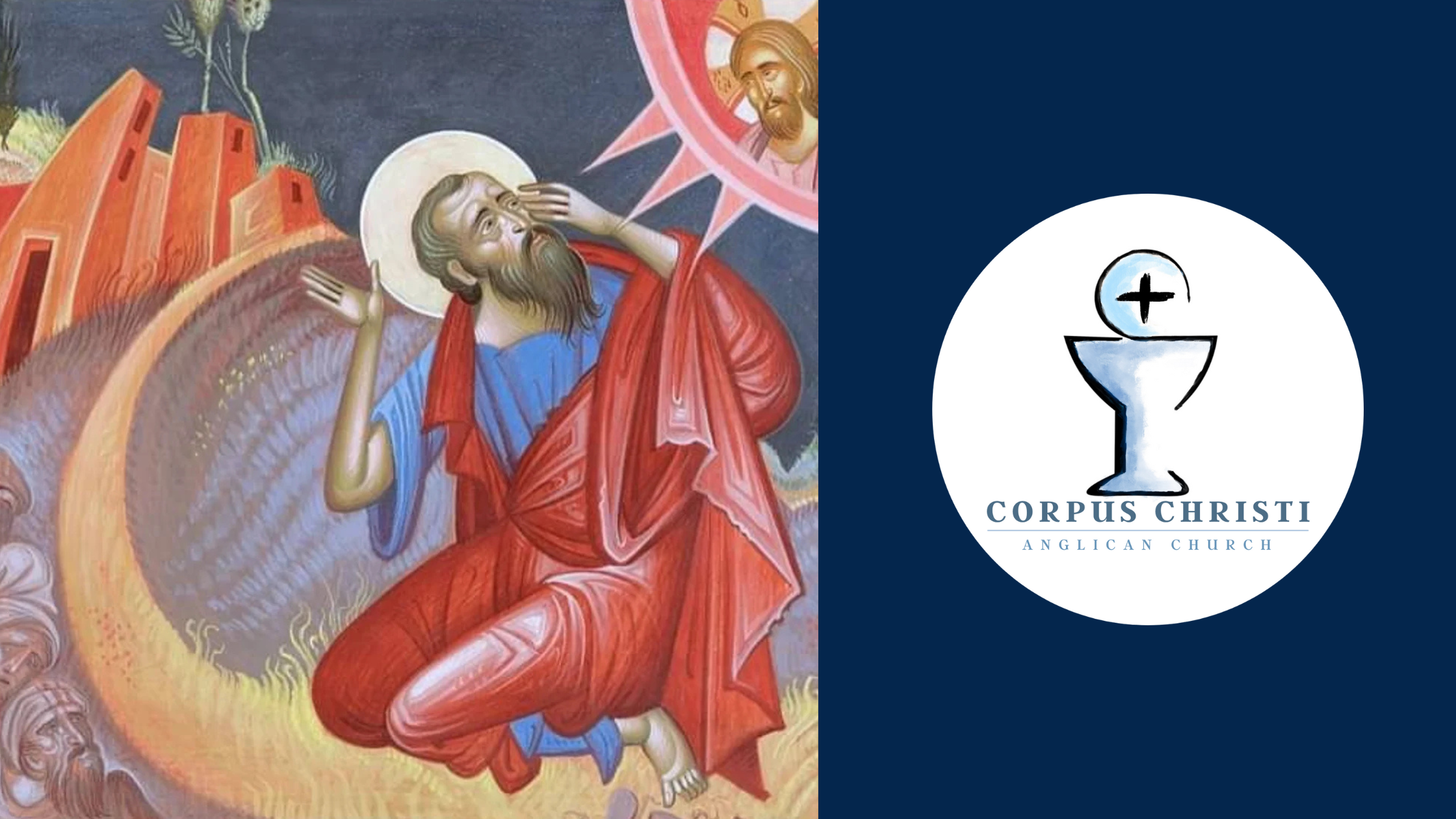
Third Sunday of Easter: The Glory of Jesus from Damascus to Eden
TranscriptioN
So just a quick, just a quick bridge to what he was saying. He mentioned some people groups, ethnic groups, who I tend not to use that. I will use some city names, but I refer to those people groups by Edenites because the place where it is is close to the source of the Tigris and the river, the Tigris and Euphrates rivers, and we think of Eden. And so I call them Edenites.
So just for your orientation. So I serve an Edenite group of about three million Sunni Muslims, and they have no church and only a handful of Christians. One Edenite planted a Protestant church in the city with many Orthodox there, Syriac Orthodox mostly, and others.
And the Orthodox have bad memories of Protestants there because Protestant workers went over there in the 19th century, and they planted churches by sheep stealing, unfortunately. So that brought a bad memory. So when this church planter, this Edenite, was down there, he was doing lots of things, and his idea was to reach the larger ethnic group, the Muslims in the area, but he began building relationships with the Orthodox and having tea.
And after a couple years, trust was built, and they actually gave him permission to use an old Protestant church, and they restored it, and now maybe 2,000 Muslims a month come into that church building every every month. And they're just, and they get a chance to share the gospel, and it's really kind of exciting. But when he was, this pastor, was telling me about his relationship with the Syriac Orthodox, that stuck in my mind, and then later I met Father Morgan.
And so naturally, I've always wanted him to come out there, but we'll see. So our church, Epiphany Anglin, also has warm relationships with your church as well. Father Morgan has come, and my wife has been involved with you.
I remember the last time we visited was during COVID at Lake Accotink, and that was an exciting time to be joining your service, and just great to see the Lord sustaining you and building you. So thank you.
So God's called me to facilitate planning churches among the Edenites.
For church planning, though, we really lack the raw materials of scriptures translated into the native tongue. And so a lot of our work since 2020 has been involved in translating the New Testament. Praise the Lord, where probably about 75% of the translation work is authorized or approved provisionally, and then we're looking in about 18 months for that to be published.
So we're excited about that. And my focus over the next couple years will be trying to figure out how can we get that promoted as a gift to the Edenites in their language. It'll be one of the most serious translation works.
And so for them, they really feel that their language is under threat, and so we're trusting that would be a door for them to explore the gospel. It'll also give them the vocabulary to share the faith. It talks about singing a new song in our Psalms.
You know, they can't sing new songs without words from their heart language. They can't have prayers without a language. You can't communicate the gospel unless it's in their vocabulary.
So translation facilitates that. I'm gonna preach on Acts chapter 9, and the question is, why is Acts chapter 9 during the season of Easter? Easter is from the resurrection until Pentecost, and we celebrate the eyewitness of the Apostles and others of seeing the risen, crucified Lord Jesus Christ. So why do we have this? Because Acts 9 is obviously after Acts 2 when Pentecost happens.
Paul describes this event, he says, I was one who saw the Lord as one untimely born. It was an unusual thing. And so, but Luke, as well as the church, they've always been, they've wanted to emphasize the fact that Paul has seen the risen Lord Jesus Christ, and he is an Apostle.
And so we can trust his work. So his writings, his teachings are apostolic and authoritative for us. And Paul also describes it in Galatians, as well as he recounts it again twice more in Acts.
It's really an important event. But in Galatians, he described it with the word, the Lord Jesus Christ was revealed to him. So this is not just a vision, and we'll see later on in the chapter, Ananias and Saul, and Paul was called Saul before at this time, but they both saw a vision, and the Lord spoke to them.
But here was a revelation. There was a type of the Lord communication to his people, beginning in Daniel and Ezekiel. And it was seen, and it was an apocalypse, a revelation.
And there was a certain series of events where there was usually a light, and then there was a, and then whoever was the recipient, they would be fall down in fear, then there would be a heavenly figure that would come, and they would get them to rise up, and they would give them a message. And that's what we see, and people who would read this in the time when Luke was writing Acts, he would know that's what was happening. So this is an apocalypse, a revelation of Jesus Christ.
But in this particular apocalypse, this revelation, there's one of the elements is missing. Usually there's a message that's given for others, and sometimes it's, say, hey put this aside, this is sealed up till the end times. And the message that, the only message that the Lord gave to Saul, he revealed himself, and Saul saw him, but he said, Saul, Saul, why are you persecuting me? And he told him, I am Jesus who you are persecuting.
And he gave him a few instructions, but there really wasn't a message. So, and Saul did not receive his commissioning or his call at this time. It was going to happen a little later in this chapter.
So one of the things, the images that struck me was this image of light coming down from heaven. The direction symbolizes the downward dimension of apostolic revelation. From heaven, down it comes, and even Paul goes actually down to the ground.
Now Saul is not a role model for us. We're not to expect to receive revelation like Paul did. That time is finished.
The time of Easter, when the people have been witnesses of the Lord Jesus Christ, is done. The canon is finished. We have scriptures, and that defines our faith, and our way of life.
So revelation like that's not happening right now. And then the Apostles, what were they to do? They were to witness to what they saw, and pass it on. And the job of the rest of people was to receive their eyewitnesses, and trust that they were reliable, that they really had seen the Lord Jesus Christ.
Well we don't learn to expect revelation the same way that Paul received it here. We can find ourselves in this scripture in a certain way, and that's that who was Paul, or Saul, when he received this? He was the enemy of Christ. He was murdering Christians.
He was going about separating families. And it was to this Saul, Christ's enemy, that when he was trying to destroy the church, that he's the one who received that. And so it's a picture for us that even in this apostolic word of faith, it comes to people who do not deserve it.
And that's like us. That's where we all start when it comes to the revelation of God. And so the apostolic faith has as its basis the words and the testimonies of the Apostles, and we come into it by receiving that.
Not on our basis of our own goodness, but because God has decided to be merciful to us. Then we come later on to what happens to Saul. He has this thing, and then he goes off, and they lead him into the city.
And for three days he's blinded, and he doesn't eat or drink. What does that remind you of? That reminds me of Lenten fasting, where you don't eat. He is mourning.
He's repenting for three days. And during that time then, he gets a vision the same time Ananias, after three days, they get that vision. And I like Ananias, because I can relate more to Ananias.
He's more your everyman. He is your common disciple of the Lord. He had this dynamic relationship with the Lord.
There's this vision, and it's not revelation, it's different, but it's this conversation that he has with the Lord. You get to see it. The Lord is speaking to him, and that Ananias also gets a chance to tell him, but wait a second Lord, this guy is dangerous.
We know about that. Are you sure you really want me to go there? And the Lord and him, they have a back-and-forth, and the Lord persuades him. So there's something about this living dynamic relationship that is happening.
And then in the middle of that, the Lord reveals to Ananias what he is doing in Saul, as part of a way of comforting and encouraging him. You know, I've sown him that somebody named Ananias will come, and will lay hands, and you'll see. And Ananias is trusted to pass on the words that he had to Saul, and Saul has to rely on Ananias that his words are reliable representation of what the Lord has to do.
It's this dynamic relationship that Ananias has that results in a flow outward from his inner to outward to Saul. And so this is different than this vertical movement from heaven downward. This is a movement from inner to outward that brings him out to mission.
Now I want to illustrate that with my own example. In 2012, I was with a church history professor and a group. He was very interested in monastic life, and we went to some monasteries in this country, and he really taught us how the Orthodox life, the center of that was prayer.
And I was really convicted because I cannot pray. I couldn't pray at that time by myself. And at the end of that, I ended up starting to pray with another person, and we began on Tuesdays and Thursday mornings at 830.
And this is back in 2012. And Lord willing, and thank the Lord, we've been able to continue praying together. And during that time of prayer, we pray the Lord, we're trying to make ourselves open to what the Lord is doing among the Edenites.
And the Lord has given us direction. That same first day that we started, I got invited to a conference, totally not related to prayer, but I used it as a time of prayer and fasting, and the Lord spoke to me in a vision. And I was complaining to the Lord.
I was actually saying, Lord, for 2,000 years, these people, you know, you said you would bless them, and all I see is cursing. I don't see your blessing, and you promised that you would bless every family of this earth. Don't you love them? I accuse the Lord.
And then the Lord appeared in a vision. It was kind of like the movie, The Passion, from Mel Gibson. And Jesus is on the cross, and his face is bloodied.
And he's like, do I love them? I'm all in, but not without my church. And I'm sorry, not without my bride. Because his plan was to reach this group using his bride, the body of Christ.
And so from that, that really came this real conviction. It's churches, both churches that will be the witnesses in this area, in the neighborhoods, in their families. That's where people will see the Lord.
In fact, that as people come to the Lord, they can understand. Oh yes, they can understand all the truths. It takes some time for people to understand the truths of who Jesus Christ is.
But to make the step of believing in baptism, it really takes them to be coming apart and joining together in the communities. And hearing their testimonies of how believers, when they declared that they're followers of Jesus, they usually get thrown out of the house for several weeks. And then they, and people are terrified of that.
Because your family is everything, and your social networks, everything depends on that. Your whole future depends on that. And people are afraid to make those declarations.
They hear the stories of how the Lord works through that, and brings those people back into relationship with their families. And then they get that courage to make that step to believe and to be baptized. So we see in Ananias, again, I want to illustrate this, that dynamic relationship that we have with the Lord from interior to out.
And it's involving being open to the Lord. I think that I think about my life here in Northern Virginia. Everyone is so busy.
We're all going from here to there. I have very little discretionary time. And so I need to really ask, and I'm feeling convicted from this sermon, it's like, okay, to really pray and ask the Lord, okay, who are the people that I know, my family members, the people I work with, or in my running club, or neighbors, who Lord are the people that you're working in? Show me, with a very small amount of time.
And so I'm encouraged to do that again, just like we are doing this, looking for this impossible thing of the Lord working among the Edenites. He can also work among us, and bring us from that posture of openness to the Lord. And He can guide and direct us.
And then the last thing that we see a movement, we said from inner to out, but there's also this beautiful picture of Ananias. Once he goes and preaches to Paul, and teaches him, and he lays hands, he says, be baptized. And they eat together, and Paul is strengthened.
And so the community, this is Paul's first community, and they take Saul in, the one who they should be really afraid of. But this small, obscure community, a group of disciples, maybe smaller than what we have right here, they were Paul's first view of what the church is. That's where he experienced the Lord, and what does that mean? And so as we go, and as we go, and are seeing the Lord doing things out there, there's also that movement of bringing those people back in.
Bringing those people here to the church. Bringing those people to your formation groups. And that is powerful.
So we want to always remember, and this is as we go into the areas where we are, it's that apostolic faith. It's something that we accept. It's happened at one time.
It's authoritative for us. We always want to remember this aspect of grace. We always remember that whoever we talk to, whatever they've done to us, whatever enemies that they are, they're not beyond God's forgiveness.
That's the vertical aspect of the apostolic faith. And then there's this horizontal relationship. This relationship that the Lord gives us that's open to all disciples of His, for the Lord to guide and direct.
You know, whether it's through visions, or through hearing liturgy, listening to a sermon, or whatever, listening to the Word. The Lord communicates with, wants to communicate with us, and we can enjoy that. And then from that flows the connection of the Lord from those words to what He's doing exterior on the outside.
And then as we do that, bringing those people back and connecting them to the Lord. Thank you.
Transcribed by TurboScribe.ai. Edited by the Vicar.
Second Sunday of Easter: When the Sad Comes Untrue
TranscriptioN
Well, it's a joy to be back with you again.
This is my third visit now to Corpus Christi, and you just keep getting bigger every time I'm here. It's like watching your children grow, right? They just get longer. It's like I can barely see the back of where you're seated.
A delight to be able to be here with you in Easter season this year and to celebrate our Lord's resurrection. Some of you are probably familiar with J.R.R. Tolkien's book, The Lord of the Rings. It is a favorite for many of us.
There's a wonderful scene that occurs toward the end of the book. It's Tolkien's depiction of hope and new life. It comes after the final battle, after the evil Lord Sauron has been defeated and the Ring of Power has been unmade.
The hobbits Frodo and Sam are now in the Houses of Healing, where their wounds are being tended to. Frodo has been basically out of it, and suddenly he wakes up. And when he opens his eyes, he sees there standing before him his friend Gandalf, whom Frodo had watched die in the mines of Moria, and he bursts out in shock and in joy.
He says, Gandalf, I thought you were dead, but then I thought I was dead. Is everything sad going to come untrue? What's happened in the world? And Gandalf says this, he says, a great shadow has departed, and then he laughed, and the sound was like music, like water in a parched land. And as he listened, the thought came to Sam that he had not heard laughter, the pure sound of merriment for days upon days without count.
Now as we come to our Gospel text this morning in John chapter 20, I want to focus basically on the first section, the first Easter evening, the evening of Christ's resurrection. There is not yet a sense within the gathered community of disciples that everything sad is coming untrue, or that a great shadow has passed. There isn't yet any laughter or merriment, but what there is is confusion because nobody had any categories for what was happening.
Nobody actually understood anything that Jesus had said about the fact that he would be killed and on the third day raised. There is probably disagreement because anxiety breeds that between people, and it's the disciples after all. And there's definitely fear.
In fact, the text tells us they are behind locked doors for fear of the Jewish leadership. And what we're going to see is four things in the text this morning. First, peace that will emerge in the midst of their anxiety and their fear. And second, that that peace is based upon proof. Third, that proof will lead to purpose. And fourth, that purpose requires God's power.
So peace, proof, purpose, and power. That's what we'll be seeing. So the context, you know, but we have to open it up because it helps us to allow our minds and our hearts to enter into the text, a text which many of us have heard many times, read many times, and the danger with being familiar with the text of scripture is if you're not careful, you just miss it all.
And so we remember the disciples are traumatized. Think about the past week. They have experienced the highest of highs and they have been whiplashed into the lowest of possible lows.
Just a week before they enter into Jerusalem to the shouts of hail, son of David, the Messiah, the King, the Anointed One, the Deliverer. They are on the highest of highs. And within days, what do they do? They deny him.
They abandon him. They betray him. They see him brutally tortured.
They see him executed on a cross between two thieves, like a common criminal, the one in whom they have placed all of their hope, all of their life. And they saw his mangled and lifeless and crushed body placed in Joseph's tomb. Now it's the third day.
It's the evening of the third day, and they're hearing crazy tales that he's alive. The women, as we heard last week, have encountered angels at the tomb who said to them, why are you looking for the living among the dead? He's not here. He's alive, just like he told you.
Don't you remember? And Mary Magdalene claims that she's actually seen him and spoken to him and heard him call her name. Peter and John have been in the empty tomb, and they have seen the grave clothes and this strange sight. Am I echoing? This strange sight of the grave cloth, the face cloth, folded neatly and tidily off to the side.
In the past few minutes, the two Emmaus Road disciples have returned, Cleopas and probably his wife. Usually you walk down the road with your wife when you're leaving from the Passover and going home. They've shown up saying, of all things, they've walked with Jesus, they've talked with Jesus, and he's done the greatest Bible study that has ever been known as he opens the scriptures and shows them how all the law and the prophets and the Psalms point to him.
And then they have communion with him, and then he's gone. It doesn't make any sense. That's where our text picks up. In verse 19, on the evening of that first day of the week, the door is being locked where the disciples were for fear of the Jews. Jesus came, and he stood among them, and he said, peace be with you. Isn't it amazing that his first words are peace be with you? His first words to his gathered church, this motley crew of broken and traumatized and sinful people, people like me and perhaps like you, his first words were not you've done it this time.
How could you? There you go again. How dare you? Your sin is too great. You've gone too far.
Shame on you. No, he doesn't say anything at all like that. He says to them, peace be with you.
These are his first words. And in fact, he'll say it again in verse 21. And then he'll say the same thing eight days later to that good old doubter, Thomas, peace be with you.
The word is shalom. And in that culture, it is basically a very normal greeting. It's an everyday greeting, but it's also the kindest greeting that you could ever give.
We don't really have an equivalent in English. About as close as you might get is when somebody comes to your house, and you say, well, welcome. I'm glad you're here.
Make yourself comfortable. My house is your house. All that is mine is yours.
But shalom goes far beyond niceties or hospitality. It's far more comprehensive. It's as though he's saying all peace in every way and at all times be with you.
It's all encompassing fullness, wellness, blessing, provision, perfection, wholeness, prosperity, healing, restoration. There's no room for fear. I only want good for you.
That's what Jesus says in his first words to his gathered church. And the reason that he can say this to these fallen and faithless people is because it is peace that he has secured. His cross and his resurrection have established peace with God.
That's what he offers to those who believe. He died because of and for our sin. He was raised, as the scripture says, for our justification before God to show that what he has done in his life, in his death, through his resurrection, and then, as we'll see soon, and in his ascension, is sufficient.
It's enough. It's satisfied. The apostle Paul says this in Romans 5, verse 1, therefore being justified by faith, we have peace with God through our Lord Jesus Christ. Oh, it is such good news. It is such good news.
Now, I just want to ask this. Have you ever wondered what his voice sounded like when he said it? Did he boom, peace be with you? Some sort of thing you'd see out of Hollywood from the sky. Did he whisper timidly, peace be with you? It's not spooky Jesus. I think, actually, he probably laughed joyously as he said it.
I think Tolkien got it right when he wrote, and then Gandalf laughed, and the sound was like music or like water in a parched land. And as he listened, the thought came to Sam that he had not heard laughter, the pure sound of merriment for days. Do you hear that? The pure sound of merriment.
You ever seen a baby giggle, a little child laughing just hysterically, not burdened by all the things that burden the rest of us as we get older and stuff all that down and life beats up on us a bit? The pure sound of merriment. That's God. Do you know that's how our Lord sees you? With a pure sound of merriment.
When he looks on you, of course he sees your brokenness. Of course. He doesn't excuse our sin.
He's done something about it. But when we trust him, what do we receive in return? The pure sound of merriment. We receive peace with our God.
He sees us with love. He sees us with kindness, with affection. Yes, he'll correct us.
A good father does that. This is why grace is so amazing. Verse 20 says, then the disciples were glad when they saw the Lord.
See, in God's kingdom, peace and joy are closely linked together. And so the permission I like to give people, I don't know if I told you this last year, but I say it an awful lot. If at any point today your heart tells you you're happy, let your face know about it.
It'll encourage me and it'll also help you because you'll begin to integrate what's going on inside in your soul, with your body, in your spirit, with all of who you are. Verse 20 also says, then he showed them his hands and his side. And what's he doing? In the midst of offering peace, he's giving them proof.
You see, our peace is based upon proof. These nail-scarred hands. He really died. Lights out. He wasn't mostly dead. He was totally dead. And he really rose from the dead, not ethereally, not spiritually. He rose physically and bodily from the dead. Our faith is based on a historical fact.
There is a resurrected Christ. Jesus is the risen Lord, which is why you see this shift that starts to go on in what they call him. They call him Lord, Lord, Lord, Lord of heaven and earth, Lord of the living and the dead.
His physical body is really alive. Is there mystery? Yeah, of course there's mystery. You don't want a God that isn't mysterious.
It's part of why you celebrate the way you do. Your people who are craving the mystery of a God that's bigger than the pragmatism that we live in day in and day out, where everything is broken down to its smallest little bit. And anything larger than the idol of our own minds gets discarded as fanciful and idle.
Oh, there's mystery. Yes, there's mystery. His resurrected body is the same and it's different. Recognizable and yet also changed. He can come and he can go and lock doors and stones across tombs. Well, there are no obstacles for him.
The stone was rolled away for the women and the disciples, not for Jesus. He's giving them and us who read the account, we who have not seen, but who have believed the proof that everything sad is really coming untrue. You can trust him.
You can trust his words to you. You can trust your life to him. You can trust his character, his heart, his promises, your yesterday, your today, your forever more, your goodness, your badness, your successes, your failures, your sins.
He can handle them. And in the end, he will triumph. Make no mistake, death is not the last word for the person who trusts in our Lord Jesus Christ.
He is crucified and he is risen. Hallelujah. And that has to be shared with other people.
That's our purpose, to share good news of peace that's based upon proof of the crucified and risen Lord. That's what he tells them and us in verse 21. He says, peace be with you as the father has sent me, even so I'm sending you.
And this is incidentally John's version of the great commission. Matthew 28, Jesus says all authority in heaven and earth has been given to me. Therefore go and make disciples of all nations, baptizing them in the name of the father and of the son and of the Holy Spirit and teaching them to obey all that I have commanded you.
And surely, surely, surely I am with you to the very end of the ages. We are a people. That's what it is to be the church.
We're not called to be a holy huddle away from the world. To retreat to the safety of our gatherings and even the wonders of our worship on a Sunday morning is meant to equip us as we worship him, as we hear from the word, as we feed from the table so that we can be sent out into the world around us. We are called to go and do what Jesus did, to seek and to save those who are lost, to help others be reconciled, to have peace with Jesus, to have peace with the holy and the almighty holy God.
So we have peace that's based upon proof and that leads to purpose, but to fulfill God's purpose, please hear this, you need God's power. Verse 22, and when he said this, he breathed on them and said to them, receive the Holy Spirit. Now the Holy Spirit is going to be poured out in even greater measure about 50 days later on the day of Pentecost.
There are going to be witnesses in Judea, Samaria, Jerusalem, Judea, Samaria, to the ends of the earth. But for now, what we want to see is that the power of the Holy Spirit brings new life. Now I'm going to go back to another Christian favorite, C.S. Lewis, Lion, the Witch, and the Wardrobe.
It's funny how these books work themselves into Easter sermons. I think these men knew something. Aslan, the lion, who is Christ, has been killed on the stone table and has been raised.
He is alive and the first thing he does is he goes to the white witch's castle where her courtyard is full of stone statues, these good creatures whom the witch has cursed and turned into stone. They are lifeless, they are dead. And Aslan walks up to each of them and breathes life upon them, turning them from stone to flesh again.
It's a picture of recreation, it's a picture of resurrection. And what do they do? They sing and they dance and they rejoice and they shout the glories of the one who makes all things new. My question this morning would be this, has that happened to you? Have you been made new, not because you started a new leaf, but because Christ's life has entered into you because you've placed your faith in him? It doesn't have to be a huge emotional thing, but it has to be a very real thing.
How many of you know that you were born as a baby? You may not remember it, but you're pretty sure it happened. Well, hello, if in the natural, so also in the spiritual. God does not leave us wanting and wondering whether we have been born anew.
He's a good father and he will confirm to us, and how will you know you actually believe the stuff you say in the liturgy? You actually hear the word, and though you might struggle with doubts at some times, I'm your bishop, every now and then I struggle with my doubts. That's not anti-Christian, that's human. That's the already and the not yet.
But do you believe? Do you rest your life on him? Then you've been born anew by his spirit. You have life from above. We might say it this way, have the promises of your baptism come alive in you? And if not, ask him to.
If you believe, you can do it now. You can do it in a few moments along with our confirmands as they affirm their baptismal promises. And if this has happened to you, if you are living this life with Christ, are you fulfilling his purposes? That's not a guilt trip.
It's a question that we all have to ask ourselves just realistically, not heavy handedly, not because somehow you're going to earn something from God or lose something from God, but because you have a purpose. We have a purpose, but we need his power. Because Jesus says, apart from me, you can do nothing.
And I'm proof of that. And so ask him to increase his power in you so you can fulfill his purpose, which is to invite others to come and discover this incredible peace that's based upon proof of our crucified and resurrected Lord. And here's this, the world needs to know that everything sad is coming untrue, especially in the time in which we live.
Let's pray. The Lord, we thank you for your word. We thank you for your resurrection.
We thank you, Lord, your spirit is here amongst us and within us and around us. Lead us to Jesus, we pray. Open our hearts to new life.
Cleanse us of our sins. Call us to purpose. And we pray, Lord, give us your power to accomplish that which you ask us to do.
We ask these things in Jesus' name, our crucified and resurrected Lord. Amen.
Transcribed by TurboScribe.ai. Edited by the Vicar.
Easter Sunday: Melito of Sardis — On Pascha
TranscriptioN
Introduction
Well, good morning again. It is good to be with you on this Easter morning. And I'm Father Morgan Reed. I'm the vicar here at Corpus Christi Anglican Church.
It has been a full week. Just last Sunday, we were celebrating Palm Sunday, if you can remember all the way back to last Sunday. And then we celebrated the Lord instituting the Eucharist on Maundy Thursday, His death on the cross on Good Friday.
And last night, we started in the darkness of the tomb in the great vigil of Easter and made our way to the resurrection together. And we celebrate the resurrection again this morning. It has been a really good, good and full week.
And one of our values of this church that we talk about is wanting to live out the church's tradition. And we're gonna do something this morning I haven't done before, which is that I'm going to help us to get to know someone in the church's tradition. One of the ways that we live out church tradition is by getting to know the mothers and the fathers of the faith that have gone before us.
So this morning for our Easter homily, I'm going to read us a historic homily. This is from a famous bishop in the year who died in the year 190, so the second century. His name was Melito, M-E-L-I-T-O.
So kids, if you're taking notes, you can write down Bishop Melito. He was the Bishop of Sardis, which is today Sart in Turkey. And this city was one of the cities, you'll remember from the book of Revelation, John had written to seven churches.
This is one of the churches that John the Apostle had written to. This was the center of Jewish civilization in Roman Asia. And so Melito, he was actually Jewish by birth at some point, he became a follower of Christ.
Like I said, he died around 190, within one century of the Apostle John having died. And so it's easy to imagine that maybe Bishop Melito's forerunner was the bishop that the Apostle John wrote to. These are the friends of the Apostles, the second generation.
This is an 1800 year old sermon. And Melito is from an ancient group called the Quartodecimans, it's a fancy word. That word means that they celebrated the passion and the resurrection of Jesus in the same liturgy together on the 14th day of the Hebrew month of Nisan, which is the first day of Passover.
Passover, פֶסַח in Hebrew, is transliterated into Greek as πασχα. So if you've ever heard the word Pascha, it comes from Hebrew Pesach, meaning Passover. To this day in the Orthodox tradition, they still call it Pascha, they don't use the word Easter.
And so the Quartodecimans that Melito is part of would celebrate this Paschal festival on the 14th of Nisan, connecting the Passover lamb with Jesus and what he has done for all of humanity, whether or not the 14th of Nisan was on a Sunday, kind of like we do with Christmas and Jesus's birth. Exodus 12 was part of their liturgy, so they would read the Passover texts together, and the events of the Passover were interpreted as a type of the saving acts of God through all of Scripture, culminating in the work of Jesus. And one helpful cultural note that I want to make, in case this isn't familiar to you, is how deeply entrenched Christianity was in Jewish ritual in the second century.
You can feel, when you hear Melito's words, you can feel the Passover Seder behind it, as the text for Melito. And he's going to refer to Christ as the coming one. Also, whenever I say the coming one in this sermon, there's a Greek word, in case you can write this down, Afikomenos.
Can you say that with me? Afikomenos! All right, it's an important word. There's a Jewish tradition in the Passover Seder of breaking off part of the main bread and hiding it somewhere in the room, and that broken piece of bread is called the Afikomen. And in modern Judaism, it's kind of like a kid's game to find the Afikomen somewhere in the room by the end of the night, and according to some scholars, then the Afikomen was originally this reminder that the Messiah is coming.
We don't know where he is, we don't know when he's coming, but he will come. And so it's a good reminder that as we hear Melito's hymn, and you hear the coming one, his Greek word there is Afikomenos. It's a play on words with the Passover liturgy in Judaism.
And so you can think of that little morsel of matzah, when you hear it, being found by a child by the end of the Seder, and with a smile on their face, they're declaring, “I found it!” Right? That's what the coming one means. So this might just be what Melito wants us to feel when we think of Jesus as the coming Messiah, the one who rose from the dead for us. Now I realize it can be challenging to listen to an old homily.
It's not something that we're attuned to doing, but it's also really helpful because it reminds us that we belong to the body of Christ, this body that has been begun in the work of Jesus and has been going for over 1,800 years. We're rooting ourselves in an ancient tradition. It gets us out of some of the anxieties of the cultural moment, and it invites us to see things more clearly, and to be more rooted into the tradition of the church.
If something goes over your head, it's okay. Just let it go and keep listening. That's okay.
You can go back and listen to this, or if you want to get the book yourself, the book that I'm reading from is Alistair Stewart's translation of On Pascha: Melito of Sardis. So we'll take a moment, and then we'll begin. God, in the beginning, having made the heaven and the earth, and all in them through the word, formed humanity from the earth and shared his own breath.
Homily on Pascha
“He sent him in the garden in the east, in Eden, there to rejoice. There he laid down for him the law through his commandment. Eat food from all the trees in the garden, yet eat not from the tree of knowledge of good and evil.
On the day that you eat it, you shall die. The man was susceptible by nature of good and evil, as a clod of earth may receive seed of either kind. And he consented to the wicked and seductive counselor, and stretched out for the tree, and broke the commandment, and disobeyed God.
For this he was thrown out into the world, condemned as though to prison. Strange and terrible was the destruction of people on earth, for these things attended to them. They were grasped by tyrannical sin, and they were led to the land of sensuality, where they were swamped in unsatisfying pleasures, by adultery, by lust, by love of money, by murder, by the shedding of blood, by the tyranny of evil, by the tyranny of lawlessness.
And sin rejoiced in all of this, working together with death, making forays into human souls, and preparing the bodies of the dead as his food. Sin had set his sign on everyone, and those on whom he etched his mark were doomed to death. All flesh fell under sin, and every body under death, and every soul was plucked from its dwelling of flesh, and that which was taken from the dust was reduced to the dust, and the gift of God was locked away in Hades.
What was marvelously knit together was unraveled, and the beautiful body divided. Humanity was doled out by death, for a strange disaster and captivity surrounded him. He was dragged off a captive under the shadow of death, and the father's image was left desolate.
For this reason is the paschal mystery completed in the body of the Lord. Thus the mystery of the Lord, prefigured from of old through the vision of a type, is today fulfilled and has found faith, even though people think it's something new. For the mystery of the Lord is both new and old.
Old with respect to the law, but new with respect to grace. But if you scrutinize the type through its outcome, you will discern him. This is the one who comes from heaven on to the earth by means of the suffering one, and wraps himself in the suffering one by means of a virgin, a womb, and carries forth a human being.
He accepted the suffering of the suffering one through suffering in a body which could suffer, and set free the flesh from suffering. Through the spirit which cannot die, he slew the manslayer, death. This is the Pascha of our salvation.
This is the one who in many people endured many things. This is the one who was murdered in Abel, tied up in Isaac, exiled in Jacob, sold in Joseph, exposed in Moses, slaughtered in the lamb, hunted down in David, dishonored in the prophets. This is the one made flesh in a virgin who was hanged on a tree, who was buried in the earth, who was raised from the dead, who was exalted to the heights of heaven.
Listen, all of you families of the nations, and see a strange death has occurred in the middle of Jerusalem, in the city of the law, in the city of the Hebrews, in the city of the prophets, in the city reckoned righteous. And so he is lifted up on a tall tree, and a placard is attached to show who has been killed. Who is it? Well, to say is hard, and not to say is more fearful.
So listen, then, shuddering at him through whom the earth shook. He who hung the earth is hanging. He who fixed the heavens in place has been fixed in place.
He who laid the foundations of the universe has been laid on a tree. The master has been profaned. God has been killed.
The king of Israel has been destroyed by an Israelite right hand. Oh, mystifying death! Oh, mystifying injustice! The master is obscured by his body exposed, and is not held worthy of a veil to shield him from view. And for this reason the great lights turned away, and the day was turned into darkness to hide the one who was stripped on the tree, obscuring not the body of the Lord, but human eyes.
For when the people didn't tremble, the earth shook. When the people didn't fear, the heavens were afraid. When the people didn't rend their garments, the angel rent his own.
When the people didn't lament, the Lord thundered from heaven, and the Most High gave his voice. The Lord clothed himself with humanity, and with suffering on behalf of the suffering one, and bound on behalf of the one constrained, and judged on behalf of the one convicted, and buried on behalf of the one entombed. He rose from the dead, and cried aloud, who will take issue with me? Let him stand before me.
I set free the condemned. I give life to the dead. I raise up the entombed.
Who will contradict me?
It is I, says the Christ, I am the one who destroys death, and triumphs over the enemy, and crushes Hades, and binds the strong man, and bears humanity off to the heavenly heights. It is I, says the Christ. So come, all of you families of people adulterated with sin, and receive forgiveness of sins.
For I am your freedom. I am the Passover of your salvation. I am the lamb slaughtered for you.
I am your ransom. I am your life. I am your light.
I am your salvation. I am your resurrection. I am your king.
I shall raise you up by my right hand. I will lead you to the heights of heaven. There I shall show you the everlasting Father.
He it is who made heavens and the earth, and formed humanity in the beginning, who proclaimed through the law and the prophets, who took flesh from a virgin, who was hung on a tree, who was buried in the earth, who was raised from the dead, and ascended to the heights of heaven, who sits at the right hand of the Father, who has the power to save all things, through whom the Father acted from the beginning and forever. This is the Alpha and the Omega, the beginning and the end, the ineffable beginning and the incomprehensible end. This is the Christ.
This is our King. This is Jesus. This is the Commander.
This is the Lord. This is He who rose from the dead. This is He who sits at the right hand of the Father.
To Him be the glory and the might forever and ever. Amen. Hallelujah.
Transcribed by TurboScribe.ai. Edited by the author.
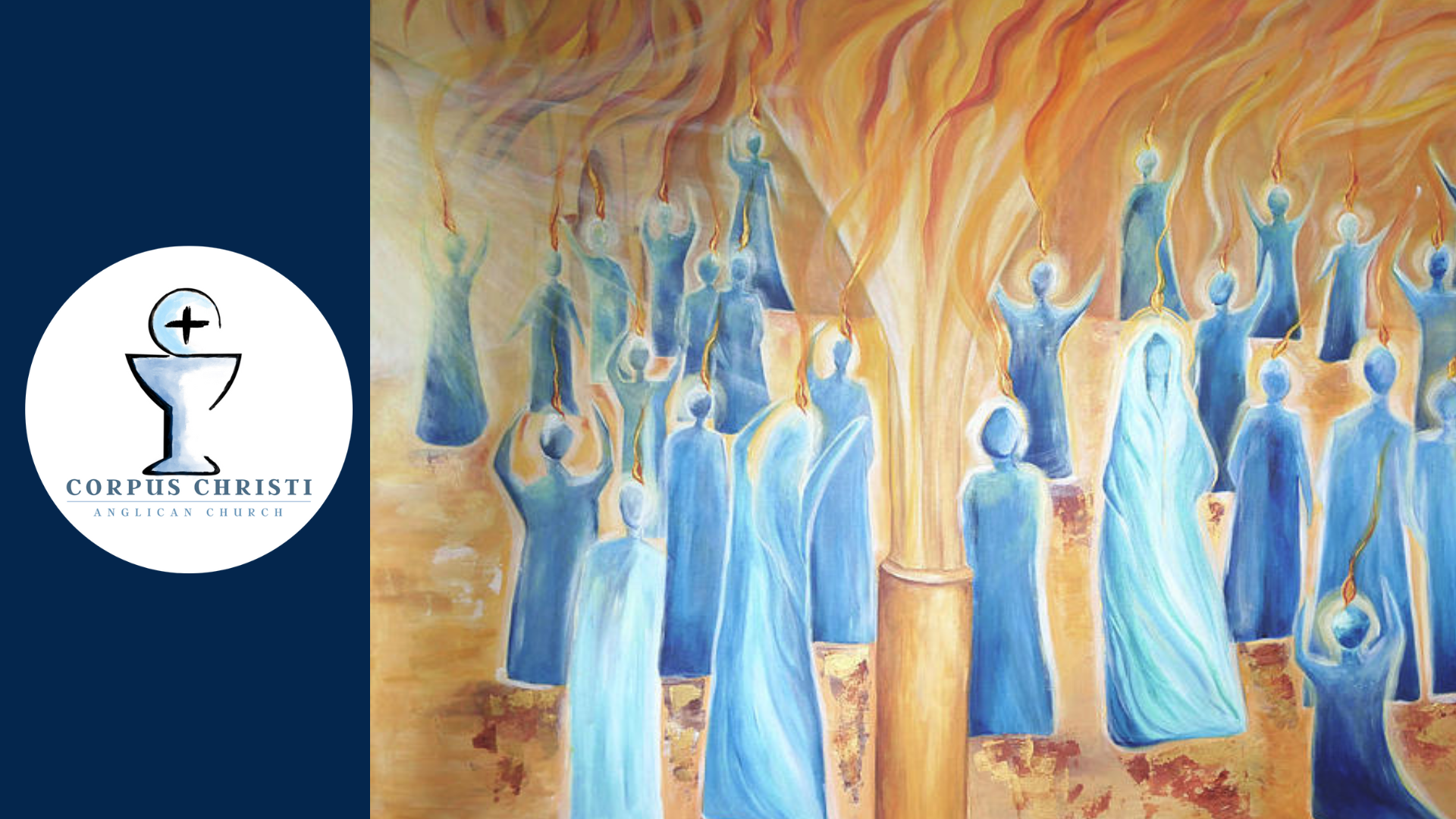
Pentecost: The Mission of God through the Community of Faith
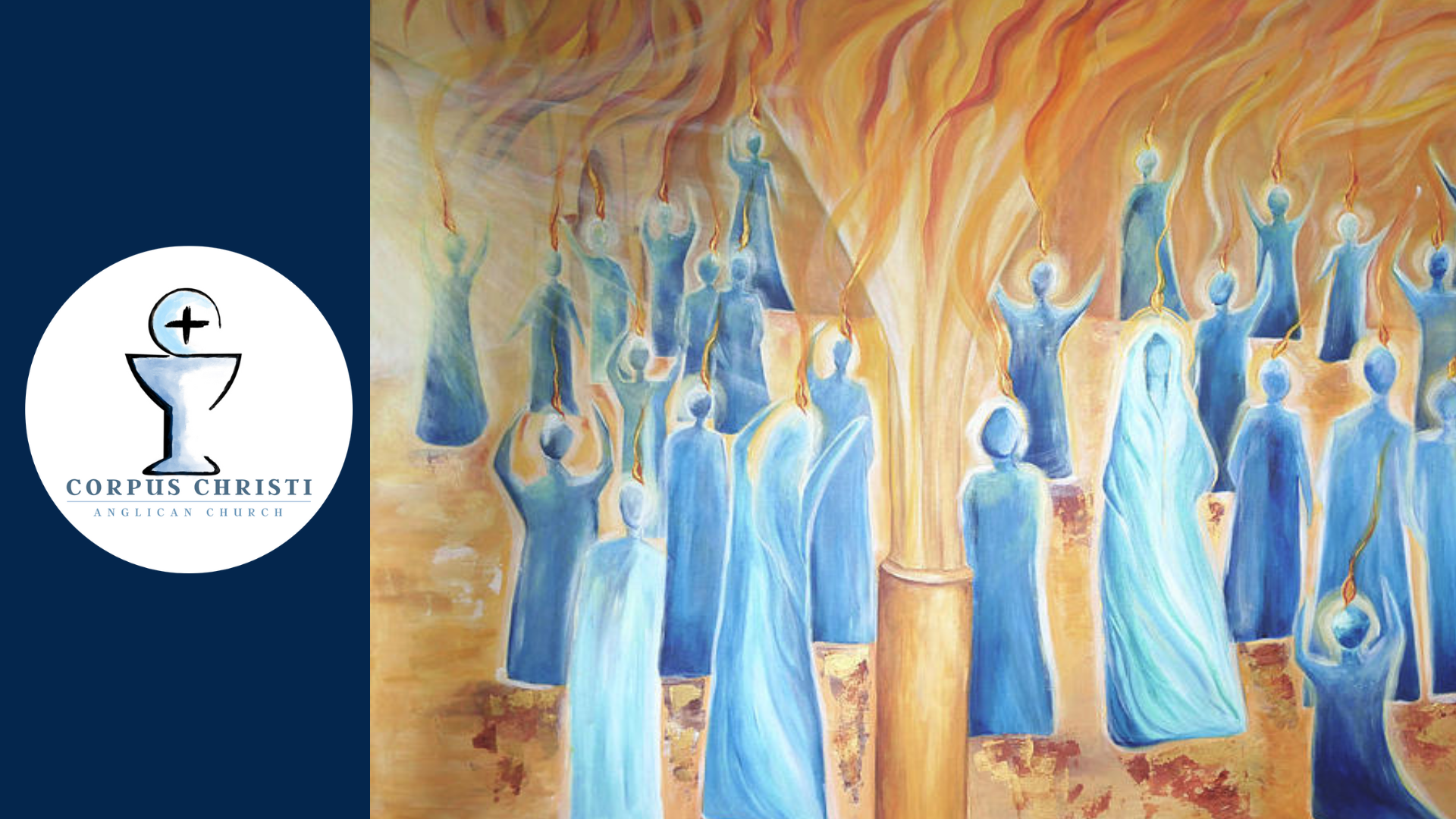
We apologize for the sound quality. The preacher is outside and is speaking loud enough for everyone to hear.

Sunday after the Ascension: Jesus is Reigning Over All
Most of the sermon was written by the Rev. Susan Rockwell, but was delivered by Fr. Morgan Reed with her permission.
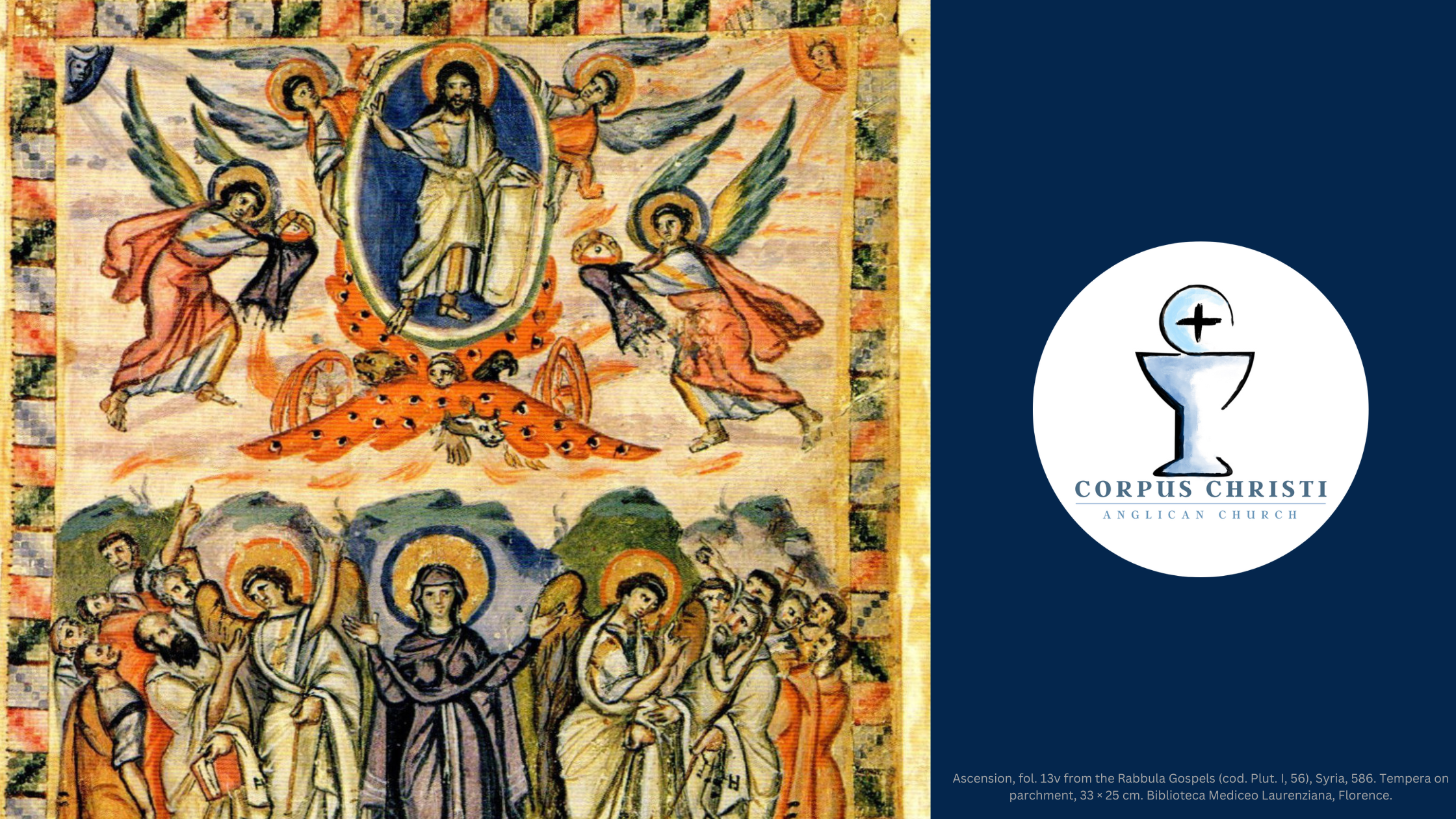

Most of the sermon was written by the Rev. Susan Rockwell, but was delivered by Fr. Morgan Reed with her permission.