
SERMONS
Archive
- October 2026
- September 2026
- August 2026
- July 2026
- June 2026
- May 2026
- April 2026
- March 2026
- February 2026
- January 2026
- December 2025
- November 2025
- October 2025
- September 2025
- August 2025
- July 2025
- June 2025
- May 2025
- April 2025
- March 2025
- February 2025
- January 2025
- December 2024
- November 2024
- October 2024
- September 2024
- August 2024
- July 2024
- June 2024
- May 2024
- April 2024
- March 2024
- February 2024
- January 2024
- December 2023
- November 2023
- October 2023
- September 2023
- August 2023
- July 2023
- June 2023
- May 2023
- April 2023
- March 2023
- February 2023
- January 2023
- December 2022
- November 2022
- October 2022
- September 2022
- August 2022
- July 2022
- June 2022
- May 2022
- April 2022
- March 2022
- February 2022
- January 2022
- December 2021
- November 2021
- October 2021
- September 2021
- August 2021
- July 2021
- June 2021
- May 2021
- April 2021
- March 2021
- February 2021
- January 2021
- December 2020
- November 2020
- October 2020
- September 2020
- August 2020
Lent 5: Seeds of Joy in the Soil of Sorrow
CONTENT
Introduction
Good morning friends. Today is Passion Sunday. It begins this two week time within Lent that includes Holy Week. If we have joined Jesus in the wilderness for 40 days, we are beginning to narrow down now to the road to the cross. This is why we veil the cross. As we look at the events that happen on the way to the cross, what will eventually be accomplished on the cross can be seen, but only dimly, as through a veil.
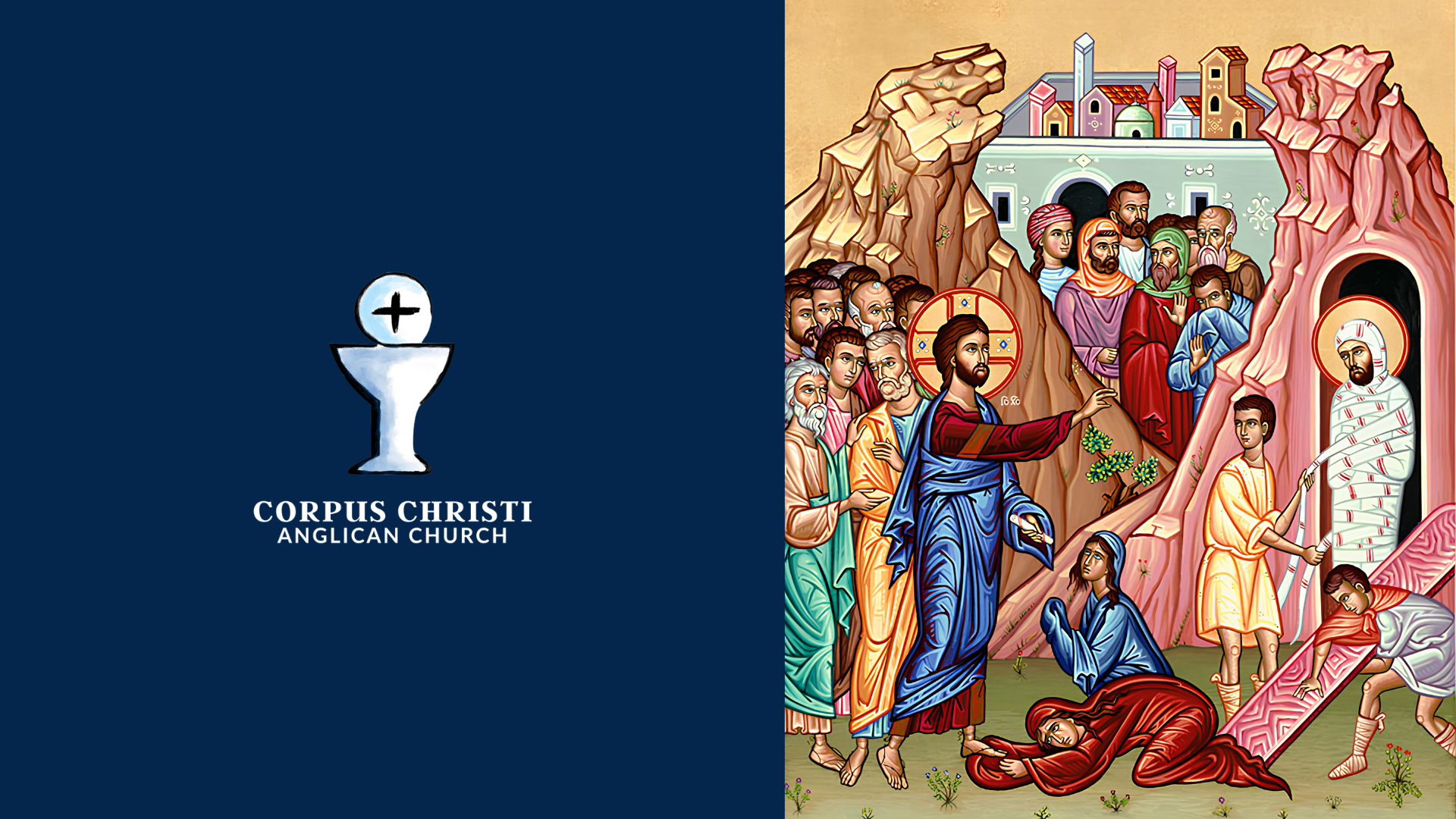
Today’s passage is all about God’s presence in our “if only” moments. We all have these “if only” parts of our stories: if only I could have said these or those words before my loved one had passed, if only I could have parented differently, if only I had understood my family system before I entered marriage, if only I had made better vocational choices, if only I had gotten married earlier or started trying for kids earlier, if only I had made better financial investments before now. All these “if only” parts of our story involve real grief and at the same time they are not the end of God’s will or goodness for us. They are the spaces we sow with tears where we can anticipate Jesus bringing a harvest of joy.
Today’s passage is what God does with “if only” moments. Jesus comes and raises Lazarus as a 7th and final sign in the Gospel of John. This story reminds us that Jesus is the resurrection and the life. In him death will be overcome and those “if only” moments are places of redemption where God’s good kingship will be known where we once saw them as a place where hope had failed. The raising of Lazarus will be the moment that Jesus will cling to to know that the Father hears him even as he is about to enter Jerusalem to meet death.
Let me pray for us as we look at St John’s Gospel: “In the name of God, the Father, the Son, and the Holy Spirit. Amen. Lord, may the words of my mouth and the meditation of our hearts be always acceptable in your sight, O Lord, our Rock and our Redeemer. Amen.”
17-27 Naming where we need Jesus to show up (If only....)
The scene opens in Bethany, which is a short distance from the city of Jerusalem. Mary, Martha, and Lazarus live there. This is a family that Jesus loves. They were well-known in the area. Jesus hears that Lazarus is ill, and yet he stayed two days longer in the place where he was. I’m sure he was praying for Lazarus and for God’s will, but in his decision to wait two days, Lazarus succumbed to his illness and dies.
When Jesus approaches Bethany, Lazarus had been dead for four days. Jesus missed the funeral. Mary is still in a period of grief for her brother and is remaining at home. Martha and Mary are upset. Martha does something about it, leaves the house and meets Jesus to get some answers. She essentially says, “Jesus, if only you had gotten here earlier; my brother would not be dead.” You can feel the tone of her question: “Jesus, where were you? I thought you cared?” The exchange between Jesus and Martha gets into the theological reason this story is included. Jesus tells her that her brother will rise again. Martha, like the Pharisees, believes that her Bible teaches a general resurrection of the faithful. She believed her brother would be a part of that, but that doesn’t give much comfort right now.
Jesus is not skipping past or bypassing her pain. When I lived in Dallas I had a 19 year old coworker who tragically took his own life after battling with mental health issues for a long time. I went to his funeral which was held at a megachurch that met in a mall-turned-church in one of their “side chapels”, which was an old movie theater. The pastor’s sermon felt so hollow. He basically told the congregation all the ways my friend lived such a full life and that we should be joyful that he is in the presence of Jesus. But his life had just begun. I would much rather have my friend back and figure out how to address his mental health challenges. Sometimes I also want to come to Jesus and say “Jesus, if you had been there my friend would not have died”. And it is also true that I can say that God has used the memory of this young man to help people: I’m sure he made an impact on people he knew, money was donated on his behalf to bless others, the few years I knew him have shaped how I view mental health, and I have so much more compassion for what it is like to be a lost 19 year old boy who is struggling to ask for help. Jesus didn’t make the situation better, but he was present to redeem a tragic end. This young man’s life and story have within them the redemption of resurrection life because Jesus is present.
Jesus is telling Martha that our hope is not just in some far off general resurrection. Our hope is in Jesus, who is the resurrection. The resurrection isn’t just a concept, it is a person — and that person is Jesus Christ. Martha believes that Jesus is the Messiah, the Son of God, the one coming into the world. Jesus brings the age to come into the present evil age. And the reason why this is our hope is that Jesus bore our griefs and carried our sorrows — and he triumphs over death. To enter into the age to come does not deny the reality of suffering and death. Jesus redeems suffering and death as the places of redemption where His kingship comes to be known.
28-37 Jesus bears our sorrows and knows our grief (Jesus wept...)
Martha calls for her sister Mary to come because the Teacher is calling for her. Jesus meets them outside the village and those who were mourning with Mary come with her to see Jesus. They thought she was heading to the tomb to go and weep there, so they follow her. This is part of early Judaism’s mourning rituals. There were family and friends who surrounded her to weep and they often hired professional mourners.
Notice that when Mary gets to Jesus she says the same thing “Lord if only you had been here my brother would not have died.” Jesus was moved very deeply at the sight of Mary crying and all those who were mourning with her. He asks where they have laid Lazarus. On the way to the tomb, verse 35 says Jesus began to weep. What was he weeping for? Jesus had just given sight to a man born blind! And Jesus knows what he’s about to do. And yet, I do think these are real tears. I love the explanation of the 4th century Potamius of Lisbon and I’ll summarize it: Jesus wept in fulfillment of this aspect of human love, offering sympathetic tears. He wept to moderate the grief of those mourning. He wept because of the extent to which humanity had fallen under the shadow of sin and death. He wept because God had given humanity every beautiful fruit and flower of the garden and they’d been cast out and exiled because of sin.
Jesus knows our tears and has borne our sorrows. In reflecting on this passage, NT Wright says, “The Word, through whom the worlds were made, weeps like a baby at the grave of his friend. Only when we stop and ponder this will we understand the full mystery of John’s gospel. Only when we put away our high-and-dry pictures of who God is and replace them with pictures in which the Word who is God can cry with the world’s crying will we discover what the word ‘God’ really means.” He is truly a man of sorrows and acquainted with grief. And while there is grief, the grief is productive and the sorrow is redemptive.
38-44 The Father hears us in the face of death (the Father hears...)
Jesus comes to the tomb and tells them to remove the stone. It’s been four days and people have no expectation that Lazarus will rise. In fact, they believe he has begun to decompose. However, in the days where he would have been decomposing, Jesus had been praying for this moment. Jesus reminds them that belief is the precursor to seeing the glory of God — much like the story of the man born blind who had to go and wash in the pool of Siloam. Jesus says something striking. Knowing what he is about to do he enters into prayer: “Father, thank you that you have heard me”. This is a moment he’d been praying about even though everyone thought he was two days too late. He was right on time. God hadn’t heard his prayer just for Lazarus to be raised, but for the right moment and opportunity for the glory of Jesus’ connection to the Father to be made known. He says “Lazarus, come out.” In a culture that knew about incantations, Jesus offers no spell. He names his friend and gives a simple command. Lazarus obeys his Lord and rises up out of the grave. This moment would be the sign that though Jesus enters our sorrows on the way to the cross, he would return them to us as the joys of redemption. The cross and resurrection are why the Psalmist can rightly say that those who sow with tears will reap with songs of joy.[1]
St. Ephrem says, “[Jesus’s] tears were like the rain, and Lazarus like a grain of wheat, and the tomb like the earth. He gave forth a cry like that of thunder, and death trembled at his voice. Lazarus burst forth like a grain of wheat. He came forth and adored his Lord who had raised him.”[2].
Conclusion
In this final sign Jesus has taken our moments of “Jesus if only you had been here”, then he weeps with us, and turns our griefs into moments of redemption where the Father hears us and his glory is made known. As we close, I want to pray the chorus from a song I love from the Porter’s Gate that summarizes what I’m saying. Please pray with me:
“The kingdom’s come // and built upon
wood and nails // gripped with joyfulness,
So send [us] out, // within Your ways
knowing that // the task is finished.
The dead will rise // and give You praise -
wood and nails // will not hold them down!
These wooden tombs, // we’ll break them soon
and fashion them // into flower beds,
The curse is done, // the battle won
swords bent down // into plowshares,
Your scar-borne hands, // we’ll join with them,
serving at // the table You’ve prepared.” Amen.[3]
[1] Psalm 126
[2] Commentary on the Diatessaron.
[3] From Work Songs, released October 6, 2017 . WOOD AND NAILS. By Keith Watts, Isaac Wardell, and Madison Cunningham; Vocals: Audrey Assad and Josh Garrels; Guitar: Isaac Wardell; Piano: Tyler Chester; Celesta: Orlando Palmer; Bass: Jay Foote
Lent 4 (Laetere Sunday): Light From the Dust
CONTENT
Introduction
Good morning friends. It is great to be with you this morning. Today is the fourth Sundxay of Lent, or Laetere Sunday, which means “rejoice”. It is a bit of reprieve that reminds us that hope, preparation, and penitence, can all sit together in the same space. The rose vestments also remind us that we’re nearing the end of Lent.
The questions raised in today’s Gospel are a warning not to search for someone to blame when it comes to others’ suffering. It doesn’t produce anything helpful. Christians don’t believe in Karma, but sometimes they can say things that feel like it. I remember hearing about someone who, when something negative happened to him, he turned to a religious interrogation of himself to try and find some sin that might be in his life that was the cause of his suffering. Imagine how cruel it is to apply this logic to the problems that arise in the birth of children and all that can go wrong in that process. It feels extraordinarily cruel. Jesus, the Good Shepherd, comes to a man born blind in John 9 and does not confront him with religious scrupulosity. He comes to address the man’s healing as a platform for God’s glory.
Instead of any hint of blame, this is actually an opportunity for new creation. Suffering is a reality we cannot avoid, nor can we explain in our narrow understanding of the world. The blind man ends up seeing more than the teachers of Israel, and like him, our good shepherd comes to bring new creation in our places of suffering.
1-7 The Light in the Darkness
Jesus and his disciples encounter this man born blind. The disciples look at this man and ask, “Who sinned, this man or his parents, that he was born blind?” Obviously the man could not have sinned since this blindness had been from birth. They are thinking about verses in the Bible about God visiting the iniquity of the parents on their children. If I could bless something in their question, it is that they don’t want to attribute this tragedy to God. But their explanation feels a bit like Job’s friends who keep asking Job to repent or figure out what he’d done to tick God off. It makes our relationship with God very transactional: If I do the right things, God will bless me, my family, and my country. If I sin, God will bring calamity to my life, the life of my household and my country. This isn’t true. And it is because of this logic that St. Augustine has to write the city of God. If Rome, a Christian empire, falls to the Goths, is Jesus still Lord of all? His answer to this question is yes, and the City of God fleshes that out.
Instead of answering questions of theodicy, God’s role in human suffering, Jesus comes with his presence as both Good Shepherd and Light of the World. The world and its systems are bound up with the kingdom of darkness. Because of this bondage, suffering will be a reality, and things will not always be as they ought to be.
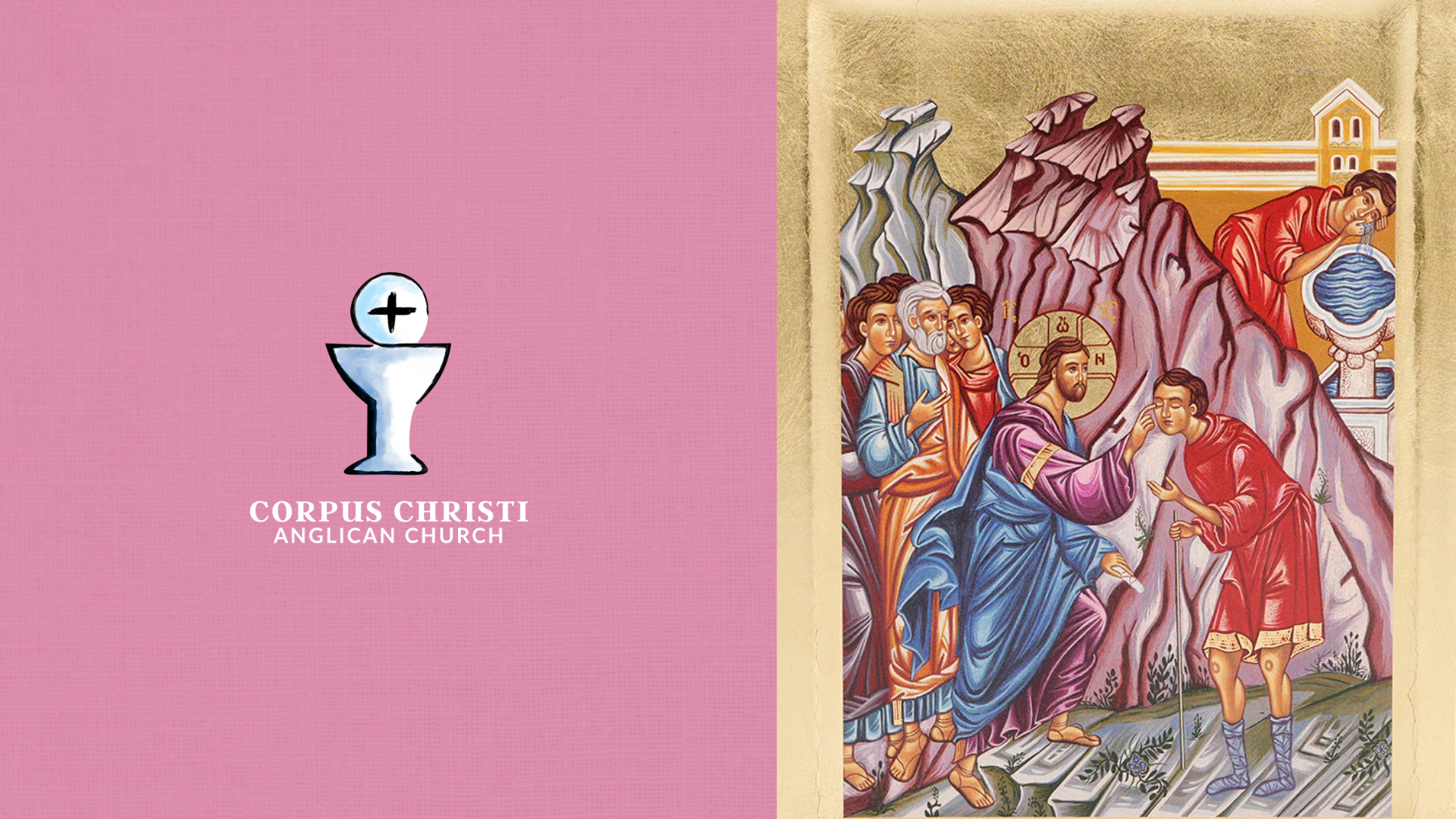
The blind man’s suffering and pain were not an opportunity for philosophical speculation, but an opportunity to anticipate new creation. Jesus brings light from dust: he spits on the ground, makes mud, wipes it on the man’s eyes, and tells him to wash in the pool of Siloam. St. Ephrem, in his commentary on this passage, says it this way: “And he brought forth the light from the dust, just as he had done in the beginning, when there was a shadow of the heavens. “Darkness was spread out over everything.” He gave a command to the light, and it was born from the darkness. Thus also here, he formed clay from his saliva, and he supplied was what lacking in creation, which was from the beginning, to show that what was lacking in nature was being supplied by his hand.”[1]
I love how small this man’s faith is and how great God’s work of new creation is. It does not take a great amount of faith to open ourselves up to the grace of God. This is a picture of what God wants to do in a newly created people. People who had been bound to spiritual blindness can now see and while they may not have all the answers, they do know that it is Jesus who is the one who makes all things new.
8-13 Jesus makes things new: Can this be the same person we knew before?
We see how Jesus is the light of the world who brings new creation where darkness had once reigned. Second, the response of the people is to wonder if this was even the same person they knew before. This is the kind of thing Jesus does. Not everyone has a momentary conversion story, but we all go through daily conversion. I’d encourage you to look at 3-4 major moments that shaped your life in Christ. There was likely some amount of suffering. How did Jesus bring light from dust? I can think back on a dinner that changed my life when I was 14, the death of grandparents, health crises within my family, the birth of our son, moments of financial instability, painful moments at the hands of church leadership, difficult and painful arguments with those close to me, and hard vocational decisions. I would not be who I am without Jesus being my Good Shepherd in these moments. The light of the world will make something new, heal what is broken, and rightly order what has been dis-ordered. People who knew us before these moments and then encounter us afterwards might say “Are you the same person”? And the answer is yes, but now I’m more myself than I was before because I have been with Jesus.
I want to be a church where we are constantly surprised by each others’ transformation because of being with Jesus; a place where we become more ourselves because of having been with Jesus and one another. This is the curiosity involved in discipleship. As you are in your formation groups or playdates, the teams you serve alongside on Sundays, or other times together, walk with one another, and be the presence of Jesus to each other, not providing explanation, but inviting Jesus to be present. Resist the temptation to interpret others’ experiences for them. And certainly don’t waste time on speculating on answers for why they’re suffering. To do that is to heap shame on an already broken heart. Come with a loving and curious presence, sometimes offering prayer, sometimes just offering a listening ear, but always offering an empathetic witness to your brother or sister’s pain and joys. As St. Paul says, “Rejoice with those who rejoice; mourn with those who mourn.”[2]
28-38 Hold onto Jesus in the face of darkness: The blind man becomes teacher and the teachers become blind
We have seen how Jesus is the light of the world who brings new creation where darkness had once reigned. Second, the response of the people is to wonder if this was even the same person. Finally the blind man becomes the teacher to spiritually blind teachers. The Jewish leaders had decided that anyone who confessed Jesus is Lord would be put out of the synagogue. The parents of the blind man had been put out as a result of the blind man just saying that Jesus helped him see. In verse 28, where our reading picked up, the leaders reviled the blind man saying that they were followers of, and disciples of, Moses. They were all out of logical arguments, and when civic discourse broke down, they resorted to exclusion, dehumanization, and violence. This is what the leaders of the synagogue had done and it is what happens today.
You can see this in children. When they are mad, and start to get hostile, they punch, kick, bite, or use words like “I hate you” and “your not my mom or dad”. What they mean is “I am angry and I can’t think clearly and I don’t have the right words right now and I need to get this energy out and then I need a hug”. I would expect to find this paradigm in the world, but God help the church to be different. I would love to see the church become a place where following Jesus means that we are self-aware enough to name things accurately within us and outside us and to bless other image-bearers with our words, holding disagreement with compassion; or if cursing occurs, that we would repent and make amends quickly.
Here the healed man takes on this sardonic tone; he may sound slightly cynical, but his aim in the text is to invite the leaders to open themselves to the work of Jesus. The healed man is amazed that these people did not know what to do with Jesus, but he experienced something no one has ever heard of — that someone born blind has been healed. The only conclusion to draw is that this man is from God. The man is not yet a disciple of Jesus, does not even quite know who exactly Jesus is, but his testimony alone was so threatening that he is thrown out of the community.
Then once he is thrown out, Jesus comes after him like a good shepherd. After hearing that he’d been driven out, verse 35 says that Jesus went and found him. It’s at this point that Jesus follows up and tells the man that He is the Son of Man. The healed man believes and worships Jesus. Then we get to the punch line of the story. There are Pharisees nearby who overhear the conversation and say “Surely we aren’t blind, are we?” The story began with people asking if family sin had resulted in a man’s blindness. The story ends with those who seem to have it all together becoming spiritually blind with the result that sin reigns. The cause and effect is reversed. Sin does not cause the blindness; spiritual blindness keeps us bound to the darkness of sin.
Conclusion
Today’s passage fits the theme of “rejoicing”/Laudete, because it is all about the light of the world bringing about new creation to anticipate what is to come. He is the one who works in us to bring about the goodness of new creation in the face of darkness around us. He is the Good Shepherd who comes to us when others have cast us aside. We cling to him in worship and hope as we share our stories of what Jesus has done in us. This is a story of the God who brings light from dust; He may not give us answers, but he gives us his presence as the troubles of this world become a platform for the Glory of His new creation. We become more fully human because we have been with Jesus.
Let us pray:
O God of unchangeable power and eternal light: Look favorably on your whole Church, that wonderful and sacred mystery; by the effectual working of your providence, carry out in tranquility the plan of salvation; let the whole world see and know that things which were cast down are being raised up, and things which had grown old are being made new, and that all things are being brought to their perfection by him through whom all things were made, your Son Jesus Christ our Lord; who lives and reigns with you, in the unity of the Holy Spirit, one God, for ever and ever. Amen.
[1] Ephrem, Commentary on Tatian’s Diatessaron 16.28.
[2] Rom 12:15
Lent 2: Jesus Answers What We Haven't Yet Thought to Ask
CONTENT
Introduction
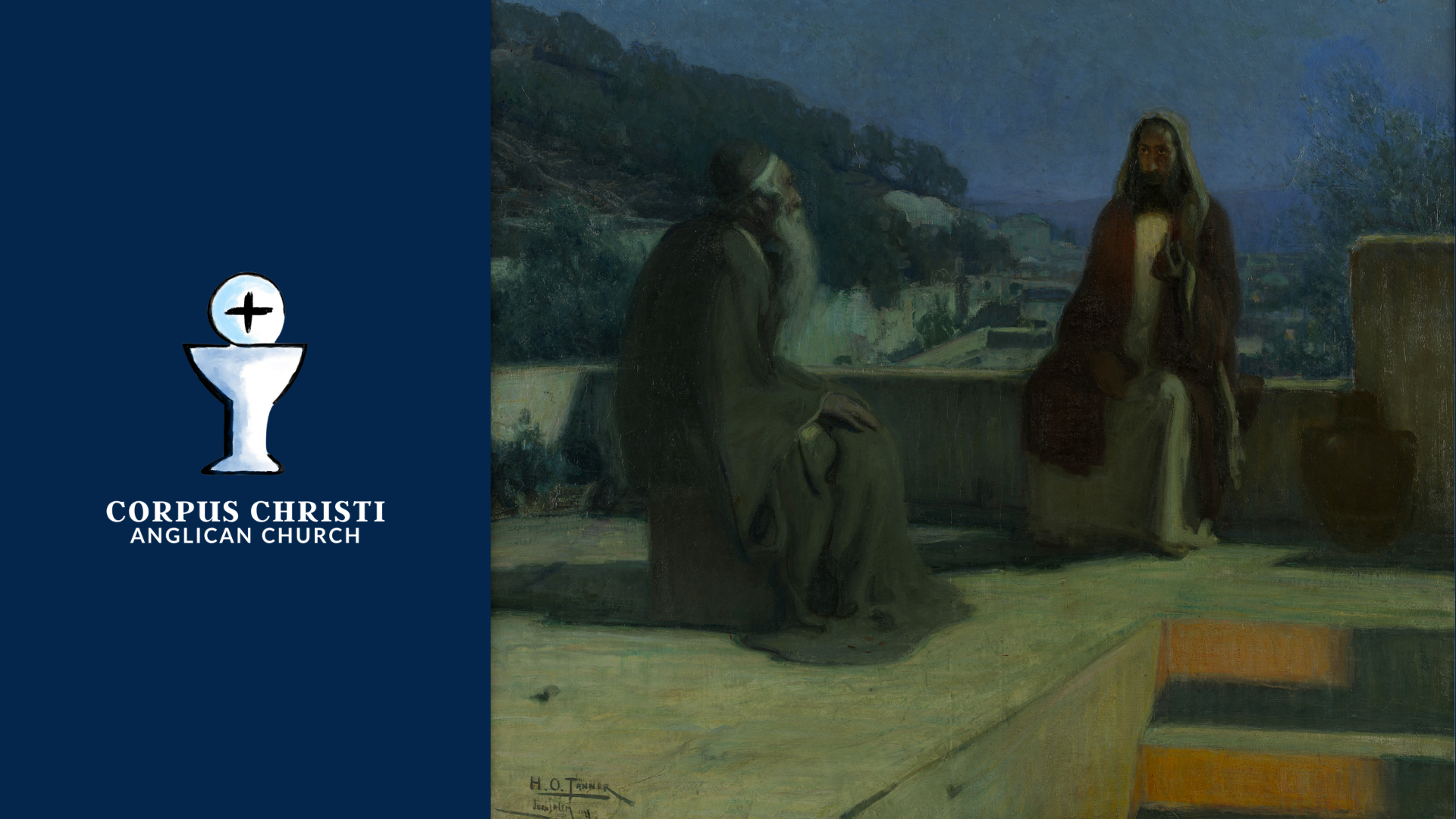
Good morning friends. It is great to be with you on this second Sunday of Lent. Over the next several weeks we will look at snippets from the Gospel of John. These different vignettes challenge some of the assumptions that people had about the Messiah. Today we encounter Nicodemus coming at night to speak with Jesus. He thought he was solving one problem, but in the discussion he learned about a problem greater than he understood. Jesus then solves for the problem that Nicodemus didn’t even know he was asking about.
Like a good spiritual director, Jesus pointed out how Nicodemus needed more than what he was asking for. In our life with Christ, this is a helpful paradigm for prayer. We come to God with our sincere questions, but fully ready to embrace an answer to a question much deeper than the one we we’re asking.
As we look at John 3, let me pray for us. “In the name of God, the Father, the Son, and the Holy Spirit. Amen. Lord, may the words of my mouth and the meditation of my heart be always acceptable in your sight, O Lord, my rock and my redeemer. Amen.”
I. 1-2 Naming the problem
This motif of light and darkness is all throughout the Gospel of John. This week we encounter Jesus meeting with a religious leader in the dark. He comes in spiritual darkness to the light of the world; he also comes under the cloak of darkness because of the risk to being associated with Jesus. John 3 calls Nicodemus a leader of the Jews which I take to mean he was likely a member of the Sanhedrin. This is sort of like a small-scale coalition government. This was made up of different parties that were at odds with one another. Nicodemus knew about Jesus’ cleansing of the temple in John 2 and as a Pharisee, he probably wouldn’t have been bothered that much about it; he may have even cheered him on. Only the Sadducees benefited from the economics of the temple system.
Nicodemus is risking something by coming to Jesus in this way. I’m sure the Sanhedrin has had discussions about Jesus. Jesus is a threat to one group because he is trying to overthrow well-established religious systems in the temple. He is a threat to another group because he claims to be a king and son of God. He is a threat to another group because he claims to be the rightful interpreter of Moses. Yet there is something in Nicodemus that is so curious about Jesus that he is willing to come and find answers for himself.
Nicodemus meets Jesus and says, “Rabbi, we know that you are a teacher who has come from God; for no one can do these signs that you do apart from the presence of God.” Jesus doesn’t have a famous teacher He followed and He doesn’t really fit anyone’s paradigm for what a teacher in Israel should look like; nonetheless, Nicodemus recognizes that there is something about Jesus’ ministry that comes from God. I wonder what he was hoping to discover? Was he hoping to discover someone who could tell him the future, or innovative hot takes on the law, or a plan to overthrow Rome, or justification that his political faction was right amidst the coalition group of the Sanhedrin? I can’t help but wonder if there were some mixed motives? Yes, he wanted to know more about Jesus, but I also wonder if he wanted to know more about how Jesus viewed his particular tribe. We cannot be certain.
We all come to Jesus with good desires clouded by mixed motivations. I think it is encouraging to see Jesus’ posture. He doesn’t turn Nicodemus away, but invites him into a better question. You and I will come to Jesus with very good longings and desires to see something of the kingdom of God. And sometimes, and maybe often, those good desires are clouded by all kinds of unhelpful beliefs, values, and misguided assumptions. Jesus doesn’t say “come back when you’re a bit more grown up spiritually.” He blesses the desire with a question to help us see the kingdom more deeply.
II. 3-13 The Spirit’s Deconstruction and Reconstruction — Problematizing the problem
Jesus tells Nicodemus that no one can see the kingdom unless they are first born from above. Some translations will say “born again”, but there is some intentional ambiguity in the Greek word that allows for both. I think the emphasis lies more on being born from above. Nicodemus asks Jesus how it is possible to be born from above. We cannot crawl back into our mothers wombs!?! This concept of being born from above is a new category for our friend Nicodemus. It doesn’t compute.
Jesus then mentions the Holy Spirit, comparing the Spirit’s work to the wind which blows where it wishes. In our house, when it gets to be about 65-70 degrees, I love to open up our door to our backyard and open up our window to the front yard to get the cross breeze to blow through our house. The problem is that the wind will blow through our nice, tidy piles of papers on the desk or artwork from our son. When the wind blows, those piles go everywhere!! I remember one day I had the windows open and the wind blew everything. I started putting the piles back together and I found a few important papers that I’d been looking for. I like thinking about the Holy Spirit in this was as a gentle disruptor, taking down our neatly stacked ways of being for the purpose of illuminating something we’d forgotten about or lost.
Nicodemus was an older man with an air-tight theology — until he met Jesus. It wasn’t about which tribe of Judaism got it right. It wasn’t about being in the right family, or among the physical children of Abraham. God was doing something new. The need was deeper than a correct interpretation of Moses, or a just sacrificial system, or the overthrow of foreign aggression. The need went to the darkness of the human condition as an invitation to all peoples to experience the light of the world. It’s an invitation to become what God has made us to be as his image-bearing children. And when this is true, some amount of deconstruction has to take place. And the Holy Spirit is a gentle and wise disrupter.
We all have places that need to get reconstructed. When I was in an evangelical and very baptist seminary in Dallas, I remember being very curious about this Anglican tradition. I had some questions and my pastor at the time connected me with a friend of his who was an Anglican priest. When I met him, he very kindly gave me a Book of Common Prayer and I said, “You know, I like everything about this, but I just can’t get over this infant baptism thing. Is it possible to be Anglican and not hold to infant baptism?” He smirked, and kindly said, “Well I haven’t really met any clergy that oppose it before.” I could have carried on with my trajectory assuming that I knew something that the church was ignorant about, but the Holy Spirit began to blow over the caverns of my soul and I started researching the logic of infant baptism. This opened a whole new world to me and it opened me up to the Spirit’s work in baptism. And now as a dad, it has changed the way I parent. Contrary to some of the toxic teaching out there, a child is not a viper in diapers and all the other bad parenting philosophies that flow from such an anthropology. That theology has been completely deconstructed by infant baptism. Instead, these are little image bearers baptized in the Holy Spirit whom God has given his grace to. Each one of us in our baptism is an adopted child of God, born from above, and the sins and disordered affections and attachments are not who we are, but outside distractions that distort God’s image in us and pervert our view of the world. We all have our own places that need deconstruction and reconstruction. It is the work of the Spirit to blow through and disrupt the piles so that we discover important things long forgotten on our journey of discovering the kingdom of God.
Nicodemus, in the darkness of night, was meeting the light of the world. And when the light goes on in the darkness it is painful to our eyes and takes us time to adjust. And Jesus is patient and kind as Nicodemus will definitely need time for his spiritual eyes to adjust.
III. 14-16 Solving the real problem
Our passage ends with Jesus teaching Nicodemus something about Israel’s Scriptures. He brings up an episode from the book of Numbers[1] where after complaining in the wilderness God sends poisonous snakes which bite the people and they are at death’s door. God has Moses erect a bronze snake on a pole. People are to stare at the snake and they would be delivered. Nicodemus came wanting to talk about Jesus’ educational background and Jesus is like “actually let’s talk about new birth, wind, and snakes”. This is not about Jewish tribalism or the overthrow of an earthly empire. Humankind has been infected with a disease of wickedness more insidious and pervasive than anyone is aware of. Jesus’ ministry as the light of the world is related here to his death on the cross. I like what one writer says, “The darkness (and those who embrace it) must be condemned, not because it offends against some arbitrary laws which God made up for the fun of it, and certainly not because it has to do with the material, created world rather than with a supposed ‘spiritual’ world. It must be condemned because evil is destroying and defacing the present world, and preventing people coming forward into God’s new world...”[2] And the new world that Jesus is talking about is explained in one of the most famous verses in all of the new testament, which we read this morning. “For God so loved the world that he gave his only begotten son, that whosoever believes in him will not perish, but have eternal life.”
Conclusion
Nicodemus came in the darkness to mitigate the risk from his colleagues who embraced the darkness as he engaged his questions with the light of the world. In this conversation, his questions, which represented his good desires clouded by mixed motives, were given space by Jesus, who welcomed them and used them to invite Nicodemus into something far more deeper and transformative. Nicodemus needed to let go of his tight theological grid in order to allow the Spirit to show him the work of Jesus and if he would do that he would begin to see the problems of the world as they are so that in Christ he could begin to see himself and the world around him rightly ordered as it should be. As we consider John 3 this Lent hold onto it as an invitation from Jesus to come to him with your questions, to begin to trust the Spirit to deconstruct the darkness and let the Holy Spirit rebuild us as we embrace the light of the world.
Let us pray:
O God, by whom the meek are guided in judgment, and light rises up in darkness for the godly: Grant us, in all our doubts and uncertainties, the grace to ask what you would have us do, that the Spirit of wisdom may save us from all false choices; that in your light we may see light, and in your straight path we may not stumble; through Jesus Christ our Lord. Amen.
[1] Numbers 21:8-9.
[2] Tom Wright, John for Everyone, Part 1: Chapters 1-10 (London: Society for Promoting Christian Knowledge, 2004), 34.
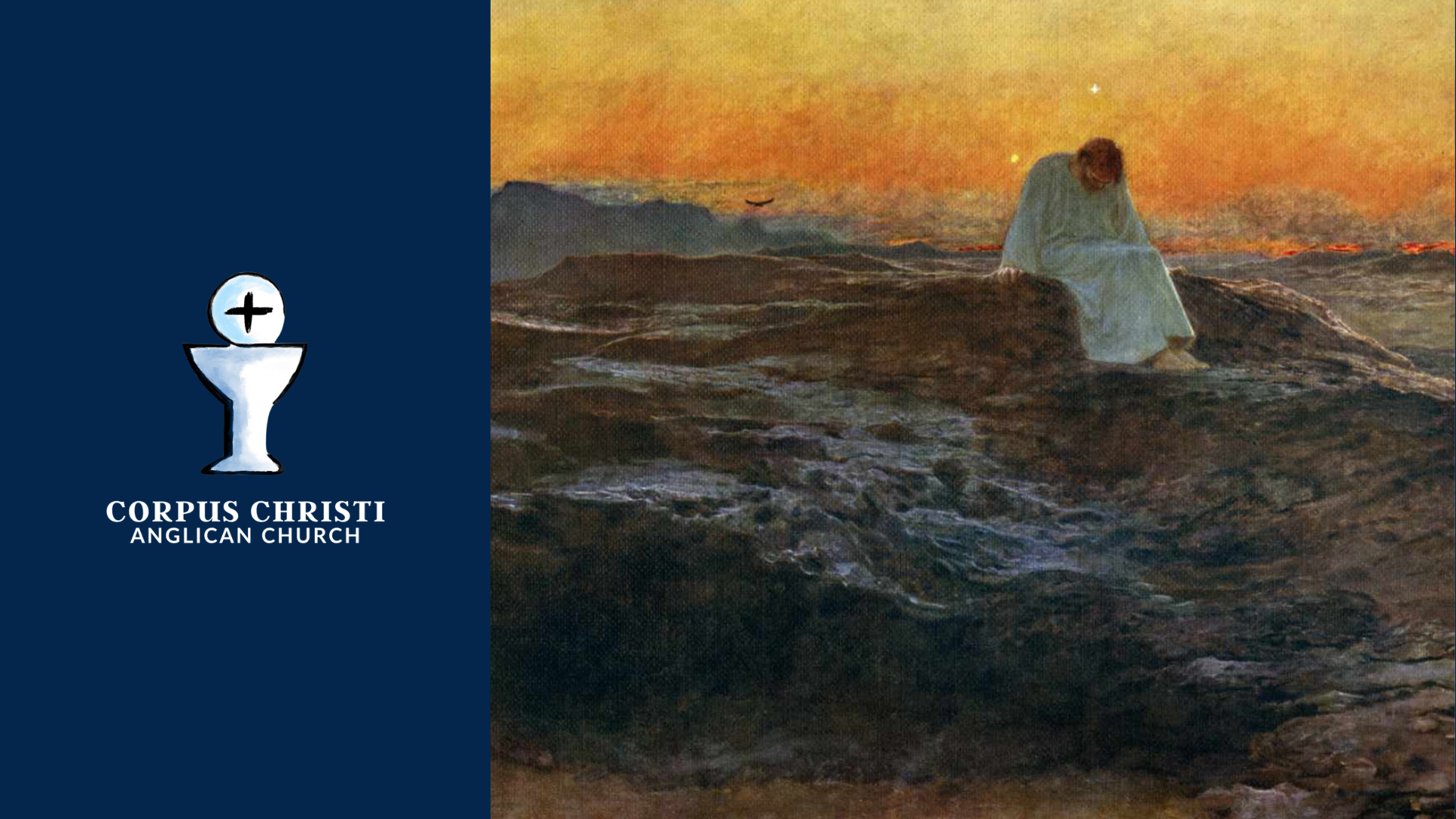
Lent 1: God's Testing is Formative, Not Punitive
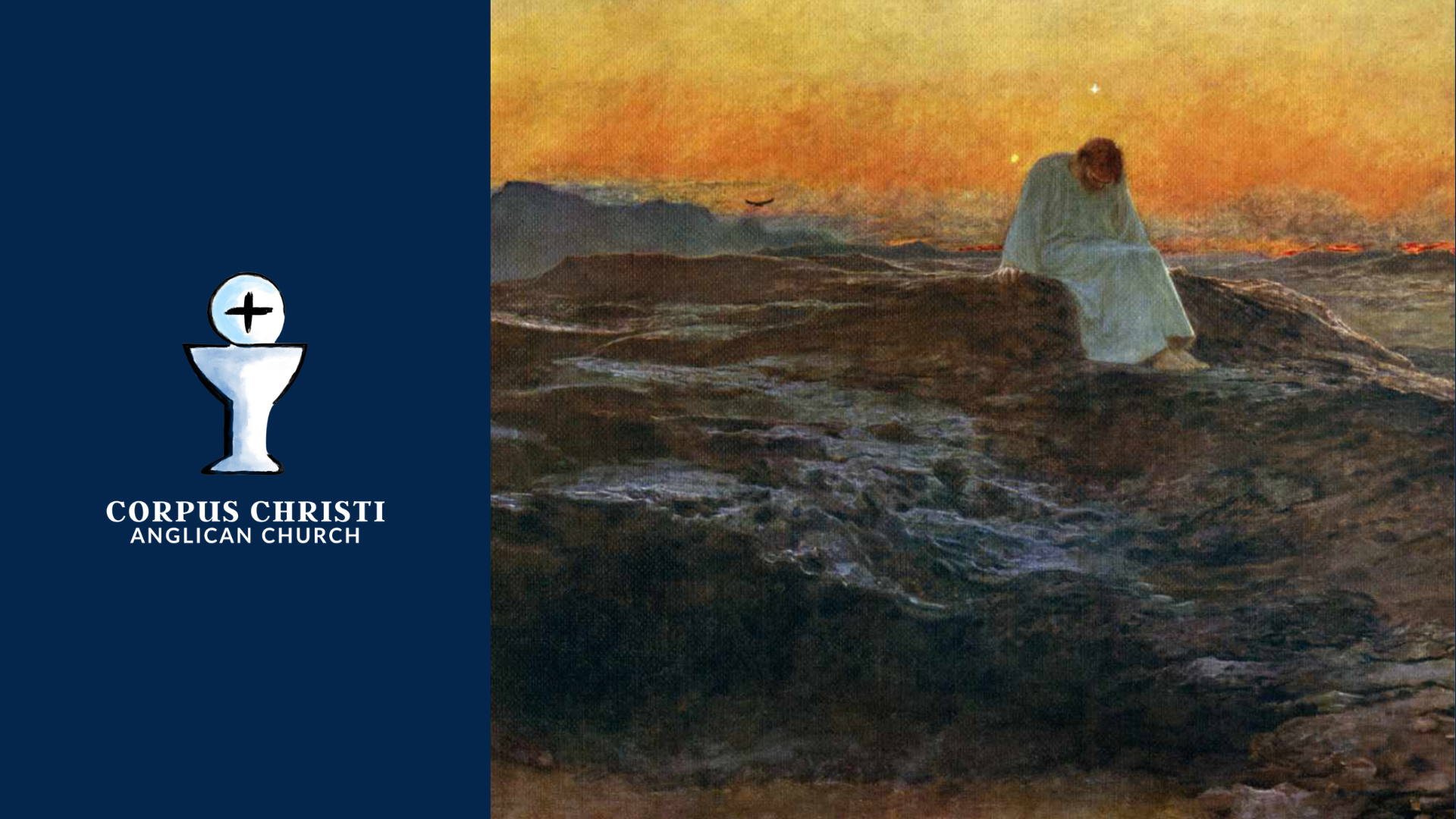
CONTENT
Introduction
Good morning my friends. It is great to be with you this morning. This 40 day season of Lent is where we join Jesus in the wilderness. We are invited to be cleansed of the unhealthy things that have taken root in our lives. The wilderness is a place of preparation for deeper life with God in the mission he calls us to. Today’s Gospel passage is all about Jesus in the wilderness and the clarification of his call in his baptism. As we look at this text together, let me pray for us.
“In the name of God, the Father, the Son, and the Holy Spirit, Amen. Lord, may the words of my mouth and the meditation of our hearts be always acceptable in your sight, O Lord, our Rock and our Redeemer. Amen.”
I. Preparation— Into the wilderness to be tested — 4:1-2
Jesus had spent almost 30 years living in his hometown, taking up the family trade, and preparing for all that God had in store for him in his public ministry through decades of everyday life. In St. Matthew’s Gospel, Jesus had just been baptized by John and experienced the manifestation of God affirming his sonship as Messiah and the one Israel had been looking for. Right after Jesus’ baptism, Jesus is led up by the Spirit into the wilderness. And why? This was preparation. The English translation of “tempting” and “temptation” is pretty unfortunate here. This Greek word, like any foreign word, has a whole range of meanings when it comes into English. God is not leading Jesus to the wilderness to be tempted with evil. God is not tempted by evil nor does he tempt anyone with evil. He does, however, allow us to be in situations where we are tested. It is like a parent helping their child gain independence through trying something hard. Imagine a parent helping their child ride a bike. The child is nervous and says “what if I fall?” The parent tells them that that might be the reality, but even adults fall. Then the parent assures their child that figuring out that bike will open up a whole new world of fun and possibilities; the fall will be worth it. The child finally figures it out and the joy that moment brings is only surpassed by the joy they get when they’re out riding. Testing from God is not punitive, it is formative.
And this is what Jesus is brought to. The Spirit brings him to the wilderness to be tested. Jesus has not done anything wrong to deserve it. In fact, this testing was to the end that Jesus would know his sonship and connection to the father more fully.
This narrative is supposed to bring our minds back to Deuteronomy where Israel is tested over the course of 40 years in the wilderness prior to entering the land of Canaan. In all the ways they had failed the test, Jesus would be victorious.
Jesus reminds us that being in the wilderness is no fault of our own and that in wilderness seasons, when our faith is tested, God’s love still rests on us and his aim is our preparation for a deeper experience of His presence and to become fully human in Christ. Seasons of testing and hardship, or privation and destitution, are the seasons that will ultimately strengthen our relationship with Jesus and our resolve to live into what God is calling us into.
II. Being Lured away with temptation 4:3-10
In the wilderness we will find ourselves subjected to demonic distractions like Jesus was. Satan uses three partial truths to attempt to derail Jesus from the mission God has called him into. First, he points out a good, god-given need and invites Jesus to meet the need in the wrong way. Second, he asks Jesus to test God. Finally, Satan invites Jesus into the right ends through the wrong means. All of these are instructive for our formation in seasons of trial.
a. Meet good needs the wrong way 4:3-4
Satan comes to Jesus in verses 3-4 nearing the end of Jesus’ time of testing in the wilderness. Jesus has a very real human need — to eat. Satan, recognizing this need, invites Jesus as the Son of God to turn the stones into bread. Jesus quotes Deuteronomy 8:3 to say, “One does not live by bread alone, but by every word that comes from the mouth of God.” Jesus submits himself to this hunger in order to learn dependence on the God who takes care of his people.
Jesus did not overcome the devil through miraculous shows of power, but through humility and forbearance. This makes me think back to about 2019 when we were considering planting a church. I remember someone telling me “it will be hard and it will take years”, but they were telling me this to tell me not to do it. They provided me with two different job openings where I could take an easy way out and get a nice rector job somewhere. As Ashley and I prayerfully considered and talked, we felt like God was really calling us to do this. It would be hard, but if I had taken the easy way out I would have missed good, hard, albeit sometimes painful, and necessary lessons in God’s love and my formation. I would have also missed the goodness of what God is doing in this church. When you prayerfully step into the hard thing God is calling you into, whether that is mending a relationship, humbly admitting fault for something, writing and advocating for vulnerable people at great cost to yourself, or stepping into a new vocation, there will be voices that encourage you to look for shortcuts. Instead, it is in our spiritual hunger that we humbly learn dependence on the God who loves us and we learn to overcome our adversary through patience and humility, in companionship with Christ.
b. Putting God under my authority and on my terms (making myself Lord) 4:5-7
After one failure, the Devil comes again to Jesus and in a vision he brings Jesus to some pinnacle on the temple. Jesus is still in the wilderness, not actually in Jerusalem.[1] Satan tells him to jump off because Scripture says that for those who trust in the most high, the angels will catch them so they don’t dash their foot against a stone.[2] He isn’t totally wrong. There has to be some truth to this verse and God’s protection of his people for this to be compelling enough to be a test. Jesus answers by quoting Deut 6:16 about not putting the Lord to the test.
I find it insightful that Satan and the powers of darkness that war against our souls can do so using what seems like a “plain reading of scripture”. Here is where their Scripture interpretation fails: they are using Scripture to try and place God under our Lordship and authority. It’s like thinking that if we do everything just right, then we’ll avoid suffering. We might use a verse like Prov 3:5 “in all your ways acknowledge him and he will make your paths straight.” However, to claim these kinds of maxims as a promise is to attempt to place God under our authority. It ignores the suffering that Jesus went through and does not make space for our own.
Instead, we join in the patience of our Lord to hold space for waiting on God and not claiming proof-texts to test God in our impatience. There is a deeper formation that we’re often not aware of.
c. A Faustian Bargain 4:8-10
Having gone through two somewhat subtle temptations, Satan comes less subtly. In another vision, Satan brings Jesus up to a mountain where he can see all the kingdoms of the earth. If Jesus would bow down to worship Satan, all the nations of earth would be given to him. He is offering him dominion as king of all kings, and the proposed route to this ultimate goal is to bow down before God’s enemy. Jesus quotes again from Deuteronomy chapter 6, verse 13 where worship and allegiance is to be ascribed to YHWH alone.
There is something called a Faustian bargain, which comes from a 16th century German legend. A man named Johan Faust trades his soul to the devil for 24 years of absolute pleasure. The essence of a Faustian bargain is to sacrifice ultimate good for short-term gain. Jesus’ baptism had committed him to the path of servanthood and the path of the cross as the ultimate path to redemption, resurrection, and the glory of kingship. Would this be given up by switching allegiances to gain it quicker and circumvent suffering?
Satan comes to us with similar compromises. Some would rather bring christendom through physical force than compel people by humility and a life transformed by Christ. Some might avoid productive personal conflict by taking personal grudges to the impersonal sphere of social media. Some would rather spend their mental energy on the evils “out there” to keep from looking at the brokenness “in here”. Some resort to high-control in our relationships or belongings to mask how out of control we feel inside. All of these things are a faustian bargain as we long rightly for the blessing and glory of God, but do so without the suffering and cross of our Savior.
Our baptism calls us to renounce the devil and turn to the Lord who saves us daily. Satan’s aim in the wilderness is to distract us and take us fully off course from God’s purpose in each of our lives.
Conclusion: The devil leaves, God attends, we are prepared. 4:11
Jesus didn’t defeat the devil by his own show of strength or bravado. He defeated him through humble, patient, dependence on the Lord who delivers. And ultimately the devil left and he was attended to by God’s angels. Jesus’ testing, and our testing, is not punitive, but formative. This season ultimately allowed him a deeper experience of the love and presence of God even though in the midst of it God may have felt very distant. His constancy, clear sense of mission, and humility allowed him not to get distracted by the voices telling him to take the easy way out, or to lean on God’s “clear” promises about success without suffering, or to make a bargain with evil for short term gain. These voices are very active for each one of us, but God calls us into the wilderness because like a parent who loves us, he wants us to grow and to experience something deeper of his presence than we would have understood before. He wants to make us fully human in the Messiah. And in this patient dependence, the devil will eventually leave. Let’s come clean to Jesus about the ways we’ve tried to take our destiny into our own hands and learn dependence on the Lord who loves us as we we bless the wilderness for what God will do in it.
Let us pray:
Almighty God, you know that we have no power in ourselves to help ourselves: Keep us both outwardly in our bodies and inwardly in our souls, that we may be defended from all adversities that may happen to the body, and from all evil thoughts that may assault and hurt the soul; through Jesus Christ our Lord, who lives and reigns with you and the Holy Spirit, one God, for ever and ever.
[1] Cf. another visionary visit in Ezek 8:1-3; 11:24.
[2] Psalm 91:11-12
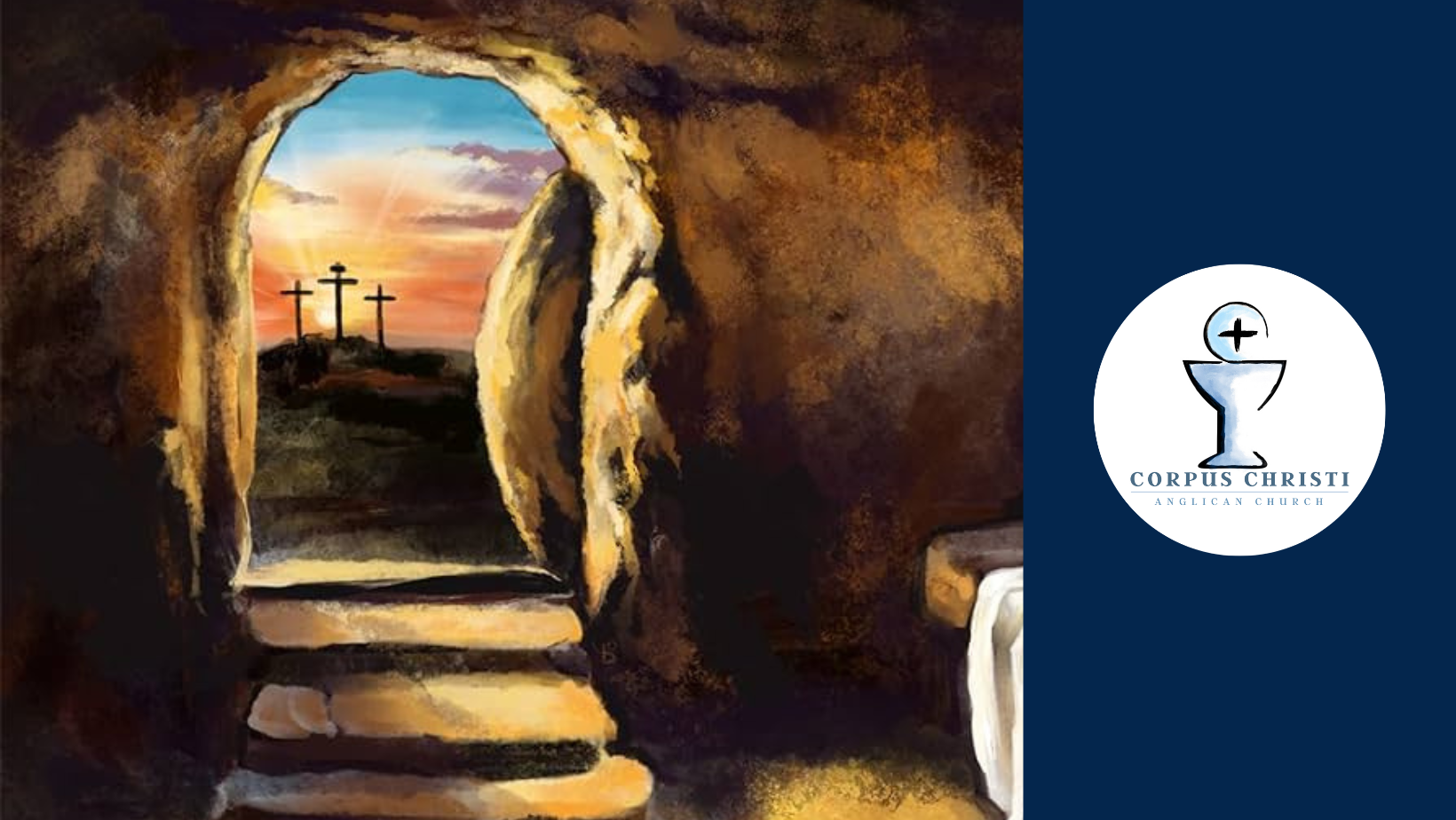
Great Vigil of Easter: Hesitant Joy about What is Next
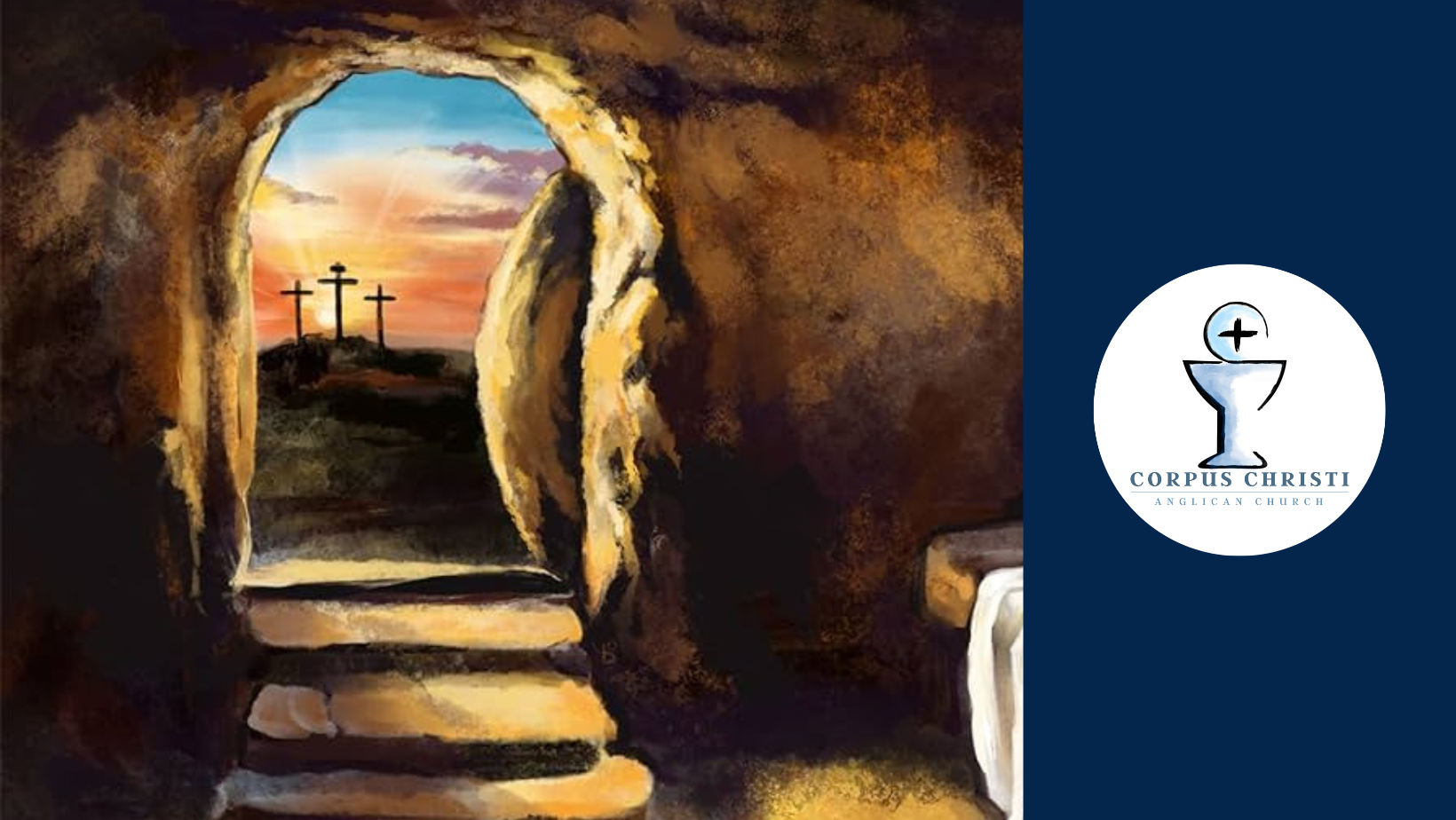
TranscriptioN
Oh, what a joy. I love this service, this opportunity to worship with you at the Easter Vigil. Well, good evening, my dear friends. It is good to be with you.
Tonight we heard God's story of salvation throughout the Scripture. We witnessed a death and a resurrection tonight in baptism, and we remembered the death and resurrection that we've experienced in Christ in our own baptism. Tonight's gospel passage in Matthew chapter 28 brings us to the women who discover that Jesus has risen from the dead.
They encounter resurrection life with joy, but a hesitant joy, and I think hesitant joy is something that feels close to home for us. We walk through each day in small acts of faithfulness to Jesus, discovering these glimpses of new creation and resurrection amidst all of our daily moments of fearful hesitancy and hope-filled joy as we bring the of the new life of the resurrection to bear on a broken world, a world that's been broken by sin and is bound to death. And the encouragement to us tonight is the same encouragement given to the women in this text.
Do not be afraid. Do not be afraid. It was on the first day of the week that Mary Magdalene and the other Mary had gone to see the tomb.
Mary Magdalene is often called the apostola, apostolorum in Latin, or the apostle to the apostles, as she and the other women become the first to bring the gospel of the resurrected Christ to the other followers of Jesus. And as they went to the tomb, there was a great earthquake as an angel came and rolled the stone away and sat on it. The angel tells them, Jesus is risen.
He's not here. And the guards see the angel and their terrified. They tremble. They fall to the ground. The women are equally terrified in that moment. These aren't angelic cherubs like you see on Christmas cards.
The angels in the Bible are in fact terrified. And so they are rightly terrified when they see this angel, but the angel addresses them and says, do not fear. The angel invites them then to walk into the tomb and to look in on this empty tomb.
So they're the first ones to walk in and to see death defeated. But I would imagine that as they stand there and they're looking in the void of where death had once been, that they're fearfully and somewhat hopefully teasing out all of the implications of what this might now mean. The angel tells them to go to Galilee, where Jesus is going ahead of them, to meet the disciples and share this good news about Jesus's resurrection with them.
They leave the tomb quickly and the text says, with fear and with great joy. Joy for what God's done, but fear about what's next. And so while the angel tells them not to fear, I do wonder what that conversation looked like on the road.
What in their lives now needed to stay the same or change? Rome hadn't actually been overthrown, so what did God's kingdom actually look like that Jesus had promised? Jesus had conquered death, but what does that mean for everybody else who is still alive and fearing death? There are so many unanswered questions for the women and in their anxious excitement and in their unanswered questions, Jesus comes and he meets them along the way. Jesus meets them with a greeting and they come to him and they hold on to his feet and they bow down and they worship him. Like the women, I think that it is in God's kindness, in Jesus's kindness, that he meets us in places of hesitant joy, where we experience this kind of hesitancy and delight on the road of obedience.
He offers us the comfort of his presence and a glimpse of his resurrection to sustain us along the path. He tells the women, like the angel did, do not be afraid. Then he says, go and tell my brothers to go to Galilee and there they will see me.
As we walk in faithfulness, in the little daily obedience that Jesus has for us, he often meets us with these glimpses, however small, of new life and resurrection that sustain us along the way. Maybe he comforts us in a time of prayer, speaks through his scripture to us, gives us joy through the smile of a child, reminds us of his goodness through the kind words or the kind actions of a dear friend, restores a relationship to us that might have been broken, or something else that reminds us that the kingdom of darkness and the power of death no longer have the final power over us, who are in Christ Jesus. To search for Jesus and his kingdom is to invest in the life of the resurrection that outshines the darkness of sin and death.
His reminder to the women is a reminder for us that he has risen, he is with us, he goes before us as we walk with him in hesitant joy, so do not fear. We live in an anxious world that is longing to escape death, nervously seeking reprieve from its slavery to death and sin in all sorts of insufficient ways, denying the reality of death, numbing our pains with addictions, other escapisms, turning towards disordered loves and appetites, looking for saviors where there are no saviors, believing false narratives to avoid addressing what's actually broken inside. But having died to this world and risen with Christ, the Spirit has made us in our baptism an unanxious sacramental presence of Christ-like new creation for the life of the world.
Jesus is alive and he's conquered death and we get to join him in that victory. I don't know if you know this, but in the Anglican liturgy the funeral pall that covers a Christian casket is an echo back to the white garments that are given to the newly baptized. It's this defiant declaration that death is defeated and our baptism is now complete and we await the glory of the resurrection to come because Jesus has defeated death.
Jesus is alive and we will ultimately be made like him. I've been really encouraged lately by reading the biography of the late great pastor Eugene Peterson and I want to read a bit of the book to you this evening, a bit that I found really encouraging as I was thinking about the resurrection of Jesus. It says this, ““Dad didn't know what state he was in,” Eric, Eugene's son reflected, “didn't know what year of the Lord it was, didn't know his dad built the house that he was sitting in, didn't know who the president was, but he knew in the depths of his soul the unshakable reality of God's presence.”
And Eugene out of that confused disoriented state maintained a holy awareness residing at his core in an interior place completely intact untouched by dementia. “That life of prayer grooved itself deep inside my dad and he had full access to that until the day that he died. I think in those last moments dad was simply descending deeper into that interior world that he built with God his entire life, only we could not access it with him.”
The last light was fading. During Eugene's final weekend, Leif and Eric and Amy and Elizabeth kept vigil at the lake. Eric and Leif kept the lantern on the dock burning 24 hours, light flickering over the dark water. Eugene took to his bed declining visibly.
Jan, his wife, held his hand as he drifted in and out of consciousness, walking that precarious threshold between our two ways of being and then unhurried and gentle, Eugene went at 630 a.m. on Monday, October 22nd, 2018. The lantern on the dock went dark. Eric placed his hand on his dad's head and passed the blessing. “Together we are witnesses to this glad fact that in sure and certain hope of the resurrection to eternal life through Jesus Christ our Lord, I declare the baptism of Eugene Hoyland Peterson is now complete. Blessed are the dead who die in the Lord, says the Spirit, that they rest from their labors and their works follow them.””
So this Easter season, let's be an unhurried and gentle people who look to the day where our labor here is done and the beloved around us can speak over us that our baptism is complete. Build that type of interior life, that interior resurrection life that gets brighter when the light of the world fades so that others will learn to praise God for the works that you have done in their midst. The kind of interior presence where Jesus's presence is enough to meet the doubts of today. Christ is risen and we have died and we have been raised with him.
Carry the good news of death's defeat in you into this broken world that's bound to the kingdom of darkness and that's longing for its redemption. Do not fear. Jesus is alive and he is with us in our hesitant joy.
Let me pray for us. Almighty God, who through your only begotten Son, Jesus Christ, overcame death and opened to us the gate of everlasting life, grant that we who celebrate with joy the day of the Lord's resurrection may by your life-giving Spirit be delivered from sin and raised from death through Jesus Christ our Lord, who lives and reigns with you in the Holy Spirit, one God, now and forever. Amen.
Transcribed by TurboScribe.ai. Edited by the author.

Good Friday: Behold the Lamb of God
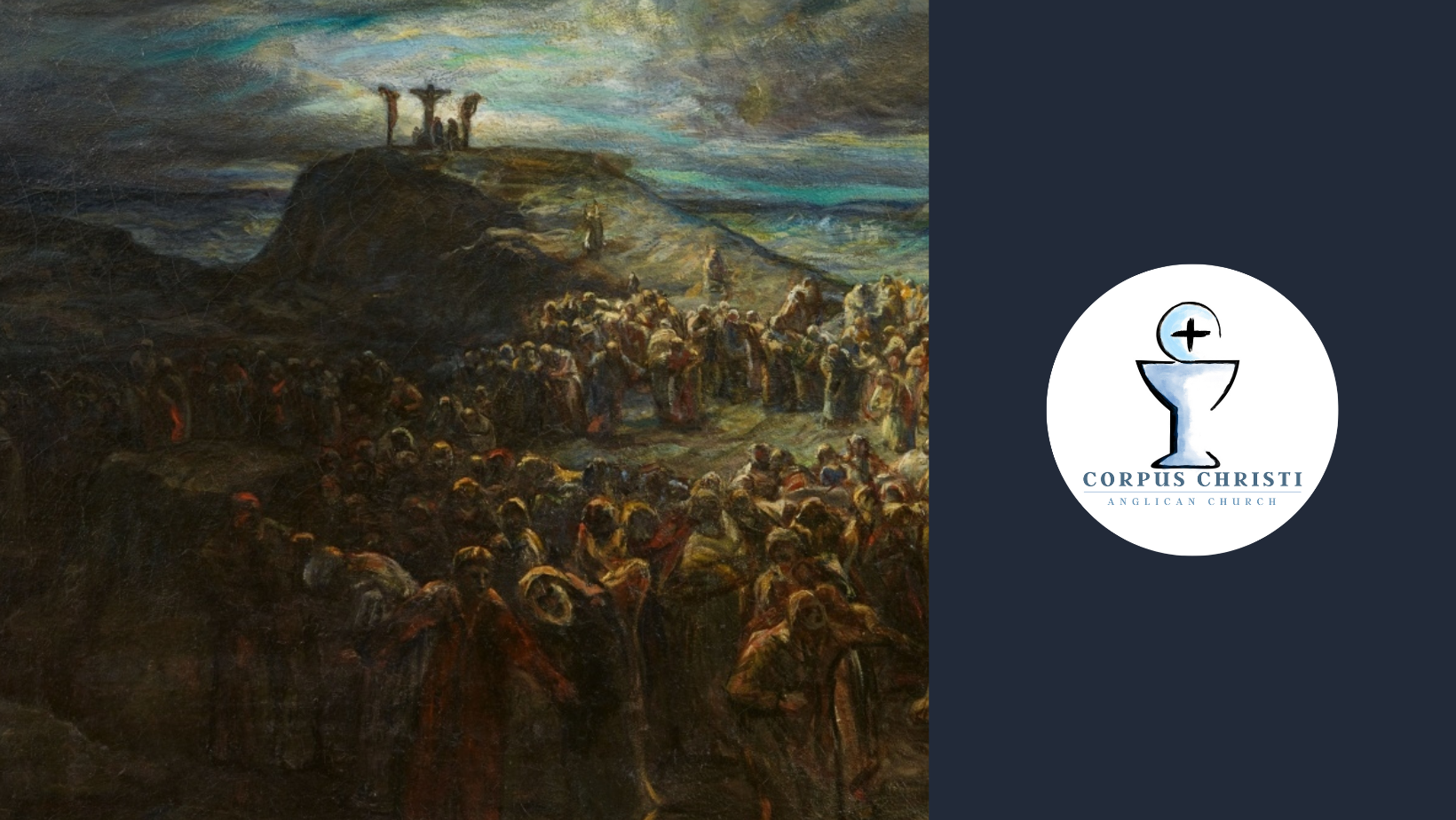
TranscriptioN
Behold the Lamb of God who takes away the sin of the world. Jesus is the Passover Lamb whose blood, whose suffering, and death is the beginning of the supreme exodus event. The exodus that frees not just the chosen people, but the whole of humanity, frees all of us who are enslaved by the dark powers which inhabit our governments, our economic systems, and indeed even the cultures that shape our minds and our way of life. Please pray with me.
May the words of my mouth and the meditation of all our hearts be acceptable in your sight, O Lord, our strength and our Redeemer. Amen. I want to share three affirmations.
First, the exodus of the Jews from Egypt is the great historical event that shapes the purpose and way of life of the people of God. Second, the exodus event begins with the Passover when God took the initiative to set the exodus event in motion. Third, Jesus' death and resurrection is the ultimate exodus event.
Jesus' death and resurrection is God's initiative to radically change the course of history and to bring to completion his plan for the fulfillment of human life now and in the world to come. Behold the Lamb of God who takes away the sin of the world. First affirmation, the exodus from Egypt is the great historical event that shapes the purpose and the way of life of the people of God.
The exodus event echoes through all the biblical texts and the whole of human history. Passover is the great annual pilgrim feast in which all the people of Israel who were able came to Jerusalem for the sacrifice of the Passover lambs in the great temple. One lamb for each family.
To this day, the Seder is the annual celebration of the exodus for every Jewish family. In the feast of Passover, the act of God for the preservation and emancipation of the nation is remembered and celebrated. It is a corporate act of worship in which all the members of the community or family are expected to participate.
Each person is expected to eat a portion of the body of the Lamb. Jesus deliberately chose the time of the feast of Passover for his final confrontation with the temple authorities. All the Gospels of Matthew, Mark, and Luke attest to this fact.
And Jesus knew this challenge to the Sanhedrin and the high priest would result in his own death, but this was his intention, to enact the event in history by which the creator of the universe brings together each part of the human community, families, cities, nations, and indeed the whole of human life. Passover is the celebration, Passover is the celebration of a profoundly political event. Second affirmation, the exodus event began when God acted before Moses set the great escape in motion.
God destroyed the lives of the firstborn of both people and animals in all the households of Egypt, but he spared the lives of the children of Israel whose homes had been marked with the blood of slaughtered lambs. In the book of Exodus we read, for I will pass through the land of Egypt that night and I will strike all the firstborn in the land of Egypt, both man and beast, and on all the gods of Egypt I will execute judgments. I am Yahweh, the Lord.
The blood of the lambs shall be assigned for you on the houses where you are, and when I see the blood I will pass over you, and no plague will befall you to destroy you when I strike the land of Egypt. While the Egyptians were warned of the impact of the unfolding purpose of God through natural events, famines, and epidemics, the exodus event began with the passing over of the power of death that allowed the chosen people to survive and begin their escape into the desert. In the blood of the Passover lambs, God took the first step to set his people free from slavery in Egypt, his initiative in creating a community that could embody the way of life that he intends for all the people on earth.
This is the character of the great father, the creator of all things, who longs to be involved in the lives of his children and who, like the prodigal father in the story told by Jesus, who runs to meet his wayward children, the children who have finally recognized their own rebellion against their father. This is part of our own personal experience, too, when finally we welcome God's direction into our lives and acknowledge that long before we became aware, he had been at work in our relationships and in our life situations to enable us to come home to him. Third affirmation, Jesus' death and resurrection is the ultimate exodus event.
God's initiative radically to change the course of history and to bring to completion his plan for the fulfillment of human life now and in the world to come. We miss the main point of the good news about Jesus' victory over the dark powers in the historical process. If we think the proclamation of the gospel is only that God's good purpose for us will be realized after we have died, we and all of human life are being created here and now.
We need to begin to enter into the fullness of God's life here and now, and that is God's purpose for his whole creation. But he waits for us to listen and to accept his invitation. He wants us to be partners with him in the process of bringing his creation to completion.
Our father God wants us to engage in things as they are in this world, and at the same time live the way of life that embodies human life as God has designed it to be. Jesus, I am sure, really enjoyed his three-year ministry in Galilee and Jerusalem, and his disciples loved being with him, but eventually he had to face the powers of human rebellion head-on, and so must we. But this confrontation with falsehood and violence must take place, or we surrender to the dark powers that distort and destroy the fullness of life that is God's gift to us.
Jesus' humiliation and excruciating death on the cross is the sacrifice of the Lamb of God, the first action in the great exodus event that includes Jesus' resurrection and the outpouring of the Spirit of God. These historical events put into motion the next steps in the creation process, God's project to create people who can reflect into the world that he is creating the qualities of his own character. St. Paul calls this process new creation, and so it is, in the sense that we have been given a glimpse in the person of Jesus of the direction of the whole creation process.
And so at the end of the scriptures, in the strange but exciting revelation to John of Patmos, we see this picture of the fulfillment of God's purpose. John wrote, and they sing the song of Moses, the servant of God, and the song of the Lamb, saying, great and amazing are your deeds, O Lord God the Almighty. Just and true are your ways, O King of the nations.
Exodus and the victory of the Messiah come together in this shout of praise, the message of the whole of the scriptures, and of the testimony of the people of God. Christ, our Passover, is sacrificed for us. Therefore, let us keep the feast.
Behold the Lamb of God, who takes away the sin of the world. And I, when I am lifted up from the earth, will draw all people to myself. Amen.
Transcribed by TurboScribe.ai. Edited by the Vicar.

Maundy Thursday: Kingdom Expectations

TranscriptioN
Good evening. Good evening. I'm Alexei Laushkin, a member here.
Let's pray. Gracious Father, we thank you for this holy set of services. We ask that you would be with us and help us not to miss the many things that happen in these next several days.
In the name of Jesus, amen. Kingdom expectations. You may, with the uncertainty that many people have faced in the Washington area, or you could think about a time where you've also faced uncertainty, maybe recently or in the past, you may remember the day before an uncertainty began, right? Things seemed normal and fine.
I was recently at a conference, and the conversation centered around 9-11, and we heard from a speaker who was in the White House in the morning, and it was prior to everything that happened on that horrible day, and he had sent an email to another colleague saying, most boring day of the Bush presidency, not knowing what was about to happen. Calamity, uncertainty, expectation, kingdom expectations. We're moving from Palm Sunday into this moment with Jesus and his disciples, the reclining at table, and I want you to get into the disciples' minds as best we can, ask God to be in our hearts and maybe think about what might be on their minds.
They've been with Jesus going on now three years. They've seen him perform miracles. They've seen him stay away from Jerusalem for the most part.
They've seen him recently raise someone who was dead, right? They've seen the crowds in this big festival say, Hosanna, Hosanna. And they think to themselves, this is it. This could be the time.
I want you to imagine this could be the time that the Messiah returns, the kingdom is restored. Just think what's about to happen and what verses might go through their minds. What do they think might happen next? Maybe they think about King David, right? If you can think about how King David ascends to the throne, there's a variety of calamities and difficulties and wars and battles, and perhaps they think to themselves, this is the time.
Or they could think about, in the passage we just read, the Exodus, the many motions that it took for deliverance from God's people to finally make it to the promised land. What they're probably not thinking about is betrayal that same night. That's probably not what they're thinking about.
That what would happen next would be an instantaneous collapse. They're probably not thinking about that. And so they're in this moment thinking about what will occur next.
They're in Jerusalem, and Jesus gives them something surprising to think through, and I'll get to that in a moment. But I want to get at some themes as we think about Easter and we think about our time with Easter. I think we have a tendency, and certainly I do, where we'd like the triumph of death over life, the triumph of Jesus over sin.
We'd like, and we have a tendency to think in very kind of binary ways. It's a celebration of good over evil, and in some ways that's very true. It's a celebration of life over death, and in some ways that is also very true.
But it is also a restoration of God being present with his people over a time in a way that the temple itself wasn't really able to do. And Jesus is the holy temple, and I think this gets to a bit of the meaning about the foot washing and why we have the foot washing this particular night. So if you think a little bit about the children of Israel, it's not by accident that in our reading tonight, this is another way to put it, that Judas is present.
It's not by accident that in the epistles, when we're asked to push away evil, that we're also given teachings to judge not least we be judged, or not to, if you know the parables of the wheat and the chaff, not to necessarily pull up that which is evil among us. And I want us to meditate a little bit on this as we're thinking about this new commandment that in many ways is being given in the midst of a betrayal that's going to happen that very night. And I want you to think about this in relation to our Christian life and that process for these next several days of what it looks like to have our inner hearts cleaned and cleansed.
Jesus is doing something wildly unexpected. And I think that when we often think about the Easter story, a story that's so familiar to us, the foot washing also somewhat familiar, the vigil pieces familiar, I want us to invite us to enter into the shock and expectation of the kingdom of God as we start this evening, the wildness of what's about to happen. And the first wild thing, just to repeat it from as I started, is that the disciples don't expect what's going to happen.
There's a shock process that happens. The second thing I think with foot washing, remember we're getting ready for service tonight and someone in my family was like, oh, foot washing, it's kind of, it's a little gross. It's uncomfortable.
But I think for those of us who've done foot washing before, it's also very familiar. So there's this tension of like it's a little bit of a stretch, but it's also a bit uncomfortable, but it's also a bit familiar. And I want to get us back into the shock, the expectation of the evening, the shock of the evening.
So this is from Bishop Barron. He was doing a sermon a few years back, and he was talking about the shock of what it would be like. And I want you to imagine that you've been invited to a very fancy dinner.
If you're a sports person, pretend your favorite sports star is there. If you're someone who likes shows, pretend someone very famous. You know, very fancy house.
It's a home for the sake of conversation. It's in McLean. It's a big home.
Someone, you know, with a nice suit. They've invited you in. The car is taking you out.
It's a table. Let's make it close to what's happening this night. So maybe it's about 15.
You're one of the 15. And your favorite star, and let's pretend we all have shoes that, you know, could be cleaned, takes out shoe polish and decides to go person by person before appetizers are served to polish your shoe. You would find it shocking.
You might even say you don't need to do that. It's a little bit, you know, shoe polishing is something people do, but it's not something people do all the time. And to have someone take off their tuxedo or make it a little easier for them to get at your shoe, it would feel really uncomfortable.
And this is the setting that we have when Jesus is taking out his outer garment. Jesus is taking his place, is putting himself in the position not just of a servant but of one of the lowliest servants. It's not every servant who would do the feat.
It usually was the lowliest servant. And you can see that Peter is just shocked. He says, I don't want this.
This is Peter who has seen Jesus do some pretty incredible things. And Jesus gives him this kind of a bit of a get thee behind me Satan sort of moment. Like this is something you must do to be part of the kingdom of God.
And then Peter says, well, okay, all of me. He says, no, it's okay. We don't need to do all of you.
And so it's this command and it's this flipping. And in many ways, it's the cleansing of the temple that we saw happen in Palm Sunday, but we see happen with his disciples, a cleansing of the temple. And I want us to think a little bit about this and a bit about the brokenness that all of this represents and Jesus' hope for this night in ways that are really unexpected.
This is not, again, a narrative the disciples are thinking about or think what would happen. So the temple is a place and just where God's glory is dwelling for Israel. It is the center of the worship life of Israel.
And I'm going to go out of Ezekiel a little bit here just in a moment. But I want you to think about the history of Israel for a moment. The history from the Exodus through Solomon is not necessarily a history where everything's going well.
It's not just a positive, joyful moment. You have enmity. You have sorcery.
I'm just giving you some of the highlights. You've got people who make our current day politics look nice and easy. It's a difficult set of generations in terms of what's happening in Israel.
And through all of that, God is still present with his people and eventually with the temple under Solomon's time. So it's not the case. I think sometimes we get the sense when we're reading the Old Testament where we sort of think, well, they sinned.
They just weren't good enough. God left them. And so then he needed to send his son.
And thank goodness we don't have to deal with all that religion in the way that they had to deal with it. I'm being very simplistic just to get us into that mindset. But what I'm trying to help you think about with the radicalness of Jesus and God's rescue plan for all of us is that God is not— but he's also very patient.
There are things happening in Israel that are really difficult and bad, and his glory hasn't left. He hasn't abandoned his people. There's judgment, but there's not abandonment.
But there is a portion, and I just want to give you a sense of what some would be thinking about around Jesus in Ezekiel 10, where there is a pronunciation that God's judgment, God's presence would leave the temple. So I want you to think about that. We're going to be tying this into foot washing in a moment.
This is Ezekiel 10, 15. Then the cherubim rose upward. There were the living creatures I had seen by the Kibar River.
When the cherubim moved, the wheels behind them moved. Did it pause there? So if you hang around Anglicans long enough, you're going to realize that the angels aren't just like the little creatures— the cherub—they're not just like little babies. It's a very Western picture.
You're going to see a much more complex picture of what angels look like. So if you're wondering what Ezekiel is referring to, he's actually talking about the angelic, not what you might see at Hallmark. When the cherubim stood still, they also stood still.
When the cherubim rose, they rose with them, because the spirit of the living creatures was in them. Then the glory of the Lord departed from over the threshold of the temple and stopped above the cherubim. While I watched the cherubim spread their wings and rose from the ground, and as they went, the wheels went with them.
They stopped at the entrance of the east gate of the Lord's house, and the glory of Israel was above them. These were the living creatures I had seen beneath the God of Israel by the Kibar River, and I realized that they were cherubim. Each had four faces and four wings.
And so in this Ezekiel passage, it's heartbreaking. And Ezekiel itself is a bit of a mysterious book of prophetic writings. But it's heartbreaking.
You see the spirit of God leave by the east gate. Now we have something in Ezekiel 43. A little bit further.
This is a prophetic utterance about the future. And in Ezekiel 43, you see, this is verse 3. The vision I saw was like the vision I'd seen when he came to destroy the city, and the vision I'd seen by the Kibar River and fell face down. The glory of the Lord entered the temple through the gate facing east, and the spirit lifted me up.
And so Ezekiel's talking about a time when the glory of the Lord will return. And in our gospel reading for Palm Sunday in Mark, it makes mention that Jesus himself is coming from the east, very intentionally. That the spirit of the Lord will be returning to the temple.
Jesus himself says, I am the temple. Right? And so on this night, where you might expect a plan to, the disciples might expect an eventual plan to reassert temple worship in a new way. I mean, there's lots of ideas about what would it look like for the Messiah to return.
Instead, you get this cleansing element where Jesus himself embodies what is to occur next. That instead of a dynamic where you need to be, and I'm thinking about these unexpected moments, maybe these moments that you've been in. But instead of pushing into, I need to do everything I can to make sure, you know, let's think of American things that we want, right? That there's provision for my children.
That I'm able to have a sustainable job. If you're in a different life circumstance, that I have a good and fulfilling career in future. That I do well by doing right.
That hard work, fair play leads to a good life. All these American isms related to success and how, when we feel uncertain, we want to cling to that success. And here is Jesus in this act of foot washing, actually giving us the opposite example.
We don't have to be held captive by the sin that so easily entangles our lives. We don't have to be focused on any other reality besides the temple and the spirit living in us through Christ. This night, before he is betrayed in just a few hours as we go through it, he is not coming with an army.
He is not coming with a political agenda. He's not coming with, here are the 30 ways that we're going to chase the Romans out of Jerusalem. All these things could have been on the disciples' minds.
I'm not saying they all were. But this is a way that God had reinstituted his kingdom in the past. Instead, he's coming to turn our very desire to put ourselves in the center of our lives and say, no, I who could say that's what we should all be doing, instead I'm going to humble myself.
The God of the universe is going to humble himself and wash his disciples' feet and say, go and do likewise. He's going to be ultimately emptying himself out completely and totally. And in those words of communion that are also related to this evening, that's what we have week after week, this emptying of self, this turning and cleansing of the temple.
But it's not the sort of turning and cleansing that says, well, all the evil, out the door. All that is wrong, be gone. In many ways, it is a seedling that will grow and outgrow the sin that's in the world.
But the difficulties, the Judas's of our life are still present at this same table. And so as we enter into this Easter season and we start thinking to ourselves, I'm not yet, Lord, the sort of person I ought to be in Christ, which is sometimes maybe this can come up for you. I'm not yet where I wanted to be this Easter.
If you're like some of the folks I interact with day to day or week to week and pray with, I had a terrible Lent. I did nothing for you, Lord. Very Anglican problem.
However you enter into this evening, know that this is not the table or the process for the very, very good and those who try very, very hard. Instead, it is the grace to enter into your life as it is right now. It's the unexpected presence of God in our vulnerability, in our difficulties, in the moments that don't seem to add up.
And yet the glory and the grace of the Lord is present with us tonight. And as we move into the foot washing in a moment, I know it is it is a vulnerable act. It is uncomfortable at times, but however you enter in, whether you come up or you sit and pray, let the Lord touch you and know that this is the way he wants to serve you.
Let the foot washing be an example of the of the way that God is ultimately serving your greatest need in this moment. Because at this night of greatest importance, in this time that is commemorated for all time, our Lord Jesus Christ takes the path of humility and the path of service and commands us to do likewise. Let us pray.
“Gracious Father, we thank you for this evening and we thank you for this holy time. We ask that you would meet us whatever has happened in our weeks and in our days and wherever we are with our walks with you so that we might have Easter be born in our hearts into everlasting life. Amen.”
Transcribed by TurboScribe.ai. Edited by the Vicar.

Palm Sunday: New Life and the Next Step of Obedience
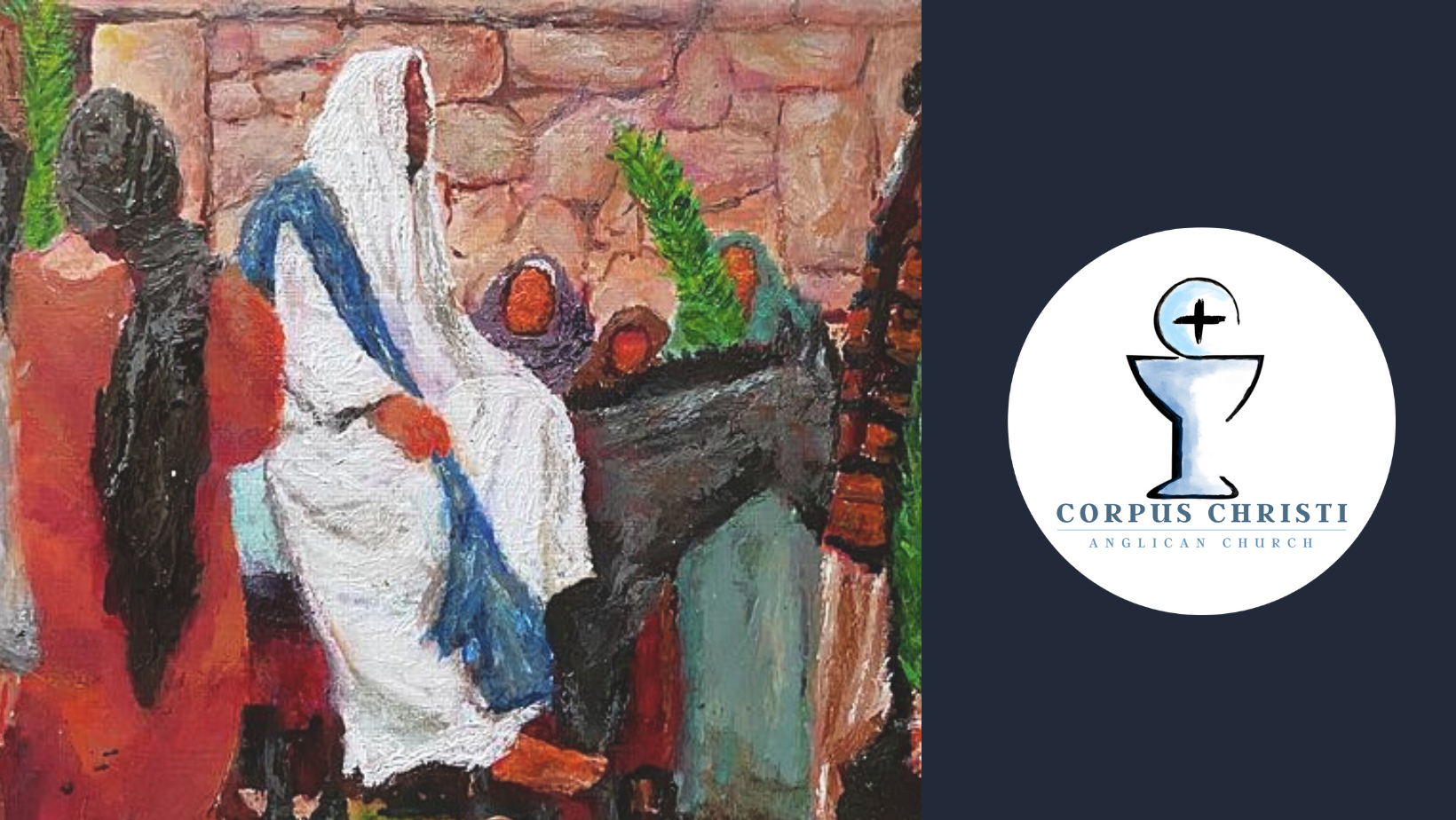
TranscriptioN
Well, welcome to this Holy Week at Corpus Christi Anglican Church. It is always striking to me how fast everything shifts. We hear in one moment the crowds who are shouting with joy for the King who's coming, and we get to celebrate with them, deliver us, Hosanna.
And then we hear how the rest of the week goes in the same service. Jesus is arrested. He's brought up on false charges. He's rejected by the people. He's hung on a cross among thieves. And this week, we're going to walk the way of the cross together.
And why do we do this? Our New Testament reading told us, Philippians 2, where St. Paul says we're supposed to take on the mind of Christ. And then he walks through what that means, how Jesus considered equality with God something not to be held on to, but he took the form of a slave and being made in the likeness of humankind, he was obedient to the point of death, even death on a cross. So to walk the way of the cross, the way that paves the way for the resurrection, is to learn the mind of Christ, which we need to take up.
People had wanted a king to overthrow their empire through violence, to establish a new order through the sword, to be victorious. This isn't the mind of Christ. Through death on the cross, Jesus would defeat the kingdom of darkness that had bound the world to sin and to death.
And Palm Sunday reminds us that God wants to bring new life to his people, new life with himself, and that the road to get there involves this everyday obedience, through both these moments of celebration and through the times of suffering, where we feel like there are forces that are warring and oppressing against our souls. And it's in that obedience that we discover, in this everyday obedience, the mind of Christ as we walk with him on the way to the cross. And it's in doing that that we find the cross to be the way of life and peace, as our collect prayed for us.
So I want to look together at Luke chapter 19 that we read outside. Jesus is entering into Jerusalem. Jesus is leading a group of pilgrims from Jericho up to Jerusalem for the Passover festival. And as they make their way from Jericho, they're going from 840-some-odd feet below sea level, up a long, hot, dusty, mountainous road under the beating sun towards the city of Jerusalem. It's a really long trek. And as they make their way up, they get to the towns of Bethany and Bethpage near Jerusalem.
And they're just across the Kidron Valley. After that long journey, they're at the place where they get their first glimpse of Jerusalem off in the distance. And as they near the town, Jesus asks two of his disciples to go into the village to find a cult that's never been ridden before and to untie it and bring it to him.
The disciples don't know the larger picture of what's going on. They don't ask him why he wants them to do that. They just do it. Jesus is setting events in motion that they don't yet understand. And I'm not sure their hearts could even handle it, to be honest. But it's this ordinary faithfulness and the simple things Jesus is commanding, the next right thing to do that brings about God's plan in a way that they can't begin to comprehend.
And Palm Sunday then reminds us that God brings these new creation realities. He orchestrates things to bring about his cosmic renewal along a road of ordinary daily faithfulness. And so in those moments, we're usually not given the larger picture of what God's doing.
We just do the next right thing that he asks us to do. And Palm Sunday reminds us that the larger picture is our redemption that God's bringing about for us. It is life with God. It's new creation where Jesus is king. But God, I think in his kindness, only gives us the next right thing to do, the next right thing to desire, because the larger picture of how to get there is often too much for our hearts to bear. So the disciples do what Jesus asks.
They bring him a colt. And those who are following Jesus, they place their clothes onto this donkey as a makeshift attempt at a saddle for Jesus. The image of Jesus riding in on a donkey into the city is one of hope. It's one of longing that the people have. And it would have certainly stirred up their imaginations for this Old Testament passage in Zechariah 9:9, where the prophet says, “Rejoice greatly, O daughter Zion. Shout aloud, O daughter Jerusalem. Lo, your king is coming to you. Triumphant and victorious is he. Humble and riding on a donkey, on a colt, the foal of a donkey.”
This is in the back of everyone's imagination. And the people are seeing this Davidic ruler come in on this donkey into Jerusalem. And they put their clothes down in front of them. They put palm branches in front of him, in front of him, rolling out the red carpet for their king who is coming. And this king would drive out the evil empire that was over them, so they thought. He would destroy their enemies.
He would overturn injustice. He would bring them back to God, this physical liberation, the spiritual renewal. All their hopes are in this king who is riding on a donkey.
Last week I had mentioned Psalm 118, which is a really important psalm peppered throughout St. Luke's Gospel at key points. And last week it was a reminder to the chief priests and scribes, as Jesus is already in Jerusalem, we're actually going back in time this week, that the cornerstone that the builders rejected would become the chief cornerstone. That's Psalm 118.
It was a rebuke to the unfaithful leaders in Israel. This week, Psalm 118 is used again, leading up to Jesus's entry into Jerusalem. And it's a psalm about explaining Jesus's kingship. The people here believe that Jesus is the anointed king. And St. Luke makes that clear as he quotes Psalm 118 and alludes to it. And he does so by calling him the king who is coming.
And St. Luke's Gospel doesn't mention the hosannas. Interestingly, the other gospels do. But the hosannas are actually part of this original psalm, Psalm 118. Hosanna is just a transliterated word in English. Originally it was transliterated into Greek, but it comes from Hebrew. It's a phrase, actually. It's a prayer. Hoshiana, which means like, “deliver us”. It's a command.
Lord, deliver us. Hoshiana (הושׁיע נא). And so it's this prayer that we actually pray, hoshiana (הושׁיע נא), every single week when we celebrate the Eucharist.
It's a reminder that Jesus alone can deliver. Jesus alone can save. From the various things that war against our soul, that war against the image of God in us, us becoming fully alive in him.
And so adults and children, in the passage this morning, joined in these chants for this royal procession. Hosanna, blessed is the king who's coming. People were singing songs of praise for a victory that went much deeper than any of them actually understood.
At the same time, there was this group of religious leaders, the Pharisees, who were not the same as the Sadducees. These ones were sowing seeds of doubt that were more insidious than they were probably aware of. They were the group that helped implement faithfulness to the Torah, that's a good thing, for a people that were dispersed.
And as such, they had a certain authority among the people to adjudicate the meaning of scripture, to make decisions about how to apply law to life. And what makes them nervous is that if Jesus really is the king, then their power is gone. They have to hand it over to him as Lord.
And it's like they're saying, it's fine to have someone overthrow secular authorities like Rome, we are all about that, as long as I get to keep my little fiefdom. I don't want to give up control. But the problem is, Jesus is king.
And if he's king, then he is Lord of all. And that's really hard for us sometimes, just like the Pharisees. It's often easier to cling to what's familiar, what we feel like we have control over, some nostalgic memory, no matter how broken it is, than to risk going into the unknown, where we trust that Jesus is Lord, and where the things that feel really hard might actually be redemptive for us.
And so this movement from the triumphal entry into the passion narrative invites us to look at our own desires, what faithfulness looks like when expectations go unmet, when we're really disappointed at how things have turned out, and what trust looks like when brokenness and nostalgia feel safer for us than stepping into what's unknown for the sake of experiencing new creation in the resurrection. It's fun and exciting to get whipped up into the frenzy of the crowd, to lay down your palms and to join the celebration when things are good, but what are we going to do when things don't turn out as we hoped they would? And so the Pharisees look like they want people to follow God, but at the end of the day, they'd rather have a broken fiefdom where they are Lord, than the kingdom of God, which is unknown to them, where Jesus is Lord of all. And the kingship of Jesus is won, as we've said at several points today, through the road to the cross.
His throne was a cross. And those who are going to take up the mind of Christ, that are called to follow Jesus in his sufferings, trusting what feels terrifying and unknown, are still going to be filled with the presence of Christ as we go into those places. What feels like shame can be acknowledged, and it will eventually be redeemed.
What is an upset or unmet expectation, a small death of sorts, is actually the road to life with God, and it is not an accidental blip along the way. Are we going to be those who follow Jesus only when we feel like it, when it's exciting, when we're swept up with the emotion of the crowd? Are we going to walk with him when it is difficult on the way to the cross? Will we hold so tightly onto the parts of our life, people in our life, those little moments of nostalgia, no matter how broken but comfortable? Or are we going to recognize Jesus as King of kings and Lord of lords and entrust ourselves to him, even though it feels costly to walk into what's unknown? This is the question posed to us on Palm Sunday. If God were to give us a glimpse of the totality of our story and our journey of our lives, we probably couldn't handle the load of it.
It would be too much. If you're talking to a five or a six-year-old, it would be completely inappropriate as you enter some sort of scenario with them to enumerate all the ways it could go wrong and all the ways that they might suffer as they grow up and move into years and years ahead. It's too much for their little hearts to handle.
So what do we do? We fill their hearts with truth. The truth of what is true around them, whether or not they feel it. And we tell them what is next.
We tell them a little bit of what to anticipate, but not the greater narrative of what could be. We remind them of what they can do, what might feel new, what might feel scary, and we help them take the next step forward. We don't need to give them more to be fearful about in the future.
Some kids are good enough at figuring that out themselves, and many of us are too. And so we help them hold on to what's true and good and just take the next right step forward. And Poem Sunday reminds us that the larger picture is our redemption and it's our life with God.
But God in his kindness doesn't give us the full glimpse of how we are going to get there because it's too much for our hearts to handle. He just gives us the next right thing to do, the next right thing to desire, because the greater picture might be too much for us. So as we enter Holy Week together, I want to encourage us to consider whether we find ourselves like the crowds or the religious leaders or vacillating between either one on any given day.
How does following Jesus feel difficult, terrifying, or threatening to our sense of control? What do we need to hand over to him, to his control? And will we still follow him into the next step of faithfulness as he leads us into the hard places that we never wanted to go? As we prayed in our collect together, I think that this is the way of the cross where we discover that the cross is the way of life and peace. That phrase has always been challenging and mystifying to me, that the way of the cross would be the way of life and peace. The way of the cross is the place of life and peace because that's where Jesus' presence is found.
We don't always have answers, but we do have his presence. And the cross is the means by which he disarms the kingdom of darkness and the means by which he is Lord of all. And so this Holy Week, I want to invite us to take up the mind of Christ together to discover the love of God in the way of the cross so that we might find it none other than the way of life and peace.
Let me pray for us. “Almighty God, whose son went not up to joy, but first he suffered pain. And entered not into glory before he was crucified. Mercifully grant that we, walking in the way of the cross, may find it none other than the way of life and peace. Through Jesus Christ, our Lord. Amen.
Transcribed byTurboScribe.ai. Edited by the Author.
Lent 5 (Passion Sunday): The Veiled Glory in the Way of the Cross
TranscriptioN
Well, good morning again everybody. It is good to see you this morning. I am delighted to be with you on this fifth Sunday of Lent. As I mentioned before, this is Passion Tide, and during our weekly emails that come out on Wednesdays, if you don't get those, let me know and I'll make sure you get them.
I tried to put a little article on what is Passion Tide, these two weeks of which one is Holy Week, this short two-week season where we shroud the crosses and the icons and it focuses our gaze on the road to Jesus's crucifixion and the glory that will later be revealed but right now is veiled. In our Gospel passage today, we encounter leaders who have forgotten that they had a delegated authority. These are the chief priests and the scribes.
They wanted to hold on to control for themselves of speaking for God through an authority that they thought belonged to them, and it's an easy trap to fall into because power is intoxicating and the idea that Jesus might just be the Messiah threatens to undo the thing they're trying to hold on to. Our passages today encourage us that God's marvelous works of redemption would be done through humility and through the power of what's going to happen on the cross. And so we involve ourselves in the work of Jesus's ministry, this kingdom that is here and to come, when we bear fruits of repentance and when we invite other people to come and taste and see the goodness of the Lord along with us.
And as we look at our passages this morning, let me pray for us. “In the name of God, the Father, the Son, and the Holy Spirit. Amen. Lord, may the words of my mouth and the meditation of my heart be always acceptable in your sight, O Lord, my rock and my Redeemer. Amen.”
The Parable
So today's parable from Jesus, we find him teaching in the temple courts, and his authority had been questioned by the religious leaders, the chief priests and the scribes, and Jesus is now teaching them through a parable about a vineyard.
A man planted a vineyard, who represents God in the story, and the vineyard itself represents the state of blessing and peace and rest for the people of God. And in this vineyard that the man plants, the vineyard is going to bear fruits. The vineyard owner has tenant farmers that he lets tend the vineyard and cultivate the fruit, do the hiring and firing, etc.
There's a delegated authority to steward the vineyard, and he sends a servant to go collect the produce from the tenants, and then they send him off empty-handed. The tenants of the vineyard have a delegated authority to collect the produce, but it actually belongs to the owner of the vineyard. So the tenants beat this servant, and then they send them back empty-handed.
The owner then sends a second servant to go and collect the produce. They beat, and then it adds, and they insult the second servant, so it's a little bit of the same but more, and they send this second servant back empty-handed. A third servant comes, and he's sent by the vineyard owner, and it's worse.
He's cast out, and he's harmed violently. The word where it says wounded in our translation is the word we get trauma in English. It's a Greek word trauma.
It's wounding, and so you can think of this person having been left wounded and traumatized from the experience of going to collect the fruit for the vineyard owner. The idea here is that God, as we heard really well read by Janet in the book of Isaiah, God has been forming a people for his glory and praise, right? They've gone into subjugation over and over again, and God has freed them and liberated them over and over again, but what he's doing ultimately is forming a people for his praise and his glory to live under his kingship, and so God has continually over and over again sent his messengers, the prophets, to once again call them back to covenant renewal and faithfulness, but those who have this delegated authority, the religious leaders, come from a long line of leaders in history who are under the delusion that they held on to control for themselves and that they spoke for God, despite the fact that their hearts were actually quite far from him, and then they turned the people's hearts away, and the result is that the owner of the vineyard did not receive the fruit of the vineyard. So finally, in this parable that Jesus tells, the owner sends his son.
There's no greater authority than if the father were to actually go himself. Certainly they're going to respect my son, and so the vineyard tenants come up with this absurd plan that, you know, if we kill the son, maybe we can inherit the vineyard. That's ridiculous, right? That makes no logical sense.
That's what you're supposed to feel when you hear Jesus tell this parable. That's illogical, it's nonsensical, and that's the point. So these people, these people with a delegated authority, the tenants, tenant farmers, they have no real authority over the vineyard.
Even if they were to kill that son, it's not like they would have authority over it, and they don't have any right to the fruit that comes from it. So at the time, Jesus speaks this parable in the temple, and the specifics at this point are veiled. They're unclear.
People don't know that he is going to go to a Roman cross to die yet. The story hasn't unfolded, and so this is a good, helpful parable for this Passion Sunday, where we have the crosses and the icons veiled, because we've got glimpses of the story, but we don't have the fullness of what's going to happen yet. The plan of God is veiled, and it's going to be made clear.
So the tenants in this parable, they take the son, they take him outside the vineyard, and they kill him. And in response, the vineyard owner is going to come, and he's going to destroy the tenant farmers, and he's going to give that vineyard to other people. And so Jesus asks the scribes and the Pharisees, what do you think of such a parable? How does that strike you? And they use this phrase that you find in Paul, may it never be! Right? And so it was sort of obfuscated in the ESV a little bit, but the idea is like, may it not be so! We don't want this to be the case.
And so Jesus then, he says, okay, well what do you think about this psalm? What does it mean? Psalm 118. How would you interpret it? Psalm 118 addresses a nation that's been rejected. It addresses a king that's been rejected before the nations, but the psalm reassures the people that the rejected people are going to have an exalted position before God, that the rejected King will have an exalted position before God.
And Psalm 118 comes to its fullest expression in the person and work of Jesus. And that's why as St. Luke is writing the gospel in the book of Acts, Psalm 118 is actually peppered throughout Luke's gospel at really key points, because he's interpreting it through the lens of Jesus's ministry. And so the imagery now moves from the vineyard in the parable to a construction yard in Psalm 118.
Building yards, builders yards, were where people would find the stones they needed to make their buildings. And once the project is near completion, the image here is of finding the stone that would finish off the building, the cornerstone, that it would, it was perfect to finish this off. But the idea here is that this stone that was perfectly ready to cap off the building had been rejected by the builders in Psalm 118.
So the workers, which here symbolized the scribes and the Jewish leaders, they might cast off Jesus as unimportant now, but he is going to come to be honored and vindicated as the Lord's Messiah. There is a timeline to the end of their delegated authority, because his needs to take over. And that's what Psalm 118 is talking about.
And I think what's neat is I was reading several of the church fathers about this passage. They often connect this with Daniel chapter 2. And in Daniel chapter 2, if you'll remember, there is a rock cut out of a mountain. And this rock is going to destroy the clay feet of the statue, which represents the kingdoms of the world.
And then it says in Daniel 2, the stone that struck the statue became a great mountain and filled the whole earth. And so they're bringing together this beautiful imagery of the stone, the cornerstone of Psalm 118, and the rock out of the mountain in Daniel chapter 2. And that connection works together to talk about, then, the rejection of Israel's leaders, because Jesus himself is going to be the true authority. He is King. He is Lord. Their authority is delegated. It is not theirs.
And they find themselves in a long line of authorities who misappropriate delegated authority as though it's their own. But his rule and reign as king is going to fill the whole earth. His rule and reign of new creation.
And so how do we join the work of the vineyard and cultivate fruits from this vineyard? There's three things I want to think about with us this morning.
Avoiding False Securities
We involve ourselves in the work of tending to the vineyard and offering the fruits to God by avoiding false securities. The chief priests and the scribes, they understand the implication of the And as a result, at the end, it says they want to lay hands on him, but they fear the crowds.
They're afraid of the people. And it's a good reminder for all of us, whether one holds public office or ecclesiastical office, that all authority in heaven and on earth is the Lord's and it is not ours. Whatever authority or responsibility we have, it is a delegated authority.
We're just stewards who are tenant farmers in the vineyard of God. And so if you're a parent, it's also a good reminder as a parent that your children belong to the Lord. Ultimately, they don't belong to us, which is really hard, right? And if you're an employer, your employees don't belong to you.
These people belong to the Lord, not even to our company. If you hold public office or ecclesiastical office, your responsibility is to uphold the welfare of people, not to hold on to power by coercing constituents or gaining favor amongst your side. All authority in heaven and on earth belongs to the Lord.
But the taste of it can be so intoxicating. And so it's a good reminder that power in and of itself can be used for good, as long as we understand that we have a delegated authority. But power can turn into evil when it outpaces our character and we don't live a life of virtue and understand that our end is to the glory and praise of God.
And that is the kind of power that will corrupt us and those around us. And so the religious leaders of Jesus's day, they had forgotten that. It's easy to forget how our responsibilities and our stations, our callings, the platforms that we have, are our stewardships.
They're platforms for the work of God, the miracles of God that he does in the human heart. And they're not marks of status in the kingdom. That's really important.
Cultivating in the way of Jesus
So Jesus is calling us to offer the fruit of the vineyard to the Lord, that all things belong to him. And this is done by cultivating the work in the same way that Jesus does. Joining the work of Jesus is a work of sowing with tears.
We read one of my favorite psalms today, Psalm 126. This is a pilgrim psalm where there's a leader leading up a group of pilgrims to Jerusalem. And the theme of God making streams in the desert is something that came up both in the psalm and in the Old Testament reading, if you were listening.
It's a common theme. This renewal that people anticipate is God making streams in the desert. It's an analogy for the hope that people have that God will give them new life.
And so the psalmist prays that those who would sow in tears would reap with shouts of joy. That those who go about weeping and bearing seed for sowing would come again with joy, shouldering their sheaves. And so similarly we read in St. Paul in chapter 3 of Philippians that he wants to know Christ and the power of his resurrection, but notice it's not empty triumphalism.
He says, and I want to know the sharing of his sufferings being made like him in his death. So the means of the power of the kingdom and the authority of the kingdom is the work of it is done through the means of the way that Jesus cultivated the work of the kingdom, which is to know the resurrection through the sufferings that led to the cross. So the hard work of weeping over the ways that we in our world is broken will return a harvest of beautiful praise to the Lord.
Because God's at work in us. Like it's easy to take the easy road and manipulate people for our own ends, to not care about them, to be unreflective, to be dismissive or callous to the needs of other people, or disadvantage other people to our own benefit. That would be the easy road.
It's easier to do those things than to recognize the places where we've been wounded, where we might have wounded others, to do the hard work of giving language to those things, teasing out those implications, and tearfully asking God for his grace, and to die to those places that are unbecoming of his life and glory. The ways that we've tried to hold on to control in our delegated authority as though it were ours to hold on to. We're really good at trying to curate our own narratives and control our image to other people.
And so Passion Sunday invites you to be undone before others. It invites the church to be undone with one another. If you feel like you're a mess, you're in the right place with the right people.
Thanks be to God. And so Passion Sunday invites us to the tearful cultivation of the heart in repentance, to let God have his authority and not take it on ourselves, to walk the way of the cross with Jesus, even though the glory might be veiled so thickly right now that we just can't see it. And we're involved in this marvelous work of God of redemption, and we involve ourselves in it when we bear fruits that are in keeping with repentance, when we invite other people to come and taste and see the Lord's goodness with us.
Bearing fruit through command and promise
So third, bearing fruit through love and desire, God would eventually rip away the authority from the tenant farmers to cultivate that vineyard, and then he would give that delegated authority to others, which has in it, in this parable, a veiled reference to the new covenant and the inclusion of unexpected people, tax collectors, sinners, Samaritans, and even as far as the Gentiles, right? This has in it this veiled expectation that God will give the vineyard to others. And one church father said about this vineyard being given to the apostles after the Jewish leaders, he says, they are sowing the seeds of piety to Christ in the hearts of believers and making the nations entrusted to their care into beautiful vineyards in the sight of God. That is the apostolic work, and it's the same one that we're called into as well.
And so what seemed like a catastrophic tragedy on the hill of Golgotha at the cross and the rejection of the Messiah was actually in the plan of God the means by which cosmic renewal would begin. There's the thing that brings the kingdom. And so there are so many subtle distractions that are seeking our attention, and lies, and the disorder, the things that we love, and the things that we desire.
If you think about the chief priests and the scribes, there were a thousand subtle shifts and decisions that these leaders made to make authority their ultimate goal. They didn't get into leadership to hold on to inappropriate authority. There were a thousand subtle shifts and decisions that brought them to that point.
And so on this fifth Sunday of Lent, we remember that it's God who brings into order the unruly wills and affections of sinners. Because we find ourselves in that place often where we've made lots of decisions and choices and things have happened to us that make our affections and desires feel unwieldy and unruly, and we trust in this God who brings them back into order. And so we need God's help to do what the poet prays for, which is to love what he commands, and to actually desire what he promises.
God commands a life that is committed to his lordship and kingship, his rule and reign, to love him and our neighbor, and ultimately to be formed for his praise, as we read in the Old Testament today. And he promises new creation. That's his promise to us, and it is an alternative amongst many false alternatives that are before us that may look attractive, but he offers us new creation in his kingdom.
But we need his help to ask for the desire for what he promises. And this passage is a great reminder to ask God for help, to love the things that he commands when that's really hard to do in the minute everyday moments of the things that we walk through, and to desire what he promises when we just can't see it because we're crowded out by all the things that are in front of us, and all the things that we're hoping for which may be slightly under the standard of the kingdom of God. And it's a good reminder that this delegated authority involves not just the glory of the resurrection, but also sharing in the sufferings and the humility of Jesus.
Conclusion
So the path of the kingdom is paved with the tears of cross-bearing saints that go before us. The glory might be veiled right now, but we're called to cultivate a field of repentance, to hand God a harvest of praise. So there's hope today as well, because he's the one who makes streams in the desert. He makes a way in the wilderness. This is the God that we serve. And he's the one who gives us this vineyard.
He's done all that he needs to to prepare the soil, to tend it, and we are these tenant farmers on the land who give him what is rightfully his amongst our households, our labors, our stations and offices, our children, the relationships he's put as our stewardship, so that by the end of it all, in him, our hearts are fixed where true joys are to be found. Let me pray for us. Almighty God, you alone can bring into order the unruly wills and affections of sinners.
Grant your people grace to love what you command and to desire what you promise, that among the swift and varied changes of this world, our hearts may surely there be fixed where true joys are to be found. Through Jesus Christ our Lord, who lives and reigns with you and the Holy Spirit, one God, now and forever.
Transcribed by TurboScribe.ai. Edited by the Author
Lent 4: The Parable of the Compassionate Father
TranscriptioN
Well, good morning again, everybody. It is good to see you this morning. I'm Father Morgan Reed, the vicar here at Corpus Christi Anglican Church, and you've come on one of the two rose-colored Sundays this morning. This is Laetera Sunday, which is kind of like Gaudete Sunday during Advent.
The word Laetera is a command, meaning to rejoice, and we wear a rose to signal that this season of Lent is coming close to its end. So next week will be Passion Sunday. We'll have the crosses and the icons veiled, and then we'll enter into Holy Week.
So we are nearing the end of Lent. And today's gospel passage is beautiful. In some ways it's been an undercurrent of all of the weeks of Lent. I haven't made it explicit, but the compassion of God is the foundation of repentance. And so today it is explicit in our passage. It is often called the parable of the prodigal son, and so today some have argued that actually it should be the parable of the running father, and I like that.
We have two pictures of two brothers here, a younger brother and an older brother, two different kinds of pictures of rebellion, and the father here is pictured as being this compassionate father who addresses them both in their unique ways. And so this passage is an encouragement to people who feel like they're not worthy of God's love. It's an encouragement to those who are listening who would have been tax collectors and known that they were considered sinners by the religious elite.
It's an encouragement for you and for me, because we often find ourselves in the place of the child who's run far. And so it also offers a challenge to the self-righteous, the older brother, and to those who are sitting and feeling satisfied in their own sense of righteousness and worth before God. And most important though, no matter where you are in that spectrum this morning, it offers us a glimpse into the compassionate character of the God who loves us.
That's the most important thing to take away from this parable. Our New Testament passage this morning that we read from St. Paul talks about us being ambassadors of reconciliation, where we're the ones who are showing the world what it means to be reconciled to God and those who are inviting others into the same. And so this parable is actually left intentionally open, but if we could fill it in, we would be the ones who are reconciled and who are inviting people to the party, so to speak.
And whether we're running, whether we're self-righteous, the Father is inviting us into new life. And this invitation, and his invitation into his compassion, is what we are called to invite other people into. So I want to just look at the parable this morning.
The First Son
The first son, the younger son, I want to look at and the father's reaction to him. Jesus is opening this parable with this son who is asking his father to share his share of the inheritance right now, which is equivalent to wishing that his dad was dead, right? Because normally you don't get the inheritance until your parent dies, and so it's insulting. He's asking his dad to sever his relationship with him, to take ownership of property, which he's going to then liquidate for cash and go off somewhere and spend that cash.
So he would rather have cash and the inheritance now than a relationship with his dad, his brother, and the rest of his family. The son takes the land and the property, and he does exactly that. He sells it off for cash, he takes that cash, he goes off into a far country with cash in hand, severed from his relationship with his family, and he wanders off and he spends everything on carnal pleasures.
And then a famine comes, and so he's left without food, without money, without any connections, and he looks to a local pig farmer, which if you're Jewish, this would make you unclean. And so he's at his lowest point, but not quite his lowest point, because now he's envious of pigs. He's saying, if I could just eat what they're eating, I'd be okay.
But he's not even allowed to eat what they're eating. So now he's hit rock bottom. He sees how low he's fallen, and it says that he came to himself, and he remembers that his father's day laborers have it better than he does at this moment, so he's not asking to be a son again.
He decides, I'm gonna go to return to my father and repent, and maybe he'll just hire me as a day laborer. All he's carrying with him is his own awareness and sense that he needs help. Without knowing the type of response that he's going to encounter, he goes back to his father, because anything is better than where he's at at the moment.
And Jesus says, while he was still far off, his father saw him, and his father was filled with compassion. He ran, and he put his arms around him, and he kissed him. So think about this. When the father sees his son far off in the distance, he knows there's been a change of heart. The father runs after him, which is a very potentially embarrassing posture. It's not something becoming of a father.
Lots of commentators point out that it's a little bit embarrassing to show this man sort of girding up his loins and running after his son. It's a boyish behavior that his dad is doing, but his dad, his compassion compels him to run. And so he meets him, and he embraces him, and he kisses him before the son even says a word to him.
If we think about what he should have done in their culture, the father should have cut him off. He should have rebuked the son, but that's not the character of the father that is in this story. And so what strikes me is that the father's compassion in this story comes to the son before the son even says a word.
Like the son has his confession all prepared, but the compassion of the father meets the son before the son even gets a word out. And it shows us something about the character of God, that God sees the deep intention of the heart, and often his compassion meets us before the words of confession even exit our lips. And that's amazing.
And so this is meant to be an encouragement for those who are listening, like the tax collectors, those who think, gosh, you know what, I've missed the boat. Like I am not worthy of God's love. I'm not worthy of being a part of this community.
Everyone hates me. Like this is for them. God sees the intention of their heart before any confession leaves their lips. And if you think of these individuals, they have a whole lifetime of dysfunction, trauma, bad decisions, false narratives that they've held on to, misplaced trust in unsafe people and relationships, other parts of their lives that form complex stories that make them what they are now, which other people would describe them and give them the label tax collector and sinner. But these are images of God, made in, you know, people made in God's image. But they're starting to believe these stories for themselves.
And it's easy to see them as they hear the story from Jesus, how they would identify themselves with this son who squandered all of his wealth. And maybe they're wondering things like, what do I have to say to get God to love me again? What do I need to do or say to be accepted amongst my family again? What do I need to do or give up to earn God's love because I've squandered it? How do I get rid of this nagging sense of guilt in my heart? And the answer from this story is to just do the simple task of turning towards God with nothing but your own awareness that you're in need of his help. That's the very first thing.
And then what happens is God comes to meet you with his compassion, to fall on you and embrace you and kiss you before the lips ever utter a confession. And his kiss and his embrace come and meet you before a word comes out. And so this is such a hopeful passage.
And you can see why this is something that people often cling to. It is good news. We should turn from false hopes and narratives that are unhelpful, dysfunctions that are part of our story, the multitudes of poor decisions we may have made, the sinful dispositions, the longing for autonomy from God.
We should turn and look to God. Repent. That's what turn means. We should repent of those things. Turn towards God with just the recognition that we need his help. And then he comes to meet us with his compassion.
It's like one of the call acts say in the prayer book, God is always more ready to hear than we are to pray. It's one of my favorite sentences. God is more ready to hear than we are to pray.
He is more ready to lavish his compassion on you than you are to turn. So it doesn't take much. Praise God.
The Second Son
And so we've seen the younger son, we've seen the father's compassion, and now let's look at the older son because he's also a very important character in this story. The father has been overjoyed at the younger son's return. It's a taste of the resurrection.
Kind of reminds me of like why we're wearing rose today. It's a little taste of resurrection before we get to Easter in a few weeks. And this son of mine, he says, was dead and now he is alive. And now we're introduced to the older son. The father had begun this celebration of the son he returned. They're having a party.
There's music. There's dancing. They've killed the fatted calf, which is now part of the English vernacular, right? This is a very exciting time.
And the older brother is out working in the field. Nothing wrong with that. It's just what he's been doing every day since his brother left.
And he hears this music and he hears this dancing and he's wondering what's going on and he hears that his brother has come home and now his father is throwing a party to celebrate his brother, who is really not his brother in his heart anymore. Now imagine the older brother's internal dialogue with me for a second. Again, this is from the Gospel of Morgan. It's totally apocryphal, but in my mind's eye, this is where his heart is, right? What do you mean that he came home? He should know better than to come back. He should stay where he was. He sold off the family's property.
He rejected us. He rejected me as his brother. Who does he think he is to come back after doing all of that? Why would my dad throw him a party? He's not worthy of a party.
He's never thrown me a party. I'm here day in and day out. I'm working hard to support this family and I'm not going to support any of this. It's not fair. I've worked way too hard. I've sacrificed too much.
And the pain of my so-called brother is just too much for me to come inside. And so notice that the father meets the older brother and he says, why don't you come in? He is beckoning the older son to come in and to celebrate. And it says in verse 28 that the father comes out and he pleads with his older son to come in.
He pleads with him. He's begging him, please come in and rejoice with what is happening. The father has compassion to meet both of his sons where they're at in their different places, their unique places.
I was reading a commentary on this passage and it had reminded me of a story of something in my own story that reminded me of this parable. I was working at a church serving and we had a cleanup day at a local stream and we had gotten our boots on. We got our trash bags and our gloves and we were walking through this stream along the hills.
It was pretty muddy and I was just looking for trash. Like I was going up and down these hills, going across the water, looking for little pieces of trash that I could put in this trash bag. And I was looking for garbage step after step.
My eyes were down. I was focused. I was going to clean this stream and then when we were done, I threw away the trash bags and then I stepped down and I watched as kids were enjoying the stream.
They were throwing rocks in it and I couldn't be helped but just be stunned at how beautiful the scenery was. I had missed it as I was looking for trash. I was sitting there going, wow, thank you Lord.
Like I got to be a part of the beauty of this place that kids get to enjoy. But I totally missed the creek's beauty for the sake of the garbage that I was focused on. And that's a bit of what's happening here.
The older brother is missing the greater picture of the compassion of the father because his fixation is on the brother's sins, his rejection, his own pain, and his own shame. And so if his father can have this kind of compassion on the younger brother, the good news is that the father can have this kind of compassion on the older brother as well. And that's the larger picture that he's missing.
Sometimes God does grant to some people more material success than their character can handle. And as a result of that, we find people joining the prodigal son. That success leads to walking away from God because that person forgets their need from him.
They come under the illusion and delusion that I can do this myself. Look, I've done all this stuff and I'm doing it well. God must be blessing it.
And I think of people who have really public platforms, who are way too young, or their character is just not ready for the responsibility of it. Like the money, the success, the fame, they often turn out to be their downfall in the end. Hitting the lowest point is often what draws people to repentance, to turning.
It doesn't have to be. Thanks be to God when it's not, but it often is hitting that lowest point. And so the joy of repentance is found here in the Father's words.
We had to celebrate. It was a compulsion that we couldn't not celebrate. We had to do it because this brother of yours was dead and now he has come back to life.
He was lost and now he is found. There is a joy in the kingdom over this little resurrection. And there's a parable about the kingdom of God.
It's an invitation to those who know their their sense of need and who are drawing near to Jesus. It is good news for those of us who know that we have need and long for the compassion of God. For those who struggle with envy like the older brother, who sit in self-righteousness judging others with a sense of superiority, this is also an invitation to the gospel to come to the table and to rejoice with God's new work of creation in those that we have deemed so unworthy.
And so this story, if you'll notice, it's intentionally left open. And it's done so for you and I to imagine who we are in this story. Are we the younger son? Are we the older son? Are we something else? It's left open for us.
All of us have reasons for why it's difficult to repent, to turn towards God, why it's hard for us to express our need to accept the compassion of God. But this story compels us to look to the Father and to discover his compassionate embrace over and over again. And if somebody else's actions have resulted in resentment and shame, the kind that has distanced us from God, part of our healing is to long for the repentance of those people that we can't imagine God would love.
And for God's compassion to do a work of new creation in them. I think another part of healing is to join the banquet by taking part in the community life of the church. The Eucharist reminds us of this every week, where we sit together, we stand together, we sing together in this gallery of portraits of prodigal children.
And as you see the image of God restored in one another, you see a little bit of a taste of the resurrection in the lives of those that you're sitting next to. You have all been dead and you have been raised to life, and you get to see this weekend and week out, maybe more than weekend and week out, if you take the opportunity to get to know each other over coffee or a meal. This is the opportunity to build that muscle memory of rejoicing over the work of God's compassion in other people, so that you can see what God can do in your own heart and life.
And so we need to long for the Father's joy in finding the dead come to life. And on this Laetare Sunday, let's rejoice in the compassion of God that's found in Jesus Christ, who came to bring the dead back to life. As our New Testament passage reminded us this morning, in Christ the old things have passed away and all things have become new.
And so you and I are ambassadors of the kingdom of God, ambassadors of Christ, and we've been entrusted with this good news of reconciliation, like the prodigal son, like the older son, who, you know, if the story had ended the way I wanted to, he said, okay, I'm going to see what you can do in this prodigal son of yours. In Jesus forgiveness of sins is possible, and new creation is the reality, and reconciliation with God that we all enter into through the death and the resurrection of Jesus. And so in Christ our wounds are redeemed, and we're restored to life.
And so are we the older brother today, or are we the younger brother? Part of this Lent, what we need to do is take some time to ponder what God's compassion might look like in our own repentance, and why we find it so hard to turn to God and to accept his compassionate embrace. That helps us avoid the besetting sins of the younger brother, but also ask to discover God's compassion, and what it might look like for those who we wish weren't actually part of our life and our story. And that's really hard, and it's also the beginning of healing, and it keeps us from the besetting sin of pride that's found in the older brother, and envy.
And with whichever brother you identify with this morning, remember ultimately that this is a parable about the Father and his compassion, that God longs to come and meet you with a compassionate embrace before the words of confession ever exit your lips. Let me pray for us. O Lord our God, accept the fervent prayers of your people.
In the multitude of your mercies, look with compassion upon us and all who turn to you for help, because you are gracious, O lover of souls. And to you we give glory, Father, Son, and Holy Spirit, now and forever. Amen.
Transcribed by TurboScribe.ai. Edited by the Author.