SERMONS
Archive
- April 2026
- March 2026
- February 2026
- January 2026
- December 2025
- November 2025
- October 2025
- September 2025
- August 2025
- July 2025
- June 2025
- May 2025
- April 2025
- March 2025
- February 2025
- January 2025
- December 2024
- November 2024
- October 2024
- September 2024
- August 2024
- July 2024
- June 2024
- May 2024
- April 2024
- March 2024
- February 2024
- January 2024
- December 2023
- November 2023
- October 2023
- September 2023
- August 2023
- July 2023
- June 2023
- May 2023
- April 2023
- March 2023
- February 2023
- January 2023
- December 2022
- November 2022
- October 2022
- September 2022
- August 2022
- July 2022
- June 2022
- May 2022
- April 2022
- March 2022
- February 2022
- January 2022
- December 2021
- November 2021
- October 2021
- September 2021
- August 2021
- July 2021
- June 2021
- May 2021
- April 2021
- March 2021
- February 2021
- January 2021
- December 2020
- November 2020
- October 2020
- September 2020
- August 2020
Easter Sunday: Jesus the King and Cultivator of the Garden of God
St. Ephrem the Syrian's Second Hymn on the Resurrection
CONTENT
Introduction
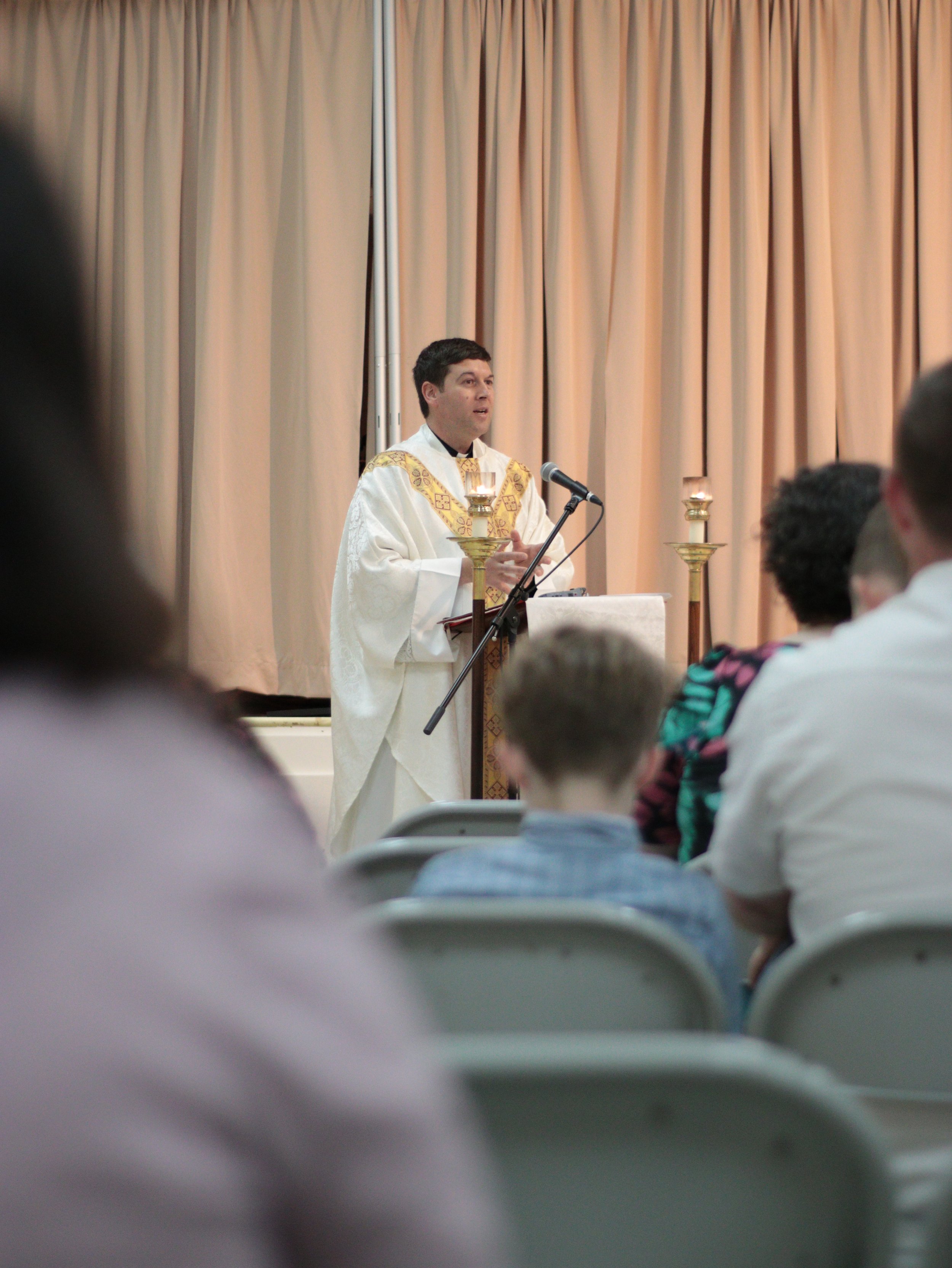
Good morning dear friends. The Lord is risen! This is our second year of hearing a homily from the ancient church. One of our values at this church is to live out the church’s tradition. We do this in the way we use the Book of Common Prayer, sometimes we’ll do a study, and this morning we will hear an ancient teaching-hymn, called a madrasha, from St. Ephrem the Syrian. The female choirs would have sung this as a form of teaching to build up the church.
Who is St. Ephrem?
St. Ephrem was born in the 300s in a town called Nisibis, which is modern Nusaybin in Turkey. This was a border town which went back and forth in its allegiance to either Rome or Persia. He lived there until Persia took it in 363 and forced out the Christian population. Ephrem and others headed west to the city of Edessa, or modern Şanli Urfa, in Turkey. He lived there for 10 years and died in 373.[1] He was a deacon and catechetical teacher under four amazing bishops.
Our Hymn
Ephrem sees two books of revelation: the Scriptures are one, and the natural world is a second book to learn and study. There are two dimensions for him: spiritual and earthly. The spiritual dimension is pictured through the lens of the Garden of Eden. The two dimensions, of paradise and physical earth, exist side-by-side, overlap, and interlock. The natural world then becomes a tapestry of divine gestures to help us adore the mystery of God. Because of this theology, Ephrem’s poems are filled with natural and biblical imagery. Ephrem’s second hymn on the resurrection, which we will read this morning, is about the celebration of Easter. I made my own translation, but then realized the other day that the amazing Sebastian Brock had also made a translation back in 2006 in a book of assorted Syriac writings.[2] I’ll put a link online to where you can find his translation. This morning I’ll read my translation for us. There are twelve stanzas to this hymn. We are invited to meditate on the Scripture and the cross through the spiritual Garden. It’s as though we see Eden’s realities as we look at earth’s realities. Paradise is filled with blooming flowers, but then as we zoom back out at earth, these blooms find their counterparts in the people of God and their praises. We are all flower arrangers in the garden of paradise through the resurrection. Stanza 2 invites us into the celebration of the Easter festival, much like we are doing this morning. Everyone has a part to play in the worship of the resurrected Lord. The reference to chaste women are the female choirs. There are children singing, lay people offering righteous lives, and clergy fulfilling their functions in the church. All of this is compared to flowers in paradise.
Ephrem mentions Nisan, which corresponds to our month of April; Passover occurs in Nisan, which is when Christians celebrate Easter, or Pascha. I was excited for some thunderstorms today because the month of Nisan and its thunderstorms form a counterpart to the thunderous praises of God’s people celebrating Easter. As thunders produce earthly flowers, praises produce the spiritual flowers of love and good deeds. In stanzas 6-8, he moves to the interweaving of the flowers of paradise into crowns that will be set on the heads of those who enter paradise. Ephrem, in entering worship, is given a crown; the donkey from the triumphal entry is crowned with them; every person in the worshiping assembly is crowned with them. But the flowers are not just flowers, they are the beauties of the obedience of the disciples of Jesus from every age and stage woven together into a celebration of God’s paradise in the lives of the saints (stanzas 9-10). The poem ends in stanzas 11 and 12 with a contrast of the victorious and resurrected King Jesus with all the kings of the earth. Jesus is the great king of flowers and his crown is perfect in its beauty, which feels redemptive as he has now traded his crown of thorns with the flowers of paradise. He has commissioned God’s people to weave the crown. The final stanza is a prayer for our king to accept the crown we weave and to “give peace to the lands that were destroyed,” and to “rebuild the churches which were burnt...” This likely means that this madrasha was composed in Nisibis in a period following one of the devastating raids of the Persians. God can make the barren places fruitful again. It is true in the war-torn and oppressive regions of the world, and it is true in the places of the human heart that have been ravaged by sin and death. We long for Christ in his resurrection to make all things new and to give us flowers that we can continue to weave into a crown for his glory.
None of us will fully grasp this hymn on the first read through. Don’t worry. I’ll put the whole transcript online when we post the audio. Here’s the hymn:
Ephrem Hymn on the Resurrection II[3]
1) Your law was my chariot
which revealed paradise.
And your cross was my key
which opened paradise.
I gathered fruit from the garden of delights;[4]
I came from paradise and amassed
roses and eloquent blooms
which are scattered throughout your festival,
in the songs, over the people.
Blessed is He who crowns and was crowned
2) Behold, the joyous festival
which consists entirely of mouths and voices.
The chaste women and men were in it
like trumpets and horns.
Infant girls and boys were in it
like harps and lyres.
Their voices were woven together and they ascended,
and all of them reached heaven.
They gave glory to the Lord of glory.
Blessed is He for whom the silent have thundered.
3) Behold, earth thundered below
and heaven thundered above.
Nisan mixed together the [thunderous] sounds
above and below.
The voices of the holy Church mixed
with the thunder-peals of Divinity.
And amidst the glow of her torches,
the flashes of lightning mix;
the tears of sorrow were with the rain
and the Paschal fast was with the new growth.
4) In the ark shouted
all the voices from every mouth.
Outside of it were strong waves,
while inside were pleasant voices.
Voices, according to each pair,
sang in it together in purity;
Our festival is a type of this,
in which the unmarried boys and girls
have sung in a holy way.
Glory to the Lord of the Ark.
5) In this festival, which each person offers
his victories as his offerings,
it grieves me, my Lord, to see
that I stand here empty-handed.
But my mind has been soaked by your dew
and it experienced a second Nisan.
Its flowers became offerings for me:
braided together into all kinds of wreaths,
and placed over the door of the ear.
Blessed be the cloud which rained down upon me.
6) Who has seen flowers being collected
from the Scriptures as though from hills?
With them the chaste women fill
the spacious recesses of the mind.[5]
The sound [of the songs], like a servant,
scattered holy blooms over the assemblies.
The flowers are holy;
receive them into your senses
as our Lord [received] the anointing of Mary.[6]
Blessed be the One who was crowned by his handmaids.
7) Flowers, beautiful and eloquent,
children have scattered before the King.
The colt was crowned with them,
the path was filled with them.
They scattered praises like flowers
and hymns like lilies.
Even now in the midst of the festival
the assembly of the children have scattered for you, my Lord,
hallelujahs like flowers.
Blessed is He who was praised by the children.[7]
8) Behold, our hearing is like an armful,[8]
of the voices of children.
The recesses of our ears, my Lord, are also filled
with the hymns of the chaste women.
Let each one of us gather up all the blooms,
and intermingle them with his own
flowers that bloomed in his own land,
so that for this great festival,
we might weave a great crown for it.
Blessed is He who invited us to weave it.
9) Let the bishop[9] weave into it
his homilies as his flowers;
the priests, their stories of victory,[10]
the deacons, their readings,
the young men, their alleluias,
the boys, their psalms,
the chaste women, their hymns,
the leaders, their charitable deeds,
and the laity, their manner of life.
Blessed is He who has multiplied victories for us.
10) Let us prepare to recount the victorious ones:
the martyrs, apostles, and prophets,
whose flowers are like them,
their blooms are shining,
their roses are abundant,
the fragrance of their lilies is sweet.
They gathered from the Garden of Delights
and brought the choicest of flowers
to crown our beautiful festival.[11]
Glory to You from the blessed ones!
11) The crowns of kings appear poor
before the wealth of Your crown.
Into which purity is interwoven,
in which faith shines,
in which humility emanates,
into which holiness is mixed,
in which great love shines forth.
Great King of flowers,
how perfect is the beauty of Your crown?
Blessed is the One who has commissioned us to weave.
12) Our King, accept our offering
and grant us salvation in return.
Give peace to the lands that were devastated,
rebuild the churches which were burnt,
so that when great peace comes,
we might weave together a great crown for You,
as flowers and those who weave them
come from all sides
that the Lord of peace might be crowned.
Blessed is he who has acted and is able to act.
[1] Reader more at https://gedsh.bethmardutho.org/entry/Ephrem
[2] Ephraem, et al. Select Poems. 1. ed, Brigham Young University Press, 2006. Eastern Christian Texts 2. Pages 169-179.
[3] TJ Lamy, Sancti Ephraem Syri hymni et sermones quos e codicibus Londinensibus, Parisiensibus et Oxoniensibus descriptos edidit, Latinitate donavit, variis lectionibus instruxit, notis et prolegomenis illustravit. Volume 2 of 4. Pages 750-756. Hymn 19 <https://archive.org/details/sanctiephraemsy02lamygoog/page/n405/mode/1up>
[4] A play on words with the garden of Eden. ‘edne (delights) sounds like ‘den (Eden).
[5] A reference to the madrashe sung by the women’s choirs for the instruction of the people.
[6] John 12:1-3
[7] Matt 21:15-16
[8] The idea is like having an armful of flowers.
[9] i.e., the chief shepherd
[10] A type of homily like an encomium or panygeric. This may also refer to a successful life of ministry as a priest.
[11] The word ܟܘܠܠܐ refers to the crowning that happens when someone is victorious. It is a short-hand way of referring to martyrdom “Receiving the crown”. The festival of receiving the crown is attested elsewhere as a commemoration of a martyrdom. In this stanza, the idea is that the martyrs, prophets, and apostles are the ones who frame the festivities. It is their lives and deeds that frame the work of the church and how this festival calls them to the same works as the saints of old, whose deeds are pictured as flowers blooming from Eden.
Great Vigil of Easter: God at Work In the Darkness
CONTENT
Introduction
Good evening friends. On Thursday we were reminded of Christ’s institution of the Eucharist and what it means to serve Christ and one another in the kingdom of God. Last night’s service drew us into the mystery of salvation in what happened on the cross. This morning we joined together to walk the way of the cross through the stations of the cross. When Christ died on the cross, creation responded with darkness, and yet God was not absent. Into the darkness, the light shined and the darkness did not overcome it. Jesus was at work in the darkness, conquering Sheol and rescuing humanity from the clutches of sin and death which would ultimately be done in the triumph of His resurrection.
There is an ancient Christian baptismal hymn from the 2nd century, part the Odes of Solomon, which sings of Christ’s victory. This hymn says, “And I opened the doors which were closed. And I shattered the bars of iron, For my own shackles had grown hot and melted before me.”[1] The early church has always made this connection between the death that Christ died, the work of his conquering of Sheol, the victory of his resurrection, and how you and I are joined to Christ and his work through our baptism. Tonight we had the privilege of praying for Les as he has walked with Jesus into baptism; in doing this we also renewed our own baptismal vows. We have died and risen with Christ.
From our passage tonight we see two important truths: 1) God is at work in the dark, and 2) Christ’s resurrection is our commission to the work of new creation.
As we look at Matthew 28, let me pray for us, “In the name of God, the Father, the Son, and the Holy Spirit. Amen. Lord, may the words of my mouth and the meditation of our hearts be always acceptable in your sight O Lord, our Rock and our Redeemer. Amen.”
I. Earthquake, Angel, guards, and empty tomb — God is at work in the dark (1-6)
God is at work in the dark. When we left St. Matthew’s Gospel text Last Sunday, the final verse was that the stone had sealed the tomb and guards were there to guard it. The extra measures of security were because of fear and unbelief. Under the cover of darkness, just as dawn was about to begin, Mary Magdalene and the other Mary come to the tomb. As they arrive on scene, there was an earthquake. And as the earth is shaking, an angel descends from heaven to roll back the stone. Heaven and earth are both testifying that the Lord is risen.
The angel of the Lord proclaims the good news to the women, “Do not be afraid; I know that you are looking for Jesus who was crucified. He is not here; for he has been raised, as he said. Come see the place where he lay.”[2] Far from abandoning the one who died on the cross, God heard his prayer. Jesus the Lord of heaven and earth, who had created all things, had been crucified on a pagan cross. After Jesus was buried, the disciples head off. How could the joy of those travelers on Palm Sunday ended with this? I can imagine that over several days they were processing their grief, feelings of guilt over abandoning their teacher, wondering what they had just been through over the last several years, and still holding onto some slight hope that maybe Jesus would actually rise like he said.
Satan has been working hard from the beginning of humankind to weave sin and death into the fabric of all humanity. The work of God in the darkness of Jesus’ death is the dismantling of the systems and powers of the kingdom of darkness. The stone is rolled away to reveal what God has done for these faithful women searching for him. This testimony that Christ has risen has changed their fear to joy and has changed their story forever.
Jesus had given glimpses of new creation and the kingdom of God in his ministry. His resurrection from the dead shows his followers that the age to come is here. Death is defeated and sin is no more. The systems and structures of evil present outside of us and at war inside of us no longer have the final word because Jesus is alive. One church father says, “Pray, brothers, that the angel would descend now and roll away all the hardness of our hearts and open up our closed senses and declare to our minds that Christ has risen, for just as the heart in which Christ lives and reigns is heaven, so also the heart in which Christ remains dead and buried is a grave.”[3] Where are these places of doubt where we need the revealing of the resurrection? I remember a friend saying they never wanted to have kids because they were afraid of what this world would do to them. It was a place of doubt and unbelief. Some doubt that God will begin to heal them if they begin to get honest about the parts of their stories that shaped them. Some are afraid to apologize to their kids because they’re afraid they’ll lose a sense of authority. Some have addictive coping strategies to keep them from facing their fear of vulnerability about what hurts. Disordered fear and unbelief are two sides of the same coin; and they are pervasive, but they’re also a defeat-able enemy. I don’t want to pass over the risk involved in each of these kinds of scenarios, but I do want to name that these are the dark places of doubt where Jesus’ triumph will put death to death. And because Jesus is alive, we can pray for God’s help in rolling back the stone to reveal the goodness of Jesus’ living presence in these places where fear and darkness reigned.
II. Commissioning of new creation (7-10)
The empty tomb is a place of commission. The women are charged with the task of going to gather the disciples to tell them to meet Jesus up in Galilee. They leave the tomb quickly with fear and great joy: fear for the magnitude of the miracle they’d experienced, and joy for what the resurrection means for them and the world. As the women travel on the way to meet the disciples, Jesus meets them. Our text says that Jesus greeting them by saying “Greetings”. If this were 21st century America it would feel like “Oh hey”! The women recognize who they are speaking with and they take hold of his feet and worship him.
Worshiping Jesus is a beautiful paradigm for following Jesus. Grab hold of his feet and worship him. Come to know him. Read the Gospels, hear what he has to say. Read the rest of the Scriptures. Create spaces of silence and stillness in his creation and know his love for you. Discover the ways he fills out the Old Covenant in Scripture; look for his unsearchable glory that is sung by multitudes of heavenly choirs of saints and angels around his throne. Join this song in the mystery of the Eucharist; discover the resurrected Jesus in everyday moments. Discover and name the places of darkness, fear, and doubt. Hold them in the presence of the one who has conquered the kingdom of darkness.
After worshiping Jesus, he tells them not to be afraid, but to go and tell his brothers that he’s risen. That Jesus calls the disciples his brothers here is significant. It follows on the heals of their utter failure and their desertion of him in his time of need. Jesus had predicted their failure in Matthew 26:31. But in 26:32, Jesus predicted that after their failure he was go to Galilee after he was raised up. His mention of “brothers” here is gently restorative. He is restoring to brotherhood those who had deserted him. The good news of Jesus’ resurrection is the good news that death is defeated, sin has no more power, and the age to come has broken into this present evil age. The new day has dawned in the darkness of an empty tomb, these women were entrusted with this news by a heavenly messenger and Jesus himself. These apostles to the apostles would bring this good news to the twelve, and from Galilee, the new creation of the kingdom of Jesus would go forth to all the world.
Conclusion
This night reminds us of the power of the resurrection. God is at work in the darkness to overcome the power of darkness with the light of the resurrected Christ. All things will be made new. Our places of doubt, death, and fear will be transformed into the places where the glory of God shines forth. As we walk along the paths God has called us to, we take hold of the risen Christ and gain perspective for the journey. He has commissioned us to live into the age to come, the life of new creation in the resurrection, and to bring this good news to others as we live it out for ourselves. This is what we have renewed in our baptism vows. As we celebrate the mystery of the resurrection, remember that Jesus’ resurrection is the beginning of new creation: God is at work in the dark, and Christ’s resurrection is our commission to the work of new creation. Alleluia!
Let us pray:
O God, who by the glorious resurrection of your Son Jesus Christ destroyed death and brought life and immortality to light: Grant that we, who have been raised with him, may abide in his presence and rejoice in the hope of eternal glory; through Jesus Christ our Lord, to whom, with you and the Holy Spirit, be honor and glory, now and for ever. Amen.
[1] Odes-Sol. 17:8-9. Charlesworth, pp. 74–5, and 76, n. 11.
[2] Matt 28:5-6.
[3] Peter Chrysologus, Sermons 75.4; Manlio Simonetti, ed., Matthew 14-28 (Ancient Christian Commentary on Scripture; Downers Grove, IL: IVP, 2002), 306.
A Holy Friday: Why We Venerate the Cross
CONTENT
In this most somber of our three days, it isn’t seem quite right to say good evening. There’s nothing good about the evening. We are in Good Friday good as in the sense of Holy Friday.
I have to tell you that since the morning my own spirit as I’ve been reflecting throughout, today has been in a kind of grief. Perhaps you felt that grief or perhaps not and you are just beginning to feel the grief.
There’s a verse friends in Zachariah 12 that I think describes the day quite well in verse 10 “and I will pour out on the house of David in the inhabitants of Jerusalem the spirit of Grace and supplication they will look on me. The one they have pierced, and they will mourned for him as one mourns for an only child and grieve bitterly for him as one grieves for her first born son.”
This is the spirituality I think in a verse for Good Friday. We meditate on grief and we do not look away.
We’re entering into the three days as Chip told us yesterday about the last supper in the mystery of these days and indeed there are mysteries.
I had a chance in preparing for the evening to review Egeria, who is a nun we believe she was a nun who traveled to Jerusalem in the 380s and I’ll share a bit more about some of her insights, but we get the sense of the earliest Christians from them. These days were all night vigils all day vigils so from the moment that we have the last supper that they would hold vigil in Gethsemane through the whole night in Gethsemane and they would rise early before the sunrise for what we actually do a little bit later in the service the veneration of the cross talk a bit about that and this would continue into Easter.
These days were days of deep spiritual preparation throughout the history of the church. These days these holy days of Easter, east and west in our own tradition in the Anglican tradition these have been days of deep spiritual preparation and as we’ve headed into the 20th and the 21st century, I’d say as the church global has had to deal with secularism, but I mean by that is people in attention on the thing of things of God as a shorthand the spirituality around Easter is something that we in our day in age are seeking hard to reclaim and so as we start the evening i darkness and we reflect on these days and we take the time. I urge you to come to stations of the cross tomorrow I urge you to come to vigil. I urge you to come to the next morning. It is tiring, I think I was texting a friend and I said I can appreciate Easter Monday now ,but just as Jesus asked his disciples can you not stand with me one hour? This is the question for us can we give our of our hour. We tire ourselves in so many things to exercise the muscle spirituality.
Let’s look at this text. It is a it is a graphic text and I think part of the holiness of this Day and even in the epistles that the phrase and I’m not ashamed of the gospel, we have to understand a little bit about what we’re actually seeing here we’ll go through it in slow fashion, this passion gospel of John that we’re given this year.
I want to start by some context that the Romans had other options besides crucifying Jesus, in fact, they used other options for a serious criminal offenses one apparently they’re all nasty but one is just throw someone off a cliff they could’ve put just a wooden chain around his neck and had him walk around, but crucifixion was a public shaming death. It was a slow death as your nail in your hands are up. You can inhale, but it is very difficult to exhale so to exhale to keep breathing asphyxiation, which is how most die from crucifixion. You need to push yourself up by the nails.
In addition to this we get in the text that Jesus was brutalized prior to this starting at the first Pilate. Pilate had Jesus flogged him and in fact, in the earliest days in this text from 380 that this day they would actually go quite early to see the poll on which he was flogged. That was part of their exercises that day.
The soldier twisted together a crown of thorns and put it on his head in order to mock him in a purple robe. It’s all mockery. They came up to him, saying hail. You can imagine that it wasn’t a quiet hail. It was more hail king of the Jews, and struck him with their hands.
Can you imagine anyone watching seeing this is a pretty brutal brutalized innocent man.
Pilate went out again and said to him see, I am bringing him out to you that you may know that I find no guilt in him. We need a little bit of context with Pilate. You may not quite understand what is going on with Pilate, but Pilate throughout his reign and we know this from Josephus and other sources he struggles to get his relationship with the Jewish people right.
I just wanna give you a few examples early in his reign he goes ahead and he decides that he’s going to build an aqueduct, but he builds the aqueduct using treasury money from the Jewish temple to see this gets him in a lot of trouble, and he has other incidents in which he puts the kind of worship of the Roman gods in front of the Jewish leaders faces, and in fact the years later, the things that the thing that gives him removed, is he violently suppresses a Samaritan gathering where another messianic type figure is claimed, and he goes ahead and kills that figure which eventually is what ends his reign.
And so the text that we get from the gospels as Pilate is struggles with this, but in his conscience, oddly enough, he doesn’t want to. This is what our scripture reports he doesn’t want to do what’s being asked of him and the leaders of the law we’ll see in the text.
You know their command is not to kill not to take a life they don’t want to be seen as having killed Jesus on the Passover when the population of the city is going from 40,000 to 50,000 to probably low estimate 140,000. It’s a much bigger city they don’t want to be seen.
Think of it this way, they want Rome to be seen killing Jesus using their most brutal techniques. This is part of the text we have today and at the same time they’re so concerned about their self imagery that in a few days you know in this next day, they wanna make sure that none of those who crucified are up during the actual passover so as to not create offense. I pointed this out briefly as we continue onto the text because this is the twisted side our human logic as someone who is engaged in the political spaces you often look at politics and it’s it’s a lot of who knows what’s going to happen here you have the ma decide or not wanting to do this but something else what I would describe as evil comes onto the scene to force his hand.
So Jesus came out wearing the crown of thorns and the purple road Pilate says to them, behold the man when the chief priests in the officer saw him they cried out crucify him. crucify him. I want you to get a sense of this and we can’t. This is captured in a bit of the liturgy, but imagine a noise so loud or a moment, so startling that perhaps a riot might be caused I don’t want to over exaggerate, but I don’t want to under exaggerate the degree of pressure crucify him crucify him Pilate has gone to the trouble and said look I’ve done some things that you’ve wanted, and the crowd is stirred up to such a degree crucify him crucify Pilate said to them, take him yourself and crucify him. Find no guilt in him the Jews answered him.
We have a law, and according to that law, he ought to die because he just made himself the son of God when I heard the statement he was even more afraid. He entered his headquarters again, and said to Jesus and I want you to imagine a Pilate here in the moment, just totally exacerbated exacerbated at his wits end not knowing what to do pacing where are you from? But Jesus gave him no answer so it to him you will not speak to me. Do you not know that I have authority to release you and authority to crucify Jesus answer you would have no authority over me at all unless I’ve been given you from above, therefore, he who delivered me over to you has the greater remarkable words from our Lord and save part of the words of obedience he knows he has to, even in this moment assuage Pilate’s conscience.
This Pilate does not want to act from then on Pilate saw to release him, but the Jews cried out if you release this man, you are not Caesar‘s friend everyone who makes himself a king opposes Caesar, and Pilate who has had so many high profile incidences where he’s gotten religion wrong in his reign. This is the pivotal turning point he’s trapped he is trapped in decisions that will eventually cause him to end his rule he’s trapped so when Pilate heard these words, he brought Jesus out and sat down on the judgment seat.
The judgment seat here is where the Romans will come to give their official judicial verdict. So prior to this you’re seeing Pilate interact with the crowd now he’s at the place, the stone pavement, where you can make his official proclamation was the day of the preparation of the passover. It was about the sixth hour he said to the Jew, behold your king, they cried out away with him away with him, crucify him to strongly suggest a group ready to riot if he says no the chief priest answered we have no king, but Cesar would just be straightforward a total lie in terms of their relationship with Rome, but it is their master stroke in their politics with Pilate that day so he delivered him over to them to be crucified.
I’ll get to the last part of the text in a moment but wanna give you a sense of how early Christians and how we ourselves might think about this early time so Egeria notes this and I won’t read the whole passage when I wanna give you some pieces here they arrive before the cross.
“The daylight is already growing bright. They’re the passage from the gospel is read with the Lord has brought before Pilate with everything that is written concerning that which Pilate spoke to the Lord or to the Jews the hole is red and afterward, the bishop addresses, the people comforting them for that they have toil all night and are about to toil during that same day bidding them not be weary, but they have hope in God who will for that to give them a greater reward.”
Listen to the words of this fourth century bishop these are his words to us who take vigil these days, encouraging them as he is able to addresses them “thus go now each one of you to your houses and sit a while. You may be able to go behold the holy wood across each one of us believing it’ll be profitable to his salvation then they go to the column of flagellation and then come back to the veneration”
So just read this passage on the veneration of the cross “chairs place for the bishop and Golgotha behind the cross, which is now standing the bishop. He takes a seat in the chair in a table, covered with a linen cloth this place before him, the deacon stand around the table in a silver guilt casket is brought in, which is the holy wood of the cross”
Think of this remarkable it’s very likely that this is the wood of the cross at this point it’s a piece of it now when it has been put up upon the table, “the bishop as he sits hold, hold the sacred would firmly in his hands. Then the people one by one come down down at the table, kiss the sacred wood and pass through because I know not when someone said so that they pass one by one all bowing themselves, they touch the cross first their forehead then with their eyes, then they kiss the cross and pass through from the earliest days.”
This is part of the Christian worship of these days. What is happening here? We’ll have an explanation a bit later but we’re thinking about just like an icon in some ways. We’re thinking about the events behind it and we’re reflecting in our bodies that worship that is already there in our hearts and this has been part of the earliest days of what it’s meant to be a Christian as far back as the fourth century where they kept vigil and they were physically moving around and they were physically moving and listening, and hearing the words of God because they were reflecting, with their bodies, was already true in their hearts, and though for some of these, some of these practices might be new in God‘s account economy, and in the kingdom of God, these practices are quite old as old as the earliest visited recorded record.
We have a nun going to Jerusalem, and so as we do these tasks as we, as we enter into them in our hearts, realize that we in our own way at a special time are reflecting and committing something to God in that in many ways is the essence of our sacramental life as Christians set aside times that have always been part of the life of the church for which we worship God and spirit and truth now for this final text that has gotten me in a appropriately somber spirit so they talk to Jesus and he went out, bearing his own cross the place called the place of a skull, which is called Golgotha right in front of the city. It’s a classic Roman crucifixion so everyone could see no hiding there. They crucified with him to others one on either side in Jesus between them. Pilate also wrote an inscription and put it on the cross it Jesus of Nazareth, the king of the Jews, my personal take this is pilots way of describing what he thinks a bit of hedging is best but an interesting way politicians when they hedge their bets sometimes tell the truth and when they push him this time, he just says I’ve written whatever she doesn’t want to move on it when the soldiers have crucified Jesus, they took his garments and divides to four parts one part for each soldier also tune for the tunic seamless let us not terrorist, but cast lots the soldiers they could care less what’s happening quite honestly friends. This is the image we get in the gospel it’s revelry it’s games, brutality. It’s a celebration of Romanhood even though creation itself in a moment will mourn in the disciples are scattered his loved ones are scattered they divided my garments among them for my clothing.
The cast remarkably here we get in John’s gospel at the moment of his agony and of his pain we get this touching moment between Mary, his mother and the apostle John in which he says woman behold your son, the love that we see and our icons even the ones around the altar here are of John often end of Mary and the love that is shown I love that Jesus himself is exemplifying in this moment in his agony when at this moment, when you were to look up at him, and the earliest Christians would’ve said, this part of the reason the epistle say, I am not ashamed of the gospel is not a western American. I can speak up and I won’t be ashamed. That’s good. It’s a good impulse you should speak up live into the spirit, but I am not ashamed of the gospel in major ways is it’s the shame of the torture instrument.
If you have seen a Roman crucifixion you would see how brutal it is. You would not think it was pleasant. It was probably one of the most gutwrenching things to watch and this is our savior, brutalized and bleeding and exhausted after this Jesus, knowing that all is now finished said to fulfill the scriptures, I thirst a jar full of soured wine stood there, so they put a sponge full of the sour wine on his branch and held it to his mouth when Jesus had received the sour wine, he said it is finished and he bowed his head and gave up his spirit. The Jon ends the text quoting scripture out of scripture Psalm 69:21. “They gave me poison for food and for my thirst, they gave me sour wine to drink. “
This is the one this is the one spoken of long ago our Savior crucified, dead and exhausted bones, not broken as was promised water and blood flowing from his side, and this is the one friends that as we come towards the veneration of the cross this week we come to this sadness and mournful of days looking at our crucified Lord, who died not for his friends, not for his loved ones for his enemies for his enemies, for those who betrayed him at the last for Peter, who denied him three times for his disciples he will scatter in eventually for those as we get even further along imagine there will probably have been those who would watched him die. Who were Romans who came to believe can you imagine what a grace in this fixes something fundamental in the human race fundamental even more powerful than David more powerful than Moses, more powerful than Abraham someone who is a spotless lamb without blame, who did not deserve any of these things who died a horrific death at the height of his popularity in an evil scheme to destroy God's work on the earth. Let's meditate on that as we continue into the service. Amen.
Maundy Thursday: This Is the Night
CONTENT
Good evening! My name is Chip Webb, and I'm a member [who serves as senior warden] here at Corpus Christi Anglican Church. [Before I begin, let us pray. Oh, Lord, may the words of my mouth and the meditations of all your peoples' hearts be acceptable in your sight, oh, Lord, our rock and our redeemer. Amen.]
This is the night, as we heard in our opening exhortations at the start of the service. This is the night, the most sobering night of the year, the most sobering night of the Church calendar for those of us who are Christians. It is not the most wondrous night—that would be Christmas Eve, when we all, like little children, like the little drummer boy, gawk at the baby lying in the manager, the wonder of our lord and savior Jesus Christ in his incarnation. It is not the most convicting night—that would be Ash Wednesday at the start of our Lenten journey, when we take stock of our lives in confessing and repenting of our sins that we commit both as individuals and collectively. It is not the most anticipatory night, for that would be the night of Holy Saturday, when we relive how all of creation and all of history strangely tingled in their uncomprehending anticipation of the new creation that would dawn with the resurrection of our lord and savior Jesus Christ the following morning. It arguably might be the most solemn night of the church year, but Christmas and Holy Saturday are stronger contenders for that title, and one could even make a case for Ash Wednesday. But this is the night, the most sobering night of the year in the events that it commemorates. This, of course, is the night of Maundy Thursday.
This is also the night of the first day of the Triduum. With tonight's service [as Fr. Morgan has mentioned], we are liturgically entering the three days of Holy Week that the one, holy, catholic, and apostolic Church provide us as a gift every year so that we can walk in the manner of Jesus's disciples through critical events in the life of our lord and savior Jesus Christ, and indeed of salvation history. Triduum is a Latin noun that comes from the word tres, for three, and dies, for days—Triduum, three days. Maundy Thursday, which we are observing now, Good Friday, tomorrow, and Holy Saturday, on Saturday make up the Triduum. And if we follow the disciples throughout these three days spiritually, observing the hours of each day by prayerfully meditating on what the disciples were doing at the approximate moments in time and seeking to place ourselves with them where they were, it can be an incredibly intense and beneficial spiritual experience. We'll be looking at examples of what that might mean a bit later, but for now, let's just keep in mind that these three days are a greater gift to us spiritually than we could ask or imagine.
Meanwhile, what about Maunday Thursday? When I first started attending an Anglican church three decades ago now, this service was an unknown to me. Maybe it has been to some of us before tonight. If so, welcome to the mystery—and tonight's service touches upon several mysteries! It's a joy to have you! This is the night when we most fundamentally follow the Church's history of holding a service showing the institution of the Holy Eucharist, which some Christian traditions instead call Communion or the Lord's Supper. We have evidence of a Maundy Thursday mass as far back as the Council of Hippo in 393 BC, according to the Dictionary of the Christian Church. Originally, there were several elements to the service, including the blessing of holy oils, which still continues in some Christian traditions today, and the reconciliation of penitents, which does not. There were originally several masses held on Maundy Thursday, but by the mid-20th century the number had reduced down to one evening liturgy. In understanding the word "maundy," it is probably easiest to think of the word "mandate," in other words, a command. Maundy Thursday is so named for the time not only when the institution of the Eucharist is commemorated, but when the Church recognizes the new commandment that our lord gave us that night: to love one another.
And I would like to suggest that there are three primary ways in which "this is the night." These three ways cover much of the same ground as the four opening exhortations at the start of the service, but they are more general and have broader implications than those exhortations. This is the night:
1. When the true nature of our lord and savior was revealed
2. When our lord and savior provided strength for every Christian's spiritual journey
3. When our lord and savior's ultimate struggle began
1. This is the night when the true nature of our lord and savior was revealed.
The apostles had known Jesus in many ways—as lord, master, teacher, and perhaps most of all, as the only one to whom they could go because he had the words of eternal life. On top of that, even if they didn't understand or fully comprehend him, they had heard him talk about himself as, and in some cases demonstrate himself as, the bread of life, the water of life, the light of the world, and the resurrection tand the life. And yet even with all of that—and perhaps because all of that—to see Jesus get up from their meal, take a towel, fill water into a basin, and apparently silently begin to wash their feet perplexed them. Here is the one who just a few days earlier had ridden into Jerusalem on the foal of a donkey to cries of "Hosanna," in accordance with Old Testament prophecy; who threw out the moneychangers from the temple; who had discussed weightier matters of the law with scribes, Pharisees and Sadducees; who had pronounced a series of woes upon the Pharisees that could not have helped their cause—and who now was stooping down to wipe off their dusty, sandy, possibly calloused feet. This did not make sense! Would-be messiahs didn't do that! Here is a mystery—and an offensive one, at least to Peter, and probably to a lot of the other apostles. I remember my first Maundy Thursday service, and while I was not offended by seeing foot washing enacted, it was something unfamiliar and new to me. And to the apostle John, it was so inexplicable that he could only define it as a supreme example of Jesus's love for them, in John 13:1.
And what about us in comparison with the apostles? With what we have revealed to us of Jesus in the Scriptures, on the other side of their Holy Spirit–inspired understandings of, and reflections on, Christ that developed after his death, we have more reasons to be astonished, and more cause to feel that we have entered a mystery. Jesus after all, is the one by whom, in whom, and for whom all things were created, as we read in Colossians 1:15–17. Let's tease this out a little bit. The very hands and fingers that set the stars in the sky and that even now, to use a 1970s catchphrase, holds the whole world in his hands, now took up a towel, filled a basin with water, and washed the feet of 12 people whom he had created. Wow! Let's take this a step further and make this personal: What does it mean to you, to me, to each one of us, that our creator would do that to each one of us—and for all we know, might do that to us one day when we see him face-to-face? Let's meditate on that; ponder that; take time to let that truth work its way into our hearts.
What this shows us fundamentally is that Jesus is at heart a servant. Jesus is at heart humble. And Jesus is at heart loving. The apostle Paul, in trying to explain this mystery, came up with a complex thought: "Have this mind among yourselves, which is yours in Christ Jesus, who, though he was in the form of God, did not count equality with God a thing to be grasped, but made himself nothing, taking the form of a servant, being born in the likeness of men" (Phil 2:5–8). There's a lot there, but at the most basic level, Jesus willingly chose to be a servant and gave up all of his privileges—the privileges of being God— to become incarnate here on Earth and serve humanity. By nature, he is God, but he chooses to serve, and that service goes against our understanding of what God should be like but is inseparable from his deity. Perhaps this servanthood helps explain how Jesus could tell his apostles later that evening that he no longer called them servants but friends. A creator who willingly gives up his privileges to come and live and die as one of us in the form of a servant willingly makes himself a friend. In any case, this is the night when the true nature of our lord and savior was revealed, and that nature is one of a God who is a servant out of love for all of humanity.
2. This is the night when our lord and savior provided strength for every Christian's spiritual journey.
The Church can be described in several ways, including as the organic body of Christ, where the Church is the people, and as the mystical bride of Christ. But perhaps a fairly unpopular way of viewing the Church today, given our societal distrust of institutions, is nonetheless a thoroughly biblical and Anglican one: as the institution designed by God for the provision of word and sacrament to humanity. God gave us the Word, Jesus, and we encounter Christ in one sense through the Scriptures, of which the Church is the guardian. Through its preaching and teaching, the Church provides word to humanity. And yet it also provides sacrament, and of the two dominical sacraments, the one we feed upon week after week after week is the Holy Eucharist, in the consecrated bread and wine. The Holy Eucharist is bread and wine for the journey of the Christian life, designed to give strength for the journey of the Christian life. In fact, a Latin term for the Eucharist, viaticum, means provision for the journey! John, interestingly, does not give us a direct account of that sacrament's institution in his gospel, but two other passages this evening either alluded to or described it. First, our psalm reading this evening from Psalm 78 gave us a picture of the prototypes of the bread and wine in God's supply of manna and water for the Israelites in the wilderness. In the life experiences of the Israelites, the apostles, and us, one major commonality is that the sustenance provided comes from God's initiative out of his grace; it is not anything that any of us do to earn it. This is again a sign of God's love for his people, that he would provide for human beings in the various wildernesses through which they travel. The second passage where we more directly read of the 3. of how Jesus instituted the Eucharist.
Now there's a lot that could be said about the Eucharist, and you can get quite a bit more from our introduction to Anglicanism class that is held once or twice a year, but even then you will barely scratch the surface. One thing important to point out is that for those of us who are Anglicans, unlike in some other Christian traditions, the Eucharist is not just a memorial of what Jesus did as outlined in 1 Corinthians and the gospels of Matthew, Mark, and Luke. Rather, it is a present intaking of sustenance by God's grace for the Christian journey in which we really do feed upon the real presence of Christ, and as a result we are by God's power strengthened in our faith as members of Christ's body, the Church. It is good to remember what Jesus did in the institution of the Eucharist; it is even better to actually feed upon him. In part, this is because, as the Anglican Puritan author Richard Sibbes wrote and other Anglican Christians have affirmed, "faith knoweth no difference of time" when we read or hear Scripture. In other words, the reader or hearer with faith experiences things described as being in the past or future in the Scriptures as if they are occurring in the present. This, in turn, means that we have a real connection with saints of the past and future when reading and hearing Scripture with faith. So we pray near the end of our Eucharistic liturgy, "We thank you for feeding us with the spiritual food of the most precious Body and Blood of your Son our Savior Jesus Christ; and for assuring us in these holy mysteries that we are living members of the body of your Son, and heirs of your eternal Kingdom" (BCP, 137). We find ourselves in Christ, and in his Church, as we partake of the Eucharist.
Fun fact here, for certain fiction readers and/or moviegoers: what popular and famous book and/or movie contains an intentional literary stand-in and parallel for the Eucharist? The Lord of the Rings. The bread lembas, which the hobbits receive from the elves of Lothlorien, is a bread "given to serve you when all else fails," as J. R. R. Tolkien wrote in The Fellowship of the Ring. So let's pause and reflect for a moment: What might it mean for any one of us to look at the Eucharist as an aid for when everything else fails? Or, if you prefer not to use Tolkien's appropriation of the idea, how can we better come to see the Eucharist as strength for our journey? Or, what does it mean to follow a savior who so loved us that he gave us such food to strengthen us? So this is the night both when the true nature of our lord and savior was revealed, and when he provided all Christians with strength for their spiritual journeys.
3. This is the night when our lord and savior's ultimate struggle began.
Our liturgy will end tonight with a reading of Psalm 22, during which we reflect on the opposition Christ through his various trials after he and the apostles left the upper room, culminating in his death. Often, we Christians think of our lord's sufferings on the cross and immediately beforehand; however, the late Christian author Fulton J. Sheen, who was a 20th century Roman Catholic bishop, notes in his book Life of Christ that "[i]t is very likely that his agony in the Garden [of Gethsemane] cost him far more suffering than even the physical pain of Crucifixion, and perhaps brought His soul into greater regions of darkness than any other moment of the Passion, with the possible exception of the one on the Cross when He cried: 'My God, My God, why hast thou forsaken Me?'"
It's not in our Scripture readings for this service, but let us briefly bring to mind that agony that our lord and savior suffered in the garden. Let us reflect upon the loneliness he felt at his three closest friends— Peter, James, and John—not being able to keep watch with him while he prayed. Let's remember the blood that fell from his forehead hours before he ever went to the cross or had a crown of thorns placed on his head. Christian songwriter Michael Card wrote in his song "In the Garden":
"Trembling with fear
Alone in the garden
Battle before the final war
Blood became tears
Alone in the garden
To fall upon the silent stone
There in the darkness the Light
And the darkness stood still
Two choices, one tortured will
And there once the choice had been made
All the world could be saved
By the one in the garden"
Brothers and sisters in Christ, let us think of what our savior suffered for you, for me, for everyone in the garden. Why does this matter? Why, oh why, does this matter? Because we will face unimaginable trials in our lives during which our lord and savior appears to be either absent or painfully inactive in helping us undergo things that even might threaten to destroy our faith in him. Can you think of such a time in your life? I know that I can. There are times when there is a horrible silence from God. As the late Rich Mullins wrote to Jesus in his song "Hard to Get,"
"Did you ever know loneliness? Do you ever know need?
Do you remember just how long a night can get
When you are barely holding on, and your friends fall asleep
And don't see the blood that's running in your sweat?
Will those who mourn be left uncomforted
While you're up there just playing hard to get?"
Those feelings that we experience or will experience are real. God does seem to play "hard to get" at times. They are not invalid and they are not wrong. Lament can be a powerful Christian discipline, rightly practiced. And still Gethsemane tells us that yes, Jesus knows what it is like. The same love that led him to become a servant for us and that led him to institute the life-giving bread of the Eucharist for us led him to suffer for us. And because Jesus has experienced silence from God himself, both in Gethsemane and on the cross, our faith can be strengthened.
And so Jesus the servant who has just instituted the Eucharist leaves the upper room for Gethsemane, where he will suffer and have to face the ultimate choice to submit to God's will and proceed to the cross. I hope that you can see from these reflections just how important Maundy Thursday is. This is the night when the true nature of our lord and savior was revealed. This is the night when our lord and savior provided strength for every Christian's spiritual journey. This is the night when our lord and savior's ultimate struggle began.
Well, this night is just the start of the Triduum. We can observe the hours the next few days, reflecting more on Gethsemane tonight, walking with Jesus and his apostles through his arrest and trials and then the cross tomorrow, and reflecting on what the apostles and other disciples must have felt on Holy Saturday. We can weep at times, if we feel moved to do so. We can think about whether we are more like Peter, in denying Christ; more like John, in observing things and reflecting on Jesus's love; more like Mary, at the foot of the cross—those are just some examples. But tonight, after the Eucharist, we will not take the Eucharist again until we celebrate our lord and savior's resurrection during the Easter vigil or on Easter morning. Just as he was separate from God, so we shall be separate from him as we know him in the body and blood. Live into that! And tonight, when the altar is stripped, let us experience it as if our souls are being stripped. Live into the desolations of the next few days, so that the consolations of Easter might be greater. This Triduum is a great gift that the Church offers us. Let us take advantage of it, to the benefit of our souls and of our faith.
In the name of the Father, and of the Son, and of the Holy Spirit. Amen.