SERMONS
Archive
- October 2026
- September 2026
- August 2026
- July 2026
- June 2026
- May 2026
- April 2026
- March 2026
- February 2026
- January 2026
- December 2025
- November 2025
- October 2025
- September 2025
- August 2025
- July 2025
- June 2025
- May 2025
- April 2025
- March 2025
- February 2025
- January 2025
- December 2024
- November 2024
- October 2024
- September 2024
- August 2024
- July 2024
- June 2024
- May 2024
- April 2024
- March 2024
- February 2024
- January 2024
- December 2023
- November 2023
- October 2023
- September 2023
- August 2023
- July 2023
- June 2023
- May 2023
- April 2023
- March 2023
- February 2023
- January 2023
- December 2022
- November 2022
- October 2022
- September 2022
- August 2022
- July 2022
- June 2022
- May 2022
- April 2022
- March 2022
- February 2022
- January 2022
- December 2021
- November 2021
- October 2021
- September 2021
- August 2021
- July 2021
- June 2021
- May 2021
- April 2021
- March 2021
- February 2021
- January 2021
- December 2020
- November 2020
- October 2020
- September 2020
- August 2020
Maundy Thursday: This Is the Night
CONTENT
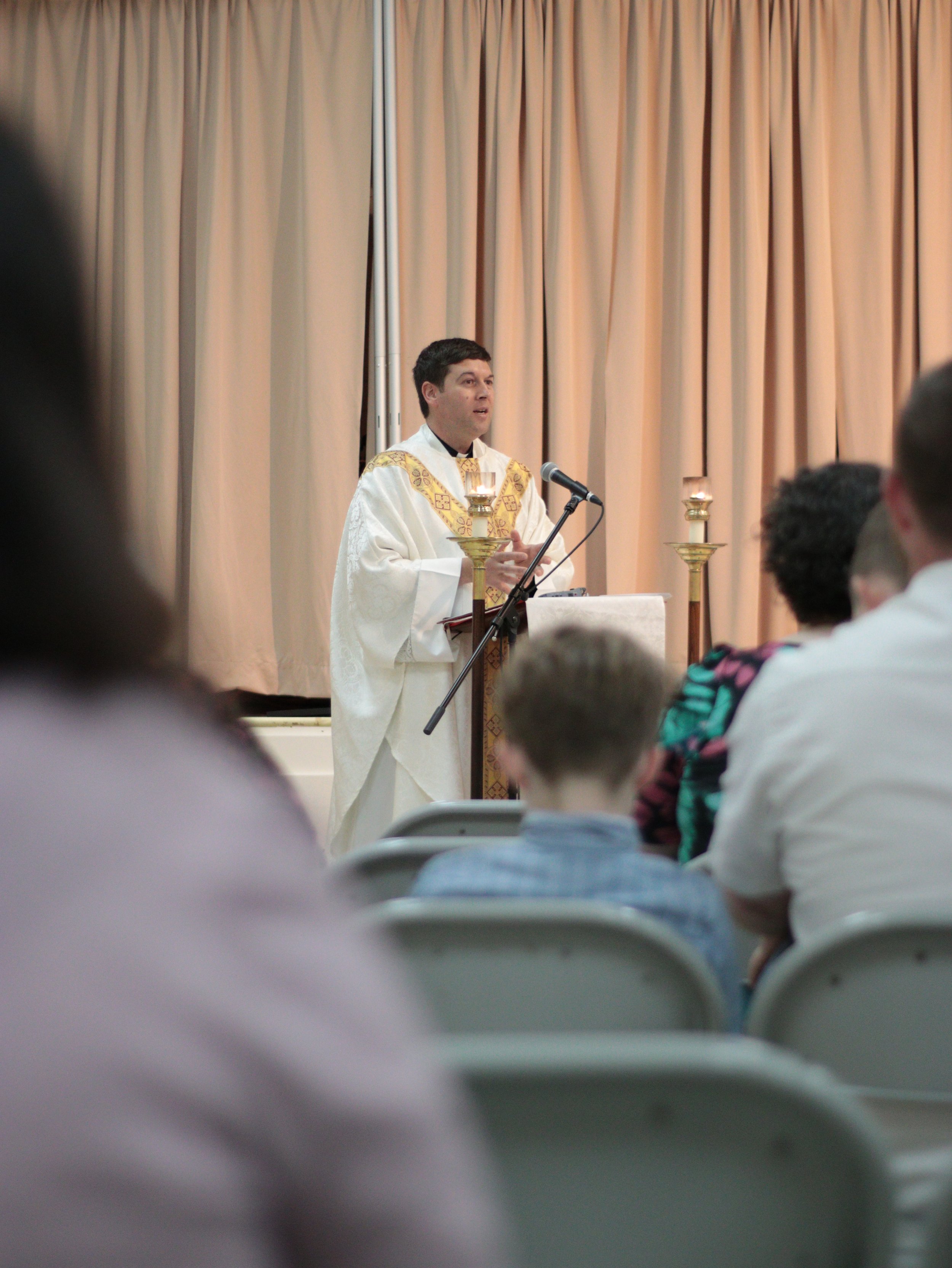
Good evening! My name is Chip Webb, and I'm a member [who serves as senior warden] here at Corpus Christi Anglican Church. [Before I begin, let us pray. Oh, Lord, may the words of my mouth and the meditations of all your peoples' hearts be acceptable in your sight, oh, Lord, our rock and our redeemer. Amen.]
This is the night, as we heard in our opening exhortations at the start of the service. This is the night, the most sobering night of the year, the most sobering night of the Church calendar for those of us who are Christians. It is not the most wondrous night—that would be Christmas Eve, when we all, like little children, like the little drummer boy, gawk at the baby lying in the manager, the wonder of our lord and savior Jesus Christ in his incarnation. It is not the most convicting night—that would be Ash Wednesday at the start of our Lenten journey, when we take stock of our lives in confessing and repenting of our sins that we commit both as individuals and collectively. It is not the most anticipatory night, for that would be the night of Holy Saturday, when we relive how all of creation and all of history strangely tingled in their uncomprehending anticipation of the new creation that would dawn with the resurrection of our lord and savior Jesus Christ the following morning. It arguably might be the most solemn night of the church year, but Christmas and Holy Saturday are stronger contenders for that title, and one could even make a case for Ash Wednesday. But this is the night, the most sobering night of the year in the events that it commemorates. This, of course, is the night of Maundy Thursday.
This is also the night of the first day of the Triduum. With tonight's service [as Fr. Morgan has mentioned], we are liturgically entering the three days of Holy Week that the one, holy, catholic, and apostolic Church provide us as a gift every year so that we can walk in the manner of Jesus's disciples through critical events in the life of our lord and savior Jesus Christ, and indeed of salvation history. Triduum is a Latin noun that comes from the word tres, for three, and dies, for days—Triduum, three days. Maundy Thursday, which we are observing now, Good Friday, tomorrow, and Holy Saturday, on Saturday make up the Triduum. And if we follow the disciples throughout these three days spiritually, observing the hours of each day by prayerfully meditating on what the disciples were doing at the approximate moments in time and seeking to place ourselves with them where they were, it can be an incredibly intense and beneficial spiritual experience. We'll be looking at examples of what that might mean a bit later, but for now, let's just keep in mind that these three days are a greater gift to us spiritually than we could ask or imagine.
Meanwhile, what about Maunday Thursday? When I first started attending an Anglican church three decades ago now, this service was an unknown to me. Maybe it has been to some of us before tonight. If so, welcome to the mystery—and tonight's service touches upon several mysteries! It's a joy to have you! This is the night when we most fundamentally follow the Church's history of holding a service showing the institution of the Holy Eucharist, which some Christian traditions instead call Communion or the Lord's Supper. We have evidence of a Maundy Thursday mass as far back as the Council of Hippo in 393 BC, according to the Dictionary of the Christian Church. Originally, there were several elements to the service, including the blessing of holy oils, which still continues in some Christian traditions today, and the reconciliation of penitents, which does not. There were originally several masses held on Maundy Thursday, but by the mid-20th century the number had reduced down to one evening liturgy. In understanding the word "maundy," it is probably easiest to think of the word "mandate," in other words, a command. Maundy Thursday is so named for the time not only when the institution of the Eucharist is commemorated, but when the Church recognizes the new commandment that our lord gave us that night: to love one another.
And I would like to suggest that there are three primary ways in which "this is the night." These three ways cover much of the same ground as the four opening exhortations at the start of the service, but they are more general and have broader implications than those exhortations. This is the night:
1. When the true nature of our lord and savior was revealed
2. When our lord and savior provided strength for every Christian's spiritual journey
3. When our lord and savior's ultimate struggle began
1. This is the night when the true nature of our lord and savior was revealed.
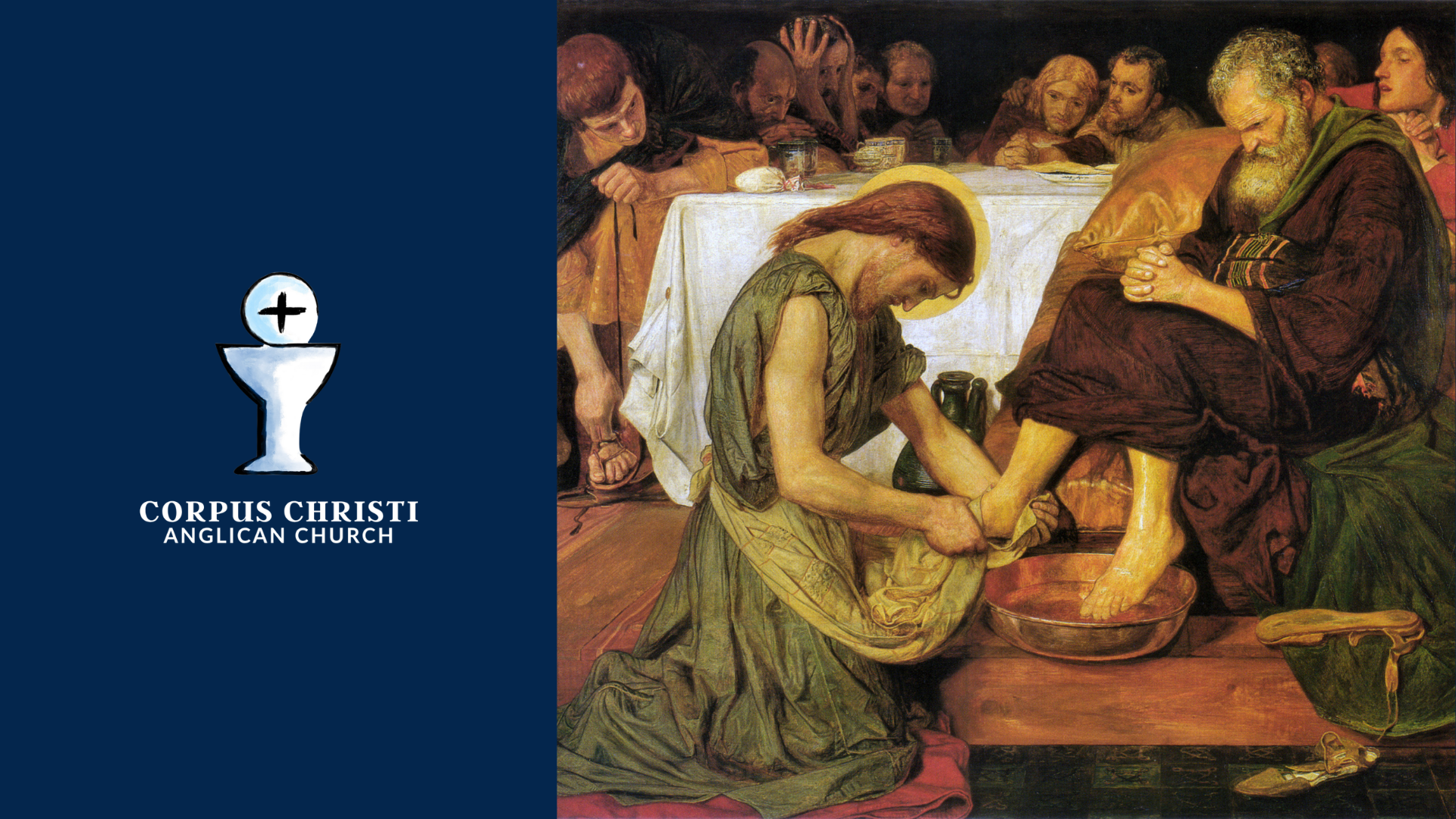
The apostles had known Jesus in many ways—as lord, master, teacher, and perhaps most of all, as the only one to whom they could go because he had the words of eternal life. On top of that, even if they didn't understand or fully comprehend him, they had heard him talk about himself as, and in some cases demonstrate himself as, the bread of life, the water of life, the light of the world, and the resurrection tand the life. And yet even with all of that—and perhaps because all of that—to see Jesus get up from their meal, take a towel, fill water into a basin, and apparently silently begin to wash their feet perplexed them. Here is the one who just a few days earlier had ridden into Jerusalem on the foal of a donkey to cries of "Hosanna," in accordance with Old Testament prophecy; who threw out the moneychangers from the temple; who had discussed weightier matters of the law with scribes, Pharisees and Sadducees; who had pronounced a series of woes upon the Pharisees that could not have helped their cause—and who now was stooping down to wipe off their dusty, sandy, possibly calloused feet. This did not make sense! Would-be messiahs didn't do that! Here is a mystery—and an offensive one, at least to Peter, and probably to a lot of the other apostles. I remember my first Maundy Thursday service, and while I was not offended by seeing foot washing enacted, it was something unfamiliar and new to me. And to the apostle John, it was so inexplicable that he could only define it as a supreme example of Jesus's love for them, in John 13:1.
And what about us in comparison with the apostles? With what we have revealed to us of Jesus in the Scriptures, on the other side of their Holy Spirit–inspired understandings of, and reflections on, Christ that developed after his death, we have more reasons to be astonished, and more cause to feel that we have entered a mystery. Jesus after all, is the one by whom, in whom, and for whom all things were created, as we read in Colossians 1:15–17. Let's tease this out a little bit. The very hands and fingers that set the stars in the sky and that even now, to use a 1970s catchphrase, holds the whole world in his hands, now took up a towel, filled a basin with water, and washed the feet of 12 people whom he had created. Wow! Let's take this a step further and make this personal: What does it mean to you, to me, to each one of us, that our creator would do that to each one of us—and for all we know, might do that to us one day when we see him face-to-face? Let's meditate on that; ponder that; take time to let that truth work its way into our hearts.
What this shows us fundamentally is that Jesus is at heart a servant. Jesus is at heart humble. And Jesus is at heart loving. The apostle Paul, in trying to explain this mystery, came up with a complex thought: "Have this mind among yourselves, which is yours in Christ Jesus, who, though he was in the form of God, did not count equality with God a thing to be grasped, but made himself nothing, taking the form of a servant, being born in the likeness of men" (Phil 2:5–8). There's a lot there, but at the most basic level, Jesus willingly chose to be a servant and gave up all of his privileges—the privileges of being God— to become incarnate here on Earth and serve humanity. By nature, he is God, but he chooses to serve, and that service goes against our understanding of what God should be like but is inseparable from his deity. Perhaps this servanthood helps explain how Jesus could tell his apostles later that evening that he no longer called them servants but friends. A creator who willingly gives up his privileges to come and live and die as one of us in the form of a servant willingly makes himself a friend. In any case, this is the night when the true nature of our lord and savior was revealed, and that nature is one of a God who is a servant out of love for all of humanity.
2. This is the night when our lord and savior provided strength for every Christian's spiritual journey.
The Church can be described in several ways, including as the organic body of Christ, where the Church is the people, and as the mystical bride of Christ. But perhaps a fairly unpopular way of viewing the Church today, given our societal distrust of institutions, is nonetheless a thoroughly biblical and Anglican one: as the institution designed by God for the provision of word and sacrament to humanity. God gave us the Word, Jesus, and we encounter Christ in one sense through the Scriptures, of which the Church is the guardian. Through its preaching and teaching, the Church provides word to humanity. And yet it also provides sacrament, and of the two dominical sacraments, the one we feed upon week after week after week is the Holy Eucharist, in the consecrated bread and wine. The Holy Eucharist is bread and wine for the journey of the Christian life, designed to give strength for the journey of the Christian life. In fact, a Latin term for the Eucharist, viaticum, means provision for the journey! John, interestingly, does not give us a direct account of that sacrament's institution in his gospel, but two other passages this evening either alluded to or described it. First, our psalm reading this evening from Psalm 78 gave us a picture of the prototypes of the bread and wine in God's supply of manna and water for the Israelites in the wilderness. In the life experiences of the Israelites, the apostles, and us, one major commonality is that the sustenance provided comes from God's initiative out of his grace; it is not anything that any of us do to earn it. This is again a sign of God's love for his people, that he would provide for human beings in the various wildernesses through which they travel. The second passage where we more directly read of the 3. of how Jesus instituted the Eucharist.
Now there's a lot that could be said about the Eucharist, and you can get quite a bit more from our introduction to Anglicanism class that is held once or twice a year, but even then you will barely scratch the surface. One thing important to point out is that for those of us who are Anglicans, unlike in some other Christian traditions, the Eucharist is not just a memorial of what Jesus did as outlined in 1 Corinthians and the gospels of Matthew, Mark, and Luke. Rather, it is a present intaking of sustenance by God's grace for the Christian journey in which we really do feed upon the real presence of Christ, and as a result we are by God's power strengthened in our faith as members of Christ's body, the Church. It is good to remember what Jesus did in the institution of the Eucharist; it is even better to actually feed upon him. In part, this is because, as the Anglican Puritan author Richard Sibbes wrote and other Anglican Christians have affirmed, "faith knoweth no difference of time" when we read or hear Scripture. In other words, the reader or hearer with faith experiences things described as being in the past or future in the Scriptures as if they are occurring in the present. This, in turn, means that we have a real connection with saints of the past and future when reading and hearing Scripture with faith. So we pray near the end of our Eucharistic liturgy, "We thank you for feeding us with the spiritual food of the most precious Body and Blood of your Son our Savior Jesus Christ; and for assuring us in these holy mysteries that we are living members of the body of your Son, and heirs of your eternal Kingdom" (BCP, 137). We find ourselves in Christ, and in his Church, as we partake of the Eucharist.
Fun fact here, for certain fiction readers and/or moviegoers: what popular and famous book and/or movie contains an intentional literary stand-in and parallel for the Eucharist? The Lord of the Rings. The bread lembas, which the hobbits receive from the elves of Lothlorien, is a bread "given to serve you when all else fails," as J. R. R. Tolkien wrote in The Fellowship of the Ring. So let's pause and reflect for a moment: What might it mean for any one of us to look at the Eucharist as an aid for when everything else fails? Or, if you prefer not to use Tolkien's appropriation of the idea, how can we better come to see the Eucharist as strength for our journey? Or, what does it mean to follow a savior who so loved us that he gave us such food to strengthen us? So this is the night both when the true nature of our lord and savior was revealed, and when he provided all Christians with strength for their spiritual journeys.
3. This is the night when our lord and savior's ultimate struggle began.
Our liturgy will end tonight with a reading of Psalm 22, during which we reflect on the opposition Christ through his various trials after he and the apostles left the upper room, culminating in his death. Often, we Christians think of our lord's sufferings on the cross and immediately beforehand; however, the late Christian author Fulton J. Sheen, who was a 20th century Roman Catholic bishop, notes in his book Life of Christ that "[i]t is very likely that his agony in the Garden [of Gethsemane] cost him far more suffering than even the physical pain of Crucifixion, and perhaps brought His soul into greater regions of darkness than any other moment of the Passion, with the possible exception of the one on the Cross when He cried: 'My God, My God, why hast thou forsaken Me?'"
It's not in our Scripture readings for this service, but let us briefly bring to mind that agony that our lord and savior suffered in the garden. Let us reflect upon the loneliness he felt at his three closest friends— Peter, James, and John—not being able to keep watch with him while he prayed. Let's remember the blood that fell from his forehead hours before he ever went to the cross or had a crown of thorns placed on his head. Christian songwriter Michael Card wrote in his song "In the Garden":
"Trembling with fear
Alone in the garden
Battle before the final war
Blood became tears
Alone in the garden
To fall upon the silent stone
There in the darkness the Light
And the darkness stood still
Two choices, one tortured will
And there once the choice had been made
All the world could be saved
By the one in the garden"
Brothers and sisters in Christ, let us think of what our savior suffered for you, for me, for everyone in the garden. Why does this matter? Why, oh why, does this matter? Because we will face unimaginable trials in our lives during which our lord and savior appears to be either absent or painfully inactive in helping us undergo things that even might threaten to destroy our faith in him. Can you think of such a time in your life? I know that I can. There are times when there is a horrible silence from God. As the late Rich Mullins wrote to Jesus in his song "Hard to Get,"
"Did you ever know loneliness? Do you ever know need?
Do you remember just how long a night can get
When you are barely holding on, and your friends fall asleep
And don't see the blood that's running in your sweat?
Will those who mourn be left uncomforted
While you're up there just playing hard to get?"
Those feelings that we experience or will experience are real. God does seem to play "hard to get" at times. They are not invalid and they are not wrong. Lament can be a powerful Christian discipline, rightly practiced. And still Gethsemane tells us that yes, Jesus knows what it is like. The same love that led him to become a servant for us and that led him to institute the life-giving bread of the Eucharist for us led him to suffer for us. And because Jesus has experienced silence from God himself, both in Gethsemane and on the cross, our faith can be strengthened.
And so Jesus the servant who has just instituted the Eucharist leaves the upper room for Gethsemane, where he will suffer and have to face the ultimate choice to submit to God's will and proceed to the cross. I hope that you can see from these reflections just how important Maundy Thursday is. This is the night when the true nature of our lord and savior was revealed. This is the night when our lord and savior provided strength for every Christian's spiritual journey. This is the night when our lord and savior's ultimate struggle began.
Well, this night is just the start of the Triduum. We can observe the hours the next few days, reflecting more on Gethsemane tonight, walking with Jesus and his apostles through his arrest and trials and then the cross tomorrow, and reflecting on what the apostles and other disciples must have felt on Holy Saturday. We can weep at times, if we feel moved to do so. We can think about whether we are more like Peter, in denying Christ; more like John, in observing things and reflecting on Jesus's love; more like Mary, at the foot of the cross—those are just some examples. But tonight, after the Eucharist, we will not take the Eucharist again until we celebrate our lord and savior's resurrection during the Easter vigil or on Easter morning. Just as he was separate from God, so we shall be separate from him as we know him in the body and blood. Live into that! And tonight, when the altar is stripped, let us experience it as if our souls are being stripped. Live into the desolations of the next few days, so that the consolations of Easter might be greater. This Triduum is a great gift that the Church offers us. Let us take advantage of it, to the benefit of our souls and of our faith.
In the name of the Father, and of the Son, and of the Holy Spirit. Amen.

Maundy Thursday: Kingdom Expectations

TranscriptioN
Good evening. Good evening. I'm Alexei Laushkin, a member here.
Let's pray. Gracious Father, we thank you for this holy set of services. We ask that you would be with us and help us not to miss the many things that happen in these next several days.
In the name of Jesus, amen. Kingdom expectations. You may, with the uncertainty that many people have faced in the Washington area, or you could think about a time where you've also faced uncertainty, maybe recently or in the past, you may remember the day before an uncertainty began, right? Things seemed normal and fine.
I was recently at a conference, and the conversation centered around 9-11, and we heard from a speaker who was in the White House in the morning, and it was prior to everything that happened on that horrible day, and he had sent an email to another colleague saying, most boring day of the Bush presidency, not knowing what was about to happen. Calamity, uncertainty, expectation, kingdom expectations. We're moving from Palm Sunday into this moment with Jesus and his disciples, the reclining at table, and I want you to get into the disciples' minds as best we can, ask God to be in our hearts and maybe think about what might be on their minds.
They've been with Jesus going on now three years. They've seen him perform miracles. They've seen him stay away from Jerusalem for the most part.
They've seen him recently raise someone who was dead, right? They've seen the crowds in this big festival say, Hosanna, Hosanna. And they think to themselves, this is it. This could be the time.
I want you to imagine this could be the time that the Messiah returns, the kingdom is restored. Just think what's about to happen and what verses might go through their minds. What do they think might happen next? Maybe they think about King David, right? If you can think about how King David ascends to the throne, there's a variety of calamities and difficulties and wars and battles, and perhaps they think to themselves, this is the time.
Or they could think about, in the passage we just read, the Exodus, the many motions that it took for deliverance from God's people to finally make it to the promised land. What they're probably not thinking about is betrayal that same night. That's probably not what they're thinking about.
That what would happen next would be an instantaneous collapse. They're probably not thinking about that. And so they're in this moment thinking about what will occur next.
They're in Jerusalem, and Jesus gives them something surprising to think through, and I'll get to that in a moment. But I want to get at some themes as we think about Easter and we think about our time with Easter. I think we have a tendency, and certainly I do, where we'd like the triumph of death over life, the triumph of Jesus over sin.
We'd like, and we have a tendency to think in very kind of binary ways. It's a celebration of good over evil, and in some ways that's very true. It's a celebration of life over death, and in some ways that is also very true.
But it is also a restoration of God being present with his people over a time in a way that the temple itself wasn't really able to do. And Jesus is the holy temple, and I think this gets to a bit of the meaning about the foot washing and why we have the foot washing this particular night. So if you think a little bit about the children of Israel, it's not by accident that in our reading tonight, this is another way to put it, that Judas is present.
It's not by accident that in the epistles, when we're asked to push away evil, that we're also given teachings to judge not least we be judged, or not to, if you know the parables of the wheat and the chaff, not to necessarily pull up that which is evil among us. And I want us to meditate a little bit on this as we're thinking about this new commandment that in many ways is being given in the midst of a betrayal that's going to happen that very night. And I want you to think about this in relation to our Christian life and that process for these next several days of what it looks like to have our inner hearts cleaned and cleansed.
Jesus is doing something wildly unexpected. And I think that when we often think about the Easter story, a story that's so familiar to us, the foot washing also somewhat familiar, the vigil pieces familiar, I want us to invite us to enter into the shock and expectation of the kingdom of God as we start this evening, the wildness of what's about to happen. And the first wild thing, just to repeat it from as I started, is that the disciples don't expect what's going to happen.
There's a shock process that happens. The second thing I think with foot washing, remember we're getting ready for service tonight and someone in my family was like, oh, foot washing, it's kind of, it's a little gross. It's uncomfortable.
But I think for those of us who've done foot washing before, it's also very familiar. So there's this tension of like it's a little bit of a stretch, but it's also a bit uncomfortable, but it's also a bit familiar. And I want to get us back into the shock, the expectation of the evening, the shock of the evening.
So this is from Bishop Barron. He was doing a sermon a few years back, and he was talking about the shock of what it would be like. And I want you to imagine that you've been invited to a very fancy dinner.
If you're a sports person, pretend your favorite sports star is there. If you're someone who likes shows, pretend someone very famous. You know, very fancy house.
It's a home for the sake of conversation. It's in McLean. It's a big home.
Someone, you know, with a nice suit. They've invited you in. The car is taking you out.
It's a table. Let's make it close to what's happening this night. So maybe it's about 15.
You're one of the 15. And your favorite star, and let's pretend we all have shoes that, you know, could be cleaned, takes out shoe polish and decides to go person by person before appetizers are served to polish your shoe. You would find it shocking.
You might even say you don't need to do that. It's a little bit, you know, shoe polishing is something people do, but it's not something people do all the time. And to have someone take off their tuxedo or make it a little easier for them to get at your shoe, it would feel really uncomfortable.
And this is the setting that we have when Jesus is taking out his outer garment. Jesus is taking his place, is putting himself in the position not just of a servant but of one of the lowliest servants. It's not every servant who would do the feat.
It usually was the lowliest servant. And you can see that Peter is just shocked. He says, I don't want this.
This is Peter who has seen Jesus do some pretty incredible things. And Jesus gives him this kind of a bit of a get thee behind me Satan sort of moment. Like this is something you must do to be part of the kingdom of God.
And then Peter says, well, okay, all of me. He says, no, it's okay. We don't need to do all of you.
And so it's this command and it's this flipping. And in many ways, it's the cleansing of the temple that we saw happen in Palm Sunday, but we see happen with his disciples, a cleansing of the temple. And I want us to think a little bit about this and a bit about the brokenness that all of this represents and Jesus' hope for this night in ways that are really unexpected.
This is not, again, a narrative the disciples are thinking about or think what would happen. So the temple is a place and just where God's glory is dwelling for Israel. It is the center of the worship life of Israel.
And I'm going to go out of Ezekiel a little bit here just in a moment. But I want you to think about the history of Israel for a moment. The history from the Exodus through Solomon is not necessarily a history where everything's going well.
It's not just a positive, joyful moment. You have enmity. You have sorcery.
I'm just giving you some of the highlights. You've got people who make our current day politics look nice and easy. It's a difficult set of generations in terms of what's happening in Israel.
And through all of that, God is still present with his people and eventually with the temple under Solomon's time. So it's not the case. I think sometimes we get the sense when we're reading the Old Testament where we sort of think, well, they sinned.
They just weren't good enough. God left them. And so then he needed to send his son.
And thank goodness we don't have to deal with all that religion in the way that they had to deal with it. I'm being very simplistic just to get us into that mindset. But what I'm trying to help you think about with the radicalness of Jesus and God's rescue plan for all of us is that God is not— but he's also very patient.
There are things happening in Israel that are really difficult and bad, and his glory hasn't left. He hasn't abandoned his people. There's judgment, but there's not abandonment.
But there is a portion, and I just want to give you a sense of what some would be thinking about around Jesus in Ezekiel 10, where there is a pronunciation that God's judgment, God's presence would leave the temple. So I want you to think about that. We're going to be tying this into foot washing in a moment.
This is Ezekiel 10, 15. Then the cherubim rose upward. There were the living creatures I had seen by the Kibar River.
When the cherubim moved, the wheels behind them moved. Did it pause there? So if you hang around Anglicans long enough, you're going to realize that the angels aren't just like the little creatures— the cherub—they're not just like little babies. It's a very Western picture.
You're going to see a much more complex picture of what angels look like. So if you're wondering what Ezekiel is referring to, he's actually talking about the angelic, not what you might see at Hallmark. When the cherubim stood still, they also stood still.
When the cherubim rose, they rose with them, because the spirit of the living creatures was in them. Then the glory of the Lord departed from over the threshold of the temple and stopped above the cherubim. While I watched the cherubim spread their wings and rose from the ground, and as they went, the wheels went with them.
They stopped at the entrance of the east gate of the Lord's house, and the glory of Israel was above them. These were the living creatures I had seen beneath the God of Israel by the Kibar River, and I realized that they were cherubim. Each had four faces and four wings.
And so in this Ezekiel passage, it's heartbreaking. And Ezekiel itself is a bit of a mysterious book of prophetic writings. But it's heartbreaking.
You see the spirit of God leave by the east gate. Now we have something in Ezekiel 43. A little bit further.
This is a prophetic utterance about the future. And in Ezekiel 43, you see, this is verse 3. The vision I saw was like the vision I'd seen when he came to destroy the city, and the vision I'd seen by the Kibar River and fell face down. The glory of the Lord entered the temple through the gate facing east, and the spirit lifted me up.
And so Ezekiel's talking about a time when the glory of the Lord will return. And in our gospel reading for Palm Sunday in Mark, it makes mention that Jesus himself is coming from the east, very intentionally. That the spirit of the Lord will be returning to the temple.
Jesus himself says, I am the temple. Right? And so on this night, where you might expect a plan to, the disciples might expect an eventual plan to reassert temple worship in a new way. I mean, there's lots of ideas about what would it look like for the Messiah to return.
Instead, you get this cleansing element where Jesus himself embodies what is to occur next. That instead of a dynamic where you need to be, and I'm thinking about these unexpected moments, maybe these moments that you've been in. But instead of pushing into, I need to do everything I can to make sure, you know, let's think of American things that we want, right? That there's provision for my children.
That I'm able to have a sustainable job. If you're in a different life circumstance, that I have a good and fulfilling career in future. That I do well by doing right.
That hard work, fair play leads to a good life. All these American isms related to success and how, when we feel uncertain, we want to cling to that success. And here is Jesus in this act of foot washing, actually giving us the opposite example.
We don't have to be held captive by the sin that so easily entangles our lives. We don't have to be focused on any other reality besides the temple and the spirit living in us through Christ. This night, before he is betrayed in just a few hours as we go through it, he is not coming with an army.
He is not coming with a political agenda. He's not coming with, here are the 30 ways that we're going to chase the Romans out of Jerusalem. All these things could have been on the disciples' minds.
I'm not saying they all were. But this is a way that God had reinstituted his kingdom in the past. Instead, he's coming to turn our very desire to put ourselves in the center of our lives and say, no, I who could say that's what we should all be doing, instead I'm going to humble myself.
The God of the universe is going to humble himself and wash his disciples' feet and say, go and do likewise. He's going to be ultimately emptying himself out completely and totally. And in those words of communion that are also related to this evening, that's what we have week after week, this emptying of self, this turning and cleansing of the temple.
But it's not the sort of turning and cleansing that says, well, all the evil, out the door. All that is wrong, be gone. In many ways, it is a seedling that will grow and outgrow the sin that's in the world.
But the difficulties, the Judas's of our life are still present at this same table. And so as we enter into this Easter season and we start thinking to ourselves, I'm not yet, Lord, the sort of person I ought to be in Christ, which is sometimes maybe this can come up for you. I'm not yet where I wanted to be this Easter.
If you're like some of the folks I interact with day to day or week to week and pray with, I had a terrible Lent. I did nothing for you, Lord. Very Anglican problem.
However you enter into this evening, know that this is not the table or the process for the very, very good and those who try very, very hard. Instead, it is the grace to enter into your life as it is right now. It's the unexpected presence of God in our vulnerability, in our difficulties, in the moments that don't seem to add up.
And yet the glory and the grace of the Lord is present with us tonight. And as we move into the foot washing in a moment, I know it is it is a vulnerable act. It is uncomfortable at times, but however you enter in, whether you come up or you sit and pray, let the Lord touch you and know that this is the way he wants to serve you.
Let the foot washing be an example of the of the way that God is ultimately serving your greatest need in this moment. Because at this night of greatest importance, in this time that is commemorated for all time, our Lord Jesus Christ takes the path of humility and the path of service and commands us to do likewise. Let us pray.
“Gracious Father, we thank you for this evening and we thank you for this holy time. We ask that you would meet us whatever has happened in our weeks and in our days and wherever we are with our walks with you so that we might have Easter be born in our hearts into everlasting life. Amen.”
Transcribed by TurboScribe.ai. Edited by the Vicar.