Second Sunday of Christmas: Did We Just Forget Jesus?!
CONTENT
Introduction
Good morning friends and Merry Christmas. We are nearing the end of Christmastide and this morning we get a fascinating window into the childhood of Jesus. This glimpse into the 12-year-old Jesus shows us something of the clarity that Jesus had about his own call. He takes the initiative to expand his parents’ own view of his ministry. As I’ve thought about this passage this week, I think that something it teaches us is that we need to stay where Jesus is; he will break through norms and expectations we have; and when he does this, it is an invitation to ponder rather than to go back to what is comfortable or familiar.
As we look at our gospel passage together, let me pray for us “In the name of God, the Father, the Son, and the Holy Spirit. Amen. Lord, may the words of my mouth and the meditation of our hearts be always acceptable in your sight, O Lord, our rock and our redeemer. Amen.”
1) Forgetting Jesus: Regardless of our piety we can move along and lose a sense of where Jesus is confidently ministering vv. 41-45
In our Gospel passage we meet Jesus as a pre-teen. He isn’t old enough to make his covenantal vows (which would have been 13), but he is starting to learn the vows he will make. This is a season for him of intensified catechesis as he prepares for manhood. Mary and Joseph make their way to Jerusalem for their annual pilgrimage. Normally it is only required that the male from the family go on this pilgrimage, but the fact that Mary and Jesus come with him tells about the piety of the holy family. They are devoted to God and want to raise their son with a sense of rootedness in the tradition of the Torah.
When people travel up to Jerusalem they do so in caravans for safety. It was likely their caravan had people they knew and trusted. It was a two-day walk from Nazareth to Jerusalem. They would walk a day, stop in the middle, stay overnight, fuel up, and hit the road again, arriving on the second day. After the seven days in Jerusalem, Mary and Joseph join the caravan and make it a day’s journey toward Nazareth. Perhaps they thought Jesus was with the other kids or friends in the caravan. He’d turn up when they got to their stop. But to their surprise, when they get to their stop, Jesus is nowhere to be found! Mom and dad are terrified!
The text doesn’t blame the parents at all. In fact, some have even wondered if Mary might have been the source of this narrative. Perhaps Mary had written his down in her journal of memorable moments from Jesus’ childhood and then told Luke about it later. We don’t know. But this is certainly memorable.
There is a helpful lesson for us in this. Mary and Joseph were incredibly pious god-fearing people and somehow they still ran along and left Jesus behind. I wonder if there might be a word of caution for us to look for where Jesus is and not to charge ahead and just assume he is in this or that scheme with us. There are so many directions we want to go, good things we want to start, but we often forget to ask if Jesus has asked us to go there or to do that thing. It’s a helpful caution for those of us who like to charge ahead and accomplish a great many things.
I remember working on a website and was hoping to keep that job while I helped as an associate to plant another church. The reality is, though, that I couldn’t keep three jobs and fundraise for the thing I felt God was calling me to do. God in his kindness allowed our grant money to run out for the website. It was really painful. I tried to get an NEH grant and didn’t get the votes I needed, but looking back, I would have tried to push ahead on too many things, so God’s “no” to that project was a kind invitation to something else that felt more risky, but it was the very place he was at. Perhaps you’ve also experienced God’s no to something meaningful. It is painful.
I can’t tell you the 5 easy steps to find Jesus in decision making and I’m distrusting of anyone who can; but what I can say is that the first step to locating Jesus is to look for him. One of the tools that I find really helpful is to have a regular examen. St. Ignatius of Loyola has a really helpful one that is simple to use. Just search for Ignatian examen and you’ll find it. It is a great tool for decision making. This is a great way to pause and make sure you are paying attention to where Jesus is in your day and what he is asking of you or not asking of you.
2) Breaking expectations (the surprise of Mary and Joseph) vv. 46-47
We have seen how this text encourages us not to forget Jesus. Now we’ll look at how Jesus breaks our expectations. Joseph and Mary know their Old Testament and the prophecies about the Messiah. We have recorded miracles about shepherds and Magi visiting them. We have heard about angels coming to them at various points. What we aren’t told much about is the day-in-and-day-out raising of this child. They do this trip every year and for the last 5 or 6 years, since they got back from Egypt, there had been no problems.
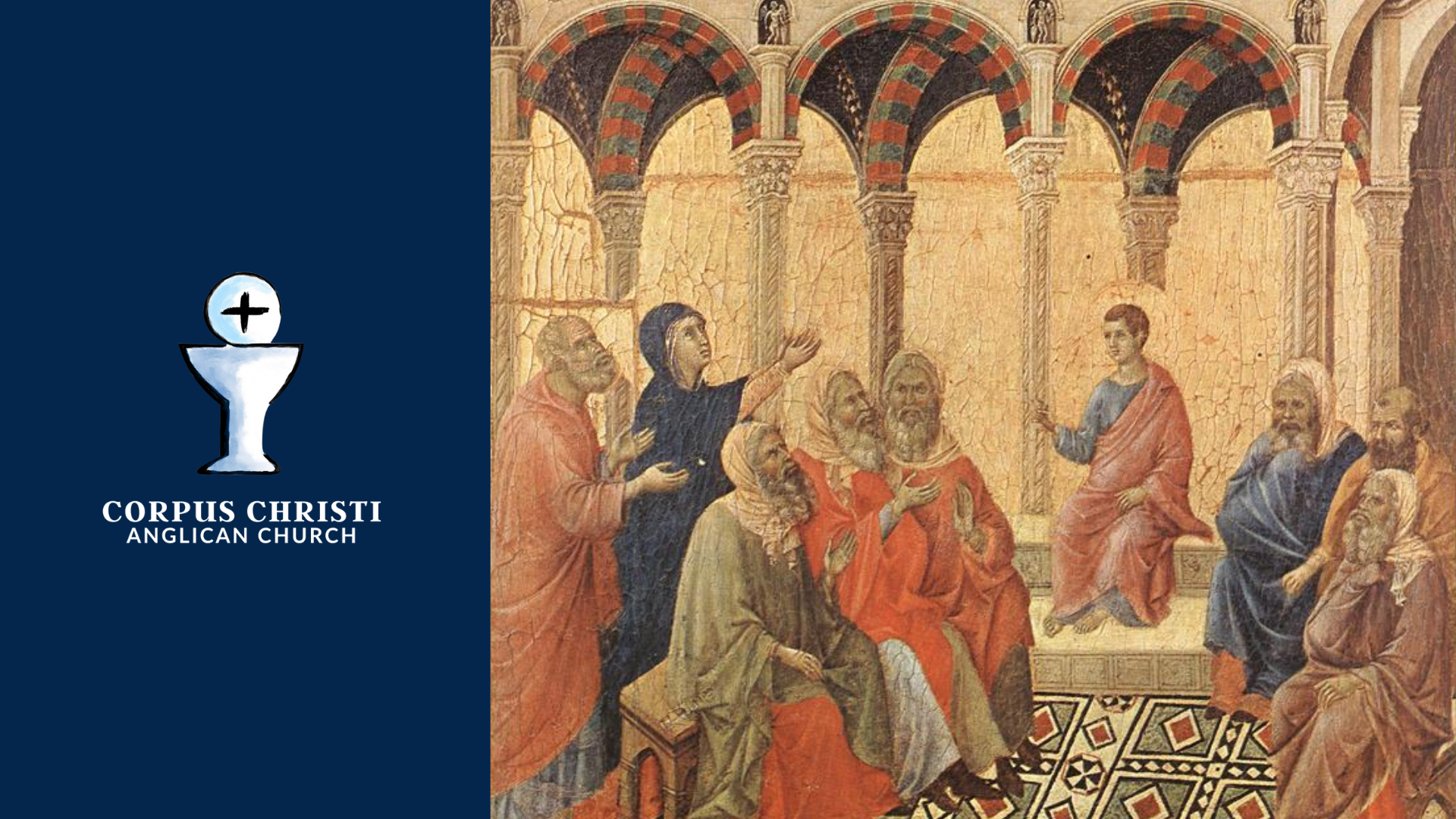
Mary and Joseph in their anxious fear make the long walk back to Jerusalem and they find Jesus in the temple area listening to the teachers and engaging with them. When they find him they don’t say “how could we have done this to you?!” Instead, Mary says, “Child, why have you treated us like this? Look, your father and I have been searching for you with great anxiety!” We definitely see the humanity of his parents here. The words that Jesus offers to his parents are a mild and respectful rebuke, and offer us the whole reason this story is recorded. Jesus says “Why were you searching for me? Did you not know that I must be in my Father’s house?” It could also be translated “about the things of my Father?”
These are the first words of Jesus in the Gospel of St. Luke. They occur well before he is baptized and begin his public ministry. There is an incredible security and self-understanding involved in this 12 year old which likely came from what his parents told him about himself! Little kids are kind of a mirror for how we parent. When your kids are like 4 or 5 you’ll watch them put their stuffies to bed the way you bed them to bed. You’ll see them exhort or rebuke their dolls or stuffies the ways you’ve exhorted or rebuked them. In those first 6-7 years they receive a lot of scripts about themselves and the world around them. When Jesus says this to Mary and Joseph, I can imagine a bit of embarrassment as Jesus has just echoed back the things he has learned about himself from them back to them. But they didn’t expect it to look like this!
That is a helpful reminder in following Jesus. Jesus cannot be constrained by our images of him or what he can do. As we follow Jesus, he will lead us to places we never thought we’d go, but he is also with us in wherever he leads. And as we walk with Jesus, we join in his confident rootedness not in the tasks we accomplish or the vocations we have, but in our relationship to God.
3) Pondering Jesus: Take note of where Jesus shows himself strong and faithful vv. 48-52
We looked at searching for Jesus and not moving ahead without seeking him. We looked at how following Jesus will often change our expectations, and how our rooted position in His love is enough to ground us in those times. And finally, we join Mary in pondering Jesus. When the shepherds had visited and told her about the testimony of angels, we had this phrase about Mary pondering these things in her heart. After hearing Jesus tell her and Joseph something they believe but hadn’t fully teased out yet, she tucks it away for later. An early commentator, the Venerable Bede says this, “As before, when she conceived the Word itself in her womb, so now does she hold within her his ways and words, cherishing them as it were in her heart. That which she now beholds in the present, she waits to have revealed with greater clarity in the future. This practice she followed as a rule and law through all her life.”[1] The virgin Mary exemplifies discipleship here and invites us into the same. She had born the Word and now is hearing and marking the words and teachings of The Word, who is now growing up before her very eyes.
The text, to clarify any confusion, does mention that Jesus went back with them to Nazareth, that he was obedient to them, and that as the years went on, he increased in wisdom and in divine and human favor. Mary made a note of this event and it was an opportunity for wonder at what was being done through Jesus. She could have tried to control things and tried to fit Jesus into her image of the child he had always been. She could have kept her mind closed off to what God was doing, but she opened herself to a bigger vision of the Messiah and to do this with her own son is a great act of faith.
Jesus is engaging with the teachers in a way that shocks people because it is so profound. Mary and Joseph’s anger and anxiety gives way to wonder as they contemplate who this child is becoming. It is a great invitation to wonder and marvel at the work of Jesus. Make it a habit to note the ways God has surprised you and been at work. Perhaps this is with the cultivation or re-cultivation of a surprising friendship, a conversation that encouraged you, the provision of your spiritual or physical needs, a surprising word of encouragement or challenge, a drawing from a child, or just a silent moment where God felt near despite the turbulence outside. Ponder these things in your heart and trace the story of the work of the Messiah.
Conclusion
As we close this Christmas season out together with a story of Jesus as a preteen, His first words of the Gospel are an invitation to us as well to be rooted in the love of God: “Did you not know that I must be in my Father’s house?”. We are reminded that we should stay where Jesus is. Don’t forget about him and move too far too fast, or even in the wrong direction. As you look for Jesus, be open to the fact that he will expand our vision for his work and his kingdom as he does things differently than we would have imagined. Finally, take time to ponder his mysterious working rather than returning again and again to what is comfortable.
Let us pray:
O God of peace, who has taught us that in returning and rest we shall be saved, in quietness and in confidence shall be our strength: By the might of your Spirit lift us, we pray, to your presence, where we may be still and know that you are God; through Jesus Christ our Lord. Amen.
[1] Taken from the Ancient Christian Commentary on Scripture.