
SERMONS
Archive
- October 2026
- September 2026
- August 2026
- July 2026
- June 2026
- May 2026
- April 2026
- March 2026
- February 2026
- January 2026
- December 2025
- November 2025
- October 2025
- September 2025
- August 2025
- July 2025
- June 2025
- May 2025
- April 2025
- March 2025
- February 2025
- January 2025
- December 2024
- November 2024
- October 2024
- September 2024
- August 2024
- July 2024
- June 2024
- May 2024
- April 2024
- March 2024
- February 2024
- January 2024
- December 2023
- November 2023
- October 2023
- September 2023
- August 2023
- July 2023
- June 2023
- May 2023
- April 2023
- March 2023
- February 2023
- January 2023
- December 2022
- November 2022
- October 2022
- September 2022
- August 2022
- July 2022
- June 2022
- May 2022
- April 2022
- March 2022
- February 2022
- January 2022
- December 2021
- November 2021
- October 2021
- September 2021
- August 2021
- July 2021
- June 2021
- May 2021
- April 2021
- March 2021
- February 2021
- January 2021
- December 2020
- November 2020
- October 2020
- September 2020
- August 2020
Second Sunday of Christmas: Did We Just Forget Jesus?!
CONTENT
Introduction
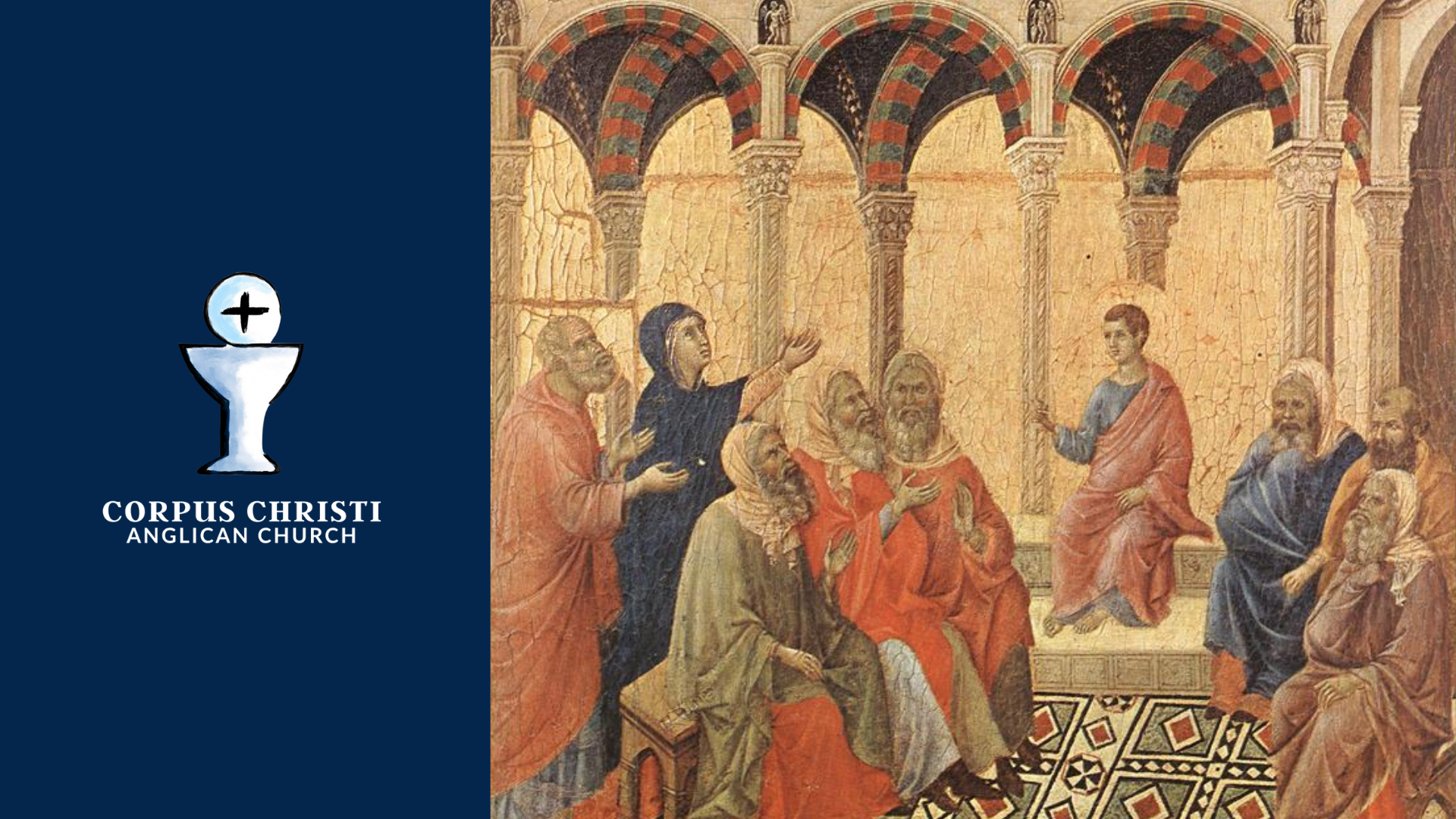
Good morning friends and Merry Christmas. We are nearing the end of Christmastide and this morning we get a fascinating window into the childhood of Jesus. This glimpse into the 12-year-old Jesus shows us something of the clarity that Jesus had about his own call. He takes the initiative to expand his parents’ own view of his ministry. As I’ve thought about this passage this week, I think that something it teaches us is that we need to stay where Jesus is; he will break through norms and expectations we have; and when he does this, it is an invitation to ponder rather than to go back to what is comfortable or familiar.
As we look at our gospel passage together, let me pray for us “In the name of God, the Father, the Son, and the Holy Spirit. Amen. Lord, may the words of my mouth and the meditation of our hearts be always acceptable in your sight, O Lord, our rock and our redeemer. Amen.”
1) Forgetting Jesus: Regardless of our piety we can move along and lose a sense of where Jesus is confidently ministering vv. 41-45
In our Gospel passage we meet Jesus as a pre-teen. He isn’t old enough to make his covenantal vows (which would have been 13), but he is starting to learn the vows he will make. This is a season for him of intensified catechesis as he prepares for manhood. Mary and Joseph make their way to Jerusalem for their annual pilgrimage. Normally it is only required that the male from the family go on this pilgrimage, but the fact that Mary and Jesus come with him tells about the piety of the holy family. They are devoted to God and want to raise their son with a sense of rootedness in the tradition of the Torah.
When people travel up to Jerusalem they do so in caravans for safety. It was likely their caravan had people they knew and trusted. It was a two-day walk from Nazareth to Jerusalem. They would walk a day, stop in the middle, stay overnight, fuel up, and hit the road again, arriving on the second day. After the seven days in Jerusalem, Mary and Joseph join the caravan and make it a day’s journey toward Nazareth. Perhaps they thought Jesus was with the other kids or friends in the caravan. He’d turn up when they got to their stop. But to their surprise, when they get to their stop, Jesus is nowhere to be found! Mom and dad are terrified!
The text doesn’t blame the parents at all. In fact, some have even wondered if Mary might have been the source of this narrative. Perhaps Mary had written his down in her journal of memorable moments from Jesus’ childhood and then told Luke about it later. We don’t know. But this is certainly memorable.
There is a helpful lesson for us in this. Mary and Joseph were incredibly pious god-fearing people and somehow they still ran along and left Jesus behind. I wonder if there might be a word of caution for us to look for where Jesus is and not to charge ahead and just assume he is in this or that scheme with us. There are so many directions we want to go, good things we want to start, but we often forget to ask if Jesus has asked us to go there or to do that thing. It’s a helpful caution for those of us who like to charge ahead and accomplish a great many things.
I remember working on a website and was hoping to keep that job while I helped as an associate to plant another church. The reality is, though, that I couldn’t keep three jobs and fundraise for the thing I felt God was calling me to do. God in his kindness allowed our grant money to run out for the website. It was really painful. I tried to get an NEH grant and didn’t get the votes I needed, but looking back, I would have tried to push ahead on too many things, so God’s “no” to that project was a kind invitation to something else that felt more risky, but it was the very place he was at. Perhaps you’ve also experienced God’s no to something meaningful. It is painful.
I can’t tell you the 5 easy steps to find Jesus in decision making and I’m distrusting of anyone who can; but what I can say is that the first step to locating Jesus is to look for him. One of the tools that I find really helpful is to have a regular examen. St. Ignatius of Loyola has a really helpful one that is simple to use. Just search for Ignatian examen and you’ll find it. It is a great tool for decision making. This is a great way to pause and make sure you are paying attention to where Jesus is in your day and what he is asking of you or not asking of you.
2) Breaking expectations (the surprise of Mary and Joseph) vv. 46-47
We have seen how this text encourages us not to forget Jesus. Now we’ll look at how Jesus breaks our expectations. Joseph and Mary know their Old Testament and the prophecies about the Messiah. We have recorded miracles about shepherds and Magi visiting them. We have heard about angels coming to them at various points. What we aren’t told much about is the day-in-and-day-out raising of this child. They do this trip every year and for the last 5 or 6 years, since they got back from Egypt, there had been no problems.
Mary and Joseph in their anxious fear make the long walk back to Jerusalem and they find Jesus in the temple area listening to the teachers and engaging with them. When they find him they don’t say “how could we have done this to you?!” Instead, Mary says, “Child, why have you treated us like this? Look, your father and I have been searching for you with great anxiety!” We definitely see the humanity of his parents here. The words that Jesus offers to his parents are a mild and respectful rebuke, and offer us the whole reason this story is recorded. Jesus says “Why were you searching for me? Did you not know that I must be in my Father’s house?” It could also be translated “about the things of my Father?”
These are the first words of Jesus in the Gospel of St. Luke. They occur well before he is baptized and begin his public ministry. There is an incredible security and self-understanding involved in this 12 year old which likely came from what his parents told him about himself! Little kids are kind of a mirror for how we parent. When your kids are like 4 or 5 you’ll watch them put their stuffies to bed the way you bed them to bed. You’ll see them exhort or rebuke their dolls or stuffies the ways you’ve exhorted or rebuked them. In those first 6-7 years they receive a lot of scripts about themselves and the world around them. When Jesus says this to Mary and Joseph, I can imagine a bit of embarrassment as Jesus has just echoed back the things he has learned about himself from them back to them. But they didn’t expect it to look like this!
That is a helpful reminder in following Jesus. Jesus cannot be constrained by our images of him or what he can do. As we follow Jesus, he will lead us to places we never thought we’d go, but he is also with us in wherever he leads. And as we walk with Jesus, we join in his confident rootedness not in the tasks we accomplish or the vocations we have, but in our relationship to God.
3) Pondering Jesus: Take note of where Jesus shows himself strong and faithful vv. 48-52
We looked at searching for Jesus and not moving ahead without seeking him. We looked at how following Jesus will often change our expectations, and how our rooted position in His love is enough to ground us in those times. And finally, we join Mary in pondering Jesus. When the shepherds had visited and told her about the testimony of angels, we had this phrase about Mary pondering these things in her heart. After hearing Jesus tell her and Joseph something they believe but hadn’t fully teased out yet, she tucks it away for later. An early commentator, the Venerable Bede says this, “As before, when she conceived the Word itself in her womb, so now does she hold within her his ways and words, cherishing them as it were in her heart. That which she now beholds in the present, she waits to have revealed with greater clarity in the future. This practice she followed as a rule and law through all her life.”[1] The virgin Mary exemplifies discipleship here and invites us into the same. She had born the Word and now is hearing and marking the words and teachings of The Word, who is now growing up before her very eyes.
The text, to clarify any confusion, does mention that Jesus went back with them to Nazareth, that he was obedient to them, and that as the years went on, he increased in wisdom and in divine and human favor. Mary made a note of this event and it was an opportunity for wonder at what was being done through Jesus. She could have tried to control things and tried to fit Jesus into her image of the child he had always been. She could have kept her mind closed off to what God was doing, but she opened herself to a bigger vision of the Messiah and to do this with her own son is a great act of faith.
Jesus is engaging with the teachers in a way that shocks people because it is so profound. Mary and Joseph’s anger and anxiety gives way to wonder as they contemplate who this child is becoming. It is a great invitation to wonder and marvel at the work of Jesus. Make it a habit to note the ways God has surprised you and been at work. Perhaps this is with the cultivation or re-cultivation of a surprising friendship, a conversation that encouraged you, the provision of your spiritual or physical needs, a surprising word of encouragement or challenge, a drawing from a child, or just a silent moment where God felt near despite the turbulence outside. Ponder these things in your heart and trace the story of the work of the Messiah.
Conclusion
As we close this Christmas season out together with a story of Jesus as a preteen, His first words of the Gospel are an invitation to us as well to be rooted in the love of God: “Did you not know that I must be in my Father’s house?”. We are reminded that we should stay where Jesus is. Don’t forget about him and move too far too fast, or even in the wrong direction. As you look for Jesus, be open to the fact that he will expand our vision for his work and his kingdom as he does things differently than we would have imagined. Finally, take time to ponder his mysterious working rather than returning again and again to what is comfortable.
Let us pray:
O God of peace, who has taught us that in returning and rest we shall be saved, in quietness and in confidence shall be our strength: By the might of your Spirit lift us, we pray, to your presence, where we may be still and know that you are God; through Jesus Christ our Lord. Amen.
[1] Taken from the Ancient Christian Commentary on Scripture.
Feast of the Holy Innocents: The Incarnation and the Hope for Grieving Humanity
CONTENT
Introduction
Good morning friends. Welcome to Corpus Christi Anglican Church. I’m Fr. Morgan Reed, the vicar here, and I’m so glad you’re here on this 4th day of Christmas. After the celebration of Christmas day, the next three days in the church calendar are commemoration days. The first is the stoning of St. Stephen, the second is the exile of St. John the Apostle, and finally, today is the slaughter of the holy innocents by Herod. The church has often referred to these people on these days as the Comites Christi, the companions of Christ. They embody three kinds of martyrdom: 1) Those who willingly took up their cross and it cost them their lives, 2) Those who willingly took of their cross and suffered for it, though not to the point of death, and 3) those who took up their cross without having the ability to choose to do so.
I know it might feel really strange to have these heartbreaking commemorations in the middle of the happiest season of all, but if you are at all acquainted with the brokenness this world and the cruelty of sin and evil, then you can appreciate that the joy is not in the season itself, it is in the incarnate son of God coming to triumph over the darkness. One writer says it well: “God knows the evil and suffering that plague our world and has dealt with it decisively in Jesus Christ. In a world of darkness and death, the God revealed in Christ brings light and life.”[1] In our Gospel passage we see the light of God coming into the world as one who is a new Israel, the holy remnant, and the branch of Jesse. As we look at our Gospel passage together this morning, let me pray for us: “In the name of God, the Father, the Son, and the Holy Spirit, Amen. Lord, may the words of my mouth and the meditation of our hearts be always acceptable in your sight O Lord, our Rock and our Redeemer. Amen.”
1) Contrast of Joseph and Herod — How to respond to fear (Hos 11:1)
Jesus is the idealized Israel who will be brought out of Egypt. At this point in the Nativity story, Jesus is perhaps 1 or 2 years old and he has just been visited by the Magi from the East who offer him their gifts. The Magi leave and the story focuses in on Joseph. We are not told much about the life of Joseph in the Gospels, but this event gives us a window into his faithfulness as a follower of God. An angel comes to him in a dream warning him about the evil schemes of Herod. The angel tells him to take Mary and Jesus and go to Egypt.
Here, Joseph takes Mary and Jesus by night for a trip that is, at minimum, a twelve hour walk. They have gone from these miraculous moments of joy where shepherds and angels are declaring wonders, where Magi are following a star to find them, to fleeing as refugees under the cloak of darkness. Just as Mary is obedient to the will of God, so Joseph also shows us his characteristic obedience to following the Lord’s command.
Egypt was a natural place to go since it had a large Jewish community and even an alternate temple set up there. But there is a theological reason for being there. God was making a new Israel in the person of Jesus to come forth out of Egypt. This is what St. Matthew means by quoting Hos 11:1 “Out of Egypt I have called my son”. It is a reference to Israel being brought out of slavery in Egypt and into the promised land. What Israel was penultimately, Jesus becomes ultimately as he typologically fulfills what they were supposed to be.
Joseph’s willingness to take his family to Egypt on God’s command makes him an ideal father for the Messiah, someone to emulate. He is a contrast from the tyrannical Herod who is set on destroying any potential political rivals and has no regard for the plan of God. Darkness is rising up and trying to destroy the light of the world, but the light escaped by night to Egypt and thwarted the powers of evil. I like how NT Wright describes this scenario: “Before the Prince of Peace had learned to walk and talk, he was a homeless refugee with a price on his head...”[2] And this is how our king began his reign. God was preserving the light so that justice and true freedom would be brought to the world.
2) The threat of God’s kingdom to the powers of darkness — Tragic death of the infants (Jer 31:15)
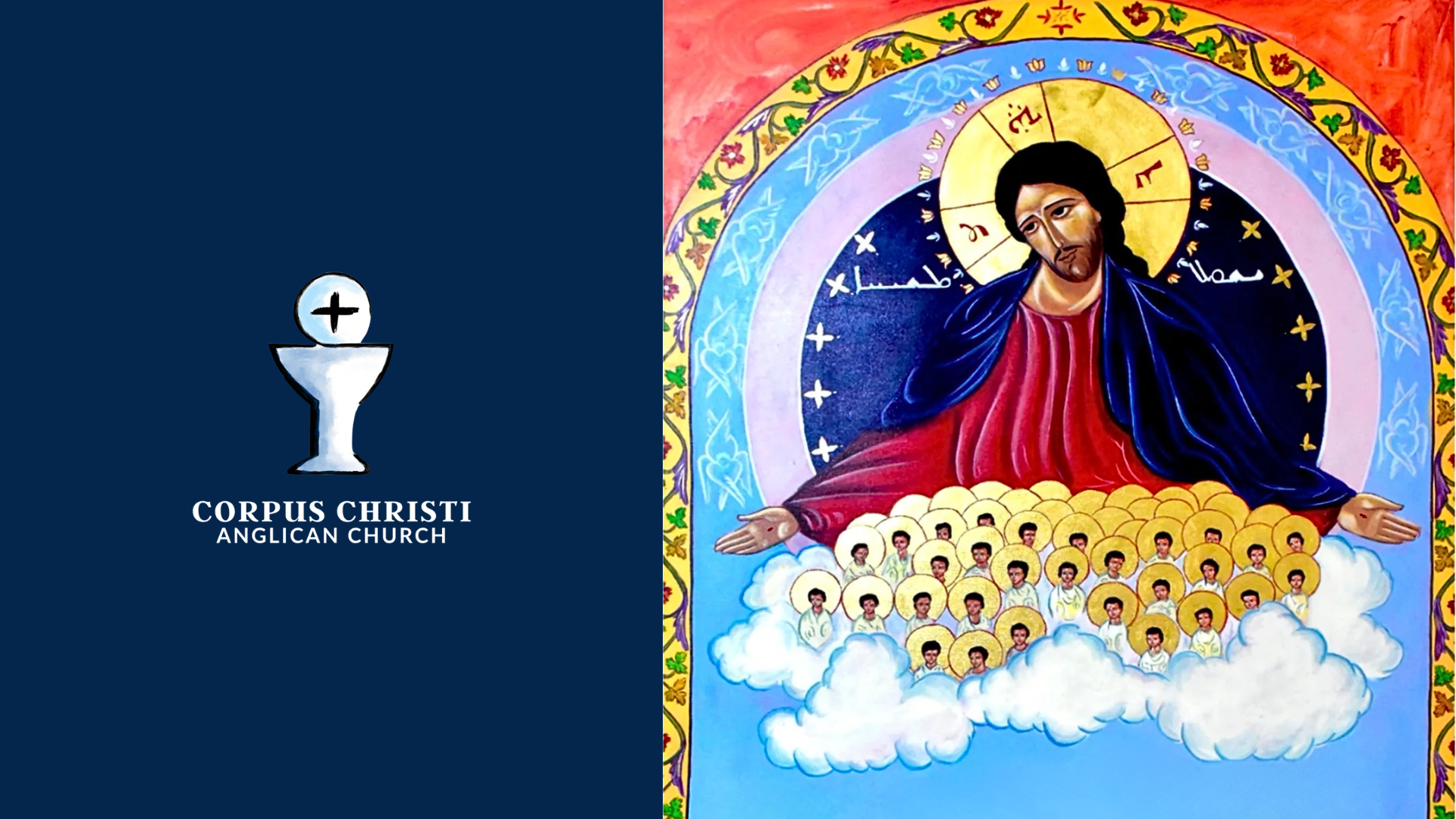
Jesus is the idealized Israel who will be brought out of Egypt. Jesus is also the holy remnant will be brought back from exile. While the Holy Family is in Egypt, Herod attempts to get rid of the Messiah by ordering that boys two and under in Bethlehem be executed. It is so horrible to consider how someone could consider indiscriminate infanticide; and it is very in line with what we know of Herod. This atrocity doesn’t even show up in documents outside the Bible and this is because on the level of atrocities Herod committed, this is actually less worse than others. This is someone who had his own wife and children executed out of a paranoid fear that they would usurp his power. Someone in Roman history once said it was better to be Herod’s dog than his son. Herod is a pawn of the kingdom of darkness and shows us the disdain and disregard of tyranny against human life that is so endemic of the spiritual forces that war against God’s good creation.
Matthew mentions that this massacre stands in a long line of moments that fulfill Jer 31:15, but it carries a special significance here. God is not the author of this tragedy, but this tragedy was not unforeseen by God either. In the midst of a very joy-filled passage about the new covenant we hear about the voice that is heard in Ramah, wailing and loud lamentation, Rachel weeping for her children; she refuses to be consoled because they are no more.” It was in Ramah that the exiles were gathered for their march to Babylon in 586 BCE.[3] Ramah was in the territory of the tribe of Benjamin, who was one of Rachel’s two sons. And while Bethlehem would have been in Judah’s rather than in Benjamin’s territory, this is the place near where Rachel was buried.[4] This is why Rachel is pictured as weeping over the holy innocents in Bethlehem.
Her weeping is for the grief over the loss of her children. And in its context, it also anticipates God bringing her children home. Grief and hope are both honored and sit side-by-side in the prophetic imagination. The tragedy in Bethlehem was real. It is a loss no one should have to bear. It also is endemic of the battle raging between the light of Christ and the darkness of the ruler of this world. This battle still rages on. It happens in the injustice carried out by tyrannical despots. It happens through the injustice of broken systems and institutions. It happens in the harm done by family and friends. It happens in the loss of hope when dreams are not realized or when we receive unplanned and tragic diagnoses. It happens in the words we say that we wish we could take back or the words we wish we had spoken. There are certainly times to join Rachel in weeping for her children. And when we join Rachel in her weeping, we can hold the tension of also joining her in her hope because God will bring his kingdom about in the midst of darkness.
In her excellent book on the Christmas season, the Rev. Dr. Emily Hunter McGowin says this about this event, “When the Christ child grows up, he will gather the girls and boys of Israel in his arms and proclaim God’s blessing over them. As the the holy innocents died involuntarily in the place of the infant Jesus, so the end of Matthew’s Gospel reveals the innocent one dying voluntarily in the place of all. It is only in his victorious resurrection from the dead three days later that Rachel, and all weeping mothers, find hope. Death — even this kind of unthinkable death— does not get the last word.” In this child there is hope.
3) The hope of Jesus even when we can’t see it yet — The wisdom of going to Nazareth and the plan of God (Isa 11:1 — the branch)
We have seen Matthew picture Jesus as the new and ideal Israel as well as the new and ideal remnant. The final picture we have is that he is branch from the tree of Jesse. The Holy Family has spent a few years as refugees in Egypt at this point. We don’t know how old Jesus is when they return but he could have been as old as 5-7 years of age. It is interesting to think that Jesus spent his preschool and kindergarten years in Egypt.
Joseph’s life had been turned upside down by this child. And despite a path he wouldn’t have chosen and years in exile because of his son, he remains faithful to the Lord. The Angel of the Lord appears to him in Egypt to let him know Herod has died and Archelaus is now overseeing Judea. He can go back. Joseph is no fool. Archelaus isn’t much better than Herod. He was so violent and oppressive that even the Romans, even the Romans!, would come to depose him and replace him with someone else. Rather than bringing his family in near proximity to another bloodthirsty tyrant, he brings the blessed virgin Mary and Jesus to the insignificant, backwater town of Nazareth.
St. Matthew finds the significance of this moment in Isaiah’s prophecy: “He will be called a Nazorean”. This is an allusion to Isaiah 11:1 which talks about a shoot that will come from the stump of Jesse and a branch (נֵצֶר) will grow out of its roots. The word play is on being a Nazarean, and the word for branch “a Nézer”. In Isaiah hope seemed lost as the tree was cut down, but hope would spring up from the felled tree as a shoot would come from the stump. I preached on Isaiah 11 back on Advent 2 if you want to go back and listen to that sermon. Here we see God making good on his promise that hope is not lost. The branch of Jesse has shot up from the tree that was cut down.
Conclusion
Jesus entering into the pain of the human predicament began before he uttered a word. He has parents raising him who say “yes” to the Lord’s will at all costs and their faithfulness was part of the plan of the light entering the darkness and not being overcome by it. The feast of the death of the holy innocents invites us to hold hope and grief in tension. We live in the liminal space where the darkness of sin and death exists side-by-side with the breaking in of the new creation that is dawning. Mourning and hope can be held in tension and live in the same space for the follower of Jesus. Jesus is the new Israel, the righteous remnant, and the branch who will conquer. He is emmanuel, God-with-us, and the darkness won’t overtake him. Rather than simple answers, we hold onto God’s promises as he gives us his presence. The victory that Christ has won will be our own ultimately and as we wait in the tension of hope and grief, we sing and pray with candles lit, lamenting in hope, defiantly proclaiming that Christ is Lord, clinging to his promises, and tuning in to the glimpses of light where brokenness is restored as a foretaste of the ways he is making all things new.
Let us pray:
Almighty God, out of the mouths of children you manifest your truth, and by the death of the Holy Innocents at the hands of evil tyrants you show your strength in our weakness: We ask you to mortify all that is evil within us, and so strengthen us by your grace, that we may glorify your holy Name by the innocence of our lives and the constancy of our faith even unto death; through Jesus Christ our Lord, who died for us and now lives with you and the Holy Spirit, world without end. Amen.
[1] Emily Hunter McGowan, Christmas, 98.
[2] Matthew for Everyone.
[3] Jer 40:1.
[4] Gen 35:16-20; 48:7.
Christmas Eve: Bethlehem Opened Paradise
CONTENT
Intro: Good evening dear friends. Merry Christmas. I’m Fr. Morgan Reed, the Vicar here at Corpus Christi Anglican Church. I am so delighted to have you with us this evening to worship our Lord together.
There is a really neat genre of art called Trompe l’oeil, meaning deceive the eye. One artist named Thomas Deininger has taken it in a new direction by creating objects like a parrot, a bee, a painting, but then if you go around to the side of the object, you realize the whole thing was made from trashed objects. It’s amazing! And I find the whole concept helpful when thinking about the nativity story. There is the image and the pieces that make it. We see details of a story like the famous story about Jesus in swaddling cloths and lying in a manger. We are familiar with the animals of the nativity. There are shepherds and angels. All of these make the nativity story recognizable, but when we turn to the side we begin to see the divine details that compose the story we’re familiar with. God has become human to save us from sin and death and to make all things new. Heaven has been opened and God is inviting us from Bethlehem back to paradise. The realities of this earthly life become windows to heaven to see and experience the kingdom of God that we ultimately long for.
As we look at the Christmas story together today, let me pray for us, “In the name of God, Father, Son, and Holy Spirit, Amen. Lord, may the words of my mouth and the meditation of our hearts be always acceptable O Lord, our Rock and our Redeemer, Amen.”
1) Christ has opened paradise in Bethlehem
The story begins with the setting of Christ’s birth in the context of the Roman Empire. It was during the time of Caesar Augustus, the adopted son of Julius Caesar, who after winning several strategic victories, he had proclaimed himself a son of god. He had, from his perspective, created global peace through his empire and the proclamation about this peace was sometimes called the gospel.
Caesar and Rome are a foil to God’s kingdom and are the historical context as we move to this couple, Mary and Joseph, in the small town of Bethlehem, because of a census that Caesar had called for. They arrive at Bethlehem, which is the town of Joseph’s ancestral lineage. Mary is quite far along in her pregnancy so she comes with him.
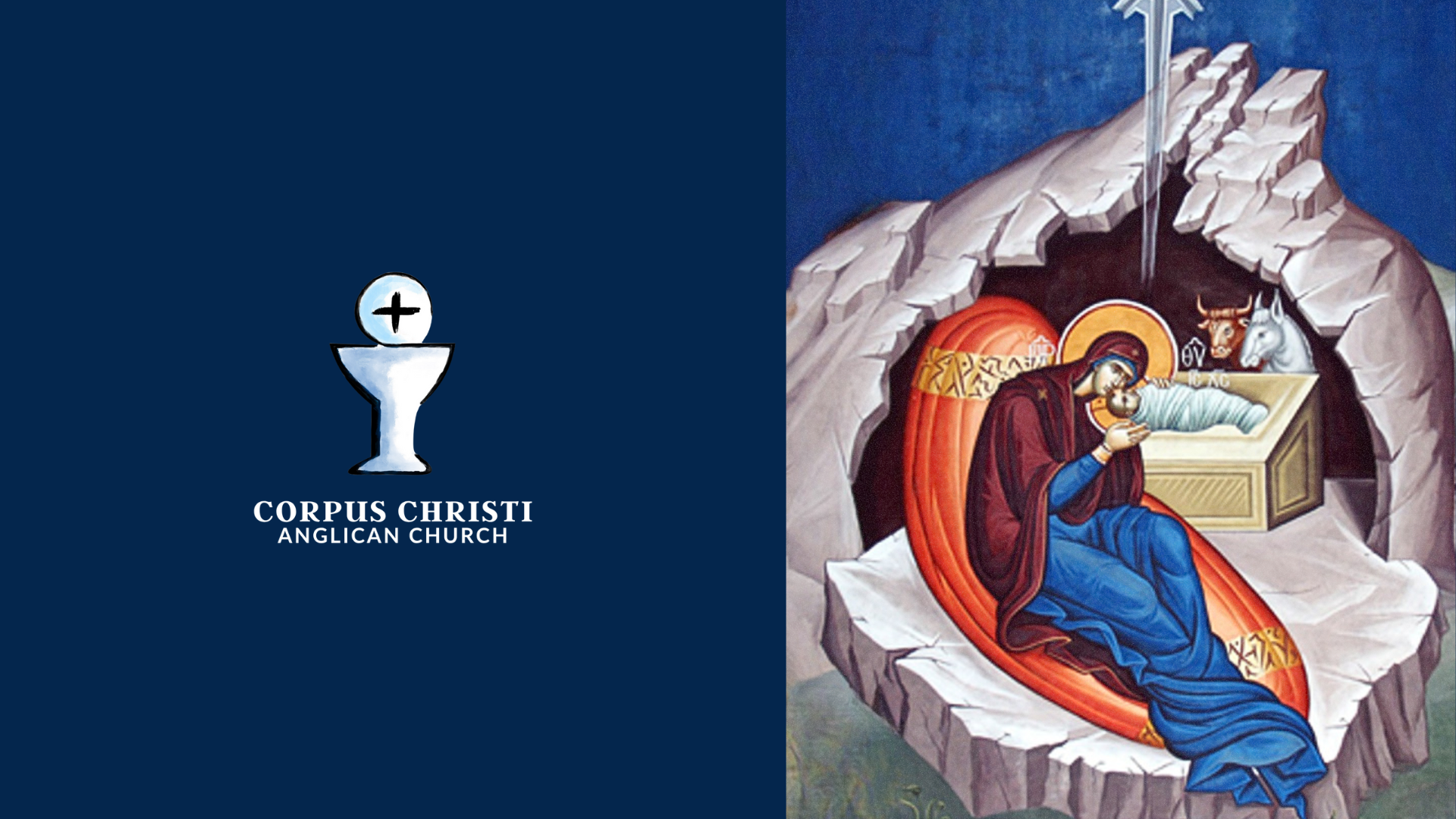
When they arrive, they get to the house of either family or a family friend only to discover that the normal guest room is occupied, so they’re given another room in the house. Mary gives birth to a healthy baby boy and at some point after his birth we are given these details about him being swaddled and placed in a feeding trough because they were functionally able to make a soft bassinet out of it.
This is one view of the Christmas story: the manger, the census, even Caesar himself. These historical realities are true but point us to a deeper reality that is going on. Now we move to the component parts of the trompe l’oeil of the story and we begin to see the heavenly realities. We meet the angels who appear in the darkness to shepherds and the glory of God shows up around them and the shepherds are terrified. Heaven proclaims that in Bethlehem, David’s city, is born this day a Savior who is Christ the Lord. This was the hope of Israel and of the nations. A multitude of angels appear and praise God, singing “Glory to God in the highest, and peace on earth among those whom he favors!”
The shepherds are given the details about Bethlehem and the feeding trough so that they can find this child. They find Mary, Joseph, and the child. They are struck with wonder and amazement. Mary is taking note of all that’s going on and pondering them in her heart.
Israel was looking for a Davidic ruler to overthrow empirical powers. What they got was heaven on earth where God became man to rescue humanity from sin and death and bring them back to fully restored life with their creator. There is a beautiful quote from someone in the church’s history about this, where it is said “Bethlehem has opened Eden: Come, let us see! We have found joy hidden! Come, let us take possession of paradise within the cave. There the unwatered stem has appeared, from which forgiveness blossoms forth! There the undug well is found from which David longed to drink of old! There the Virgin has borne a child, and at once the thirst of Adam and David is made to cease. Therefore let us hasten to this place where for our sake the eternal God was born as a little child!”[1]
Christ would live in perfect obedience and union with his father, would be mocked and die on a cross to conquer sin for us, would rise from the dead to conquer death for us, and would ascend to reign on high and make all things new. But first, he must be born, Son of God and Son of Man. He was conceived by the Holy Spirit, fully divine — and born of the virgin Mary, fully human. He took all of what we are as humans to raise it up again into full fellowship and union with the life of God. When we think back to the garden of Eden in the book of Genesis, God’s invitation to humanity was perfect fellowship, a daily walk in the cool of the day, but we were tempted by the voice that called us away from dependence on God and life with our creator to do things our own way in believing that we have the capacity without God’s help to figure it out. This voice tempts us time and time again and as a result creation is broken and we are broken.
The young woman, Eve, mourned because she and Adam were cast out of God’s presence, but she now takes comfort in this young woman, the blessed virgin Mary. Through Mary’s child, paradise is opened again and Eve’s children will stream to it. This child is Emmanuel, God with us, because although we had walked away, God, in his compassion has given us this child to be our savior, who is Christ, the Lord. He is making all things new in the hearts and lives of people by the power of his resurrection and his rule and reign as a promise that he will do it ultimately. And tonight we celebrate the miracle that began it all in wonder with the shepherds who hear the heavens declare the story that God has come to earth in this child and become king of all, that in him all things will be renewed if we simply swear our allegiance to him and trust him as our king and Lord.
Conclusion
As we look at the parts of the story, let’s not get too hung up on a manger or animals. The story that God is telling is the beginning of the end of sin and death. It is the story of God’s plan to make all things new and invite his people into life with him once again. As we consider the Incarnation and Nativity of our Lord, let me close us by praying for us:
“Almighty God, you have given your only-begotten Son to take our nature upon him, and to be born of a pure virgin: Grant that we, who have been born again and made your children by adoption and grace, may daily be renewed by your Holy Spirit; through Jesus Christ our Lord, to whom with you and the same Spirit be honor and glory, now and for ever. Amen.”
[1] Anonymous. Ancient Christian Commentary on Scripture.