
SERMONS
Archive
- October 2026
- September 2026
- August 2026
- July 2026
- June 2026
- May 2026
- April 2026
- March 2026
- February 2026
- January 2026
- December 2025
- November 2025
- October 2025
- September 2025
- August 2025
- July 2025
- June 2025
- May 2025
- April 2025
- March 2025
- February 2025
- January 2025
- December 2024
- November 2024
- October 2024
- September 2024
- August 2024
- July 2024
- June 2024
- May 2024
- April 2024
- March 2024
- February 2024
- January 2024
- December 2023
- November 2023
- October 2023
- September 2023
- August 2023
- July 2023
- June 2023
- May 2023
- April 2023
- March 2023
- February 2023
- January 2023
- December 2022
- November 2022
- October 2022
- September 2022
- August 2022
- July 2022
- June 2022
- May 2022
- April 2022
- March 2022
- February 2022
- January 2022
- December 2021
- November 2021
- October 2021
- September 2021
- August 2021
- July 2021
- June 2021
- May 2021
- April 2021
- March 2021
- February 2021
- January 2021
- December 2020
- November 2020
- October 2020
- September 2020
- August 2020
Candlemas: Pilgrims and Doorkeepers in the House of Our God
CONTENT
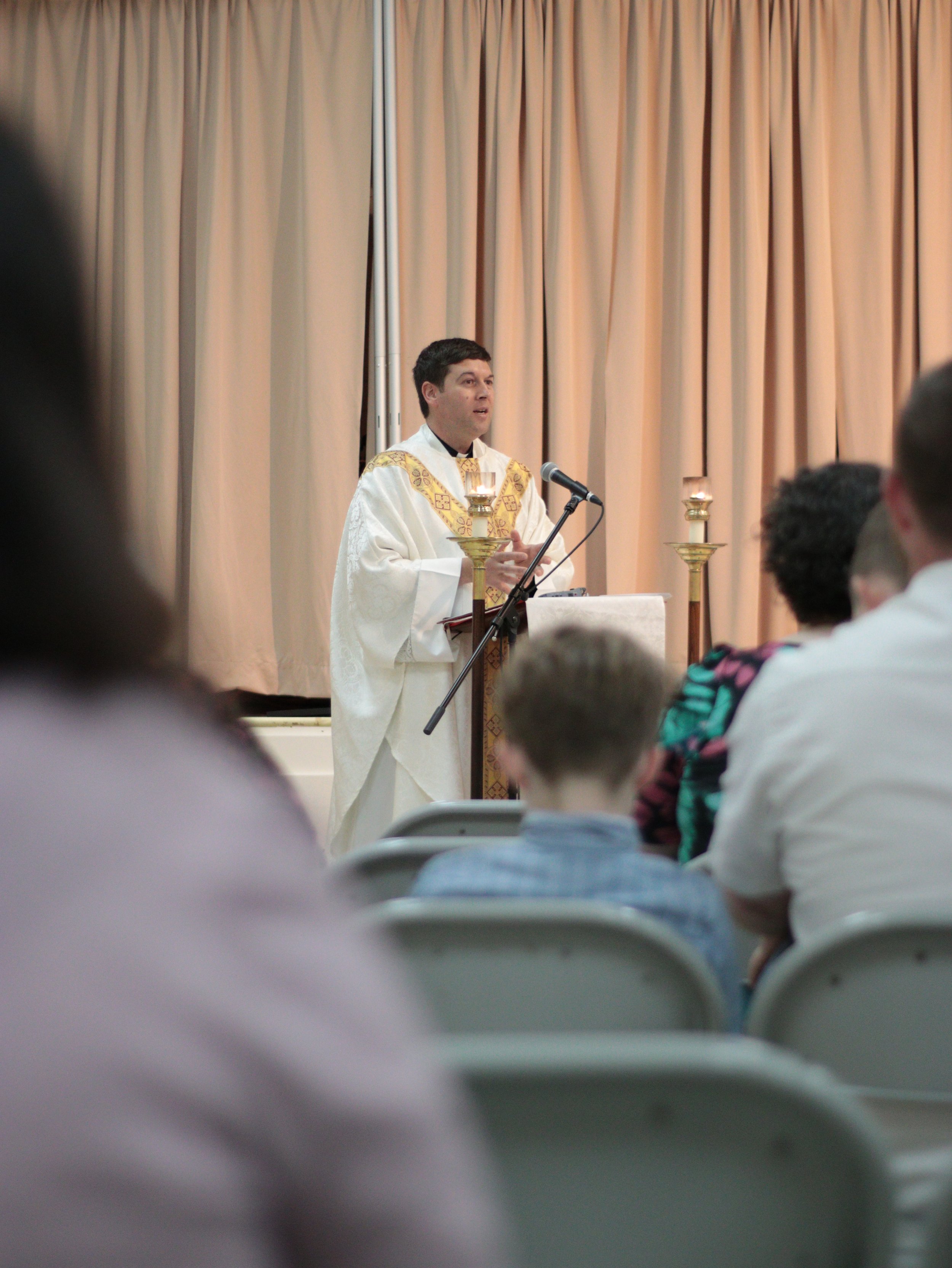
Good evening! I'm Chip Webb, and I'm a member [who serves as senior warden] here at Corpus Christi Anglican Church. [Before I begin, let us pray. Oh, Lord, may the words of my mouth and the meditations of all your peoples' hearts be acceptable in your sight, oh, Lord, our rock and our redeemer. Amen.]
Last summer, there was a mini-reunion of students and one staff couple from my old Virginia Tech college campus ministry in Blacksburg, VA. The next day, I went to my old church down there, and then I spent a few hours driving and walking around places of spiritual significance to me from that time. One place I stopped at was the Blacksburg Town Park, which is where I would go to pray and/or read Scripture at times. That place will forever be spiritually significant to me for a time in the summer of 1987, when I agonizingly sought God's will in prayer for several hours regarding a major, painful decision. It was at that time when, by my recollection, I first learned how to wrestle with God—a spiritual practice that I have found confronting me at various major points in my life since. Returning to that spot last summer and finding the rough spot where I walked, sat, prayed, and figuratively (and perhaps literally) sweated that day was important to me, as it paid tribute to the pilgrimage that I've been on over my life. That experience of pilgrimage is one that all of us share, whether we realize it or not, as there is no spiritual life without a continual pilgrimage seeking to draw closer to God.
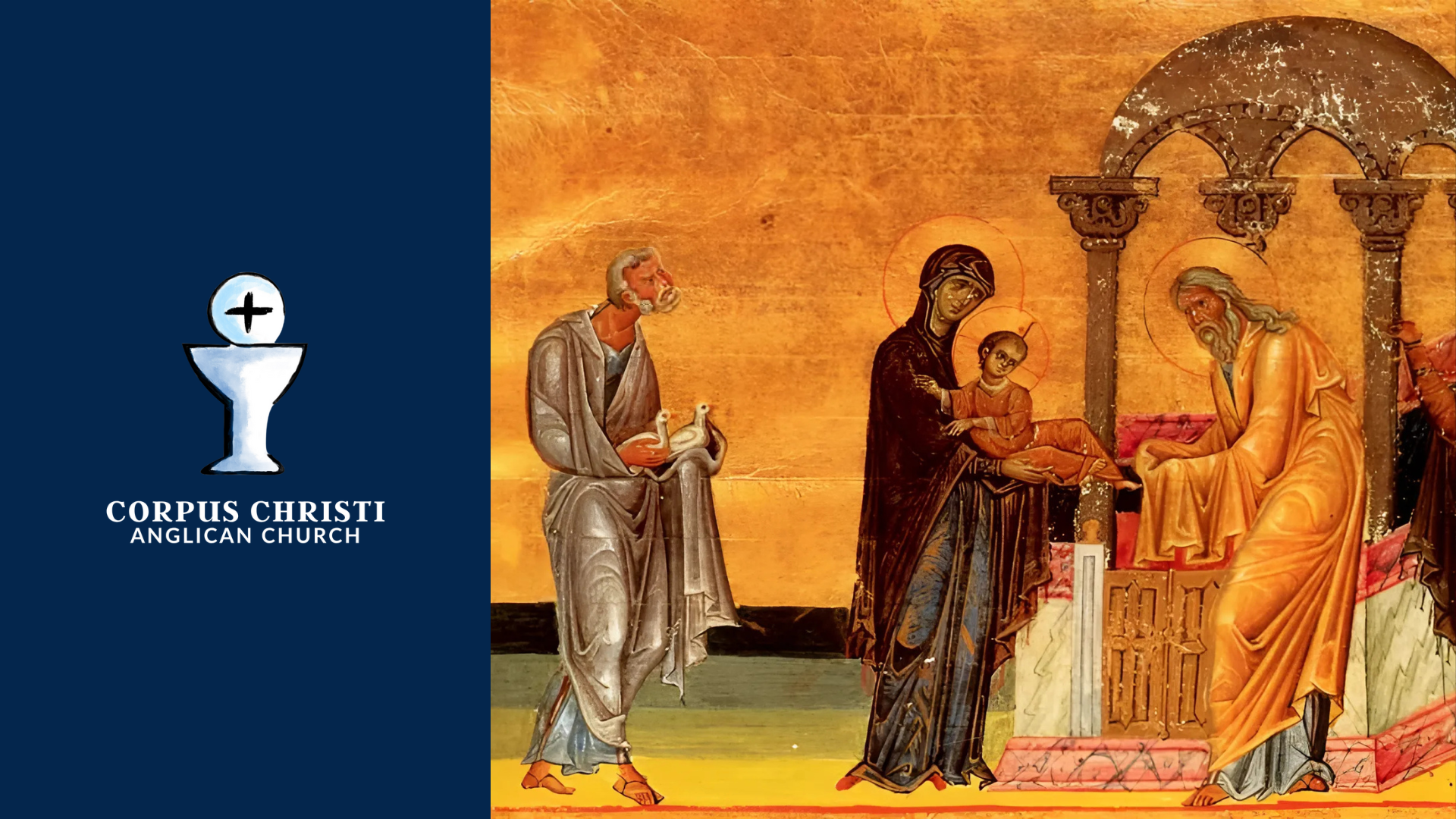
Well, today we celebrate Candlemas, which is known in our 2019 Book of Common Prayer (BCP) as a holy day titled The Presentation of Christ in the Temple. But if you're like me, Candlemas is a bit of an unknown to you. I'm not sure that I ever heard of it before I came to Corpus Christi! And yet, it can be— and perhaps should be—an important day in our Christian lives, in our walks with God. What does the word Candlemas mean? Well, it's two words put together into one, candle and mass, to make Candlemas, dropping the final s. The word in that regard is similar to Christmas, which is a word we get from combining the words Christ and mass. Christmas historically has been the mass, the worship service, at which we celebrate the coming of Christ into our world, his incarnation. Candlemas is similar: it is a mass in which we focus on candles' light, as with our prayer candles; if we were in person, we might experience a procession with lighted candles, symbolizing Christ, the light of the world's, entrance into the temple 40 days after his birth. As such it continues with the theme of light that we have been observing in Epiphany, and it shows a progression in the church calendar. We have moved from celebrating Christ's birth at Christmas to a season in which we initially remember the wise men's following a star and their visit to the young light of the world, perhaps some two years after his birth, and now back in time to our Lord's presentation at the temple. Candlemas, according to the Dictionary of the Christian Church, was first celebrated sometime around 350 AD in Jerusalem. The original date for celebrating Candlemas was February 14, but at some point in Church history it switched to February 2, undoubtedly to observe it 40 days after Christmas.
And tonight we have heard four glorious Scripture readings, and participated in reciting one of them! Let us particularly look now at two of those passages, our gospel reading from Luke 2:22-40 and Ps 84, and how they intertwine. Together, they have much to say to us as followers of Christ, as pilgrims in this "dry and weary land" (Ps 63:1) as we sojourn to our ultimate home with God in the new heavens and new earth.
Mary and Joseph were on this same journey at the time of our gospel reading, a spiritual journey through life to our final home with God. They were also more immediately on a pilgrimage to Jerusalem. Verse 22 in our gospel reading tells us that "when the time came for their purification according to the law of Moses, they brought him up to Jerusalem to present him to the Lord." Where did they come from? Luke's account left us prior to this verse in Bethlehem, at the manger. Now Bethlehem is just five or six miles south of Jerusalem and Luke does not mention them journeying again until verse 39, when they return to Nazareth after the presentation at the temple. So they very well might have remained in Bethlehem or some area around there for 40 days. Perhaps less possibly, they returned to their town of Nazareth in the interim, which was about 64 or 65 miles from Jerusalem. So they either had a short pilgrimage to Jerusalem or a moderately long one, but it was still a pilgrimage. Pilgrimages can be short (e.g., to a local church) or long (e.g., to a historic Christian site) in distance.
And they went, according to verse 22, "for their purification according to the Law of Moses." Lev 12 notes that purification was required for a child's mother, who the Law judged to be ceremonially unclean, for a week after a son's birth. She also had to avoid touching holy objects and stay out of the sanctuary for an additional 33 days, for a total of 40 days. (The time was double that for daughters.) So this holy day, which we see as The Presentation of Jesus in the Temple, is also recognized as The Purification of the Blessed Virgin Mary in some Christian traditions.
They also went to present Jesus at the temple in accordance with the Law's requirement for every firstborn son to be presented to the Lord, a tradition that went back to Israel's Passover from Egypt. And at the end of the 40 days, the mother had to bring a sacrifice for her atonement, which for poor people was either two turtledoves or two pigeons. Perhaps Mary felt, along with the psalmist who wrote Ps 84, "My soul longs, yes, faints for the courts of the Lord" (Ps 84:2) given her period of required exile from them. Maybe as she and Joseph approached the temple, they recited Ps 84, or perhaps their hearts sang, "How lovely is your dwelling place, O LORD of hosts" (Ps 84:1). And possibly their turtledoves or pigeons reminded them that all people and creatures who inhabit God's house are blessed (Ps 84:3–4). How about us? We do not worship in a temple; we worship in a much less grand fellowship hall. Yet every week we have icons to remind us visually of saints who have gone on before us; occasionally we have incense; and every Sunday we meet together as the people of God who attend Corpus Christi Anglican Church. Even tonight, in exile from the fellowship hall due to ice, do we wish that we were instead participating in a fuller service there instead of this virtual one? Longing for the space in which we worship as a church can be a profound and praiseworthy mark of Christian spirituality.
In our gospel lesson, Luke now shifts his attention to another person in Jerusalem, Simeon, who we are told "was righteous and devout, waiting for the consolation of Israel, and the Holy Spirit was upon him." (Luke 22:25). Let's notice that phrase "waiting for the consolation of Israel." Fr. Morgan often speaks of how God meets us in our desolations and our consolations. Why did Israel need consolation? Because it was not free and under the control of the Romans. Because despite all of the Pharisees' best efforts over a very long period of time to help the Jewish people grow in faithfulness by heeding the Pharisees' minute extrapolations of the Law, their messiah had not yet come. Israel knew desolation, and both consolations and desolations are marks of pilgrimages. Listen to these words from Psalm 84 again: "Blessed are those whose strength is in you, in whose heart are the highways to Zion. As they go through the Valley of Baca, they make it a place of springs; the early rain also covers it with pool. They go from strength to strength; each one appears before God in Zion" (vv. 5–7). We begin in verse 5 with two consolations: strength in God and a heart for "the highways to Zion," meaning a heart for both pilgrimage ("the highways") and the actual destination of Zion. But then we reach the Valley of Baca in v.
6. Some commentators believe that the word Baca indicates a consolation: a tree that flourishes in dry places, like the Joshua tree, for those who have visited that national park. In that case, the "springs" of v. 6 are waters that enable the tree to grow and the land to flourish. Other commentators, however, see Baca as taken from a word meaning "to weep," and the journey, the pilgrimage, as involving sorrow that results in pools of tears. Interestingly, historians and archaeologists have been unable to locate a Valley of Baca, which leads to the question of whether the pilgrimage in Psalm 84 is meant to be taken as a literal one, a spiritual one, or both. In any case, though, the pilgrims go through a dry land in v. 6, and v. 7 tells us that they "go from strength to strength" all along their journey to Zion. Let's stop briefly and think of the implications of that. Whether we go through dry lands, or dry periods of life, and flourish despite the dryness, or whether we go through seasons of such intense weeping that it is like we flood the ground with our tears, we go from strength to strength. Our circumstances impact us, yes, and considerably so—but ultimately even our darkest times of sojourn will not destroy those whose strength is in God and in whose hearts are the highways of Zion. What we cannot see with our eyes now, we strive to apprehend by faith and will see clearly when the times have reached their consummation—that we go from strength to strength. The late hymnwriter Fanny Crosby put it this way in her hymn "All the Way My Savior Leads Me": "For I know what e'er befall me/Jesus led me all the way."
Back to our gospel story, Simeon is implicitly described by Luke as someone who is considerably older in years than the young couple and infant child, and who faithfully, although perhaps not always patiently, waits for the consolation of Israel and is full of the Holy Spirit. He experiences strength in that he is given a spiritual high watermark in his life and pilgrimage: He gets to see the messiah, the baby Jesus, and hold him in his arms. He then utters what we call the song of Simeon that is present in our Evening Prayer service and closes our Compline service. Here Simeon goes from the strength of seeing Jesus to the strength of prophesying about Jesus, with the prophecy concerning the worldwide scope of the messiah's salvation. Simeon has seen with his physical eyes the baby Jesus; now he sees with his spiritual eyes and heart the glory of that messiah's coming reign. Verse 33 tells us that Joseph and Mary marveled at this prophecy, and we might wonder well if this is one of the things that Mary treasured in her heart, as mentioned later in v. 51.
But then Simeon moves from a prophecy of consolation to one largely of desolation, journeying again from strength to strength. This messiah will not have universally positive effects on all of his countrymen, and he will opposed; what is more, Mary's soul will be pierced as if by a sword. Some in their pilgrimages will flourish in their encounters with the messiah; others will not. Mary herself will enter a Baca of weeping, as she did most notably at the cross. Most of all, this Jesus, this messiah, who is the Word, as John tells us, and who is the light of the world that shines in the darkness, will reveal the thoughts of human hearts and lay them bare—an insight that probably informed the author of the book of Hebrews when he or she described the Word of God as like a sword that reveals the hearts and intentions of people, in Hebrews 4:12. We find a partial correlation to this insight about hearts being laid bare in Psalm 84:8, where the psalmist pleads with God out of his heart, "O Lord God of hosts, hear my prayer; give ear, O God of Jacob!"
It is good, then, that not only are all of our inmost thoughts known by Jesus, but he is also our defense along our pilgrimage. Our secret ways—our hidden thoughts, our actions that are unknown to others, both good and bad—will be revealed, and possibly one day for all the world to see. And yet this Jesus is also the strong defense of those whose strength is in God and in whose hearts are the highways of Zion. The psalmist says in v. 9 of Ps 84, "Behold our shield, O God; look on the face of your anointed!" The shield and the anointed one to the psalmist was Israel's king, enthroned in Jerusalem. Our shield is Jesus; the face of the anointed one is Jesus's face. It is Jesus who is the righteousness of those who are Christians, whatever our sins and other flaws might be. We are to trust in Jesus's defense, remembering the comforting words given to us in 2 Timothy, "if we are faithless, he remains faithful—for he cannot deny himself" (2 Tim 2:13).
Luke finally turns our attention to the prophetess Anna, who we are told is "advanced in years" and evidently somewhere beyond the age of 84. Here we are presented with an arguably even greater example of faithfulness, for "[s]he did not depart from the temple, worshipping with fasting and prayer night and day" (Luke 2:38). We are not told what she said and prophesied about Jesus, just that she was overflowing with thankfulness for her messiah and that she spoke about him to all who longed for Jerusalem's redemption. In Psalm 84, the psalmist, having reached Jerusalem, conveys the climax of the psalm with a resolution: "For a day in your courts is better than a thousand elsewhere. I would rather be a doorkeeper in the house of my God than dwell in the tents of wickedness." It is better to be in God's presence than anywhere else; that is the goal of pilgrimage. Is the pilgrimage described in Psalm 84 a physical one to Jerusalem, a spiritual one in the heart, or both? It doesn't matter. The goal in all of these possibilities is to get to Zion, to the temple, to God's presence. Of course, God is with us along our pilgrimage, but we have a destination of life with God that has a final fulfillment in the eschaton, in the new heavens and the new earth, and that has intermediate fulfillments in the Church.
The psalmist goes on to identify with being a doorkeeper—one who waited at the threshold of the temple either begging for money or continually knocking on the door, seeking to be let in to the temple. He or she is in the temple courts outside of the temple, braving the outside elements and possible poverty rather than living more comfortably with the wicked. Here we have a seeming reflection of the two ways theology that we see in texts like Psalm 1—the way of the righteous versus those of the wicked. We also might remember the words of Jesus about those who knock on God's door, or Bob Dylan's contemporary application of those words, "knock, knock, knocking on Heaven's door." And while we're not told where Anna stayed, her continual presence in the temple and constant works of mercy through fasting and prayer are equivalent to the characteristics of a doorkeeper.
But she is not the only pilgrim who reaches a certain level of destination and becomes a doorkeeper. Mary, Joseph, and Simeon are also doorkeepers. And so who do we identify with most? Mary, needing purification and/or feeling a sword pierce her soul? Joseph, faithfully observing the law and protecting his family? Simeon, faithfully waiting for consolation? Anna, not departing from God's presence, and fasting and praying? We can identify strongly with each of them at different points in our lives. God has many different types of doorkeepers.
He also has many different spots of pilgrimage. Where are we now on our pilgrimage with God? Are we praising and delighting in God, as at the start of Psalm 84? Are we in a Baca where we are grateful for flourishing despite being in a spiritual desert? Are we instead in a Baca where our tears are so numerous that they threaten to flood the earth? Are we at a place where we are fervently imploring God to hear our prayers? Are we asking him to look upon Jesus, our shield and defense, to serve as our righteousness? All of these, and others, are places where we might find ourselves during our earthly pilgrimage.
And so what general applications can we make from all of these considerations of pilgrimage and doorkeeping? They all involve cultivating longings and habits, and so are not quickly achieved.
Cultivate a longing for, and pilgrimage towards, Jesus—We learn in the New Testament, particularly John 2 and 4, that Jesus is the temple now, not any building. We will in the end, at the consummation of all things, be in his presence. Let's make it our goal to consciously be in his presence as much as possible throughout the day. The Daily Office is one great benefit here!
Cultivate a longing for, and pilgrimage with, the Church—The Church is not just a fellowship of like-minded people, but the institution that God has designed for the provision of word and sacrament to humanity. The Church is not in its fullest sense a building or worship space, but the body and bride of Christ. Christ and his Church are inextricably linked. Christianity is more accurately viewed as corporate than individualistic. Regular Sunday worship and other involvement with CCAC can aid here.
Cultivate the humility and purity of a doorkeeper—As doorkeepers, we are less concerned about ourselves than living in God's presence, and less concerned about our prosperity and advancement than our faithfulness. As doorkeepers, we strive to live holy lives, and we confess and repent of our sins. Private devotional practices, weekly worship, and periodic confessions with clergy all can benefit us here.
Cultivate trust in Jesus's power and defense—The good news is that we go from strength to strength even at times when we do not feel God's presence or power. Jesus went from strength to strength; his presentation in the temple fulfilled the Law of Moses, just as his baptism would much later in his life. It's very possible that we could see Jesus's life and ministry as emanating from his presentation in the temple. Even his agony at Gethsemane and on the cross were not the end of his story, as he lives and reigns over the entire universe now. Jesus can be said in one sense to have been a doorkeeper during his agony in Gethsemane, knocking on Heaven's door and leaving the results to God. The author of Hebrews tells us that he learned obedience. Our messiah identifies with us so much that he knows experientially what it means to be both a doorkeeper and a pilgrim. He is trustworthy.
Cultivate models in the saints—Jesus is the light of the world, but all of us who are Christians are as well, for we are in Christ. The same is true of the saints who have gone on before us. For example, as mentioned earlier, consider Mary, Joseph, Simeon, and Anna.
And so the psalmist appropriately ends Psalm 84 with a kind of benediction in verses 11 and 12. May it bless all of us this Candlemas as we celebrate Christ, who is the light of the world that candles only dimly reflect. "For the Lord God is a sun and shield; the Lord bestows favor and honor. No good thing does he withhold from those who walk uprightly. O Lord of hosts, blessed is the one who trusts in you."
In the name of the Father, and of the Son, and of the Holy Spirit. Amen.

Jesus’ Best in Our Worst
Transcription
Good morning again everybody. It is good to see you this morning. I love seeing your smiles. It is good to be with you in worship and community this morning.
Regardless of the week you've had coming in, it is good and formative to be together. So thank you for making time to be here with your church this morning. If you're new here or visiting, we're glad you're here as well. I'm Father Morgan Reed. I'm the vicar at Corpus Christi Anglican Church. If you're new to Anglicanism, it's like a senior pastor of a mission church. And that's what I am here, and we are delighted to have you with us.
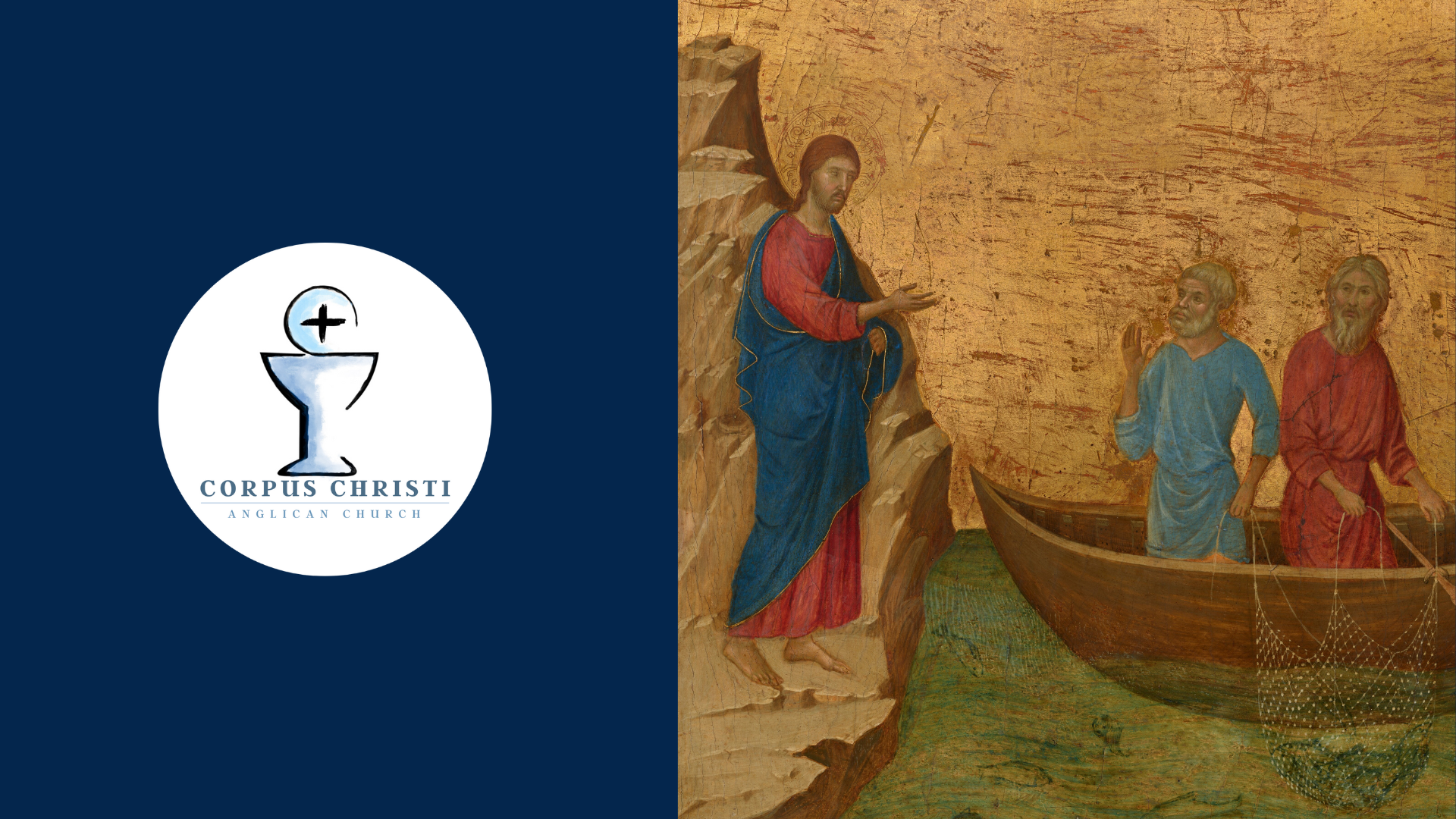
Today in our Gospels, we are looking at the calling of the disciples. And so we've been talking about the glory of God through Epiphany. Now that glory is going to go forth through these who Jesus will choose as his disciples to carry on the kingdom work. And whether or not they knew it, these disciples, their lives, their stories, their vocations, were setting them up in unique ways to bring their unique gifts to bear on the age to come, the kingdom of God. And they were doing so in the midst of an empire that was not eager to know the love of the Messiah.
There was this clash of good news messages, Gospels. One of those being, we have no king but Caesar. One of those being, we have no king but Christ. And in the midst of that tension, the disciples are being called, these fishermen, to proclaim the good news of the kingdom of God where Jesus is Lord. And so the followers of Jesus are called to hold out the glory of Jesus in the midst of really challenging circumstances. And this is what the apostles are called to.
And how can they do this? I love this passage today. It is such an encouragement. How are they able to carry the glory of Jesus out in the midst of really challenging circumstances in an empire that's not necessarily friendly to them? That's what we're going to look at this morning. And what they're going to learn is that Jesus brings people into an encounter with himself often when they're at their worst. And then they're going to learn that Jesus can do far more than they expect of him. And then when they're confronted with their own finitude as human beings, then they're going to come to know the power of Jesus working in them to do more in them and through them than they could have imagined.
And I think that you and I this morning are in need of such an encouragement as we follow Jesus in seasons of real instability. As we look at our passage this morning, let me pray for us. “In the name of God, the Father, the Son, and the Holy Spirit. Amen. Almighty God, from whom all thoughts of truth and peace proceed, kindle, we pray, in the hearts of all people, the true love of peace. And guide with your pure and peaceable wisdom those who take counsel for the nations of the earth, that in tranquility your kingdom may go forward till the earth is filled with the knowledge of your love, through Jesus Christ, our Lord. Amen.”
Jesus meets us in our worst
Well first, I want to look at this first point that I brought up, that Jesus meets people often when they're at their worst. Jesus meets them when they're at their worst. Chapter 5 of St. Luke's Gospel is what we read today. Jesus comes to the lake of Gennesaret, which is also called the Sea of Galilee. It's in the northern part of Israel. It's about 18 by 14 square mile, yeah, square miles. And it serves as a popular freshwater fishing location.
And when he shows up to the Sea of Galilee, there's a crowd that's gathered. They're gathered there to hear him teach. And the crowd is growing. And because it's growing, they need to be able to hear him. And that area provides a natural amphitheater, so he has to go out a little from the shore to utilize the natural resources around him to create an amphitheater so that everybody can hear. And so he sees these two boats that are by the lake that he needs, and he decides that he needs one of them to go out onto the lake.
Well, the fishermen are not in those boats. They're out of the boats, and they're cleaning all of their nets. They've just, it's morning time now. They've spent all night fishing, which is the best time for them to catch a hole. And so Jesus decides on one of these boats to be taken out to the sea a little ways to be able to preach. And this boat belongs to Simon, who's going to eventually be renamed as Peter. And Simon here is not at his best. You can believe it. He's really, really tired.
He spent all night fishing. Show of hands, how many of you have pulled an all-nighter in college? Right? This is, you, Peter spent an all-nighter, and he has not caught anything to show for it. You can imagine how useless he is at this point, and how frustrated and tired and probably deflated he's feeling.
He is not at his best, probably just wants to go to sleep. But in his tiredness, when he's not at his best, he still welcomes Jesus in. And I wonder, with Peter and Simon, if a lot of us are not feeling at our best this morning, as you came in here today. This passage is for you. It's an encouragement. The instability of these past few weeks have been really exhausting.
I know because I'm fielding texts, emails, and prayer requests all the time. People are worried about their jobs. They're worried about the immigration statuses of family and friends. They're worried about the takeover of government systems and processes by the wrong people, that we might break democracy in irreversible ways, that people around the world are going to suffer and die because of freezing and cutting aid. People are afraid of economic impact, on what imposing tariffs on allies means, what the diplomatic fallout of this is going to be. And that's just to name a few things that might be causing fear for some people this morning.
And a lot of these things do impact people in our church because you work for government agencies, or you work for NGOs that serve other people around the world. And so I'm hearing an understandable fear about what is happening right now. Things that make us feel like we're just not in our best.
Right? And that's okay. And if all that wasn't enough, life still continues to march on. And you have your daily responsibilities, the things that you need to do, making repair in relationships that are broken, keeping it together with your spouse, if you have one, maintaining your own mental and physical health.
And in this scenario, in this, you know, current situation, for some of you have kids, caring for your kids, maintaining a sense of security for them, and dealing with the challenges that they present day in and day out. Being present to all the different people that you need to be present to, and your different spheres of life. How do we maintain all of those things? And the reality is, if we were to look back on human history, there is never been a time where heaven has been on earth that we can point to one nation state and go, that was the kingdom of God.
You know, we just want to be like that. We've never seen it yet. There has never been a nation state that has exemplified the ideals of the kingdom of God. And so, you know, I want to name what feels so hard for a lot of people today as they're walking in. What are the things that make us feel like, man, I am just not at my best right now. And the reminder to us this morning, that this is the setup to encounter Jesus.
That when you're not feeling at your best, let your heart and your body be reminded that this is the place where Jesus sees you, where he knows you, where he deeply loves you, even when you're feeling like you're at your worst. And so when we can learn to name the things that are broken before Jesus, then what we're also doing is naming the very thing where we are, we're place where we're longing for God's love and grace to be poured in and change, change our hearts. So when we're in our worst, that's when we're often most ready to encounter Jesus.
Jesus can do more than we expect
And then second, Jesus can do way more than we often expect him to be able to do. Jesus says to Simon, put out into the deep water and let down your nets for a catch. Can you imagine Peter cleaning his nets tired? And Jesus says, can you get back in the boat, push it out in the water? And also, can you put your nets down too for another catch? You know, it's like it's a very truncated dialogue in the gospel.
So I wrote my own. Jesus says, let down your nets.
And Peter says, “really? We've been at this all night. I am exhausted. I'm tired. I'm hungry. All I want to do is sleep.
Jesus: “I know I get it. And I'm so sorry that you are tired and hungry. Let down your nets.”
Peter: “ We know how to fish. We've been at this all night. We know the right time to go out. You're a carpenter. This is my thing. Do you think that you know how to do my job better than I do? “
Jesus: “Totally get it. You're an expert fisherman. I understand that. And yes, I actually do know more about your job than you do. I know more about you than you do. Put those nets down.”
Peter: “OK, whatever. I'm going to do it. I will let down the nets.”
All right. Now, I know that that is apocryphal from the gospel of Morgan. This is not the actual dialogue that happened. But man, isn't that our internal dialogue? I mean, that is my internal dialogue. Whenever Jesus tells me to act in faith, we find ourselves really frustrated. We find ourselves in the place of being overwhelmed.
And then when Jesus reveals something to us that's broken, that's in need of his grace, we're quick to say, Jesus, don't touch that. You don't know what you're doing. I know how to fix this. Or at least I know people who do. And we strategize and we try to figure out who can help us fix this thing or a plan to get better or things to avoid it. People or activities that we can find or pleasures to keep us from addressing the very thing that Jesus says, I want to touch that and heal that thing in you.
And so Jesus invites us in all of our doubts, in those places of frustration and uncertainty, when we're definitely feeling like, you know, I'm just not at my best today, to set down the nets in faith so that we can see what he can actually do. And when they obeyed, those nets became so full that they were starting to break. And so Simon, when he sees that, he looks at Jesus and says, go away from me, Lord, I am a sinful man.
And that confession of Peter at this point, sorry, I keep saying Simon and Peter, you know who I mean. So Simon, as he confesses this, it highlights now how attuned he is to the fact that Jesus is the son of God, that he's bringing the kingdom and that he himself is unworthy. He's realized who he is and who Jesus is.
And it was at this moment where he's rightly esteeming his own unworthiness before Jesus, that he is now ready to receive exactly what Jesus wants to do in him, the grace of Jesus to be poured in him to continue the work of Jesus. He has to get to this point if he is going to be a vessel worthy of the gospel of the kingdom. And so when Peter is at his lowest, Jesus is ready to reveal himself to him.
And then that is a comfort to you and to us, to all of us this morning. If you feel like you've made a real mess of things this morning, if you feel like there's not any hope, like you are just feeling really undone, overwhelmed, if things outside your control are feeling completely overwhelming, then the posture that this text invites us into is to say, Jesus, I don't get it. And honestly, sometimes I wonder if you actually get it. But I really want to be surprised by you today. And so I will let down my net. Jesus, I don't get it. I don't know if you get it. But at your word, I'm going to take that next step and let down the net. This is the posture when we feel overwhelmed.
And this is the step of faith that leads to new beginnings for us. It opens up to us the God who brings abundance out of these places of emotional and physical scarcity. This is Jesus whose kingdom is transforming a people, individuals and corporately that if we ask, where is the kingdom of God? You're seeing it in a community that's being transformed by him, whether or not the empire is Christian, pagan, in peace or in crisis.
The kingdom of God goes forth in a community of people. And so these small moments of faith are where we learn how frail we are and how powerful God is. And we learn all the meager training that we've had up to this point. And our experience and our life circumstances are all the training to understand that our life has far more significance for the kingdom of God than we would have imagined before. And so when we're at our worst, Jesus comes to meet us. Second, we looked at how Jesus can do more than we would have imagined.
Jesus calls us to more than we expect of ourselves
And finally, Jesus calls us into more than we often expect of ourselves. Jesus calls Peter and James and John to come and to catch people. And they're going to go gather people into God's boat of salvation, where people are going to be delivered into the kingdom of God, where Jesus is Lord. And so they leave everything behind at this point to follow Jesus, which is a huge step of faith. And we read today two passages that were really important for this. Judges, where we heard about one of the judges confronting the Midianites, Gideon, and 1 Corinthians 15, where Paul calls himself the least of the apostles.
And those passages remind us that the kingdom of God doesn't go forward through our constructed worthiness or the image that we would like people, that we would curate on social media for people to experience our holiness or our worthiness. This is not how it goes forward. But through the honest, frail brokenness of our stories, people who are longing to see Jesus at work, who are willing to prioritize God's kingdom, first and foremost, above all things, in our brokenness. N.T. Wright says it this way. He says, “When Jesus calls, he really does demand everything of us. There are no bystanders in God's kingdom. And this is because he has plans in store for us and the world that we live in that surpass what we would have dreamt of.”
And so what God has brought you through up to this point, your circumstances, the things that have been really hard, what God has brought you through up to this point are the beginning of your story. Your places of brokenness are the unique places of redemption that are going to form the compelling stories that draw people into the love of God in the kingdom of God.
Your story, your life has a role to play in the kingdom of God. Your vocation, your skills, your proclivities, the relationships you have, the stories that form you. When these things are submitted to this disposition of, Lord, if you say so, I'll let down my nets.
Then we're ready to see how Jesus can take our frailty and our brokenness and do more in us and through us than we would have ever imagined or dreamt of.
Conclusion
And so as a recap, thinking about this passage, it teaches us three really important principles about life in the kingdom of God, a life of following Jesus. First, that we are ready to see Jesus when we are at our worst. I hope that's an encouragement for you this morning. Second, it teaches us that Jesus can do more than we can imagine. And third, that Jesus can do more in us and through us than we could have expected of ourselves.
And I know that these are fraught days. For a lot of people, these are really destabilizing days, whether or not it's the circumstances outside or not, or just the internal ones. There are a lot of things that destabilize us. Continue in these days to do your daily prayers, right? It's like that World War II poster, keep calm and carry on. Keep calm and pray the daily office. You know, keep praying your daily prayers.
Regulate yourselves when you feel emotionally out of control. Take care of your bodies, they're really important. Your bodies are the means by which you come into the kingdom, and so take care of those bodies.
Take each day to admit to Jesus those things that feel broken. Where do I not feel at my best today? And then ask him for what the next step of faith is. What is the next right thing to do, Jesus, when I am not feeling myself today? Your days are going to be filled with moments and glimpses of the kingdom of God and Jesus's power, but we need to search for them prayerfully with intention, in the midst of things feeling pretty chaotic.
And so my prayer for us is that may God give us the grace to prioritize his kingdom first and above all when we're not feeling totally ourselves. Let me pray for us this morning. “O God, you made us in your own image, and you have redeemed us through your son, Jesus Christ. Look with compassion on the whole human family. Take away the arrogance and the hatred that infect our hearts. Break down the walls that separate us, unite us in bonds of love, and work through our struggle and confusion to accomplish your purposes on earth. That in your good time, all nations and races may serve you in harmony around your heavenly throne. Through Jesus Christ, our Lord. Amen.”
Transcribed by TurboScribe.ai. Edited by the author.

Candlemas: The Glory of Jesus in Ordinary Faithfulness
Transcription
Well, good morning everybody. It is good to see you this morning. I'm Father Morgan Reed. I'm the vicar here at Corpus Christi Anglican Church and February 2nd marks a very special day in the church's calendar.
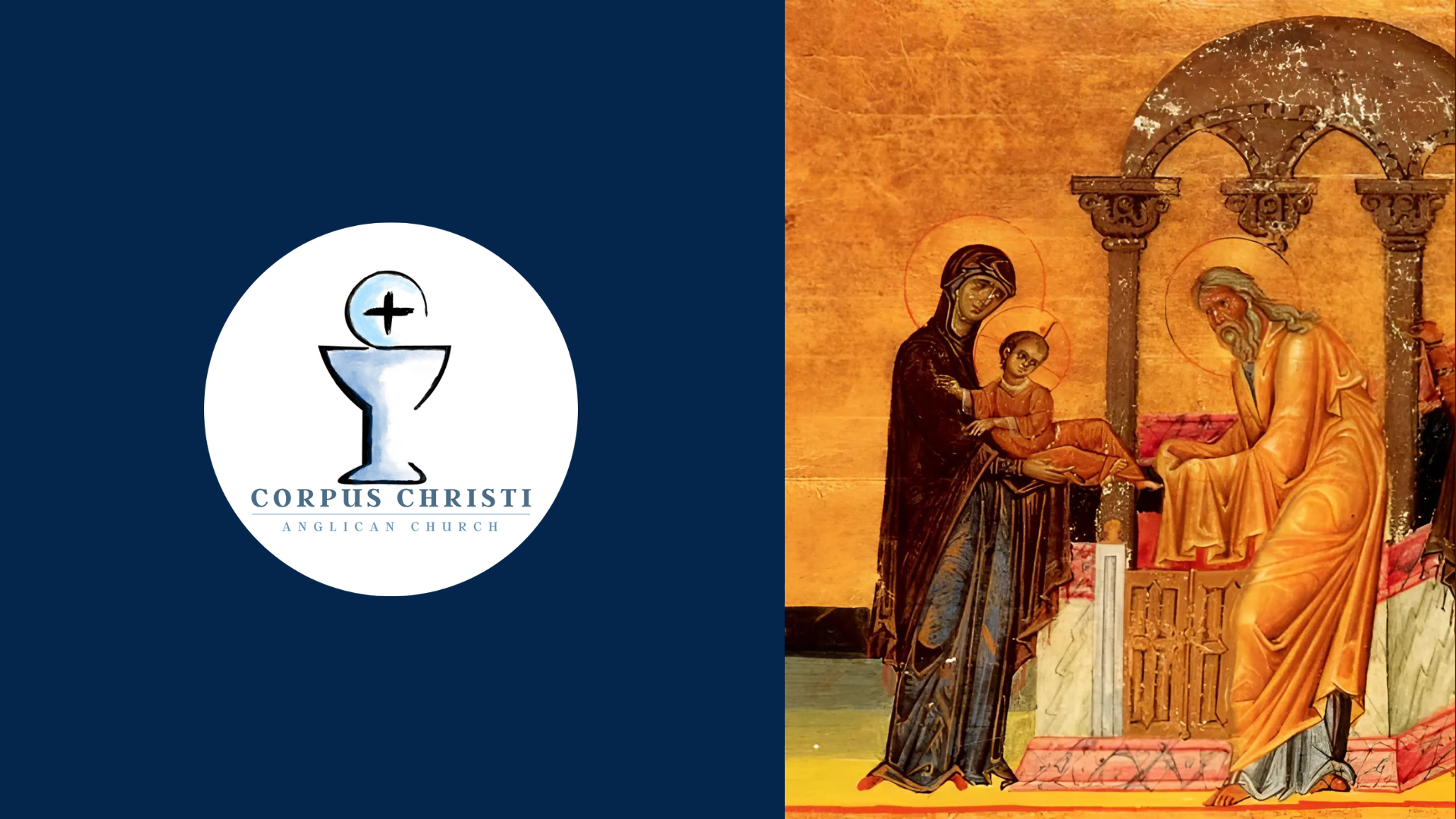
It usually occurs not on a Sunday, so we haven't often, we haven't been able to do it yet, but this we'll start doing this in the future on February 2nd. Today it's on a Sunday, so we get to celebrate, it's called Candlemas, or the Feast of the Presentation of Christ into the temple. And this passage that we read today concludes the infancy narratives in the Gospel of St. Luke.
If you remember, in the last several weeks, we're going now backwards chronologically, we've started Epiphany the first Sunday talking about the baptism of Jesus, so he was already an adult, and then after that we talked about him changing the water into wine, his first miracle in Cana of Galilee, and then last week we saw his glory going from synagogue to synagogue as he taught. And so now we're going back in time, back to the infancy narratives, and this passage today brings us to an encounter with the glory of Jesus that Mary and Joseph are going to experience at the temple with Simeon and Anna. And as we look at these passages this morning, let me pray for us.
“In the name of God, the Father, the Son, and the Holy Spirit. Amen. Lord, may the words of my mouth and the meditation of my heart be always acceptable in your sight. Oh Lord, my rock and redeemer. Amen.”
We're going to look at this passage through the lens of Mary and Joseph, through the lens of Simeon, and through the lens of Anna. So those are sort of my three points this morning, and through them all we're going to see about what it looks like to live a life of faith when things feel really uncertain. In today's gospel, we find people waiting for the glory of the Messiah. They're waiting, Joseph and Mary, Simeon and Anna, and Mary and Joseph show us this example of a devout couple, a couple who is following the law as it prescribes.
Mary and Joseph
They come to the temple to do three important things. First, for Mary's ritual purification after childbirth, so it's about 40 days after her son is born, for the presentation of the firstborn to the Lord, and for the dedication of the firstborn to the Lord's service. All these things are sort of wrapped up summarily in St. Luke's Gospel.
They come and they offer two turtle doves, which is according to the law, but it shows us that they are among the working class and the poorer in their culture. They can't afford to offer a lamb or a bull, and it's actually quite un-extraordinary what they're doing. They are just being faithful Jews, following the law.
They have had extraordinary encounters surrounding the birth of their son Jesus, but this particular thing that they're doing is quite un-extraordinary, and I find a lot of comfort in that because they're about to experience something amazing that God is bringing together and orchestrating, but from their perspective, they're just carrying on in the un-extraordinary, being faithful with the next thing God's called them to do, and the presence of God is making its way into the temple through this child who is being carried along by faithful parents who are doing something completely ordinary. When we think of the glory of Jesus coming to meet us, day in and day out, it reminds me that the glory of God comes through very common vessels and very ordinary encounters in your walk of faith, in my walk of faith. Sometimes people can look for signs of God's blessings in really big things, like if everything is going right, then God must be blessing what I'm doing.
You might hear someone say, well this bad thing didn't happen to me, so God must be pleased with me for what I'm doing, and that person who's experiencing failure must not be experiencing God's blessing, or they might say this good thing happened to me, so God has to be blessing me. But instead, the story of Mary and Joseph here reminds us that God's glory is often discovered among those small, seemingly insignificant acts of faithfulness that we take, and the outcomes are sort of out of our hands, as it were. Carving out time to pray, carving out time for intention and meditation to be honest about how we're feeling, doing something for a spouse without them having to ask you to do it, making time to invite other people over.
These are small rhythms of intentional faithfulness that as we encounter the image of God in other people, these reveal to us the glory of Jesus. This is the soil. The intentional rhythms are the soil for the revealing of the glory of Jesus.
And in the last two months, I've been listening to a few books, one on parenting, the other one on marriage, and then I've been reading one on friendship, because it is so easy to occupy my mind with things that I can't change, right? And maybe some of you are in that space too, where you've spent the week and your mental load has been occupied with things that are out of your control, right? But I want to see Jesus in the everyday stuff of my life. So, not that I want to stick my head in the sand, but I want to spend an equal amount of time on these things, these everyday moments that I can control, living out life with Jesus in the everyday stuff of the household, the neighborhood, the place that I live, our church. And the things that I can control are familial relationships and friendships, and I can have an effect in those places.
So, we need to discover the glory of Jesus in small places that are just very common places. We need to be surprised by Jesus in those ordinary spaces, those everyday faithfulness encounters of just walking and doing the next good thing, just like Mary and Joseph are in this story.
Simeon
So, this is Mary and Joseph, and then the camera changes, right? If you can picture like a movie, the camera is now changing to another person, to a man named Simeon. And Simeon, according to tradition, is an old man and a priest. We don't really have that in the gospel text, and that's not the point. The point is, this is a devout man who is living in the city, who is looking and longing for the Messiah to come and bring the redemption of Israel.
Jesus had already been testified about earlier in that chapter by shepherds in the wilderness, and now he's going to be testified about in the city and in the epicenter of religious power. Jesus has the witness of those in the country, and now he's going to receive the testimony of the devout Jews who are in the city of Jerusalem. So, the Holy Spirit reveals to Simeon that he will not die before he sees the hope of the Messiah.
And so, then it says the Holy Spirit guided Simeon to the temple. I'm not sure what that looked like, but Simeon has this habit of, you know, being a part of temple life. He's described as a devout and a just man.
And so, Simeon meets Mary and Joseph and Jesus, either in the temple of the women or the temple of the Gentiles, sorry, the court of the women or the court of the Gentiles, somewhere in the temple complex. He meets them. We don't know where, but as he encounters them, God is clearly orchestrating this moment from behind the scenes.
And then, when Simeon speaks, he speaks Isaiah chapter 60, with the light and the glory that are being brought together that describe the goodness of God's kingship over all the nations. And it's really important, in light coming to the nations, this is going to be one of the important themes in the ministry of Jesus, and this is where it first shows up in the Gospel of Saint Luke, that the light of Jesus going to the nations starts right here in Simeon's song. It's connected to this universal reign of the kingdom of God that is going to include the Gentiles, and that's what's new here.
You have, in the infancy narratives, you have these songs, the song of Mary, the song of the angels, the song of Simeon, and we'll get to the song of Anna. Each of those progressively reveals something about the nature of the saving work of the Messiah. And now that Simeon has seen Jesus, he can give up his post. He can rest. He's done. He's seen it.
He's seen God's promise fulfilled in his sight. And he adds what's interesting in this song, which we say every day in evening prayer, he adds this note of suffering in the song, and it's really interesting. So I can imagine Mary and Joseph, they're smiling with delight.
Yes, yes, you know, blessed be the Lord God of Israel. Oh wait, that's the morning prayer one, sorry, the evening prayer one. You know, as he's, you know, the light to enlighten the Gentiles and the glory of your people Israel, and their faces are beaming with joy, like, yes, we are seeing God's goodness here.
And then he says, and a sword will pierce your own soul too. Whoa, right? This is the first moment where there's this introduction of the ministry of the Messiah will involve some level of grief and suffering, but they're not sure the fullness of what that means yet. And I would imagine Mary and Joseph's facial expressions change in that moment.
And so now, the grief of anticipated pain is going to sit side-by-side with the joy that she's feeling about her son. And maybe, just maybe, you've been in a place like that, and maybe you're in a place this morning where grief about some sort of anticipated pain and suffering is with you. And in Mary's example, take note of her example here, she is somebody who we find that grief and hope sit next to each other for decades, right? This is 40 days into her child's birth, you know, being born.
There's 30 plus more years to go. Grief and hope are going to sit side-by-side for decades throughout the life of her son. And in that daily space between grief and hope, she does the next good thing as an act of faith, that famous, be it to me Lord according to your word.
She gives us an example of faith in that space between hope and grief. The next good thing as we're longing for the glory of God's kingdom to show up. And so we're called to follow her example.
Simeon has similarly cultivated a life of everyday faithfulness in anticipating the work of the Messiah, and he's led by God to meet these ordinary parents as yet another witness with the angels and with the shepherds of what this child's ministry is going to be. And so I've been thinking about the significance of what does it mean to end our days with this prayer of the song of Simeon, Lord now let your servant depart in peace, according to your word. Whether it's comp line or daily evening prayer, this ends our prayer every day.
And so what does that mean for us? Well, this prayer offers us an opportunity to discover the glory of Jesus in the everyday, moment-by-moment conversations and encounters that you guys are going to have every single day. It does that first. It also affirms that Jesus is present in all those things, and it invites us to rest.
I mean, when you hear Simeon sing this song, there's this profound sense that the work of God is in God's hands, and he can rest in this quiet confidence and stillness that God is going to be the one to carry out his work and his plan. And so this song invites us into a quiet rest with quiet confidence. And our bodies and our souls need that rest, and so this is why I love having this as a daily prayer.
Our bodies need this daily reminder. There are days when you and I are enraptured by joy upon joy, and there are days where we're finding the glory of God in that joy, and there are days where you and I are struck by grief, and there are days that we just live in the ordinary somewhere in between. There are days that we undergo this pain that pierced Mary's heart as well.
But Simeon invites us to frame things differently, to frame gladness and grief under the umbrella of God's glory going forth through Jesus as he shines his light on the nations. So as we live in that space between hope and grief, we live out the next good thing to the looking for the glory of God which is going forth to the nations as we take the next step of faithfulness in God's kingdom.
Anna
So we've seen God come in surprising glory in the faithful lives of Joseph and Mary and Simeon, and now the camera is going to change yet again, and we encounter a prophet, a woman named Anna.
Anna is introduced as this prophet who is from the tribe of Asher, which is one of the northern ten tribes, and there's some debate about how old she is. You know, it's common in those days for women to get married in their mid to late teens, and so if she had been married somewhere around 16-ish, then her husband would have died by the time she was 23. So she was probably a widow from her mid-20s, and so it's possible that she's somewhere now in her early to mid-90s or even in her early hundreds, but she has spent all that time in the station of widowhood.
People know who she is. She's been in the temple every day. She is a pinnacle of the example of female piety, and she represents the voices of the women in Jerusalem in the city who are longing for the hope of the Messiah, and Anna has been looking for the redemption of Israel, which comes and brings in the new age of the messianic king, and this is going to be a major theme in the gospel, this coming kingdom.
The Venerable Bede, one of our saints in the English tradition, says something really important here. He says, “What needs to be mentioned too, is that deservedly both sexes hurried to meet him, offering congratulations, since he appeared as Redeemer of both.” So Jesus would be the redeemer of man and of woman. He would be the redeemer of Jew and Gentile, of pious city dwellers, and of common herdsmen in the wilderness.
Jesus is the hope and the redeemer for all people, and when people find their rest in the lordship of Jesus and his reign as king, they do so in a way that takes full account of who they are and the uniqueness of where they've come from, and so Anna invites us to be very curious about what the redemption of Jesus looks like in groups of people who aren't always given the most prominent voices. Women have to be heard and held in honor. Children and elderly must be heard and held in honor.
Ethnic, linguistic minorities have to be able to tell their stories, and those lives must be honored, and so the poor must have a voice in honor. So Anna hears one group of people, a representative of one group who is looking for the redemption of Jesus. She invites us to reflect on whose voices I think feel under- represented in the church.
Now think with me again about the infancy narratives. Angels, shepherds, a just and devout city-dwelling man, a pious Jewish woman prophet who is a city dweller. These are all giving unique voice and testimony to the work, the hope, the consolation of Israel in the ministry of Jesus, and so the kingdom of God is going to be lived out, and it's going to look very unique and different in the different vocations and stations of life, sexes, families of origin, subcultures, stories, and all of these things creating a tapestry in the church that's depicting this narrative of the glory of God and how the light of Jesus is going into the nations, through our neighborhoods, through our households, through our individual lives, and so as the glory of Jesus goes forth, take notice of it in the everyday stuff of life and the lives of the other people that you're encountering with a disposition of curiosity to learn more about the global picture of redemption that God's portraying.
Conclusion
So in conclusion, today's passage calls us to join Mary and Joseph and Simeon and Anna to live out faithful anticipation of God's coming kingdom in the midst of the everyday encounters that you and I have in our routines, and Mary and Joseph remind us to carry on in obedience, one good next step at a time, even though we don't fully understand the significance of what we're holding in our hands. Simeon reminds us to find rest and quiet confidence in the God who's going to carry out his plan, even though there will be times of grief and gladness. Anna reminds us to value Jesus's redemption and the unique stations and stories of others in the kingdom of God, and just as we all were carrying in our candles this morning, singing about the light of Christ, let's remember this day, candle-ness, that this day calls us to carry the light of Christ in everyday faithfulness to the world around us that is longing to know the light and love of our Lord.
Let me pray for us. “O God, our Father, source of all light, today you reveal to the aged Simeon your light, which enlightens the nations. Fill our hearts with the light of faith, that we who have borne our candles may walk in the path of goodness and come to the light that shines forever.
Your Son, Jesus Christ our Lord. Amen.”
Transcribed by TurboScribe.ai. Edited by the author.