Sunday of Christ the King: Citizens of Heaven, Pilgrims on Earth
cONTENT
Introduction
Good morning, friends. Welcome to the end of our liturgical year, the Sunday of Christ the King. This is a really new feast in the calendar of the church. In fact, today is its 100th celebration. There was a turbulent revolutionary period between 1917 and 1922 as Vladimir Lenin consolidated power, led his socialist-Bolshevik party in fighting a civil war, and as he won and consolidated power, began to push out his opponents. World War I had just ended, and people were figuring out how to rebuild in Europe. Lenin’s version of Marxism promised people land, bread, and peace — and people bought into it. This began the creation of what would be the Soviet Union as Lenin and his form of socialism promised answers to hurting peoples’ questions.
Around 1922, Joseph Stalin had become the secretary-general of the Communist Party and in just 2 years would expel Trotsky to become dictator and ruling leader when Lenin died in 1924. Stalin had forcibly collectivized the USSR’s agriculture and industry, held power by intensive police terror, and extended soviet control over a number of European states. He is really the architect of what we would now consider to be soviet totalitarianism. He executed people, sent them to labor camps, and persecuted the Russian Orthodox Church and other religious groups in the name of militant atheism. This movement was creating global alliances that were harmful not just to the church, but to human civilization at large.
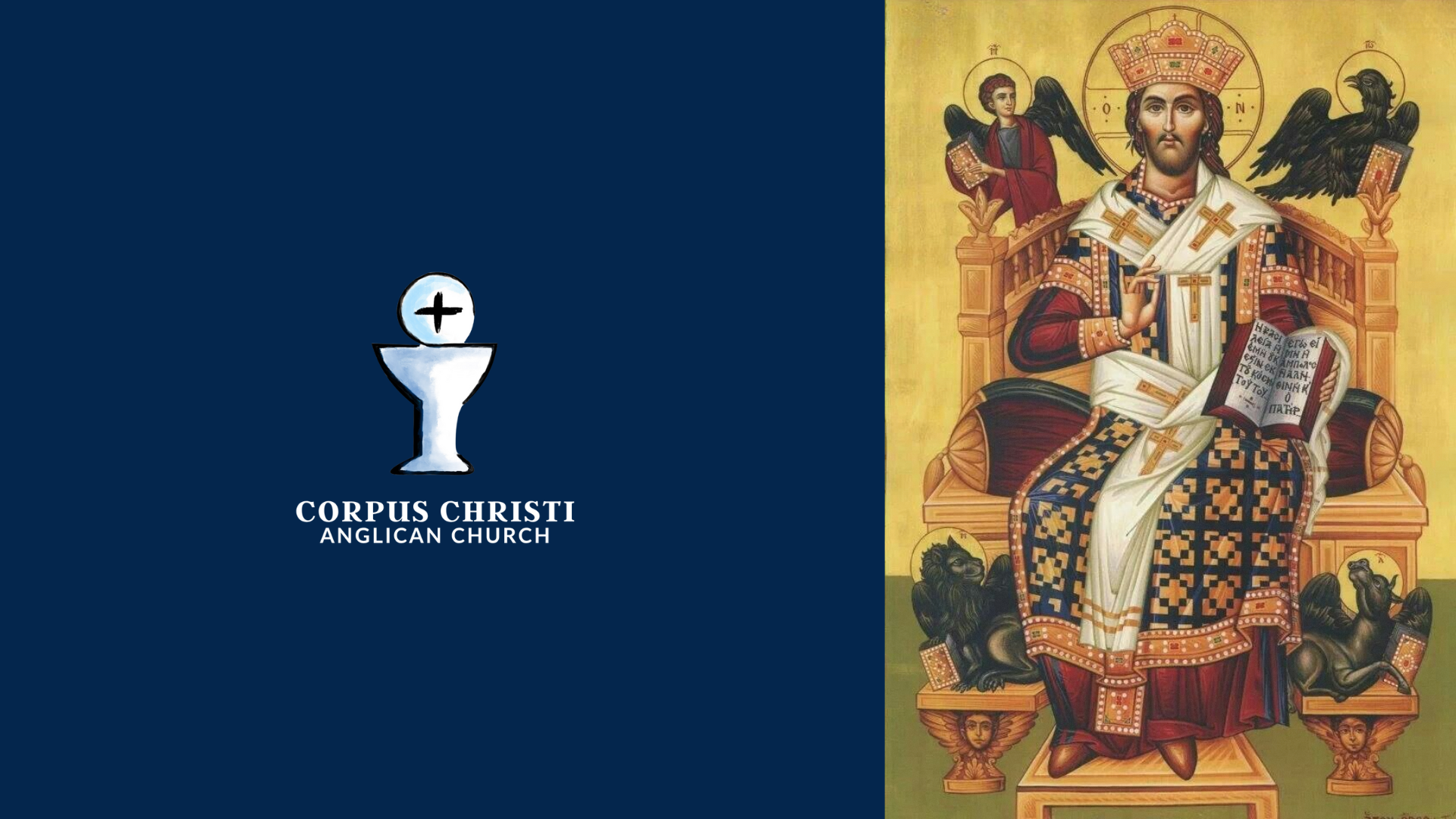
As the church finds herself in 1925, wondering what her future will be in this world, Pope Pius XI institutes the feast of the Solemnity of Our Lord Jesus Christ, King of the Universe. In his encyclical, his message of hope to the church is that governments will come and go but it is Christ who reigns as king forever. He says, “From this it follows not only that Christ is to be adored by angels and men, but that to him as man angels and men are subject, and must recognize his empire; by reason of the hypostatic union Christ has power over all creatures.”[1] This feast day ends our liturgical year with the crucial reminder that Jesus Christ is Lord and King — He has the final word. Every area of our lives shall be under Christ’s reign so that we can declare and put on display the goodness of his rule and reign in a broken world, subject to unjust empires and spiritual forces of wickedness, which is longing for restoration.
As we look at the Gospel text this morning, let me pray for us: “In the name of God, the Father, the Son, and the Holy Spirit. Amen. Lord, may the words of my mouth and the meditation of our hearts be always acceptable in your sight, O Lord, our Rock and Redeemer, Amen.”
• Mocking will come from those who don’t have eyes to see — Lk 23:35-39
In the Gospel today St. Luke shows us humanity’s response to our Lord. There are curious watchers and mockers all throughout the text. The people who condemned Christ to be crucified stand and watch in curiosity at what will happen as an outcome for their call to have Jesus killed. The leaders of the people take it a step further and don’t just stand in curiosity, but move towards mockery. If Jesus was so good at saving others, why can’t he save himself? This is echoed by the Roman soldiers who form a third group of mockers. While kings sit in luxury on their thrones, satiating themselves with delicacies and drinking the finest wine, our Lord received a crown of thorns and in his thirst, was given the poor man’s sour wine: enough to momentarily satisfy this thirst, but only enough to prolong his suffering. They join in the chorus of saying “Hey, if you can save others, why don’t you save yourself?”.
All of the mockery and suffering is framed by the inscription above Jesus’ head. “Jesus, the Nazarene, the King of the Jews”. Everyone is accosting Jesus, even one of the criminals crucified next to him. One author paints a helpfully vivid picture of what St. Luke is doing: “Jesus has stood on its head the meaning of kingship, the meaning of the kingdom itself. He has celebrated with the wrong people, offered peace and hope to the wrong people, and warned the wrong people of God’s coming judgment. Now he is hailed as king at last, but in mockery. Here comes his royal cupbearer, only it’s a Roman soldier offering him the sour wine that poor people drank. Here is his royal placard, announcing his kingship to the world, but it is in fact the criminal charge which explains his cruel death.” Humanity’s problem was far deeper than an ethnic community losing political power. His death, resurrection, and ascension procured a kingship far more real, spiritual, and cosmic than holding onto earthly power. His Kingship, his rule and reign, breaks into the world to overcome sin and death one person, household, neighborhood, and town at a time. The diaspora of the church spread abroad in the world is promise that God is bringing all things into the fullness of their new creation. We will find people mocking because this kingdom does not fit the contours of any earthly kingdom perfectly.
In the early church, there is a great letter saved for us called the Epistle of Diognetus which says, “But while they live in both Greek and barbarian cities, as each one’s lot was cast...at the same time they demonstrate the remarkable and admittedly unusual character of their own citizenship. They live in their own countries, but only as nonresidents; they participate in everything as citizens, and endure everything as foreigners. Every foreign country is their fatherland, and every fatherland is foreign. They marry like everyone else, and they have children, but they do not expose their offspring. They share their food, but not their wives. They are in the flesh but do not live according to the flesh. They live on earth, but their citizenship is in heaven.”[2] We cannot set our hope in human institutions to provide the salvation we long for. We begin with Christ as our king and live in the world under delegated and penultimate authorities. We do not look to Darius, Caesar, or any earthly authority who might promise the kingdom of God, or that they can fix every ill in the world, and then demand our unquestioning allegiance to them. We need to prayerfully, and in allegiance to Christ our King, shape the institutions that will in turn shape us. Doing the work of God’s kingdom means risking mockery to desire that we and others become more like Jesus and that things are ultimately made right again.
It starts with the hard work of naming accurately done wrong, or not done right. It is hard to name someone else’s harm of us accurately so that they might come to repentance. It is hard to ask for forgiveness, and often harder to extend forgiveness when others have genuinely repented. It is hard to do what is good and right when it is common to uphold injustice and vice — especially when injustice and vice become legal!
Citizens of God’s kingdom don’t long for the appearance of satisfaction, comfort, or opulence — a put-together life— but we risk admitting that we are not put together so that people can see the transforming work of the Holy Spirit in us. Sometimes when I talk with someone not a part of the church, they will share about something deeply broken. And my reply is often “there are a lot of people who have struggled with that”. Sometimes I’ll ask if they even want to hear of my own story with regards to what they're going through if it seems appropriate. It’s in those moments of recognizing our common humanity that I’m able to share something about the goodness of the work of Jesus in a way that it can be held in honor, because the problem is not just that we are not morally good, it is that we are deeply wounded and in need of becoming whole again. The kingship of Jesus is so much deeper than acquiring earthly power or changing people’s behavior. It is about helping others see how our desire for autonomy and separation from God has broken us more than we’re often able to admit; but also helping others become acquainted with the power of Jesus, who reigns over all, and is far more able deliver us than we would have ever believed. We risk mockery for the benefits of heavenly citizenship.
• The cross is the doorway to paradise and Christ’s reign (Lk 23:40-43)
One of the thieves on a cross next to Jesus refuses the mockery. His life is nearly done, he knows his flaws and probably deeply regrets the life choices that led to this moment. Jesus is really his last hope. He knows the inscription above Jesus’ head and in the mystery of God, he has some faith that Jesus is telling the truth about the kingdom of God, whatever that might mean. I can imagine this kind of faith being something like “Jesus, I’m not sure what this kingdom will look like, but when you arrive there, please remember me as someone who is favored and not someone who has taken the side of the wicked and the unjust.” He says, “Remember me when you come into your kingdom.” A simple desire opens up the door to the grace of God.
Jesus tells the man immediately, “Truly, I tell you, today you will be with me in Paradise.” When someone turn towards God with the smallest amount of faith, God turns toward him or her with an overwhelming amount of grace. The man on the cross is hope for all of humanity who longs for God’s kingdom to break into the chaos of our brokenness, of our failed relationships, our unmet expectations, and our injustices. St. Ephrem says it this way:
Adam had been naked and fair,
but his diligent wife
labored and made for him
a garment covered with stains.
The garden, seeing him thus vile,
drove him forth.
Through Mary, Adam had
another robe
which adorned the thief;
and when he became resplendent at Christ’s promise,
the garden, looking on,
embraced him in Adam’s place.”[3]
Conclusion
After a hundred years of celebrating the Solemnity of Our Lord Jesus Christ, King of the Universe, we end the liturgical year with the reminder that Jesus’ kingdom will rule over all. Humanity is still inventing new ways to rebel against God, new ways to exploit one another, new idols to worship. And yet, Christ has ascended on high where he sits as king above all. He used the apostles as agents of cosmic renewal where the Gospel of Christ was overturning wickedness and death by the transformed lives of people by the Holy Spirit. You and I have joined that same heritage and citizenship, where every foreign land is our fatherland, and fatherland is where we journey as strangers. As we go about doing the hard work of repentance, naming things accurately, and risking mockery, we trust that Christ, who rules over all, will transform us and those around us by his grace because his citizenship acquaints us with the grace of God and brings the healing and restoration we long for.
Let us pray:
O God, the King of glory, you have exalted your only Son Jesus Christ with great triumph to your kingdom in heaven: Do not leave us comfortless, but send us your Holy Spirit to strengthen us, and exalt us to that place where our Savior Christ has gone before; who lives and reigns with you and the Holy Spirit, one God, in glory everlasting. Amen.
[1] Quas Primas, 13.
[2] Michael Holmes, The Apostolic Fathers in English. Epistle to Diognetus, 5:5-9.
[3] Hymns on Paradise 4.5.