SERMONS
Archive
- March 2026
- February 2026
- January 2026
- December 2025
- November 2025
- October 2025
- September 2025
- August 2025
- July 2025
- June 2025
- May 2025
- April 2025
- March 2025
- February 2025
- January 2025
- December 2024
- November 2024
- October 2024
- September 2024
- August 2024
- July 2024
- June 2024
- May 2024
- April 2024
- March 2024
- February 2024
- January 2024
- December 2023
- November 2023
- October 2023
- September 2023
- August 2023
- July 2023
- June 2023
- May 2023
- April 2023
- March 2023
- February 2023
- January 2023
- December 2022
- November 2022
- October 2022
- September 2022
- August 2022
- July 2022
- June 2022
- May 2022
- April 2022
- March 2022
- February 2022
- January 2022
- December 2021
- November 2021
- October 2021
- September 2021
- August 2021
- July 2021
- June 2021
- May 2021
- April 2021
- March 2021
- February 2021
- January 2021
- December 2020
- November 2020
- October 2020
- September 2020
- August 2020
Lent 3: This Changes Everything!
Exodus 17:1-7
Psalm 95
Romans 1:16-32
John 4:5-26, 39-42
CONTENT
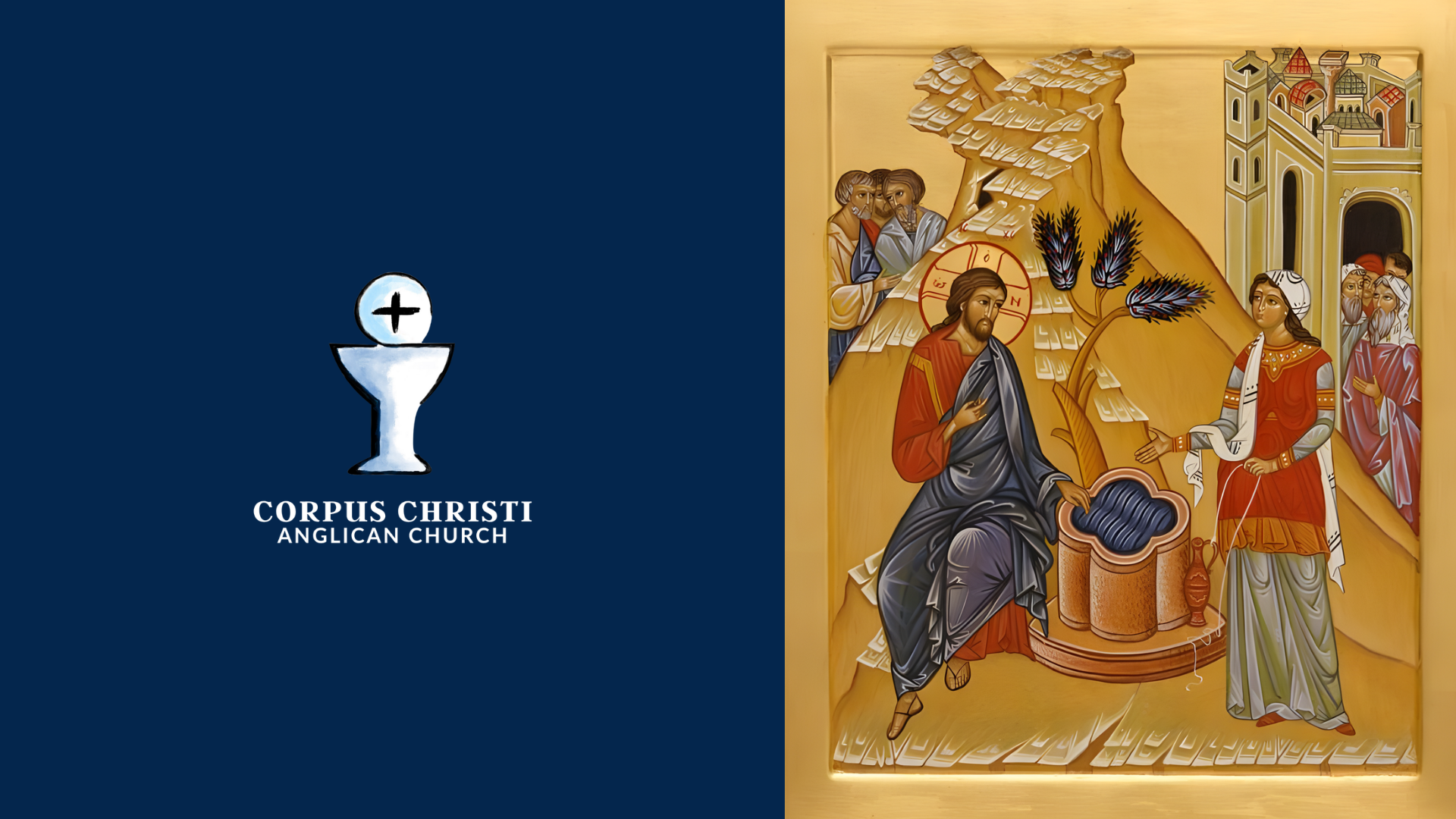
Today’s reading from the Gospel according to John describes Jesus’ encounter with a Samaritan women at Jacob’s well (near Nablus on the West Bank) at mid-day, an event totally unacceptable in the culture of the day. If this story were portrayed in a YouTube video today, the title would be, “Judean man speaks to Samaritan woman in public. This changes everything!”
Please pray with me: May the words of my mouth and the meditation of our hearts be acceptable in thy sight, O Lord, our strength and our redeemer.
“This changes everything!” It is easy for us, who are familiar with the New Testament, not to realize how shockingly counter-cultural the Gospel stories were in the first century; and are even now profoundly counter-cultural in the twenty-first century.
In first century Israel, Jews did not speak to Samaritans. Furthermore, men did not speak in public with women not of their own families; and certainly not with women “of doubtful character.” The woman at the well was there at mid-day, alone. In the first century, women went to the village well in a group, at dawn, when the air was cool. Obviously, this lone woman was some kind of an outcast.
Jesus honored the Samaritan woman simply by speaking to her; but more than that, he cared about her personal life, and he spoke honestly with her. And she realized she was conversing with a very unusual person…
Until just the last few years, in most cultures, women have been treated as second-class citizens. Only now, in Western culture anyway, are women acknowledged as having the same dignity as men, and an equal place in economic and political status. However, this huge change has only just begun; and we find ourselves in much confusion and some conflict.
Right now, young men in particular, often feel they have lost both their identity and their job opportunities: “They sit alone in the basements in the homes of their single mothers playing computer games or watching porn videos.”
In addition, the biblical understanding of “marriage” appears to have evaporated. A “wedding” now is a huge, expensive social event, not a sacramental event in the midst of the life of a congregation. A married couple are not “husband and wife,” but “partners” instead. And the relationship is not necessarily life-long…
What are we, as followers of “the man from Galilee,” to say and do in this situation? Remember: When Jesus turns up, This changes everything. A process of deep change begins, and it is not an easy change. In fact, “its complicated,” but here are three suggestions:
Beware of the weaponization of language.
Respect “the six-ton elephant.”
Lift up your hearts.
1. Beware of “the weaponization of language”
The idea that we can shape culture by manipulating language is a form of idolatry. It is one of the ways that we creatures claim to be gods ourselves. But we can not create truth. We struggle to discern and communicate truth. If we can make words mean whatever we want them to mean, there is no truth at all.
In the biblical story of the creation of the world, God gives Adam the job of naming all the creatures. To name another being is to have the right to control or use the other. [Genesis 3] When God meets Moses in the desert at the burning bush, “burning but not consumed,” the bush reveals the divine presence. Moses asks God his name, but God does not give his name, but a verb instead: “I am who I am, and I will be who I will be,” YahWeh. [Exodus ].
We must be very humble in our use of words. Words are the instruments of creation. Words lead to events. Words result in the shaping of concrete objects. Words, truth, belong first of all, to God. “In the beginning was the Word, and the Word was God… and everything that was made was made through him... And the Word became flesh, and “pitched his tent” with us. [John 1:1-14]
One of our problems with the words used in translating the Bible into English is the use of masculine pronouns in reference to the character of God. Maleness and femaleness, both biological and psychological, are dimensions of the good creation; and in that sense originate within God; but God can not be labeled under either category – Ultimate Reality can not be labeled! Our limited minds can reflect the character of God; but can not encompass God. “The fear of the Lord is the beginning of wisdom, and the knowledge of the Holy One is insight.” Humility is the beginning of wisdom. [Proverbs 9:10]
2. Respect “the six-ton elephant”
One of the traps of Greek philosophy is the idea of “the philosopher-king” - All would be well in the nation-state if the ruler were a truly rational person. Really? Are any of us, men or women, truly “rational”?
To use the words of a woman commedian, “Have you (men) ever said something stupid? Yeah. That's not your fault. You were designed that way. You're not designed to think complicated, convoluted, sensitive thoughts. You're designed to spring up from behind a rock, kill stuff, and drag it home, okay? That's your gig.”
Or, on the other hand, to put it in the words of Professor Higgins, “Why can’t a woman think like a man?” Or, again, “A woman’s place is barefoot and pregnant in the kitchen.” “No, the woman’s place is in the House... and the Senate.”
Jonathan Haidt, a prominent social psychologist, says that the rational, conscious part of our personality is like the rider on the neck of a six-ton elephant. The rider may think he is controlling the elephant (the unconscious mind, the primary agent of perception and motivation), but the rider is actually just making excuses for what the elephant has already decided to do.
Each of us should get to know our own elephant; and if we want to communicate with other people, we should ask the respectful questions that will enable us to get acquainted with their elephants.
3. Lift up your hearts
The opening sentences of the Great Thanksgiving in the Eucharist are: “The Lord be with you. And with your spirit. Lift up your hearts. We lift them to the Lord.”
This is typical biblical language. We understand that this is poetic imagery. “Our hearts” means, at least our emotions, our attitudes, our expectations. It really is a reference to our six-ton elephants. The “elephant” is not a biblical image, but maybe useful nevertheless...
The opening sentences in the Great Thanksgiving, “The Lord be with you And with your spirit, Lift up your hearts,” take on a new depth of meaning if “hearts” means our “elephants,” our whole unconscious mind.
In our weekly celebration of the Eucharist these sentences may seem rather bland; but in the original Greek they can be full of enthusiasm. An equally valid translation of the opening sentences, now found in The Alternative Service Book [1980] of the Church of England, is, “The Lord is here. His Spirit is with us. Lift up your hearts.” [p.130] Now when the priest says, “Lift up your hearts,” the congregation understands that it is the Holy Spirit who enables us to lift up our six-ton hearts.
And even, in keeping with the ancient Jewish custom, when we stand to worship God, we could lift our arms upwards in praise.
In conclusion:
1. Beware of the weaponization of language. Language is not a device for us to manipulate for our own advantage.
2. Respect “the six-ton elephant.” As individuals and as a Church we need to do the work of getting acquainted with our elephants, learning how our riders can interact with our elephants creatively.
3. Lift up your hearts. Remember the warning at the end of Psalm 95:
Today, if you hear his voice,
8 do not harden your hearts, as at Meribah,
as on the day at Massah in the wilderness,
9 when your fathers put me to the test
and put me to the proof, though they had seen my work.
10 For forty years I loathed that generation
and said, “They are a people who go astray in their heart,
and they have not known my ways.”
11 Therefore I swore in my wrath,
“They shall not enter my rest.”
And remember also, that it is the Holy Spirit who gives us the humility and the courage to deal with our elephants.
Please pray with me:
Heavenly Father, you have made us for yourself, and our hearts are restless until they rest in you: Look with compassion upon the heartfelt desires of your servants, and purify our disordered affections, that we may behold your eternal glory in the face of Christ Jesus; who lives and reigns with you and the Holy Spirit, one God, for ever and ever. Amen.
[BCP p. 606]
Job to Jesus - Undeserved Suffering
cONTENT
Introduction
Let’s focus on today’s Old Testament lesson:
23 ‘O that my words were written down!
O that they were inscribed in a book!
24 O that with an iron pen and with lead
they were engraved on a rock for ever!
25 For I know that my Redeemer lives,
and that at the last he will stand upon the earth;
26 and after my skin has been thus destroyed,
then in my flesh I shall see God,
27a whom I shall see on my side,
and my eyes shall behold, and not another.
This is the climax of an amazing Hebrew poem on the subject of Undeserved Suffering. The last three verses are found in the series of anthems that are read or sung at the beginning of every service for the Burial of the Dead in our Book of Common Prayer.
BCP p. 249
Prayer
I want to address three themes, which together embrace the whole message of the Bible. I am not going to cite specific texts, but if you’ll give me your email address, I’ll send you the full text of this sermon with references, each of which is worthy of careful reading and reflection. These themes are:
Undeserved suffering
Crucifixion and resurrection, and
Voluntary self-sacrifice
Undeserved Suffering
One of the results of modern communications is that we have more information than we can bear. And “news,” by definition, is bad news: Wars, famine, epidemics, storms, earthquakes, crime, economic failure, demographic collapse.
Sometimes we can ignore these things. They happen mostly to other people. But the most difficult suffering to face is the suffering of the innocent, or of “good people,” whose suffering is not the result of their own ignorance, foolishness, or mistakes. That has sometimes happened to us, or to members of our family, or some close friends. If God is “good,” how could He allow a world in which there is so much, terrible, suffering.
The Book of Job is a word-picture of exactly this question. He has lost his business, his children, and his health. In pain and exasperation, Job’s wife cries out, Curse God and die!”
Job 2:9
Some of us have friends or family members, who used to believe in God, who have had experiences like this, and now say they are “atheists.” How can a good God allow such suffering; especially when it has the dimension of genocide - the deliberate destruction of millions of people for no reason other than the “wrong political orientation, the wrong ethnic identity or the wrong economic class”…
Job 3:1-31:40, 38:1-42:6
Crucifixion and Resurrection
As the Apostle Paul, that amazing Pharisee, reflected on the history of his people, Israel, and what God did in the Crucifixion and Resurrection of Jesus, he saw a parallel between the experience of his people over the centuries and the process whereby a child grows up and becomes an adult. His letters to the young churches in his care were full of references to the importance of growing up, such as “when we were children, [we] were enslaved to the elementary principles of the world. But when the fullness of time had come, God sent forth his Son, born of woman, born under the law, to redeem those who were under the law, so that we might receive adoption as sons.”
Galatians 4:3-5
Paul speaks of “growing up” as a transition from being a slave in the tribe to the status of an adult member of the extended family by being adopted (a transition familiar to both Jews and Romans). We see the Sacrament of Baptism as an adoption ceremony, a transition in the status and character of the individual, made possible by Jesus’ death and resurrection (grace). (Adult baptism is the norm.) BCP p.169 A simple definition of “growing up” is making the transition from total self-centeredness to sacrificially serving others. What does that transition look like?
Hebrews 1:10-11, 6:1-5 Luke 9:23-24
Crucifixion
That’s what Jesus was talking about when he said, “If anyone would come after me, let him deny himself and take up his cross daily and follow me. For whoever would save his life will lose it, but whoever loses his life for my sake will save it.” What does daily crucifixion look like? It is a mirror of the entire process by which Jesus intentionally went to his death outside the walls of Jerusalem: grief, anger, humiliation, suffering, dereliction.
As Jesus approached Jerusalem the last time, he looked down on the city and wept. He had spent three years trying to teach the people of Jerusalem his way of dealing with the Romans, but in their mind the only way of liberation was through violence. Sometimes our efforts to communicate the Good News of the Kingdom appear to fall on deaf ears…
Luke 19:441-44
When Jesus entered the Temple he was furious with the money-changers who were desecrating this sacred place for their financial gain. Sometimes our anger is the motivation for positive change.
Matthew 21:12-13
In their attempt to undercut Jesus’ authority with the common people, the Romans deliberately humiliated him publicly, by portraying him as a false king, and by torturing him to death in public. Sometimes we may be derided for claiming to represent Jesus.
Matthew 27:27-31; 32-44
And on the cross, Jesus felt he had been abandoned, not only by his friends, but by God himself. Sometimes we may feel terribly alone.
Matthew 27:45-47
Resurrection
God’s mighty act, Jesus’ vindication. This public event marked the completion of his mission, the inauguration of the New Creation - the Kingdom of God; the beginning of a new stage in history, in which the practice of voluntary self-sacrifice begins to transform human culture and the whole historical process.
Matthew 28:1-10; Colossian 2:8-15; Revelation 21:5-6
Voluntary self-sacrifice
The transition from “this evil age” to “the coming age;” from childhood to adulthood; from serving oneself to sacrificially serving others (the meaning of “love”). We are in both “this evil age” and “the coming age,” at the present time, both grown up and immature, at the same time.
Colossians 1:9-14, 24-28
A note about the word “sacrifice:” It does not mean a bloody, primitive ritual. It means “getting your priorities in order, preferably in accordance with the directions of the Holy spirit.”
And just a note on the word, “evil.” In the biblical context there are two types of “evil,” the evil of immaturity, of accident and mistake, and malice, “the dark power,” that works to corrupt or destroy God’s good creation. In the Lord’s Prayer, the word “evil” can carry both meaning, both our tendency to harm or destroy ourselves, or “the evil one,” the seemingly autonomous dark power tending to destroy the good creation.
Summary
The message of the Bible can be seen as the combination of three themes:
1 Undeserved suffering
2 Crucifixion and resurrection, and
3 Voluntary self-sacrifice
Conclusion
Stand firm. Trust God. Listen for his directions. The “age to come” has already begun.
Glory to God whose power, working in us, can do infinitely more than we can ask or imagine: Glory to him from generation to generation in the Church, and in Christ Jesus for ever and ever. Amen.
EPHESIANS 3:20-21
BCP p. 26

Good Friday: Behold the Lamb of God
TranscriptioN
Behold the Lamb of God who takes away the sin of the world. Jesus is the Passover Lamb whose blood, whose suffering, and death is the beginning of the supreme exodus event. The exodus that frees not just the chosen people, but the whole of humanity, frees all of us who are enslaved by the dark powers which inhabit our governments, our economic systems, and indeed even the cultures that shape our minds and our way of life. Please pray with me.
May the words of my mouth and the meditation of all our hearts be acceptable in your sight, O Lord, our strength and our Redeemer. Amen. I want to share three affirmations.
First, the exodus of the Jews from Egypt is the great historical event that shapes the purpose and way of life of the people of God. Second, the exodus event begins with the Passover when God took the initiative to set the exodus event in motion. Third, Jesus' death and resurrection is the ultimate exodus event.
Jesus' death and resurrection is God's initiative to radically change the course of history and to bring to completion his plan for the fulfillment of human life now and in the world to come. Behold the Lamb of God who takes away the sin of the world. First affirmation, the exodus from Egypt is the great historical event that shapes the purpose and the way of life of the people of God.
The exodus event echoes through all the biblical texts and the whole of human history. Passover is the great annual pilgrim feast in which all the people of Israel who were able came to Jerusalem for the sacrifice of the Passover lambs in the great temple. One lamb for each family.
To this day, the Seder is the annual celebration of the exodus for every Jewish family. In the feast of Passover, the act of God for the preservation and emancipation of the nation is remembered and celebrated. It is a corporate act of worship in which all the members of the community or family are expected to participate.
Each person is expected to eat a portion of the body of the Lamb. Jesus deliberately chose the time of the feast of Passover for his final confrontation with the temple authorities. All the Gospels of Matthew, Mark, and Luke attest to this fact.
And Jesus knew this challenge to the Sanhedrin and the high priest would result in his own death, but this was his intention, to enact the event in history by which the creator of the universe brings together each part of the human community, families, cities, nations, and indeed the whole of human life. Passover is the celebration, Passover is the celebration of a profoundly political event. Second affirmation, the exodus event began when God acted before Moses set the great escape in motion.
God destroyed the lives of the firstborn of both people and animals in all the households of Egypt, but he spared the lives of the children of Israel whose homes had been marked with the blood of slaughtered lambs. In the book of Exodus we read, for I will pass through the land of Egypt that night and I will strike all the firstborn in the land of Egypt, both man and beast, and on all the gods of Egypt I will execute judgments. I am Yahweh, the Lord.
The blood of the lambs shall be assigned for you on the houses where you are, and when I see the blood I will pass over you, and no plague will befall you to destroy you when I strike the land of Egypt. While the Egyptians were warned of the impact of the unfolding purpose of God through natural events, famines, and epidemics, the exodus event began with the passing over of the power of death that allowed the chosen people to survive and begin their escape into the desert. In the blood of the Passover lambs, God took the first step to set his people free from slavery in Egypt, his initiative in creating a community that could embody the way of life that he intends for all the people on earth.
This is the character of the great father, the creator of all things, who longs to be involved in the lives of his children and who, like the prodigal father in the story told by Jesus, who runs to meet his wayward children, the children who have finally recognized their own rebellion against their father. This is part of our own personal experience, too, when finally we welcome God's direction into our lives and acknowledge that long before we became aware, he had been at work in our relationships and in our life situations to enable us to come home to him. Third affirmation, Jesus' death and resurrection is the ultimate exodus event.
God's initiative radically to change the course of history and to bring to completion his plan for the fulfillment of human life now and in the world to come. We miss the main point of the good news about Jesus' victory over the dark powers in the historical process. If we think the proclamation of the gospel is only that God's good purpose for us will be realized after we have died, we and all of human life are being created here and now.
We need to begin to enter into the fullness of God's life here and now, and that is God's purpose for his whole creation. But he waits for us to listen and to accept his invitation. He wants us to be partners with him in the process of bringing his creation to completion.
Our father God wants us to engage in things as they are in this world, and at the same time live the way of life that embodies human life as God has designed it to be. Jesus, I am sure, really enjoyed his three-year ministry in Galilee and Jerusalem, and his disciples loved being with him, but eventually he had to face the powers of human rebellion head-on, and so must we. But this confrontation with falsehood and violence must take place, or we surrender to the dark powers that distort and destroy the fullness of life that is God's gift to us.
Jesus' humiliation and excruciating death on the cross is the sacrifice of the Lamb of God, the first action in the great exodus event that includes Jesus' resurrection and the outpouring of the Spirit of God. These historical events put into motion the next steps in the creation process, God's project to create people who can reflect into the world that he is creating the qualities of his own character. St. Paul calls this process new creation, and so it is, in the sense that we have been given a glimpse in the person of Jesus of the direction of the whole creation process.
And so at the end of the scriptures, in the strange but exciting revelation to John of Patmos, we see this picture of the fulfillment of God's purpose. John wrote, and they sing the song of Moses, the servant of God, and the song of the Lamb, saying, great and amazing are your deeds, O Lord God the Almighty. Just and true are your ways, O King of the nations.
Exodus and the victory of the Messiah come together in this shout of praise, the message of the whole of the scriptures, and of the testimony of the people of God. Christ, our Passover, is sacrificed for us. Therefore, let us keep the feast.
Behold the Lamb of God, who takes away the sin of the world. And I, when I am lifted up from the earth, will draw all people to myself. Amen.
Transcribed by TurboScribe.ai. Edited by the Vicar.

Missionaries of God’s Kingdom
Transcription
Today is World Mission Sunday, and we have just heard four wonderful texts; but I'm going to focus on just one verse from the Gospel for today:
As the Father has sent me, so I send you.
But before I get into the sermon, I would like to conduct a very brief survey. On the first one, I would just like a show of hands.
So first question - Would any of you who are missionaries, please raise your hand. Okay, one, two, three, four, five, six, seven. Some are not quite sure whether they're missionaries or not, but that's okay.
Now the second two questions, just answer it in your own mind. This is not a quiz and there will be no grades on this. So second question - Who was the first missionary in the Bible? Make a mental note. Who was the first missionary?
And the second of these two questions was - Who was the supreme missionary mentioned in the Bible? Okay, you've got those in your mental notebook. Here we go.
1. Well, of course, I'm sure you all, or almost all of you, noted that the first missionary was Father Abraham. He obeyed God's instructions and he didn't know where he was going, and I think that's a good point. It's important to know that. Just because you've been given orders by the Lord, it doesn't mean you know exactly what's going to happen next. In fact, that's part of the fun, although it's part of the danger as well.
Around 1900 BC - the archaeologists are able to give us this rough date for the time of Abraham. He's not a figment of somebody's imagination, but he was a real person and he lived in the real world of his time. His ancestors were migrants, probably from the ancient urban culture of Sumer (and I'm resisting talking about this because I think Sumer is fascinating. Anyway, ask me about that privately if you wish.) So, his ancestors came from Sumer.
The point is that they were not primitive nomads. They were sophisticated city people from what was at that time a high civilization. And his father was called to leave the city of Ur in southern Mesopotamia and ended up at Haran; yes, in what is Syria today. And it was there that Abraham heard the call to "go from your country and your kindred and your father's house to the land that I will show you, and I will make of you a great nation, and I will bless you and make your name great so that you will be a blessing. I will bless those who bless you, and him who honors you I will honor, and him who dishonors you I will curse. And in you (and this is really the punchline here) in you all the families of the earth shall be blessed." (Genesis 12:1-3)
Wow, that's weird. So, equally weird, Abraham obeyed. He went as the Lord had told him. If you want the rest of the story, you're gonna have to open the Bible yourself and read Genesis chapter 12 and following.
God had promised Abraham that he would have many descendants, but not until late in his life did he finally have a son by his wife Sarah. And then, this terrible story, completely opposite to Abraham's expectations - God told him to sacrifice his son Isaac, who at that time was probably in his early teens. Abraham was on the verge of carrying out the sacrifice when at the very last minute God provided an animal in place of Isaac.
This to us is a very strange story. I have struggled with it for years, but I think I understand now what was going on. In the culture in which Abraham lived, people understood that the promise to Abraham was the making of a covenant-relationship between God and Abraham, a long-term promise of absolute trust.
Some of my friends have criticized me in the past for always talking about covenant, but I don't think you can talk about it too much, because we really need to get a hold of it. A covenant is a promise between two parties which is absolute and it's for life - it's long-term. And this is the bit that some slow-witted people like Steve Arpee didn't get:
A covenant relationship in the ancient world was always sealed with a sacrifice. Why? What was the point of it? We know that in many ancient cultures sacrifices were rituals intended somehow to manipulate the supernatural powers; but that wasn't what was going on here. What was going on was the making of a covenant-relationship, and the sacrifice was a way of affirming one's promise.
The sacrifice was a way of affirming one's promise, declaring in a visible way that everything the two parties owned was committed to keeping the promise. The sacrifice is a visible way of demonstrating that everything that was in the power of each party was owned by the two parties, was committed to keeping that promise. So the sacrifice was really important, it wasn't hocus-pocus. It wasn't an attempt to manipulate the spiritual powers, but it was a way of saying "I am in this totally."
"Everything that I am and all that I have" is represented by the beast that's offered in the sacrifice and is committed to this relationship. So this is huge. By being willing to sacrifice his son, Abraham showed that he trusted God to keep his promise, even though that looked impossible if Isaac were dead.
How's that for a terrible test? Abraham trusted God to keep his covenant promise, and God saw Abraham's obedience as Abraham's keeping his side of the covenant promise. That is what righteousness means. (Now this is a pet peeve of mine, I shouldn't go off on this, but people tend to think that righteousness is something that we attain by being good boys and girls and doing everything that the rules say. No way, that is not what righteousness means in the biblical context. It means covenant faithfulness.) So God saw Abraham's obedience as his righteousness, that is to say not that he was morally pure, but that he was keeping the terms of the covenant relationship.
So that is the kind of righteousness that has been given to us. If you hadn't noticed, none of us is morally perfect and couldn't get there if we tried. But we are called to be faithful to our promises made in our baptism (which we were going through again last Sunday) to keep our covenant promises.
Okay, so the first missionary was Father Abraham, because the Lord said, "Go and I will be with you and I will show you where to go." And this was a really tricky injunction, but Abraham obeyed and he went. He had been sent, and so we can see him as the first missionary in the biblical story.
2. All right, the second question was, who was the supreme missionary in the scriptures? Well, obviously, Jesus is the supreme missionary. The Father had sent him to do the Father's work in this world. So we can all nod to that. But the world needs to know what we mean by Jesus having been sent by the Father. And we need to know, we need to be able to say, who is Jesus? Now, I'm getting into deep water here. Some of this is pretty straightforward, but just hold onto your seats here.
Who is Jesus?
1. The teachers of the church declare that he is "fully God and fully man." In terms of our way of thinking, at least this simple person, that is an impossible affirmation. We cannot, with our rational minds, see how any person can be fully God and fully man. What in the world, quite literally, are we talking about? We'll just put that aside for a minute. You can struggle. We can talk about this later or for the rest of your life. It's really, it's really important to get a hold of this affirmation.
2. Okay, secondly, in biblical language, we acknowledge that Jesus is the Messiah. Now, in a sense, this is the easy one, because you all know that Messiah means "the Anointed One," which is the title of the King of Israel.
And God had made promises to David and to the people of Israel that his realm would eventually encompass all of the nations. So, oh, some of us think it's really important to recover the political theology of the Bible. And so I really like this, because this is a political concept, and we need to take it seriously as such. So Jesus is the true King of the whole human race, the Lord of this whole planet. And if you follow this out to it's logical application, he is Lord of the whole universe.
This is a subject I think that's been ignored in much of our histories, or at least the language of our readings of history. But I have been reading a little bit about the history of Israel in the Middle Ages, and there were many messiahs. There were wars and revolutions that were precipitated by these Jews who claimed to be the Messiah. But they all just brought destruction and disappointment on the people that followed them. So there have been false messiahs. And actually, if we stretch our vocabulary a little bit, we can see that not only were there false Jewish messiahs, there are all kinds of false messiahs - false claimants to our obedience in the historical process, some maybe not so far away.
3.Another title, which for those of us who have lived in the Islamic world, really is very important. And I think it's important for all of us, and that is the term related to Jesus of "Son of God."
People get all tangled up in biology. This title has nothing to do with biology. In fact, it comes out of the history of the Roman Empire. You all know this amazing general by the name of Julius Caesar, who went on a rampage in Gaul, among other places, and was assassinated for his troubles. But sometime after that event, the Senate of Rome elevated Julius Caesar to the rank of God, or a god. So Julius Caesar was deified by the Roman Senate.
And again, unless you paid a little attention to Roman history, you wouldn't know that. But it's very important because Julius Caesar had an adopted son. And when Julius Caesar's successor was sought by the Senate, they elected a man (Gaius Octavius) whose title was Augustus Caesar, who was in fact the Roman emperor presiding in the whole Mediterranean world at the time of Jesus' birth. So "Son of God" was the title of Augustus Caesar as the adopted son of Julius Caesar who had been deified by the Senate. Now in terms of vocabulary, I think this is of huge importance. Augustus Caesar actually brought peace, order, and prosperity to the Roman Empire. And he was not shy about saying, "I alone did this." And he put up great big stone billboards with the announcement of all the wonderful things that he had done to bring peace and prosperity to the whole ancient world - his announcement of what he had done to bless all of humanity.
You know what's coming? What was the title of that announcement? What was it called? It was called good news. Yes, the good news was about what Augustus Caesar, the son of God, had achieved. And yes, the Greek word, of course, was euangelion, which is translated "gospel." The word is a way of proclaiming the achievement, the role, the power, and the honor of the son of God. It's not talking about biology. If you're concerned about the biology, that's another subject. But that was not the issue for the church in these early centuries. Some people get tripped up in that title. But it's only if you take the title "son of God" as referring to biology.
We need to be able to say who Jesus is in a way that can make sense to the world around us. Boy, is this a toughie. But there's no escape from it is we are to give witness to the covenant-relationship to which we have committed ourselves. We need to be able to explain to people, when they ask us, who Jesus is. The first thing I think that is necessary is to say that if Jesus is indeed fully God and fully man, we are - what do we say, "we're beyond our pay grade." We're into a realm of knowledge and of vocabulary for which we are incompetent. So I think there's a need for very deep humility. We do the best we can to use the words we have, but we have to do it with fear and trembling, knowing that our words are so easily misunderstood. So anyway, that doesn't excuse us.
We still have to do what we can to talk about Jesus, to affirm his divinity, and to affirm his humanity. There's a phrase by an English poet of the 18th century, "to err is human and to forgive is divine." Well, that's good poetry and it has a certain amount of pastoral application, but that is not the definition of what it means to be human. But you all know what it means to be human, of course. What it means to be truly human is defined very succinctly in the book of Genesis. It's to be made in the image of God.
Our character is to reflect the character of the creator of the universe. That's what it means to be human. And we need to be clear on that, fellow-students, and there will be a test. In fact, the rest of your life is the test. What does it really mean to be human? But if we talk about Jesus the human, it's not all that easy. And I wish I could just step down here and let Morgan sort this out, but I'm on the spot here.
Okay, first thing, Jesus is fully human, but he is not a rebel against God. And this is what the word sin means. It means, hey, I hear you claim to be God, sir, but I really want to be God. I understand that you really are the owner of everything, including me and everything that I have, but I want to be the owner. This desire on our part is the essence of sin. It's wanting to be owners and in charge of our world, at any cost.
So, Jesus reflects the father's character and he is, in that sense, fully human, but he never evidenced any rebellion against the father. In fact, he was clearly, deeply united with the Lord of the universe, with the master of all things, whom he call "daddy", Abba. "Father" is too formal a term in English, but we don't have the right language that correlates with the Aramaic at this point.
Furthermore, Jesus clearly had the father's authority to carry out the father's plans for the whole creation. And this is something else that we need to be really clear about. I have to confess, in regard to our theological ancestors, many of whom were pagans, that we tend to have been sucked in by the pagan and Greek misunderstanding of reality - seeing the material world as bad and the intellectual or spiritual world as good, and therefore that "salvation" or "success" was a matter of escaping from the suffering of this world and being liberated to go to "heaven," wherever that was, where everything would be peachy keen.
That is really a pagan idea. It's Greek in formulation, but a lot of our theological heritage in Western Europe has gotten sucked in by that, and we don't understand that God's project is not an escape scheme from this world, but that he has created this world, this world is good, and that he wants us to be partners with him in dealing with this world. And this process, New Creation, (the word doesn't get a lot of emphasis in the New Testament, but it's there, and it's very deep) and that is that the project that God began when he brought this planet into existence and created the human race - his project is ongoing, and it has not been curtailed by human rebellion.
What God has done in the ministry of Jesus, and particularly in his death and resurrection, is to overcome the powers and principalities of this world, who want to mess everything up, who are not wanting to cooperate with God's plan for his creation. So Jesus, Emmanuel, "God with us," came in person to bring this project forward. One theologian calls Jesus' ministry, in fact, the divine revolution against the dark powers of this world. And this is what Jesus is doing to bring God the Father's creation project to completion.
He was sent to complete the creation process that had been begun "in the beginning." It is not a mistake that the fourth gospel starts with the same words as Genesis, because the point is that in the ministry of Jesus, the creation is being brought to its completion. How is that working? I mean, you can look around and say, hey, this isn't going very well, Lord.
3. And this comes around to the missionary's job description, so I hope you're all taking notes, because this is you and me. This is us. Jesus said, as the Father has sent me, so I send you. We are all sent. We are all missionaries.
(a) So what is our role, each one of us, whatever our age? First of all, we are Jesus' friends.
We're not merely servants. The word in Greek, in the New Testament, is doulos, for slave. We are not slaves. We are friends. So we are Jesus' friends. He wants us as partners in carrying forward his mission, to complete the creation.
And of course, we are being created in the process ourselves.
(Oh, I can't resist this. This is a, I don't know what to call it. It's not a metaphor, but it's a word puzzle, you might say, which you are free to ignore, but I just can't, I can't control myself here: We need to be very clear here, The church of God does not have a mission. The God of mission has a church, okay? You got this? I expect you to get this right in writing when the quiz comes around. The Church of God does not have a mission. The God of mission has a church.)
So first, we are friends of Jesus. He takes us into his confidence. He's told us what he is doing, and he invites us to be partners. We act as a partner.
What's kind of a partner?
(b) So we are called to be stewards.
Now, a steward is a person who has the authority of the owner, but he is not the owner. He is a particular kind of partner. A steward is a person who has the authority of the owner, but he is not the owner. He is a particular kind of partner. We act in Jesus' name.
That is, we act with the authority of Jesus. And this is kind of scary. I think it's more than kind of, but our role is to be the presence of Jesus in the world, day by day, wherever we are, in the workplace, in our homes, in our towns.
We have his authority. So we need to know what that is and what it looks like and how we are called to exercise it.
(c) And then thirdly, as I mentioned, we are revolutionaries.
This is a big subject. And as members of the people of God, a shorthand for this is to say that our roles shift back and forth. Sometimes they are to submit to the powers and principalities, and sometimes they are to subvert.
And how do you know what you're supposed to be doing? Well, that's where we have to remember that the Holy Spirit is the primary agent in all of our obedience and all of our relationships. And we need to learn how to listen to the Holy Spirit. And as Morgan would tell you, there are at least three if not four ways we have to listen.
In the silence of our inner life, in our prayers, we have to listen. And that includes, by the way, dreams. Some of our dreams are just plain crazy. But sometimes God speaks to us through our dreams. We need to learn and get the help to understand how God may be speaking to us through our dreams.
God speaks to us when we are struggling with problems. So problems precipitate creativity in our lives. So just because you're having a hard time, don't think that's bad necessarily. It may be difficult. But it is when we are faced by problems that we have to be open to finding something new. And very often, God speaks to us in this situation when we are looking and asking, then he speaks to us.
And he speaks to us through the scriptures, of course. And that's one of the reasons why we're here and why we need people who are scholars to help us with our reading of the scriptures.
And I almost said most of all, because this is closest to my heart, God speaks to us through each other in the body of Christ. And when we've got some brilliant idea or some wild strategy for moving forward, we'd better talk with our brothers and sisters in Christ. And they will say, "OK, right on. Go for it. We'll pray for you." Or they will say, "you're out of your skull and look at it this way." So we need the checks and balances of our own community. But God is speaking to us all the time, or wanting to, if only, we will pay attention
Now, I'm going to read this sentence twice, because this is part of the exam.
The purpose of a congregation is to equip and support each baptized person for our job in the everyday world as Jesus' partners in his New Creation project.
In closing, I'm going to give you a closing survey, rather than a summary, as such:
So first question, who was the first missionary in the Bible, everybody?
Abraham. Yes.Who was the supreme missionary mentioned in the Bible? Jesus. Yes.
And would any of you who are missionaries, please raise your hand. Okay, that's pretty good (strong majority). Some of us, it takes a while to get this sorted out.
And I heard the voice of the Lord saying, whom shall I send and who will go for us? Then I said, here I am, send me. Amen.
Christ the King: The Son of Man - Cosmic Sovereign
Transcription
Daniel is living among the exiles in Babylon. And it would have been very easy for them to say, "Well, we're away from home. Now we don't know who we are, and we're cut off from our God." But Ezekiel and Daniel are saying, "No way, children. God is king, and he is still with us, and he is in charge:"
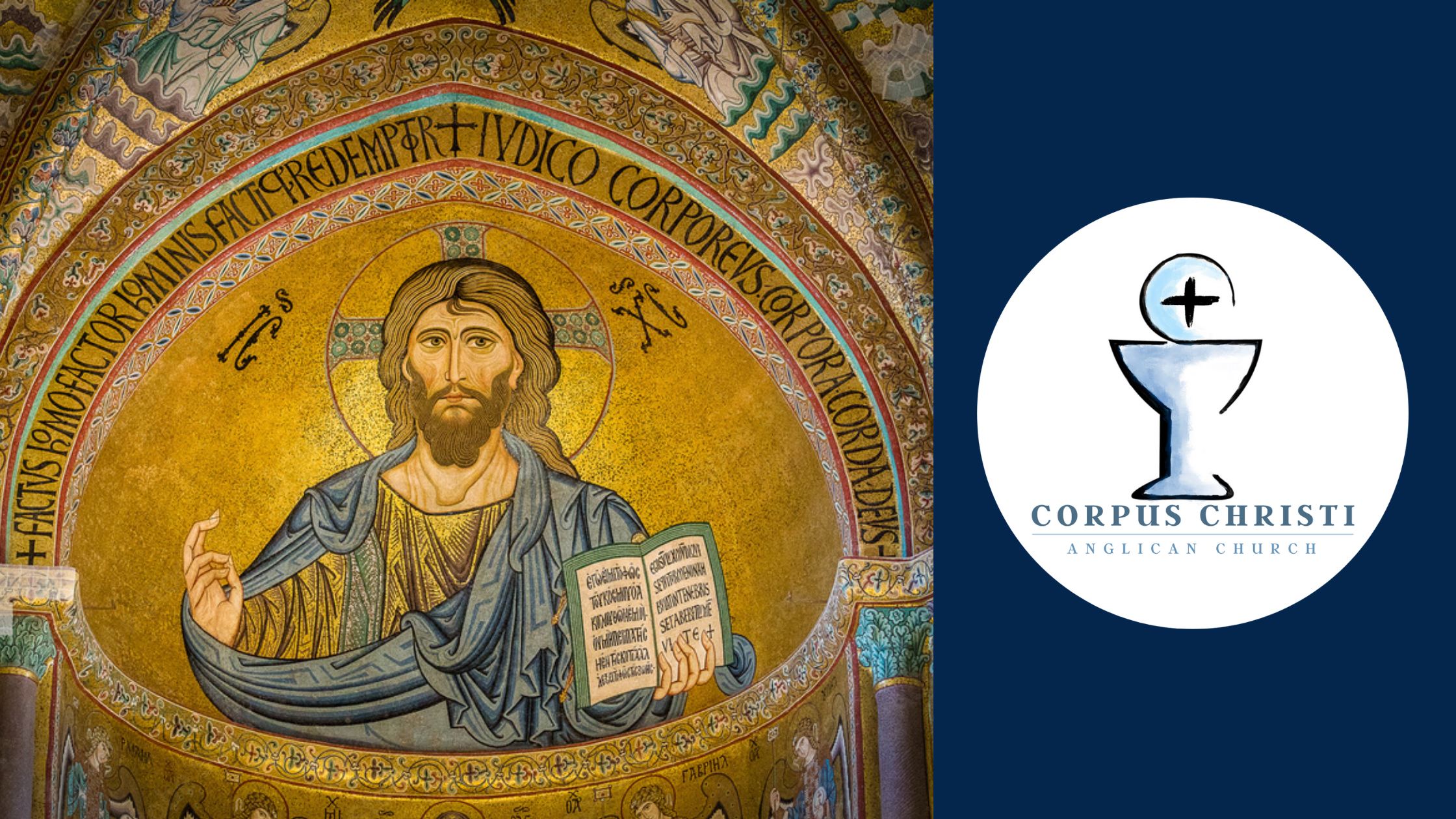
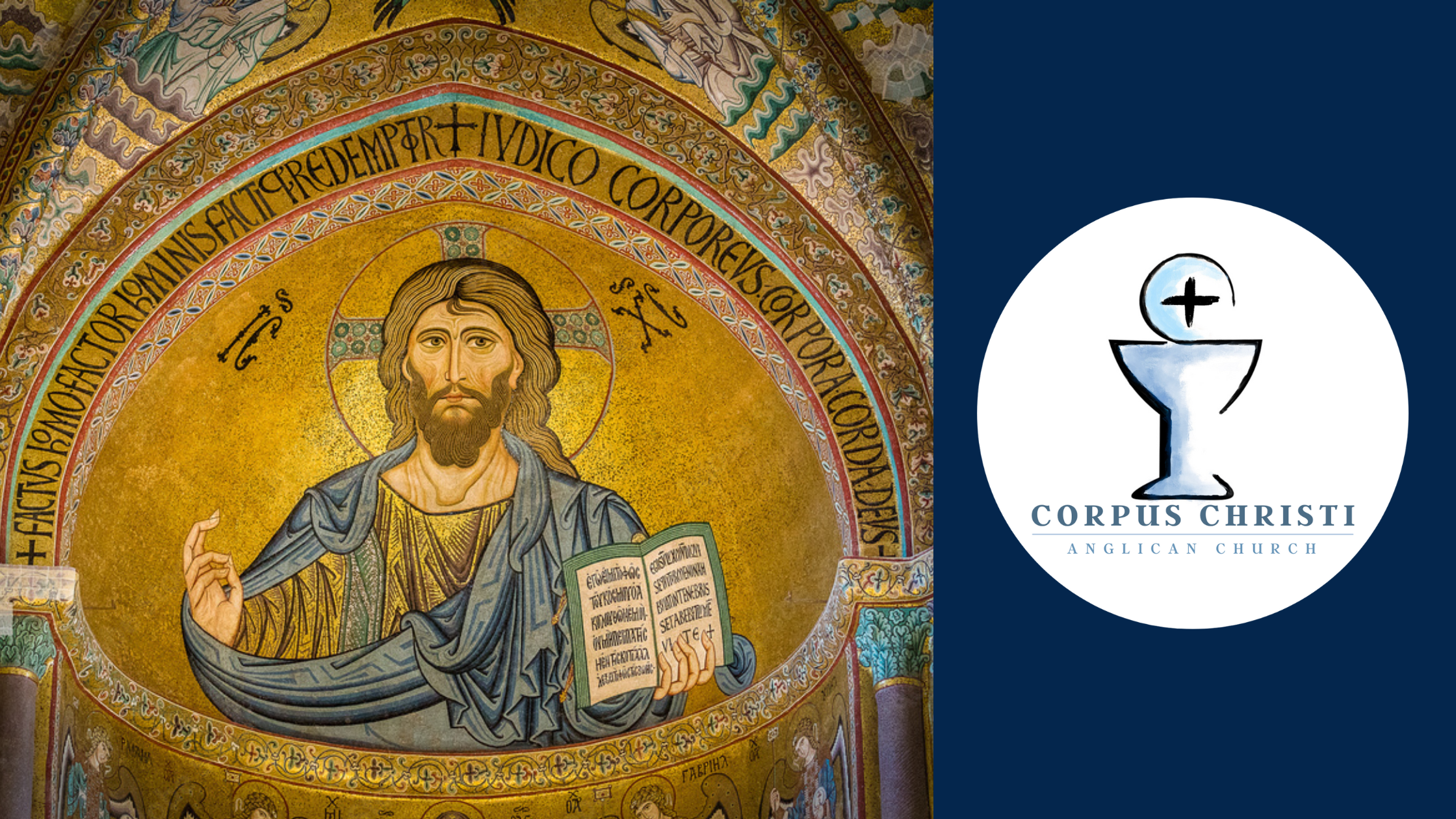
I saw in the night visions, and behold, with the clouds of heaven, there came one like a Son of Man. And he came to the Ancient of Days, and was presented before him. And to him was given dominion, and glory, and a kingdom that all peoples, nations, and languages should serve him. His dominion is an everlasting dominion, which shall not pass away. And his kingdom, one that shall not be destroyed.
In the ordinary use of the Old Testament, the expression Son of Man simply means "a human being." However, when Jesus uses this expression to refer to himself, he clearly has this passage from Daniel 7 in mind. Jesus' use of this phrase is cited 90 times all together, in all four Gospels. Jesus was very cagey about how he spoke to these Galilean fishermen. He wanted to tell them as clearly as he could who he was, and what he was doing, and what he expected of them.
So if he used the phrase, Son of Man, the title, in referring to himself, they could just say, "Oh, well, he's saying just like, "a man like one of you." It would have just gone over their heads. But you would think that since Jesus kept using this term, and if you saw how he spoke this way in context, you would realize he was talking about the vision of Daniel in chapter 7.
If we are to understand how Jesus was using this title, Son of Man, in teaching his disciples, and therefore, his understanding of the phrase, the Kingdom of God, which we are keenly interested in understanding, we need to understand the meaning of these words in the Jewish world in which Jesus lived. We need to travel back in time, and we need to hear the words of the Bible in context, and be very careful about not thinking that the words, as we read them in the text, mean the same thing as they do to us today, because for the most part, we are totally out of it, in today's culture.
So this sermon has two parts, and you'll be relieved to know that I 1
left almost everything out of the first part. We are in a culture that has lost its memory. I'm so embarrassed that so many of our contemporaries have no understanding, not only of American history, which is just a moment in time, but of the history of Israel, which is the story of God's struggling, very patiently, over millennia, to communicate with us, his human creatures.
Part 1: So anyway, I'm just going to hit two points in Part 1. It's not the whole history of Israel, but just two key points, which are the context of today's reflections. And then Part 2 is three suggestions on how this applies to us and is important for us to take to heart, in order to know what God is saying to us today.
You remember the history of Israel, starting with good old Abe and coming up through the Exodus and that amazing character Moses, and then the kingdom established under David. And things ticked along for a couple hundred years, which is as much history as we Americans are aware of. And then the superpowers closed in on the land of the Eastern Mediterranean, because it was just really a connecting link between Mesopotamia and Egypt. Everybody wanted to get their traffic through there without being harassed by the local population. First of all, in around 700 BC, the Assyrians, who were a particularly well-organized country militarily and very brutal, rolled in and wiped out the northern kingdom of the Jews, which is called historically, Israel. And as far as we know, when we talk about the lost 10 tribes of Israel, they were indeed, lost. That is what often happened when one people conquered another. Usually all the military men were killed, and the women and children were enslaved - and so the people lost their identity. As far as we know, that's what happened to the lost 10 tribes of Israel.
On the other hand, by an act of God the Judeans said, the Assyrians' siege of Jerusalem fell apart and the Assyrian army went home. It was another 100 years before the Babylonians came rolling in. And they had no patience with the little kingdom of Judah. They marched in. They destroyed Jerusalem, including Solomon's temple. And they took all of the elite people and a lot of the skilled craftsmen into exile in Babylon.
But you knew that. So this is the setting of today's texts. The first text, which is really important, and not only historically, because it's important for us, is Jeremiah. Jeremiah chapter 29. And you know who Jeremiah was. He was a prophet in Jerusalem. And he went through this whole hell of international political negotiations. The Judean king thought that if he had an alliance with the king of Egypt, that he would send funds and advanced weaponry and everything would be OK. But it didn't work that way. And so Jerusalem got wiped out.
Jeremiah was there through the whole of it. And he was treated very badly, which is normal operating procedure, again, for prophets. If you don't like what somebody's saying to you, then you have to cancel them one way or another. They did their best to cancel Jeremiah. They dropped him into a pit and left him there to starve. But a friend pulled him out. Once the exiles were settled in Babylon, Jeremiah sent them a letter. And this is the key. This is the heart of that letter:
These are the words of the letter that Jeremiah the prophet sent from Jerusalem to the surviving elders of the exiles and to the priests, the prophets, and all the people whom Nebuchadnezzar had taken into exile from Jerusalem to Babylon. And thus says the Lord of hosts. Build houses and live in them. Plant gardens and eat their produce. Take wives and have sons and daughters. Multiply there and do not decrease, but seek the welfare of the city where I have sent you into exile.
Do you hear that? "Seek the welfare of the city where I have sent you into exile." This is the action from Ezekiel's vision of the throne on wheels. "And pray to the Lord on its behalf." Pray to the Lord on behalf of the Babylonians who just messed us up totally and for its welfare. "For in its welfare, you will find your welfare." That is an amazingly revolutionary, positive approach towards the people who just destroyed your country. Can you imagine? I would call that very practical forgiveness. So what Jeremiah is saying is, "Don't conform, don't accept the lifestyle of the Babylonians, but work for their welfare."
Normally, if you're present in a hostile group of people, you want to be comfortable. And the best way to be comfortable is to speak the same way, act the same way, wear the same clothes, and kind of just melt in. Isn't that what we normally want to do? But Jeremiah is saying, "Don't do that. Don't get too comfortable. I want you to flourish. But retain your identity." "Remember who you are. Remember my purpose," says Yahweh. "Remember what my purpose is for you, my holy people." Don't forget who you are and what your mission is.
And related to this is a deep, dark concept which I hesitate to mention. Most preachers probably don't even think about it, or are too prudent, or cowardly, to mention it to the congregation: And that is, that adversity calls forth creativity. Adversity evokes creativity. If we're too comfortable, if we're fat and sassy and everything's going just smoothly (I'm speaking of myself), then we're not open to the new thing that the Lord has in mind. My tendency is just to sit back and go to sleep. I mean, everything is peachy keen. And I have heard people say, after this recent election, "Oh, I'm looking forward to the time where things settle down and I can just be comfortable again."
No, children. Don't expect to be comfortable if the hand of the Lord is on you. Was it in last Sunday's epistle, one of the verses in there that went skidding by, was, "It's a terrible thing to fall into the hands of the living God." And the Jews would say, "That the truth!" But that's what we've signed up for, guys. So when things get tough, what do they say, "When the going get tough, the tough get going?" And that's another way of saying that adversity evokes creativity. So when you've got a problem, don't hang your head and say, "Oh, this is terrible." You say, "Oh, OK, Lord, what are you saying to me? What do you want me to do?"
What is the creative, imaginative thing that I can do that will bring blessing not only to me and my household, but also to the world around me? So this is what's going on among the exiles in Babylon. And hence this strange idea, that the hardships, the calamity that has happened to them is the context of God's blessing! Now, put that in your pipe and smoke it, if you're upset about the recent election.
So Daniel's vision, and this is Number 2 in Part 1, and I'm almost done with this part, is of a son of man, a human person, is enthroned in the presence of the Creator of the Universe. And to him is given the imperial heritage of the Davidic monarchy, which is rule over the whole creation, and that this sovereignty has already been established and has already begun in the death and resurrection of Jesus and the outpouring of the Holy Spirit. And if you all read your history, boys, and those of you who are a little bit older than (12-year old) Levi, for example, Tom Holland's book, Dominion, is a very good glimpse into the history of Western Europe -- how a few stubborn, dedicated people have changed the culture of Europe and the British Isles.
We all take this historical transformation for granted right now, and so does the world around us. Most of our compatriots don't know where it came from. The Kingdom of God has already started transforming human life on this planet, and not only in the West, but also globally. We need to be aware of it, and pay attention, and listen for the voice of God, because he's got a job for every one of us to do, in case you hadn't noticed. And I'm sure most of you have been listening, and you know what God wants you to be doing at this point. He is at work changing the way human beings live.
So here is Part 2: The three suggestions that we can draw from these readings that are important for our life here today. OK, number one: Jesus, in his last conversation with the disciples, well, the disciples are present, but Jesus is talking with that poor guy we know as Pontius Pilate. And Pilate is trying to figure out who this prophet is, because he's obviously not broken any rules, but he's a very dangerous character.
And Pilate is trying to figure this out, and he's saying, "Are you a king?" And Jesus is saying, "king" is your word. And then Jesus is trying to be really right up front, and he says, "My kingdom is not from this world." And if we knew the Greek - it's very hard to translate it simply into English. The ESV has done the best it could by translating the same Greek phrase two different ways. First of all, it has Jesus saying, "My kingdom is not of this world. And then the second time (it's the same phrase), Jesus says, "My kingdom is not from this world." And this is hugely important. What he is saying is that kingship or leadership in our experience comes through the exertion of deceit and violence. And that is just taken for granted. ("The first casualty in war," as Winston Churchill said, "is the truth." And Churchill, of all people, was brilliant at using deception in multiplying the strategic advantages of the Allied troops.)
However, Jesus' way, God's way, of establishing his authority in the historical process, is not the way we think it's done. The assumption of people is that might makes right. Or to put it in other terms, if your army wins and defeats your enemy, that is a demonstration that God is on your side -- if people are still thinking about God. I'll get to that in a minute. Most ancient cultures, and I would say probably most cultures today still, assume that theology and politics can't be separated. And so if your side wins, that's because you're the best, and you have divine approval. You're top dog. But Jesus is saying, "Yes, I have absolute, ultimate, eternal authority. But it is not based on deceit and violence." And boy, is that hard for us to understand.
OK, second thing. The vision of Daniel became a historic reality with the resurrection and ascension of Jesus. We rational people need to pay attention to the historical evidence, both in the New Testament and in the historical process, for the reality of Jesus' resurrection. The scholars, and I'm thinking particularly of Tom Wright, make it very clear that the historical foundation for the acceptance of the assertion that Jesus was raised from the dead is more powerful than most of the historical data that we have on any other person in history.
So pay attention. The old temple, and I talked a little bit about this last Sunday - the function of the old temple, the temple in Jerusalem, was that it would be the meeting place of heaven and earth. It was understood that God had two places, heaven and earth. And his intention, as represented by the Garden of Eden, was that these go together. In His plan, where God lives is where we live. That's what God wants. He wants us to dwell in relationship with him, be at home with Him. And we screwed that up when we told Him to get lost. Adam said, in effect, "I'm going to do this my way." (We're not blaming this on Eve in particular. I mean, we're all in this conspiracy together.) And so God said, "Well, I'm sorry about that. But you're out of here, children. And we've got some work to do."
This is the whole story of the scriptures. But what Israel longed for was to reconnect with the presence of God. And that was the function of the Jerusalem temple. The Judeans believed that through a system of sacrifice, a place could be created between heaven (that is, a place where God is) and earth (and that is where we are). And that we could be in relationship with the Creator of the Universe through the process of sacrifice, especially, in the Jerusalem temple. And as I mentioned last week, when the temple was destroyed, Jesus said this was a good thing, because he wanted his people to understand that he is the Temple.
We're in a difficult position, we Americans or we Westerners, because we assume that God is out of business, that God is dead, or that we don't need Him. And our culture is completely at sea. We don't know who we are or where we're going. If there is no God and if he does not rule, then we have no basis for knowing the difference between right and wrong. There is no foundation for morality, if God is not taken seriously. There is no purpose for our lives. How many of our young people live in terrible despair because they don't know what they're here for or what the purpose of their lives is, or what they should expect for the future.
Third, our mission, which we accepted at our baptism and which we reaffirm whenever we celebrate the Eucharist or recite the Creed -- our mission is to be the means by which all people may discover who they truly are and what God's purpose for them is, for us all. And it is to make our life together the reality of the way of the life of the Kingdom of God, by communicating the message of the Kingdom by word and action:
Oh God, you have made of one blood all the peoples of the earth and sent your blessed son to preach peace to those who are far off and to those who are near. Grant that people everywhere may seek after you and find you. Bring the nations into your fold. Pour out the spirit upon all flesh and hasten the coming of your kingdom through Jesus Christ, our Lord. Amen.**
_______________________________
**The recording of this sermon was converted online from mp3 format to text by https://turboscribe.ai/ and edited by the author.
The Destruction of the Temple: A Time of Trouble
Transcription
We've just heard a very strange reading from the Gospel According to Mark. The subject is the destruction of the Jerusalem Temple in AD 70 during the first Jewish-Roman War. That's 40 years after the death and resurrection of Jesus. Why should the destruction of the Jerusalem Temple be important for us today?
We need to remember that the Bible is about more than our personal way of life, although it certainly has to do with that, or whether there is life for us beyond death. Some of us are particularly interested about that question in a very practical sense. As Janet loves to say, we have already passed our sell-by date. But these questions belong to a larger context, and it's a context that we may be reluctant or not equipped to deal with. A number of people that we know have chosen they don't want to think about these things. These questions are too complicated to work through, and they're too anxiety-producing. Who cares anyway? However, we who read the scriptures and take them seriously, know how important the whole flow of history is, because it is in this context that the creator of the universe speaks to us and enables us to manage living in the present time, and to look forward towards the future with confidence. And of course the biblical word for that is hope.
Our hope is not wishy-washy. It is our sure confidence that God keeps his promises, and that even when things get really rough, we can deal with it; because we know that the hand of the Lord is in all of these things. So as we, at this point in our history, are wondering what in the world is going to happen in the next four years, and some of us may be quite anxious on this subject, so we need to look at these things and try to see today's texts, in particular, in relationship to what God is doing on this planet in the historical process.
So to grasp the significance of today's reading from the Gospel, we need to remember the story of the Jews from the Exodus, at least, right up to the Roman occupation of the land of the Jews. What we're looking at is the time when a young Galilean rabbi summoned a small group of fishermen to follow him and to learn from him.
In order to understand today's reading, we have to go back to the first verses of Mark. By the way, the order of Sunday readings in our Book of Common Prayer was reorganized around the 1960s. The editors could see that the list of readings for Advent season was too short; and yet the sequence was very important, and so what they did was to change the Lectionary so that there are at least these two weeks' readings before the beginning of Advent, which in fact are Advent readings. They're intended to get us ready for Advent.
Last week the Gospel text was about the poor woman making an offering at the temple, and that doesn't seem to have anything to do with Advent; so suddenly, wham, here we are, and even this reading is suddenly dropped on us out of the sky, so to speak, and we don't know what was going on with Jesus and the disciples right before it. So I'm going to try very quickly to fill that in. Actually, the first part of my sermon today is just trying to get us in the historical context, and then I will have a very compressed three points, which of course you will remember.
So Jesus is with his disciples. This is his last visit to Jerusalem, and he's been trying to tell the disciples that he's facing arrest and his own death and his resurrection. He's trying to prepare them for this, but as we noted a few weeks ago, the disciples are a little bit slow. (That's why I feel so comfortable with them.) They couldn't really understand what he was talking about. But they still had their own preconceptions, which were very powerful; and are represented by the reading from Daniel.
Daniel was a Jewish prophet of the exile living in Babylon, and he was talking to the Jewish exiles in Babylonia and saying, "Hang on, guys. This is all within God's plan, and it's going to come out all right in a time and a time and a half of time." I don't really understand that chronology. Anyway, it's a long time, and whatever it is, the Jews had been waiting for about 500 to 600 years by the time Jesus showed up in Galilee. Waiting a long time is certainly not anything we Americans do very well. If I'm looking forward to something happening, I want it to happen right now, and you tell me I have to wait 600 years, forget it. That's never in my book. At least, I won't be here in 600 years. But Daniel gave this message to the exiles, and they took it very seriously, generation after generation after generation. This was a very powerful promise.
And so by the time Jesus and this bunch of simple fishermen turn up, and Jesus is trying to prepare them for this astounding event that is about to take place, the Jews have been waiting literally for many generations, 500 to 600 years, and they are on tiptoes because they believe that the time has come and that God is going to act again. "He's done it before. He'll do it again. He got us out of Egypt. He gave us King David, and he established the Kingdom of Israel; and then those Greeks came in and messed up everything, but we fixed them because the Maccabees rose up, these guerrilla fighters, and much to their surprise, not to mention the surprise to the Greeks, they were successful in driving the Greeks out of Judea. And their kingdom lasted, I think, almost 200 years.
They did some amazing things, and I have to not digress here because I get so excited about what the Hasmoneans, that's what the Maccabean dynasty is called, accomplished during these 200 years. For example, they invented the synagogue during this time. And they kept the faith of Israel alive. They did it by starting transferring the teaching responsibility of the temple to the synagogues.
The temple was still there, and it had been rebuilt, but they transferred some of that teaching of the temple scholars to the synagogue because the Jews had forgotten how to speak Hebrew, not to mention most were just peasants. They couldn't read or write, but what happened was that the Hasmoneans created public education for ordinary people in the context of the synagogue. And so these people learned how to read Hebrew, and the point of this was that the Hasmoneans knew that if this kingdom was going to hold together, they had to know where they came from-- they had to know about the Exodus, and they had to know the law of Moses.
So they needed the Torah, which is both narrative and law, and this was absolutely basic. So, in spite of the Greeks, and thanks to the Hasmoneans, the Jews still knew who they were, and were eagerly looking forward to the time that God would act to restore the kingdom to Israel. And that meant, by Jesus' time, getting rid of the Romans. Some of us are descended from the Romans, so I mean no offense; but if you were a Jew, you didn't have any patience with the Romans, and you looked forward to a mighty act of God which would take the form of a military action, and would throw out the Romans. And Jesus was trying to tell them it's not going to happen that way, but something huge is about to happen.
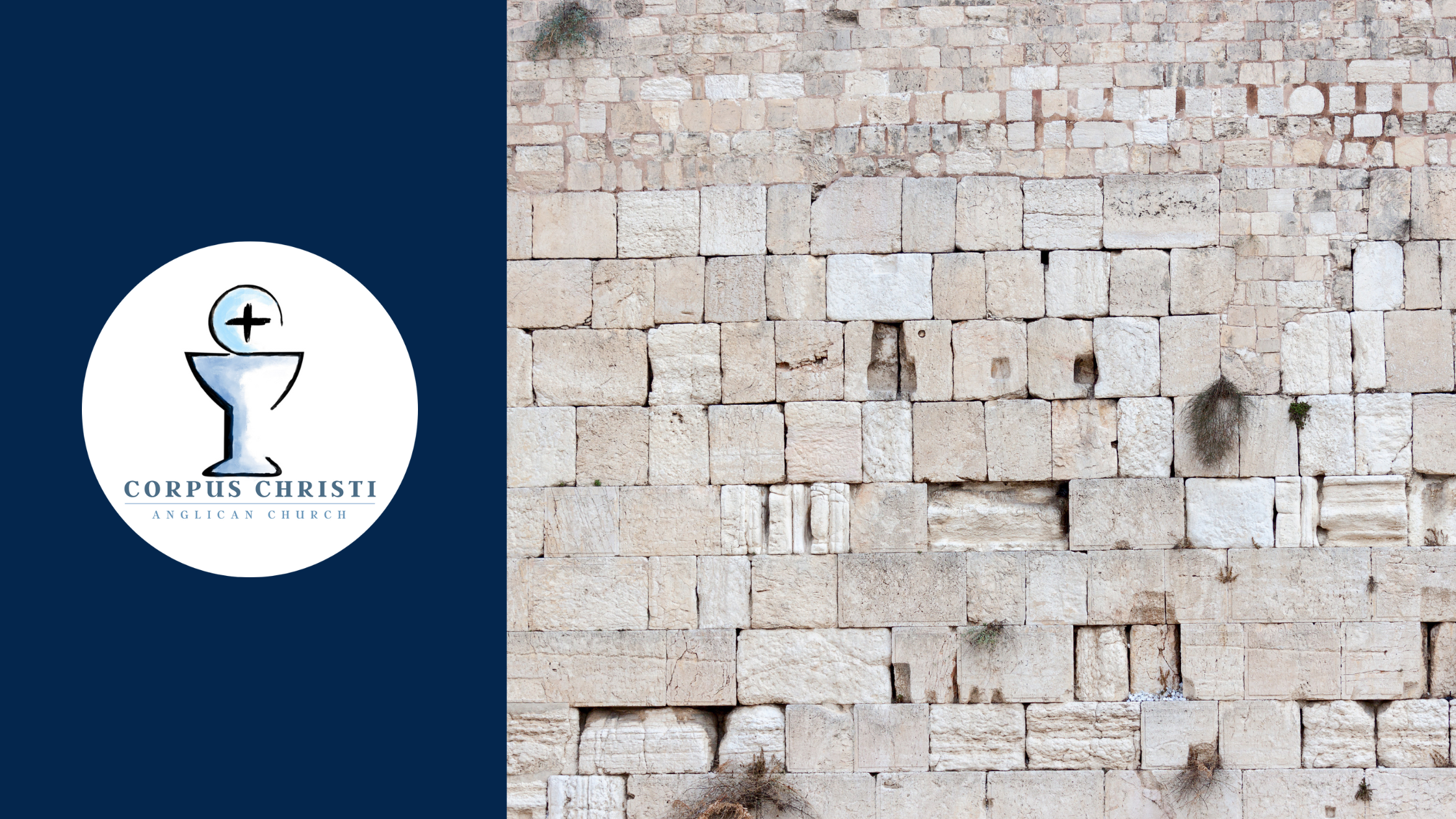
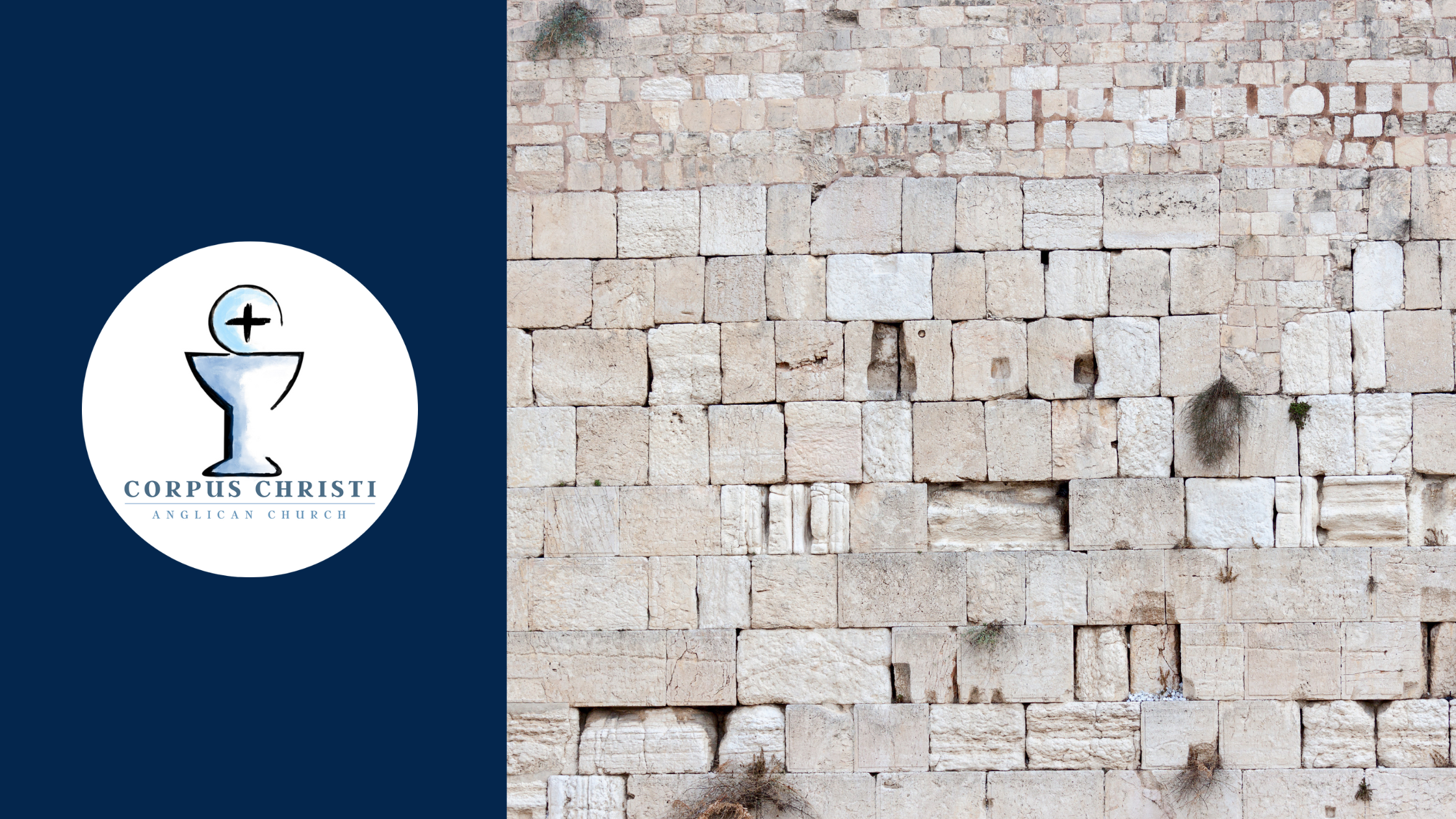
So I've got to back up a couple of verses to the beginning of chapter 13 in Mark, and it starts like this: As Jesus came out of the temple, one of the disciples said to him, "Look teacher, what wonderful stones and what wonderful buildings!" Have any of you ever been to the Wailing Wall in Jerusalem? Yeah, well, those are just the foundation stones, but they are huge, I mean one of the stones is about the size of, well, almost of the back wall here, and those are just the foundation stones.
And the second temple that Herod had built was really a stupendous building, and so all of the Jews were very proud of this second temple, and they said, "look teacher, what wonderful stones and what wonderful buildings," and Jesus said to them, "do you see these great buildings? There will not be left here one stone upon another that will not be thrown down." Oh boy, what a downer. It was as though, and try to picture this for yourself, it was as though Jesus had led us into Washington D.C. to the Mall, and said, "hey, look up there at Capitol Hill," and said, "do you see that magnificent building? There will not be left here one stone upon another that will not be thrown down."
How would we feel? Oh no, that building represents everything that is important to us, our common story, the ideas that shape our way of life, the experiences that fill the memories of our families going back many generations. One of us cries out, "I had five ancestors on the Mayflower in 1620. They were Puritans and wanted to create a society based on the Protestant Reformation and English common law." A second one of us said, "my great-grandfather was a French Calvinist, a Huguenot who came to America in 1760 to escape persecuton and begin a new life." And then a third said, "my father was sent to America as a 12-year-old to escape the ethnic cleansing of Armenians that began in Turkey in 1895." And if you thought about your own family histories, you could probably remember family stories that go back to when your people came to this country first, and what the cost and the reason for their migration was.
When Jesus warned his disciples that the temple would be destroyed in the near future, they would have reacted the same way as we would when confronted by the possible destruction of everything that we hold most precious to us in this country. But the people of Israel had lost their way. They had forgotten their covenant with God, the foundation of their national life. They assumed, like all the other nations, that peace and prosperity could be achieved through war. After all, as I have already said, they had been through a number of encounters with imperial powers which involved, sooner or later, some form of warfare. And they had come through it, and the nation had been established.
So, it was entirely plausible that the nation would expect that if they rose and rebelled against the Romans, against all odds... You know, the Romans were the superpower of the day. They were amazingly well organized as a military power. So, having listened to Daniel and the other prophets, the Jews were sure that at the right time God would act, and they believed that they would be victorious.
During the time that Jesus was walking in Galilee and visiting Jerusalem, the disciples believed the time for the deliverance of Israel was near. Most of the Jewish people believed that this was the time, and this was the state of expectancy that Jesus was addressing in his teaching. But he was really struggling to get these dear people to understand what he was talking about.
When Jesus stood on the Mount of Olives as he and the disciples were approaching Jerusalem that last time -- You know, the Mount of Olives is about the same level or higher than the city of Jerusalem. So, they were on the top of the Mount of Olives looking across the valley to the city. And Jesus was looking down with the other men, and he lamented, "Oh, Jerusalem, Jerusalem, the city that kills the prophets and stones those who are sent to it, how often would I have gathered your children together as a hen gathers her brood under her wings, but you were not willing." One of the most sad events that is recalled in the Gospels.
And then Jesus began to say to them, "See that no one leads you astray. Many, many will come in my name saying, I am he, and they will lead many astray. And when you hear of wars and rumors of wars, do not be alarmed. This must take place, but the end is not yet. Nation will rise against nation and kingdom against kingdom, there will be earthquakes in various places. There will be famines, but these are but the beginning of the birth pangs. But be on your guard, for they will deliver you over to councils and you will be beaten in synagogues, and you will stand before governors and kings for my sake to bear witness before them. And the gospel must first be proclaimed to all nations."
This is where today's reading begins -- in case you're wondering, that's the background, that's the context. And maybe today's reading will begin to make sense if we understand this high sense of expectancy. Jesus struggled to get the disciples to understand what the situation meant. And so then the account in the Gospel of Mark goes on. "But when you see the abomination of desolation standing where it ought not to be, let the reader understand."
I hope you understand because I shouldn't take the time to unpack that right now. It's interesting historically, but the point is, it's a sign that things are really going to pop. "Then let those who are in Judea flee to the mountains." Jesus continued: If anyone says to you, look, here is the Christ, or look, there he is, do not believe it. For false prophets will arise and perform signs and wonders to lead astray, if possible. But be on guard, I have told you things beforehand." Okay, this is just the preface. So how does all this apply to our situation today?
This text is not about the literal end of the world. Some people read it that way and that causes profound confusion. It does not mean what we mean by "the end of the world." It doesn't mean that history will stop or that the planet will dissolve into dust. That's not what it means; but it does mean that the world as we know it, our way of life, everything that's familiar to us, everything that's important to us, will come to an end. That's what Jesus is saying.
So just to try to get a hold of this -- This is the start of the three points here. (1) The first is the symbolism of the temple. What does the temple mean to the Jews? (2) The second is what is Jesus' advice if we find ourselves in a time of trouble, in a situation that looks like imminent catastrophe? (3) And then the bottom line, the good news, and get a hold of this, everyone, Jesus is the temple. If you're paying attention, that's the bottom line. But that's kind of a weird way of talking about it. Okay, first of all, the symbolism of the temple.
(1) The temple, the Jewish temple is the symbol of national identity and unity. Okay? This is huge. Sounds something like the Capitol building, huh? And it's the repository of the national constitution. And, of course, what is the repository of the national constitution of the Kingdom of Israel? Of course, it's the Ark of the Covenant. And you know what's in the Ark of the Covenant? It's a big box covered with wonderful golden decoration. And inside are scrolls. And, the stone tablets on which the 10 words were written on Mount Sinai. But that wasn't all. There were two more things. There was also Aaron's staff. I had forgotten that. I didn't know that until I looked it up in the words of All Wisdom, the Wikipedia. But I did know that the fourth thing in there was a bowl of manna.
So these were the symbols, the objects that were associated with the events that both gave the people of Israel their freedom and their identity and their way of life. So it was huge. It was the national constitution. It was what gave their life meaning and shape. And the key point here, and I can't go into detail on this, is that the sacrificial system, (I'm just struggling afresh with the whole concept of sacrifice) but besides being a national symbol, the temple was a place of periodic, regular sacrifices.
The point of the sacrifices was, through the sacrifices, a place was made in human life where both heaven and earth overlapped and intersected. This is where heaven, which is where God is, and earth, which is where we are, where they overlap and intersect.
And, of course, God's purpose in his creation is that these two, heaven and earth, should be together. But because of our willfulness, there's been a gap created. And God's purpose, what he's doing in the historical process, is to close that gap and get his human creatures back together with himself. And that was what the temple represented, the meeting place of heaven and earth.
(2) Point number two, dealing with imminent catastrophe. When it looks like everything's going down the drain, how do we react? Well, actually, Jesus says, if it's really serious, get going. Get out! And that's what most of the church in Jerusalem did when the war with the Romans was imminent. They got out of town. And that was good advice. It sounded like something they told me in seminary. And that was, "Choose which hill you want to die on. You can't fight all the battles." There are times where you just take a powder. You just get out. However, that's not normal operating procedure for us.
We are not to chicken out. We are not to stick our heads in the sand. We are to stand and be good stewards. That is the situation in which most of us find ourselves today. Our calling is to listen for the guidance of the Holy Spirit and to do what he is telling us to do in our particular situation, even though it's costly for us and may look as though it's futile. That's what Jesus is telling us to do. So the options are escape or stewardship. And the basic message is, don't chicken out, guys. Hang in there. OK.
(3) Jesus is the real Temple, but he is not only the place where heaven and earth overlap and interlock, but Jesus' resurrection is the beginning of the New Creation. And we've already heard a bit about this, but we really need to get this in our heads. I don't know about you, but I am a child of the Protestant Reformation and, in particular, Calvinism, which I respect and appreciate. However, as Calvinism has come down to this generation, it looks like merely an escape mechanism. That is, if you believe the right thing and do the right things, your ticket is punched and you can be sure you will go to heaven when you kick the bucket. And that's all that matters. And I would say, well, that matters, but that's not all that matters.
This is the point. God has created this amazing planet and has brought these strange and wonderful creatures (us) into existence, and he's not given up on us. God does not make junk. That's a basic biblical principle. I hope you all got that. And he has started this process, and he's going to bring it to completion in spite of the powers and principalities and all of the forces that want to spoil God's plan.
So we are experiencing the birth pangs of the New Creation. And not only was it mentioned, in today's gospel -- Paul picks that up in Romans. He talks about the sufferings of the present age as the birth pangs of creation. And that is what our suffering looks like. So let's bring all of this in line. Let's pray together this wonderful prayer from our Book of Common Prayer:
Almighty God, who hast given us this good land for our heritage:
We humbly beseech thee that we may always prove ourselves a people mindful of thy favor and glad to do thy will. Bless our land with honorable industry, sound learning, and pure conduct. Save us from violence, discord, and confusion; from pride and arrogance, and from every evil way. Defend our liberties, and fashion into one united people the multitudes brought hither out of many kindreds and tongues. Endue with the spirit of wisdom those to whom, in thy Name, we entrust the authority of government, that there may be justice and peace at home, and that, through obedience to thy law, we may show forth thy praise among the nations of the earth. In the time of prosperity, fill our hearts with thankfulness, and in the day of trouble, suffer not our trust in thee to fail; all of which we ask through Jesus Christ our Lord. Amen.**
_______________________________
**The recording of this sermon was converted online from mp3 format to text by https://turboscribe.ai/ and edited by the author.
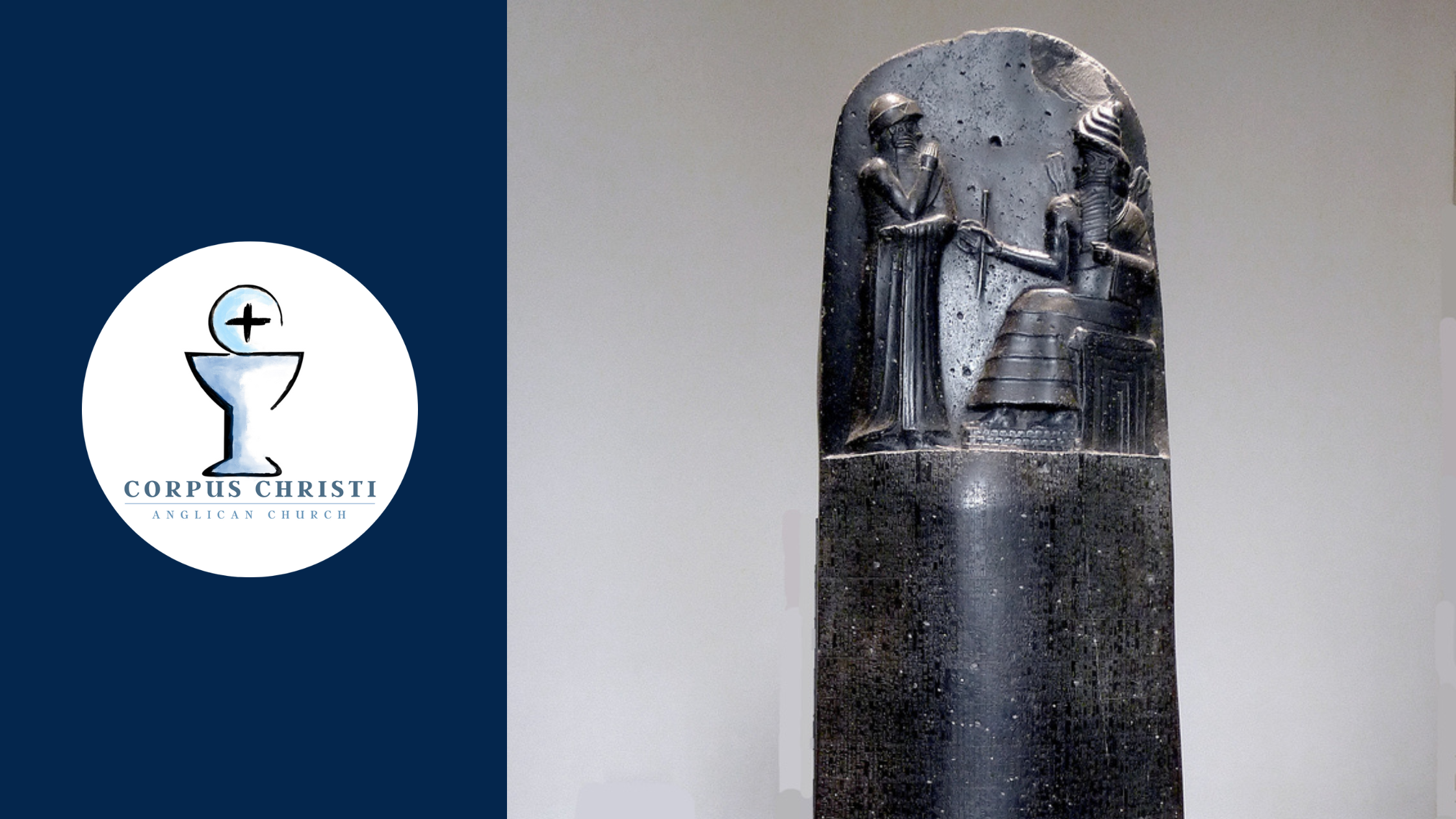
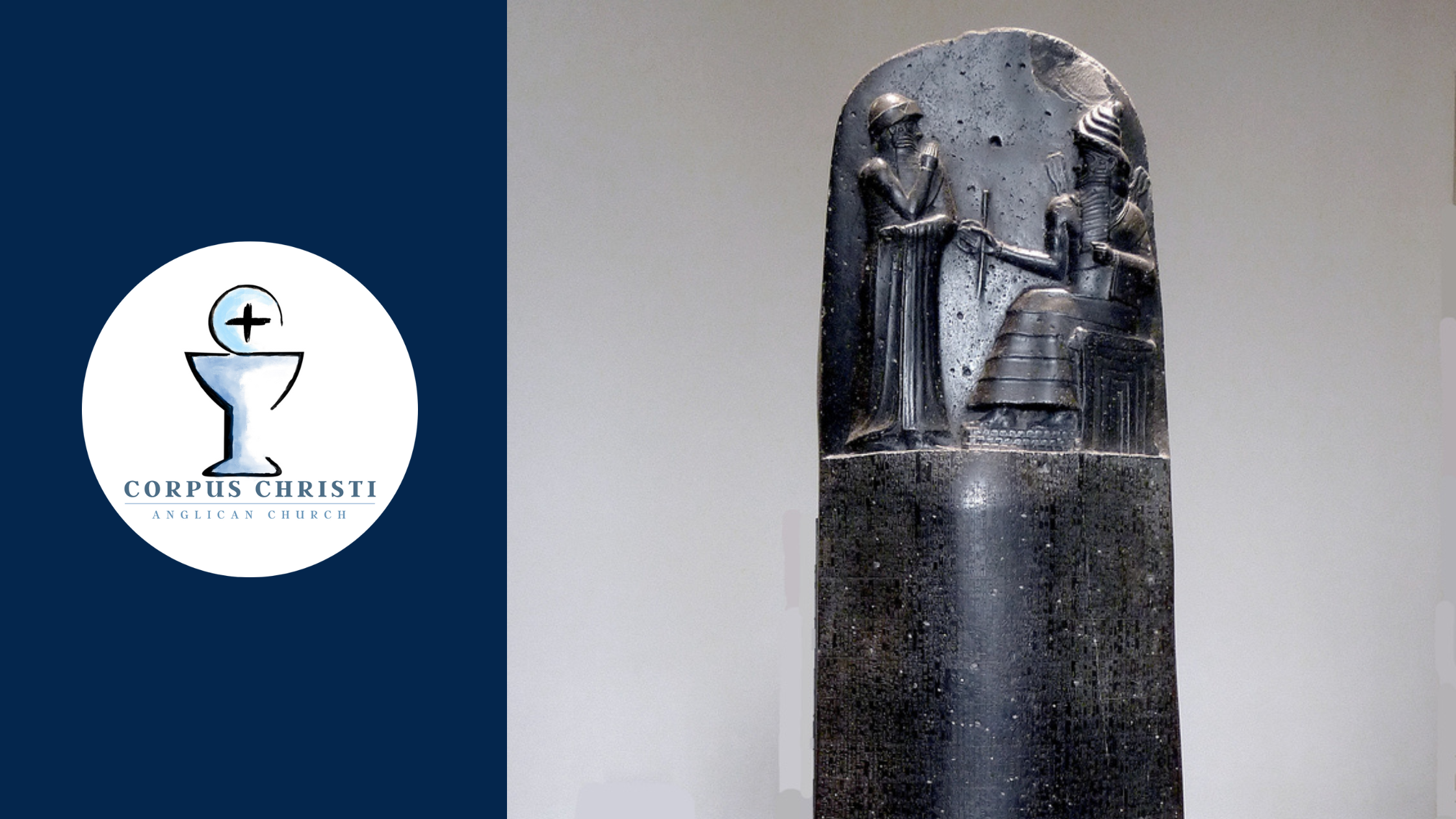

Good Friday: The Day the Revolution Began
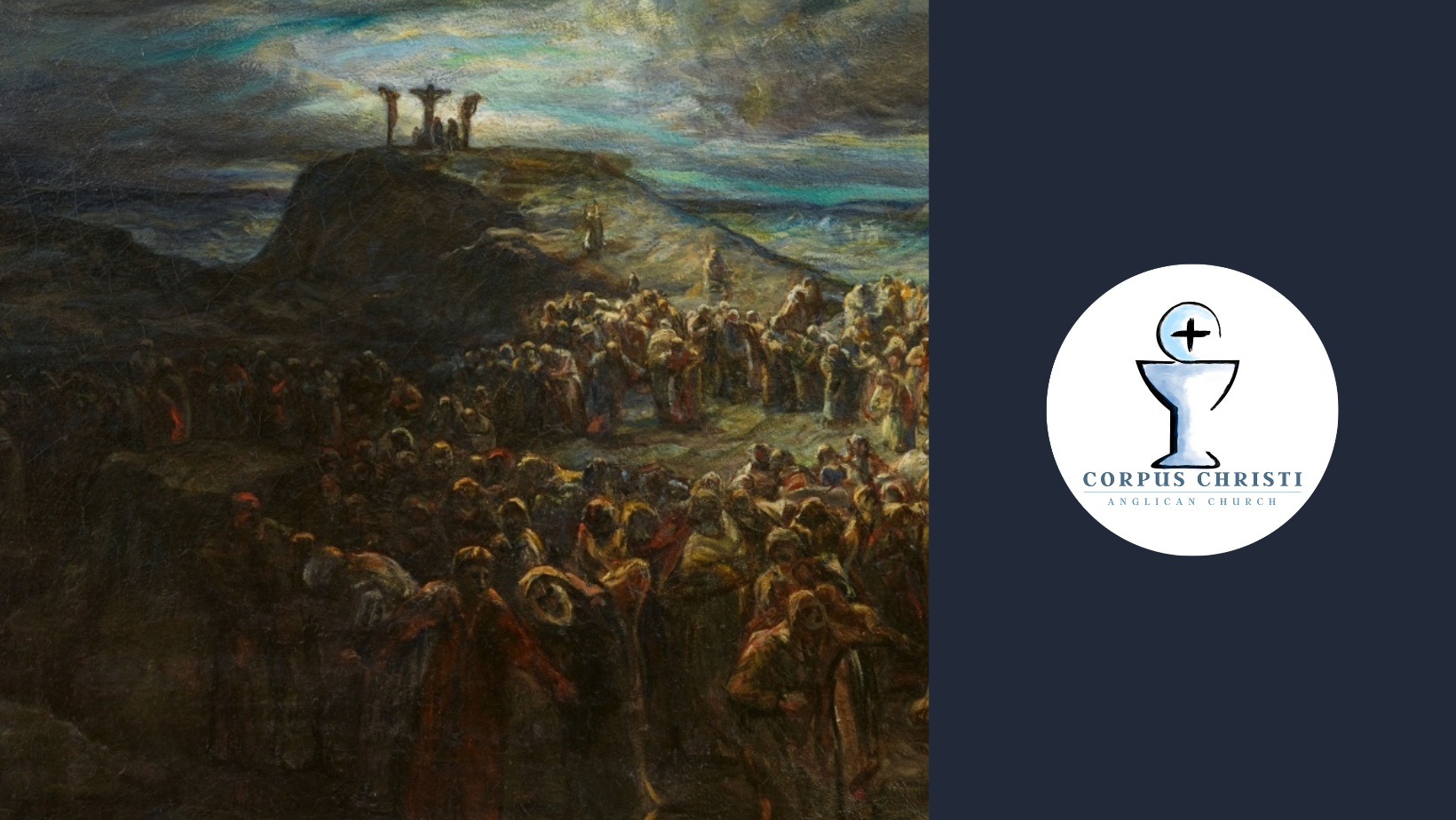
Nikolaos Gysis, “The Crucifixion of Christ on Golgotha”