SERMONS
Archive
- October 2026
- September 2026
- August 2026
- July 2026
- June 2026
- May 2026
- April 2026
- March 2026
- February 2026
- January 2026
- December 2025
- November 2025
- October 2025
- September 2025
- August 2025
- July 2025
- June 2025
- May 2025
- April 2025
- March 2025
- February 2025
- January 2025
- December 2024
- November 2024
- October 2024
- September 2024
- August 2024
- July 2024
- June 2024
- May 2024
- April 2024
- March 2024
- February 2024
- January 2024
- December 2023
- November 2023
- October 2023
- September 2023
- August 2023
- July 2023
- June 2023
- May 2023
- April 2023
- March 2023
- February 2023
- January 2023
- December 2022
- November 2022
- October 2022
- September 2022
- August 2022
- July 2022
- June 2022
- May 2022
- April 2022
- March 2022
- February 2022
- January 2022
- December 2021
- November 2021
- October 2021
- September 2021
- August 2021
- July 2021
- June 2021
- May 2021
- April 2021
- March 2021
- February 2021
- January 2021
- December 2020
- November 2020
- October 2020
- September 2020
- August 2020
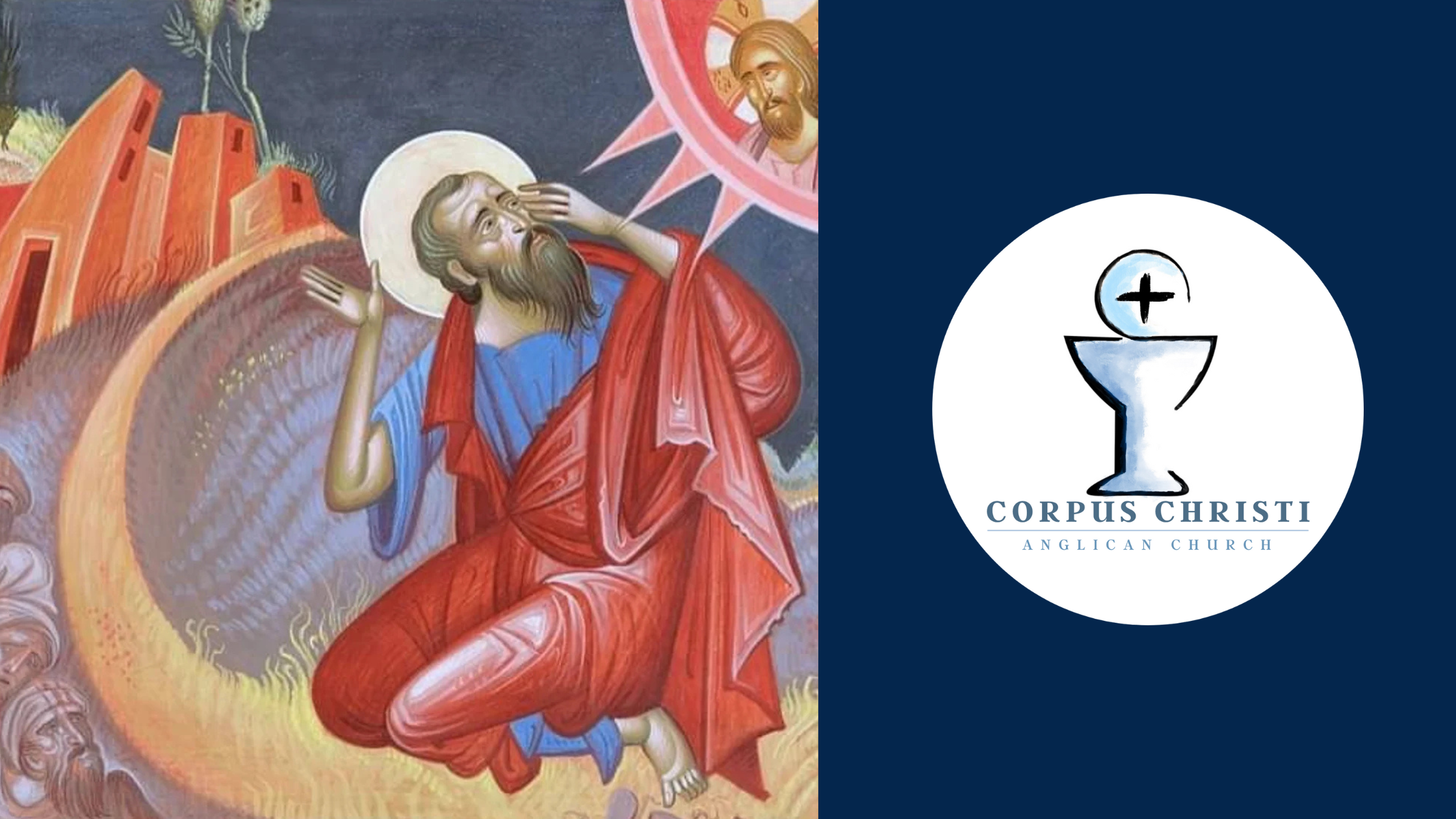
Third Sunday of Easter: The Glory of Jesus from Damascus to Eden
TranscriptioN
So just a quick, just a quick bridge to what he was saying. He mentioned some people groups, ethnic groups, who I tend not to use that. I will use some city names, but I refer to those people groups by Edenites because the place where it is is close to the source of the Tigris and the river, the Tigris and Euphrates rivers, and we think of Eden. And so I call them Edenites.
So just for your orientation. So I serve an Edenite group of about three million Sunni Muslims, and they have no church and only a handful of Christians. One Edenite planted a Protestant church in the city with many Orthodox there, Syriac Orthodox mostly, and others.
And the Orthodox have bad memories of Protestants there because Protestant workers went over there in the 19th century, and they planted churches by sheep stealing, unfortunately. So that brought a bad memory. So when this church planter, this Edenite, was down there, he was doing lots of things, and his idea was to reach the larger ethnic group, the Muslims in the area, but he began building relationships with the Orthodox and having tea.
And after a couple years, trust was built, and they actually gave him permission to use an old Protestant church, and they restored it, and now maybe 2,000 Muslims a month come into that church building every every month. And they're just, and they get a chance to share the gospel, and it's really kind of exciting. But when he was, this pastor, was telling me about his relationship with the Syriac Orthodox, that stuck in my mind, and then later I met Father Morgan.
And so naturally, I've always wanted him to come out there, but we'll see. So our church, Epiphany Anglin, also has warm relationships with your church as well. Father Morgan has come, and my wife has been involved with you.
I remember the last time we visited was during COVID at Lake Accotink, and that was an exciting time to be joining your service, and just great to see the Lord sustaining you and building you. So thank you.
So God's called me to facilitate planning churches among the Edenites.
For church planning, though, we really lack the raw materials of scriptures translated into the native tongue. And so a lot of our work since 2020 has been involved in translating the New Testament. Praise the Lord, where probably about 75% of the translation work is authorized or approved provisionally, and then we're looking in about 18 months for that to be published.
So we're excited about that. And my focus over the next couple years will be trying to figure out how can we get that promoted as a gift to the Edenites in their language. It'll be one of the most serious translation works.
And so for them, they really feel that their language is under threat, and so we're trusting that would be a door for them to explore the gospel. It'll also give them the vocabulary to share the faith. It talks about singing a new song in our Psalms.
You know, they can't sing new songs without words from their heart language. They can't have prayers without a language. You can't communicate the gospel unless it's in their vocabulary.
So translation facilitates that. I'm gonna preach on Acts chapter 9, and the question is, why is Acts chapter 9 during the season of Easter? Easter is from the resurrection until Pentecost, and we celebrate the eyewitness of the Apostles and others of seeing the risen, crucified Lord Jesus Christ. So why do we have this? Because Acts 9 is obviously after Acts 2 when Pentecost happens.
Paul describes this event, he says, I was one who saw the Lord as one untimely born. It was an unusual thing. And so, but Luke, as well as the church, they've always been, they've wanted to emphasize the fact that Paul has seen the risen Lord Jesus Christ, and he is an Apostle.
And so we can trust his work. So his writings, his teachings are apostolic and authoritative for us. And Paul also describes it in Galatians, as well as he recounts it again twice more in Acts.
It's really an important event. But in Galatians, he described it with the word, the Lord Jesus Christ was revealed to him. So this is not just a vision, and we'll see later on in the chapter, Ananias and Saul, and Paul was called Saul before at this time, but they both saw a vision, and the Lord spoke to them.
But here was a revelation. There was a type of the Lord communication to his people, beginning in Daniel and Ezekiel. And it was seen, and it was an apocalypse, a revelation.
And there was a certain series of events where there was usually a light, and then there was a, and then whoever was the recipient, they would be fall down in fear, then there would be a heavenly figure that would come, and they would get them to rise up, and they would give them a message. And that's what we see, and people who would read this in the time when Luke was writing Acts, he would know that's what was happening. So this is an apocalypse, a revelation of Jesus Christ.
But in this particular apocalypse, this revelation, there's one of the elements is missing. Usually there's a message that's given for others, and sometimes it's, say, hey put this aside, this is sealed up till the end times. And the message that, the only message that the Lord gave to Saul, he revealed himself, and Saul saw him, but he said, Saul, Saul, why are you persecuting me? And he told him, I am Jesus who you are persecuting.
And he gave him a few instructions, but there really wasn't a message. So, and Saul did not receive his commissioning or his call at this time. It was going to happen a little later in this chapter.
So one of the things, the images that struck me was this image of light coming down from heaven. The direction symbolizes the downward dimension of apostolic revelation. From heaven, down it comes, and even Paul goes actually down to the ground.
Now Saul is not a role model for us. We're not to expect to receive revelation like Paul did. That time is finished.
The time of Easter, when the people have been witnesses of the Lord Jesus Christ, is done. The canon is finished. We have scriptures, and that defines our faith, and our way of life.
So revelation like that's not happening right now. And then the Apostles, what were they to do? They were to witness to what they saw, and pass it on. And the job of the rest of people was to receive their eyewitnesses, and trust that they were reliable, that they really had seen the Lord Jesus Christ.
Well we don't learn to expect revelation the same way that Paul received it here. We can find ourselves in this scripture in a certain way, and that's that who was Paul, or Saul, when he received this? He was the enemy of Christ. He was murdering Christians.
He was going about separating families. And it was to this Saul, Christ's enemy, that when he was trying to destroy the church, that he's the one who received that. And so it's a picture for us that even in this apostolic word of faith, it comes to people who do not deserve it.
And that's like us. That's where we all start when it comes to the revelation of God. And so the apostolic faith has as its basis the words and the testimonies of the Apostles, and we come into it by receiving that.
Not on our basis of our own goodness, but because God has decided to be merciful to us. Then we come later on to what happens to Saul. He has this thing, and then he goes off, and they lead him into the city.
And for three days he's blinded, and he doesn't eat or drink. What does that remind you of? That reminds me of Lenten fasting, where you don't eat. He is mourning.
He's repenting for three days. And during that time then, he gets a vision the same time Ananias, after three days, they get that vision. And I like Ananias, because I can relate more to Ananias.
He's more your everyman. He is your common disciple of the Lord. He had this dynamic relationship with the Lord.
There's this vision, and it's not revelation, it's different, but it's this conversation that he has with the Lord. You get to see it. The Lord is speaking to him, and that Ananias also gets a chance to tell him, but wait a second Lord, this guy is dangerous.
We know about that. Are you sure you really want me to go there? And the Lord and him, they have a back-and-forth, and the Lord persuades him. So there's something about this living dynamic relationship that is happening.
And then in the middle of that, the Lord reveals to Ananias what he is doing in Saul, as part of a way of comforting and encouraging him. You know, I've sown him that somebody named Ananias will come, and will lay hands, and you'll see. And Ananias is trusted to pass on the words that he had to Saul, and Saul has to rely on Ananias that his words are reliable representation of what the Lord has to do.
It's this dynamic relationship that Ananias has that results in a flow outward from his inner to outward to Saul. And so this is different than this vertical movement from heaven downward. This is a movement from inner to outward that brings him out to mission.
Now I want to illustrate that with my own example. In 2012, I was with a church history professor and a group. He was very interested in monastic life, and we went to some monasteries in this country, and he really taught us how the Orthodox life, the center of that was prayer.
And I was really convicted because I cannot pray. I couldn't pray at that time by myself. And at the end of that, I ended up starting to pray with another person, and we began on Tuesdays and Thursday mornings at 830.
And this is back in 2012. And Lord willing, and thank the Lord, we've been able to continue praying together. And during that time of prayer, we pray the Lord, we're trying to make ourselves open to what the Lord is doing among the Edenites.
And the Lord has given us direction. That same first day that we started, I got invited to a conference, totally not related to prayer, but I used it as a time of prayer and fasting, and the Lord spoke to me in a vision. And I was complaining to the Lord.
I was actually saying, Lord, for 2,000 years, these people, you know, you said you would bless them, and all I see is cursing. I don't see your blessing, and you promised that you would bless every family of this earth. Don't you love them? I accuse the Lord.
And then the Lord appeared in a vision. It was kind of like the movie, The Passion, from Mel Gibson. And Jesus is on the cross, and his face is bloodied.
And he's like, do I love them? I'm all in, but not without my church. And I'm sorry, not without my bride. Because his plan was to reach this group using his bride, the body of Christ.
And so from that, that really came this real conviction. It's churches, both churches that will be the witnesses in this area, in the neighborhoods, in their families. That's where people will see the Lord.
In fact, that as people come to the Lord, they can understand. Oh yes, they can understand all the truths. It takes some time for people to understand the truths of who Jesus Christ is.
But to make the step of believing in baptism, it really takes them to be coming apart and joining together in the communities. And hearing their testimonies of how believers, when they declared that they're followers of Jesus, they usually get thrown out of the house for several weeks. And then they, and people are terrified of that.
Because your family is everything, and your social networks, everything depends on that. Your whole future depends on that. And people are afraid to make those declarations.
They hear the stories of how the Lord works through that, and brings those people back into relationship with their families. And then they get that courage to make that step to believe and to be baptized. So we see in Ananias, again, I want to illustrate this, that dynamic relationship that we have with the Lord from interior to out.
And it's involving being open to the Lord. I think that I think about my life here in Northern Virginia. Everyone is so busy.
We're all going from here to there. I have very little discretionary time. And so I need to really ask, and I'm feeling convicted from this sermon, it's like, okay, to really pray and ask the Lord, okay, who are the people that I know, my family members, the people I work with, or in my running club, or neighbors, who Lord are the people that you're working in? Show me, with a very small amount of time.
And so I'm encouraged to do that again, just like we are doing this, looking for this impossible thing of the Lord working among the Edenites. He can also work among us, and bring us from that posture of openness to the Lord. And He can guide and direct us.
And then the last thing that we see a movement, we said from inner to out, but there's also this beautiful picture of Ananias. Once he goes and preaches to Paul, and teaches him, and he lays hands, he says, be baptized. And they eat together, and Paul is strengthened.
And so the community, this is Paul's first community, and they take Saul in, the one who they should be really afraid of. But this small, obscure community, a group of disciples, maybe smaller than what we have right here, they were Paul's first view of what the church is. That's where he experienced the Lord, and what does that mean? And so as we go, and as we go, and are seeing the Lord doing things out there, there's also that movement of bringing those people back in.
Bringing those people here to the church. Bringing those people to your formation groups. And that is powerful.
So we want to always remember, and this is as we go into the areas where we are, it's that apostolic faith. It's something that we accept. It's happened at one time.
It's authoritative for us. We always want to remember this aspect of grace. We always remember that whoever we talk to, whatever they've done to us, whatever enemies that they are, they're not beyond God's forgiveness.
That's the vertical aspect of the apostolic faith. And then there's this horizontal relationship. This relationship that the Lord gives us that's open to all disciples of His, for the Lord to guide and direct.
You know, whether it's through visions, or through hearing liturgy, listening to a sermon, or whatever, listening to the Word. The Lord communicates with, wants to communicate with us, and we can enjoy that. And then from that flows the connection of the Lord from those words to what He's doing exterior on the outside.
And then as we do that, bringing those people back and connecting them to the Lord. Thank you.
Transcribed by TurboScribe.ai. Edited by the Vicar.

Missionaries of God’s Kingdom
Transcription
Today is World Mission Sunday, and we have just heard four wonderful texts; but I'm going to focus on just one verse from the Gospel for today:
As the Father has sent me, so I send you.
But before I get into the sermon, I would like to conduct a very brief survey. On the first one, I would just like a show of hands.
So first question - Would any of you who are missionaries, please raise your hand. Okay, one, two, three, four, five, six, seven. Some are not quite sure whether they're missionaries or not, but that's okay.
Now the second two questions, just answer it in your own mind. This is not a quiz and there will be no grades on this. So second question - Who was the first missionary in the Bible? Make a mental note. Who was the first missionary?
And the second of these two questions was - Who was the supreme missionary mentioned in the Bible? Okay, you've got those in your mental notebook. Here we go.
1. Well, of course, I'm sure you all, or almost all of you, noted that the first missionary was Father Abraham. He obeyed God's instructions and he didn't know where he was going, and I think that's a good point. It's important to know that. Just because you've been given orders by the Lord, it doesn't mean you know exactly what's going to happen next. In fact, that's part of the fun, although it's part of the danger as well.
Around 1900 BC - the archaeologists are able to give us this rough date for the time of Abraham. He's not a figment of somebody's imagination, but he was a real person and he lived in the real world of his time. His ancestors were migrants, probably from the ancient urban culture of Sumer (and I'm resisting talking about this because I think Sumer is fascinating. Anyway, ask me about that privately if you wish.) So, his ancestors came from Sumer.
The point is that they were not primitive nomads. They were sophisticated city people from what was at that time a high civilization. And his father was called to leave the city of Ur in southern Mesopotamia and ended up at Haran; yes, in what is Syria today. And it was there that Abraham heard the call to "go from your country and your kindred and your father's house to the land that I will show you, and I will make of you a great nation, and I will bless you and make your name great so that you will be a blessing. I will bless those who bless you, and him who honors you I will honor, and him who dishonors you I will curse. And in you (and this is really the punchline here) in you all the families of the earth shall be blessed." (Genesis 12:1-3)
Wow, that's weird. So, equally weird, Abraham obeyed. He went as the Lord had told him. If you want the rest of the story, you're gonna have to open the Bible yourself and read Genesis chapter 12 and following.
God had promised Abraham that he would have many descendants, but not until late in his life did he finally have a son by his wife Sarah. And then, this terrible story, completely opposite to Abraham's expectations - God told him to sacrifice his son Isaac, who at that time was probably in his early teens. Abraham was on the verge of carrying out the sacrifice when at the very last minute God provided an animal in place of Isaac.
This to us is a very strange story. I have struggled with it for years, but I think I understand now what was going on. In the culture in which Abraham lived, people understood that the promise to Abraham was the making of a covenant-relationship between God and Abraham, a long-term promise of absolute trust.
Some of my friends have criticized me in the past for always talking about covenant, but I don't think you can talk about it too much, because we really need to get a hold of it. A covenant is a promise between two parties which is absolute and it's for life - it's long-term. And this is the bit that some slow-witted people like Steve Arpee didn't get:
A covenant relationship in the ancient world was always sealed with a sacrifice. Why? What was the point of it? We know that in many ancient cultures sacrifices were rituals intended somehow to manipulate the supernatural powers; but that wasn't what was going on here. What was going on was the making of a covenant-relationship, and the sacrifice was a way of affirming one's promise.
The sacrifice was a way of affirming one's promise, declaring in a visible way that everything the two parties owned was committed to keeping the promise. The sacrifice is a visible way of demonstrating that everything that was in the power of each party was owned by the two parties, was committed to keeping that promise. So the sacrifice was really important, it wasn't hocus-pocus. It wasn't an attempt to manipulate the spiritual powers, but it was a way of saying "I am in this totally."
"Everything that I am and all that I have" is represented by the beast that's offered in the sacrifice and is committed to this relationship. So this is huge. By being willing to sacrifice his son, Abraham showed that he trusted God to keep his promise, even though that looked impossible if Isaac were dead.
How's that for a terrible test? Abraham trusted God to keep his covenant promise, and God saw Abraham's obedience as Abraham's keeping his side of the covenant promise. That is what righteousness means. (Now this is a pet peeve of mine, I shouldn't go off on this, but people tend to think that righteousness is something that we attain by being good boys and girls and doing everything that the rules say. No way, that is not what righteousness means in the biblical context. It means covenant faithfulness.) So God saw Abraham's obedience as his righteousness, that is to say not that he was morally pure, but that he was keeping the terms of the covenant relationship.
So that is the kind of righteousness that has been given to us. If you hadn't noticed, none of us is morally perfect and couldn't get there if we tried. But we are called to be faithful to our promises made in our baptism (which we were going through again last Sunday) to keep our covenant promises.
Okay, so the first missionary was Father Abraham, because the Lord said, "Go and I will be with you and I will show you where to go." And this was a really tricky injunction, but Abraham obeyed and he went. He had been sent, and so we can see him as the first missionary in the biblical story.
2. All right, the second question was, who was the supreme missionary in the scriptures? Well, obviously, Jesus is the supreme missionary. The Father had sent him to do the Father's work in this world. So we can all nod to that. But the world needs to know what we mean by Jesus having been sent by the Father. And we need to know, we need to be able to say, who is Jesus? Now, I'm getting into deep water here. Some of this is pretty straightforward, but just hold onto your seats here.
Who is Jesus?
1. The teachers of the church declare that he is "fully God and fully man." In terms of our way of thinking, at least this simple person, that is an impossible affirmation. We cannot, with our rational minds, see how any person can be fully God and fully man. What in the world, quite literally, are we talking about? We'll just put that aside for a minute. You can struggle. We can talk about this later or for the rest of your life. It's really, it's really important to get a hold of this affirmation.
2. Okay, secondly, in biblical language, we acknowledge that Jesus is the Messiah. Now, in a sense, this is the easy one, because you all know that Messiah means "the Anointed One," which is the title of the King of Israel.
And God had made promises to David and to the people of Israel that his realm would eventually encompass all of the nations. So, oh, some of us think it's really important to recover the political theology of the Bible. And so I really like this, because this is a political concept, and we need to take it seriously as such. So Jesus is the true King of the whole human race, the Lord of this whole planet. And if you follow this out to it's logical application, he is Lord of the whole universe.
This is a subject I think that's been ignored in much of our histories, or at least the language of our readings of history. But I have been reading a little bit about the history of Israel in the Middle Ages, and there were many messiahs. There were wars and revolutions that were precipitated by these Jews who claimed to be the Messiah. But they all just brought destruction and disappointment on the people that followed them. So there have been false messiahs. And actually, if we stretch our vocabulary a little bit, we can see that not only were there false Jewish messiahs, there are all kinds of false messiahs - false claimants to our obedience in the historical process, some maybe not so far away.
3.Another title, which for those of us who have lived in the Islamic world, really is very important. And I think it's important for all of us, and that is the term related to Jesus of "Son of God."
People get all tangled up in biology. This title has nothing to do with biology. In fact, it comes out of the history of the Roman Empire. You all know this amazing general by the name of Julius Caesar, who went on a rampage in Gaul, among other places, and was assassinated for his troubles. But sometime after that event, the Senate of Rome elevated Julius Caesar to the rank of God, or a god. So Julius Caesar was deified by the Roman Senate.
And again, unless you paid a little attention to Roman history, you wouldn't know that. But it's very important because Julius Caesar had an adopted son. And when Julius Caesar's successor was sought by the Senate, they elected a man (Gaius Octavius) whose title was Augustus Caesar, who was in fact the Roman emperor presiding in the whole Mediterranean world at the time of Jesus' birth. So "Son of God" was the title of Augustus Caesar as the adopted son of Julius Caesar who had been deified by the Senate. Now in terms of vocabulary, I think this is of huge importance. Augustus Caesar actually brought peace, order, and prosperity to the Roman Empire. And he was not shy about saying, "I alone did this." And he put up great big stone billboards with the announcement of all the wonderful things that he had done to bring peace and prosperity to the whole ancient world - his announcement of what he had done to bless all of humanity.
You know what's coming? What was the title of that announcement? What was it called? It was called good news. Yes, the good news was about what Augustus Caesar, the son of God, had achieved. And yes, the Greek word, of course, was euangelion, which is translated "gospel." The word is a way of proclaiming the achievement, the role, the power, and the honor of the son of God. It's not talking about biology. If you're concerned about the biology, that's another subject. But that was not the issue for the church in these early centuries. Some people get tripped up in that title. But it's only if you take the title "son of God" as referring to biology.
We need to be able to say who Jesus is in a way that can make sense to the world around us. Boy, is this a toughie. But there's no escape from it is we are to give witness to the covenant-relationship to which we have committed ourselves. We need to be able to explain to people, when they ask us, who Jesus is. The first thing I think that is necessary is to say that if Jesus is indeed fully God and fully man, we are - what do we say, "we're beyond our pay grade." We're into a realm of knowledge and of vocabulary for which we are incompetent. So I think there's a need for very deep humility. We do the best we can to use the words we have, but we have to do it with fear and trembling, knowing that our words are so easily misunderstood. So anyway, that doesn't excuse us.
We still have to do what we can to talk about Jesus, to affirm his divinity, and to affirm his humanity. There's a phrase by an English poet of the 18th century, "to err is human and to forgive is divine." Well, that's good poetry and it has a certain amount of pastoral application, but that is not the definition of what it means to be human. But you all know what it means to be human, of course. What it means to be truly human is defined very succinctly in the book of Genesis. It's to be made in the image of God.
Our character is to reflect the character of the creator of the universe. That's what it means to be human. And we need to be clear on that, fellow-students, and there will be a test. In fact, the rest of your life is the test. What does it really mean to be human? But if we talk about Jesus the human, it's not all that easy. And I wish I could just step down here and let Morgan sort this out, but I'm on the spot here.
Okay, first thing, Jesus is fully human, but he is not a rebel against God. And this is what the word sin means. It means, hey, I hear you claim to be God, sir, but I really want to be God. I understand that you really are the owner of everything, including me and everything that I have, but I want to be the owner. This desire on our part is the essence of sin. It's wanting to be owners and in charge of our world, at any cost.
So, Jesus reflects the father's character and he is, in that sense, fully human, but he never evidenced any rebellion against the father. In fact, he was clearly, deeply united with the Lord of the universe, with the master of all things, whom he call "daddy", Abba. "Father" is too formal a term in English, but we don't have the right language that correlates with the Aramaic at this point.
Furthermore, Jesus clearly had the father's authority to carry out the father's plans for the whole creation. And this is something else that we need to be really clear about. I have to confess, in regard to our theological ancestors, many of whom were pagans, that we tend to have been sucked in by the pagan and Greek misunderstanding of reality - seeing the material world as bad and the intellectual or spiritual world as good, and therefore that "salvation" or "success" was a matter of escaping from the suffering of this world and being liberated to go to "heaven," wherever that was, where everything would be peachy keen.
That is really a pagan idea. It's Greek in formulation, but a lot of our theological heritage in Western Europe has gotten sucked in by that, and we don't understand that God's project is not an escape scheme from this world, but that he has created this world, this world is good, and that he wants us to be partners with him in dealing with this world. And this process, New Creation, (the word doesn't get a lot of emphasis in the New Testament, but it's there, and it's very deep) and that is that the project that God began when he brought this planet into existence and created the human race - his project is ongoing, and it has not been curtailed by human rebellion.
What God has done in the ministry of Jesus, and particularly in his death and resurrection, is to overcome the powers and principalities of this world, who want to mess everything up, who are not wanting to cooperate with God's plan for his creation. So Jesus, Emmanuel, "God with us," came in person to bring this project forward. One theologian calls Jesus' ministry, in fact, the divine revolution against the dark powers of this world. And this is what Jesus is doing to bring God the Father's creation project to completion.
He was sent to complete the creation process that had been begun "in the beginning." It is not a mistake that the fourth gospel starts with the same words as Genesis, because the point is that in the ministry of Jesus, the creation is being brought to its completion. How is that working? I mean, you can look around and say, hey, this isn't going very well, Lord.
3. And this comes around to the missionary's job description, so I hope you're all taking notes, because this is you and me. This is us. Jesus said, as the Father has sent me, so I send you. We are all sent. We are all missionaries.
(a) So what is our role, each one of us, whatever our age? First of all, we are Jesus' friends.
We're not merely servants. The word in Greek, in the New Testament, is doulos, for slave. We are not slaves. We are friends. So we are Jesus' friends. He wants us as partners in carrying forward his mission, to complete the creation.
And of course, we are being created in the process ourselves.
(Oh, I can't resist this. This is a, I don't know what to call it. It's not a metaphor, but it's a word puzzle, you might say, which you are free to ignore, but I just can't, I can't control myself here: We need to be very clear here, The church of God does not have a mission. The God of mission has a church, okay? You got this? I expect you to get this right in writing when the quiz comes around. The Church of God does not have a mission. The God of mission has a church.)
So first, we are friends of Jesus. He takes us into his confidence. He's told us what he is doing, and he invites us to be partners. We act as a partner.
What's kind of a partner?
(b) So we are called to be stewards.
Now, a steward is a person who has the authority of the owner, but he is not the owner. He is a particular kind of partner. A steward is a person who has the authority of the owner, but he is not the owner. He is a particular kind of partner. We act in Jesus' name.
That is, we act with the authority of Jesus. And this is kind of scary. I think it's more than kind of, but our role is to be the presence of Jesus in the world, day by day, wherever we are, in the workplace, in our homes, in our towns.
We have his authority. So we need to know what that is and what it looks like and how we are called to exercise it.
(c) And then thirdly, as I mentioned, we are revolutionaries.
This is a big subject. And as members of the people of God, a shorthand for this is to say that our roles shift back and forth. Sometimes they are to submit to the powers and principalities, and sometimes they are to subvert.
And how do you know what you're supposed to be doing? Well, that's where we have to remember that the Holy Spirit is the primary agent in all of our obedience and all of our relationships. And we need to learn how to listen to the Holy Spirit. And as Morgan would tell you, there are at least three if not four ways we have to listen.
In the silence of our inner life, in our prayers, we have to listen. And that includes, by the way, dreams. Some of our dreams are just plain crazy. But sometimes God speaks to us through our dreams. We need to learn and get the help to understand how God may be speaking to us through our dreams.
God speaks to us when we are struggling with problems. So problems precipitate creativity in our lives. So just because you're having a hard time, don't think that's bad necessarily. It may be difficult. But it is when we are faced by problems that we have to be open to finding something new. And very often, God speaks to us in this situation when we are looking and asking, then he speaks to us.
And he speaks to us through the scriptures, of course. And that's one of the reasons why we're here and why we need people who are scholars to help us with our reading of the scriptures.
And I almost said most of all, because this is closest to my heart, God speaks to us through each other in the body of Christ. And when we've got some brilliant idea or some wild strategy for moving forward, we'd better talk with our brothers and sisters in Christ. And they will say, "OK, right on. Go for it. We'll pray for you." Or they will say, "you're out of your skull and look at it this way." So we need the checks and balances of our own community. But God is speaking to us all the time, or wanting to, if only, we will pay attention
Now, I'm going to read this sentence twice, because this is part of the exam.
The purpose of a congregation is to equip and support each baptized person for our job in the everyday world as Jesus' partners in his New Creation project.
In closing, I'm going to give you a closing survey, rather than a summary, as such:
So first question, who was the first missionary in the Bible, everybody?
Abraham. Yes.Who was the supreme missionary mentioned in the Bible? Jesus. Yes.
And would any of you who are missionaries, please raise your hand. Okay, that's pretty good (strong majority). Some of us, it takes a while to get this sorted out.
And I heard the voice of the Lord saying, whom shall I send and who will go for us? Then I said, here I am, send me. Amen.