
SERMONS
Archive
- October 2026
- September 2026
- August 2026
- July 2026
- June 2026
- May 2026
- April 2026
- March 2026
- February 2026
- January 2026
- December 2025
- November 2025
- October 2025
- September 2025
- August 2025
- July 2025
- June 2025
- May 2025
- April 2025
- March 2025
- February 2025
- January 2025
- December 2024
- November 2024
- October 2024
- September 2024
- August 2024
- July 2024
- June 2024
- May 2024
- April 2024
- March 2024
- February 2024
- January 2024
- December 2023
- November 2023
- October 2023
- September 2023
- August 2023
- July 2023
- June 2023
- May 2023
- April 2023
- March 2023
- February 2023
- January 2023
- December 2022
- November 2022
- October 2022
- September 2022
- August 2022
- July 2022
- June 2022
- May 2022
- April 2022
- March 2022
- February 2022
- January 2022
- December 2021
- November 2021
- October 2021
- September 2021
- August 2021
- July 2021
- June 2021
- May 2021
- April 2021
- March 2021
- February 2021
- January 2021
- December 2020
- November 2020
- October 2020
- September 2020
- August 2020
World Mission Sunday: Send Us Out as Faith Witnesses
CONTENT
Join with me in prayer:
May the words of my mouth and the meditation of my heart be acceptable in your sight, O LORD, my rock and my redeemer.
It has been nine months since I last visited and it is great to be back. God has been working.
I’ve been able to return as a witness twice to two Edenite towns and a Edenite cities.
Friday the first 11 chapters of Revelation in the Edenite language were approved and we’re still on track to publishing the New Testament Translation this Fall.
We’ve finished enough translated scriptures to craft and pray a simple version of Morning prayer.
Your generous gifts have enabled these developments and demonstrate your commitment to the ends of the Earth. Thank you.
Acts 1:8 says:
But you will receive power when the Holy Spirit has come upon you,
and you will be my witnesses
in Jerusalem and in all Judea and Samaria, and to the end of the earth.”
Jesus is speaking to the Apostles, just before ascending to Heaven.
He frames his worldwide agenda from Isaiah 49. In Epiphany, we say every week, “I will make you as a light for the nations” and we respond, “That my salvation may reach to the end of the earth.” Christ’s agenda is salvation reaching everywhere.
Jesus has prepared the Apostles for three years, they witnessed his death and resurrection, and Jesus spent 40 days convincing them and teaching about his kingdom.
But the last question they ask him is what, “Are you restoring the kingdom to Israel?” I sympathize. They longed for deliverance from the brutal Roman empire. They have promises from the prophets about Israels end-time restoration. The Messiah’s come. But they haven’t taken onboard his agenda.
His goal is the salvation of the end of the earth, and he promises to empower and claims them for a critical role and activity.
He says: Focus on me and my agenda! That is your identity. That is your ministry.
Let’s thank God for Jesus’ agenda.
We are about as far removed in space and time as could be imagined from the Apostles. And yet, through them, Christ has brought salvation even to us.
Peter went went west into Europe, Thomas went east all the way to India. They were witnesses amon diverse geographies, cultures, religions and languages. They passed on this promise to the churches they established, who in turn spread all over the world even to us. Let us thank God.
Yet there are places, peoples and languages with no witnessing church or Christians. It’s just six hundred miles from Jerusalem to Eden where I serve, Christ’s witnesses are rare and almost all live their entire lives without meeting a Christian or visiting a Church community.
For the fullfillment of Salvation reaching to them, we must still expectantly pray for this promise to be fullfilled.
Christ called me to Eden, but God has brought people from the ends of the earth here.
Fairfax county schools have students from over 200 languages and 200 countries.
Springfield has thousands of Muslims, Jews, Hindus, and Buddhists, atheists, and agnostics. You work, go to school, live in the same neighborhood, maybe the same family.
The ends of the earth is here physically, yet it s still a challenge to enter the door of your neighbor or coworker and be a witness.
Let’s unpack this promise a little:
You will be my witnesses
YOU
The you in there can be taken individually or corporately. Your corporate witness in West Springfield is critical and important. As important as that is, most of us spend 90% of our time not gathered like now, but scattered in our neighborhoods, workplaces and schools. As we pray. “Lord send us out to do the work you have called us to do, to love and serve you as faithful witnesses of Christ our Lord”.
BE
The promise is about BEING, our identity, our role, our ministry in the world.
MY
Central to the identity is that we are Christ’s. We belong to him. We follow His agenda. He has claimed us for a ministry and a task.
In Eden, people are suspicious of who I represent. Are you an agent of the US? Are you a company man? Are you a charlatan or a hypocrite? This verse helps settle that for me. I belong to Christ and am on the lookout for what He’s doing.
This last week I started training in the school district with people from around the world. Christ’s claim over my life as a witness has been a precious lodestone for me to remember whose I am, and has been a promise that kept me expectant. Each day has been a joy just in being Christ’s witness, his servant among people who have no witnesses.
WITNESS
What is that? Someone who testifies to what they have seen and heard Christ do.
[Note here: Assumption that Christ spends years working salvation into people’s lives and gives us mini-assignments as that, one step along the way]
Luke models that in verse 1, “I have dealt with all that Jesus began to do and teach, until he ascended” That is all we need to share, Jesus has done and said in our lives, and what we see him is doing and saying right now. Simple but not easy.
Bringing up these topics is risky. Who will they think I am? One of those Christians that stands on a street corner shouting the “end is near” or a salesperson.
Will others understand clearly what I say?.
For both these, the Lord says we need something? Do you need a seminary degree? Do you need discipleship? Those are good. The apostles had three years with the Master himself. Was that enough to fullfill this. No: They needed the power of the Holy Spirit, which the Lord promised.
We need that the power of the Holy Spirit just as much as the apostles.
Last week Bishop Chris came to Church of the Epiphany and I saw with new eyes the Anglican liturgical expression of receiving the power of the Holy Spirit to be witnessses. In Baptism the Holy Spirit gives us the power of new life and to be united to Christ. In Confirmation, the Bishop as a representative of the Apostles, lays hands on believers so they’ll receive power to be witnesses and servants.
The Anglican communion has started a non-geographical diocese to welcome Muslim born believers into the into the Church universal. In September He gained my trust after seeing him up close for a couple days as his chaplain. My Edenite partners trusted him as well. They nodded their heads in agreement as he described the special needs of Muslim born believers. One of the Edenite places has connections to the Syriac Orthodox. Orthodox take very seriously the grace imparted by a Bishop. So I asked Bishop Yassir if there was a way to connect with his Diocese. He ended up asking me to pray about ordination. For him, ordained priests are an essential part of Anglican discipleship. So I’ve begun the ordinatoin process with his diocese. I’m excited for the day when one day hundreds, thousands are empowered for witness among the Edenites.
In your families, workplaces, schools and neighborhoods, are you relying the Holy Spirit to empower you to be Christ’s witnesses? Life is busy, hard and distracting here in Northern Virginia and it is easy to forget about the Holy Spirit.
If you have any doubts about the Holy Spirit being given to you to empower you for ministry,
First recall your own confirmation. Let that be a source of confidence for you.
If you struggle with the reception part, consider receiving a fresh reaffirmation when the Bishop visits you in May.
If you’ve been baptized, consider preparing for confirmation and receiving this gift.
How does this power of the Holy Spirit
Whose Agenda?
I hadn’t been to a town called Aldous in five years. I went to a conference in May expecting to lead a group there. At the last minute a local leader changed our itinerary. My heart sank because I’d prayed for months with growing anticipation.
However, I started seeing buses to Aldous. I was sooo close. That day I read in First Thessalonians 3, where Paul said “when I could bear it no longer.” That is how I felt about missing Aldous. I gently broached the idea with Beerah, asking if I could be excused from the group the following day. Beerah wasn’t happy but acquiesced.
So I started off and soon all my contacts were dead ends. I wondered Was I being led by the Holy Spirit or just following a fool’s errand? Aldous was out of the way. Was it worth the risk of just showing up? But the town was neglected and I could not bear the thought of not trying. I caught the first bus of the morning to Aldous and arrived with just the name of a man I’d prayed for for years. He and his family had suffered greatly for decades as Orthodox Christians, but fifty years ago, most had denied Christ and converted en masse to Islam. Another man hosted me. His family had abandoned Orthodoxy for Islam. But he thought well of Christians. Aydin took responsibility to show me around town and introduced me to a couple of the few remaining Armenian Orthodox Christians. They boldly encouraged Aydin to return to Christ!
I think something is happening in that town.
We are inheritors of this apostolic calling to be witnesses as we scatter. Let us remember that we are his, we belong to him and his agenda. Let us expect the power of the Holy Spirit to speak as witnesses.
Let us pray:
“Holy Spirit after we have eaten at your table, send us out to do the work you have given us to do as what … faithful witnesses.. and Let us go forth into the world rejoicing in the power of the Holy Spirit.
Third Sunday of Easter: The Glory of Jesus from Damascus to Eden
TranscriptioN
So just a quick, just a quick bridge to what he was saying. He mentioned some people groups, ethnic groups, who I tend not to use that. I will use some city names, but I refer to those people groups by Edenites because the place where it is is close to the source of the Tigris and the river, the Tigris and Euphrates rivers, and we think of Eden. And so I call them Edenites.
So just for your orientation. So I serve an Edenite group of about three million Sunni Muslims, and they have no church and only a handful of Christians. One Edenite planted a Protestant church in the city with many Orthodox there, Syriac Orthodox mostly, and others.
And the Orthodox have bad memories of Protestants there because Protestant workers went over there in the 19th century, and they planted churches by sheep stealing, unfortunately. So that brought a bad memory. So when this church planter, this Edenite, was down there, he was doing lots of things, and his idea was to reach the larger ethnic group, the Muslims in the area, but he began building relationships with the Orthodox and having tea.
And after a couple years, trust was built, and they actually gave him permission to use an old Protestant church, and they restored it, and now maybe 2,000 Muslims a month come into that church building every every month. And they're just, and they get a chance to share the gospel, and it's really kind of exciting. But when he was, this pastor, was telling me about his relationship with the Syriac Orthodox, that stuck in my mind, and then later I met Father Morgan.
And so naturally, I've always wanted him to come out there, but we'll see. So our church, Epiphany Anglin, also has warm relationships with your church as well. Father Morgan has come, and my wife has been involved with you.
I remember the last time we visited was during COVID at Lake Accotink, and that was an exciting time to be joining your service, and just great to see the Lord sustaining you and building you. So thank you.
So God's called me to facilitate planning churches among the Edenites.
For church planning, though, we really lack the raw materials of scriptures translated into the native tongue. And so a lot of our work since 2020 has been involved in translating the New Testament. Praise the Lord, where probably about 75% of the translation work is authorized or approved provisionally, and then we're looking in about 18 months for that to be published.
So we're excited about that. And my focus over the next couple years will be trying to figure out how can we get that promoted as a gift to the Edenites in their language. It'll be one of the most serious translation works.
And so for them, they really feel that their language is under threat, and so we're trusting that would be a door for them to explore the gospel. It'll also give them the vocabulary to share the faith. It talks about singing a new song in our Psalms.
You know, they can't sing new songs without words from their heart language. They can't have prayers without a language. You can't communicate the gospel unless it's in their vocabulary.
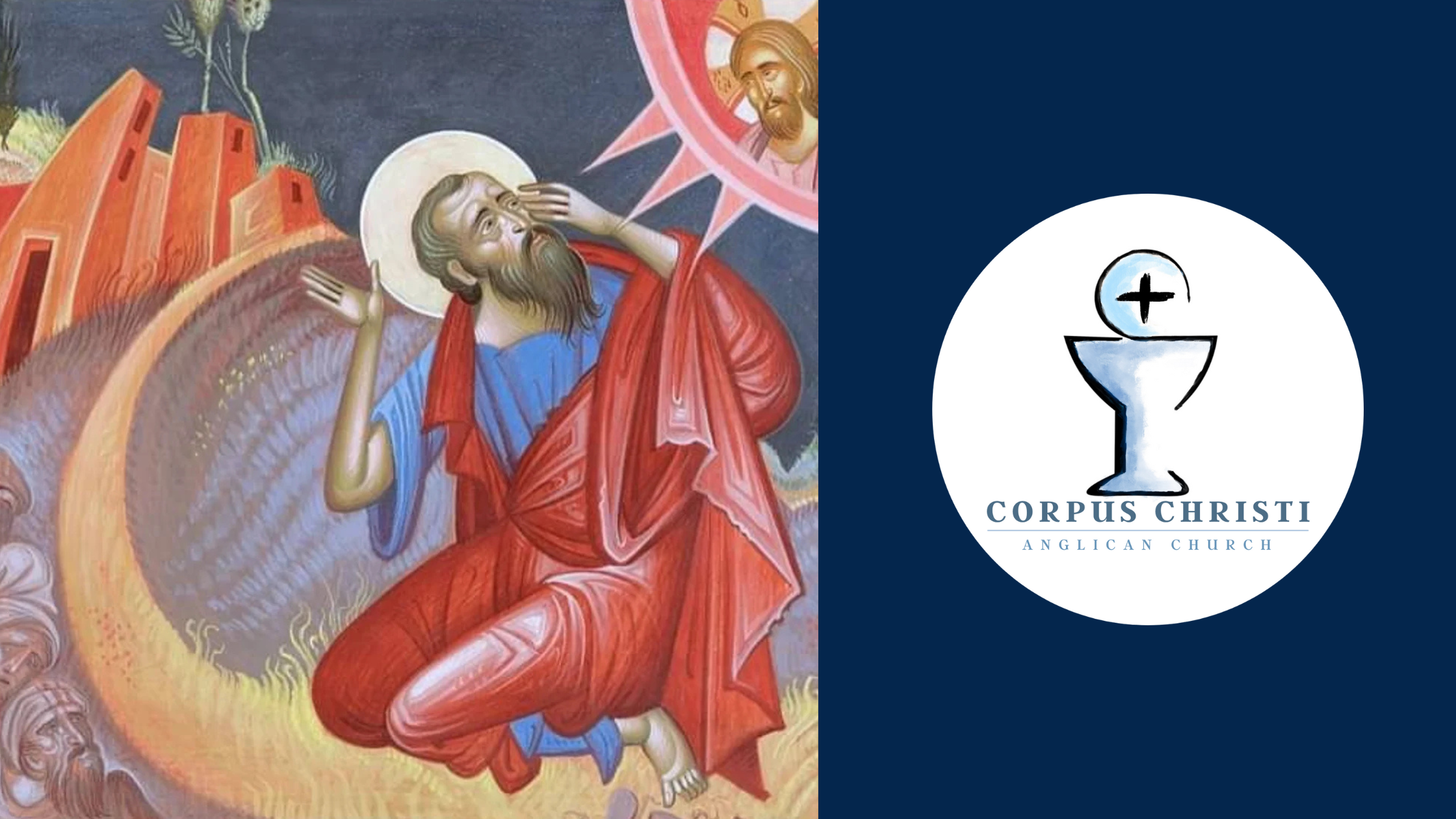
So translation facilitates that. I'm gonna preach on Acts chapter 9, and the question is, why is Acts chapter 9 during the season of Easter? Easter is from the resurrection until Pentecost, and we celebrate the eyewitness of the Apostles and others of seeing the risen, crucified Lord Jesus Christ. So why do we have this? Because Acts 9 is obviously after Acts 2 when Pentecost happens.
Paul describes this event, he says, I was one who saw the Lord as one untimely born. It was an unusual thing. And so, but Luke, as well as the church, they've always been, they've wanted to emphasize the fact that Paul has seen the risen Lord Jesus Christ, and he is an Apostle.
And so we can trust his work. So his writings, his teachings are apostolic and authoritative for us. And Paul also describes it in Galatians, as well as he recounts it again twice more in Acts.
It's really an important event. But in Galatians, he described it with the word, the Lord Jesus Christ was revealed to him. So this is not just a vision, and we'll see later on in the chapter, Ananias and Saul, and Paul was called Saul before at this time, but they both saw a vision, and the Lord spoke to them.
But here was a revelation. There was a type of the Lord communication to his people, beginning in Daniel and Ezekiel. And it was seen, and it was an apocalypse, a revelation.
And there was a certain series of events where there was usually a light, and then there was a, and then whoever was the recipient, they would be fall down in fear, then there would be a heavenly figure that would come, and they would get them to rise up, and they would give them a message. And that's what we see, and people who would read this in the time when Luke was writing Acts, he would know that's what was happening. So this is an apocalypse, a revelation of Jesus Christ.
But in this particular apocalypse, this revelation, there's one of the elements is missing. Usually there's a message that's given for others, and sometimes it's, say, hey put this aside, this is sealed up till the end times. And the message that, the only message that the Lord gave to Saul, he revealed himself, and Saul saw him, but he said, Saul, Saul, why are you persecuting me? And he told him, I am Jesus who you are persecuting.
And he gave him a few instructions, but there really wasn't a message. So, and Saul did not receive his commissioning or his call at this time. It was going to happen a little later in this chapter.
So one of the things, the images that struck me was this image of light coming down from heaven. The direction symbolizes the downward dimension of apostolic revelation. From heaven, down it comes, and even Paul goes actually down to the ground.
Now Saul is not a role model for us. We're not to expect to receive revelation like Paul did. That time is finished.
The time of Easter, when the people have been witnesses of the Lord Jesus Christ, is done. The canon is finished. We have scriptures, and that defines our faith, and our way of life.
So revelation like that's not happening right now. And then the Apostles, what were they to do? They were to witness to what they saw, and pass it on. And the job of the rest of people was to receive their eyewitnesses, and trust that they were reliable, that they really had seen the Lord Jesus Christ.
Well we don't learn to expect revelation the same way that Paul received it here. We can find ourselves in this scripture in a certain way, and that's that who was Paul, or Saul, when he received this? He was the enemy of Christ. He was murdering Christians.
He was going about separating families. And it was to this Saul, Christ's enemy, that when he was trying to destroy the church, that he's the one who received that. And so it's a picture for us that even in this apostolic word of faith, it comes to people who do not deserve it.
And that's like us. That's where we all start when it comes to the revelation of God. And so the apostolic faith has as its basis the words and the testimonies of the Apostles, and we come into it by receiving that.
Not on our basis of our own goodness, but because God has decided to be merciful to us. Then we come later on to what happens to Saul. He has this thing, and then he goes off, and they lead him into the city.
And for three days he's blinded, and he doesn't eat or drink. What does that remind you of? That reminds me of Lenten fasting, where you don't eat. He is mourning.
He's repenting for three days. And during that time then, he gets a vision the same time Ananias, after three days, they get that vision. And I like Ananias, because I can relate more to Ananias.
He's more your everyman. He is your common disciple of the Lord. He had this dynamic relationship with the Lord.
There's this vision, and it's not revelation, it's different, but it's this conversation that he has with the Lord. You get to see it. The Lord is speaking to him, and that Ananias also gets a chance to tell him, but wait a second Lord, this guy is dangerous.
We know about that. Are you sure you really want me to go there? And the Lord and him, they have a back-and-forth, and the Lord persuades him. So there's something about this living dynamic relationship that is happening.
And then in the middle of that, the Lord reveals to Ananias what he is doing in Saul, as part of a way of comforting and encouraging him. You know, I've sown him that somebody named Ananias will come, and will lay hands, and you'll see. And Ananias is trusted to pass on the words that he had to Saul, and Saul has to rely on Ananias that his words are reliable representation of what the Lord has to do.
It's this dynamic relationship that Ananias has that results in a flow outward from his inner to outward to Saul. And so this is different than this vertical movement from heaven downward. This is a movement from inner to outward that brings him out to mission.
Now I want to illustrate that with my own example. In 2012, I was with a church history professor and a group. He was very interested in monastic life, and we went to some monasteries in this country, and he really taught us how the Orthodox life, the center of that was prayer.
And I was really convicted because I cannot pray. I couldn't pray at that time by myself. And at the end of that, I ended up starting to pray with another person, and we began on Tuesdays and Thursday mornings at 830.
And this is back in 2012. And Lord willing, and thank the Lord, we've been able to continue praying together. And during that time of prayer, we pray the Lord, we're trying to make ourselves open to what the Lord is doing among the Edenites.
And the Lord has given us direction. That same first day that we started, I got invited to a conference, totally not related to prayer, but I used it as a time of prayer and fasting, and the Lord spoke to me in a vision. And I was complaining to the Lord.
I was actually saying, Lord, for 2,000 years, these people, you know, you said you would bless them, and all I see is cursing. I don't see your blessing, and you promised that you would bless every family of this earth. Don't you love them? I accuse the Lord.
And then the Lord appeared in a vision. It was kind of like the movie, The Passion, from Mel Gibson. And Jesus is on the cross, and his face is bloodied.
And he's like, do I love them? I'm all in, but not without my church. And I'm sorry, not without my bride. Because his plan was to reach this group using his bride, the body of Christ.
And so from that, that really came this real conviction. It's churches, both churches that will be the witnesses in this area, in the neighborhoods, in their families. That's where people will see the Lord.
In fact, that as people come to the Lord, they can understand. Oh yes, they can understand all the truths. It takes some time for people to understand the truths of who Jesus Christ is.
But to make the step of believing in baptism, it really takes them to be coming apart and joining together in the communities. And hearing their testimonies of how believers, when they declared that they're followers of Jesus, they usually get thrown out of the house for several weeks. And then they, and people are terrified of that.
Because your family is everything, and your social networks, everything depends on that. Your whole future depends on that. And people are afraid to make those declarations.
They hear the stories of how the Lord works through that, and brings those people back into relationship with their families. And then they get that courage to make that step to believe and to be baptized. So we see in Ananias, again, I want to illustrate this, that dynamic relationship that we have with the Lord from interior to out.
And it's involving being open to the Lord. I think that I think about my life here in Northern Virginia. Everyone is so busy.
We're all going from here to there. I have very little discretionary time. And so I need to really ask, and I'm feeling convicted from this sermon, it's like, okay, to really pray and ask the Lord, okay, who are the people that I know, my family members, the people I work with, or in my running club, or neighbors, who Lord are the people that you're working in? Show me, with a very small amount of time.
And so I'm encouraged to do that again, just like we are doing this, looking for this impossible thing of the Lord working among the Edenites. He can also work among us, and bring us from that posture of openness to the Lord. And He can guide and direct us.
And then the last thing that we see a movement, we said from inner to out, but there's also this beautiful picture of Ananias. Once he goes and preaches to Paul, and teaches him, and he lays hands, he says, be baptized. And they eat together, and Paul is strengthened.
And so the community, this is Paul's first community, and they take Saul in, the one who they should be really afraid of. But this small, obscure community, a group of disciples, maybe smaller than what we have right here, they were Paul's first view of what the church is. That's where he experienced the Lord, and what does that mean? And so as we go, and as we go, and are seeing the Lord doing things out there, there's also that movement of bringing those people back in.
Bringing those people here to the church. Bringing those people to your formation groups. And that is powerful.
So we want to always remember, and this is as we go into the areas where we are, it's that apostolic faith. It's something that we accept. It's happened at one time.
It's authoritative for us. We always want to remember this aspect of grace. We always remember that whoever we talk to, whatever they've done to us, whatever enemies that they are, they're not beyond God's forgiveness.
That's the vertical aspect of the apostolic faith. And then there's this horizontal relationship. This relationship that the Lord gives us that's open to all disciples of His, for the Lord to guide and direct.
You know, whether it's through visions, or through hearing liturgy, listening to a sermon, or whatever, listening to the Word. The Lord communicates with, wants to communicate with us, and we can enjoy that. And then from that flows the connection of the Lord from those words to what He's doing exterior on the outside.
And then as we do that, bringing those people back and connecting them to the Lord. Thank you.
Transcribed by TurboScribe.ai. Edited by the Vicar.