
Introduction
Good morning dear friends. It is great to see you this morning. Matthew 22 has Jesus in a sparring match with the different groups of religious leadership in Jerusalem. There is certainly more material here than can be covered in 20 minutes, but as I studied and prayed this week, I was drawn specifically to the conversation with the Sadducees. There are some really important theological truths to highlight that help us in our life with Christ. The first will sound counter-intuitive for us, which is not to love tradition for tradition’s own sake. Jesus argues that we should adapt ourselves to what God is doing, which is connected to what has happened before, but also feels quite different than what we might be comfortable with. Second, He encourages us to live into the new creation work now that will one day be ultimate. He encourages us to know the story of God’s power in the Scripture and to connect it to what He is doing now.
Let me pray for us: “In the name of God, the Father, the Son, and the Holy Spirit. Amen. Lord, may the words of my mouth and the meditation of our hearts be always acceptable in your sight, O Lord, our Rock and our Redeemer. Amen.”
1) Tradition for tradition’s sake can be underdeveloped and lead us astray
There were several different groups in early Judaism during the time of Jesus. We often talk about the Pharisees, but I want to introduce you to the Sadducees. If you’re familiar with the children’s song, you’ll remember that you don’t want to be a Sadducee because they’re... so sad you see :) Why is that? Well, in the song, it is because they do not believe in the resurrection.
By the mid-2nd century BCE, this group is recognizable as an aristocratic group of either priests or those who had intermarried with the-high priestly families. The group is named after Tsadok, the priest who had been over the temple during Solomon’s reign. Around 150 BCE or so, the Hasmoneans, the Jewish political leaders who sought independence from Rome, kicked out the Zadokites and put rival priests in. Some of the Zadokites or Sadduccees stayed in temple service, but most went to the wilderness of Qumran. Over the next 150 years, many would to Jerusalem, gain power in the temple system, and join the Sanhedrin coalition with the Pharisees because they found favor among the Herodian dynasty. They became an unpopular aristocratic class, politically in favor, and were conservative literalists in their approach to adjudicating the law for the Judaism of their day.
They rejected the oral tradition, or the “traditions of the fathers” that the Pharisees espoused.[1] In general, the Sadducees really disagreed with the Pharisees on purity laws. They did not believe in punishment or reward after death and disagreed with the immortality of the soul — all of which were held by the Pharisees. Jesus’ views are closer to that of the Pharisees. NT Wright helpfully calls the Sadducees the “let’s-keep-things-as-they-are” party.[2] While offshoots of the Sadducees continued for centuries on, they were no longer a part of Jewish history after 70 CE, once the temple was destroyed.
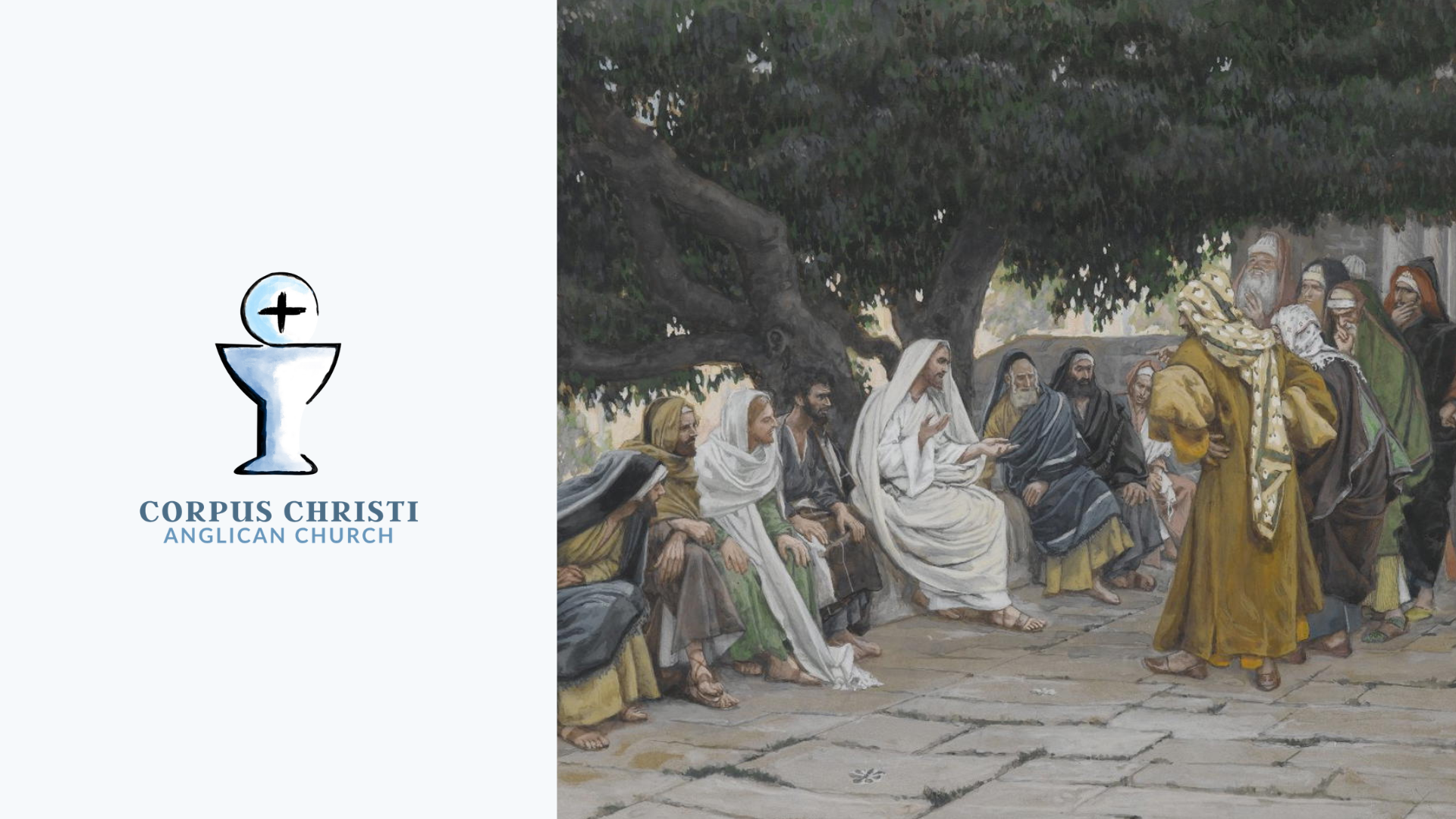
This group comes to Jesus after he successfully shuts down the Pharisees to ask Him another question. They do not believe in life after death and they have constructed a story to reinforce the thing they believe. Their absurd argument reveals more about their ignorance of God’s revelation than about the absurdity of a resurrection. They come to Jesus with a question about a woman who is married to a man who dies. Being literalists, they bring up the law of Levirate marriage from Deuteronomy 25:5-6 where if a husband dies childless, then she marries her dead husband’s brother. This is to produce offspring for the family line. The only “resurrection” these folks believe in is continuity through family lineage.
After 7 marriages and no children, they ask whose wife she will be. The first problem in their question is that they do not understand that the kingdom Jesus is bringing about does not depend on family lineage. Levirate marriage makes no sense in Jesus’ kingdom where the children of Abraham will be of the spiritual lineage of Abraham in every tongue, tribe and nation. Without life after death they were completely blind to this truth that was being revealed. They had such a tight theological system and narrow grid that their traditionalism kept them from what God was revealing through time.
They loved tradition for its own sake and missed what God was doing. I love tradition. It’s why I’m Anglican and if you look at my Clifton Strengthsfinders top-5 results, “context” is my highest strength. I cannot look forward without rooting the future in the past. That is a good thing. The Sadducees reveal what happens when nostalgia and traditionalism for their own sakes distort us: history becomes no longer a guiding principle in knowing the Lord, but a means to control things, hold power, and an excuse not to change.
God does not develop or change, but our understanding of Him and his plan does as we move through different cultures and times. This progressive unfolding of the will of God happens throughout the developing canon of Scripture and even into the application of the apostles teaching. We are not unlike the Pharisees in having a “traditions of the Fathers” as we look to early interpreters of the Scriptures as guides on applying Scripture to ethics and ever-evolving cultural situations. What can be an unhelpful kind of traditionalism is one that gets frozen in a point in time that no longer looks backwards for nuance and understanding. Nostalgic and simple responses to hard situations can make us feel safe, but they can also close us off from the story of God’s work in the world. We should always be looking backward at the Scriptures and the interpreters who have gone before us. If we stop learning, we run the risk of choosing easy answers that make us feel safe and lead us astray. This is what Jesus will accuse them of next.
2) The quality of resurrection life gives us the purpose for which we aim right now.
The Sadducees reveal in their question that they do not understand the meaning and purpose of humanity. Jesus answers their question, but in a way that they didn’t anticipate. He tells them that they are wrong and that they know neither the Scriptures nor the power of God. If they had known Scripture better they would know the power of God better. If they understood God’s power, then raising the dead would be more comprehensible. More than that, they would understand that the resurrection is a new state of being to enter into. In this age to come that Jesus is bringing about, death and sin will be no more. We taste it in part now, but look forward to it ultimately when we all enter into this resurrection life.
Because death occurs now, there is a need for humanity to continue to perpetuate its existence through the bearing and rearing of children. Marriage, sex, bearing, adopting, and raising children are not for their own sake, or just to preserve someone’s family lineage. The ultimate purpose is to join in and experience the divine life, love, and fellowship of our creator. If death, decay, and sin are taken away, the ultimate end of humanity is revealed and it reframes our present.
Sex and marriage make no more sense in the context of ultimate resurrection life where sin, death, and decay are not more. Sex and marriage pass away, but love still remains. As one writer says, “If you grumble that this makes God a killjoy, remember what C. S. Lewis said: asking if there will be sexual activity in the future world is like the child who, on being told that sex was the greatest pleasure known to humans, assumed that people ate chocolates at the same time.”[3] In other words, we cannot comprehend the fullest sense of joy and delight in the fullness of new creation.
This is what our burial liturgy speaks to when we pray: “Give rest, O Christ, to your servant with your saints, where sorrow and pain are no more, neither sighing, but life everlasting.” I appreciate the translation of “Life everlasting” because it reminds us that the quality of the life of the kingdom of heaven is something we pray for to be made known now experientially and it is not something completely off somewhere in the future.
This is what the Sadducees missed...and why they are so sad-you-see. They have not sufficiently understood Scripture, but have become stuck in inflexible ways of understanding the world and Scripture that do not account for God’s continued work among His people. Jesus tells them that God isn’t the God of the dead, but of the living. He is the God of Abraham, Isaac, and Jacob. Jesus goes further back than Levirate marriage, all the way to the Patriarchs. God is holding these patriarchs, and all the faithful, in life, waiting for the day where they will see all things made new. The Sadducees, who were in the family lineage of Zadok the priest, depended on a culture of death and family lineage to retain power and hope. This is true of anyone with an unhealthy view of God’s kingdom and unhealthy relationship to power and wealth. Life with God in new creation and the defeat of death is not some innovation of the inter-testamental period, it is the fulfillment of God’s promises before the Mosaic law existed. It is the guiding principle for the law itself and Jesus points us to the hope found in his ministry where death is defeated and sin is no more.
Conclusion
The kingdom is entered into by our turning from our own broken fiefdoms to the kingdom where Jesus is king and is bringing in people from all nations around his throne. It is a kingdom of hope that we experience in power now in Scripture, in the Spirit, in the church, and in the sacraments, that point us to the power of the resurrection where all things will be made new. The kingdom of God cannot be bought by the wealthy, inherited by the powerful, or contained by a small group of aristocratic traditionalists; it will go forth through God’s power by the lowly through the gentleness of lives transformed by the grace of God in Christ.
Let us pray:
O God, the King of saints, we praise and glorify your holy Name for all your servants who have finished their course in your faith and fear: for the blessed Virgin Mary; for the holy patriarchs, prophets, apostles, and martyrs; and for all your other righteous servants, known to us and unknown; and we pray that, encouraged by their examples, and strengthened by their fellowship, we also may be partakers of the inheritance of the saints in light; through the merits of your Son Jesus Christ our Lord. Amen.
[1] Lawrence H. Schiffman and Chaim Potok, Reclaiming the Dead Sea Scrolls: The History of Judaism, the Background of Christianity, the Lost Library of Qumran (New Haven; London: Yale University Press, 1994), 74.
[2] Tom Wright, Matthew for Everyone, Part 2: Chapters 16-28 (London: Society for Promoting Christian Knowledge, 2004), 91.
[3] Tom Wright, Matthew for Everyone, Part 2: Chapters 16-28 (London: Society for Promoting Christian Knowledge, 2004), 91.