Feast of the Holy Cross: The Glory of Jesus in the Community of Faith
TranscriptioN
Good morning again, everybody. It's good to see you this morning.
This is a special day. First, it's the Feast of the Holy Cross, which is always September 14th, and it just so happens that this year it's on a Sunday. And this week, one of the things that they have in our church calendar are called Ember Days. They're days to especially set aside to pray for people who are ordained or people who are going to be ordained. So, as you think about those who are ordained or those who are in the process, be praying for them this week.
This day focuses on the hope and the victory and the light that is found in the work of the cross of Jesus. And it's also our fall kickoff day. And so we're gonna have a cookout following the service. Would love for you all to be there. The barbecue team has prepared a brisket. And this kicks off a lot of our fall programming this week. So, the kids are in CGS, and we're gonna start formation groups this week. I love how Holy Cross Day frames the fall kickoff, because what it does is it says the work of Jesus is central to our life together as a community and becoming the body of Christ together.
All the things that we view programmatically are to adorn what we're supposed to become in our lives with Jesus. And so, God has made us for the life and love of the Trinity, and the cross is what makes that possible, as we were separated from him by our sin. And so, creation doesn't experience its ultimate end until it's restored by the work of the cross and the resurrection of Jesus as the means of that restoration.
Holy Cross Day History
So why is this day in our church calendar? This day is celebrated by us, the Roman Catholic Church, and the Eastern Orthodox. And we all celebrate it back in 326. In the 20th year of the reign of Constantine, he sent his mother Helena to Jerusalem to venerate the holy places there. And in the course of her journey around Jerusalem, it's said that she discovered the Holy Sepulcher as well as three crosses that were there, which were supposedly the crosses on which were hung Jesus and the two thieves. And she wasn't sure which one was which.
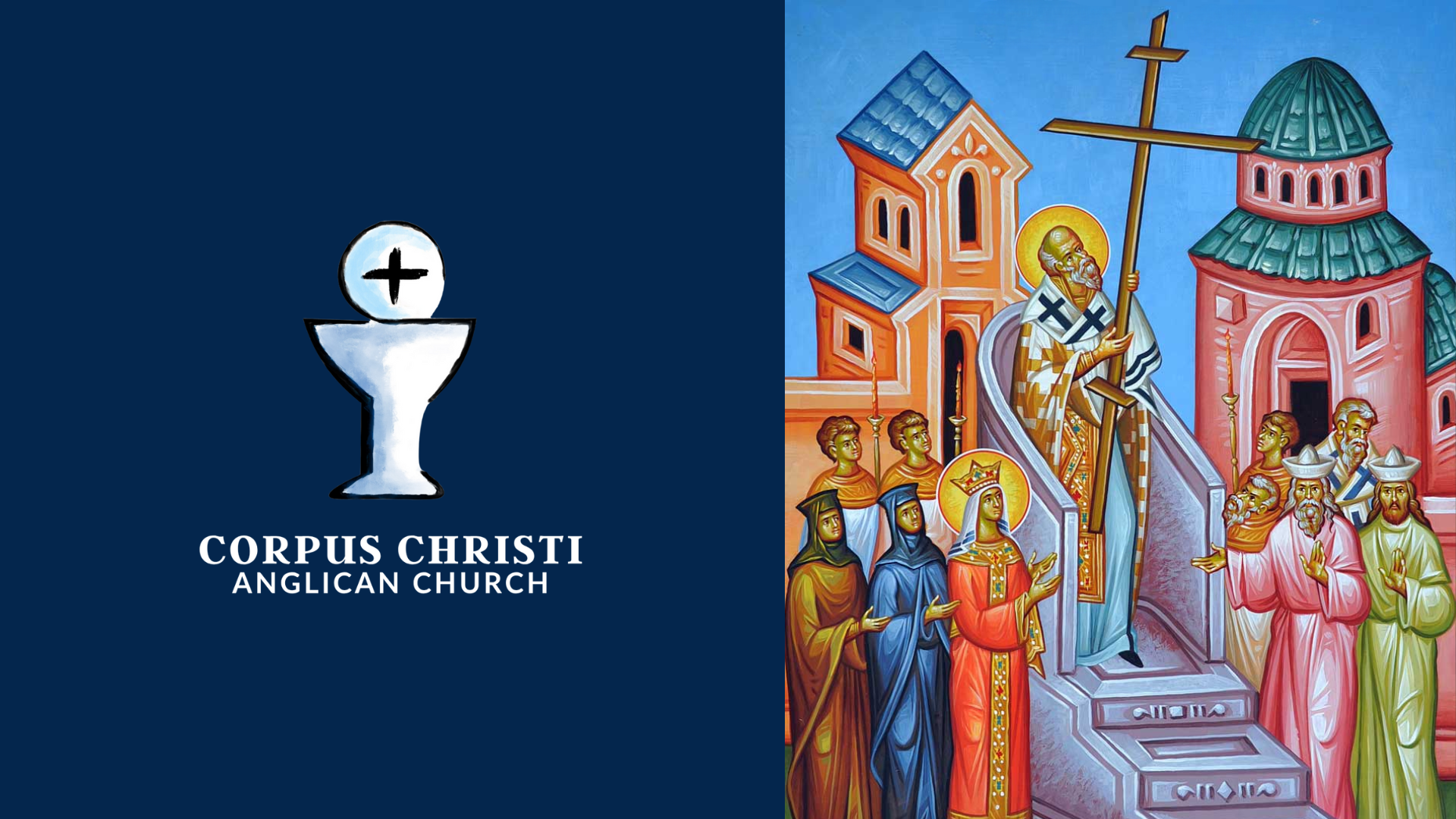
And as legend has it, there is a woman who is in Jerusalem at the time. She's near to death and she's sick, and she touches one of the crosses and she's miraculously healed. And so, at that point, this is why St. Macarius of Jerusalem is lifting up the cross, because as he's one of the ecclesial leaders in Jerusalem at the time, he sees that this miracle has been done and he exalts this as the Holy Cross on which Christ must have been crucified for the world's salvation.
And so, this is the history of the veneration and the exaltation of the true cross, this instrument of shame on which was hung the world's salvation. And so, beyond the exaltation of the true cross, what this day reminds us of is that in Jesus Christ, death has been defeated. Sin no longer has any power, or ultimate power, over those who are in Christ.
So, September 14th every year happens in the middle of Ordinary Time, and it's this nice time in Ordinary Time to commemorate the glory that the cross reveals of Jesus—the glory of Jesus being revealed in the cross. And the cross then is the light for the nations; it's the hope of our redemption, and it's the promise of victory over all the powers that are set against us. It's the tree of life that brings healing to the nations.
And so, in our gospel reading today, we read John chapter 12. In this passage, some Greeks had come to Jesus. These are probably God-fearing Gentiles who started following the law. They're in the city for the Feast of Passover. They've got some questions about the ministry of Jesus, if he is the Messiah. And this is anticipating in John's gospel the universal scope of salvation for the people outside of the Jews—beyond the Jews—this other flock as well that's being brought in. And they're wondering, what is God doing in this man? They don't ask him a direct question in the text, but in asking just to see Jesus, this prompts a dialogue that he has with them and others about his time not yet having come to be glorified, and what that means. The question they do ask follows on the heels of this: we thought that the Messiah was supposed to reign forever, and with the little knowledge that they have of who this Messiah is, they understand that he is supposed to reign over all, and that his kingdom will last forever.
And so, they're probably thinking that this is about to take place—sharpen your swords, right? But victory over death didn't require a sword; it required a cross. And it wasn't a victory over a human emperor—that would be too small of a vision for the kingdom of God—it was over Satan and over the rulers and powers of this world that were set against us, and their use of sin and death in the destruction of the good creation. And so, our ultimate enemy is both greater and more insidious than any earthly authority.
And Jesus had been preparing his followers for his kingdom not by sharpening their swords, but in naming their brokenness and preparing to follow him in suffering. Earthly power is too small of an aim for the kingdom of God. Instead, it's this renewal of humanity, and it's this renewal of all creation, of which our lives are a part. And it's seen now, breaking in one day at a time, in broken lives that are being transformed by the gospel of Jesus' death and resurrection.
Kenosis
The language that Jesus uses about being lifted up on the cross in the Gospel of John couches the crucifixion in a cosmic battle between God and Satan. And the crucifixion then, as it's couched this way, becomes the decisive moment of the transfer of power from the ruler of this world into the hands of the Son of Man.
And our New Testament passage today is a famous one from the book of Philippians, chapter 2. It's called the Great Kenosis passage, which means "the laying aside," and it forms this song that the church takes on about taking on the mind of Christ, letting go of all the things. In the form of God, he did not regard equality with God a thing to be grasped, right? This is the mind of Christ.
And I love, as I was reading about this, one writer describes this passage this way,
“He says, if creation's purpose was to make beings capable of union with the Trinity's love, then Christ would have to overcome our alienation in order to complete creation. So, he descended in Kenosis all the way down to Sheol, where he found Adam and Eve shackled by mortality, and he broke their chains, trampling down death by death, and he raised up human nature to ascend with him. It's a beautiful summary of the gospel—how the cosmic meets the personal. And so, this is the mind to which you and I are called—all of us—to take on, the mind of Christ. Do we look to go into the depths with people, to call them forth to become their new creation selves?”
I think the exaltation of the cross invites us to explore the mystery of God's grace in our broken stories. And then that invites us to explore God's grace in the brokenness of other human stories—our neighbors, our friends, our relatives. And that involves discovering, through the situations that we go through or our own reactions, what we believe about ourselves and what we believe about God. We all have our own proclivities and our besetting sins. I was just confessing mine to the music team this morning about my own triggers yesterday at a weird baseball event.
But we all have them, right? And I've discovered in my own story that I struggle with feeling like I am only as loved as my last success. And I really take it personally when things don't go well. Like, I'll be affected the next day, and it's something I'm continually working on—to know that God loves me even if something didn't go as planned.
You know, when a Sunday doesn't go well, the baseball game doesn't go well, when I make small mistakes that I just can't get rid of. Other people—it's a different thing, right? Maybe you don't feel loved if you don't feel validated, or if you don't feel needed or valued, or if people don't see you as having amazing intellectual prowess, if you're not seen as fun—whatever it is, right? We all have these places that are part of our story, and we get triggered by them, and it's really hard.
One of the things that I loved on our vacation was seeing the Ben & Jerry's factory in Vermont, and the reason why is they have a really cool graveyard there for the dead flavors that they tried and completely failed. It's an attraction unto itself. They have glorified their failures for the public to see day in and day out, and it inspired me to keep a record of failures and to celebrate what was good in my desire to attempt something that did not work, and then to move on and know that God still loves me, because even in that desire that was good, there was something unique in me that reflected something of the goodness of God—not because I can accomplish something good, but because of who he's made me to be, and he actually loves that, right?
And so, each one of us uniquely shows something of the goodness of the image of God, and it's not dependent on how much one accomplishes for the kingdom. So think of your own stories, your own proclivities, the things that you hold on to—consider what they reveal about what's broken, and the deeply held beliefs that we have about God and about ourselves—and then come to your new creation self by laying hold of the grace of God that's found at the foot of the cross. And as you take hold of that grace, learn to call that forth in other people as well by wondering with them with kindness and compassion and some curiosity. And as your neighbors tell you about their struggles—parenting, their bent towards workaholism, alcoholism, anger, perpetual anxiety, whatever it is—enter into that wounding with them and wonder with them if God's grace might actually be greater than the brokenness they're experiencing.
Half the battle is naming it as brokenness, the other half is knowing that God's grace goes deeper than that brokenness. And so, as people become more radicalized, as they become more tribal, it's all the more important to rehumanize one another—to rehumanize our neighbors, even those with whom we have disagreement. That's part of taking on the mind of Christ, because he became like us. He entered into the wounding to show us what new creation could become in us. And so, make space for someone's vulnerability, name and bless the goodness of their longings, the things they were trying to do, and then wonder with them about how the work of Jesus might be there to restore what's broken in them. And that's what happens in a healthy church.
As we name God's grace for one another, this is one of the things we are called to in taking on the mind of Christ with one another—naming the grace of God in one another when we struggle to name it for ourselves. That's how we discover the depths of the mystery of salvation through the cross, as broken people in community who are longing for God's grace as we grow together in taking on the mind of Christ.
Learning the Significance of the Cross in the Community of Faith
So, this is also the fall kickoff day, and that's really important. I wanted to highlight some of the ministries that happen on Sunday, even though these are just a sample of the larger life together, because we do other things outside of Sunday. But part of our Sunday life together is that we gather weekly and we're growing together as a church family.
So, I asked some of our different team leads about why they do what they do and what impact that's made on their walk with the Lord, and they gave me some really great answers. So, I want to read those to you as we think of taking on the mind of Christ in community and what that's looked like in a very specific way.
One person said, "I'm reminded of all the actions and efforts that can often go unnoticed in the preparation of a Sunday service, and it makes me really grateful for the generosity of everyone's involvement on a Sunday. In those moments, I'm reminded of all the imperceived ways that Jesus supports and sustains me. True love continues to give even without recognition."
Another person said, "Serving on the music team has given me the ability to help others worship the Lord using their talents that God gave them."
Another said, "Serving has deepened our understanding of the love Jesus has for his church by reminding us that hospitality is at the heart of community. Hospitality brings people together. Hospitality is love in action. But it also puts into perspective how much hospitality Jesus engaged in—feeding the 5,000 and the 4,000 and numerous other examples of bringing people together through hospitality in order to share truth through his teachings. Hospitality is where we get the opportunity to gather together and grow as a church body."
Someone said, "Helping with the barbecue team reminds me of Jesus feeding the 5,000. Getting to serve delicious food to my church family at these events reminds me that Jesus will always provide."
And then the last one: "Jesus demonstrated his love for his disciples when he served them, whether by teaching them, feeding them, or washing their feet. When I serve in the liturgy, I'm a conduit of his continuing love for his church as he feeds us through the Word and in the Eucharist. I'm a vessel that he uses to love his body, the church, during worship. I'm both loved by him as he uses me to fulfill his purpose, and a means to show his love to others."
And so, I'm grateful for the thoughtfulness of those who are spearheading the different things that happen in our life together in the church, and the ways that doing this—taking on the mind of Christ—shows you something of Jesus' love for you.
Conclusion
Serving on Sundays is just one way to grow in our relationship with Jesus. Consider your calendars. Consider opening your calendars up to the lives of one another to enter into each other's lives together. Have some conversations during the cookout. This is a good starting point. You can keep it light. Ask some questions like: What have you learned about yourself this summer? What's been good? What's been interesting? What's going well as you enter the fall season? What's causing you anxiety as you go a little deeper? What's bringing you joy right now? You know—keep it light. Pace yourself. Don't go too deep too quickly. But the point is, these are the moments where we open ourselves up into each other's lives as we eat together and we are together. We make space for one another.
These people around you, as you look around at one another, these are the ones who are going to help you discover the grace of God in the work of the cross. We're all here for one another for that reason.
And so, on this Feast Day, remember the glory of Jesus that's revealed in the work of the cross. He's reached far below the abyss of our brokenness to raise us up to the heights for which you and I are created—which is life with him, where we're perfectly known, where we're perfectly loved. And so, let's hold on to that grace together. Let's take on the mind of Christ and then live this out in community together.
Let me pray for us.
“O God of unchangeable power and eternal light, look favorably on your whole church, that wonderful and sacred mystery. By the effectual working of your providence, carry out in tranquility the plan of salvation. Let the whole world see and know that things which were cast down are being raised up, and things which had grown old are being made new, and that all things are being brought to their perfection by him through whom all things were made, your Son Jesus Christ our Lord. Amen.”
Transcribed by TurboScribe.ai. Edited by the author.