SERMONS
Archive
- April 2026
- March 2026
- February 2026
- January 2026
- December 2025
- November 2025
- October 2025
- September 2025
- August 2025
- July 2025
- June 2025
- May 2025
- April 2025
- March 2025
- February 2025
- January 2025
- December 2024
- November 2024
- October 2024
- September 2024
- August 2024
- July 2024
- June 2024
- May 2024
- April 2024
- March 2024
- February 2024
- January 2024
- December 2023
- November 2023
- October 2023
- September 2023
- August 2023
- July 2023
- June 2023
- May 2023
- April 2023
- March 2023
- February 2023
- January 2023
- December 2022
- November 2022
- October 2022
- September 2022
- August 2022
- July 2022
- June 2022
- May 2022
- April 2022
- March 2022
- February 2022
- January 2022
- December 2021
- November 2021
- October 2021
- September 2021
- August 2021
- July 2021
- June 2021
- May 2021
- April 2021
- March 2021
- February 2021
- January 2021
- December 2020
- November 2020
- October 2020
- September 2020
- August 2020
Third Sunday of Easter
CONTENT
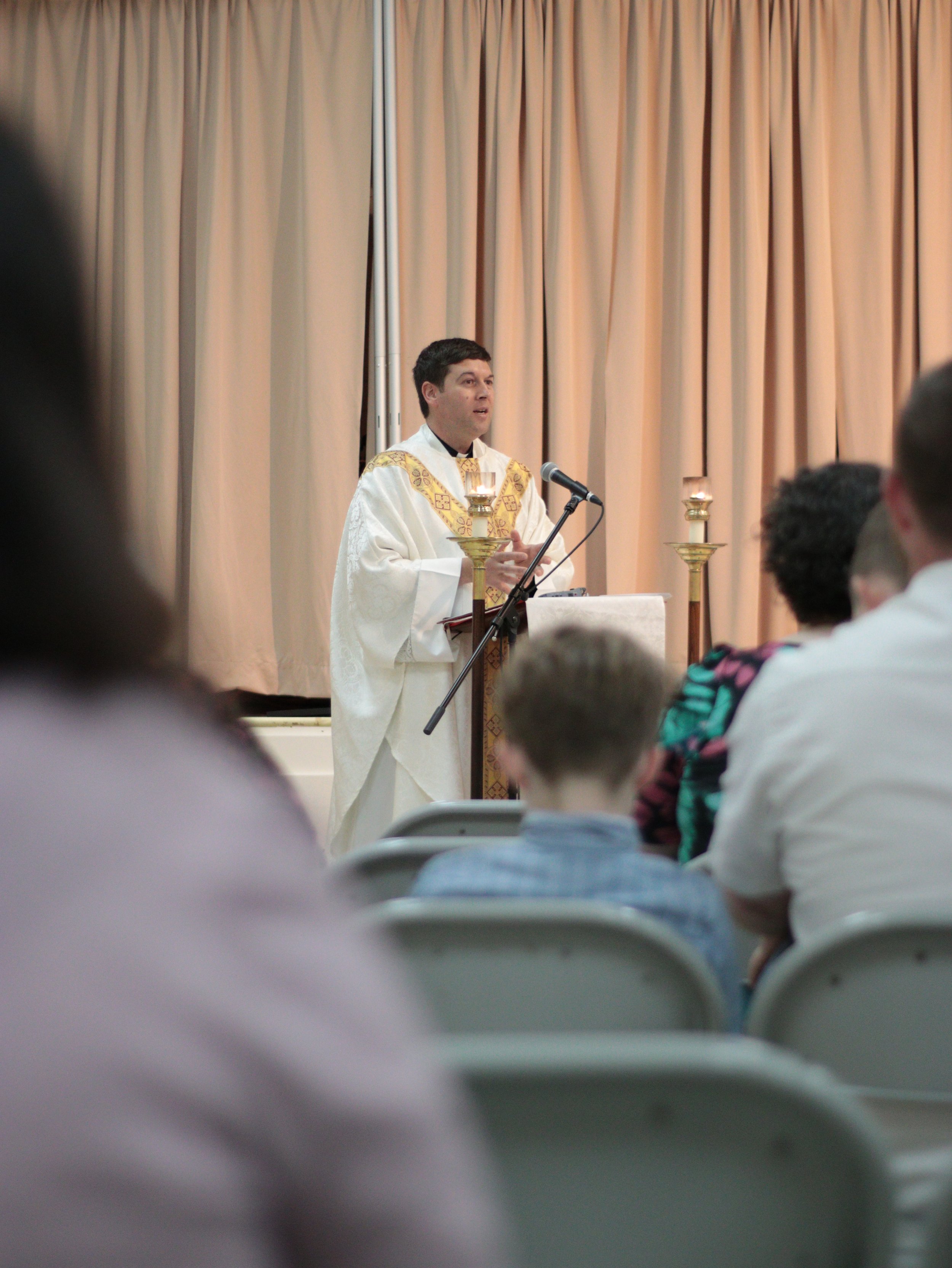
Good morning, everyone. It’s nice to see you all this fine day. My name is Steven Myles, I am a member here at Corpus Christi Anglican Church. So, if you are new or visiting with us today, I am not the person you would normally see in this space. Father Morgan Reed, the beloved Vicar of our church, has invited me to speak today, which just so happens to be the 3rd Sunday of Easter.
Several years ago – after I graduated college, I had the incredible privilege of working in the Nuba Mountains of Sudan. During that time, I worked with a relief organization that was tasked with rebuilding churches, physical church structures, that had been targeted and destroyed during the 70-year civil war. After our team had completed all the church reconstruction in one geographic area, we would send out a scout into an unknown area, and that scout would go from village to village and collect the histories of these areas and based upon that information our organization could then identify the next villages eligible for physical church reconstruction. For a period of time, I was one of these scouts and – I can tell you – I will never forget the stories that I got to hear. The life of these people was so different from my own, one of the key differences I noticed was the way the Nubians were inextricably intertwined with their cattle. Let me give you a sense of what I mean by that - There was no school in most villages, so the young boys were in charge of shepherding the cows out to find pasture and water and protecting them from threats. While out in the fields, the young men would drink the cow’s milk to put on muscle mass and they would wrestle, wrestling was the national sport, so they would wrestle which allowed them to establish their place in the social hierarchy of their village. They would also use the cattle urine to dye their hair a vivid orange color, and they would burn the cattle dung for heat at night and use the ash from those dung fires to cover their bodies in ash and that would repel mosquitoes, because malaria was a real threat in this part of the world. And every so often they would come into town, for celebrations and weddings, and they would dance, the most incredible dances, and they would actually hold their arms imitating the position of their favorite cow’s horns, because every cow had varying degrees of value based on their horns orientation, coloring and patterns on their hide – hopefully you kind of get the picture - their lives, in a sense, revolved around their cows. And all the while these young men were out in the fields living a shepherd’s life they had plenty of time to dream, and what do young men dream about – women – let’s be honest, they dream about women but specifically how they would raise the dowry price for a wife. The average dowry, or the price a man would have to pay to his future father in-law for his wife, was between 50-400 cows and the vast majority of people didn’t have hundreds of cows, and that usually meant these young shepherds would form a group and would raid neighboring villages of different tribes. So the history of this people is one of perpetual violence unfortunately, perpetual cattle raids. It was common knowledge that you could tell where a man was headed based on the spear he was carrying, there was a spear for fishing a spear for hunting and a distinct spear for battle. So I would sit in these churches of mud walls and a grass roof, or sometimes just a few logs under the shade of a large mango tree and write down the histories of these villages. And the recurring theme I picked up on, was raiding other tribes for their cattle and then being raided in revenge, raiding and being raided, until one day light skinned men showed up– Arabs from the North- showed up with machine guns and tanks and the villagers would fight them with their spears, and when the Arabs left they got on with life as usual. For most of the villages I interviewed, that was the extent of their experience of the 70-year civil war in their country – just 1 or 2 brief encounters. Men and women lived their whole lives, raised families, built homes and communities but were otherwise completely detached from the broader context – this war that was going on around them. It was a battle over which government would rule the country, the fight over which laws would be instituted upon their land and they were mostly disengaged. I don’t think that is unique to the Nubian people though– is it? Certainly their situation is unique, and their day to day looks vastly different from ours, but as men and women on this Earth, we share the same tendencies. This propensity to trod along from one day to the next, and casually fall into the patterns of the world or the culture around us and all the while remain detached, oblivious or too pre-occupied to engage with the overarching struggles that surround us. So as we approach today’s passage, I ask that you would join me in praying that we could hear the voice of God calling out to us who are so prone to wander.
OPENING PRAYER:
The grass withers, the flower fades, but Your word O Lord will stand forever.
Lord the word that goes out from Your mouth; it shall not return to You empty,
but it shall accomplish that which you purpose, and shall succeed in the thing for which You sent it. Father God clinging to that truth we ask You to speak to us this morning, that Your Word may accomplish that which is needed in each of us - in Christ’s Name. Amen.
SERMON:
Before we jump in - I find it helpful to provide a rough outline of what the next few minutes are going to look like. First, I want to establish where we are in the church calendar and understand the context behind the Easter season. Then we take a close look at our gospel passage from today’s lectionary in Luke 24 and these 2 men on the road to Emmaus. And finally I want to make the connection of how we sitting here today fit into this story – the story of Easter.
Because– when we take a step back, friends, collectively we are all a part of one story. The story of God and who He is, and how He endeavors to communicate and relate to us– that is the greatest story there will ever be. And to tie it back to my work in Nuba, I believe that is the battle that is ongoing and enveloping us all-whether we recognize it or not. This battle for the truth of who God is. Bear with me here, I’m going to start pretty far out and abstract and then slowly tighten our focus and zoom in. Now, a lot of people take exception with how God has chosen to reveal Himself. The most common refrain throughout all human history is mankind saying, “if God is real, why doesn’t He just show me who he is?” Seems fair - But have you ever stopped and given that question any thought? How should an infinite God convey to finite creatures the breadth of who He is. Would just one look really do it? From what I can observe and from what Scripture teaches me, God is unchangeable, He is a constant, from eternity past to eternity future He is.
Because God is a constant, He is unchanging, He reveals Himself in A consistent and repetitious manner. All throughout Scripture, we can trace these story lines of God revealing His character, from one generation to the next. He reveals Himself as Holy, as a King, as a Father as a shepherd - metaphors that we can relate to. And the absolute beauty of God’s word is the congruity or the uniformity of these revelations – each of these nuggets of truth in the Bible were recorded by different men or women, from different time periods different geographic locations, and the purpose of their writings were wildly different, some men wrote poetry about God, some recorded history, some transcribed prophecy, but despite all those variables taken together the whole of Scripture conveys the nature of an infinite God just viewed from different perspectives. The season we call Easter, is one example of God, slowly and methodically, leaving a trail of compounding evidence which not only reveal his character but His plan of redemption for mankind. So let’s look closely at Easter - In order to understand, we have to go back to the Jewish traditions before Jesus, there is the holiday of Passover, this commemorates the night, 3500 years ago in Egypt, Jews had to slaughter a lamb and wipe the blood of that animal on their doorposts. In faith, the families who obeyed these instructions were saved, and the spirit of death passed over their homes. The very next Sunday after the Passover, there is a ceremony the feast of first fruits, where a priest will collect a sheaf or bundle of wheat, the best and most perfect bunch of wheat, and he raises it up before God and thanks God and ask that the rest of the harvest would be just as good. From that Feast of First Fruits there is a period of 50 days which ended in another Feast. That final feast of weeks signifies ten commandments and God’s covenant with Moses. I want to make sure you are still with me – that was a lot of words. What I am trying to highlight – is the pattern? There is a 1 to 1 direct connection between those ancient traditions, and our Easter season – and they all occur during the same stretch of the calendar – roughly March to May. The pattern begins with death, few days later a raising up, a period of fifty days, and the institution of a new covenant. Death, raising up, 50 days, and a new covenant. So let’s make those 1 to 1 connections to really drive this home - For thousands of years Jews, before Jesus, had an annual holiday where they remembered the day a lamb was slaughtered so that they could live, and fast-forward to Jesus’ time it’s on that very same day the Lamb of God, Jesus Christ, died to save the world. Back to the Jewish traditions, three days after the Passover, the priest would lift up the perfect grain offering, fast forward to Jesus’ time and three days after his burial Jesus was raised from the dead. Then a period of 50 days and the mark of a new covenant with the giving of the law and now a period of 50 days and the mark of the new covenant with the giving of the Holy Spirit at Pentecost.
I don’t know what you imagined it would look like, I don’t know what you think it should like, but this pattern is God is trying, desperately trying to reveal to us, the collective us of mankind, who He is. He is not distant, He is not far off, aloof or indifferent. He has been engaged during this whole arc of history and He is engaged here and now. Regardless of what time in history you were born, whether it was before Jesus, during the life of Jesus, or after His resurrection. God has been using this same stretch of the calendar - 50 some days from March to May– for thousands of years to capture our attention. To the Jews it was Passover and the Feasts and to us it is Easter – but the purpose of these traditions remains consistent and that is to break up our day to day and focus our minds and affections on God’s plan of redemption for mankind.
You guys with me still – that was a lot. That’s why I don’t do this for a living. So that was part one, we’ve set the stage with the significance of the Easter season, and all the careful meticulous effort God has crafted into its messaging.
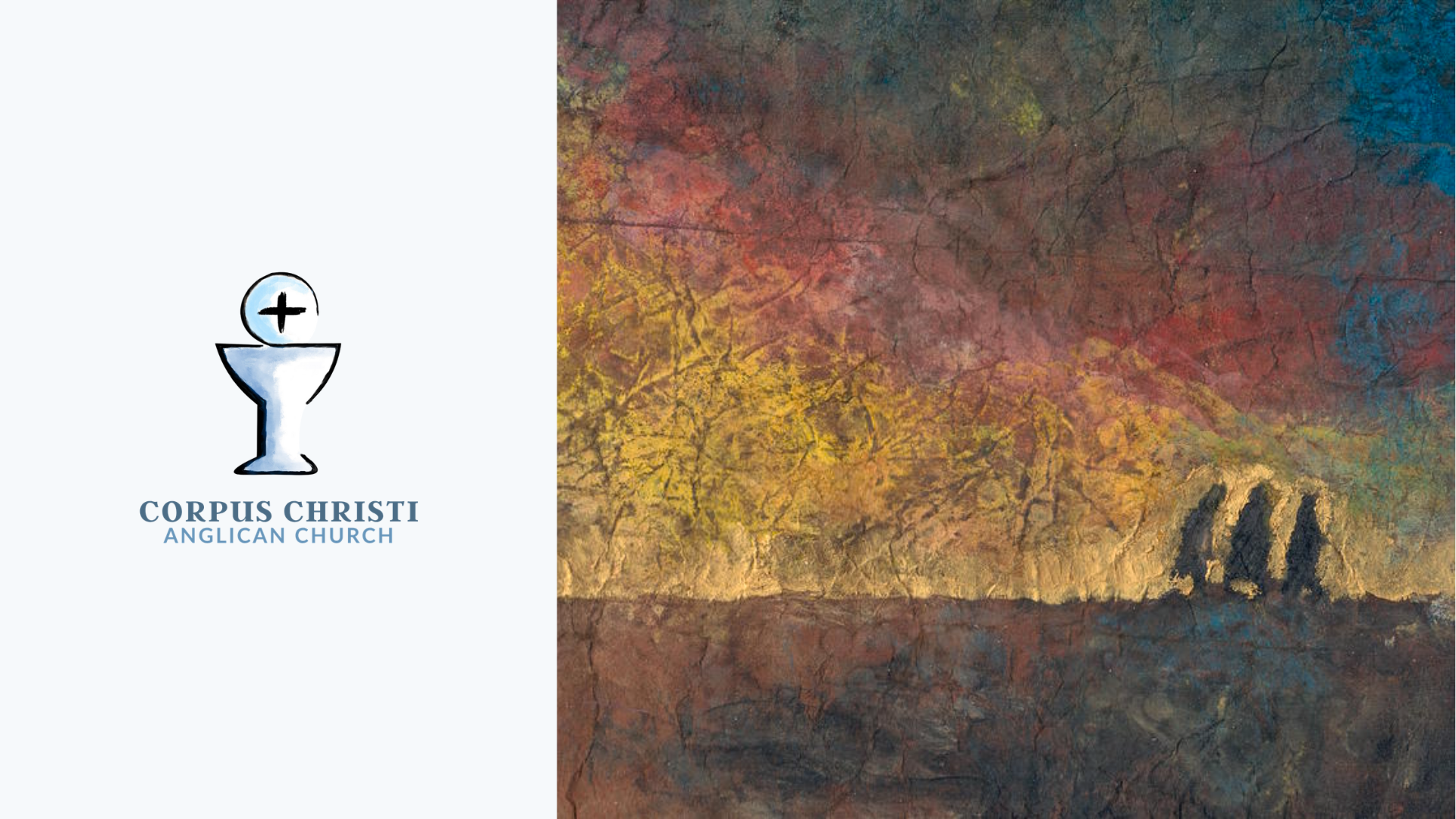
So now, the second part of toady’s message, we can turn our attention to the passage in Luke 24, and I’m hoping with this context established we can better understand the dialogue that is going on between Jesus and these 2 men on the road to Emmaus. To quickly set the stage, this is one of a dozen or so instances where Jesus appears to people after His resurrection. We pick it up in verse 13 Cleopas and his friend are on a short 7 mile walk, downhill and to the West, from Jerusalem to Emmaus. And these men are discussing the latest events in Jerusalem, but verse 16 indicates that their eyes were kept from noticing that the stranger who joins them was actually Jesus. And as they are walking and talking with this stranger, the stranger inquires in v.17 “what is this conversation you are having?” And it’s pretty palpable right, the incredulousness of Cleopas, his incredulity in verse 18 when he answers and says, “Are you the only visitor in Jerusalem who doesn’t know what has happened in these days?” But Jesus’ interest is in hearing if these men have picked up on this sequence of clues, so he invites their explanation by saying “What things?” And here I can imagine Cleopas and his friend launching into the story with excitement in their voices, finishing each other’s sentences and maybe adding details that the other neglected, in verse 19 they say “There was a man, Jesus of Nazareth, a prophet, mighty in deed and word before God and man.” And slowly their excitement fades, and their voices drop because they inform the stranger that – v.20 “Our chief priests and rulers delivered him up to be crucified, we had hoped he was the one to redeem Israel, but it has now been 3 days since he died. Women we knew went to his tomb this morning, but they did not see his body”
Jesus’ response in v.25 might come as a bit of a surprise – it pretty cutting, “O foolish ones - slow of heart to believe”. It’s important to distinguish that when Jesus calls these men fools, He is not making a judgement on their intellectual capabilities, he is not calling them stupid. In scripture the term fool has a very specific definition, it’s an indictment against the aspect of our humanity that rejects wisdom and despises instruction. “O foolish ones - slow of heart to believe” Psalms tells us that “It is a fool that says in his heart, there is no God”. And every one of us have played that fool – but why? From the time our parents ate of that forbidden fruit we have been cursed to believe that the biggest obstacle, the biggest barrier to what we perceive to be our own joy and happiness is God’s law. So we want to do away with it, we want to be free we want the autonomy to do whatever we want to do and not what He commands us to do. The deepest most pernicious bias of all human inclination is this bias against our blessed Creator Himself. We are “Foolish ones – slow of heart to believe.”
Thanks be to God that He understands us and He is patient with us. Jesus, recognizes that these men are unaware of the situation of the context they have missed that this the unveiling of God’s plan which has been in motion for thousands of years. So in v. 27 it tells us that, “beginning with Moses and all the Prophets, Jesus explained to them what was said in all the Scriptures concerning himself.” And I can only imagine how riveting that must have been, to listen to the author Himself explain the intention and the nuance behind each piece of His story. So he points to the law and the prophets, the poetry and the wisdom books, and he reveals how those writings are proclaiming Jesus as the Messiah – the one the Jews have been waiting for, the one who will save mankind. Not only were the events of the last few days foretold, but the events of the last few days were necessary, v.26 Jesus says it “was necessary that the Christ should suffer these things.” Because without the shedding of blood there is no remission of sins.
But still that’s not enough - is it. All the facts and information can be laid out in the most compelling fashion. Men can have all the knowledge there is, and yet it will not penetrate into their day to day lives. We will remain undeterred, we will remain indifferent, information is not enough to change a man’s heart. So in v. 32 we hear the men remark, “did not our hearts burn within us while he talked with us on the road.” And this my friends is a gift of God. These men described there interaction with God as a fire burning within them, and similarly the prophet Jeremiah records his experience as a fire shut up in my bones, and the only way I can try to explain this is that when we truly hear the voice of the eternal God, it resonates with the part of us that is also eternal, our own soul and it produces a visceral response. The history that before appeared to be just a coincidence, the man we walked with who appeared to be just a stranger. We recognize its not just a coincidence, we recognize its not just a stranger. We see that it is God who has walked with us these many, and it is His voice calling out to us. “Do you see me? Do you see who I am? Do you see my love for you in this great plan I have made? Will you not repent and turn back to me?”
In closing, I want to quickly read from our passage in Psalms 116– the author writes “What shall I render to the Lord for all his benefits to me?” Surely this Easter season is a period of joy and thanksgiving. It is a time to celebrate and remember the grace of God through Jesus Christ His Son. And what a privilege to live during these days, where we can look back and connect the dots to see God’s mighty arm moving through history. It’s said we need to be reminded more than we need to be instructed and my hope this morning we are reminded of God’s faithfulness and how He has been using the Easter season for thousands of years to break up people’s day-to day and to call them back to Himself. As we approach the altar here to receive the elements, the body and blood of Christ, let us remember the second part of Psalm 116, the author answers his own question “What shall I render to the Lord for all his benefits to me? I will lift up the cup of salvation, and call on the name of the Lord.” If God has your attention this morning, call out to Him, He is near. If you don’t know what to say, there are people after the service who would love to pray with you. Happy Easter my Friends – He is Risen! He is Risen indeed!

Enduring Faith
TranscriptioN
It's very good to see you all this fine Sunday. My name is Steven Myles, and I'm a member here at Corpus Christi Anglican Church. For those of you who are new or visiting with us this morning, I'm not the person that you would normally see in this space. Father Morgan Reed, the beloved vicar of our church plant, is on a well-deserved vacation with his family. And in his stead, he asked me to speak this morning and not mess things up too badly. So I have had the opportunity to deliver the homily once before. And if you recall, the last time I was up here, I openly admitted that I am a baby Anglican. It's true. The majority of my life I've spent with Baptist and non-denominational communities of faith.
And so the rhythms of the Anglican Church calendar, the commemoration to the Saints of old, the different holy days, are still relatively novel to me. So bear with me here, the newbie, but for a few moments, I would like to call our attention right at the onset to two things. The Saint which we commemorate on this day and where we are positioned in the church calendar. It's marked to commemorate St. Lawrence. And St. Lawrence was a deacon and martyr of the Catholic Church in Rome around the third century. And so in this very month, this month of August, 1,767 years ago, the Emperor of Rome, Emperor Valerian, made the decree that all bishops, deacons, and priests were to be executed and that the riches of the church were to be put into the coffers of the Roman Empire. And the next day, Pope Sixtus, the Pope, was executed, and Lawrence, the Saint that we're commemorating this day, was ordered to go and collect the riches of the church to surrender them before he would be executed. And Lawrence worked swiftly, and over the course of the next three days he did, he collected the riches of the church and then he distributed them to the poor. And as he stood before the prefect of Rome three days later, he was asked to present the riches of the church. And he pointed to the poor, the indigent, the blind, the crippled, and the one suffering, and he said, "Here are the riches of the church." And then he was executed. It's a powerful testimony.
So that is the Saint, St. Lawrence, that we commemorate on this, the 10th of August. And in regards to the church calendar, there is a period of time after Pentecost and before Advent known as ordinary time. Right? There are no major feasts or holy days. Each week is numbered, and this week we are smack dab in the middle of that stretch. This is the 14th week of ordinary time. And although the time is ordinary, by God's grace we have the opportunity this morning to redeem these moments and to once again focus our minds and our intentions on abiding with God.
So please pray with me. “The grass withers, the flower fades, but Your word, O Lord, will stand forever. Lord, the word that goes out from Your mouth, it shall not return to You empty, but it shall accomplish that which You purpose and shall succeed in the thing for which You sent it. And so, Father, we cling to this truth, and we ask that You would speak to us this morning, and may Your word accomplish that which is needed in each of us. In Christ's name. Amen.”
So before we jump into today's text in Hebrews 11, I want to give you a rough outline of what the next few moments are going to look like. So I will attempt to briefly summarize the book of Hebrews prior to chapter 11. Bold task. And then we will look at Hebrews 11 and the two distinct categories that faithfulness falls into that we encounter in the text. A conquering faith and an enduring faith. And then finally, I'll close with a few words which I hope will encourage us to remain steadfast despite our situation. Now, why do we have to go back and summarize the entire book of Hebrews, you might ask? That's a fair question, okay? But when we get to chapter 11, where our text is today, it's kind of the culmination of this argument that the author has been making for the past ten chapters, okay? This assertion that Jesus Christ is superior to all the other previous ways that God has revealed Himself in the past.
And so this is very similar to other authors of the New Testament who have crafted a very particular message. Under the inspiration of the Holy Spirit, these authors would systematically and methodically argue the case for Jesus Christ as the Messiah and the veracity of what He claims. In John's account of witnessing, right? Witnessing firsthand with his eyes the miracles and teaching of Jesus Christ, he states very plainly that his purpose in writing these things is that you may believe, and that by believing you may have life.
In Paul's letter, he declares very explicitly that it was necessary to first preach the Word of God to the—But because they rejected it, the gospel of Jesus Christ is extended to the Gentiles. And so Paul's subsequent letters are intentionally meant to plant and nourish faith in people without an understanding of God's involvement throughout history. So in the same fashion, the author of Hebrews has a very distinct purpose.
He's writing to Jewish believers, as the name of the book implies, right? And so understanding his audience, there's this baseline assumption that the reader is intimately familiar with the Old Testament. He doesn't explain the covenant with Abraham, Mount Sinai, the Torah, the sacrificial system. It's expected that these things are already to be understood.
So the book of Hebrews, prior to chapter 11, the author very methodically lays out this four-point argument, okay? To prove that Jesus is the ultimate revelation of God's love and mercy. So the author elevates Jesus above all the other prior revelations from the Old Testament, from the Torah. He's greater than the angels. He's greater than Moses. He's greater than the priestly order. And Jesus is greater than the sacrificial system. Those are the four main points. And then coupled with those four points are four warnings. Because Jesus is greater than the angels, beware of rejecting His message. Because Jesus is greater than Moses, beware of abandoning Him. Because Jesus is—beware. So those are the four points and the counter four warnings.
That's what the first ten chapters have set out to accomplish. Jesus is the ultimate revelation of God's redemption, so you, the reader, do not turn away from the One who fulfills everything that the law and the prophets have directed you towards. And so that's the first point of this homily, right? Everything prior to chapter 11.
Now we get into today's text. Chapter 11 is sometimes often referred to as the Hall of Faith, right? Hall of Fame, Hall of Faith. You guys got it.
So now that we've arrived at the culmination of this argument, right, that he's been making for the last ten chapters, the author has demonstrated now that Jesus is not nullifying their traditions, right? He's not rendering moot everything that they have been brought up in, but rather He is the fulfillment of everything that the Jewish reader would have been taught as a young man in the synagogue. So now in chapter 11, he is encouraging them to continue in this same tradition of faith as those that have gone before. And he provides a litany of examples.
Abel, Enoch, Noah, Abraham, Isaac, Jacob. Because even though Jesus is the new revelation, nothing has changed in regards to the prescribed manner in which mankind is restored to a right relationship with God. Throughout all time, the prescribed manner in which man is restored to a right standing with God has remained constant.
We are saved by God's grace through faith. And the very first act of faith mentioned in Hebrews 11 goes all the way back to Abel, right, very early on. Adam and Eve, Cain and Abel.
And so in the Genesis account, it is inferred that God initiated a blood sacrifice the moment Adam and Eve sinned against Him. Genesis tells us that God killed an animal in order to clothe Adam and Eve with the skins of those animals. What is inferred there is a blood sacrifice as an atonement for sin.
So this is an indication to us of why Abel's sacrifice was acceptable and Cain's was not. For the Genesis story in chapter 4 recounts that Abel brought an offering of the firstborn of his flock. It was an animal sacrifice. And Cain brought an offering of the fruit of the ground. The profundity of this interaction between Cain and Abel and God cannot be overstated. Why was Abel's offering accepted and Cain's was not? Why? Is it better to be a shepherd than a farmer? Was his offering more costly than his brother's? Abel had followed the prescribed method that God had given for atonement. He exercised faith and obedience, and he offered a blood sacrifice. Cain, on the other hand, tried to circumvent God's prescribed method and offered the fruit of the ground, or in other words, the fruit of his efforts. Cain's offering was rejected because he tried to approach God through the merit of his good works.
Mankind has always and will always be deceived into believing that they can earn God's favor. This idea of earning something from God is pervasive. And even for the people who have matured in faith, you don't automatically become immune to this line of reasoning. Especially in our Western world, we are taught that the punishment should suit the crime and payment should be commensurate with the level of effort. And so through nature and nurture, we kind of develop a transactional view of relationship. And this is the portion of my message I was most conflicted about.
Because here in chapter 11, we're presented with this list of elders, and they fall into one of these two categories. Either a conquering faith or an enduring faith. But how can we judiciously examine both of these categories without favoring one over the other? Let me try to explain this a little bit better.
Because more than anything, what I want to do is I want to reach for examples like David and Daniel and Samuel, right? And I want to place them here at the forefront of our attention. And I want to be able to point to the amazing things that they accomplished through their lives of faithfulness. Right? They shut the mouths of lions. Literally conquered kingdoms. Administered justice. Obtained the promises. And more than anything, I want to use their examples to encourage you to not lose hope, to persevere, because you all know just as well as I do what is outside in this world.
It is a cold and unjust world in which we travel. And what's more than likely, though, is that our problems and our struggles — they didn't have the decency to stop at the door. Right? But they're right here with us, and the tension is pulling on us. The financial struggles of losing work. The slow slip into a cold marriage. The quiet suffering of a miscarried child. The pain in your body that won't go away. And I don't think that the intention behind highlighting these types of conquering faith stories is meant to be misleading. Right? It's natural.
We love a happy ending, and these stories of conquering elders can certainly strengthen our resolve and spark hope. And so, I don't know — maybe it's just me on this point — but when those are the examples that are predominantly celebrated, predominantly in the spotlight, then I get this idea in my head that maybe that's what a faithful life should look like.
If only my faith were stronger, then maybe I wouldn't be stuck in this situation. And that step is so subtle. Right? It's almost an unconscious progression of logic.
Of course, in our transactional minds, we can kind of make the leap that a faithful life equals a fruitful life — a life that conquers all obstacles. And yet, when we come to the text, we learn that man's economy and God's economy on this point cannot be farther apart. And yet, too often, the former is projected onto the latter, and we end up with this distorted view of God's will. We end up with a muddled and watered-down understanding of the truth. Right? The number of young men and women in our country that are escaping Christianity as soon as they're out of their parents' sight — statistically speaking — is on the rise. And I'm not going to stand here and reduce it down to this one reason — that's too simplistic — but I do believe a contributing factor is this prevalent understanding in the American church that a life of faithfulness to God is a path to comfort, a path away from suffering.
And so, when our next generation of young men and women are faced with the reality of this world and their faith isn't fixing everything, it isn't utilitarian, it's cast aside. And so, too often, these examples of a conquering faith are lifted up, but it can come at the expense of a richer and deeper understanding. And I think, though, Hebrews 11 brings balance to this propensity towards the conquering faith by reminding the reader of tremendous examples of enduring faith.
Abraham would never see the covenant fulfilled. Moses chose to suffer alongside his brothers rather than live comfortably in Egypt. Others were afflicted, many more were mocked and imprisoned, and some were put to death.
And we know that Jesus himself, the author and perfecter of our faith, was betrayed and died alone. And so, the profound truth that Hebrews 11 is instructing us in is that God does not measure faith by the result that it achieves, but by the obedience it maintains. Scripture gives us a glimpse forward to the day where a servant will stand before his God, and the words that he longs to hear are, “Well done, thou good and faithful servant.” Faithful, not fruitful. God is the one who produces the fruit, and all that we can do is bear that which he chooses to bestow. Noah labored for a hundred years, toiling in the sun, building an ark, and at the end, eight lives were saved.
Jonah preached to the city of Nineveh, and over a hundred thousand souls repented and were saved. And yet, both of these men were faithful to what God had revealed to them. God recognized both of their faiths, yet the results were wildly disparate.
So even now, God is searching. Right now, he is seeking men and women of true faith. Verse 6 rightly states that without faith, it is impossible to please God. And true faith is not a collection of beliefs; it's not this intellectual pursuit of a perfect theology. True faith ignites action. Abel offered when there was no manual.
Enoch walked when there was no example to follow. Noah built a boat though he had never seen rain. And Abraham ventured out into the unknown without a map.
These men and women were driven by what verse 1 calls an assurance of things hoped for and the conviction of things not seen. They did not require the guarantees of safety and security before they went out, and they did not demand God to prove himself before they would believe. They did not require constant validation in order to earn their loyalty.
And so, this path to a restored relationship with God, like I mentioned earlier, has remained constant — that we are saved by God's grace through faith. And we're not called to strictly adhere to a set of rules and regulations. We're not called to sacrifice animals to atone for sin. Right? The time for those revelations is past.
We live in the age now where Jesus Christ has been revealed, and the faith that God will honor is the faith placed in the finished work of Jesus's life, death, and resurrection. And maybe you've heard this before. Maybe it all makes sense. But the one thing you can't wrap your head around is why? Why, though? The last verse in our passage from today, in verse 16, is what I've been holding on to after praying and preparing for this sermon. And it's a small phrase that says, “Therefore, God is not ashamed to be called their God.” So after the author has gone through this litany of examples of faithful men and women, he adds this small phrase — that God is not ashamed to be called their God.
My prayer is that the same could be said about me. My prayer is that the same will be said about you. There is a love that you simply cannot understand until you experience it. The power of God's love is the only force that I have experienced in my life that has not only changed who I am, but has literally changed the desires — the things that I desire in my heart. You all might not know, but I am keenly aware of the depravity of the things that I used to chase after. And God understands our nature. He knows that we are weak, and so he provides his Spirit to fill and empower us to live in the way that he always intended. This satisfaction of not only being loved unconditionally, but being restored to a true purpose — I think this is why it makes sense. Because otherwise, it looks crazy. Right? To the world, these things look foolish.
Why remain when others have left? Why endure when there's no relief? Why trust if it doesn't make sense? These men and women in the Hall of Faith tasted and saw that God is good. And like Job — Job who lost everything in this world — he lost his wife, he lost his children, he lost his wealth, his occupation, he lost his friends, he lost his health. And when he was stripped of everything, his words were, “Though he slay me, yet I will trust in Him.”
The truth is that these men and women were wholly satisfied in God alone. They did not need the joys of this world. They did not even need the blessings that could come from his hand. He alone was their portion, and God was not ashamed to be called their God.
And so, today, do not be lured into the temptation of putting your life in the scales and deciding that my life is a wreck because my faith is weak. Or don't fall into the trap that because God is remaining silent, He is far from you. Rather, maybe you're closer to the heroes of faith who are called to endure rather than conquer. And so, do not lose faith. Do not be discouraged. For lo, He is with us, and He will not forsake us. Amen.
Transcribed by TurboScribe.ai. Edited using ChatGPT.