
SERMONS
Archive
- October 2026
- September 2026
- August 2026
- July 2026
- June 2026
- May 2026
- April 2026
- March 2026
- February 2026
- January 2026
- December 2025
- November 2025
- October 2025
- September 2025
- August 2025
- July 2025
- June 2025
- May 2025
- April 2025
- March 2025
- February 2025
- January 2025
- December 2024
- November 2024
- October 2024
- September 2024
- August 2024
- July 2024
- June 2024
- May 2024
- April 2024
- March 2024
- February 2024
- January 2024
- December 2023
- November 2023
- October 2023
- September 2023
- August 2023
- July 2023
- June 2023
- May 2023
- April 2023
- March 2023
- February 2023
- January 2023
- December 2022
- November 2022
- October 2022
- September 2022
- August 2022
- July 2022
- June 2022
- May 2022
- April 2022
- March 2022
- February 2022
- January 2022
- December 2021
- November 2021
- October 2021
- September 2021
- August 2021
- July 2021
- June 2021
- May 2021
- April 2021
- March 2021
- February 2021
- January 2021
- December 2020
- November 2020
- October 2020
- September 2020
- August 2020
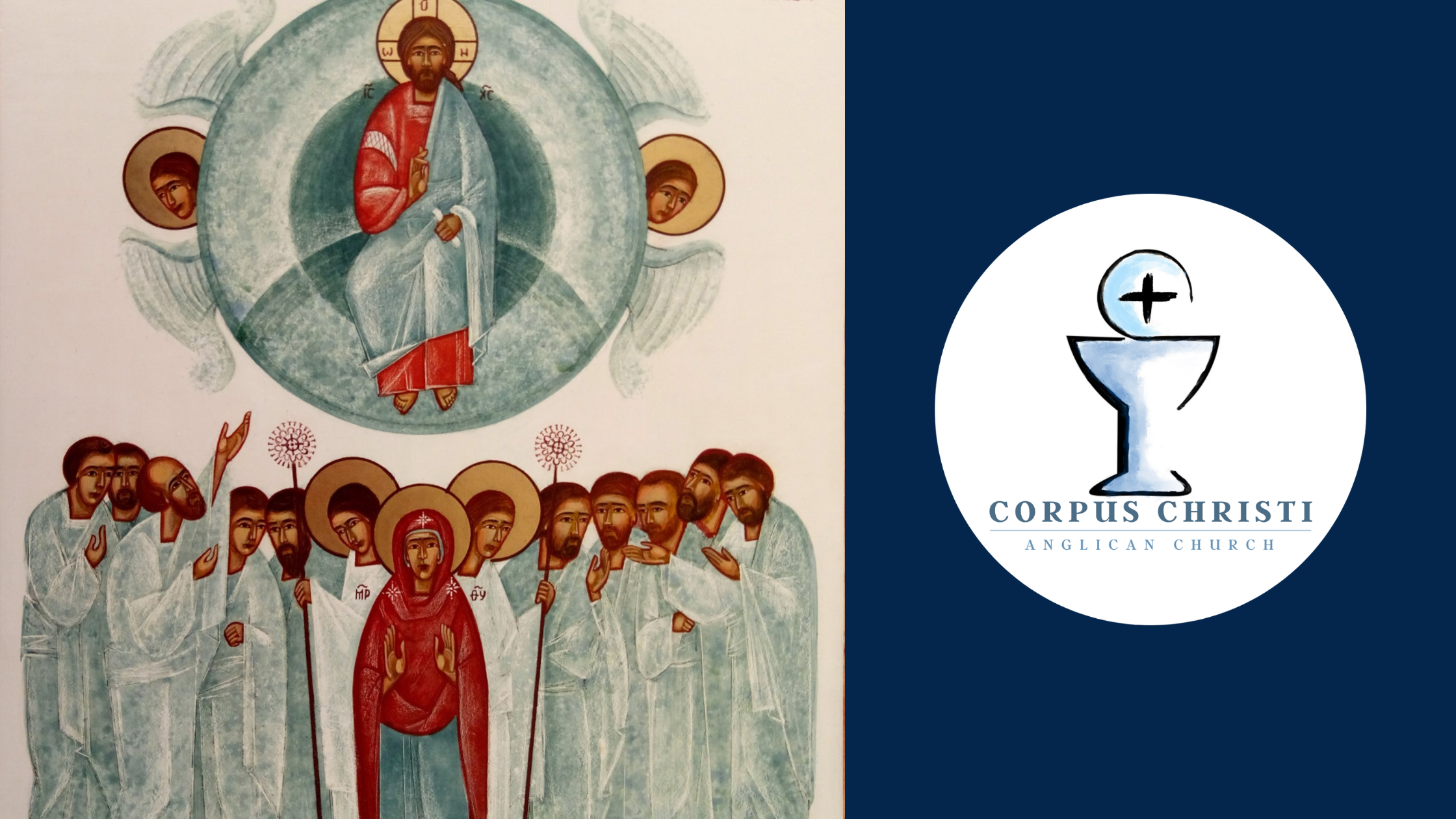
Sunday After the Ascension: Lord, Get us Out of this Mess

TranscriptioN
Well, good morning everybody. It is good to see you this morning. I'm the vicar here at Corpus Christi Anglican Church and this is, as I mentioned before, the final Sunday and Eastertide, this long Easter season that we celebrate. Next week we'll get to celebrate Pentecost together and so we'll be wearing red.
It will be a joyous celebration. And on this last Sunday of Easter, in this little 10 days that we often refer to as Ascensiontide, we are reminded of Jesus going and ascending where he rules and reigns and the disciples waiting for the Spirit to come and to empower them for the work that God is calling them to do, which is to carry on the work of Jesus. And so as we think about Ascension, one of the things that we did on Thursday is we celebrated the Feast of Ascension and we were reminded that there are two realms to creation, heaven and earth, that the Scripture describes.
And Jesus is Lord over all. And what he is doing in Ascension is bringing heaven's realm into earth, breaking in. And this is why each day we pray in the Lord's Prayer, Lord may your kingdom come on earth as it is in heaven.
God's doing this cosmic work of salvation that we're a part of, uniting heaven and earth in new creation. And we see in part now what we look forward to in its fullness when Jesus comes again to restore all things at his second coming. And so today we're still focused on this waiting period, these 10 days, where Jesus has ascended and he is reigning on high and yet hasn't given the Spirit to his disciples to dwell in them, to be his presence as they are to carry on his works.
But what Jesus' Ascension does remind us of, we might be tempted to think that he ascends and so he's absent, but actually the Ascension does not declare his absence, it declares his active presence as he rules and reigns and brings his kingdom to come on earth as it is in heaven. And I don't want to take us too far off on a tangent, but I don't know how many of you are aware of this, but in the Bible, in the book of Esther in Hebrew, how many of you were aware that it almost didn't make it into the canon? Okay, a few of you. It almost did not make it into the canon.
That and the book of Ezekiel are two books that almost didn't make it in for different reasons. For those of you who knew why Esther didn't almost make it in, do you know why? Yes, excellent, yes. It never mentions God, never mentions Yahweh whatsoever, explicitly I should say.
So essentially when you read it, it's this narrative about a Judean woman in the Persian period who saves her people through deception, like that's the basic storyline. Now, some have suggested that the name Yahweh in Hebrews, יהוה, those four letters show up as an acrostic pattern at different points in the book, and that might be true. It's debated, but if it is, and even if it's not true, it still highlights something that's very true about the book, which is that the Lord's name may not be mentioned explicitly, but he's far from absent.
He's in their preservation, and to me the book of Esther in that way, as we see God working in the background very actively, this is something like what it feels like to me when we talk about the ascension of Jesus. He's not absent. He's reigning, and his reign moves over our age and into our earthly realm in ways that you could put sort of on this spectrum of overtly miraculous and overtly ordinary.
Still miraculous, but ordinary. Somewhere in there you see the kingdom of God breaking in. You see Jesus's rule and reign as king breaking into our realm, and we can see it in today's passage in the book of Acts, chapter 16.
We see it in the stirring up of hearts. We see it in the disruption of corrupt and demonic systems, and we see it in this surprising deliverance that produces faith in a Gentile, a pagan, and so I want to look at this text together this morning in Acts, chapter 16. If you have your Bible or you have it on your phone, you can open up to Acts, chapter 16, and as we get into it, let me pray for us.
“In the name of God, the Father, the Son, and the Holy Spirit, amen. Lord, may the words of my mouth and the meditation of my heart be always acceptable in your sight, O Lord, my rock and redeemer, amen.”
Lydia and the Stirring of the Heart
Well first I want to see how God's kingdom comes in stirred hearts.
Paul is in a missionary journey in this context, a different one than the last one we talked about. This time he's traveling with Paul, Silas, Timothy, possibly Luke himself, and they arrive at Philippi, which is a major Roman colony, a very urban place in northeastern Macedonia today, northeastern Greece, and he does what he normally does, which is to find a local synagogue to preach out of, to share the story about how Jesus ties all of history together for people's deliverance and salvation, but Philippi is so pagan that there are no synagogues in Philippi, so what is he to do? He hears a rumor that there are some people who pray down by, there's a regular place to pray down by the water, and there it's mostly made up of women, and when he's down there, this is before the passage we read today, he encounters a woman named Lydia, and Lydia is a God-fearing Gentile, meaning she was a pagan Gentile that converted to worshiping the God of Israel, so she's a monotheist, and as he encounters her, he ties together the stories of Jesus for her in a way that shows her what God has done for her in the Jewish Messiah. She believes this gospel, and then she is baptized, her and her household, so the gospel comes to a successful businesswoman, a woman who is very well known, well off, and she and her whole household are baptized, so we see the gospel being fruitful, multiplying, and filling the earth in this woman, Lydia.
Even in pagan Gentile cities where there's not even a synagogue to preach out of, we don't see all the parts of Lydia's life that lead up to this moment, but we do know that in Acts, God had given Paul a dream to go to Macedonia, and so we see Jesus reigning and bringing together the story of salvation in ways that Paul's not aware of, that Lydia is not going to be aware of until it happens, and Lydia reminds me that we often see the kingship of Jesus when we're open to looking for the ways that God is stirring hearts. Sometimes people will call these God moments, right? There's these ways that you couldn't have guessed that God would bring these moments together, but he does, and in the stirring of hearts, we see God's rule and reign. In Lydia's time, paganism was the norm, and especially in Philippi, this city to preserve its welfare, sacrifice to gods and to the emperor who was considered a god.
They were trying to keep the gods happy, to procure the blessing on their city, and so it was tied together. Economic, politics, religion, it's all brought together in a cohesive system, in this religious system that was intertwined, and this is what it meant to be Roman, and so to follow Christ was a Roman identity, and it was a threat to these Roman nationalists who didn't want anybody threatening the safety or the Roman-ness of their colony, and in our context, you know, there's often a veneer of Christianity that we can see in places, or at least if there's not a veneer of Christianity, people are pretty familiar with the story of Christianity. That might be less and less true, but even now, someone at least knows what this term means, generally, but the reality is our neighbors are still bound to the kingdom of darkness.
No matter where we go, our physical neighbors, our co-workers, and in this place where God, where people are still bound to the kingdom of darkness, Jesus is still stirring up hearts to find him, to discover his goodness, and you and I, like the disciples like Paul here, are called to be attentive to what God is doing, when to speak, when to listen, but we should be prepared to listen and then connect somebody's story to the story that God is telling in them and through them when the opportunity is presented to us. So that's Lydia that we encounter. Jesus is stirring hearts, as in Lydia's case.
The Gospel Disrupts Demonic Systems — the Freed Slave Girl
Jesus also disrupts demonic systems, no matter how embedded they become. This is an amazing aspect of the gospel. So they go another time to the place of prayer.
This is what we read this morning. They encounter a female slave. She's not given a name in the story, but they harass Paul and Silas, and he turns at some point, and he commands the demon to come out in the name of Jesus, and if you think about this, what's astounding is you have this Lydia, who is a well-off businesswoman who comes and believes the gospel.
She's a Gentile convert to Judaism and then believes the gospel of Jesus, and now you have a pagan slave girl who's being profited upon, or she's being used for other people's profit by telling the future, but Luke wants us to see that the gospel comes to all, whether it's the well-off, whether it's the poor, whether it's slave, whether it's free. Her society told her that she only had value in as much as she benefited other people, right? She was valueless, but Jesus has an alternate gospel narrative that her life not only matters, she is an image-bearer of the king of the universe, and that is this holy economic deconstruction of the earthly emperor's gospel. This does battle with the good news of the Roman Empire.
The woman had a spirit of divination. She could tell the future, and Paul liberates this woman both from the spirit of divination that was holding her hostage and, as a result, from her masters. The slave girl is now freed to reign with the king of heaven for the first time in her life, and that is stunning, and so first Paul has to recognize that what this girl is doing is not truly her.
She's bound to the kingdom of darkness. Then he has to take the risk to cast this girl's, the demon out in Jesus's name, and why was it risky? I mean, for a couple reasons. One is if he had said something and nothing happened, so that's a risk, but two, it's also a risk because he named something as demonic that was completely normalized in their culture, and it was something that was so normalized that it was expected to support the sustainability of their culture, so her masters are irate.
They tell the municipal authorities, these men are Jews and they're throwing our city into an uproar by advocating for customs that are unlawful for us Romans to accept or to practice, and I also wonder if there was, for these slave masters, a feeling of fear. If people start becoming Christians, then they're going to move away from Caesar as emperor and lord. They're going to move away from faithful citizens.
They're going to move away from what it means to be Roman, since it was Roman law to sacrifice to the emperor, and if these men's livelihoods could be lost, then perhaps other people's livelihoods could be lost too, as now Christians are just coming in and destabilizing the economy of the colony, especially when your commerce is, your commerce surrounds those gods, and so they're accused of a kind of revolution. People would rather be comfortable than free. Some people want to be told that they're okay, even if they're sick, because the process of healing can involve pain, it can involve suffering, and most difficult to swallow, it can admit that, it can, it can involve admitting that we were wrong, and that's really hard, especially when we're talking about religious political systems, and what if, if we think about the gospel here, what if there were a way to live in community in a way that didn't use slave labor, or exploit women, and that honored the image of God in all people, right? On this end of the empire, Roman Empire's collapse, it seems obvious.
It did not seem obvious to those slave owning Gentile pagans, but this is the power that the gospel brings, a society where the slave is free, that women are honored, that the image of God is honored in all people. This is what the gospel of Jesus offers, but healing can be scary and risky when patterns of acceptable corruption start to calcify and get normalized in the society, and so the kingdom of heaven comes when the calcified patterns of the kingdom of darkness are named, and they're broken up, and they're deconstructed, and Jesus's kingdom comes when individuals are then de-shackled from the lies of the kingdom of darkness. This girl had value as an image bearer of the king, and after the slave woman is free, we see her masters double down on systems that they're bound to, patterns that they've lived into, but Luke's point, which is helpful for us, is that even though they double down on their systems of bondage to the kingdom of darkness, that is not going to stop what God will bring about through the gospel, and that's good news.
So this work of the gospel bearing fruit might be surprising, it might be disappointing at times because it's painful, or there's an admission that we were wrong, but if we prepare our hearts to receive people's reactions, the circumstances that we find ourselves in, with curiosity, kindness, and trust that the Holy Spirit is at work in us, that he's with us, that he's at work through us, then we begin to see the kingdom of God break through into this earthly realm, and the suffering becomes redemptive as the healing begins.
Discerning the Movement of the Kingdom — The Philippian Jailer
And so we've seen Paul and Silas's disposition. They needed to have this disposition of openness, curiosity, and wonder at what God was doing.
They needed this because they're going to then be thrown into prison as a result of these masters and their complaints to the municipal authorities. They're thrown into prison and they're beaten with rods, but then we find them again in Acts 16 praying and singing hymns in the middle of the night, and there's an earthquake that takes place, the whole place is shaken, and all the prison doors are opened. And you have to understand in this culture, people take, the Gentile pagans take things like earthquakes, and they see them as signs of God's disfavor or favor, depending on if it's favorable to them or not.
There is a divine agent behind these natural disasters, and so this is frightening for the guard because the prison doors are open, and he was responsible for these prisoners. If they had escaped, he would be punished. There's little ears, so I just leave it out, he will be punished.
So Paul stops the guard from making a life-altering decision, and he reassures him that all the prisoners are there and they're accounted for. But God had used the earthquake to get the guard's attention, and the guard brings Paul and Silas out to ask them a question. Our translations make it sound so spiritual.
Sirs, what must I do to be saved? This is a Roman pagan. This is a prison guard. There is no way he's thinking in like Jewish kingdom messianic constructs.
So other people have translated it differently. I think they're right. Rather than saved, which is a pretty loaded theological term for us, I think what he's saying is, okay you guys, how do I get out of this mess? That's the essence of what saved means here in this passage.
So God has brought him to this point of realizing, I'm in trouble, I need to know how to get out of this, and I am open to hearing whatever you have to say, because you must know something I don't. And so Paul tells him, trust in Jesus and you will be delivered, you and your household. And we have to keep keep in mind what this means.
Trust in Jesus. He's asking him functionally to disavow his allegiance with the Roman Emperor, who is a god, and to realign his allegiance to Jesus as Lord and King. Jesus is Lord, there is no other.
Jesus is King, there is no other. Caesar is not Lord, Caesar is not King. And that night this man puts his faith in Jesus, and he says, you know, no matter what God brings me through, I trust that Jesus is King.
And he and all of his household that night are baptized, which includes his wife, it includes his children, and if his household had slaves, it includes them too. All of them are brought into the body of Christ. God in his kindness then does what Paul says.
He spares the life of this soldier, as the magistrates just decide that Paul and Silas are allowed to leave now. And so they're released, and they go forward to the next thing, and the life of this soldier and his family are forever changed. This is the beginning of the church at Philippi.
A Jewish woman, a freed slave girl, or a Gentile convert to Judaism, a freed slave girl, a Roman soldier. These are the beginnings of what God is doing in creating the body of Christ in Philippi, where he is shown to be Lord and King. So Jesus delivered this person and his family in a surprising way, that Paul and Silas had to live a life to prepare for.
They had to be recognizing this. They had to be careful to keep faithful rhythms of prayer and worship in order to keep a watchful eye and an open ear to what God was doing and to where his kingdom was moving, and they noticed it in the life of this jailer. They could have run for freedom, but they were attentive to what God was doing, and the result was an enduring faith in the Philippian jailer and trust in the kingship of Christ for this man and his whole household.
Imagine how many generations of Christians there are because of this man and his household. So when Jesus ascends, he is not absent. Quite the contrary, he is actively reigning as Lord and King, and we see his rule and reign where heaven and earth are united in the stirring up of hearts, like in the story of Lydia, through the disruption of demonic systems, as in the deliverance of the slave girl, and when people trust in Jesus, as in the life of the Philippian jailer, and all of us are called to sharing in this ministry of sharing in Christ's rule and reign together.
This is the community where Jesus is King and Lord, and people see that in the way that we treat each other, and it requires a life of attentiveness, regular prayer and worship to reframe our everyday moments, our proclivities, our desires, and our loves under the reality of the kingship of Christ. We need what is real to frame what is temporary, and this also involves curiosity about where we see Christ at work. Sometimes his work is subtle in our everyday moments, and sometimes it is glaringly obvious, but in any case, Jesus hasn't abandoned the project of creation.
He's become Lord of all things, and all things will be brought to their fullness in his work of new creation. His ascension is a promise that he will come back again and restore fully what he is doing in part right now. So I want to encourage us not to just think of heaven as a place we go to where when we die, a geographic space, but instead it's something that is breaking into our reality now.
It is taking over in individuals and households and communities in this community, and so we're to prioritize looking for it attentively, so that each day we can actually pray, may your kingdom come on earth as it is in heaven. Let me pray for us. Almighty God, you sent your son Jesus Christ to reconcile the world to yourself.
We praise and bless you for those whom you have sent in the power of the Spirit to preach the gospel to all nations. We thank you that in all parts of the earth, a community of love has been gathered together by their prayers and labors, and that in every place your servants call upon your name, for the kingdom and the power and the glory are yours forever and ever. Amen.
Transcribed by TurboScribe.ai. Edited by the Author.
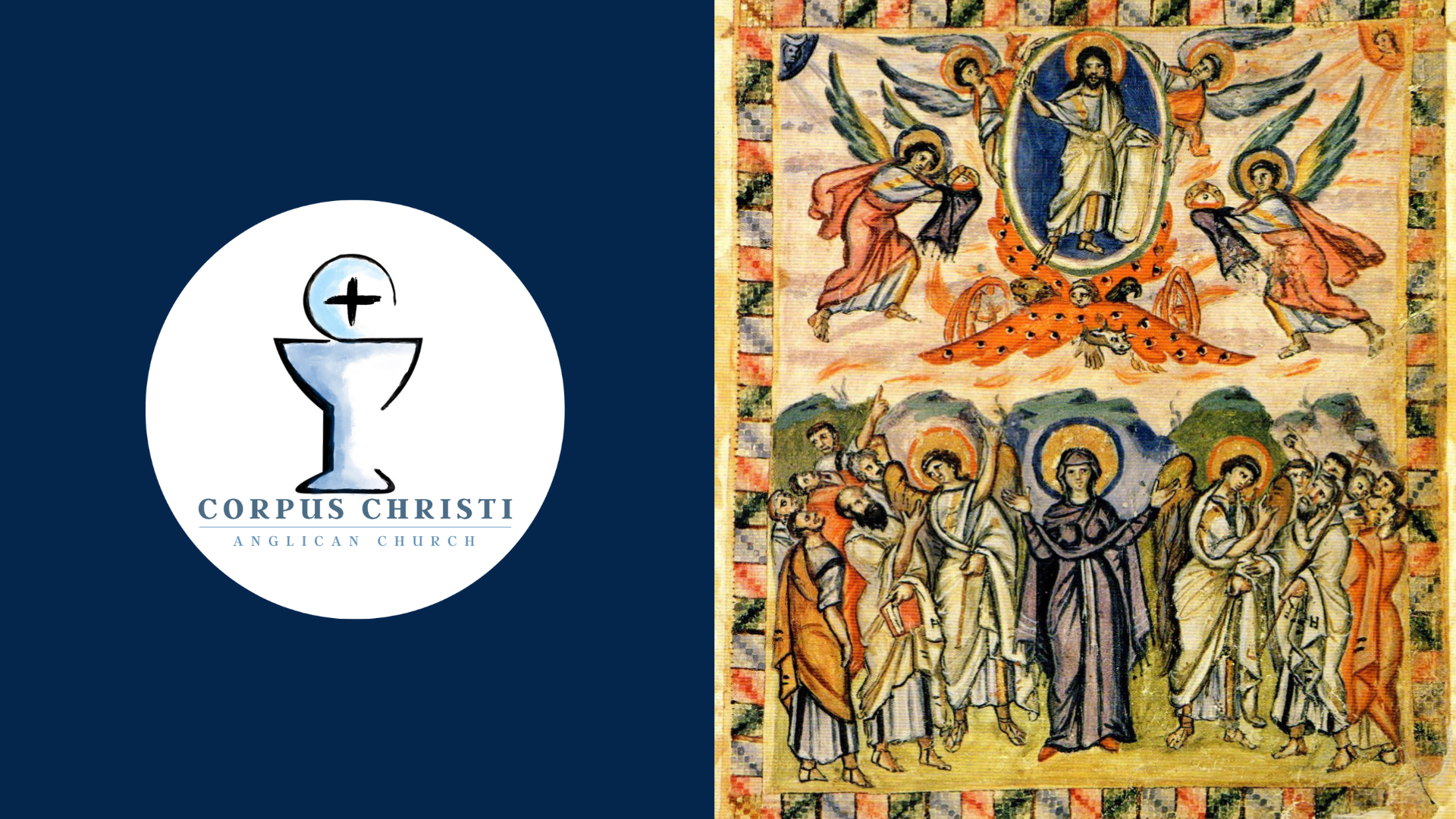
Ascension Day: The Reign of Jesus in the Realm of Life
TranscriptioN
Thanks for making time to come and gather on a Thursday night.
This is one of those days where it's often it comes up on us and we're not used to thinking about it, but it is such an important day in the church's calendar. Part of the gospel here is Jesus crucified, risen from the dead, ascended on high, who will come back again. All of this is the gospel, the saving work of God.
And this is actually our first time as a church celebrating it on its actual day. And thank you to Caroline for trying out the incense with us tonight. I was thinking about how joyous it is to talk about Jesus going up in the clouds and then having the clouds of incense just permeating our olfactory imagination.
So thank you. It smells like prayer in here. I'm grateful to you for your help.
And so as I said, this is one of the central days in the church's calendar, in the history of the church. And this feast commemorates not Jesus being absent, but his exaltation as King. That's what the Ascension is all about.
This feast declares that heaven and earth will one day be ultimately one, and that Jesus is Lord over both of these dimensions, heaven and earth, both parts of God's creation. And both of those realms find their overlap in Jesus himself, who is the promise that heaven and earth will ultimately be reunited, restored in this cosmic story of salvation and new creation. And as we look at this book of Acts chapter one, let me pray for us.
In the name of God, the Father, the Son, and the Holy Spirit. Amen. Lord, may the words of my mouth and the meditation of my heart be always acceptable in your sight, O Lord, my rock and my Redeemer.
Amen. The disciples gather around Jesus, and they ask him in chapter one, the beginning of this chapter, Lord, are you at this time going to restore the kingdom to Israel? This is the question on their minds. The expectation is that the Messiah is going to come, that the Messiah is going to conquer the nations that were warring against God and his anointed one.
This is sort of the theme of the Psalms, and that God would establish a throne that would last forever through his servant of the line of David. And that's why the cross had been so surprising, but now Jesus has risen from the dead, and you can imagine, now he's risen from the dead, perhaps their hopes are sparked again, that this might be the time now. Now that we've seen him, now that we've walked with him in his resurrection, maybe now is the time.
When are you going to restore the kingdom to Israel? Is this the time it's going to happen? And Jesus tells them not to worry about the day or the hour. That shouldn't be on the forefront of your thinking and your anxiety, but he instead gives them a call in the meantime. He tells them that the Holy Spirit will come upon them.
They're to wait until that happens, and then they're now going to be Jesus' witnesses in Jerusalem, and then in Judea, which is broader than the area in which is Jerusalem, and then Samaria, just north, and then to the ends of the earth. Everyone else, the Gentiles, but they are waiting. They're in this season of waiting for the Holy Spirit to come on them.
And it reminds me that we're not supposed to waste our time on worrying about when this is finally going to come. When is Jesus going to come back? Reading the newspapers for signs of the times is not a helpful discipline. Instead, we're called in this time of waiting while Jesus is reigning, and we're waiting for him to come again.
The word for that that they use in the Bible and in Catechesis of the Good Shepherd is the parousia, when he comes again to restore all things in their fullness. While we're in this waiting period, we receive this call to bring the message and continue the works of Jesus, who was crucified, resurrected, now he reigns on high. And now one of the things that we're called to do is look for the ways that he reigns right now, because his kingdom isn't just out there, but what the Ascension declares is that his kingdom is come, and will come more fully.
And so we're looking for the ways that his kingdom comes. And it's easy to get hung up on misconceptions about heaven being something out there, something disconnected from our everyday experience, or geographically above us. I can't remember who I was talking with, but there was a Russian atheist, and when he went up into space, he said, you know, I went up into the heavens and God was not there.
And so the reality is that heaven is not geographically located, somewhere out there disconnected. Heaven is another realm or dimension that overlaps with the dimension that we find ourselves in, and Jesus reigns over both realms and dimensions as king over all creation. It's easy to think of it as this repository of souls that's off in the sky, but the way that the Bible describes heaven is that heaven and earth, and we think of that phrase, heaven and earth, as this complete totality of the creation.
And sometimes God's realm breaks into ours. You can think of the Theophanies, the Old Testament, like Mount Sinai, the crossing of the Red Sea, or even something as simple as going into the temple, this thin place where heaven meets earth. And Jesus came in the book of Acts, part of the argument is that he is the temple, he is the place where heaven meets earth.
So if you want to encounter the place, you encounter Jesus, because that's the one who brings these things together. And so when we see Jesus being the temple, we see him stirring people's hearts, healing them physically, some other brokenness restored. These are all the miraculous spaces where we see heaven breaking into our world.
And so I was remembering a time where I felt something like this, where the two realms, there was two realms. And so I used to work when I lived in Chicago as a caterer for a catering company, and I was about 18 or 19, I was in under, no, I was 20, I was an undergraduate, and I was working for this catering company, which brought me into really cool places in Chicago. And one of the interesting places that I got to go was inside the stage of Millennium Park.
And the reason I was there was because there was a girl who was having her 16th birthday party. So this is a realm I'm not used to, where one 16th birthday party is celebrated with private catering inside the stage of Millennium Park. And here I am in this fancy tuxedo, going to this place, serving hors d'oeuvres.
And one of the kids had struck up a conversation with me as I was serving them food, because they don't have some of the same barriers. And the mom comes over and says, please don't talk to the help. I've never felt so out of the realm of where I was at.
I'm wearing a tuxedo, which is not me, and I'm serving food in Millennium Park, which is not me, and here I am, the help, and it's just a weird reality where there is a realm that I was in, which I was not accustomed. That realm was not mine. So it's possible to imagine that God's realm is kind of over here, and it has nothing to do with our realm.
But when we pray the Lord's Prayer multiple times a day, we say, may your kingdom come on earth as it is in heaven. And so there is something of the kingdom of God breaking into our realm that we get to experience when Christ reigns. So when Jesus becomes king, he rules over both heaven and earth, and when we see heaven break in, it's a promise that earth and heaven will ultimately be one.
Like when you read Paul's passages about all in all, Christ is all in all, these things will ultimately be one, and we taste now what will ultimately be true in the future. And it's not that like God has, Jesus has disappeared in the ascension, and we're left to just fend for ourselves down here, but Jesus again is Lord, and he is active, and our job isn't to just fixate on when he's going to restore all things, but to discover how he's doing it right now through the Spirit that he has given to us. He had to ascend in order to send us the Spirit, who is his presence that empowers us to carry on his works to the ends of the earth, which involves our neighborhoods, those closest to us, wherever we go and work.
So Jesus is taken up in a cloud in their sight, and the Son of Man ascending on a cloud is a reference to Daniel 7 13. Again, at this time there's no New Testament written. Their Bible, the Bible that they were familiar with, was what we would call the Old Testament.
So when Jesus ascends on a cloud, this is the image that's coming to mind, is Daniel 7 13. It's kingship language, that the Messiah has become King. It proclaims that Jesus is exalted, not that he's absent, and that's really important, because sometimes it can feel like he is, but being King is really the opposite of abandoning his project until the end when he's going to come back again, and that's why these messengers, heavenly messengers, say to the disciples, why are you standing here looking at the sky? The disciples had been focused on when Jesus is going to bring a physical kingdom, rather than being enamored with discovering where it is now
They were missing, well I should say it this way, they were called to mission, not to date setting, not to wonder when, but to discover where Jesus's rule and reign is breaking into their lives at this time. And so now they need to get their eyes off the sky to look at what's in front of them. Have you ever been on a road trip with a child, or have you been the child on the road trip? You know, the sense of time is just not the same when you're little, and so when you're on a four-hour car ride, and you're in the first five minutes, and you hear from the back, are we there yet? Are we there yet? Well, no, no, it's been five minutes.
Are we there? It's been two minutes since you asked. No, we're not there. Internally you have this dread about how long this four-hour car ride is going to be, and the way that a child is going to stop asking that question is either if they're sleeping, or if they become enamored with what the things are that they can look at out the window.
And as they're looking out the window, there's things to look at, they're just enamored with wonder at what they're seeing as they see new landscapes and places. And that helps me personally to understand something of the kingdom mission that the disciples and us are called to. Rather than focusing on the are we there yet? Can you please come back now? Instead, it's a call to notice the kingdom that God is bringing in them, through them, and around them.
The end is secure. Jesus is ascended. He is going to come back again, and he's going to restore all things.
And he reigns now, and in the meantime, before he comes back again, their call is to proclaim the message, and more importantly, to notice where the kingdom is coming in their lives, and in the world, and in the lives of others. And noticing that is actually part of the proclamation. When you can notice it and name it, this is part of the work of the kingdom mission.
So Jesus ascends to reign, and the story of Acts is all about what Jesus continues to do and teach. And this is the story that's continuing and written into the life of the church through the centuries. I was actually thinking about this.
This is the 1700th anniversary of the Council of Nicaea. This is how, you know, if we look back at the last 1700 years, we are seeing the work of the Holy Spirit writing out this story of the Acts of Jesus in the church. And as you consider your own story, what work has God done in your story to redeem what's broken? And so looking at those things that are broken, and seeing how God has redeemed them, those are miraculous breaking in of the kingdom of God.
Those are the places where heaven and earth get joined together, where you start to see Jesus's rule, and his reign, and his lordship. The point of being saved, when we hear that language, it's often loaded. It's not to go somewhere someday.
That's not usually how the Bible talks about being saved. Again, because heaven's not a geographic place out in the sky. It's to be joined to the new creation work that Christ is doing as he is Lord of all things.
It's seen in the freedom that we have from sin, or that we're experiencing from sin, even for the first time. It's experienced in the changed ways of thinking that we have, the behaviors that change, the breaking of generational trauma, of generational sin, the restoring of broken relationships, broken selves, patterns of speech. All of these things are where heaven breaks in, and we see Jesus's rule and reign as king.
So I want to encourage us to make time for contemplation and stillness, to reimagine how the world has sown in corruption, but how God is going to reap in corruption from that, as the Bible says. There's a passage that I really love from C.S. Lewis in a book called Letters to Malcolm, and he describes memory and reality in this passage, in the new heavens and the new earth. What's the relationship between memory and reality? What happens now in our lives should be framed by the reality of what will be later, and so as he's talking to his imaginary friends in these letters, he says, this is a quote, I can now communicate to you the vanished fields of my boyhood.
They are building estates today, only imperfectly by words. Perhaps the day is coming when I can take you for a walk through them. In other words, the reality of what will be restored is different than his memory, and the memory of what will be restored should reframe what's now broken and what's in need of redemption.
And so again, today we celebrate Jesus as Ascendant. He rules and he reigns as King over all and Lord, and our call is to carry on with the disciples these words in the works of Jesus until he comes again to restore all things ultimately. So we don't need to waste time or effort concerning ourselves with when he comes, but resting in the certainty that he will indeed restore all things, and then we're to engage with him in this work of restoring creation and discovering heaven in the daily earthly experiences that we have.
And that requires us taking time to wonder and notice what God's doing as we serve one another like Christ, and we cultivate incorruptible things from what's been sown in corruption. So make space, like a child in a car ride, to be mesmerized by God's work in your hearts, and in the hearts of others, those who you live with, those who are around you, be mesmerized at the kingdom work that Jesus is doing, because Jesus is Ascended not to abandon the world, but to rule and to reign and to make all things new. Let me pray for us.
O God of peace who has taught us that in returning and rest we shall be saved, in quietness and confidence shall be our strength. By the might of your Spirit lift us, we pray, to your presence, where we may be still and know that you are God, through Jesus Christ our Lord. Amen.
Transcribed by TurboScribe.ai. Edited by the Author.
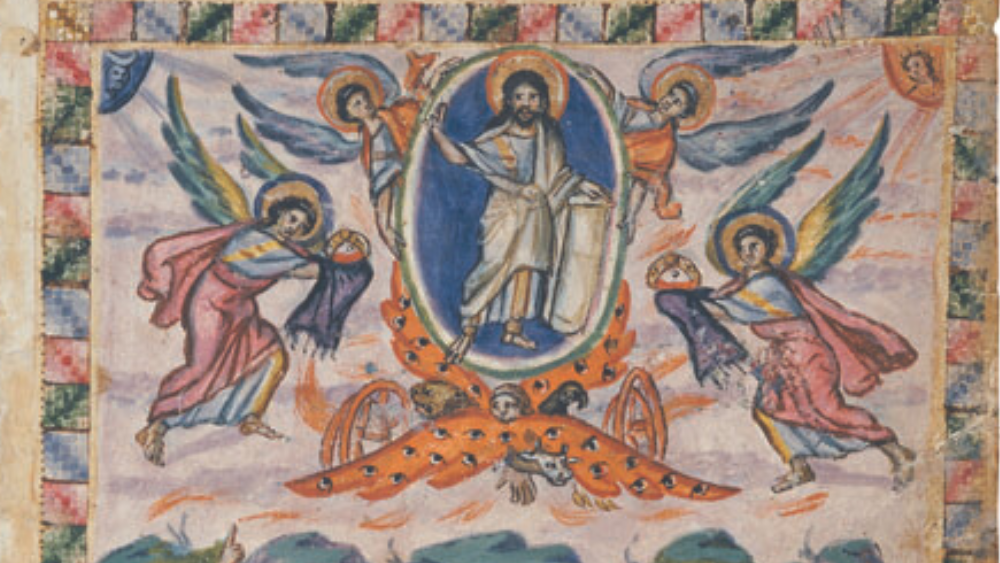
The Ascension of Jesus: where our Hearts are Fixed
The Sunday after the Feast of the Ascension and a celebration of Baptism.
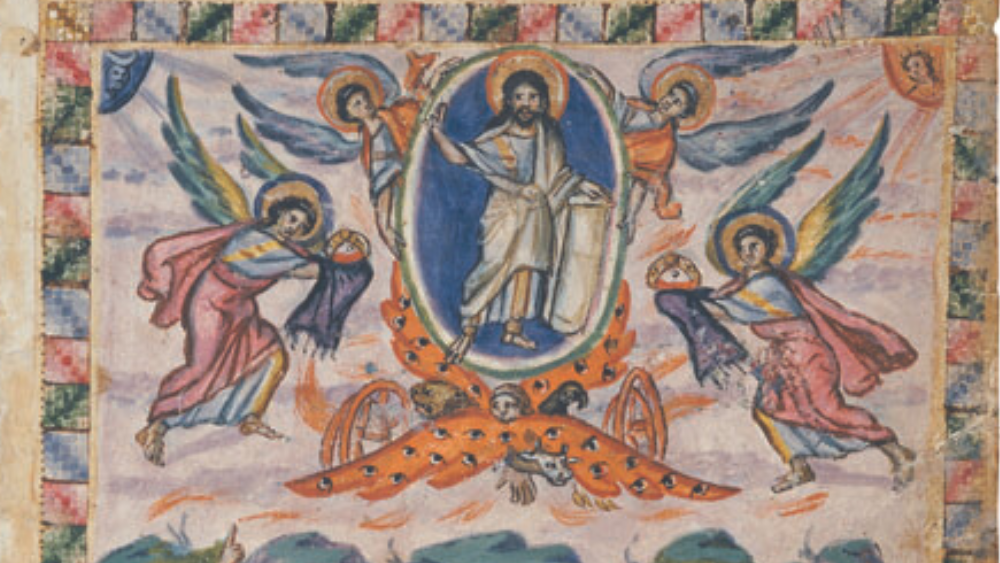
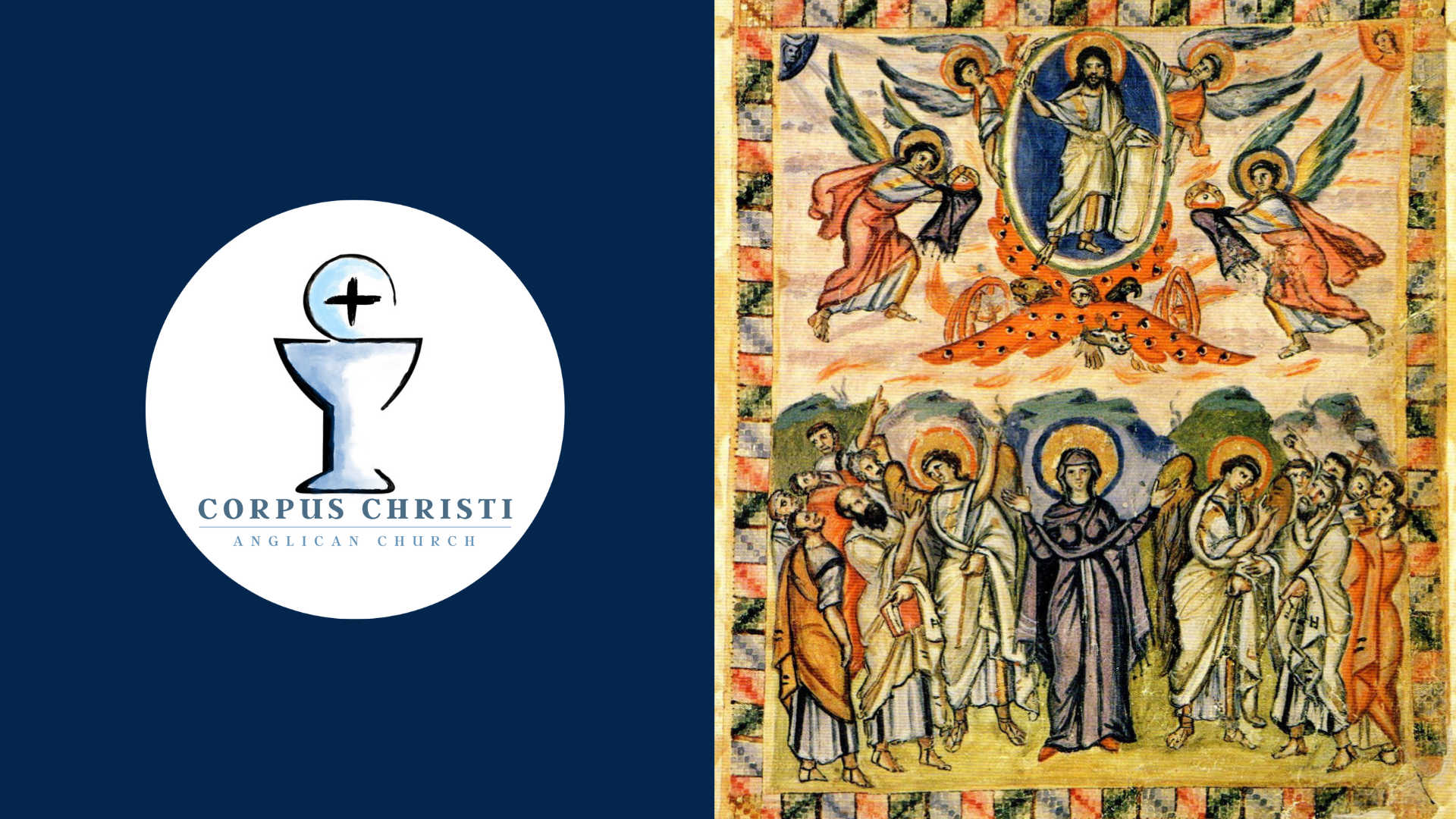
Ascension from the Rabbula Gospels, from Art in the Christian Tradition, a project of the Vanderbilt Divinity Library, Nashville, TN. https://diglib.library.vanderbilt.edu/act-imagelink.pl?RC=53846[retrieved May 29, 2022].
The Sunday after the Feast of the Ascension and a celebration of Baptism.