
SERMONS
Archive
- October 2026
- September 2026
- August 2026
- July 2026
- June 2026
- May 2026
- April 2026
- March 2026
- February 2026
- January 2026
- December 2025
- November 2025
- October 2025
- September 2025
- August 2025
- July 2025
- June 2025
- May 2025
- April 2025
- March 2025
- February 2025
- January 2025
- December 2024
- November 2024
- October 2024
- September 2024
- August 2024
- July 2024
- June 2024
- May 2024
- April 2024
- March 2024
- February 2024
- January 2024
- December 2023
- November 2023
- October 2023
- September 2023
- August 2023
- July 2023
- June 2023
- May 2023
- April 2023
- March 2023
- February 2023
- January 2023
- December 2022
- November 2022
- October 2022
- September 2022
- August 2022
- July 2022
- June 2022
- May 2022
- April 2022
- March 2022
- February 2022
- January 2022
- December 2021
- November 2021
- October 2021
- September 2021
- August 2021
- July 2021
- June 2021
- May 2021
- April 2021
- March 2021
- February 2021
- January 2021
- December 2020
- November 2020
- October 2020
- September 2020
- August 2020
Pentecost Sunday: A Commission to Join in New Creation
Introduction
Good morning friends. Welcome to Pentecost Sunday. Jesus has ascended and on this day we commemorate His sending the Holy Spirit to the church to continue his work. While the kids aren’t in CGS, I want to start doing something new. I want to invite the kids down for a children’s sermon. Kids, come on down.
Kids’ Sermon
How many of you enjoy playing in the sand? Me too! What do you like doing in sandboxes? If we were to try to build a sandbox together, what kinds of things would we need? [Let the kids answer]. If we just had a pile of wood and pile of bags of sand, could we do it? What would happen if I poured the sand on the ground with nothing to hold it in? What would happen if I put boards up with out nailing them together and put sand in it? What happens if I just put a bunch of bags of sand on top of each other? Would that make a sandbox? NO! That’s right, we need a plan and the right tools to get things done. It’s not enough to think hard about it, or to just get the supplies. We need someone with a plan and the right tools to help us build it. We’ll have to cut the boards with a saw, hammer or screw together those boards with drills and screws or hammers and nails. We need a sharp knife to open the sandbags and someone who is really strong to dump all the sand into the sandbox. What happens after we build it? We can finally play! We fill it with toys, we spend time in it. We enjoy it.
In today’s passages we heard about how people made a mess of things in the world. But the thing is, even when we make a mess of things, God still loves us. He made us and he wants us to ask him for help and to enjoy his goodness in this world. I would even say that the joy of play is learning the reality of heaven, but when people want to do things their own way and not listen to God, they start to break things and make everything more chaotic and complicated. In our Genesis reading today, people became separated from one another, and they separated themselves from God. They forgot how to play in the goodness of God’s presence.
Pentecost is where the Holy Spirit, God himself, comes to make things new for all people. He will reorder the chaos they’ve made and reconstruct the things we have broken so we can play in His presence and have a full life with God once again. He is the one who has all the supplies, the knowledge, the wisdom, the tools and the power to bring us back to himself through Jesus. Today, remember that God loves you and has given his Holy Spirit to help rebuild what is broken. Thanks for listening kids. You can head back.
As I look at our texts with all of us, let me pray for us:
“In the name of God, the Father, the Son, and the Holy Spirit, Amen. O God, you have made of one blood all the peoples of the earth, and sent your blessed Son to preach peace to those who are far off and to those who are near: Grant that people everywhere may seek after you and find you; bring the nations into your fold; pour out your Spirit upon all flesh; and hasten the coming of your kingdom; through Jesus Christ our Lord. Amen.
1. Hubris, destruction, and the need for a new history — Genesis 11
We read today from Genesis chapter 11. It’s a strange story which shows humanity’s recapitulation of the ancestral sin: refusing God’s goodness to opt for our own autonomy and authority. The peoples who were born from the descendants of Noah migrated east and wanted to build a city. As Alexei pointed out in his sermon last week, there weren’t the abundance of rocks that there had been where they came from, so they innovated and figured out how to make bricks and mortar with what they had. They say “Let’s build ourselves a city, have a tower with its height in the sky, and make a name for ourselves.”[1]
God comes down to visit the city. In contrast to the book of Acts today where God comes down to indwell a people, God here comes down to look at it. In his mercy, so that they did not create a scenario which they could not come back from, he scatters the people and creates confusion by dividing their languages. This whole narrative is a critique of Babylonian culture and human pride. Babylon viewed themselves as the height and pinnacle of human civilization. It also served as a warning to Israel in the future that the divisions, wars, and animosity towards strangers and foreign nations were a result of a choice to reject the good life with God in creation. In this narrative there is no small token of hope. There is no fig leaf, no mark to keep one safe, no rainbow. This is the first judgment narrative in Genesis with no hope of blessing. History has to be rewritten. And this is why the narrative begins in chapter 12 with introducing us to God’s calling of Abraham.
The whole narrative hinges on a wordplay. The people say “Let us make bricks” (נִלְבְּנָה) in verse 7. Despite their ingenuity and hubris, God says “let us confuse” (וְנָבְלָה) their languages. The group in Babel saw themselves as “the whole earth” and now they’d be scattered through the whole earth. God’s purposes will be accomplished despite the arrogance and defiance of proud people. Abraham begins a new history which gives humanity hope that all things will be put right again. Since the time of Abraham, the descendants of Abraham have been looking for that servant who would come and restore these cracked icons and destroy the dividing wall between heaven and earth and between our many earthly divisions caused by fear and pride.
2. God comes to dwell and put the two parts of creation (Heaven and earth), back together again. Shalom— Acts 2
Jesus is the hope humanity was looking for and his work is continuing through the Holy Spirit in the church in Acts 2 and beyond. God indwells a people in the Holy Spirit and begins reversing not just the curse of Babel, but the effects of the ancestral sin of humanity. I was reading a book this week on the counter-world that we long for in the Psalms, and the author points out some of the brokenness that seems so commonly a part of the human story.
Living with the mindset of scarcity, there is not enough out there for all of us, we have not done enough, we are not enough, and all of this heightens our anxiety. And once we are anxious and fearful, we are met with messages that keep us in this state of alert and people can sell us narratives and products we think we need to keep ourselves safer, healthier, more loved. Our anxieties then push us to control more of our lives, control our situations, control the people around us. In a world of scarcity and anxiety it is not hard to discover that greed becomes the means to keep us safe. We need more and more to keep up appearances, to make us feel important, to help us feel safe. The author says, “Thus the ideology of anxious scarcity generates artificial needs, so that unthinkable luxuries are quickly redefined as necessities...”[2]
Our greed gives us the illusion that we are self-sufficient. In our self-deluded self-sufficiency we think we can make it on our own or we fear rivals and competitors and say “I have to be self-sufficient”. God told Israel that once they got into the land and had eaten their fill and built fine houses, they should not exalt themselves and think that their wealth came by their own hand.[3] God makes no sense and has no relevance to those bound to a high-control, greedy, self-sufficient, and a frenetically-paced world. This leads us to denial. Buying that advertised razor and having a better shave won’t give me the perfect life that commercial promises any more than re-posting that one thing on social media will satisfy my rage and longing for safety and prosperity. But we do it anyways. And then the denial finally begins to give way to despair where our world feels like the bottom has dropped out of it and we are incapable of care and hospitality, unable to keep thoughtful attention and an even temper, and without hope. We cope with the hopelessness with a cultivated amnesia, addiction or other coping strategies to forget the hurt we have experienced. This produces only disconnection: disconnection from God, others, and even ourselves. Ultimately the disconnected world becomes a world without norms “because without God and without tradition and without common good, everything is possible.”[4]
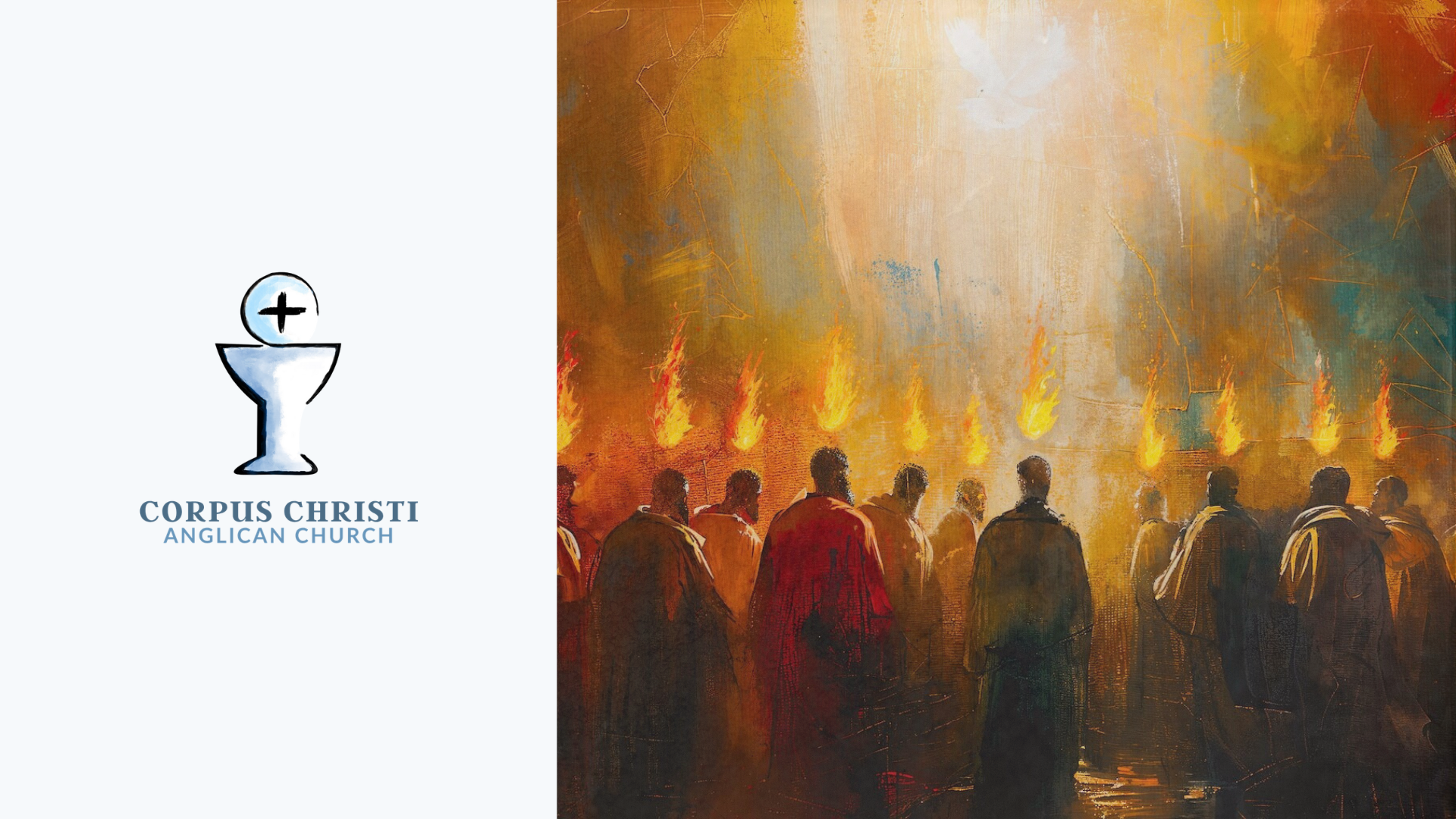
Whereas God visited Babel to look at it and then thwart their plans, Jesus is God’s visitation of the world to inhabit it, re-create it, and bring unity to heaven and earth — the two realms of creation. The book of Acts continues the narrative of the things Jesus did. The work of Jesus was continuing in a people who were filled with God’s very presence as the new temple for the Holy Spirit to fill. The point of Pentecost is not the injection of energy into a people, it is God’s coming to dwell with his new covenant people — a new Sinai. It is a fulfillment of promises long ago. What started with Abraham in Genesis 12 has found its fulfillment in God’s homecoming.
Pentecost launches a worldwide mission to put the world right again. You and I are filled with the Holy Spirit and part of this mission. Pentecost Sunday always feels like a re-missioning. What brokenness have you encountered this week? What disappointments? In any given week there are a number of reminders that the world is not as it should be. And in the midst of these places, the Spirit is working. Have we asked him what he wants to do in us? Have we sat with others in community to discern the work of the Spirit?
Conclusion
God has come, the Spirit is here. The church has what she needs to become the mature body of Christ and to continue the works and teachings of Jesus in a world bound to anxiety, greed, self-sufficiency, denial, amnesia, and disconnection. The fractures of humanity are being healed in the church as the place of new creation. In our own strength, innovation, and pride, we will only sow chaos into creation, but God’s Spirit has been poured out into the church to bring about new creation. As God rebuilds, we come to know the profound joy of the work of the Spirit in the church and as we know this joy, we come to learn the stuff of heaven where we learn to play again where God dwells.
Let us pray:
Lord Jesus, Master Carpenter of Nazareth, on the Cross through wood and nails you wrought our full salvation: Wield well your tools in this, your workshop, that we who come to you rough-hewn may be fashioned into a truer beauty by your hand; who with the Father and the Holy Spirit live and reign, one God, world without end. Amen.
[1] Genesis 11:4.
[2] Walter Brueggemann, From Whom No Secrets are Hid: Introducing the Psalms, 10-11.
[3] Deut. 8:12-17.
[4] Walter Brueggemann, From Whom No Secrets are Hid: Introducing the Psalms, 12-14.