
Lent, Prayer, and Evagrius of Pontus
LENT AND NEW PRAYER PRACTICES
As we enter into the season of Lent together next month, we will have 40 days to set aside for fasting, almsgiving, and prayer. Lent is a special time to ask God to root out our spiritual illnesses and immaturities, and to help us to receive his grace to heal us and make us new. One of the tools that I have found particularly helpful in seasons of penitence is an examen. There is a supplemental, Anglo-Catholic, prayerbook called St. Augustine’s prayerbook which has a great examen in it. This examen walks through the seven deadly sins to help the reader meditate on the various ways they may have been tempted by or committed various vices. For example, if someone has acted timid or cowardly in facing difficulty, suffering, or responsibility, perhaps there is a root cause of pride which is showing up as an inability to place one’s trust in God. Or perhaps we have dissatisfaction and complaints that deny or object to our current reality with no interest in the work it requires to improve or change our situation. Perhaps this is a result of resentment which stems from a seminal form of anger. It has been helpful for me to get into the weeds and name things accurately in order to open myself up to God’s grace and healing in various thoughts, dispositions, and actions. Doing this kind of work within the rhythm of daily prayer, communal worship, and receiving the sacraments, is what helps a Christian grow more proficient in a knowledge of the love of God and knowing the will of God. Lent is a great opportunity to do some of this hard spiritual and emotional work in our lives.
Who is Evagrius of Pontus?!
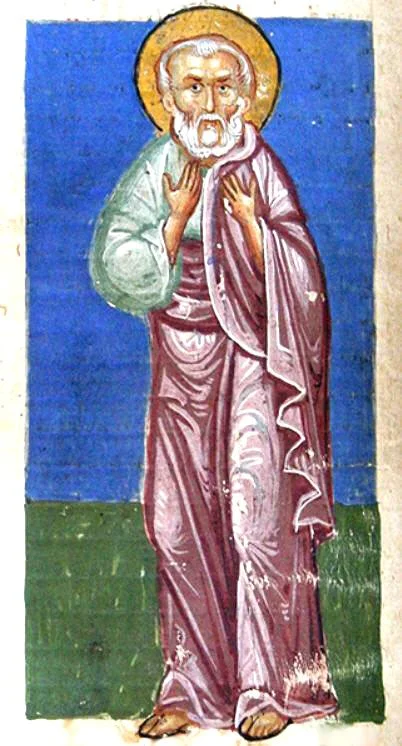
The popular “seven deadly sins” tradition has been a helpful tool in the church’s history for naming besetting sins in order to bring them before the Lord in anticipation of receiving his grace in Christ. Where did the seven dealy sins come from? They come from one of the original architects of monastic spirituality, Evagrius of Pontus (d. 399 AD). Evagrius, whose dad was a Bishop, had been ordained a lector by St. Basil of Caesarea, and followed his friend, St. Gregory of Nazianzus in the 370s to Constantinople where he was Gregory’s Archdeacon. He would eventually leave Constantinople to travel to Jerusalem and learn from Melania the Elder and Rufinus. In 383, Evagrius joined a monastic community in Nitria where he stayed two years and learned the monasticism of the Egyptian desert. Evagrius brings together the ascetical theology of Pachomius (the founder of communal monasticism) with the theology and cosmology of Origen. Unfortunately, near the end of his life, Theophilus, the Patriarch of Alexandria, pursued Evagrius as a heretic, bringing charges of Origenism against him. As a result, Evagrius would become a controversial theologian even though his monastic theology would become foundational for writers like St. John Cassian and then St. Benedict of Nursia. Evagrius would come to be condemned as a heretic about 150 years after his death at the Second Council of Constantinople in 553. As a result of his condemnation, his writings were either transmitted through communities which did not accept the ruling of the Second Council of Constantinople or under the names of orthodox writers like St. Nilus or St. Athanasius.
THE PRAKTIKOS AND PRAYER
Over the course of four weeks in Lent (March 1, 8, 15, and 22) we will look at the life and writings of Evagrius of Pontus. We will specifically look at his most popular work, the Praktikos, which is a practical work on the acquisition of virtue. You can read it through Luke Dysinger’s website here or purchase John Bamberger’s translation of it here. In the Praktikos, Evagrius names the eight evil thoughts that tempt the human soul toward evil (which would become the seven deadly sins tradition): 1) Gluttony (gastrimargia), 2) Fornication (porneia), 3) Love of money (philarguria), 4) Sadness (lupē), 5) Anger (orgē), 6) Listlessness (acedia), 7) Vainglory (kenodoxia), and 8) Pride (huperēphania). (see William Harmless, S.J., Desert Christians: An Introduction to the Literature of Early Monasticism, 322). I have a few goals with studying this work over Lent: First, this study will help us read the Scripture with the history of the church. Second, our time together will help us name how God is at work in our unique stories and why we each have unique struggles and besetting sins. Third, I hope to help us gain tools to name our besetting sins and the things that activate us more accurately so that we can pay attention to what our bodies are telling us. Finally, I want us to grow in our vision for who God is and his love for us as we get better at noticing and uprooting the seedlings of sin before they grow too large and unwieldy. I want us to grow together as a church in our ascetical theology, Christian proficiency, and a life of prayer. Lent is the perfect season for this.
Do Anglicans Do Asceticism?
Yes, Anglicans do asceticism, i.e., training for spiritual progress in our life with Christ. In our catechism, paragraph 224 asks this question: “What is a “rule” of prayer?” It’s answer is this: “A rule of prayer is a regular discipline by which I cultivate a life of prayer and grow to love and glorify God more fully (Psalms 5:1–3; 119:164; Daniel 6:6–13; Mark 1:35–39; Luke 5:12–16; Ephesians 6:10–20).” A fuller growth in the love of God is possible for the Christian. The Church has always taught the possibility of our growing more proficient in knowing the love and will of God. This progress has a name in the church’s history: asceticism.
We might think of asceticism as pertaining only to cloistered monks, but in thinking this way we would be doing ourselves a disservice. The Book of Common Prayer itself is a testament that ascetical growth in the Lord belongs to the whole body of Christ (clergy and laity). Anglican Priest, the Rev. Martin Thornton, says this: “…When the Prayer Book is studied and used, publicly, privately, and constantly, then it takes on its true character of a comprehensive system. And the more it is used privately, the more it is seen to be the basis of an integrated religious life; something to be found not neatly stacked in the church bookcase but in the kitchen and in one’s pocket…The Book grows into a system: regularity of worship leads into Continuity of Christian living.” (English Spirituality, 262). In using the Book of Common Prayer to steady ourselves and seek God regularly in our turbulent lives, we settle ourselves in something rooted and grounded. We engage in an ascetical journey of growing in the love of God. Part of our work of studying those who have gone before us (like Evagrius), is that we are becoming more proficient in knowing God’s love for us, in becoming regulated in a troublesome and changing world, and in integrating our body, mind, and soul in our life of following Christ.
Join us this March to read and discuss a life of prayer through Evagrius of Pontus!